
Programming, Databases, Distributed systems, Beachvolley. Currently working on a Datalog engine on top of S3 .
Joined January 2019
- Tweets 75
- Following 193
- Followers 44
- Likes 128
1 Photos and videos

Finn Völkel retweeted

May 5
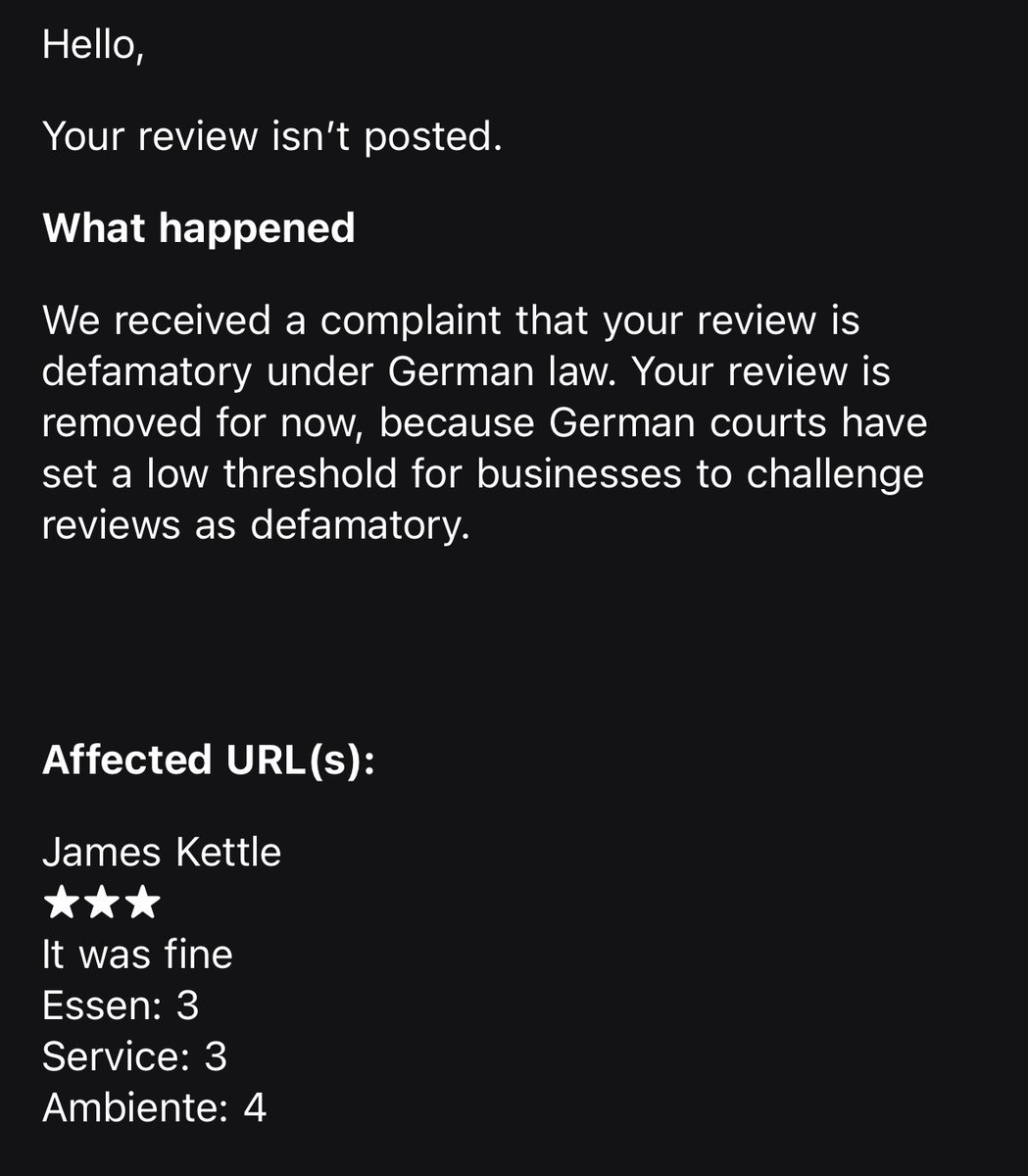
Giving a restaurant a three star review is illegal in Germany.
810
3,075
58,147
3,109,427

Apr 28
Blogged about Triplox, a system I'm building on top of SlateDB. finnvolkel.com/triplox-log-1… #slatedb #datomic
3
48
Apr 10
Wrote some more thoughts down on multi-way joins in DBSP. finnvolkel.com/more-thoughts… It's reads more like a note to myself.
14
Finn Völkel retweeted

Jan 16
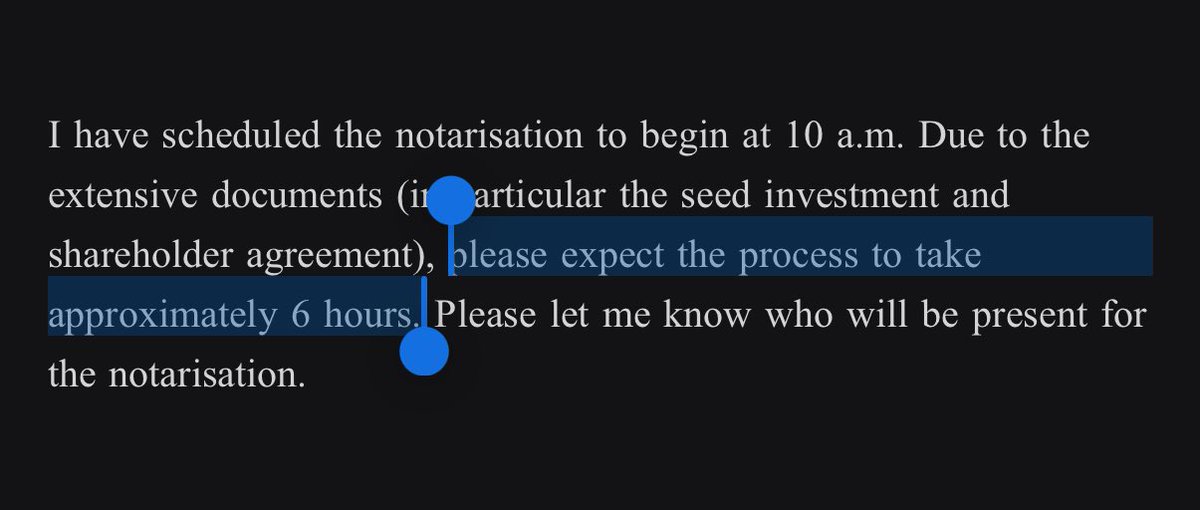
With rules like this, who would invest in a German startup? Not me.
Jan 15

another German investment, another 6 hours of a notary reading every single word of all the documents out loud to each party to the transaction after we’ve all agreed on the docs
177
135
2,552
305,442
Finn Völkel retweeted
Jan 3
WCOJ meets DBSP. This is the post I wanted to get at when starting the series. finnvolkel.com/wcoj-wcoj-mee…
1
1
33
10 Dec 2025
I started to write a blog series on worst-case optimal join finnvolkel.com/wcoj-graph-jo…
1
2
56
Jan 2
The 4th post in the WCOJ series. An intro to DBSP, Z-Sets and connections to EDN Datalog indices. This will set us up for a WCOJ meets DBSP algorithm. finnvolkel.com/wcoj-dbsp-zse…
1
1
1
44
Jan 3
WCOJ meets DBSP. This is the post I wanted to get at when starting the series. finnvolkel.com/wcoj-wcoj-mee…
1
1
33
Finn Völkel retweeted
Jan 2
The 4th post in the WCOJ series. An intro to DBSP, Z-Sets and connections to EDN Datalog indices. This will set us up for a WCOJ meets DBSP algorithm. finnvolkel.com/wcoj-dbsp-zse…
1
1
1
44
31 Dec 2025
Idea from a friend of mine. People who set off fireworks should be drafted immediately.
16
Finn Völkel retweeted
15 Dec 2025
The 3rd post in the WCOJ series. Implementing some logical datalog connectors in the context of GenericJoin. finnvolkel.com/wcoj-datalog-…
1
2
2
92
Finn Völkel retweeted
11 Dec 2025
The second post in the series is on an actual implementation of a WCOJ algorithm. finnvolkel.com/wcoj-generic-…
1
1
1
41
24 Nov 2025
Wrote a blog post about continuation-passing style in @xtdb_com.
finnvolkel.com/continuation-…
2
4
335
Finn Völkel retweeted

16 Nov 2025
"In this new programming paradigm then, the new most predictive feature to look at is verifiability. If a task/job is verifiable, then it is optimizable directly or via reinforcement learning, and a neural net can be trained to work extremely well."
16 Nov 2025

Sharing an interesting recent conversation on AI's impact on the economy.
AI has been compared to various historical precedents: electricity, industrial revolution, etc., I think the strongest analogy is that of AI as a new computing paradigm (Software 2.0) because both are fundamentally about the automation of digital information processing.
If you were to forecast the impact of computing on the job market in ~1980s, the most predictive feature of a task/job you'd look at is to what extent the algorithm of it is fixed, i.e. are you just mechanically transforming information according to rote, easy to specify rules (e.g. typing, bookkeeping, human calculators, etc.)? Back then, this was the class of programs that the computing capability of that era allowed us to write (by hand, manually).
With AI now, we are able to write new programs that we could never hope to write by hand before. We do it by specifying objectives (e.g. classification accuracy, reward functions), and we search the program space via gradient descent to find neural networks that work well against that objective. This is my Software 2.0 blog post from a while ago. In this new programming paradigm then, the new most predictive feature to look at is verifiability. If a task/job is verifiable, then it is optimizable directly or via reinforcement learning, and a neural net can be trained to work extremely well. It's about to what extent an AI can "practice" something. The environment has to be resettable (you can start a new attempt), efficient (a lot attempts can be made), and rewardable (there is some automated process to reward any specific attempt that was made).
The more a task/job is verifiable, the more amenable it is to automation in the new programming paradigm. If it is not verifiable, it has to fall out from neural net magic of generalization fingers crossed, or via weaker means like imitation. This is what's driving the "jagged" frontier of progress in LLMs. Tasks that are verifiable progress rapidly, including possibly beyond the ability of top experts (e.g. math, code, amount of time spent watching videos, anything that looks like puzzles with correct answers), while many others lag by comparison (creative, strategic, tasks that combine real-world knowledge, state, context and common sense).
Software 1.0 easily automates what you can specify.
Software 2.0 easily automates what you can verify.
30
58
1,028
173,231
Finn Völkel retweeted

7 Nov 2020
How to become expert at thing:
1 iteratively take on concrete projects and accomplish them depth wise, learning “on demand” (ie don’t learn bottom up breadth wise)
2 teach/summarize everything you learn in your own words
3 only compare yourself to younger you, never to others
174
2,712
14,415

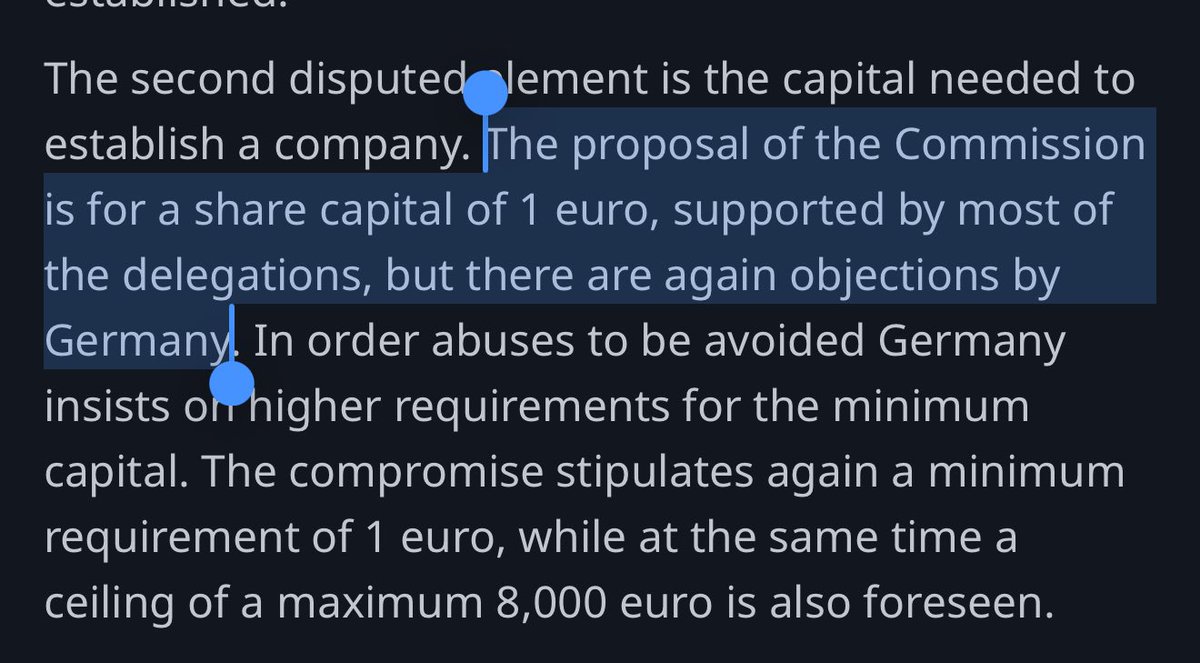
History on European law, 28th regime attempt
Last time it was vetoed by 🇩🇪@CDU again in power with Chancelor @_FriedrichMerz .
Will F Merz do (much) better than Merkel?
Germany was against the min 1 euro requirement, which would have made Europe competitive with 🇺🇸
17
17
134
12,981
Finn Völkel retweeted

20 Jul 2025
Summer ClojureBerlin meetup on Wed, Jul 23 - sign up here: clojure.berlin/events/2025-0…
The topic this month will be clojure-mcp - using Clojure with LLMs
Hope to see you in Kreuzberg!
3
3
1,224