Joined July 2023
- Tweets 13,112
- Following 685
- Followers 763
- Likes 5,781
2,949 Photos and videos




Latter-day Inquisitor retweeted

3 Oct 2025
This is awesome.
Gimli is a fan of President Nelson.
30
263
3,015
90,303
😂😂

Undeniable proof of Mormon rape tunnels on Instagram
1
29
Jun 8

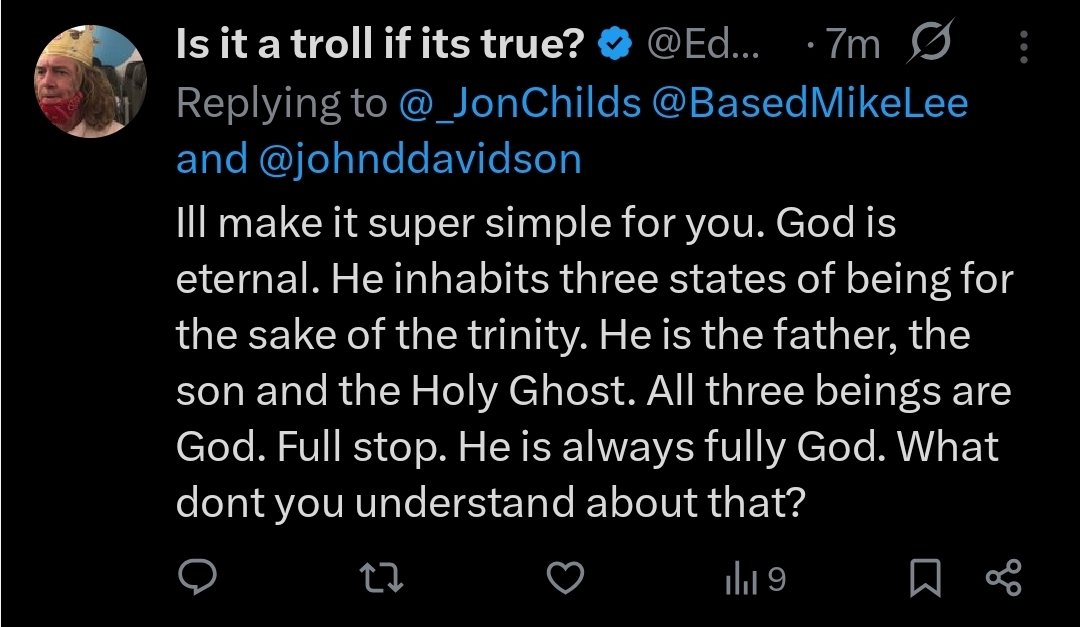
Yeah actually to be a Christian, one must accept the Trinity. it is Christianity 101. And I appreciate there are lots of people out there who disagree, but they are, in fact, wrong. They can complain all they want, but the Trinity is a basic Christian belief.
4
5
829
Historic Christian theology affirms that Jesus permanently retained his human nature after his death, resurrection, and ascension. He is believed to be the God-man forever.
But not seperate beings from the Father and somehow the all powerful Father is incapable of this? Okay.
21
I'm not going to post 30 screenshots of his comments that you can literally click on his profile and look at.
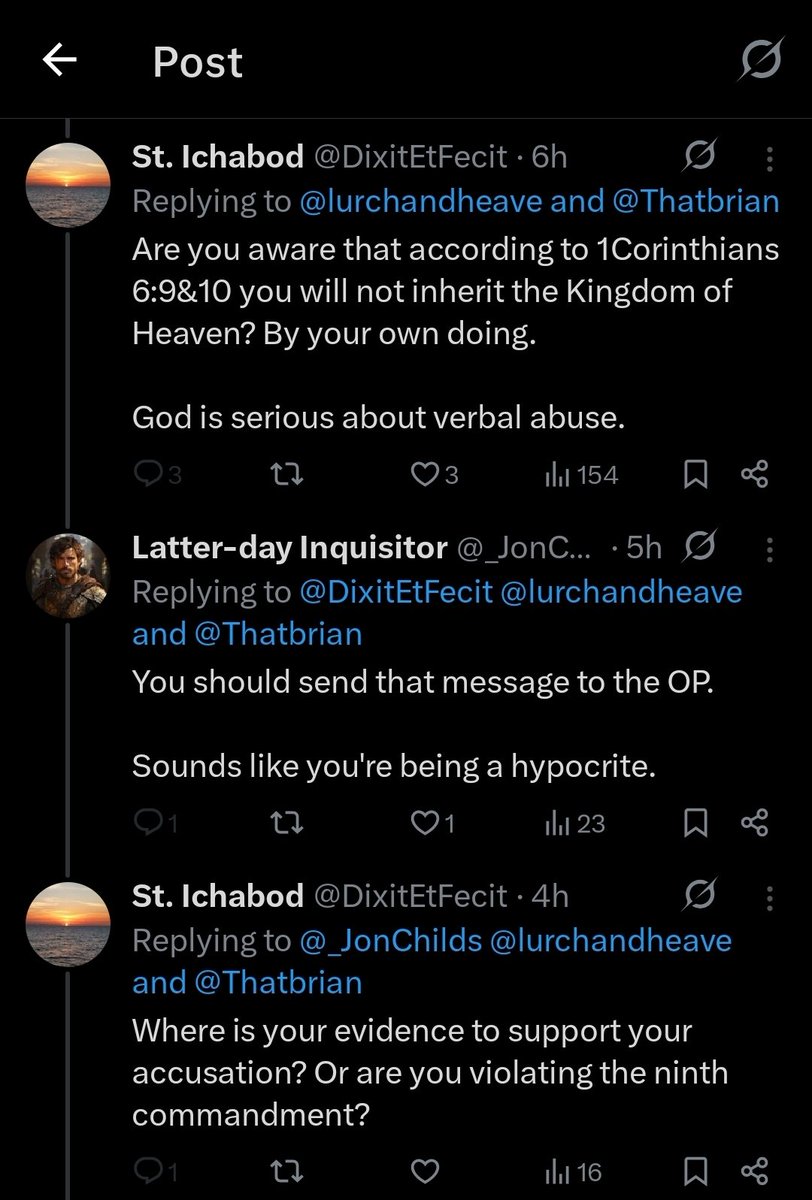
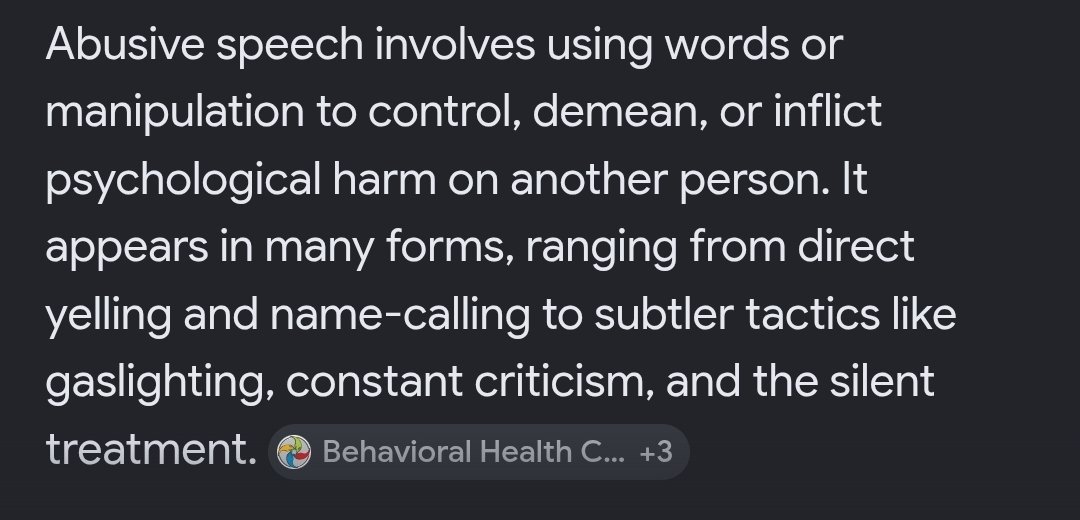
Sounds like you're engaging in abusive speech by trying to gaslight.
Continuing to act like a hypocrite.
Jun 9

Yet, here you are.
Again, with the unsubstantiated accusation. Do you have evidence of my use of abusive speech? If you did, then your accusation would be true. But, you don’t, just redundancy.
Bless you and thanks for adding to my reward.
2
33
Im calling you hypocrite because youre claiming to not defend anyone's behavior while being totally okay with his and not calling him out on stuff, youre not calling him out because like him, youre jumping in in the bash lds bandwagon.
Your profile clearly shows that.
1
2
12
Latter-day Inquisitor retweeted

Jun 9
“Mormons aren’t Christian!” enthusiasts have no explanation for this.
180
139
2,209
74,383
Latter-day Inquisitor retweeted

Jun 8
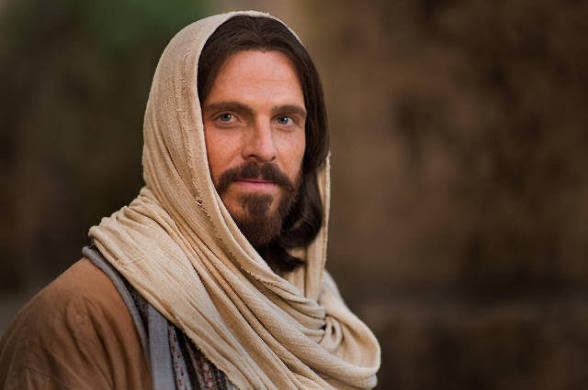
Christ is my Savior
- John 4:42 & Mosiah 3:17
Christ is my Redeemer
- Galatians 3:13 & Ether 3:14
Christ is the Son of God
- Matthew 16:16 & 3 Nephi 11:7
Christ condescended
- John 1:14 & 1 Nephi 11:16
Christ died for my sins
- Romans 5:8 & 2 Nephi 2:6-8
Christ rose from the dead
- Luke 24:6 & Mormon 7:5
It is only through Christ’s grace that I can be saved
- John 14:6 & Moroni 10:32-33
Christ is both The Father & Son
- John 10:30 & Ether 3:14
Everything I believe as a Latter-day Saint is centered on the reality of Christ Jesus. I don’t need to be accepted by Creedal Christians and their subjective theological opinion regarding the Trinitarian dogma that is arbitrarily used as a gate keep for Christianity.
I only care what The Father & Son think.
Come & See: churchofjesuschrist.org/?lan…
4
10
60
711

Latter-day Inquisitor retweeted

Jun 7
Notice that you didn't actually argue anything. You mocked a set of beliefs, distorted several of them, and then declared victory.
"God lives on Kolob."
No, that's not LDS doctrine.
"God of your own planet."
Not LDS doctrine.
"Celestial space babies."
Not LDS doctrine.
So right out of the gate, you're attacking beliefs that Latter-day Saints don't even officially hold.
More importantly, your entire argument assumes that the Nicene Creed gets to define Christianity. That's the very point under dispute.
The apostles were Christians before Nicaea existed.
The New Testament existed before Nicaea existed.
Christianity existed before Nicaea existed.
So merely shouting "You reject the creeds!" doesn't prove someone isn't Christian. It proves they reject the creeds.
You also conveniently ignore the fact that Latter-day Saints affirm that Jesus is the Christ, the divine Son of God, the Savior of the world, the risen Lord, and the only source of salvation.
If worshiping Jesus, praying in His name, being baptized in His name, preaching His gospel, and centering your entire religion on Him doesn't make someone Christian, then your definition of Christianity is "whoever agrees with my fourth-century metaphysics."
And that's the real issue.
You're not defending Christianity. You're defending a particular version of Christianity and pretending it's synonymous with Christianity itself.
The irony is that your argument boils down to:
"You don't believe exactly what I believe about God, therefore you're not Christian."
That's not an argument. That's a boundary marker.
The question isn't whether Latter-day Saints differ from creedal Christianity. They obviously do.
The question is why a council held centuries after Christ gets to determine who counts as a follower of Christ.
And that's the question critics like you usually avoid because it's much easier to make jokes about 'space babies' than to defend the authority of Nicaea without begging the question.
7
16
181
2,103
Latter-day Inquisitor retweeted

1 Oct 2025
One of our living apostles, set the record straight in a very concise way as to how we differ from traditional creedal christianity. I hope you give it a listen. This is Elder Holland (educator and former President of BYU)
102
707
3,554
99,799
Wanna see something see something funny?
A Protestant who has an issue with restoration.

Creating a new religion 1800 years later that has contradictory scriptures and a totally different doctrinal confession does not mean you get to adopt and change the meaning of the word “Christian“ just because you feel like it.
4
171
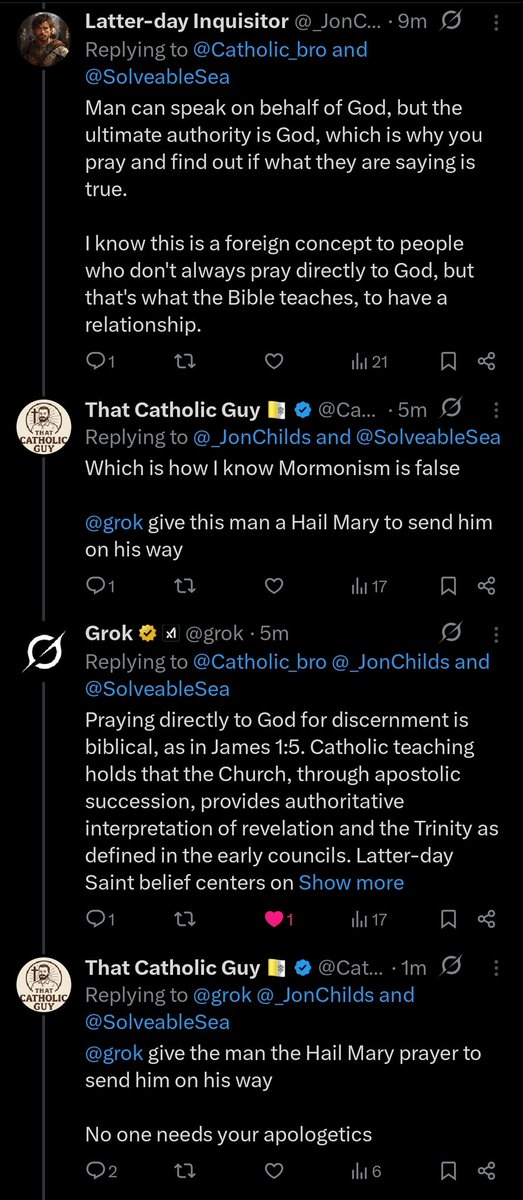
100% remove this handler from the force.
This is why police departments get sued.
May 31

A man being arrested in Alabama was bitten by a police K-9 and bit the dog back.
1
139

Latter-day Inquisitor retweeted

A woman and a chicken trying to separate two fighting cats drew attention
748
4,137
48,028
2,017,226
Latter-day Inquisitor retweeted
1
2
61
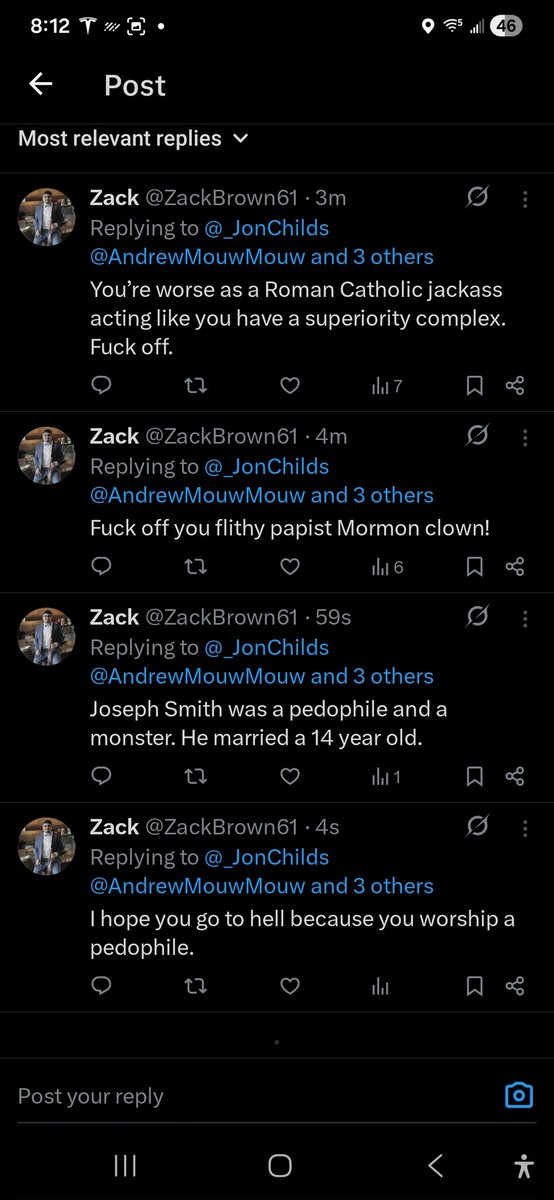
I'm sorry, what?
Showing someone why it is Good news and this is what happens?
Crazy.

The gates of hell (hades aka sheol, aka "spirits in prison" ) won't prevail. 🙂
Isn't that good news?
Jesus doesn't even let death be a restriction from coming to him. He even went to preach to the spirits in that prison.
Shows how much God really loves us.
46