
Sunday Times Bestseller. Illustrator author education autism childhood learning activist art. Represented by @thebksAgency
Joined March 2020
- Tweets 8,335
- Following 4,551
- Followers 15,426
- Likes 13,251
1,730 Photos and videos


Missing The Mark retweeted

16 Jun 2025
‘Why can’t you make them behave?’
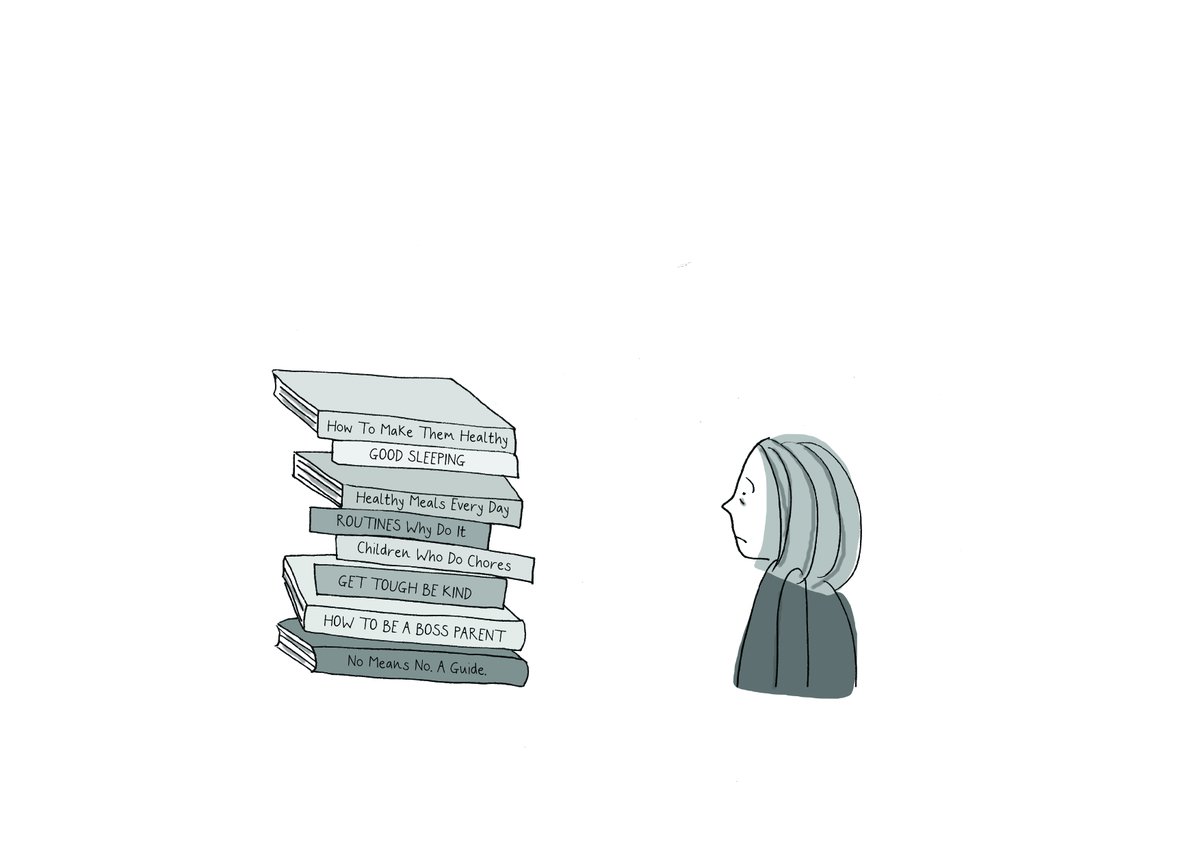
So much of ‘good parenting’ is about children’s behaviour. Right from the start we’re encouraged to try and mould our children, so they are ‘well-behaved’. We’re told to use star charts, and praise, and to set firm boundaries. Tell them our expectations and implement consequences if they don’t comply. Be authoritative, meaning both firm and caring.
That’s what ‘good parents’ do.
The promise is that if we do it right, our children will get the message and fall into line. We can bask in the knowledge that we are doing parenting ‘right’.
And then along comes the child who hasn’t read the parenting manual. They rip up the star chart and trample over the boundaries. They put you on the naughty step and tell you that you’ll regret your behaviour later when you shout.
The harder you try, the worse things get. You feel terrible, You wonder if you are to blame. After all, it seems to work for everyone else, doesn’t it? Is it all because you just aren’t firm enough?
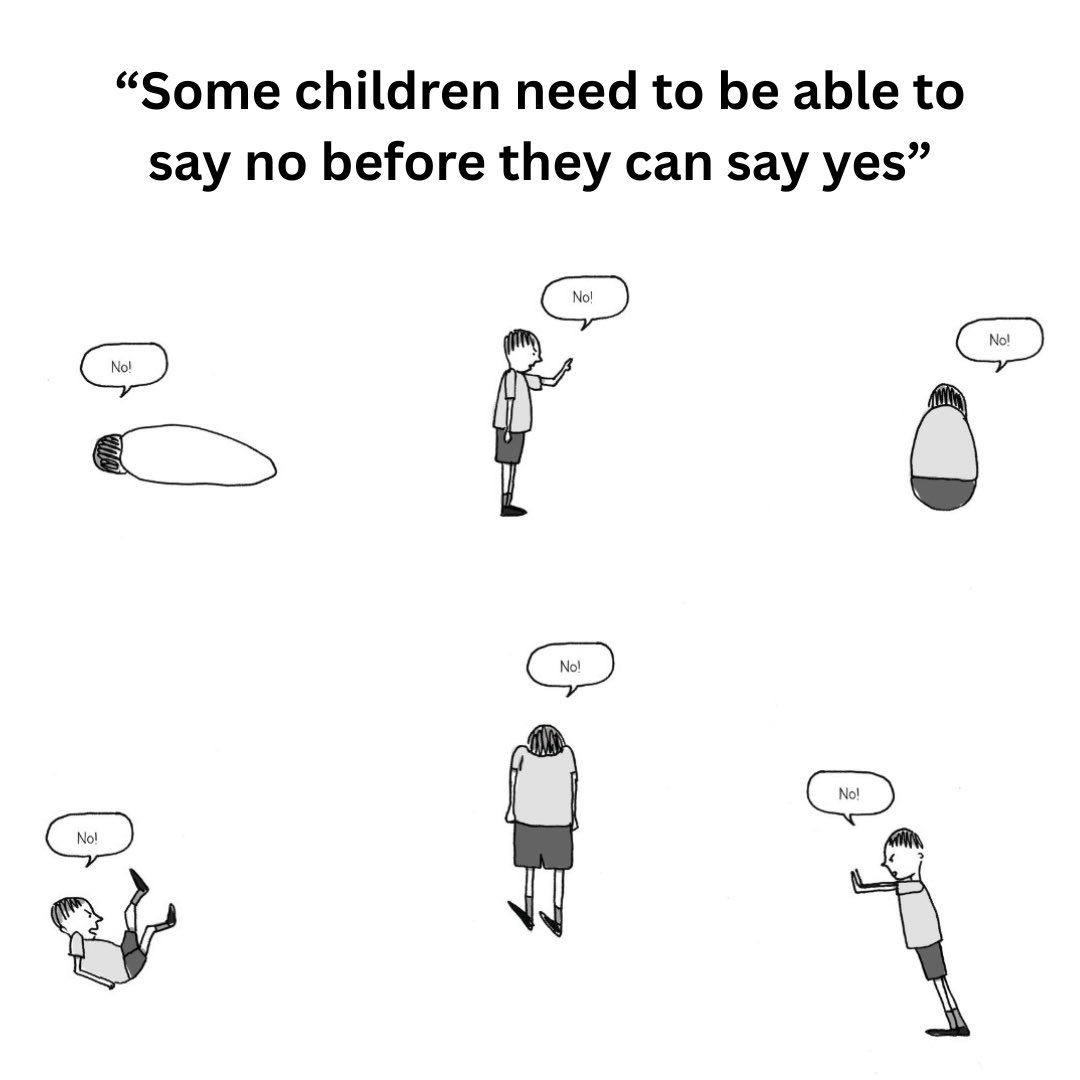
It’s not your fault. You have the wrong tools. Some children need something different. That’s because conventional parenting techniques are based on control – and some children react very strongly against that control. They are tuned in, super-sensitive to any hint of pressure.
The more you try to control their behaviour, the more they refuse. You count to 3 and they say ‘So?’. You promise a treat and they say ‘I don’t care’. You implement a consequence and they say ‘You can’t make me’.
And you realise that this is true. You really can’t make them. No one can make another person do things without their consent. Not unless you want to spend every day with your child in a head-to-head battle, and that isn’t the life that you want.
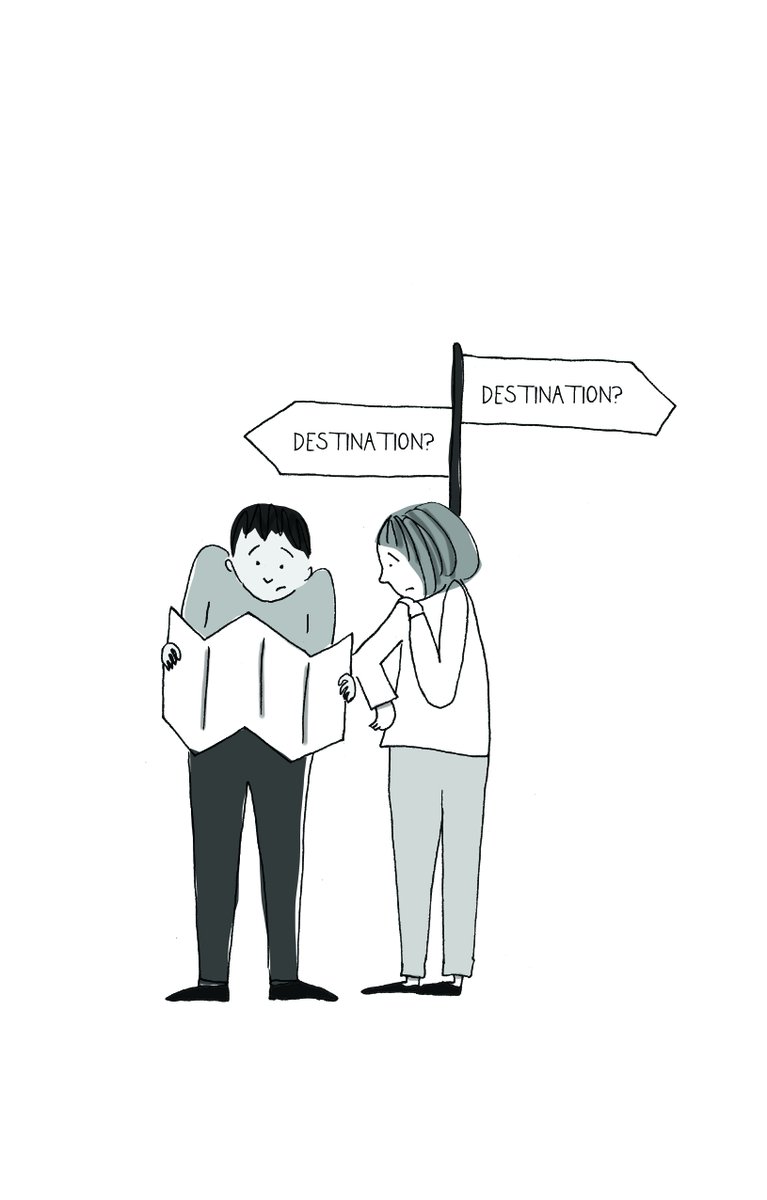
This realisation is life-changing. Suddenly you are grappling with a new way to parent, and none of the old rules seem to apply. What happens then?
That’s what Eliza (@_MissingTheMark) I are talking about in our webinar on Wednesday. The Art of Low Demand Parenting: Behaviour. Fully illustrated and with a down-to-earth and informal style throughout. Come and discover that you aren’t alone and it’s not your fault. Some children (and adults) need something different.
Please share if you know parents who really need another way.
eventbrite.co.uk/e/the-art-o…
4
16
46
3,946
Missing The Mark retweeted
3 Jun 2025
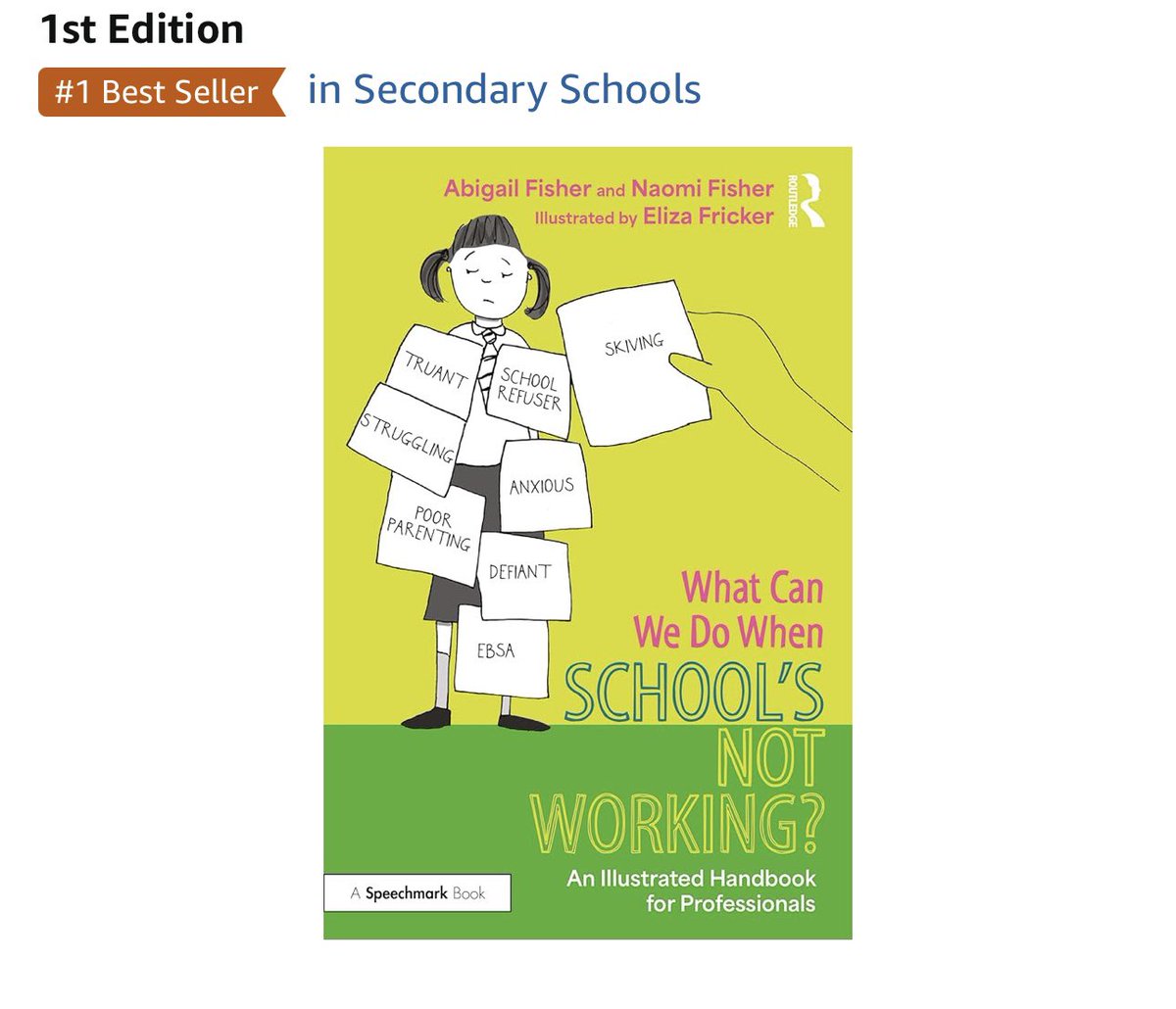
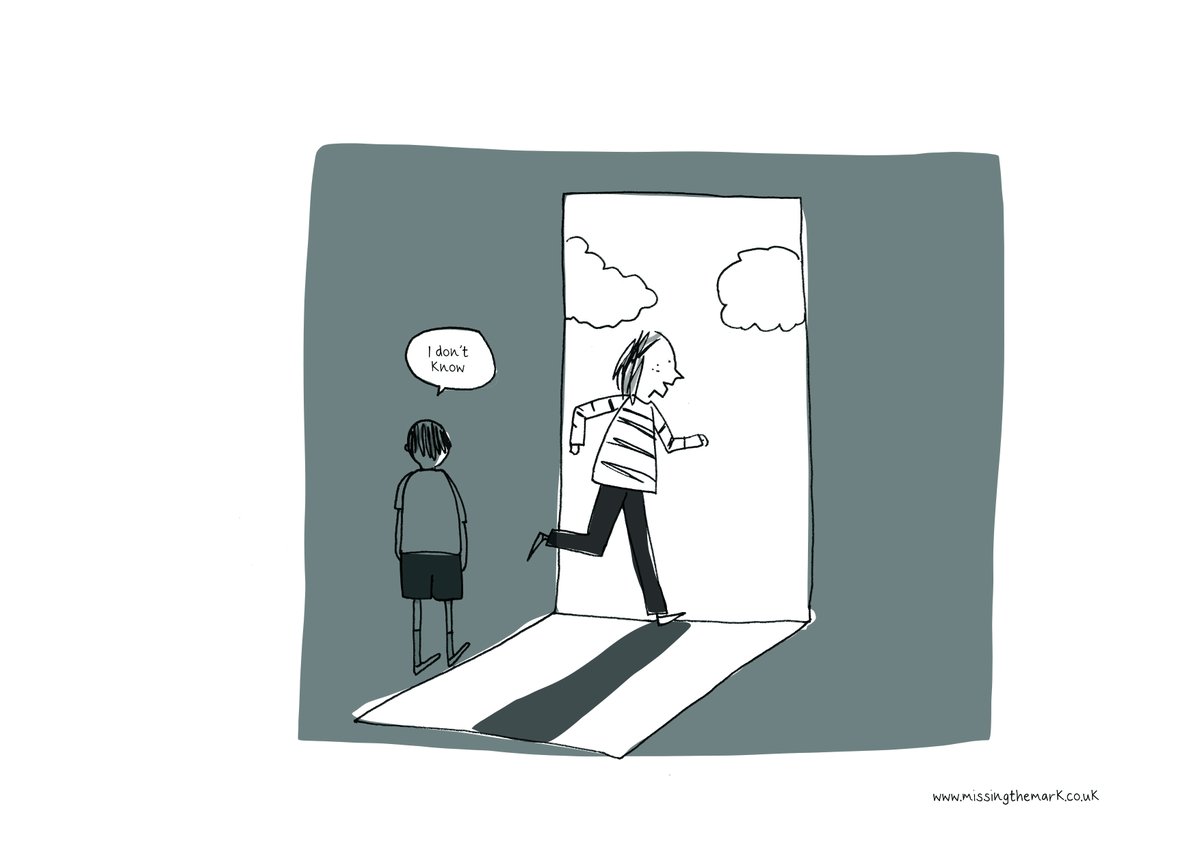
When I was thirteen, I started at a new school. The other kids disliked me and called me names. I found the work boring and pointless. I felt like an alien. I dreaded each interminable day. I stopped wanting to go to school. Every Sunday evening I was filled with misery.
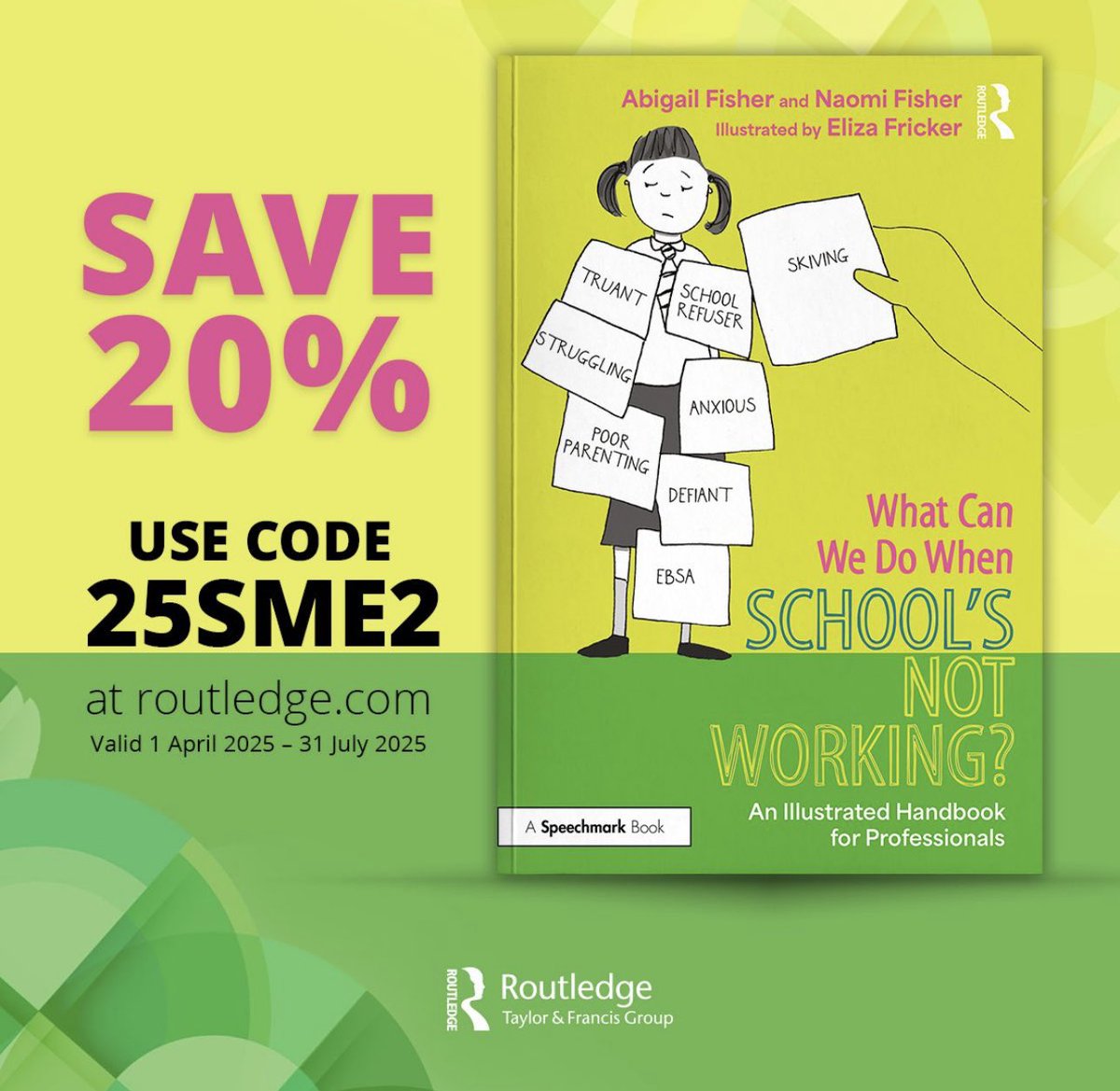
If that happened today, they’d say I was anxious about school. I could have been said to have ‘Emotionally Based School Avoidance (EBSA)’ or ‘school anxiety’. Then, it was just called ‘school refusal’.
I was anxious about school, that’s true.
I was anxious about school when I was told that there was no choice but to go every day and that I ‘looked fine when you’re there’. I was anxious when I was told that if I didn’t attend school, I’d have no future. I was anxious when I was told that it was an ‘excellent school’ and that perhaps I just didn’t appreciate my luck.
I was anxious because I felt trapped in a place where I was miserable. There’s nothing wrong with someone who feels anxious in those circumstances. In fact, I’d worry more about someone who DOESN’T feel anxious. Certainly most adults would.
Once I had been defined as ‘anxious’ I could have been sent to see a specialist. I could have been told I had a mental health problem. My hatred of school would have been turned into a problem with me. ‘Successful treatment’ would have meant ‘Back to school’.
And what I would have learnt was that I was the problem. I’ve have learnt to keep quiet and stop telling others how I felt. I’ve have learnt (as I already suspected) that there was something wrong with me, not the school.
In fact I was lucky. That didn’t happen. I moved house and changed schools and the next school was different. I felt different almost immediately.
Anxiety is a understandable reaction to many circumstances. It’s an emotional response to uncertainty, novelty or lack of safety. It lets us know that extra caution is required. It keeps us alert through hard times. It is useful. We need our anxiety.
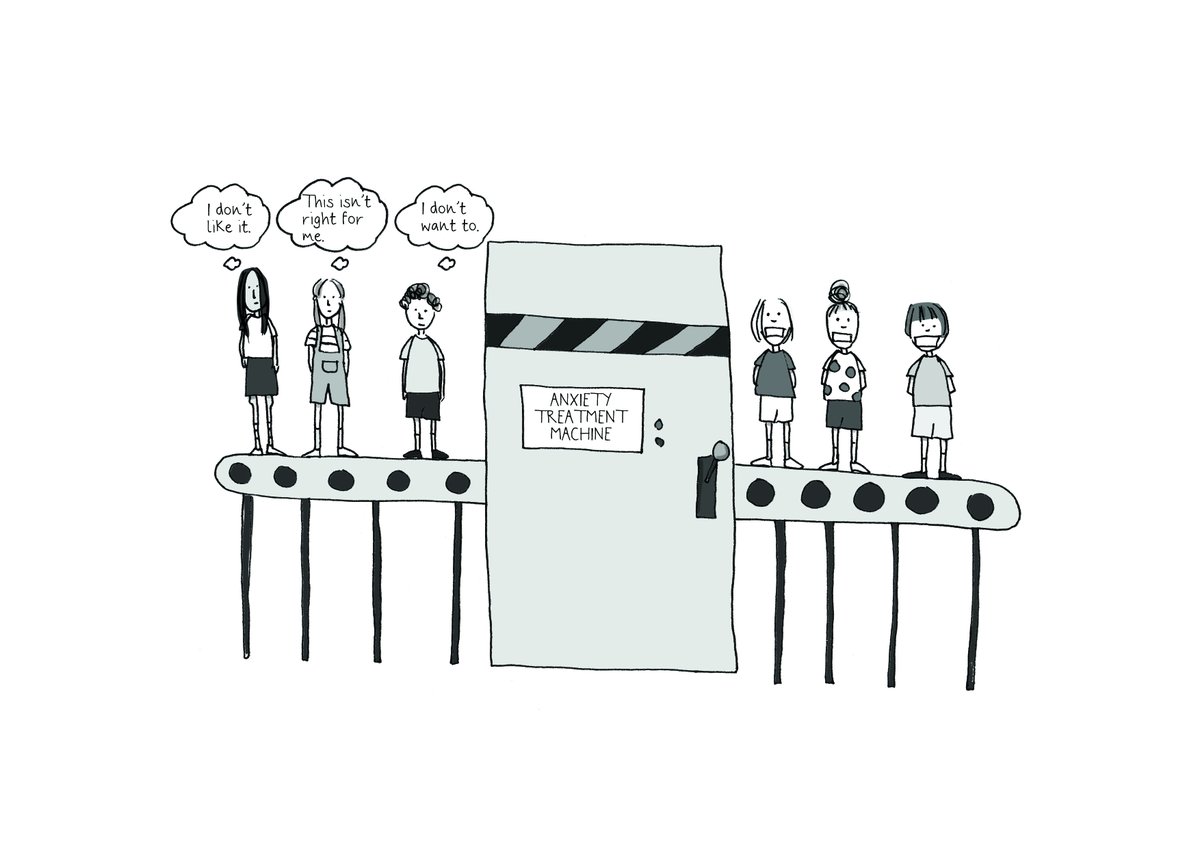
Yet with children, we’ve decided that their anxiety is the problem, that it means something is wrong with them. We’ve even told them this, with mental health awareness campaigns on toilet doors and in classrooms. We’ve encouraged them to see their emotional reactions as a sign of dysfunction, as something outside the ordinary. A problem in their heads, rather than a meaningful reaction to the world.
By turning children’s distress into a mental health problem, we depoliticise it. Instead of asking questions about the school system and whether it is fit for children, we suggest that the problem is our children’s reaction to school.
We’re using ‘anxiety’ to keep children quiet.
We don’t ask whether our schools might be designed in ways which provoke distress and anxiety. We don’t ask if they might be developmentally inappropriate and in need of change. Instead we say that they need counsellors, and mindfulness courses, and emotional regulation apps. Ways to ‘cope’, whilst the system carries on regardless.
If only our children could just stop having those inconvenient emotions, we think, then we could carry on as we were. There would be no need to change anything.
But they can't. No more than I could, all those years ago. Our children’s reactions are showing us that there’s a problem.
What will it take for us to listen?
(with @_MissingTheMark)
4
21
100
5,499

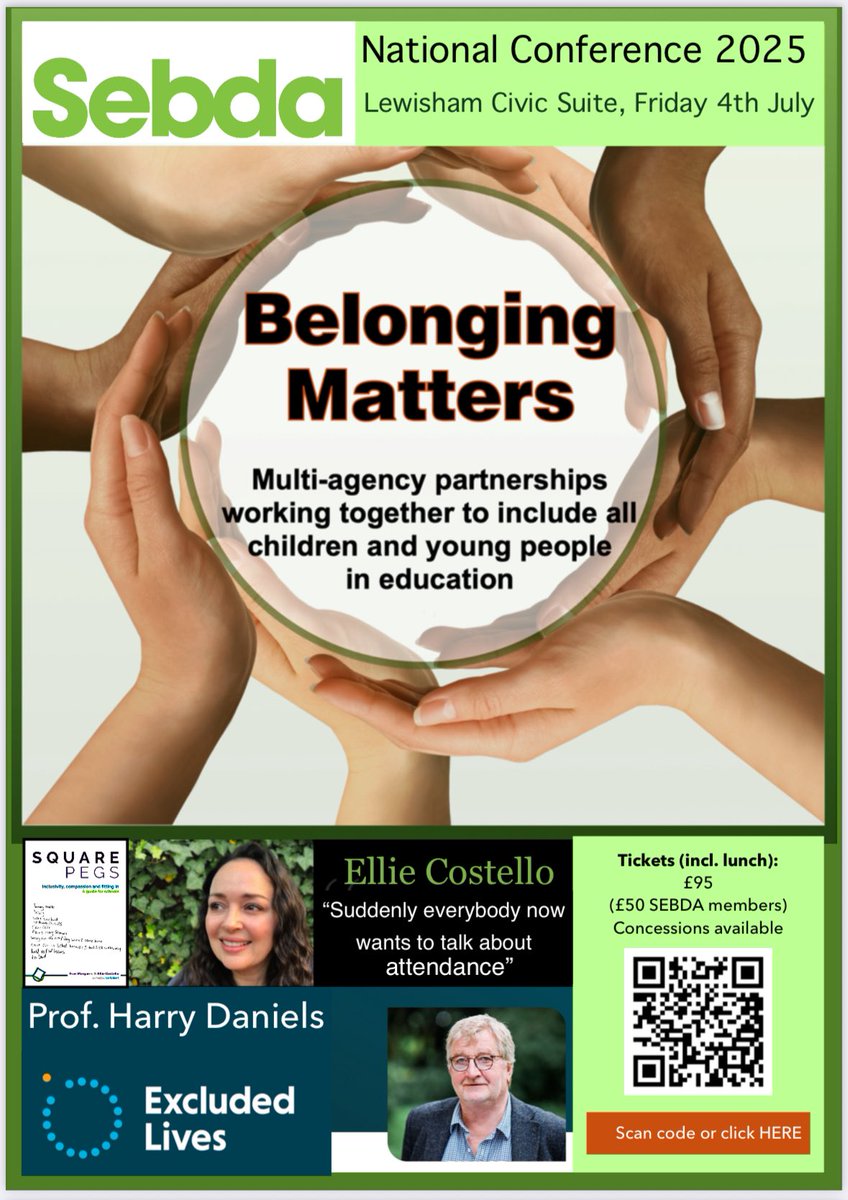
Come join us in Lewisham for this National Conference… Keynotes include: Ellie Costello @teamsquarepeg and Prof Harry Daniels… also with Eliza Fricker @_MissingTheMark July 4th! @SebdaOrg
3
6
812

31 May 2025
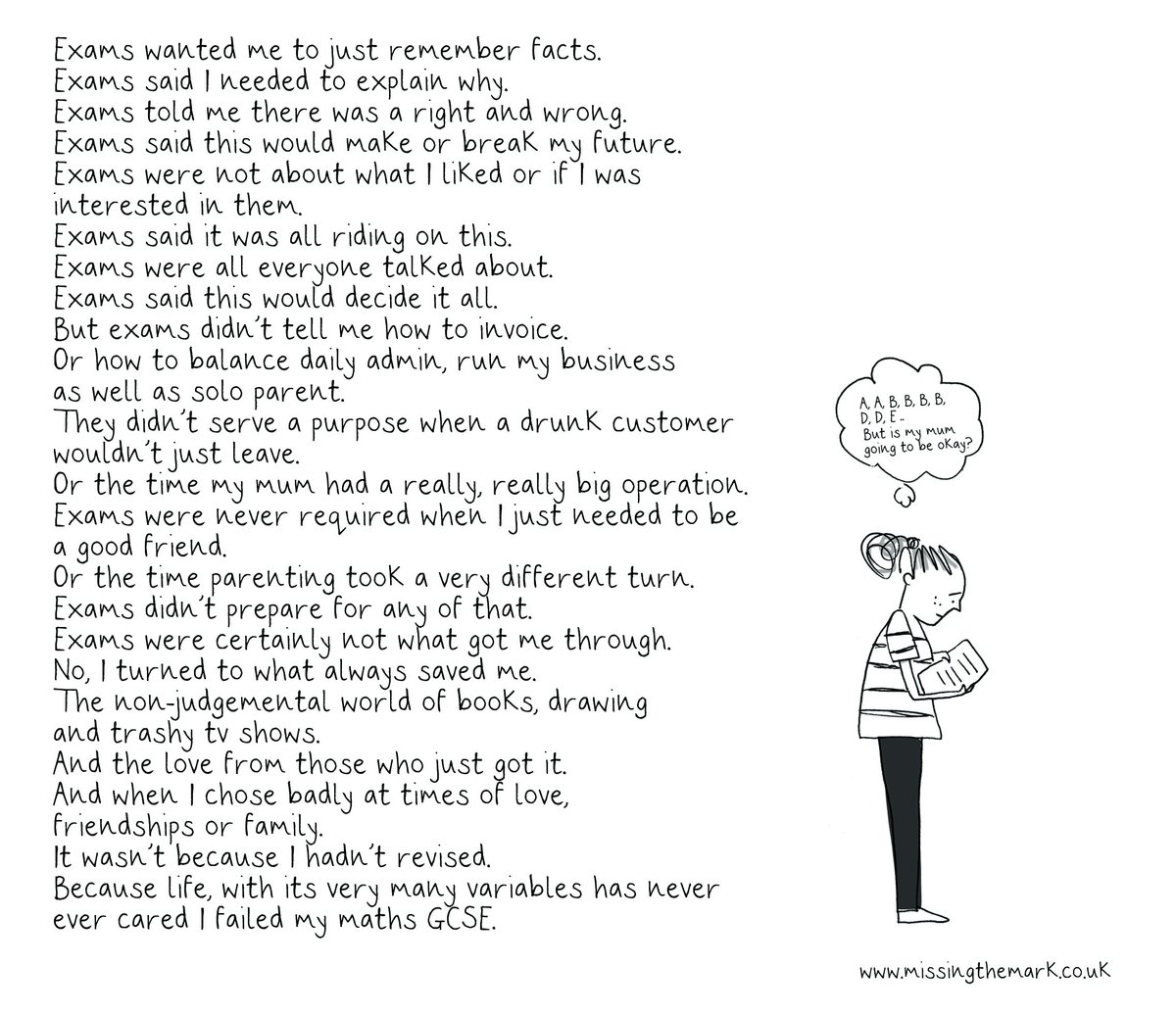
Exams will never prepare you for life.. Life will.
1
9
39
1,519
27 May 2025
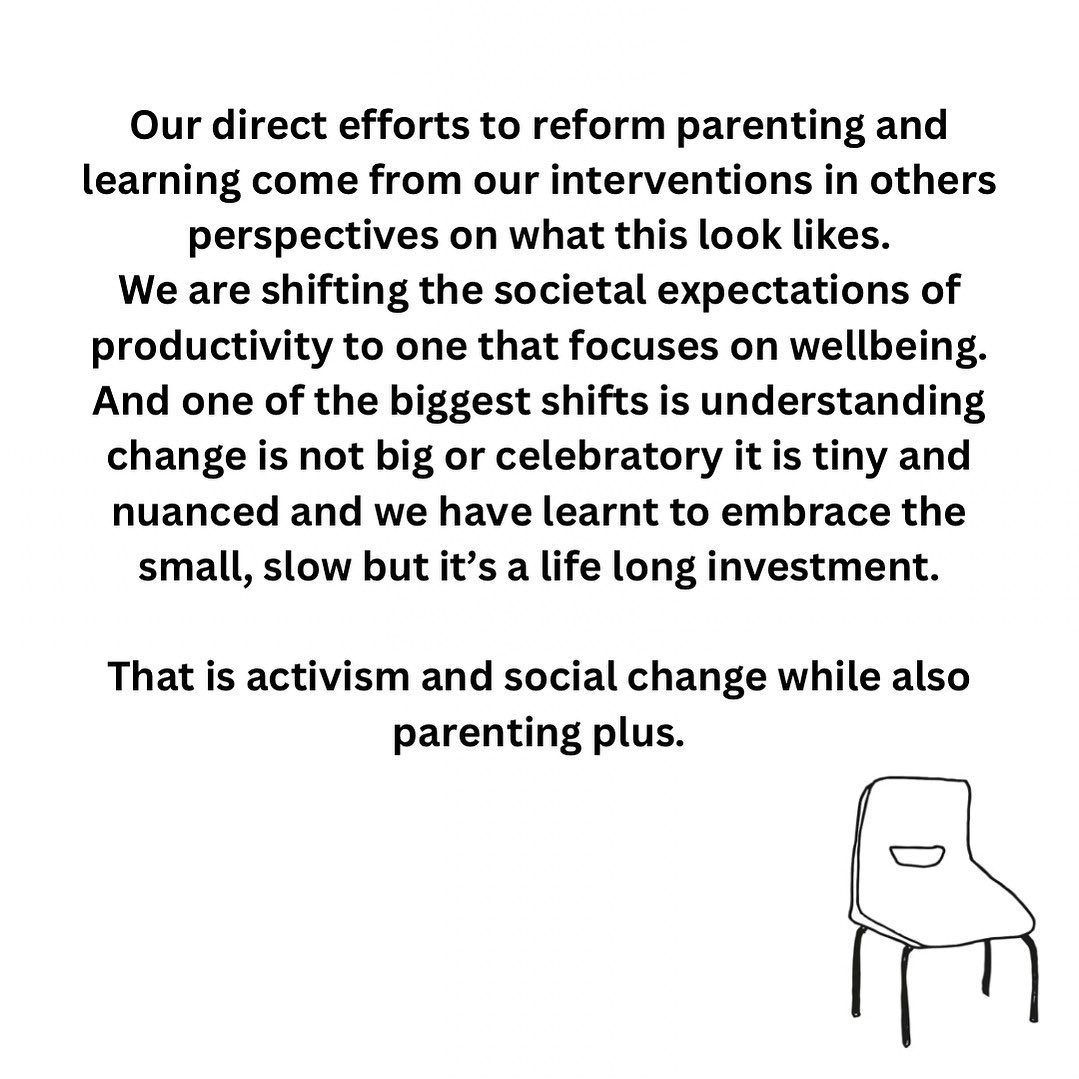
I went to talk this weekend with Rebecca Solnit, a writer, historian and activist.
She talked about the slowness of change and how we hold steady in uncertain times with hope and it got me thinking..
3
17
817
23 May 2025
My heart and head are full after my stay at Cambridge University.
This week I was invited back to finish our project on comics and autism.
The conversations and explorations were brilliant and mind expanding.
1
13
373
23 May 2025
We made plans to make more plans including lectures and more workshops in the near future.
As you know I wasn’t ready or able to take part in further education when I was younger so the opportunities they have given me in the last few years is feels amazing.
1
2
243
23 May 2025
Their support and encouragement makes my heart swell.
I can’t wait to come back in the autumn.
@DrJennyG
@JulieBailey222
3
229
Missing The Mark retweeted

17 May 2025
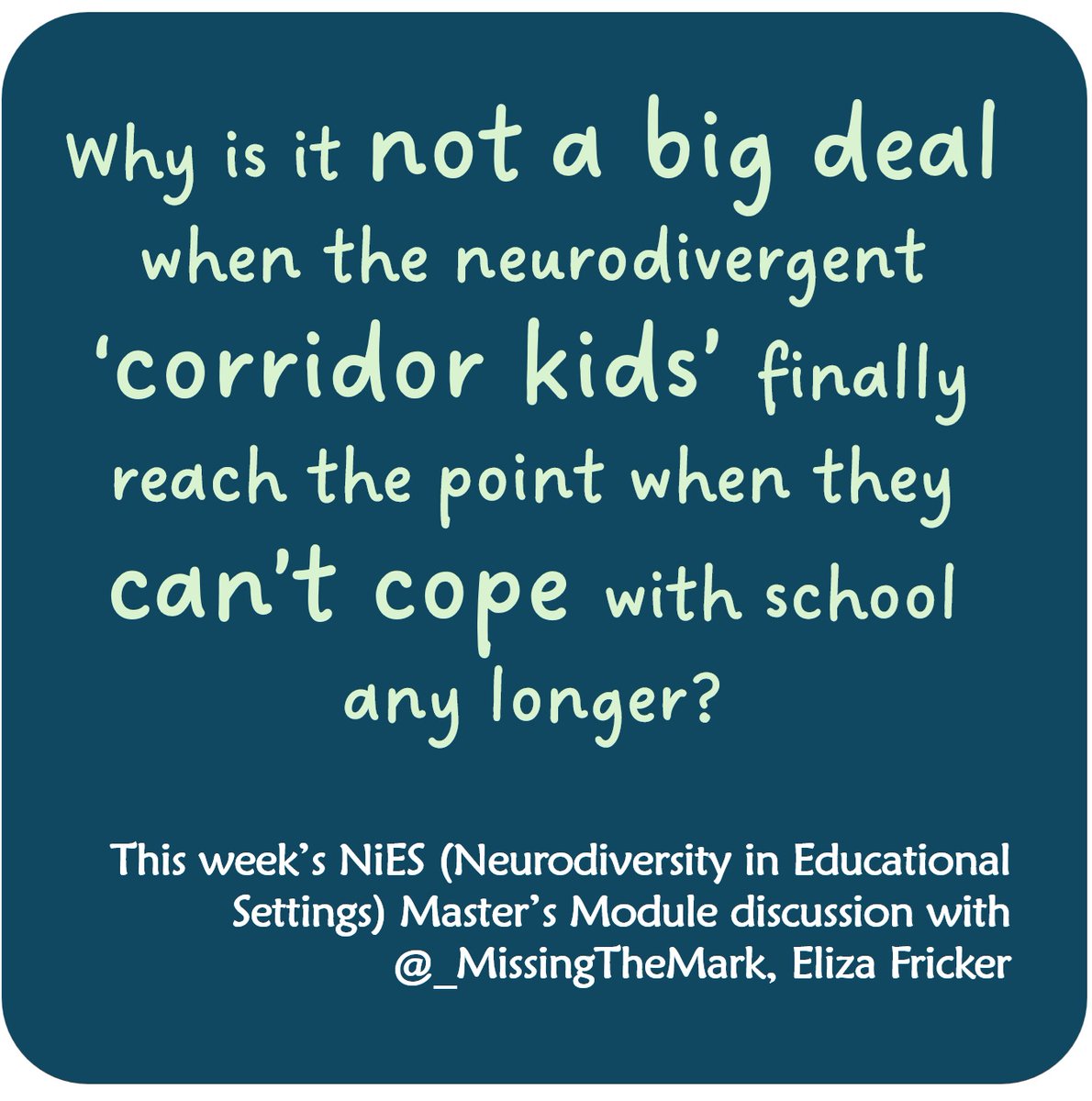
It was a delight to welcome Eliza Fricker @_MissingTheMark to the NiES (Neurodiversity in Educational Settings) Master’s Module @CamEdFac @DrJennyG last week, discussing why authentic trust and genuine relationships must be at the heart of inclusion for #neurodivergentlearners
1
1
4
413
12 May 2025
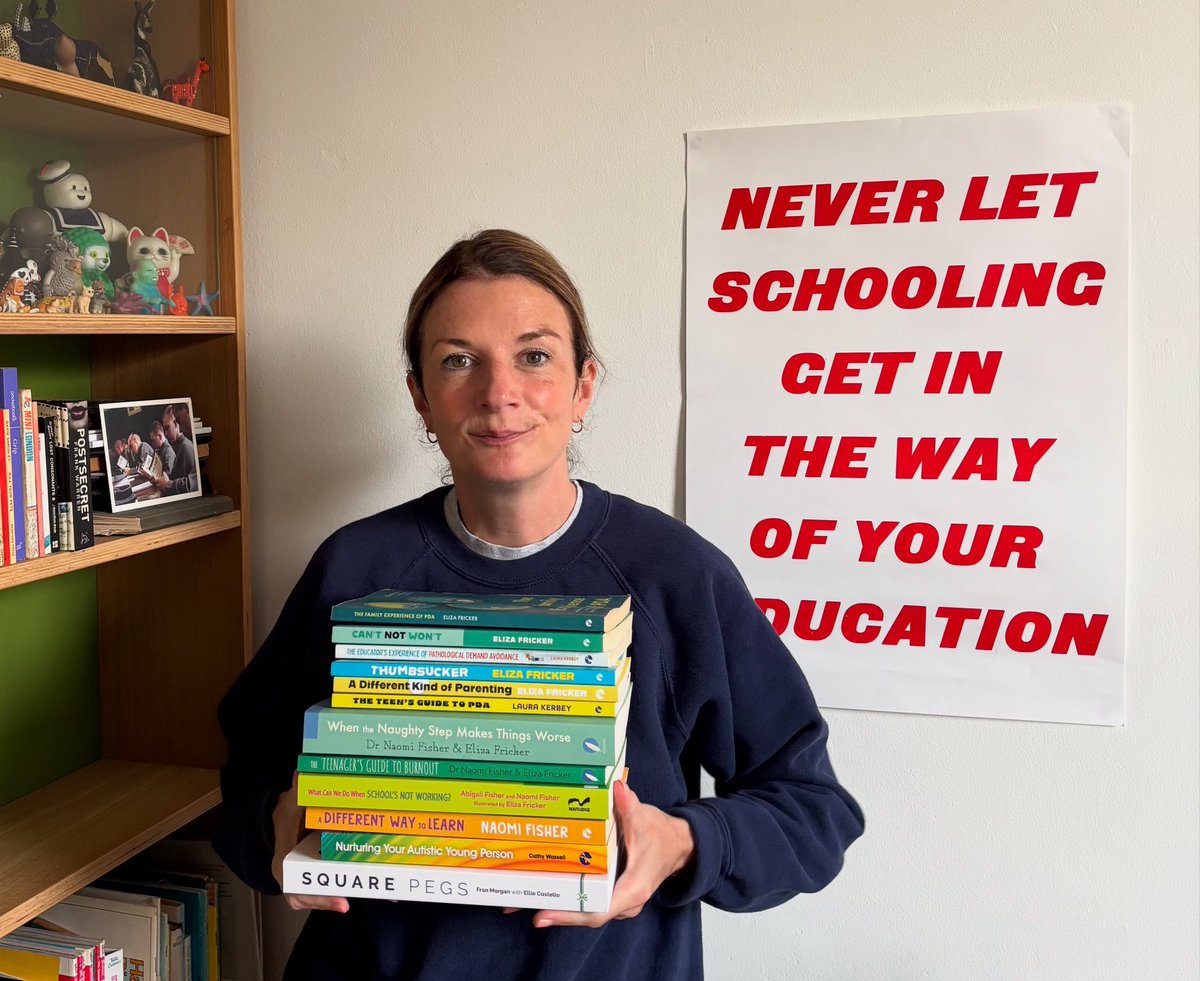
Here’s the books I’ve worked on so far.
They are all about neurodivergence, education and parenting.
I am a neurodivergent author as well as parent.
4
1
31
750
12 May 2025
I love my work and feel passion and authenticity are so important to the work I do, who I work with and what will best connect with our children.
Over the next week I’ll be sharing videos of each of these books I’ve worked on. 💕
1
1
253
12 May 2025
Ps. Books are and have always been one of my special interests they calm me and help me make sense of the world so I’m chuffed to bits I actually get to contribute to this world myself now!
2
237
28 Apr 2025
I was recently asked to talk about PDA for her new podcast.
We talk about the adjustments our children need to thrive.
The episode has a lovely title too: Draw the World Differently.
podcasts.apple.com/gb/podcas…
4
10
695
25 Apr 2025
Thanks for this video. This is all of us. The system that breaks us..
22 Apr 2025

From @theguardian.com and @arsprenga - looking at the challenges faced by #children and #families with #LearningDisabilities: youtube.com/watch?v=K21bENDS… #SEND #education
1
5
810
24 Apr 2025
Whatever it looks like, we don’t worry about the end result.
What you will know is I tried my best.
I didn’t rush.
(Learned a lot as I went)
Took all my time in the end.
1
4
216
24 Apr 2025
To put it right.
To mend it.
Put it back together again.
Repair what we lost for so long through all of that.
Us.x
4
188
24 Apr 2025
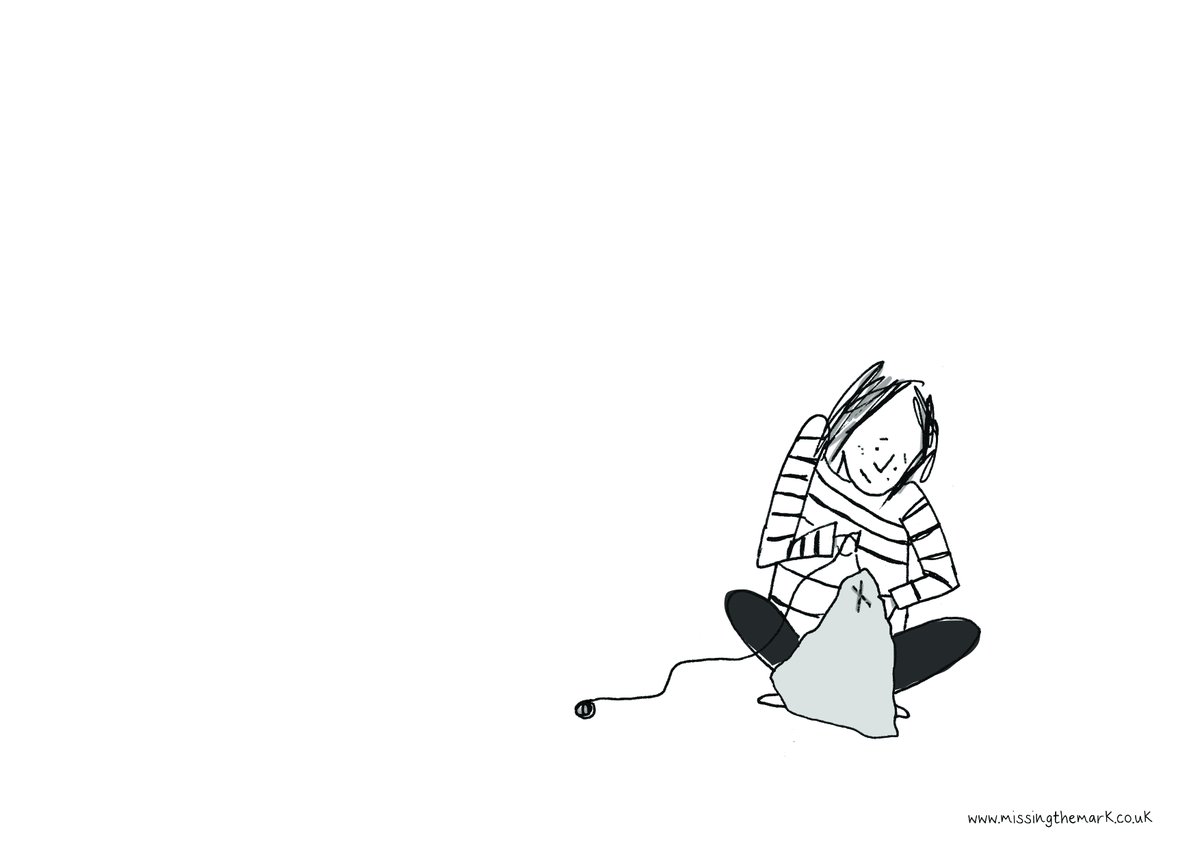
I’m not very good at it, never have been.
I’m all fingers and thumbs.
Clumsy.
Impatient.
But it’s important, the most precious thing.
So, I sit take my time.
No idea what I am doing really.
But I want to show you I can do it.
The main thing is it is done with love.
1
4
29
557