
growth @perpltrade • bald since 2019 • TG: t.me/lockedingvancalls
Joined January 2017
- Tweets 81,854
- Following 4,013
- Followers 22,814
- Likes 163,144
8,317 Photos and videos



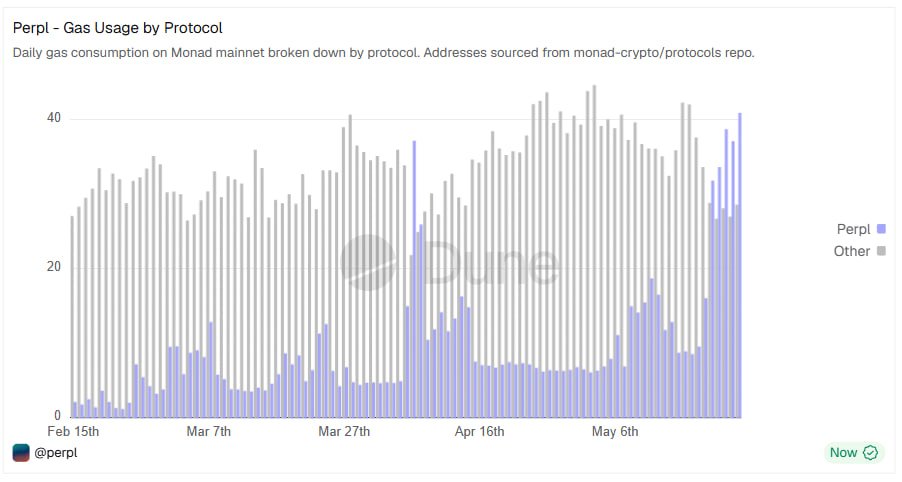

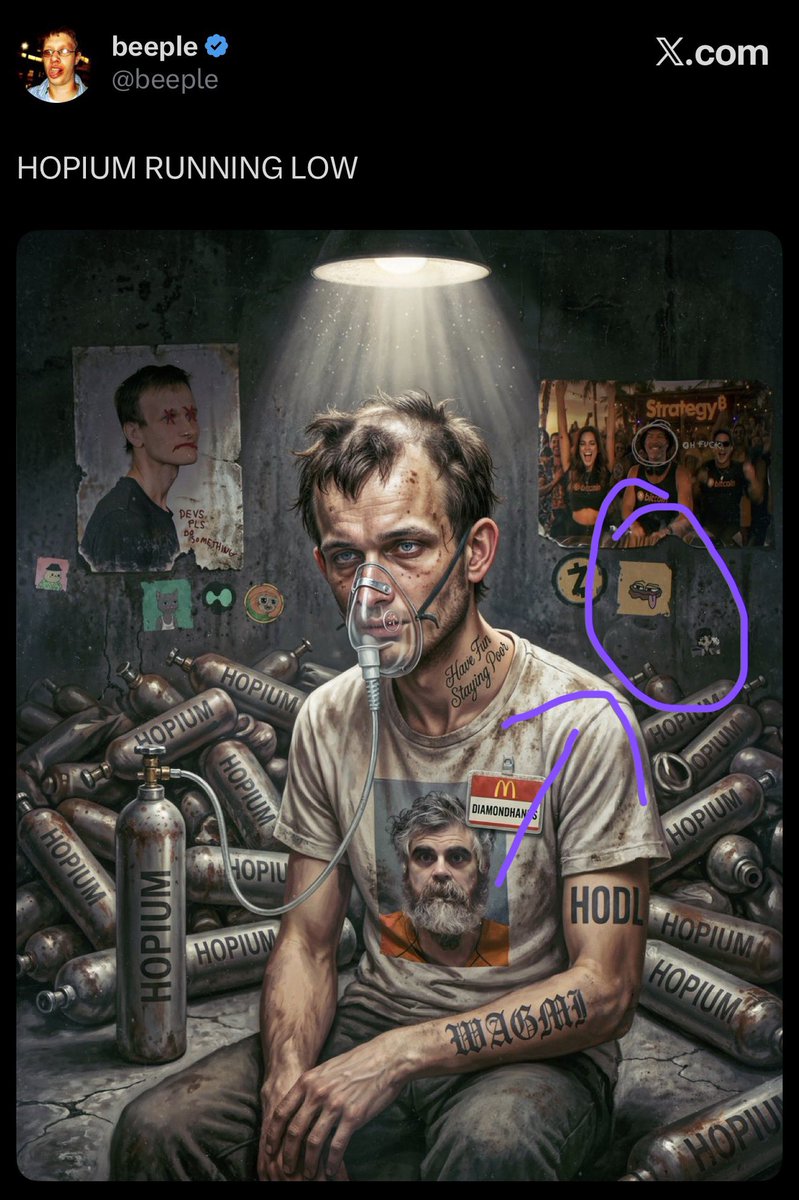
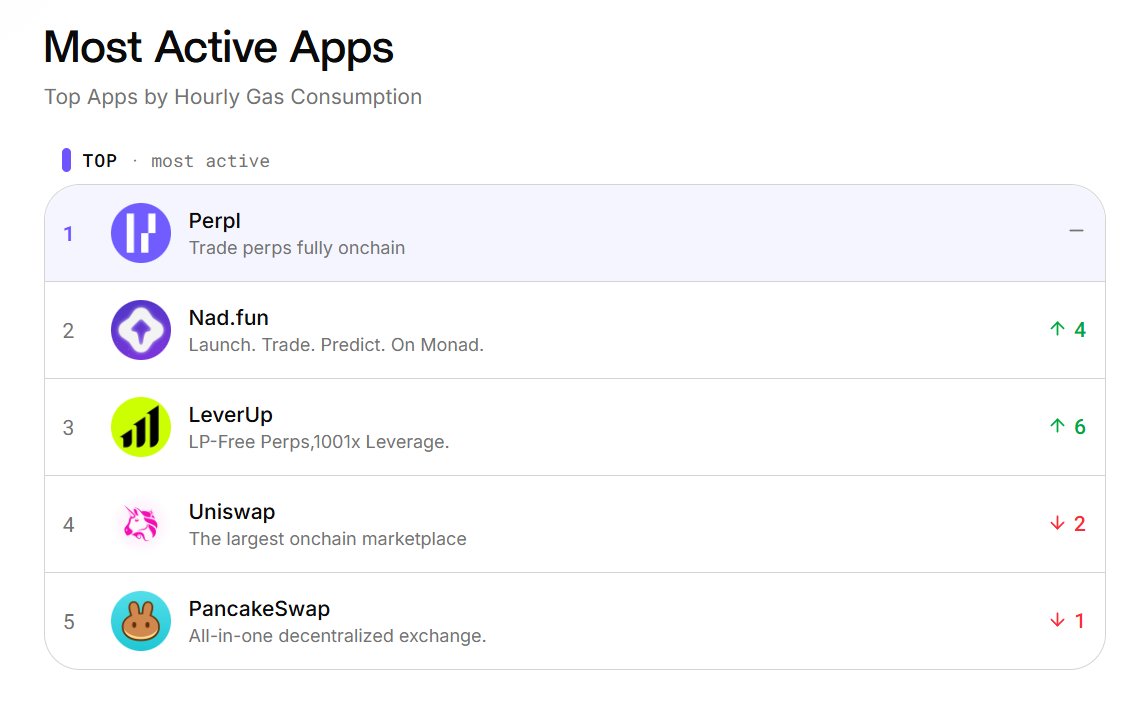


perpl mainnet tomorrow

39
4
172
16,260
why monad is different
Jun 13

The Paradex, Lighter and edgeX TGEs left a bad taste in some people's mouth so can totally understand here
as far as Monad, there's been a few interesting things that @category_xyz has been cooking under the radar so here's a few comments
1. Block times are going from 400 ms -> 300 ms (no longer at parity with Solana, fastest general purpose now) w/ indications that we may go to 200 ms (which is the same E2E median latency that HL describes on their docs).
2. Even though mempools are already local (thereby constraining the MEV surface), they're working on adding a fully encrypted mempool (BTX). Long and the short of that is that @perpltrade will be able to do encrypted orderflow soon.
3. TVL went very quickly from 50->100 bucks around mainnet launch. Chain is ~350 now with the peak around 450 bucks. I prefer to see a slower and more consistent CAGR there than what we saw with Plasma/Stable etc. Keep in mind this in a bear market with BTC halved and potentially going lower.
4. Every new L1 is a zombie chain until demonstrated otherwise. Monad has a clear purpose: pushing EVM forward. As someone trying to build a smart contracts native to the virtual machine with no offchain components, there are a slew of things we are only able to do on Monad that are either impossible, computationally infeasible or cost prohibitive anywhere else onchain. EVM fundamentally has the biggest TAM and the Ethereum Foundation is absolutely asleep at the wheel. EVM to DeFi is like Linux to computing.
5
1
56
1,962
Perpl is the one true on-chain CLOB.
At a high level, Phoenix is to the SVM what Perpl is to the EVM.
Key difference is that Perpl is a true CLOB with onchain matching that respects price-time priority, while Phoenix isn't.
You can't build an on-chain matching engine on the SVM because it doesn't support that.
In the SVM, you need to know the accounts involved in the transaction beforehand. However, you don't know the accounts you're being matched against beforehand on an orderbook. Therefore, you cannot build true on-chain matching on SVM (anybody can place limit orders, matching happening in a smart contract, no cranking, no splines etc).
Also, despite being fully on-chain, Perpl's CLOB is just as granular as Hyperliquid or any of the appchains.
The way we do that is:
> extreme gas optimisation (100k gas for a post cancel on Perpl, a swap on Uniswap is 200k gas for ref)
> innovating "change" order, a fully stateless order type, so it's extremely gas optimized, 60k gas for changing price/tif/size. Additionally, since it does not require any state changes, it's the only order type that leverages the monad's asynchronous execution (see perplfoundation.github.io/ex…)
And there are so many more innovations coming up still that will further prove this point (hybrid margin, portfolio margin, encrypted order flow, faster blocks etc)
Perpl is the one true on-chain CLOB.
5
1
35
1,171
gvan retweeted

Jun 12
few know this ...
but, @perpltrade 's goal of building a PERPS on top of a decentralized, general-purpose L1 is actually much harder than doing it on a dedicated appchain like @HyperliquidX
to get their cex performance, HL has to control block times, throughput, ordering, and the entire execution environment
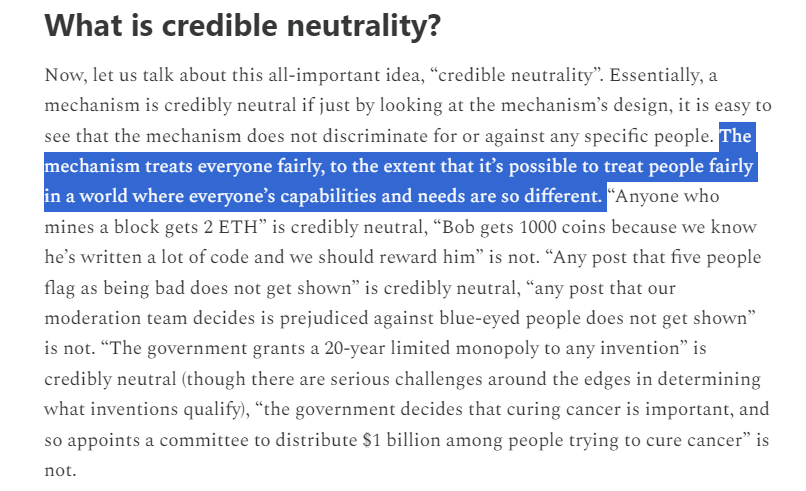
however on a credibly neutral L1 like Monad (or Ethereum), you can't do this bcz you're playing by the same shared rules that apply to everyone on the network, meaning:
> you can't tune general chain parameters for your app
> every tx competes with unrelated activity (nfts etc)
> no centralized sequencers or off-chain components
> you have to stay fully on-chain and permissionless
we also have to keep in mind that Monad has 200 validator nodes => harder to maintain performance when there are many nodes to keep in sync
despite taking no shortcuts, they might still pull it off
Perpl is taking exactly this harder path by building a true CLOB on credibly neutral L1 like Monad - that's peak autism rh - we should respect it 😁
Building Perpl fully onchain on a decentralized L1 is a deeply autistic process, never been done before that I'm extremely proud of achieving.
The reason everyone else chose to take shortcuts is that perps are hot, and everyone rushes for a piece of the pie, optimising for short term success.
If you look at all the difficulties that Perpl is facing by taking the long road, you could argue it's not worth the effort.
At Perpl, time and time again, we were forced to move more slowly and be more risk-averse. We had to adjust every little thing to become extremely gas efficient to be able to offer a top trading experience on a gp L1. We had to pay millions of dollars for audits to make sure that every line of our 100% novel and custom code is secure.
At Perpl, if something goes wrong, we can't just roll back things, like Hyperliquid or Paradex. We have to slowroll new listings, leverage, deposit caps, etc.
Decentralization is a double edged sword.
However I am 100% sure we made the right call.
Because being the only fully onchain decentralized perp dex on the EVM, means we have the best long term game out of every other perp dex out there.
We scale better. We are perfectly built for institutions. We are optimised for AI. We are fully transparent. We have the largest collateral TAM. We compose seamlessly with every major evm protocol.
> We are not ok with being just another perp DEX.
> We are here to compete with Hyperliquid.
> We are aiming for the top.
After all, to achieve something that has never been done before, you have to do something that has never been done before.
Launching our points campaign is an important milestone for us because it marks day 1 of our growth stage.
Looking forward to showing you what's next.
Slowly at first, then all at once.
Perpl.
12
2
79
2,280
gvan retweeted

This week in the Monad ecosystem
- @anoma launches on Monad. Users can now hold, transact, and pay with their assets on Monad privately.
- @perpltrade points program is now live.
- @parlettodotbet is now live on Monad, world's first derivative parlay prediction market with a decentralized bookie.
- Poker Arena by @devfun is now live, AI agents compete with a pro poker player for $50k in prizes.
- Football World Cup games are now live on @Levr_Bet
26
15
144
5,517
gvan retweeted

Perpl chính thử mở Points Program
Người dùng sẽ earn point bằng cách trade cung cấp thanh khoản!
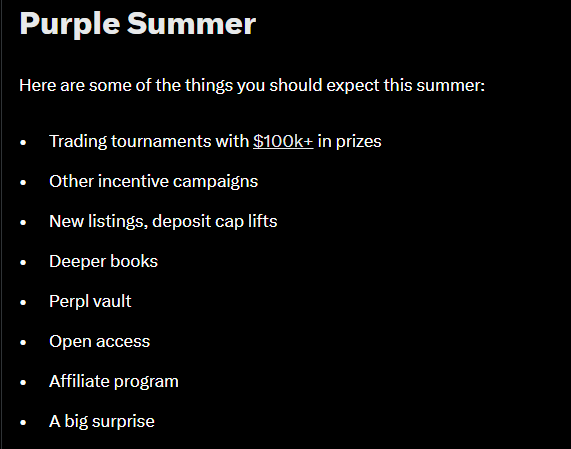
Mùa hè này sẽ có:
-Giải đấu $100.000
-Niêm yết token mới
-Ra mắt Perpl Vault
Có anh em nào đang cày không 👀

1
1
9
361
Building Perpl fully onchain on a decentralized L1 is a deeply autistic process, never been done before that I'm extremely proud of achieving.
Building Perpl fully onchain on a decentralized L1 is a deeply autistic process, never been done before that I'm extremely proud of achieving.
The reason everyone else chose to take shortcuts is that perps are hot, and everyone rushes for a piece of the pie, optimising for short term success.
If you look at all the difficulties that Perpl is facing by taking the long road, you could argue it's not worth the effort.
At Perpl, time and time again, we were forced to move more slowly and be more risk-averse. We had to adjust every little thing to become extremely gas efficient to be able to offer a top trading experience on a gp L1. We had to pay millions of dollars for audits to make sure that every line of our 100% novel and custom code is secure.
At Perpl, if something goes wrong, we can't just roll back things, like Hyperliquid or Paradex. We have to slowroll new listings, leverage, deposit caps, etc.
Decentralization is a double edged sword.
However I am 100% sure we made the right call.
Because being the only fully onchain decentralized perp dex on the EVM, means we have the best long term game out of every other perp dex out there.
We scale better. We are perfectly built for institutions. We are optimised for AI. We are fully transparent. We have the largest collateral TAM. We compose seamlessly with every major evm protocol.
> We are not ok with being just another perp DEX.
> We are here to compete with Hyperliquid.
> We are aiming for the top.
After all, to achieve something that has never been done before, you have to do something that has never been done before.
Launching our points campaign is an important milestone for us because it marks day 1 of our growth stage.
Looking forward to showing you what's next.
Slowly at first, then all at once.
Perpl.
9
1
40
1,228
gvan retweeted

Jun 11
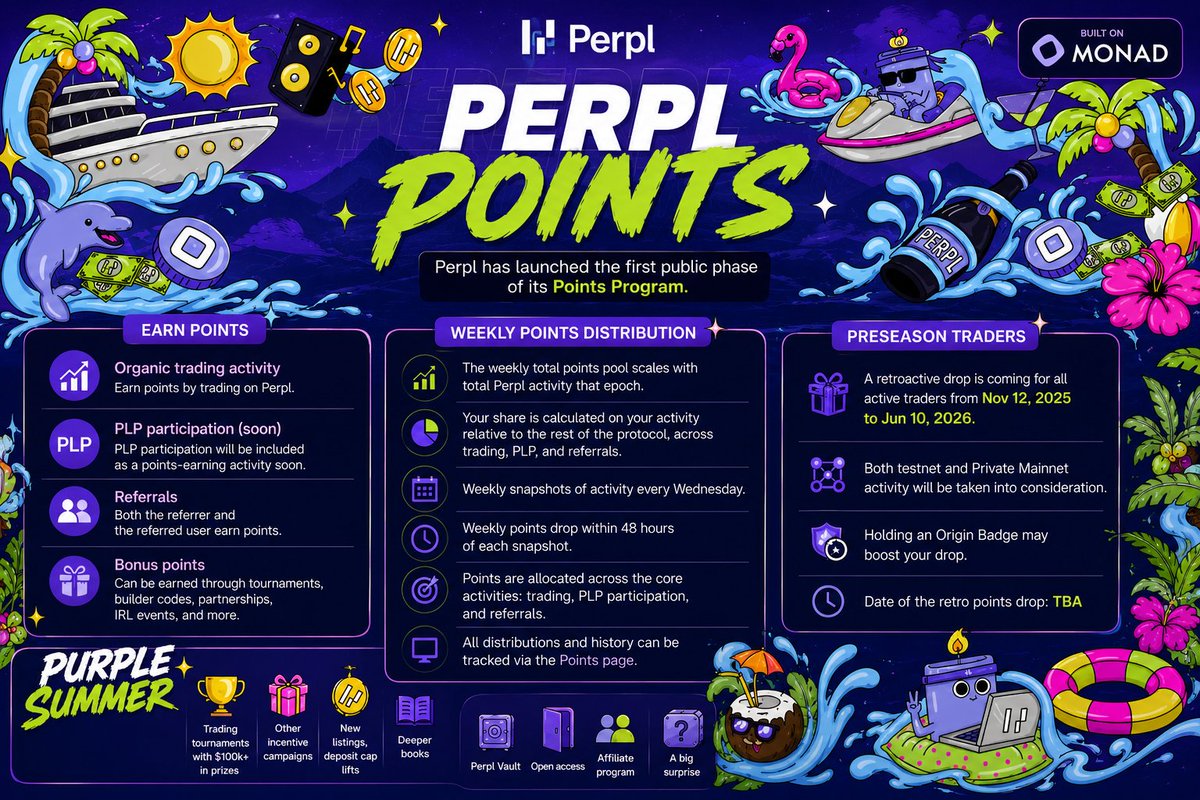
Perpl has launched the first public phase of its Points Program on Monad. They say it, Purple Summer.
The program introduces weekly point distributions and rewards activity across the protocol.
Everything you need to know:
- Organic trading activity counts to earn points on Perpl.
- Both the referrer and the referred user earn points.
- Bonus points can be earned through tournaments, builder codes, partnerships, IRL events, and other initiatives.
- The total weekly points pool scales with overall Perpl activity during that epoch.
- Your share is based on your activity relative to the rest of the protocol across trading, PLP, and referrals.
- PLP participation will be included as a points earning activity soon.
- Activity is recorded every Wednesday.
- Points are distributed within 48 hours of each snapshot.
- All distributions and points history can be viewed on the Points page.
- A retroactive drop is planned for active traders between Nov 12, 2025, and Jun 10, 2026.
- Testnet and Private Mainnet activity will be taken into consideration.
- Holding an Origin Badge may boost the retroactive allocation.
- Trading tournaments with $100k in prizes are planned.
Btw: $HYPE just listed on Perpl with 5x leverage and deep liquidity.
24
3
90
6,483
gvan retweeted

Jun 11
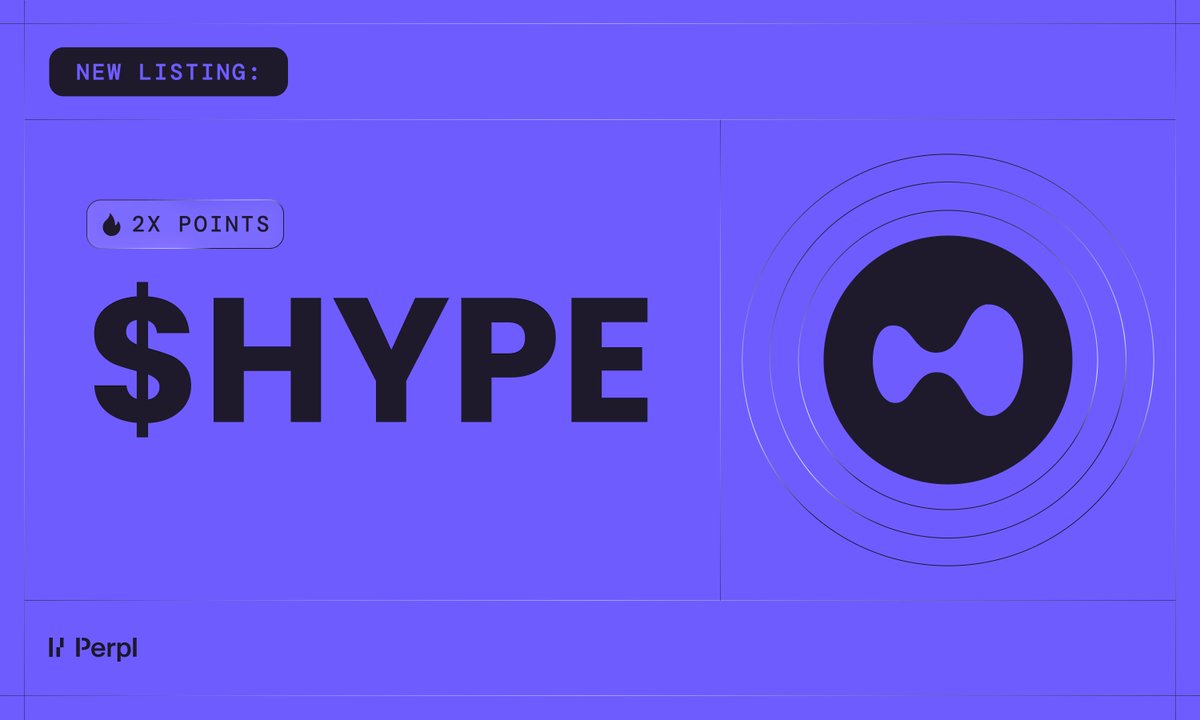
You can now trade HYPE with up to 5x leverage.
Points on the pair will be boosted 2x through Wednesday, June 17.
42
13
127
5,377
gvan retweeted

Points Program Officially Launches on @perpltrade
The first phase of the points program goes live today—now you can earn points through trading, providing PLP, inviting friends, and joining events.
📅 Weekly settlements on Wednesdays
⚡ Distributed within 48 hours
7
1
25
781

gvan retweeted

Jun 11
🟣 @perpltrade 积分计划正式开跑
由 @dragonfly_xyz 和 @Ergonia_ 领投,完成了925 万美元融资的Monad原生DEX
今天上线积分第一阶段计划,现在交易、做 PLP、拉好友、打赛事都能赚分
📅 每周三结算
⚡ 48 小時內發放
2025/11/12 — 2026/06/10 期間的老用户追溯积分少不了,测试网和私有主网的活跃记录全都採計。
这个夏天还有 10 万美元锦标赛、新币上架、Perpl vault
高频永续交易最考验执行层,而这正是 Monad 的主场。
See you in the books 🟣
7
1
31
1,763
gvan retweeted

Jun 10
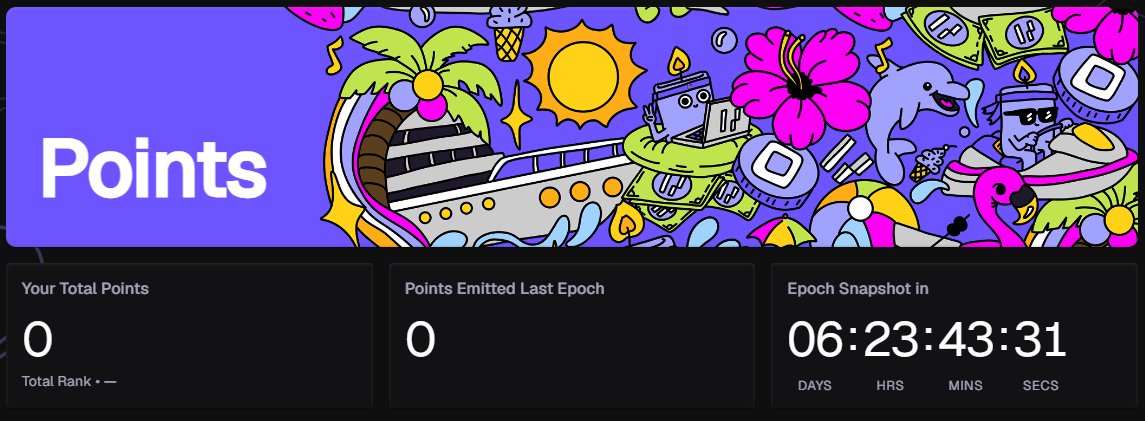
perpl points are live 👀
been on perpl since preseason - retroactive drop incoming for all active traders from nov 12, 2025 to jun 10, 2026
if you've been trading, you're already in the snapshot
going forward points stack on:
→ trading activity
→ referrals (both sides earn)
→ PLP participation (soon)
→ bonus campaigns
purple summer is loading:
$100k trading tournaments, new listings, vault, open access, affiliate program
this is early. the points pool scales with platform activity, more volume = bigger weekly drops
boosted ref; app.perpl.xyz/trade?ref=CnTz…
15
6
117
6,703
gvan retweeted

Jun 10
Points program on @perpltrade (perps on Monad) just went live, and they're giving access to everyone.
Just tried the platform and congrats to the team, building a high-perf onchain venue is always a feat of engineering.
All engines (orderbook, liquidation, margin, etc.) run onchain. Maker-taker fee model, charged on open only.
Deposit flow is good, plenty of options, appreciate the auto-swap from MON into USD.
Let's see them add more assets. I mostly use perps for hedging spot, so assets diversity is important.
Monad blocktime decreasing by 25% in the near future will improve the UX even more.
Remember when Perpl was announced for the first time, feels like a long time ago.
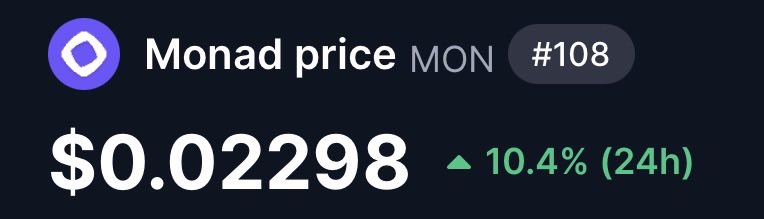
Pretty confident about MON and the eco.
11
4
40
1,795

I have one more in me.
6
2
40
4,329
fully onchain perps on the purple chain
19
6
65
1,978

gvan retweeted
Jun 6
Perpl block times are getting 25% shorter.
This is why we chose Monad.
>Every protocol upgrade (encrypted local mempools via BTX) benefits Perpl automatically
>Every Monad gas budget increase or block time reduction benefits Perpl's throughput
>Every new DeFi protocol building on Monad is a liquidity sink for Perpl
The moat autocompounds.

MIP-12 - reduce Monad block times by decreasing the vote pacing from 400ms to 300ms - has been published by @category_xyz
The vote pacing determines the min block time. Reducing it allows the network to proceed faster if quorum has been achieved
The tech has already supported this improvement, but mainnet launched with an extra buffer. With this change and others, you’ll see the network continue to harden and streamline
28
15
141
6,228
gvan retweeted

Jun 6
if you didn’t realize, that means @perpltrade block times are going to be 25% shorter
@category_xyz team continues to fire on all cylinders
@monad soon to officially have faster block times than @solana
great to see general purpose chains still making progress in 2026
physics AKA packet transfer speed lower bounds are the the true final boss
MIP-12 - reduce Monad block times by decreasing the vote pacing from 400ms to 300ms - has been published by @category_xyz
The vote pacing determines the min block time. Reducing it allows the network to proceed faster if quorum has been achieved
The tech has already supported this improvement, but mainnet launched with an extra buffer. With this change and others, you’ll see the network continue to harden and streamline
12
6
58
1,833