
Joined March 2025
- Tweets 1,263
- Following 306
- Followers 394
- Likes 2,953
82 Photos and videos












Jon Cipher retweeted

The biggest weakness of centralized AI is simple:
Someone can decide who gets access.
A government can restrict it.
A company can revoke it.
A policy can change overnight.
Connito is built on a different idea.
Instead of relying on a single gatekeeper, intelligence improves through decentralized competition. No single company owns it. No single authority controls it.
The future of AI shouldn’t depend on permission.
It should depend on merit.
@connitoai #ConnitoAI #SN102 #Bittensor #TAO #DecentralizedAI #AI
2
3
122
$TAO Decentralised and Open ⬇️⬇️
Anthropic’s Centralized Reckoning: A Massive Bullish Catalyst for Bittensor ($TAO)
June 2026
The AI arms race just delivered rocket fuel for decentralized intelligence.
US Commerce Department export controls forced Anthropic to shut down access to its hot new frontier models — Fable 5 and Mythos 5 — for everyone. National security, dual-use risks, agentic capabilities. A fresh launch, instantly kneecapped by regulators.
Classic centralized fragility.
Labs like Anthropic and OpenAI live under one roof and one set of government strings. Export bans, forced guardrails, sudden shutdowns — one directive from Washington and frontier access vanishes. Downtime, geopolitics, and opacity plague users and enterprises alike.
Why This Supercharges Bittensor ($TAO)
Bittensor is the antifragile alternative: a permissionless, global network of machine intelligence powered by nodes, miners, and subnets. No single point of failure. No government can flip the switch.
This event accelerates everything:
• Censorship Resistance: Bittensor routes around bans and controls. Subnets push real capability while the network stays open and resilient.
• Narrative Explosion: Centralized vulnerabilities scream why decentralized AI wins. Expect surging builder interest, enterprise adoption, and capital rotation.
• Token Momentum: With $TAO now seamlessly tradable on Solana via Wormhole, liquidity surges. Rising demand for decentralized compute drives staking, emissions, and value accrual — TAO as the fuel of the intelligence economy.
• Macro Tailwinds: In an AI capex frenzy full of losses and regulatory traps, Bittensor distributes innovation and incentives perfectly.
Centralized labs bend to the state. Bittensor thrives beyond it. This is a defining moment — the flywheel is accelerating hard toward open, incentivized intelligence.
Risks exist (subnet execution, volatility), but the architecture is built for this world.
Bottom Line: This Anthropic shutdown is emphatically bullish for $TAO. It doesn’t just validate the decentralized thesis — it exposes the structural weaknesses of centralized labs in real time, driving a clear narrative shift as developers, enterprises, and capital seek resilient alternatives. Bittensor emerges stronger, with its permissionless model perfectly positioned to capture the next wave of AI adoption amid regulatory pressure and geopolitical risks. The intelligence economy belongs to the open network.
Stay positioned — momentum is building fast.
#Bittensor #TAO #DecentralizedAI #AICrypto #Crypto #Solana #SOL #AI #Blockchain #Web3 $TAO $SOL
4
8
37
1,126

Jun 12
$TAO Rising Tide! ⬇️⬇️
Bittensor Subnet Alphas: Lifting Baselines in a Maturing dTAO Ecosystem
The Bittensor network – specifically the subnet alphas under the dTAO framework – shows something compelling unfolding in the decentralized AI (DeAI) narrative.
Rather than focusing solely on TAO’s price action (currently trading around $211–215, market cap in the $2B range), the real story is this: subnet alphas are demonstrating resilience, capital inflows, and valuation strength that outpaces what we saw a few months ago at similar TAO levels. This “lifting of baselines” across the ecosystem signals maturation in Bittensor’s incentive markets.
If TAO were at March–April 2026 levels (often $300 ), collective subnet market caps would look even stronger. That relative outperformance points to growing conviction in the subnet layer as a value creator beyond the core token.
The dTAO Mechanics: Market-Driven Evolution
Dynamic TAO (rolled out around February 2025) shifted emissions to capital allocation. Each of the 128 active subnets now has its own alpha token paired with TAO in AMM liquidity pools.
• Stake TAO → receive alpha.
• Stronger inflows → higher alpha price → greater emissions share.
Market voting at work. Baselines (performance floors, pricing stability, activity) are lifting as productive subnets draw liquidity and deliver real utility in compute, inference, vision, training, and agents.
Total subnet valuations hover around τ1.33 (hundreds of millions USD equivalent), with leaders like Chutes (SN64), Targon, and Affine commanding serious caps.
Positive Signals: Growth Despite TAO Consolidation
At higher TAO prices earlier, cumulative subnet caps peaked near $1–1.5B equivalent. Now, with TAO pulled back, the ecosystem holds firm. Highlights:
• Inflows & Emissions: Strong flows, liquidity, and market-driven rewards favoring utility.
• Activity & Utility: Progress in training, inference, vision, and agents — plus bridges like TAO on Solana via Wormhole.
• Flywheel: More subnets viable, with discussions of expansion. Deeper capital efficiency in DeAI infrastructure.
Early-stage building where decentralized incentives could edge out on cost, privacy, and innovation.
Risks and the Bear Case
Alpha pools face slippage. Many subnets remain speculative. Top-heavy distribution and broader crypto/AI cycles bring execution and regulatory risks. Not every alpha will sustain revenue.
Conviction Angle
Leaders like Chutes (compute/inference) and agent-focused plays stand out. Strategies include broad staking or targeted alphas. Bittensor acts as market-selected DeAI infrastructure — if a handful scale, network effects compound. Still early, with improving on-chain metrics.
Bottom Line
Lifting baselines for Bittensor subnet alphas are a bullish tell. Even as TAO consolidates, the value layer builds substance through capital allocation, proven utility, and rising activity across the 128 subnets — reflecting deeper ecosystem conviction and a maturing flywheel in DeAI. This setup rewards patience and selective positioning for those who see decentralized incentives as a long-term edge in AI infrastructure.
Monitor taostats.io and emissions closely. Volatility is the feature.
DYOR. Not financial advice. Crypto and DeAI are highly volatile.
#Bittensor #TAO #dTAO #DeAI #Crypto #Solana #AI #DeFi $TAO $SOL $BTC #Web3 #Blockchain
1
4
14
1,104
Jon Cipher retweeted

Jun 11
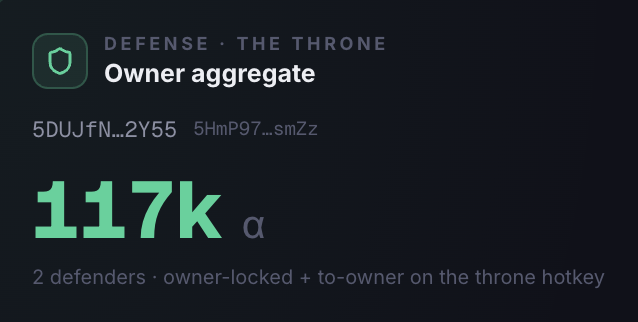
Conviction Update: To make up for the delay, we have completed a lock of 59,000 Ditto Tokens.
This makes a total of 117K Tokens being locked to the Team.
More locked in than ever!
May 29

Ditto will be locking 40,000 alpha into conviction.
For context, this is 100% of the alpha owned by the team.
Ditto is forever.
This is our conviction.
8
9
74
5,288
Jun 11
$TAO The Alpha Beast ⬇️⬇️
Why ConnitoAI (SN102) Is One of the Absolute Sharpest, Most Explosive Asymmetries SCREAMING in Bittensor Right Now 🔥🧠🚀💥
Let’s cut straight through the noise.
While most subnets are out here chasing weak narratives, quick emissions, and flavor-of-the-month hype, ConnitoAI is flat-out BUILDING THE FUTURE — a hardcore decentralized architecture that cracks one of the biggest puzzles in all of AI: delivering specialized, continuously improving MoE models that actually scale, compound, and deliver real-world edge.
The whitepaper (“Connito: Decentralized Composable MoE”) already dropped the crystal-clear blueprint. But the upcoming formal research paper? That’s the absolute monster catalyst ready to send shockwaves through the entire ecosystem. Deeper benchmarks, ironclad Proof-of-Loss proofs, full composability breakdowns, and direct head-to-heads against centralized training. When it lands — BOOM — credibility explosion, serious attention, and capital rotation incoming. 📜💥
What They’re Shipping Right Now Is Straight Fire
• Sparse Expert Selection: Only the relevant specialist shards get updated while everything else stays frozen and ultra-efficient.
• In-place ESFT Breakthrough: Already live and absolutely crushing — 5× less memory, 4× faster training, just ~20% active parameters, and full accuracy preserved. This is game-changing efficiency on affordable hardware that actually makes decentralized training viable. 🚀💪
• Proof-of-Loss Composable Merging: Miners train locally. Validators reward only real, measurable gains. Quality updates merge into a growing library of reusable experts with zero catastrophic forgetting. This is brain-like modularity on absolute steroids. 🧠🛠️
This is precisely what the next wave of private data-loop models, agents, and vertical AI winners are starving for. The specialized flywheel is spinning harder every single week. 💡
The Alpha Setup Is Practically Yelling At You
Healthy network. Blazing iteration speed. Still tiny market cap. Juicy staking APY while the broader market is sleeping on it hard. The research paper is the near-term spark ready to wake the entire crowd up.
This is PRIME alpha territory — the exact kind of setup where getting in early can deliver massive, asymmetric moves. Real technical progress is dropping consistently, the whitepaper gives the full roadmap, and once the research paper hits TaaS traction kicks in? This thing can rerate violently fast in any TAO strength. 💰🌊
The specialized MoE beast has been evolving in silence — sharpening its experts, strengthening its Proof-of-Loss defenses, and preparing for the next leap. The research paper will be the signal. The TaaS flywheel will be the fuel.
It’s time to RELEASE THE KRAKEN. 🐙⚡️💥🌊
Bottom Line
ConnitoAI isn’t screaming for attention — it’s too busy delivering cold, relentless execution. They’re forging the decentralized specialization layer that turns open models into continuously smarter, commercially unstoppable powerhouses.
If you believe own-your-data specialized models are the real endgame (and they 100% are), SN102 is one of the cleanest, highest-conviction asymmetric rockets still available in the entire Bittensor ecosystem. Get positioned before the research paper drops and the crowd rushes in.
The beast is awakening.
You in, or you watching from the sidelines? ⚡️🚀🐙
$TAO $SN102 $SOL
#ConnitoAI #SN102 #Bittensor #TAO #DecentralizedAI #CryptoAI #AIAgents #Web3 #Solana
1
1
3
308
Jun 11
$TAO The Beast Stirs 👀👀
Why ConnitoAI (SN102) Looks Like One of the Sharpest Asymmetries in Bittensor Right Now 🔥
Let’s cut through the noise.
Most subnets are still chasing narrative or emissions. ConnitoAI is quietly executing on a real architecture that solves one of the hardest problems in decentralized AI: making specialized, continuously improving MoE models actually work at scale. 🧠
The whitepaper (“Connito: Decentralized Composable MoE”) already laid out the vision clearly. Now the upcoming formal research paper is the catalyst everyone should have on their radar. It’s expected to deliver deeper benchmarks, formal Proof-of-Loss proofs, detailed composability mechanics, and early head-to-head comparisons with centralized training. That paper will be a major derisking and credibility event. 📜⚡️
What They’re Actually Building
• Sparse Expert Selection: Only update the relevant specialist shards while freezing the router, shared parameters, and background experts.
• In-place ESFT Breakthrough: Already live — 5× less memory, 4× faster training, just ~20% active parameters (3.11B out of 15.7B), with full accuracy preserved. 🚀
• Proof-of-Loss Composable Merging: Miners train locally on affordable hardware. Validators measure real improvement. Quality updates merge back into a growing library of reusable experts — no catastrophic forgetting. 🛠️
This is brain-like modularity at the subnet level: efficient specialization that compounds over time. Perfect for the shift toward private data-loop models that vertical apps and enterprises actually need. 💡
The Alpha Setup Right Now
Network is healthy and iterating fast. Tiny market cap. High staking APY potential while still early. The research paper landing soon should act as a strong near-term trigger.
This is the kind of setup where alpha feels perfect for entry. Real technical progress is already shipping, the whitepaper provides the map, and the research paper will likely bring broader attention. When TaaS starts showing traction on top of that, things can rerate very fast in a TAO-friendly environment. 💰🚀
Bottom Line
ConnitoAI isn’t loud — it’s deliberate. They’re building the decentralized specialization layer that turns open models into something continuously better and commercially useful. 🐙
If you believe specialized, own-your-data models are the real endgame, SN102 is one of the cleanest ways to play it with asymmetric upside still on the table.
$TAO $SN102 $SOL
#ConnitoAI #SN102 #Bittensor #TAO #DecentralizedAI #CryptoAI #AIAgents #Web3 #Solana
2
1
8
662
Jun 11
$TAO Sleeping Giant ⬇️⬇️
🚨ConnitoAI SN 102 - Upcoming Research Paper on the Horizon🚀🚀
Listen up. The whitepaper for ConnitoAI (SN102) — “Connito: Decentralized Composable MoE” — lays out a clear, executable framework, and the team is executing on it in real time. The upcoming formal research paper will be the major credibility catalyst that takes this to the next level.
The Core Framework (Straight from V1 Whitepaper)
Connito introduces a decentralized framework for sparse MoE adaptation. Instead of full-model retraining on giant clusters:
• Sparse Expert Selection: For any target domain, only a small subset of relevant experts gets updated while the shared parameters, router, and background experts stay frozen.
• Local Training Proof-of-Loss: Miners train selected expert shards locally on affordable hardware. Validators score submissions via real held-out loss improvement.
• Composable Integration: Useful expert updates merge back into the global MoE library. This creates reusable, continuously compounding specialists without catastrophic forgetting.
This turns open-model improvement into a distributed, expert-level market — modular, efficient, and scalable.
The Next Catalyst: The Upcoming Research Paper Live Compounding
The whitepaper provides the blueprint — but the formal research paper (expected soon) will deliver deeper benchmarks, formal proofs around Proof-of-Loss, detailed composability mechanics, and early comparisons versus centralized training. This is the credibility unlock the market has been waiting for.
In the meantime, execution is already accelerating:
• The In-place ESFT breakthrough (5× less memory, 4× faster training, ~20% active parameters) directly implements the sparse optimization vision.
• Live network health (full miners/validators, steady progress, rapid dev iterations) shows the Proof-of-Loss integration loop working in practice.
When the research paper drops, it will validate the entire architecture publicly and open the door wider for enterprise adoption.
This is the flywheel: quality expert contributions → better global model → more valuable TaaS opportunities → stronger incentives → even better experts. The research paper acts as the accelerator.
Why This Catalyst Hits Different
Enterprises want continuously improving, specialized experts trained on their private data loops — privacy-first, composable, and cost-effective. ConnitoAI’s architecture (sparse updates frozen anchors Proof-of-Loss) makes this economically viable in a decentralized way.
The whitepaper sets the target. The upcoming research paper will provide the rigorous validation. Together they position SN102 as essential infrastructure for specialized model improvement.
Bull Case
As the expert library grows and TaaS pilots land (usage-based pricing for custom modules), revenue layers on top of TAO emissions. The research paper will serve as a major derisking event, drawing attention and capital. In a maturing Bittensor environment with real demand for specialized models, SN102’s tiny valuation proven iteration = strong asymmetric rerating potential.
Risks (Be Real)
Early execution phase. Needs broader adoption and enterprise traction. Top-heavy rewards and general crypto risks apply. But the technical foundation is solid and widening rapidly.
Bottom Line
The next catalyst for ConnitoAI centers on the upcoming research paper validating the whitepaper in full force — while sparse, composable MoE adaptation delivers continuous, decentralized improvement right now.
SN102 is building the modular intelligence layer that compounds. The specialized MoE beast is evolving exactly as designed, with major validation incoming.
Patience for the believers. Builders are winning.
RELEASE THE KRAKEN. 🐙⚡️💥
$TAO $SN102 $SOL
#ConnitoAI #SN102 #Bittensor #TAO #DecentralizedAI #CryptoAI #AIAgents #Web3 #Solana
2
2
13
411
Jun 11
$TAO Smart Synergies ⬇️⬇️
ConnitoAI and Quasar: A Smart Synergy Shaping Bittensor’s Future
In the rapidly maturing Bittensor ecosystem, two subnets stand out for their complementary strengths. ConnitoAI (Subnet 102) delivers practical, efficient fine-tuning, while Quasar (Subnet 24) tackles one of AI’s toughest challenges: long-context performance. Together, they point to a realistic and powerful way forward for decentralized AI — one that can compete with centralized giants while each team chases its own revenue opportunities.
ConnitoAI: Efficient Fine-Tuning for the Masses
ConnitoAI focuses on Mixture-of-Experts (MoE) models with its in-place ESFT approach. Miners running single-GPU setups train small shards — typically just 8 out of 64 experts — using clever masked routing. The updated experts are then intelligently merged back into the full model via techniques like averaging or TIES.
The payoff is compelling: around 5× lower memory usage and 4× faster training, with solid gains on targeted tasks and minimal loss of general capabilities. This lowers barriers dramatically, allowing far more participants to contribute meaningful work.
Quasar: Cracking the Long-Context Code
Quasar brings architectural innovation through Continuous-Time Attention, achieving linear scaling instead of the usual quadratic slowdown. This enables stable, high-performance handling of contexts from 100K tokens up to millions — perfect for entire codebases, long documents, or extended reasoning.
Its hybrid, MoE-friendly design also slashes compute costs, making it an excellent base model for further development.
The Integration: Composability at Its Best
The real opportunity lies in combining them:
1. Start with a strong Quasar base for efficient long-context power.
2. Layer on Connito’s in-place ESFT for targeted expert specialization.
3. Merge the results intelligently and iterate across the miner network.
Repeated cycles can build models that excel in both massive context windows and specialized skills, steadily advancing toward generalist performance.
Why This Thesis Matters — and Why It Can Work Independently
Bittensor’s subnet model turns global collaboration into a self-reinforcing flywheel: faster iteration, lower costs, and improving efficiency over time. By tapping underutilized hardware worldwide, this approach sidesteps the enormous energy bills and capex of massive centralized data centers. Over time, the blend of linear scaling, MoE efficiency, and permissionless contributions could let these models outperform specialized offerings from Grok, Anthropic, or OpenAI in cost-efficiency, massive-context reasoning, and niche expertise.
Crucially, all of this can — and does — happen while each subnet pursues its own revenue path. Teams monetize through APIs, enterprise deals, and alpha token economics independently, yet naturally compose with others because better outputs in one subnet drive demand in the next.
Broader Paths in the Ecosystem
This isn’t the only route. Other strong options include direct large-scale pre-training via Teutonic (SN3, formerly Templar), inference optimization on Chutes (SN64), Targon (SN4), and Nineteen (SN19), agentic capabilities through Apex (SN1) and Ridges AI (SN62), and quality data via Data Universe (SN13). These interconnect seamlessly — for example, Quasar bases refined by Connito, trained on Teutonic, and served on Chutes.
The beauty of Bittensor lies in this modularity. Teams compete aggressively for revenue while the network rewards useful collaboration. In a world dominated by a handful of well-funded labs, this open, incentive-driven model offers a genuinely different — and potentially superior — path to scalable, accessible intelligence.
The ConnitoAI Quasar thesis isn’t just plausible; it’s already aligned with how the ecosystem is evolving.
#Bittensor #TAO #Quasar #Connito #SN24 #SN102 #Teutonic #SN3 #Chutes #SN64 #Targon #SN4 #Apex #SN1 #DeAI #Web3 #Crypto #AI #Solana $TAO $SOL
1
1
7
865
Jun 11
$TAO What if? - Possible synergies 👀
Pure speculation but interesting ⬇️⬇️
ConnitoAI and Quasar: A Powerful Synergy for Decentralized AI
In the Bittensor ecosystem, two innovative subnets tackle complementary challenges in building powerful AI. ConnitoAI (Subnet 102) excels at efficient fine-tuning, while Quasar (Subnet 24) solves long-context limitations. Together, they create a compelling path to accessible, high-performing decentralized AI that can compete with centralized systems.
ConnitoAI: Making Fine-Tuning Practical
ConnitoAI specializes in Mixture-of-Experts (MoE) models using in-place ESFT. Miners with single-GPU setups train small shards (e.g., 8 of 64 experts) via masked routing, then merge improvements back using techniques like averaging or TIES.
Result: ~5× lower memory and ~4× faster training, with strong task gains and minimal regression on general abilities. This opens AI development to many more participants.
Quasar: Solving the Long-Context Problem
Quasar introduces Continuous-Time Attention for linear scaling, enabling stable performance from 100K to millions of tokens. Its hybrid, MoE-friendly designs cut compute costs for massive contexts like full codebases or long documents.
The Integration: Stronger Together
Combine them like this:
1. Use a Quasar base for efficient long-context power.
2. Apply Connito’s in-place ESFT for targeted expert specialization.
3. Merge results intelligently.
Repeated rounds across miners build models strong in both long contexts and specialized skills—moving toward generalist capabilities like frontier models.
Why This Thesis Matters
Bittensor’s subnet composability turns global collaboration into a powerful flywheel: faster, cheaper development with improving speeds and efficiency over time. Connito handles practical training; Quasar provides the architectural edge.
This approach democratizes AI progress, reducing reliance on a few centralized labs with massive capex budgets. It taps underutilized global hardware and avoids the expensive energy and infrastructure costs of huge data centers. Over time, the combination of linear long-context scaling, efficient MoE specialization, and permissionless iteration could allow these models to outperform specialized offerings from Grok, Anthropic, or OpenAI in areas like massive-context reasoning, cost-efficiency, and niche expertise—where decentralized scale and rapid community-driven improvements provide a lasting edge. The result is more accessible, scalable intelligence built by the many—not just big tech.
Other Promising Paths Forward
While the Connito Quasar synergy is strong, Bittensor has multiple complementary routes involving specific subnets:
• Direct decentralized pre-training via Teutonic (SN3, formerly Templar), which has powered large-scale models like Covenant-72B and continues ambitious training runs.
• Inference optimization through subnets like Chutes (SN64) for serverless compute, Targon (SN4) for confidential/high-performance inference, Nineteen (SN19), and Apex (SN1) for agentic workflows.
• Agentic and tool-use via Apex (SN1) and Ridges AI (SN62) for autonomous agents and coding tasks.
• Data curation through Data Universe (SN13) for high-quality, community-curated datasets.
These paths interconnect—for example, Quasar bases fine-tuned via Connito, pre-trained on Teutonic, deployed on Chutes, and enhanced with data from SN13. The ecosystem’s strength lies in this modularity: many parallel experiments compounding into robust, open AI.
This synergy highlights Bittensor’s potential for truly open and competitive AI.
#Bittensor #TAO #Quasar #Connito #DecentralizedAI #Solana $TAO $SOL
1
1
3
513

Into: @ConnitoAI (SN102)
Most subnets run inference. Connito wants to train 100B parameter models by splitting them into expert pieces across independent miners, no central GPU cluster. Whitepaper out, alpha code live.
intotao.app/subnets/connito
3
4
14
808
Jon Cipher retweeted

Jun 11
3
4
19
1,861

Absolutely! SN102 is one of best subnet we have right now … nobody understands MoE ….@ConnitoAI
Jun 7

$TAO Bittensor’s New Brain ⬇️⬇️
Why ConnitoAI’s Mixture-of-Experts Architecture Feels Like the Brain
Let’s cut through the noise.
Most people still think of AI models as one giant, dense brain that lights up everything every time. That’s inefficient and wrong. ConnitoAI (SN102) is building something far closer to how your actual brain operates — and that’s a very big deal.
The Brain Is a Natural Mixture-of-Experts System
Your brain doesn’t activate all 86 billion neurons for every task. That would burn massive energy and be incredibly slow. Instead:
• It has specialized modules (experts): vision cortex, language areas, motor control, memory systems, emotional centers, etc.
• A routing mechanism (prefrontal cortex thalamus) decides in milliseconds which modules to activate based on the input.
• Only a small fraction of your brain is “on” at any moment — this is called sparse activation. The rest stays dormant to save energy.
Result? You can be an absolute expert in chess, surgery, or music without your entire brain being rewired every time. New skills strengthen specific circuits while preserving everything else.
This is exactly what a true Mixture-of-Experts (MoE) model does.
How ConnitoAI Brings This to Life
In ConnitoAI’s decentralized setup:
• Individual experts (or shards of them) are trained locally by miners on affordable GPUs. One expert gets elite at math reasoning. Another at code. Another at legal analysis.
• The router learns over time which experts to call for which type of input — just like your brain.
• Thanks to their In-place ESFT breakthrough, they only load and update a tiny active portion (~20% of parameters, 21GB memory) while the rest sits quietly on CPU. Training is 4× faster with no loss in quality.
This mirrors biology beautifully: specialization without catastrophic forgetting. You don’t forget how to drive when you learn a new language — and ConnitoAI’s system is designed to avoid that classic AI pitfall.
Why This Architecture Wins Long-Term
Dense models try to be good at everything at once and hit diminishing returns fast.
MoE systems (especially decentralized ones) scale specialization elegantly. They’re:
• Far more efficient (lower cost, accessible hardware)
• More maintainable (update one expert without breaking the whole model)
• Better at continuous learning (add new domain knowledge over time)
This is precisely why ConnitoAI is positioned so strongly for the next phase of AI: vertical applications and agents that need deep, proprietary expertise rather than generic intelligence.
The market is still chasing “bigger is better.” Smart money is starting to realize that brain-like — sparse, modular, specialized, and efficient — is the real path forward.
ConnitoAI isn’t just building another subnet. They’re engineering the decentralized equivalent of biological intelligence.
That’s the quiet alpha most people are still missing.
$TAO $SN102 $SOL
#ConnitoAI #SN102 #Bittensor #TAO #DecentralizedAI #CryptoAI #AIAgents #Web3 #Solana
3
4
8
856
Jon Cipher retweeted

Jun 7
SN9's large-scale pre-training draws plenty of attention, yet it is capital-intensive and hard to monetize. In contrast, SN102 leverages ESFT technology for highly efficient training. Combined with the Training-as-a-Service business model, it boasts stronger moats and profitability with remarkable long-term advantages.
1
3
178
Jon Cipher retweeted
Jun 7
Dense large models have long hit their ceiling. Sparse Mixture-of-Experts combined with continual learning is the real breakthrough. SN102 replicates how the human brain works, resolving AI's issues of wasted computing power and catastrophic forgetting. Its long-term value is crystal clear
1
3
169
Jun 7
$TAO Bittensor’s New Brain ⬇️⬇️
Why ConnitoAI’s Mixture-of-Experts Architecture Feels Like the Brain
Let’s cut through the noise.
Most people still think of AI models as one giant, dense brain that lights up everything every time. That’s inefficient and wrong. ConnitoAI (SN102) is building something far closer to how your actual brain operates — and that’s a very big deal.
The Brain Is a Natural Mixture-of-Experts System
Your brain doesn’t activate all 86 billion neurons for every task. That would burn massive energy and be incredibly slow. Instead:
• It has specialized modules (experts): vision cortex, language areas, motor control, memory systems, emotional centers, etc.
• A routing mechanism (prefrontal cortex thalamus) decides in milliseconds which modules to activate based on the input.
• Only a small fraction of your brain is “on” at any moment — this is called sparse activation. The rest stays dormant to save energy.
Result? You can be an absolute expert in chess, surgery, or music without your entire brain being rewired every time. New skills strengthen specific circuits while preserving everything else.
This is exactly what a true Mixture-of-Experts (MoE) model does.
How ConnitoAI Brings This to Life
In ConnitoAI’s decentralized setup:
• Individual experts (or shards of them) are trained locally by miners on affordable GPUs. One expert gets elite at math reasoning. Another at code. Another at legal analysis.
• The router learns over time which experts to call for which type of input — just like your brain.
• Thanks to their In-place ESFT breakthrough, they only load and update a tiny active portion (~20% of parameters, 21GB memory) while the rest sits quietly on CPU. Training is 4× faster with no loss in quality.
This mirrors biology beautifully: specialization without catastrophic forgetting. You don’t forget how to drive when you learn a new language — and ConnitoAI’s system is designed to avoid that classic AI pitfall.
Why This Architecture Wins Long-Term
Dense models try to be good at everything at once and hit diminishing returns fast.
MoE systems (especially decentralized ones) scale specialization elegantly. They’re:
• Far more efficient (lower cost, accessible hardware)
• More maintainable (update one expert without breaking the whole model)
• Better at continuous learning (add new domain knowledge over time)
This is precisely why ConnitoAI is positioned so strongly for the next phase of AI: vertical applications and agents that need deep, proprietary expertise rather than generic intelligence.
The market is still chasing “bigger is better.” Smart money is starting to realize that brain-like — sparse, modular, specialized, and efficient — is the real path forward.
ConnitoAI isn’t just building another subnet. They’re engineering the decentralized equivalent of biological intelligence.
That’s the quiet alpha most people are still missing.
$TAO $SN102 $SOL
#ConnitoAI #SN102 #Bittensor #TAO #DecentralizedAI #CryptoAI #AIAgents #Web3 #Solana
2
4
16
2,237