
pkgsrc/NetBSD/Contao他いろいろ、妻と京都住まい。@_taca_en is me tweeting in English. ツイート数に対して不自然にフォロー/フォロアーが多い方は遠慮してます。
Joined December 2008
- Tweets 66,679
- Following 1,987
- Followers 1,146
- Likes 4,702
3,534 Photos and videos














Takahiro Kambe retweeted

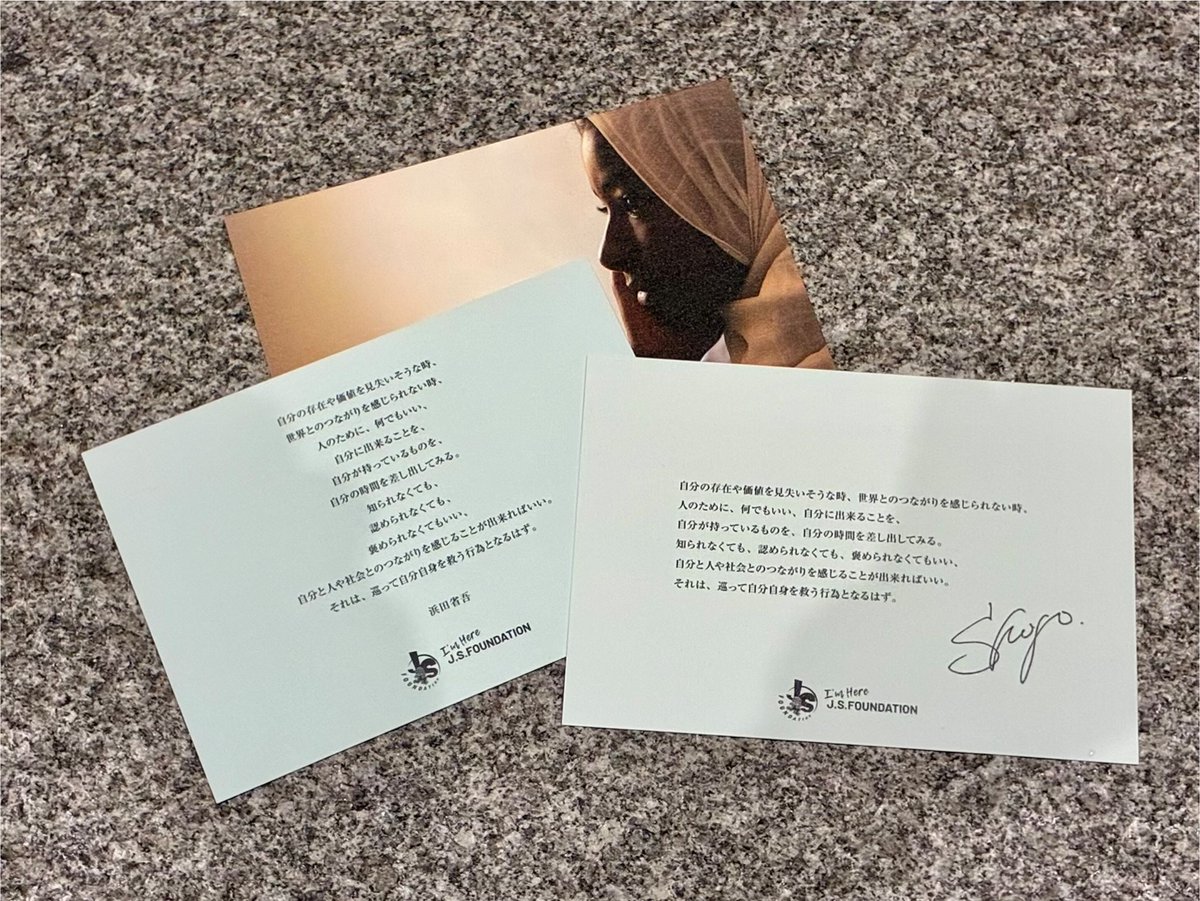
<活動報告更新です>
6/12,13東京国際フォーラムでの募金は743,986円です。 温かいご支援ありがとうございます。
当日は小さなメンバーたちもブースで元気にお声がけをしました。
思いやりの輪が次の世代へと受け継がれていくことを感じるうれしい時間でした。
js-foundation.com/report/300…
#浜田省吾
1
34
354
2,836
Takahiro Kambe retweeted

Jun 14
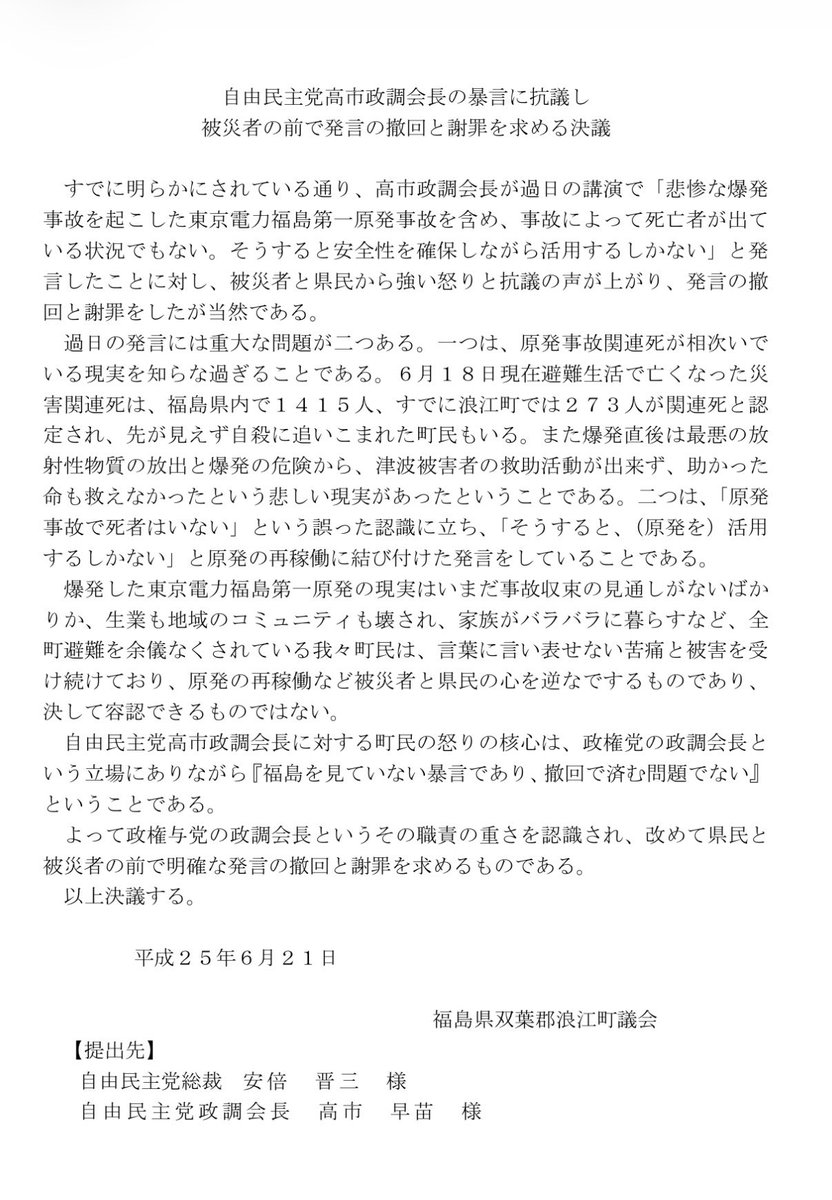
この書類を、今あらためて読んでほしいです。
2013年、浪江町議会は、
高市早苗さんの発言に対し、
被災者の前での撤回と謝罪を求める決議を出しました。
高市さんは当時、福島第一原発事故について、
「事故によって死亡者が出ている状況でもない」
という趣旨の発言をされていました。
しかし、原発事故関連死はありました。
避難生活の中で亡くなった方がいる。
家族が離れ離れになった方がいる。
地域も、生業も、暮らしも壊された方がいる。
これは単なる失言の話ではありません。
政治家が、
数字や制度の向こうにいる
「人の命」と「暮らし」を見ているのか。
そこが問われているのだと思います。
そして今、
ナフサ供給についても「足りている」「100%」という発信があります。
けれど、塗装会社などで厳しい状況が起き、
倒産に至った会社もあると聞きます。
この件は国会でも取り上げられ、
中道改革連合も調べてくださっています。
また私の知り合いからも、
歯医者で麻酔が足りず、
予定していた治療を受けられなかったと聞きました。
「足りている」と言える数字があっても、
現場で困っている人がいるなら、
政治はそこを見に行くべきではないでしょうか。
福島の時も。
ナフサの時も。
数字の向こうに、
人の命と暮らしがあります。
私はそこを見落とさない政治であってほしいです。
60
7,606
16,087
181,565
Takahiro Kambe retweeted

竹田恒泰はいつから「旧皇族」になったんだ?🤣
法的な意味での「旧皇族」は、1947年に皇籍を離脱した当事者(恒泰の祖父・恒徳王など)を指します。
恒パパ(恒和)の出生時に旧皇族は解体されていたため、本人が皇族であった経験は一時たりともありません😅
また、恒パパは三男なので、制度が続いていても成人後に「臣籍降下」していた可能性が高い。
竹田が「旧皇族」の肩書を自称することは不敬である上に、皇室の権威を私的に利用していると捉えられても仕方ない。

ALT 2008年竹田恒泰著「旧皇族が語る天皇の日本史」
150
2,628
7,739
118,507
Takahiro Kambe retweeted

これが事実なら万博協会はじめ、国もリスクを知っておきながらそれは蔑ろにして開催ありきで中小企業のことはお構いなしで募集してたのですか?
そしてそのリスクが予想通り発生したら我関せずで知らんがなみたいな発言されたら…
もはや万博は国家的詐欺プロジェクトでは… news.yahoo.co.jp/articles/32…
9
794
1,318
20,237
Takahiro Kambe retweeted
これ、トランプ氏の手柄じゃなくて、自分がしでかしたことの後始末だから。被害はとてつもなく大きく、今なお進行中。これで解決するかどうかも未だ分からない。間違っても、「やっぱり世界に平和と繁栄をもたらせるのはドナルドだけ」とか言わないでもらいたい。

【速報】トランプ大統領 「イランとの合意完了 海峡は開放」
news.web.nhk/newsweb/na/na-k…
124
8,576
23,701
526,953
Takahiro Kambe retweeted

Jun 12
✈️ダナン線増便記念SNSキャンペーン開催🎉
航空券やベトナム航空オリジナルグッズが当たる🎁
フォローしてキャンペーン投稿をシェアするだけで応募完了✨
🗓2026/6/12~6/28
① @meets_vietnam をフォロー
② キャンペーン投稿をシェア
詳細は👇
meetsvietnam.vietnamairlines…
#ベトナム航空 #ダナン

181
2,037
1,030
203,315
Takahiro Kambe retweeted

Jun 13
思った以上に根深い問題だった‥。
松井健は麻生太郎が関係する専門学校でソフトウエア開発を専攻。 株式会社「麻生」に入社。 高市氏を含む20人のリクエストに応じ動画1万本作成。 アカウントは投票日に削除。 都知事選で石丸伸二陣営にアドバイス。 同年の衆院選で国民民主党のSNS発信支援。
Jun 12

「松井さんのおかげで勝てた」自民総裁選、高市氏秘書から小泉氏批評動画で謝意 衆院選でも「ネガキャン」証言、「世論操作の一環だ」「全て無償」作成者を駆り立てた動機とは…
47news.jp/14456753.html?utm_…
84
9,870
21,796
476,526
Takahiro Kambe retweeted

Jun 13
浜田省吾さんホールツアー
東京国際フォーラム ホールA 2Days😎
映像収録が入っていたので、
二日間とも本番前は緊張で「😳」こんな気持ちだったけど...
ステージに出たら、なんのその!🥹
めちゃくちゃロック😎‼️でした😆✨
ありがとうございました!
次回は、福島と仙台へ🚄❣️


27
54
1,422
13,522
Takahiro Kambe retweeted

Jun 13
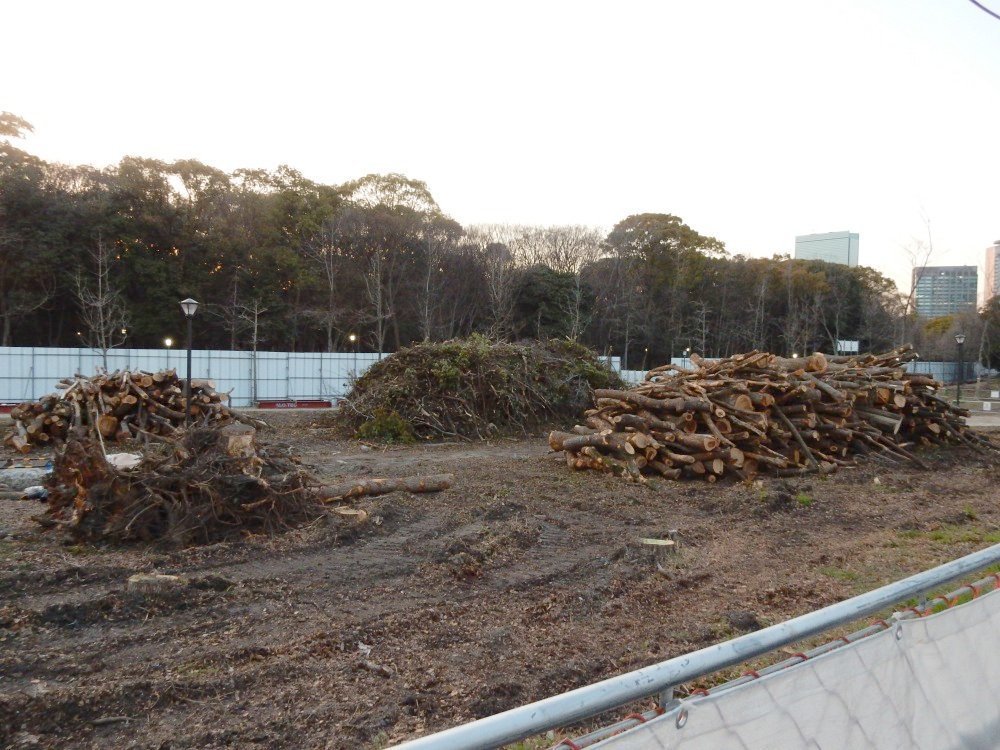
大阪城公園の樹木を伐採して「クールジャパンパーク大阪」なる痛々しいネーミングのハコモノを建てて数年後に「森ノ宮よしもと漫才劇場」という名前になってしまったことを全国の皆様にも知ってほしい。権力と蜜月じゃなければ大阪城公園を私物化できんわな。

Jun 13

お笑い芸人好きな方には申し訳ないんですけど、アニメ・マンガがクールジャパンだって言っておいてその予算が結局Y興業ばっかりに流れてたっていうのオタクとして忘れられない怨になってます……
gendai.media/articles/-/6612…
45
6,951
12,993
483,384
Takahiro Kambe retweeted

Jun 13
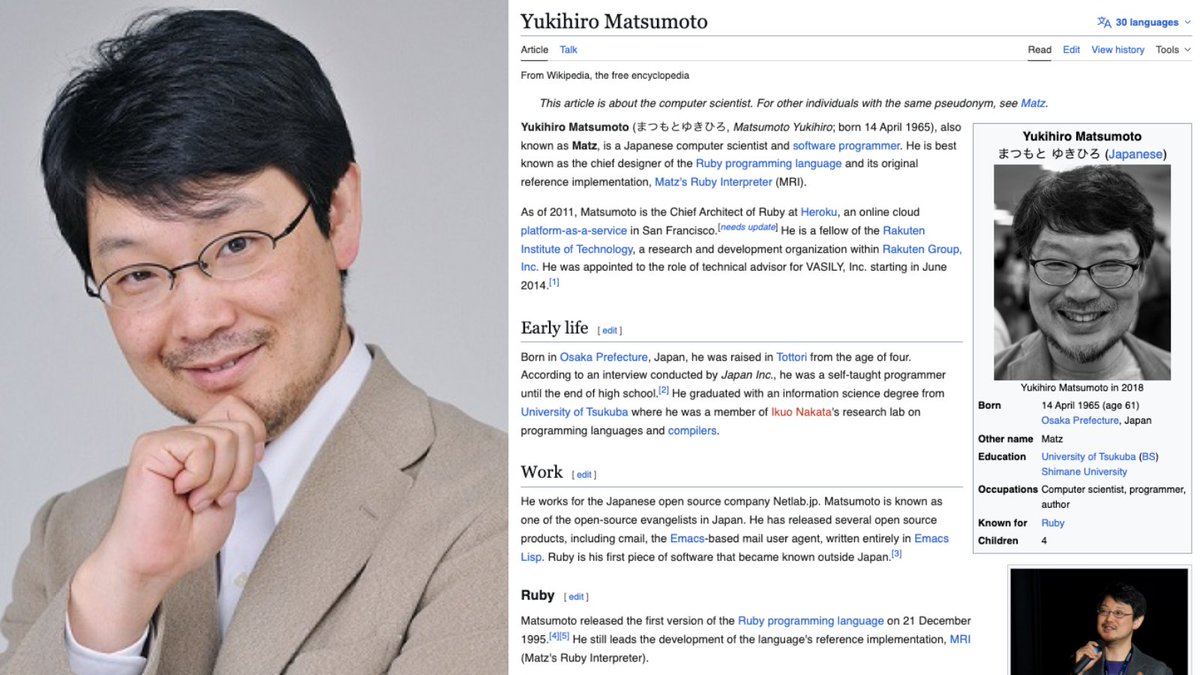
A Japanese programmer looked at every existing programming language in 1993, decided none of them made him happy, and spent two years building his own the language he built became the foundation GitHub, Shopify, Airbnb, and Coinbase were all built on.
His name is Yukihiro Matsumoto.
Everyone in the programming world calls him Matz. He was born in 1965, studied information science at the University of Tsukuba, and graduated in 1990 with a head full of ideas about what programming languages could be and a quiet frustration with what they actually were.
He knew Perl. He did not like it. He said it had the smell of a toy language. He knew Python. He did not like it either, because he felt its object-oriented features were add-ons bolted onto a language that was not designed around them from the start. He wanted something that was genuinely, completely object-oriented, easy to use, and built for the person writing the code rather than the machine running it.
He looked for that language. He could not find it.
So on February 24, 1993, he opened a chat window with his colleague Keiju Ishitsuka and typed: "Let us decide the codename now."
They wanted to name it after a gemstone, inspired by Perl. Ishitsuka suggested Coral. Matsumoto suggested Ruby. Ruby was shorter by one letter. Ruby won.
He spent the next two years building it alone, working through the architecture piece by piece. The object system. The string class. The IO streams. He later said he talked through specific features while speaking to his baby daughter, using her as a sounding board the way programmers use rubber ducks. In August 1993, he finally wrote the line of code that produced "Hello, world." on the screen.
The first public version, Ruby 0.95, was released to Japanese domestic newsgroups on December 21, 1995. No press release. No launch event. Just a quiet post to a mailing list.
The design principle underneath everything was the one nobody else had ever made primary. Matsumoto called it programmer happiness. He believed programming languages should be built for the joy and productivity of the person writing the code, not optimized purely for machine efficiency. Every decision in Ruby's design ran through that filter. If it made the programmer's life harder, it was wrong.
That philosophy attracted a small but devoted following in Japan through the late 1990s. Then in 2003, a Danish programmer named David Heinemeier Hansson discovered Ruby and used it to build an internal project management tool for his company. He called the tool Basecamp. He extracted the framework underneath it and released it publicly in 2004.
He called it Ruby on Rails.
Within a year of that release, the framework had changed how web applications were built. Rails introduced the principle of convention over configuration, meaning developers could make decisions about structure quickly because the framework had already made sensible defaults. What used to take weeks of setup took days. What used to take days took hours.
Shopify started on Rails in 2005. GitHub built on Rails a couple of years later. Airbnb, Twitch, Coinbase, SoundCloud, and Zendesk all followed. The first generation of consumer internet companies that defined how people think about software products were largely built by small teams moving fast on a framework that traced directly back to one Japanese programmer who was dissatisfied with his tools in 1993.
Shopify now processes over $200 billion in annual commerce volume. It still runs on Rails. GitHub became the largest code hosting platform on earth and was acquired by Microsoft for $7.5 billion in 2018. It started on Rails.
Matsumoto has said many times that he created Ruby for selfish reasons. He was so underwhelmed by every available option that he built something that would make himself happy. The programmer happiness he was chasing was his own.
The community that grew around Ruby adopted a motto that says everything about who he is. Matz is nice and so we are nice. They abbreviated it MINASWAN. It spread because it was true. He answered emails from strangers. He engaged with the community with patience. He treated the language as a gift, not a product.
He is still the chief designer of Ruby today. The language is 31 years old. It is still being improved.
The last stable release was Ruby 4.0.4, shipped on May 11, 2026.
One programmer, unhappy with his tools, built something better in the evenings in 1993. The companies you use to buy things, to store code, to book travel, and to watch streams were built on top of what he made.
He just wanted to be happy while he worked.
Did you know Ruby was behind the tools you use every day?
40
719
3,703
362,026
Takahiro Kambe retweeted

Jun 13
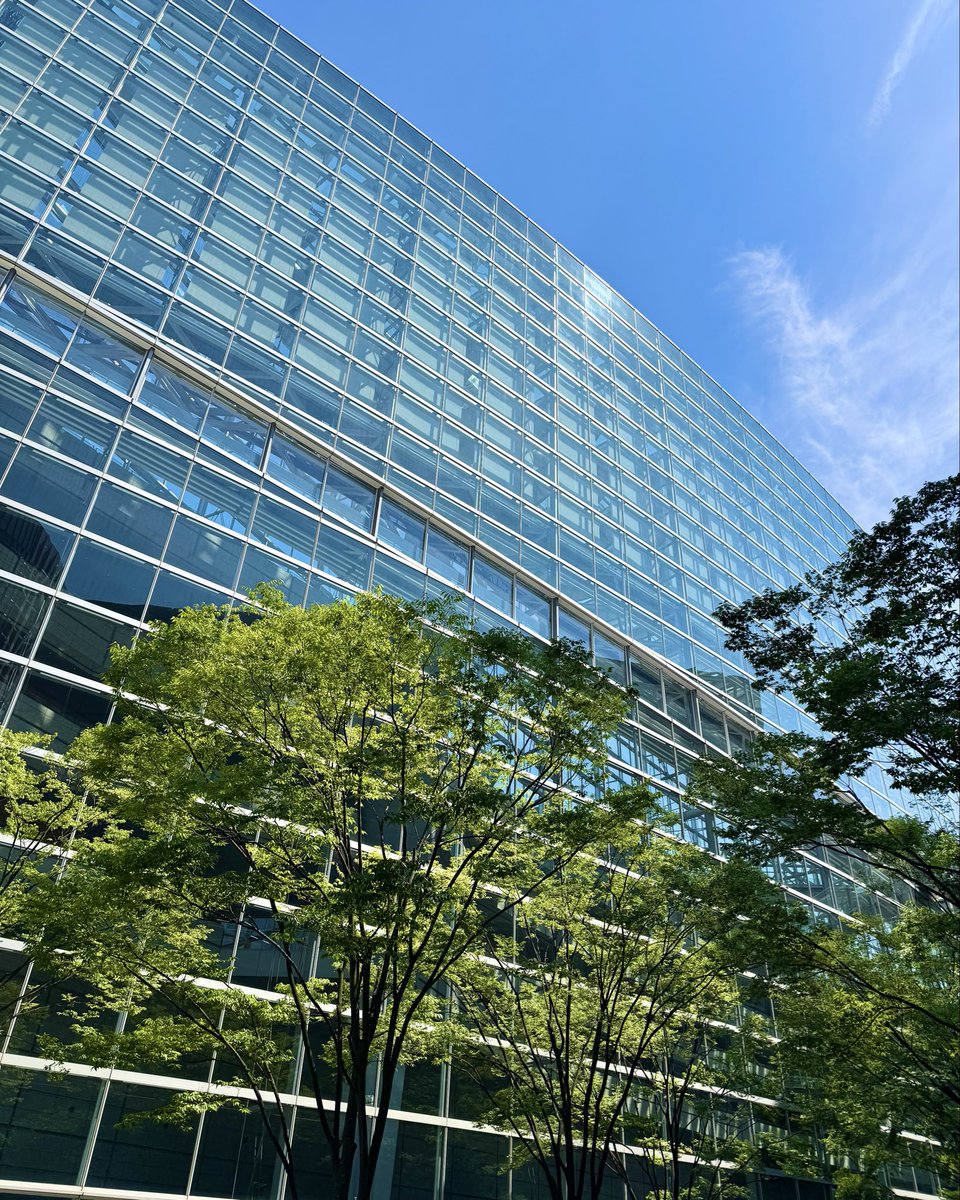
浜田省吾さん東京国際フォーラム2Days❗️
ツアー半ばの東京は、新鮮でもあり不思議な緊張感もありましたが、
浜田さんの放つ歌に曲のグルーヴに突き動かされた瞬間から、ステージ上の空気もお客さんの表情もどんどん色めき立っていくのが本当に美しかった✨
体温ある二日間。ありがとうございました‼️

39
55
1,632
14,636
Takahiro Kambe retweeted

Jun 12
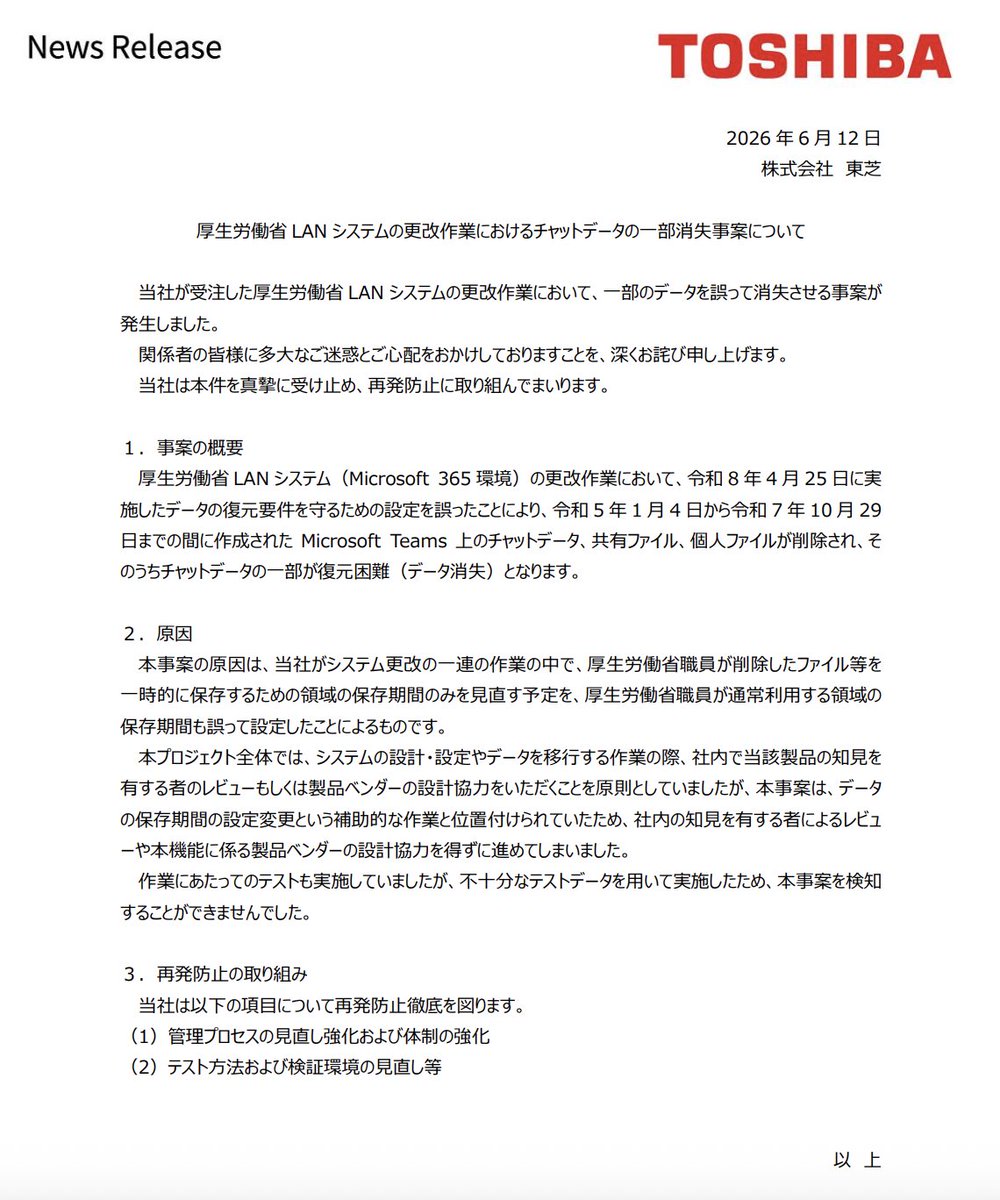
厚生労働省。「Teams」のチャット約750万件が消失し、復元できない状態に。運用委託先である東芝がシステム更改の作業中に誤設定
553
10,000
25,794
6,167,666
Takahiro Kambe retweeted

Jun 12
道路が冠水し大変危険な状態です
無理な外出は控えてください
765
2,569
7,878
3,167,213
Takahiro Kambe retweeted

Jun 11
このサイトあまりに有用すぎて、英語圏の人とやりとりするとき頻繁に引用させてもらっている
heistak.github.io/your-code-…
252
1,250
118,042

Apple Container、version 1.0がリリースされている!!!!!!!!!! github.com/apple/container
21
343
2,178
237,642
Takahiro Kambe retweeted

Jun 9
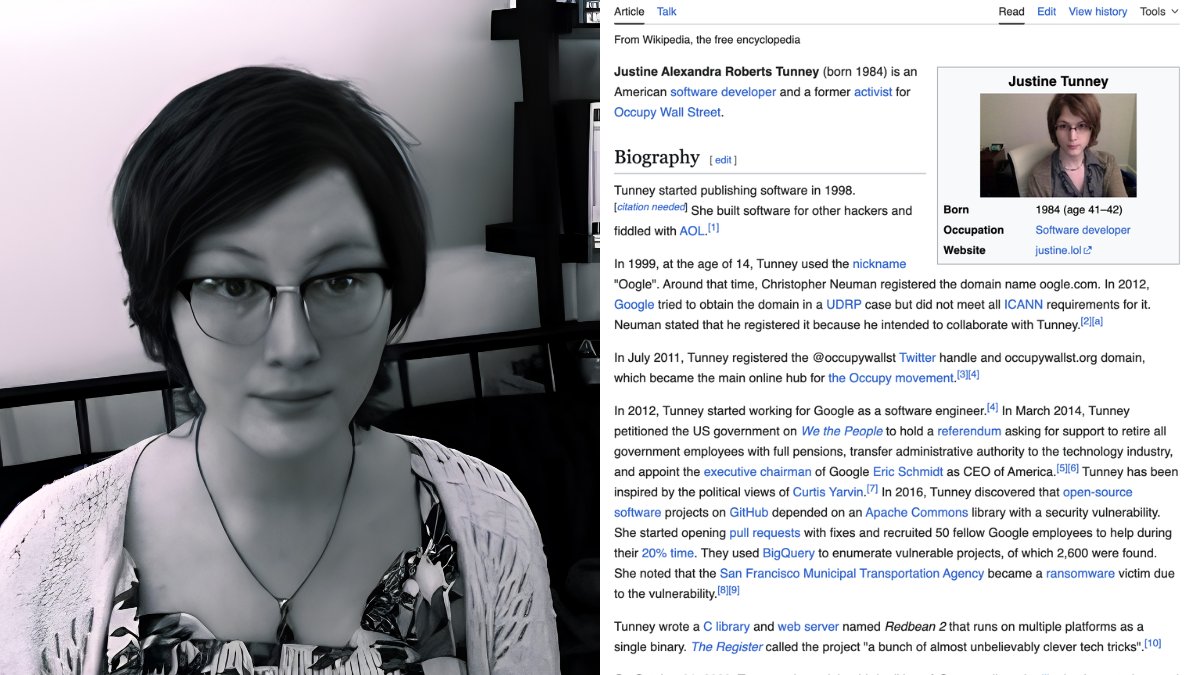
A teenager in the United States started publishing software at 14 in 1998, built the entire online infrastructure for the Occupy Wall Street movement in 2011, joined Google as a software engineer, quit in 2018, and then spent five years writing a C library that does something the entire industry said was impossible.
Then she combined it with llama.cpp and shipped the easiest way on the planet to run a large language model on any computer.
Her name is Justine Tunney.
Here is the story, because almost nobody outside the low level systems world knows what one engineer has built.
Justine was born in 1984. She started writing and publishing software at 14, back when distribution meant uploading binaries to BBS systems and chat networks. She picked up the handle jart, which she still uses on GitHub today. She did the work most teenagers her age were not doing. She read the systems programming literature. She studied compilers. She fell in love with C.
In July 2011 she registered the @occupywallst Twitter handle and the occupywallst dot org domain. Within weeks the protest movement that began in Zuccotti Park in New York had become a global phenomenon, and her infrastructure was the digital backbone of the entire thing. She handled the social media, the website, the donations, the coordination. She built the platform that pushed the movement to reach millions.
After Occupy she joined Google as a software engineer. She worked on TensorBoard, the visualization tool for TensorFlow, and on site reliability for Google infrastructure. She stayed for years. Then in 2018 she left Google Brain to work on a personal project.
The project was called Cosmopolitan Libc.
Cosmopolitan does something most C programmers would tell you is mathematically impossible. It lets you compile a C program once and have the resulting binary run natively on Linux, Windows, macOS, FreeBSD, OpenBSD, and NetBSD with no modification. One file. Six operating systems. No virtual machines. No interpreters. No recompilation. The technique she invented is called Actually Portable Executable.
The implications are wild. Cosmopolitan binaries violate every assumption about how operating systems load programs. They are at once a Windows PE file, a Linux ELF binary, a macOS Mach-O binary, and a shell script. The same bytes run on every platform.
For five years she worked on it mostly alone. She funded the development partly through Mozilla's MIECO program, which sponsored her work on Cosmopolitan 3.0, released on October 31, 2023.
A month later she shipped llamafile.
llamafile is what happens when you combine Cosmopolitan with llama.cpp. You take any LLM weights file in the standard GGUF format, you wrap it in Justine's binary, and you get a single file that runs on six operating systems without installation. No Python. No CUDA setup. No dependency hell. Just one file that you double click and it works.
Mozilla launched it as an official project of their innovation group on November 29, 2023. It went viral immediately. The repository, hosted at github .com/mozilla-ai/llamafile, now has 24,600 stars. The license is Apache 2.0.
Justine kept shipping. She added GPU support to Cosmopolitan, a task systems engineers thought would require rewriting the whole thing. She added dlopen support, another thing nobody else had figured out. She wrote whisperfile, a single file version of OpenAI's Whisper speech-to-text model based on the same architecture.
Her GitHub profile lists projects most engineers would consider impossible. sectorlisp, a Lisp interpreter that fits in a boot sector. blink, the tiniest x86-64-linux emulator on Earth. bestline, a teletypewriter command session library. redbean, a complete web server inside a single zip file.
A teenager who shipped software in 1998 grew up to write the C library that the entire local AI movement now runs on top of.
She did most of it alone, and most people scrolling AI Twitter cannot name her.
128
842
5,802
365,733

Takahiro Kambe retweeted
Jun 8
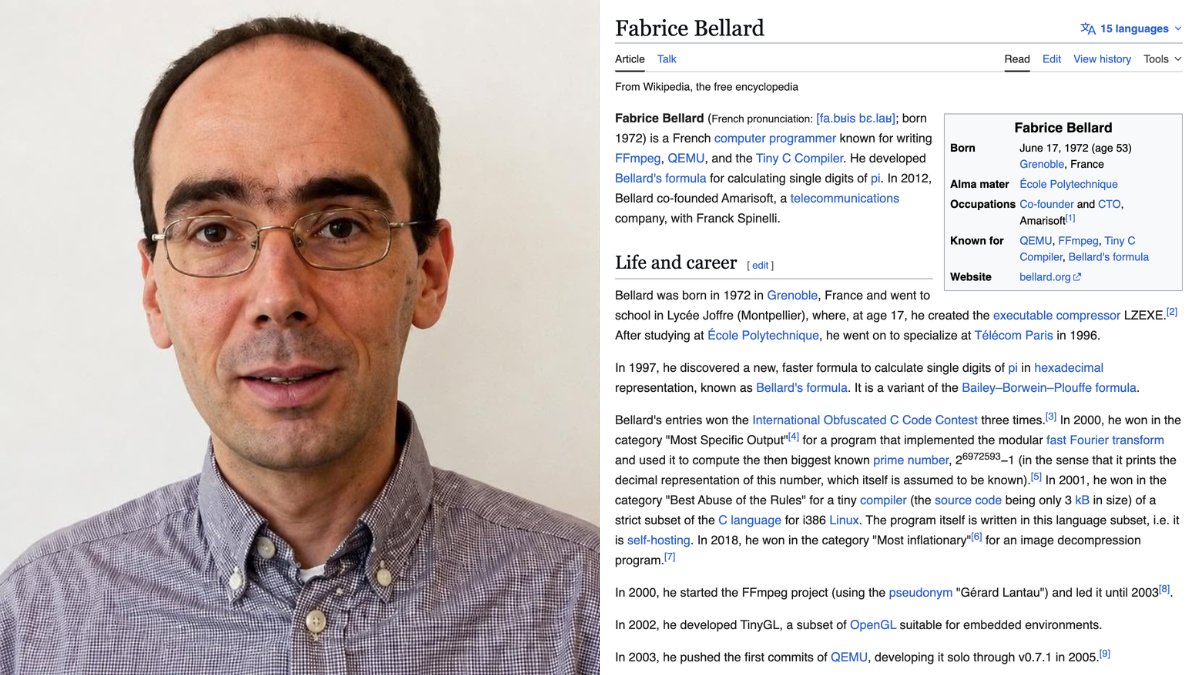
A French engineer who lives quietly in Paris has spent 30 years writing software that the entire internet now runs on without knowing his name.
He wrote the code that streams every YouTube video, every Netflix show, every TikTok clip. He wrote the code that runs the virtual servers underneath AWS, Google Cloud, and Microsoft Azure. He calculated more digits of pi than anyone in history. He has no Twitter. He has no marketing. He just keeps shipping.
His name is Fabrice Bellard.
Here is the story, because almost nobody outside the systems programming world knows what one man has built.
Fabrice was born in 1972 in Grenoble, France. He studied at École Polytechnique, the top French engineering school. He never went to Silicon Valley. He never built a startup empire. He just wrote code.
In 2000 he started a project called FFmpeg, an open-source multimedia framework for encoding, decoding, and streaming video. He was 28. The project did one thing nobody else had done well. It handled every video and audio format that existed, in one library, on every operating system. He led it himself for years.
Today FFmpeg is the invisible engine of the internet. YouTube uses it. Netflix uses it. VLC uses it. Chrome and Firefox use parts of it. Every Android phone, every iPhone, every smart TV, every video editing tool you have ever touched runs FFmpeg somewhere underneath. If you have watched a video on a screen in the last 20 years, Fabrice's code processed it.
He was not done.
In 2003 he started QEMU, a machine emulator and virtualizer. He wrote it solo until version 0.7.1 in 2005. QEMU lets you run any operating system on any other operating system. It became the foundation of modern virtualization. KVM, the Linux kernel hypervisor, runs on top of QEMU. Every major cloud provider, AWS, Google Cloud, Microsoft Azure, IBM Cloud, runs virtual machines on infrastructure built around it. The Quick Emulator is the most cited piece of cloud infrastructure code on Earth.
He kept going.
In 2001 he won the International Obfuscated C Code Contest with a small C compiler that grew into TCC, the Tiny C Compiler. TCC can compile and boot a Linux kernel from source in under 15 seconds. In 2004 he calculated the most digits of pi ever computed at the time, using a personal desktop computer and an algorithm he derived himself called Bellard's formula. In 2011 he wrote a complete PC emulator in pure JavaScript that runs Linux in your browser, a project called JSLinux that engineers still cannot believe is real.
In 2019 he released QuickJS, a small but complete JavaScript engine that fits where V8 cannot. In 2021 he released NNCP, a neural network based lossless data compressor that immediately took the lead on the Large Text Compression Benchmark.
Then he turned his attention to large language models. He built TextSynth Server, a web server with a REST API for running LLMs locally. He released ts_zip and ts_sms, compression utilities that use language models to compress text and short messages at ratios traditional algorithms cannot reach. He released TSAC, a very low bitrate audio compression system. In December 2025 he released Micro QuickJS, a new JavaScript engine for microcontrollers, separate from QuickJS, designed for environments with almost no memory.
Fabrice co-founded a telecom company called Amarisoft in 2012, where he serves as CTO. Amarisoft builds 4G and 5G base station software used by carriers and labs around the world. He has been running it for over a decade while continuing to ship personal projects from his own home page at bellard dot org
He has no Twitter. He has no Instagram. He gives almost no interviews. His personal website is a flat list of projects with no styling, no fonts, no marketing copy. Just titles and links.
A quiet French engineer who never moved to Silicon Valley wrote the code that quietly runs the internet.
He is still shipping.
379
4,516
25,163
3,054,543
Takahiro Kambe retweeted

Jun 7
中学の頃、音楽の先生に一人、どう見ても普通の先生ではない人がおった。男の先生ではある。だが、歩き方はしなやかで、声は少し高く、手をひらひらさせながら、「はぁい、みなさん。今日も心の調律、狂ってないかしら?」などと言って音楽室に入ってくる。いわゆるオネエっぽい先生である。
男子がリコーダーを振り回せば、
「ちょっと男子ィ! それは武器じゃないから!」
と叱る。教室は笑う。だが、その先生がピアノの前に座ると、空気が一変した。
最初の一音が鳴った瞬間、騒いでいた生徒まで黙る。先生はクラシックを、ただの古い音楽として教えなかった。
「クラシックってね、寝る時に聞くだけの音楽じゃないの。昔の人間が、恋して、失恋して、怒って、泣いて、それでも生きた証なのよ」
そう言ってベートーヴェンを弾いた。
「耳が聞こえなくなっても、彼は世界に音楽を奏でました」
その後に聴く『運命』は、ただの「ジャジャジャジャーン」ではなかった。人生が乱暴に扉を叩いてくる音に聞こえた。
モーツァルトは、明るいだけの天才ではなかった。
「可愛い顔して、けっこう毒もあるのよ。明るい曲の裏に、ふっと寂しさを忍ばせる。そういう子、クラスにもいるでしょ?」
そう言われると、遠い昔の作曲家が、急に同じ教室の誰かに見えた。
ショパンの時、先生は少し黙ってから言った。
「この人の曲には、帰りたい場所に帰れない人の感じがするの」
ノクターンは、夕方の窓みたいだった。部活帰りのグラウンド、誰もいない廊下、なぜか泣きたくなる帰り道。その全部が音になっていた。
その時、初めて知った。
音楽とは、音の並びではない。言葉にならなかった気持ちの居場所なのだ。
合唱コンクールでも先生は本気だった。
「大きな声を出せばいいと思ってる子、違うわよ。歌は叫びじゃない。誰かに手紙を渡すことなの」
男子には、
「あなたたちの声は地面。女子の声が空を飛ぶなら、男子は土台よ」
女子には、
「綺麗に歌おうとしすぎない。綺麗だけの声なんて退屈。少し本音を混ぜなさい」
そう言った。
すると合唱は、ただ音程を合わせるものではなくなった。照れも、不満も、仲の良さも、言えない気持ちも混ざって、一つの声になった。
先生はよく音楽室で一人、レコードを聴いていた。
「心って、放っておくとすぐ雑巾みたいになるんだから」
その言葉を、大人になってから思い出すことになる。仕事で疲れ、何も言えない夜に、ふとショパンを流した。すると、白いカーテン、西日のピアノ、先生の声が戻ってきた。
「心の調律、狂ってないかしら?」
あの先生は、音楽を教えていたのではない。感情に名前をつける方法を教えていたのである。
数学の先生が点の取り方を教える人なら、あの音楽の先生は、点数にならないものの大切さを教える人だった。
壊れないために。強くなるためではない。柔らかいまま生き残るために。
あの音楽室で起きていたのは、ただの授業ではない。
騒がしく、不器用で、傷つきやすい中学生たちが、自分の心に耳を澄ませるための、小さな演奏会だった。
思い返すとほんとに先生に恵まれた学生時代であった。あの人たちは天才である。
524
20,527
104,954
4,174,124
Takahiro Kambe retweeted

Jun 8
高市氏のこのような対応は、過去にも、不機嫌・怒りのオーラを発しつつ強い言葉で全否定し、根拠を示されてもひたすら否定し続ければ追及はそのうち止む、という成功体験があったからではないでしょうか。総務省公文書問題とか…
(映像は関西テレビ)
news.yahoo.co.jp/articles/44…
187
5,744
14,032
276,566