
Joined October 2021
- Tweets 8,425
- Following 191
- Followers 7,357
- Likes 23,026
661 Photos and videos



Pinned Tweet

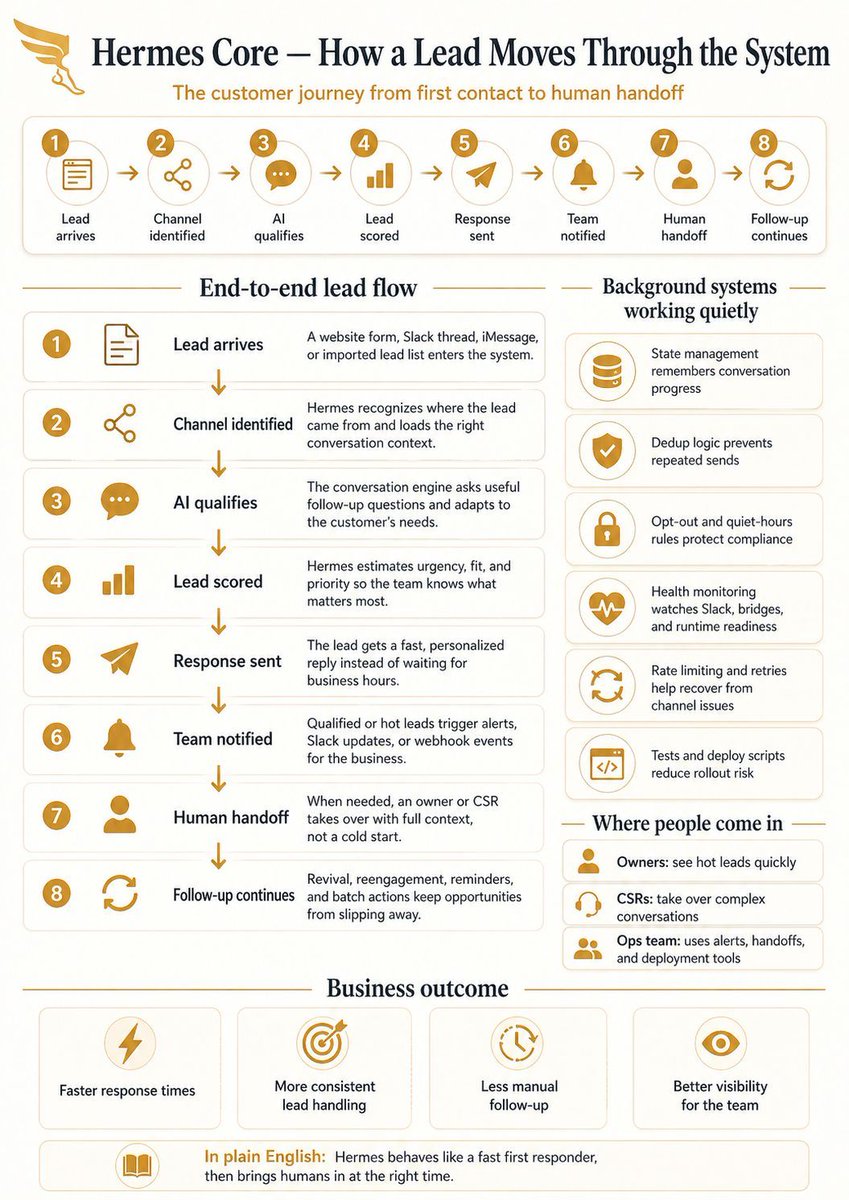
We built an AI agent for an HVAC company that responds to every lead within 30 seconds of it coming in.
Their team was taking hours to get back to people. Here's what changed:
When a homeowner submits a form on your website or reaches out through any lead channel, the clock starts immediately. That person has an AC that's dying heading into summer. They're not waiting around.
By the time your CSR calls them back a few hours later, they've already contacted 2 or 3 other companies. The first one to respond well usually wins the job.
This HVAC company knew their response times were slow, so we built an agent to handle first response and qualification automatically.
Here's how it works.
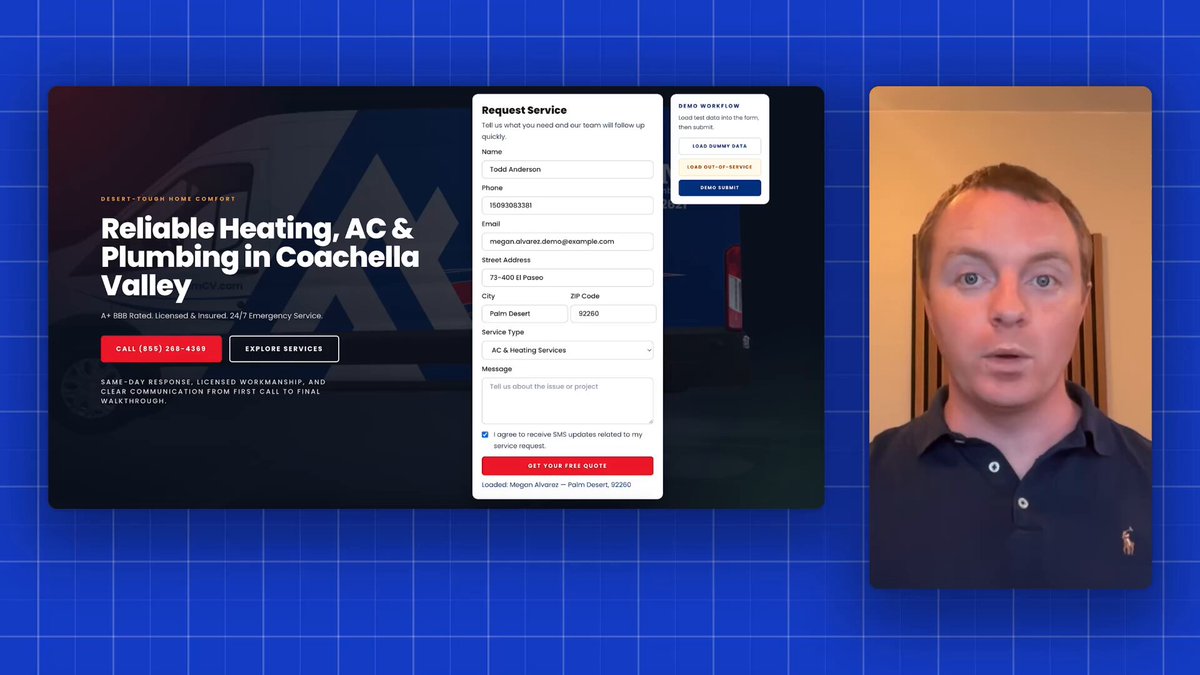
When a lead comes in from any channel, the agent reads their message and responds within 60 seconds with a personalized text. Not too fast, not too slow. We want the interaction to feel natural, not robotic.
And it's not the generic "thanks for reaching out" auto-reply you've seen from every other tool. The agent sends something specific to their actual issue without being over the top about it. Warm, but not overbearing.
If someone submits a form saying their thermostat keeps cycling and the unit shuts off randomly, the agent responds with something like:
- How old is the unit, and is it still under warranty?
- Is it a heat pump or standard AC?
- We could have someone out this week if that works for you.
It asks the right qualifying questions, gathers the information your CSR would normally spend the first 5 minutes of a phone call collecting, and keeps the lead engaged until someone on the team is free to pick up the conversation.
By the time the CSR actually calls them back, they already know:
- What the customer needs
- How urgently they need it
- Whether they're ready to book
The lead is warm instead of cold.
6 days of results:
Response time went from hours down to under 60 seconds across all their lead channels. Conversion rates jumped to 55% on leads the agent handled first, all while their CSR was busy with other inbound calls.
The sample size is still small. We need a few more weeks of data before we can call this conclusive.
The reason this matters is that HVAC leads are almost always urgent, especially heading into summer. A homeowner whose AC just died isn't casually browsing. They're reaching out to whoever shows up first and booking with whoever gets back to them fastest.
The problem I see with our SEO clients all the time is we help a company generate more leads through organic search, but their response time becomes the bottleneck. Marketing is working. Sales can't keep up. And the ROI on everything they're spending tanks because leads are sitting for hours before anyone touches them.
If your average response time is over an hour, you're paying to generate leads and then handing them to a competitor who simply got there faster.
11
2
34
3,072
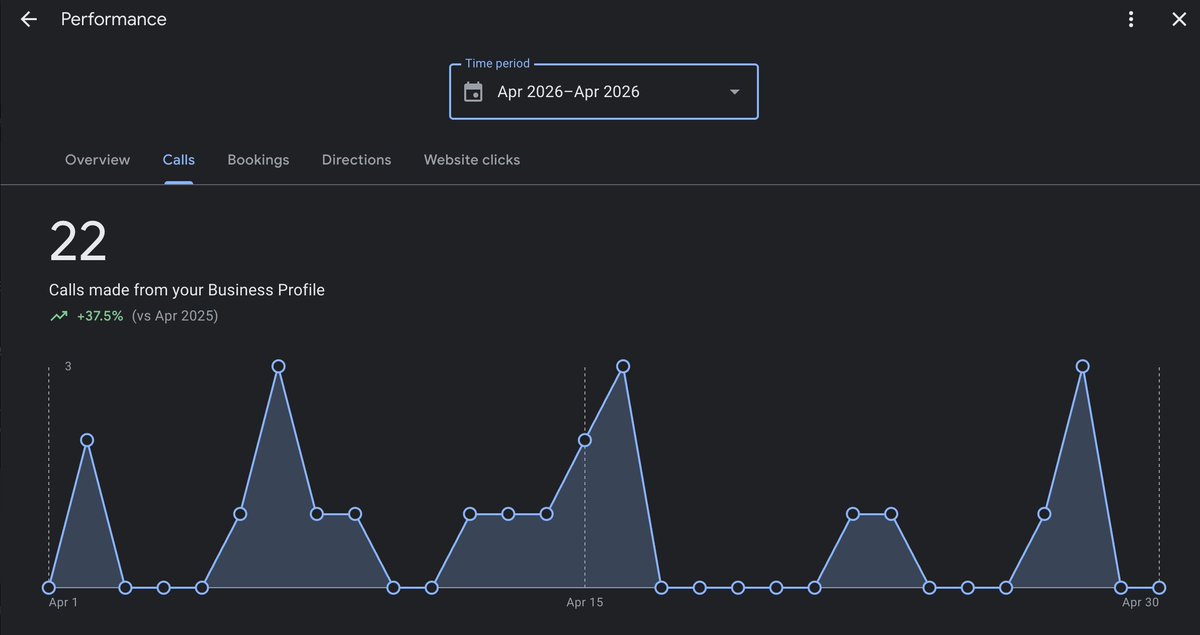
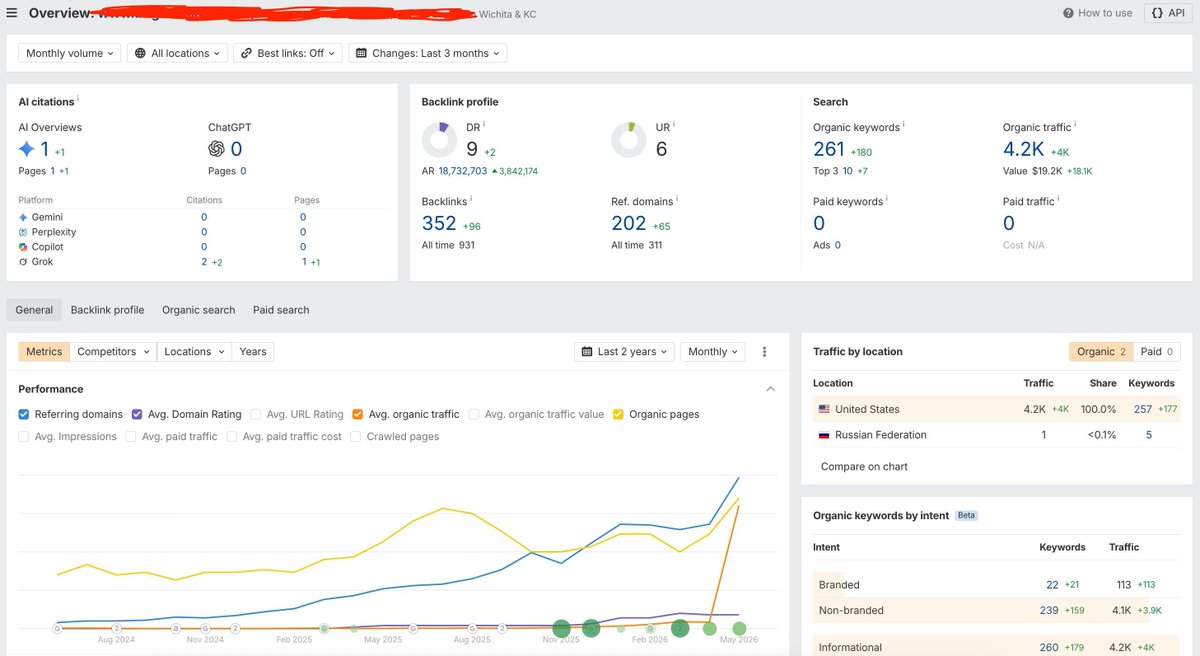
We got this commercial plumbing company 22 qualified calls in April, up 37% from last year.
We achieved these results despite having less reviews, and a newer domain.
Heres a few sneaky tricks that we used to get an edge in this market:
1 - Sneaky internal linking
It feels like every week Google is cracking down on spam harder and harder.
And one of the only ways to get around this is by making sure your website is extremely crawlable and links are placed in natural locations.
Spamming them in paragraphs with internal links to more important pages is still working though.
But a trick that we found specifically is by having heavier navigation sections, like the header and footer, and keyword stuffing them with hyperlinks.
This is a unique trick right now, as Google seems to give a lot more leeway to navigation links and allow you to spam them far harder than regular content.
So while the links may look navigational, they still seem to be passing SEO juice, which is hilarious.
You don't even need to have these visible on the page, since they can be rendered as UI elements that only happen on certain hover effects, which the user doesn't even need to see if you hide them correctly.
2 - Indexation
And of course you have to run all your pages and citations through indexing tools these days as well.
This is probably the easiest thing to automate with your team right now and has been crucial for our strategy
And keep in mind that every indexer you use usually has a shelf life of about three months until Google finds out about their network and blacklists it
3 - Spamming local schema
We've tried about five different iterations of local schema in the past year and haven't found one to rank better than the other
Most important thing is just having it on the site and then loading it up with keywords.
This is most simple for single GBP campaigns, but can get a little abstract with multiple locations and NAP data.
In general, we found that having the schema point to your main location is usually the best bang for your buck, but this does vary.
We strongly believe that these three measures and focusing on this area is what led to the year-over-year growth for these guys, despite being in a pretty difficult position.
5
616
We discovered a million dollar opportunity for a regional landscaping franchise last week.
By simply adding speed to lead for after hours, they stand to add about 10% to their bottom line.
After digging deep into their systems, we discovered that their close rate on off-hours leads was around 5-8%
Whereas after we've implemented speed lead systems, we've seen as high as 25% close rates on these off-hours leads.
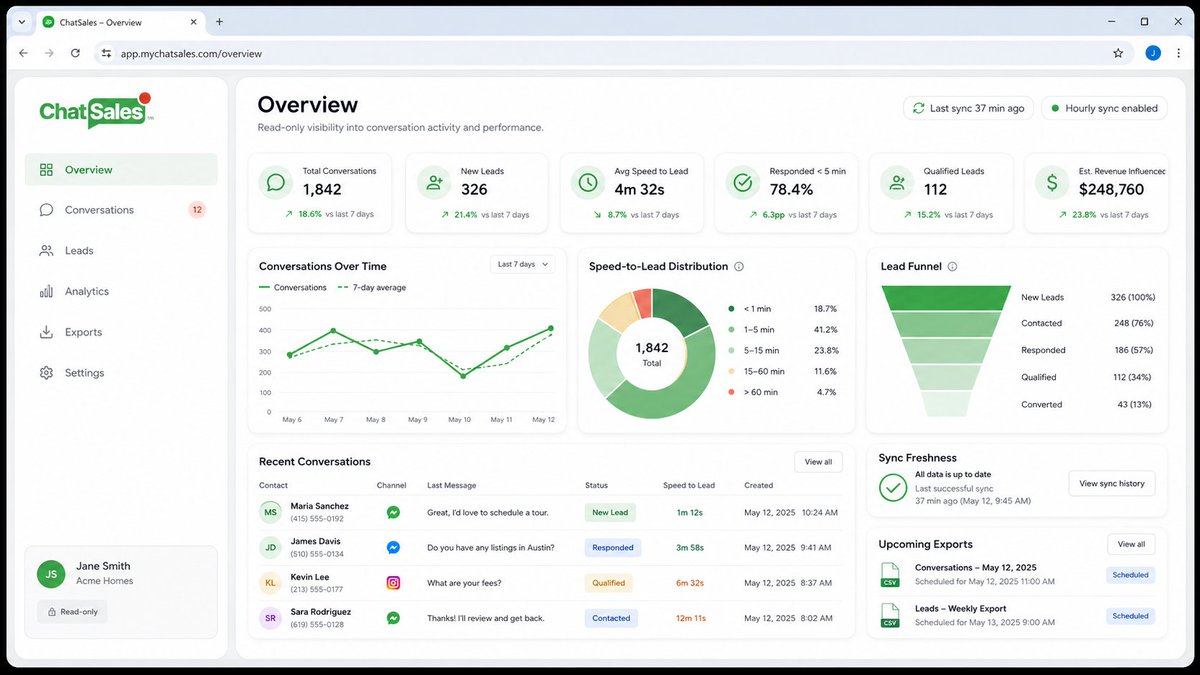
By implementing ChatSales and speed to lead, we're going to easily drive this number up by at least 15 to 20% for off hours closes.
And given that these guys have obtained 11,000 leads year to date, we stand to add at least another 200 leads for them every 6 months.
With average profit per job in their niche coming in around $1,200, we're crossing nearly $600,000 in additional profit from this one implementation.
Not to mention, their existing speed delete was about five minutes, whereas our speed delete agent can grab the leads in about 30 to 45 seconds.
Additional close rate is expected to go up by 5%, influencing the rest of their revenue for regular leads.
My partner and I are still shocked to see large corporations that haven't caught up with AI.
There's so many opportunities out there right now for companies that want to get ahead of the curve and begin implementing AI systems before everyone else.
1
1
4
611
Such an unlock for home service providers.
You see a lot about "Agents for home service companies" but this takes it so much further.
May 29

We built an AI agent for an HVAC company in the southeast last month.
They were doing around $3M a year and growing fast, but their CSRs couldn't keep up with the lead volume.
Form fills were taking 4-6 hours to respond to. LSA messages and Yelp inquiries went 12 hours sometimes. They were losing jobs to whoever responded first.
Here's exactly what the agent does:
When a homeowner submits a form on their website, sends a message through their LSA listing, fills out a request on Yelp or Angi, or texts their main business line:
> The agent responds within 30 seconds with a personalized message acknowledging the specific issue (no AC, furnace not heating, capacitor replacement, whatever they mentioned)
> Sends it all through blue iMessage texts, so the homeowner thinks they're texting with a real person at the company
> Asks 2-3 qualifying questions: zip code, residential or commercial, what type of system they have, when they need service
> Pulls their calendar in real time and offers 3 actual available appointment slots based on tech routing
> Books the appointment directly into ServiceTitan if they accept
> Texts the customer a confirmation with the tech's name, photo, and ETA window
> Notifies the CSR team only if the lead is high-priority (commercial, multi-system, replacement quote, etc.)
What changed in the first 30 days:
> Average lead response time: 4 hours to under 1 minute
> Booked-to-lead ratio: 22% to 41%
> CSR hours saved per week: about 18
> Owner now actually sleeps because after-hours leads get booked without anyone touching them
Most HVAC companies are spending $30-60 per LSA lead and then losing 30-50% of them to slow follow-up.
AI isn't perfect and it shouldn't fully replace humans in your sales process. But there's no reason not to use the best tech available to make your business more money.
4
1,151
We're going to add 40k-60k profit per month for a real estate agent near Boston this year.
How?
We kicked off a new SEO campaign for him this week targeting the most profitable suburbs.
His previous SEO campaigns went bust since the projects targeted the wrong areas.
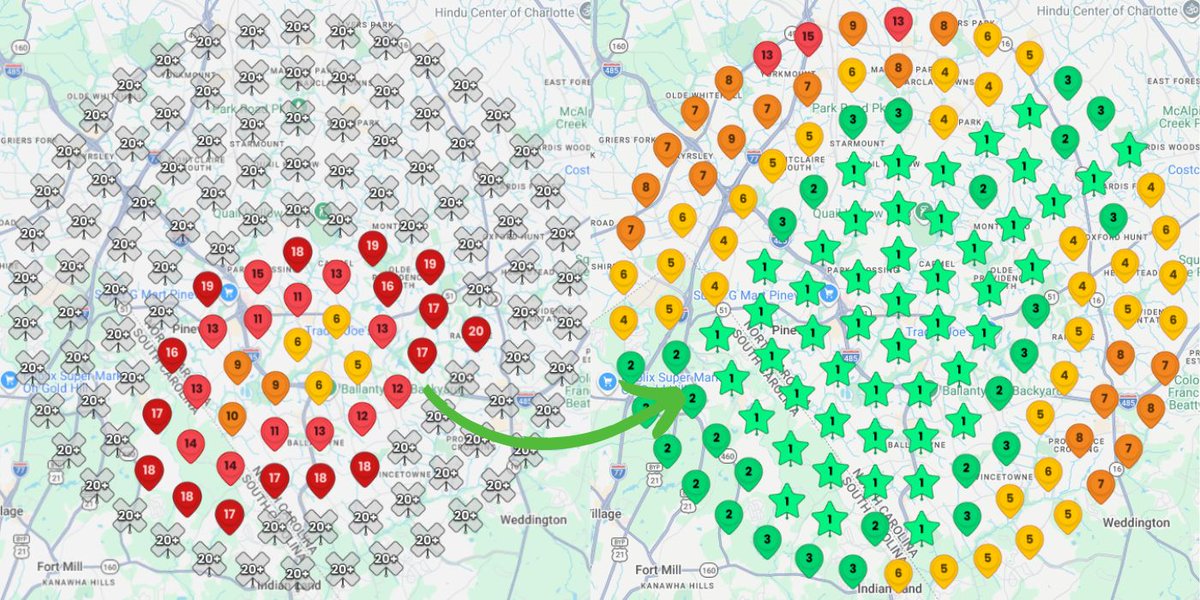
Sure, he ranked well for niche keywords, and had a green local dominator scan across the board, but it didn't bring in any calls.
This is what most SEO agencies are getting wrong.
And subsequently, what most home service companies are falling for.
A green local dominator scan doesn't mean anything if it's not targeting the right locations.
You can rank for a 50-mile radius in the middle of the Nevada desert, and you're not getting any leads.
Location selection matters most.
This is why for every one of our new SEO campaigns, we kick off with a new GBP targeting the exact area operators want leads from.
This way, we maximize ROI from day one.
And it's super simple to track and attribute the SEO efforts to lead volume.
New lead from the new area we targeted?
Thats our work. Easy attribution.
We've done this with every one of our SEO campaigns in the last year, and we've had a much higher impact and ROI with all of our projects.
If we can get this real estate agent only ten calls a month from this new campaign, they'll be able to close about 60% of the inbound leads with profit per deal coming in around 8-12k.
After I showed the business owner this math and was confident we could get that kind of call volume from a new campaign this year, it made the investment a no-brainer.
A lot of home service companies we talk to have run through failed campaigns that touted green metrics.
Without the right targeting and direction set in the beginning, SEO campaigns and green graphs are worthless.
2
5
325
Exact Match Domains are ripping right now.
Maybe better than ever.
Heres how we're using it to rank our clients in search 👇
1 - Search up high intent keywords on Ahrefs.
Find your main keywords, with at least 250 traffic per month.
Niche-adjacent words are okay in this case.
Nine times out of ten, the main EMDs will already be taken, like New York City housecleaning . com.
But that's okay, even niche adjacent ones are still ripping.
2 - Grab domain from name cheap.
Self-explanatory. Go grab the domain.
If you're doing tons of these, break up the accounts and areas you buy them from, but for any project with 12 or less of these, using the same account is fine.
3 - Vibe code up an initial site.
Use lovable or GBPs 5.5 and get a basic lander up and spam the keywords in the H-tags and internal links.
A lot of these times, these sites don't need to be perfect and can even mirror your main domain's branding.
4 - Build out socials and post daily for a month or so.
Pretty self-explanatory. Run some basic SEO and off-page to this profile for a little while.
Note: You do not need to build content-based backlinks to move the DR.
We found recently that even zero DR sites can have a pretty impressive impact.
5 - Two paths from here....
For the first scenario, you can build out the site. Wait till it starts ranking, and then link back to your main domain.
Links from the home page back to your main domain seem to work best in this case.
Again, though, if you're building many of these, don't leave any bread crumbs or patterns.
For the second scenario, after its ranking, you can literally just redirect it to your main domain.
We've seen both these instances work recently, and you have to play with them to see which one works best.
With zero DR, you'd be surprised at how well you can rank for some very strong keywords in tier one and tier two cities right now.
This has become a cornerstone in our SEO strategy for all our clients recently.
With vibe coding, it's easy enough to spin up these sites and start generating leads.
3
335
I worked with Kyam over the last year and he grew my LinkedIn from zero to 8,000 followers.
Can't say anything bad about these guys, love working with them.
If you need to grow on LinkedIn, hit up Kyam and his team. You won't regret it.
May 27

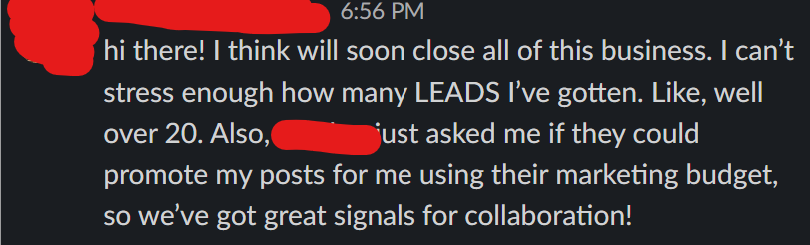
Client result:
- 20 leads in 60 days (high ticket offer, very niche)
- 17 QUALIFIED calls
- People offering to boost posts
You need to be LinkedIn maxxing
Send me a DM and we will do this for you, without any stupid trickery or weird content agency mental gymnastics
3
3
854
A fencing company came to us for SEO after spending 14 months on a failing SEO project.
Heres our exact strategy on how we're going to 2X their lead volume this year: 🧵
1 - Their NAP data was already pretty clean, but could use some work in a few areas.
Most of the home service companies that come to us have this problem and its easy to fix.
Usually, when setting up your profiles early on, business owners use different types of names that are similar but not the same.
For example:
- Top Dog Roofing
- Top Dog Roofing Services
- Top Dog Roofing LLC
It might not look like much, but this does add up, and Google notices the inconsistencies.
This is one of the first things we clean up in most campaigns.
2 - Reddit posting.
Reddit is gaining more and more traction online and being sold by AI even more.
Sometimes even simple threads can move the needle for more niche blue-collar services.
We'll roll out a sizable campaign here to begin moving the AI needle in the right direction.
3 - New GBPs in target areas.
This shouldn't come as a shock to anyone.
Local SEO is all about proximity and local search relevance.
The more local nodes you have in a network, the more leads you can capture.
Every campaign we kick off these days at least starts with one new GBP, so we know we can guarantee an ROI on the campaign with new leads.
We're not just going to rank these guys better in their existing locations, but we're going to give them new lead generating assets.
4 - Review strategies for their techs.
Some home service companies that we take on have unoptimized review strategies.
Yes, Google will tell you not to incentivize these, but your competitors are still doing
For larger ticket jobs, we even recommend sending something simple like a gift box with a few mugs or a ball cap with a personalized note and a QR code to scan for the GBP review.
We've seen this increase in review velocity from those jobs by about 300%.
In my opinion, if the box costs about $30 to send and you get a great 5-star review and you repeat that process ten times, I guarantee you're ranking better on Google because of it and you will land more jobs from SEO because of it.
And technically, that would bring your SEO cost per lead just from that endeavor to about $300 for a closed job.
Which, funny enough, is far less than what you would pay for PPC for a high-ticket job.
This is what makes the difference between a regular SEO campaign and one that's scrappy in 2026 and is going to win.
1
9
499
Our speed to lead agent closed a lead at 1 AM last week for recurring services.
LTV around 8k while the business owner was asleep.
The agent:
- Noticed it was a returning customer
- Brought up their information
- Asked qualifying to get up to speed on their problem
- Nurtured to close on an approved time slot
- And scheduled the lead
Owner woke up the next morning with a new lead booked, and got an email update at 8:00 AM.
Automation for home service companies is still extremely slept on.
Everyone's sitting here like it's 2023 and think that AI sucks just like the first versions of ChatGPT.
With the right systems built out, the leverage is unimaginable right now.
Pair this with a real iPhone sending messages, and you can increase your close rate by at least 15-20% by using these systems.
2
3
321
Really interesting to see this play out in corporate America.
AI on the hands of a 10x dev is a godsend.
AI in the hands of an everyday worker, and it's catastrophic as they run in the wrong direction with it.
May 25

Uber COO Andrew Macdonald said he's not seeing proportional productivity gains from increasing AI costs. bit.ly/4e3w4PC
1
274
We're going to rank an 8 million dollar plumbing company in AI search in the next 90 days.
Heres an overview of how we're doing it:
First, we need to do a gap analysis.
As it turns out, these guys had zero coverage for...
- Their branded search name
- Main services
- Niche adjacent services
- Reviews
- Testimonials
- Emergency services
- Near me keywords
- Cost questions
- Maintenance questions
The list goes on and on....
We're going to use these as our topic clusters to build pillar and supporting content in Reddit threads for their brand.
Second, which subreddits.
Smaller subreddits are easier to rank in where mods are more asleep at the wheel.
While larger ones are going to be harder to penetrate with more advanced spam blockers and detection.
Both are important, and we usually start with the larger ones first.
We'll ask probing questions. Talk about testimonials and ask questions about cost that can be answered by the brand.
This will form the initial ground layer for the campaign.
Third, we look at what threads we need to hide.
In some cases, businesses will have poor Reddit threads on them already.
In this case, they had one that was severely hurting a reputation with over 300 upvotes on a negative thread.
We're targeting this exact subreddit to try and outrank this post and bury it with positive media.
A lot of SEO companies miss this one part, and they just blindly build new content without targeting the negative content to try and bury it.
Arguably, this is the most important step.
From there, we begin building out lower-level funnel content.
You can take the strategy further and go after what threads have ranked well for competitors in the past, but many have untapped this channel.
AI Search is rising and is already about three acts up from what it was in January of this year.
With the campaign going to run anywhere from $20,000 to $25,000, it's certainly not a small lift.
But if these guys can begin closing jobs from AI search, it'll take anywhere from six to eight jobs to ROI on this.
After that, it's pure profit.
4
429
As a home service company, how many GBPs should you have?
Most owners I talk to stop at one or two at most.
But - GBPs rank on a proximity based algorithm.
Meaning more GBPs = more rankings nodes.
We created 6 for our clients recently. This is how we go about it 👇
1 - Location research
First off, we look at the CRM data and where the most profitable leads have come from.
We look at past jobs, what text services those areas, where your texts are located, existing routes, etc.
This lets us tap into current operations and see if there's any low-hanging fruit that we can build on top of.
2 - Demographic research
Next up, we investigate demographics and look at the propensity to pay for these customers in the new area.
We look at public records for permits pulled to see who's doing home renovations.
If there's a pocket of highly affluent buyers, we sink our teeth into it.
3 - How many GBPs is enough?
This answer is very nuanced.
If you have multiple primary service categories, such as plumbing and HVAC, it's best to do separate GBPs for separate services.
Generally, we like to do two to three per city for each one of our clients.
This maximizes the reach without overdoing it and creates a strong enough hold on the market where we can target the most valuable jobs.
4 - The setup.
You don't need a hard physical location to pull this off.
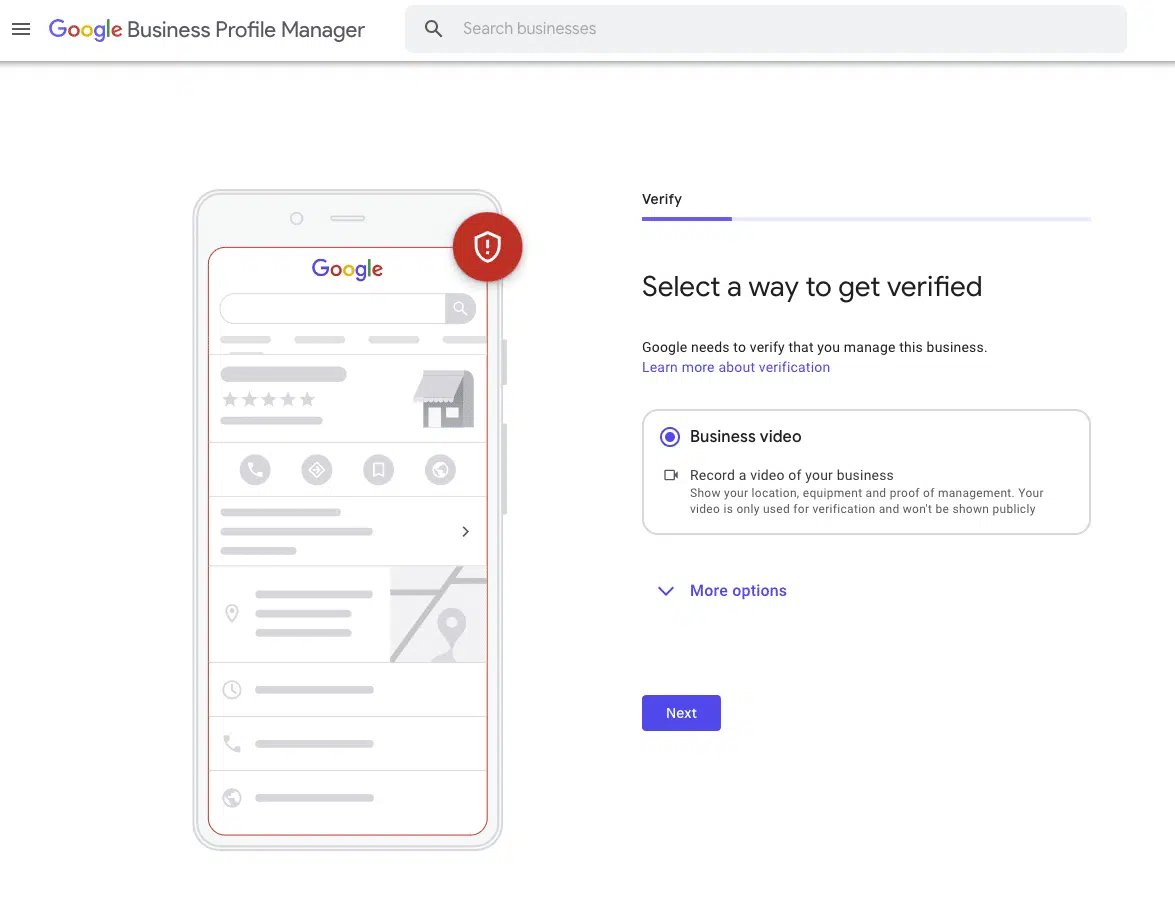
We verified half a dozen of these this past quarter, all remotely with our proprietary methods.
This saves our clients time, money, and headaches, and allows us to provide an SEO service that's more white glove.
If you have to, you can always pick an office space in your hometown and go rent it for $400-$600 a month and do manual video verification, but it's not necessary.
It takes about 12 months to get up to speed from starting out.
Without a physical address, you're dead in the water if you're trying to run a service area business.
Use this playbook to get multiple profiles live and begin building your local ranking network.
Thank me in 12 months.
4
1
10
1,221
Our speed to lead agent is coming up on about $150,000 worth of sales nurtured for our clients.
The blue iMessage that gets sent to the leads outperforms green SMS at every turn.
The data doesn't lie - our agent is moving mountains for 7-figure home service companies 😎
7
1,047
I get asked on discovery calls all the time:
"Whats so special about SEO leads?"
One of the biggest reasons is the close rate.
SEO leads have the highest intent of any lead because they're coming to YOU and YOUR business.
We regularly see close rates on SEO leads about 60%, where as lead aggregators of FB leads come in around 15-30% at best.
SEO leads are upwards of 4 times more valuable than other lead channels.
Prospects always want to know what kind of ROI they can see form a campaign and how many leads.
Usually, they're nervous about poor campaign performance.
After we do the math and see that they only need 5-6 leads from SEO to ROI on the campaign, they're bought into the process.
1
389
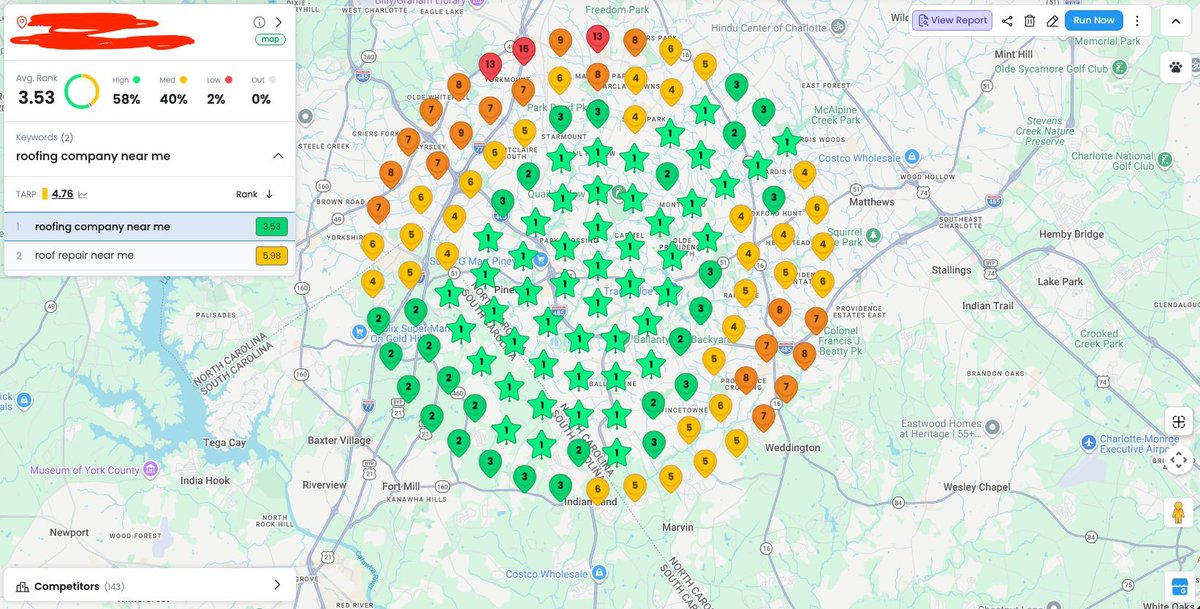
A roofing company is Charlotte NC has spent $28,000 with us for SEO.
Now we bring them about 26 qualified high intent leads per month.
Est. Revenue from those leads is about $109,000, on 20% profit margins.
Heres exactly how we ranked them to number 1:
First off these guys needed a new site and its easier than ever with AI now.
We fixed all of their onpage errors and added more internal links than usual.
Spamming internal link with aggressive anchors can be a huge help with now with getting pages indexed.
We also stuffed keywords on their main location pages and mentioned the keyword about 50-80 times per page give or take.
We stopped here and didn't spam that many location pages. Don't over do these right now.
After we blasted some PR for a bit, and built out core citations.
We beefed up their review generation methods and coached them on best practices for white hat and black hat techniques.
From here we made sure they were posting regularly on social media from day one.
We made sure their FB posts were pointing back to the home page and linking to specific service pages for over a year now.
All of this, combined with a dash of CTR in house, helped rank them quickly as they headed into busy season this year.
At 26 inbound calls last month, they nearly get a 10X ROI on our monthly retainer between calls and form fills.
And - thats not counting any commercial jobs we've gotten them in the past too.
SEO works in 2026. You just need to stay on your toes with the strat.
2
4
425
Update on our speed-to-lead agent this week.
- We booked 100k in jobs for a client this past week.
- Scheduling is fully integrated with CRMs for bookings
- Dispatch is built out to select techs depending on the job
- Personalized dashboard allows you to take control of the conversation real time
- Agent will auto-text message phone calls that were not picked up by day crew
- Close rate increased from about 15% to 30% from lead aggregators for a client due to fast response times
We did a ton of competitor analysis this week and everyone is still sending green SMS to home owners.
This SCREAMS automated text and no one wants to hear it.
Our blue iMessage bubbles are blowing away the competition with better response rates right now and its not even close.
1
4
303
GBP rankings do NOT equal SERP rankings.
You need two different strategies, for two different algos.
And in some cases, different sites (if you have the resources)
This is EXACTLY how we're concurring both for a home service rollup right now:
(Bookmark to copy later)
The SERP algorithm rewards site architecture, link authority, content depth, and technical health.
The local algorithm rewards proximity, review velocity, brand mentions, social signals, and the relationship between physical addresses and search intent.
Different signals. Different strategies.
For this campaign, we're rolling out two strategies for the different sectors.
To target SERP rankings: clean architecture, schema, kill the crawl budget bloat, build location page clusters and TONS of links.
For the local pack: a satellite network of GBPs tied to local content.
The satellite play:
Since the client is PE-backed with HVAC, electrical, and plumbing divisions, we built standalone niche sites for adjacent service-area combinations.
Think of them as rank-and-rent properties except they're owned by the parent brand and funnel leads to the same CRM.
This is because the algorithm performs differently in this regard than it does for SERPs
You need a defined strategy that caters to the different signals.
Each node has its own domain, branded with city plus service keywords, with real reviews aggregated from the network.
These nodes target highly specific location verbiage to lock down specific regions in the market.
In their case, they're building dozens of these across their network now for each service and area they want to target with the local algorithm.
This is a 6-12 month strategy and with their review velocity the should be able to capture about 25% of the market for each service this year.
Most agencies we compete with only focus on one of the two algorithms.
But the reality is you can't split both into the campaign if you want true dominance, thats why we split it up for the highest impact when we have the budget for it.
This creates ironclad rankings that can't be matched by an agency with a linear strategy.
3
1
17
1,206
In 8 months of SEO work we added 36 leads per month to this home service business.
The hockey stick growth FINALLY set in for this one.
They were hesitant to pull the trigger since it was their first time running SEO for their business but they took the plunge.
When they came in, ranking was #18 in their service area on the GBP. Reviews were inconsistent and the GBP had calls trickling in but nothing meaningful.
The play wasn't a single profile push. We went multi-GBP from week one and got new profiles up and began building links.
Pest control margins are too thin to bet on one ranking node. We stood up additional profiles in service areas the existing one wasn't covering.
Took a margin hit early to fund aggressive link building too which ended up paying off big time.
Months 1-7: heavy local backlink work. Real local sites, not spam, and citation cleanup across 80 directories in tandem.
Content clusters tied to the highest-converting service-area pages and services as well.
Ranking improvements were slow for a while but the owner stayed patient.
Month 8: hockey stick growth for SERPs.
Rankings on the primary GBP hit #4 as well, and the secondary profiles started picking up calls too.
A Google update landed and rewarded the kind of content we'd been writing for months.
Total spend over 8 months: just over $22K. Revenue impact: easily 10x that now.
Now they're rolling into two new cities next year and we're running the same plays. Confidence level is high because we've stress-tested the model in a hard vertical and we know we can duplicate it again.
4
7
513
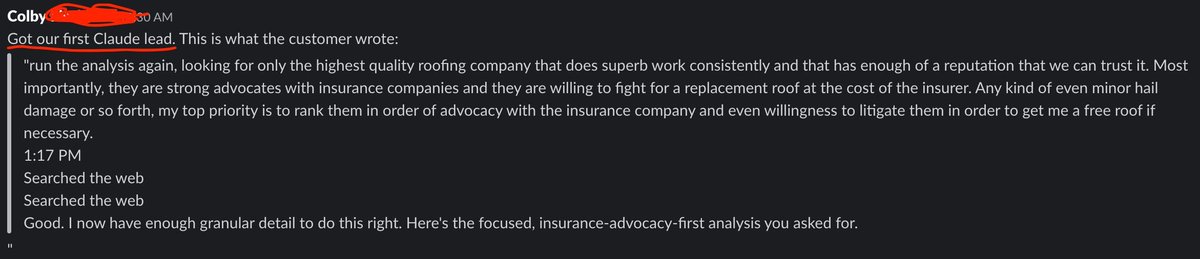
We got a roof replacement job worth $18,000 booked for our client in AI search.
We started optimizing for AI Overview / LLM citations 6 months ago.
Zero-click search is the next phase of local SEO and most agencies haven't adjusted yet.
Heres how we’re optimizing for it right now:
Homeowners are increasingly asking Claude or GPT "who are the best roofers near me" instead of typing into Google. The LLM crawls, summarizes, and cites a few sources. If you're not in the citation set, you don't exist for that lead.
What changes when you optimize for LLM citations:
Schema becomes load-bearing. Not the trivial schema most agencies slap on. Real local business information, FAQs, services, and review schema that the model can parse cleanly.
Page architecture matters more. Clean H1 matters more than ever, focused intent per page with a concise topic alignment , and clear service-to-location relationships.
Cited sources also matter more now. Mentions on local directories, news, and association sites.
These worked for local SEO for ever, but now they feed LLM training and retrieval as well.
The agencies still writing 1,500-word blog posts stuffed with keywords are optimizing for a search experience that's already losing share.
The lead came in clean. Homeowner texted the GBP number, mentioned they "saw us on Claude." We even asked them what they prompted Claude with and they told us straight up. Claude pitched our client perfectly.
Inbound conversion close rate on those leads is roughly 60% because the AI already pre-qualified them as a "best in area" option before they ever reached out.
If you're a contractor and your SEO agency isn't talking about LLM citations and AI Overview optimization yet, you're already behind.
2
10
1,146
We’ve designed over 150 websites for clients in the past two years.
Most contractor websites convert SEO traffic at 2-3%. The right design converts at 5-6%.
We onboard a lot of clients with sites that aren't actually broken. They usually load fine but the architecture is all wrong.
Four things that move a contractor site from 2% to 5%:
One: sticky nav with a visible CTA. The phone number and "get a quote" button never leave the screen on any screen size.
Two: contact form in the hero above the fold.
The homeowner who lands on the homepage decides in 8 seconds whether to fill out the form or bounce.
Three: programmatic Google reviews on the homepage. Pulled live, not screenshot, since leads DO know the difference.
The homeowner needs to see social proof in the first scroll. Static testimonials don't move the needle.
Four: fast load on mobile. Not "loads eventually." Sub-2-second to interactive. If your site takes 5 seconds to paint on a 4G connection, you're losing 30% of mobile traffic before they ever see your hero.
Bonus for all our new clients lately: we throw in a new site for free when we onboard SEO clients who need one.
AI design tooling got good enough that we can ship a high-converting site in days, not months.
Builds used to be a 15k project but now we can ship great frontend designs in days.
If your SEO agency isn't auditing your conversion rate alongside your rankings, they're flying half-blind.
4
314
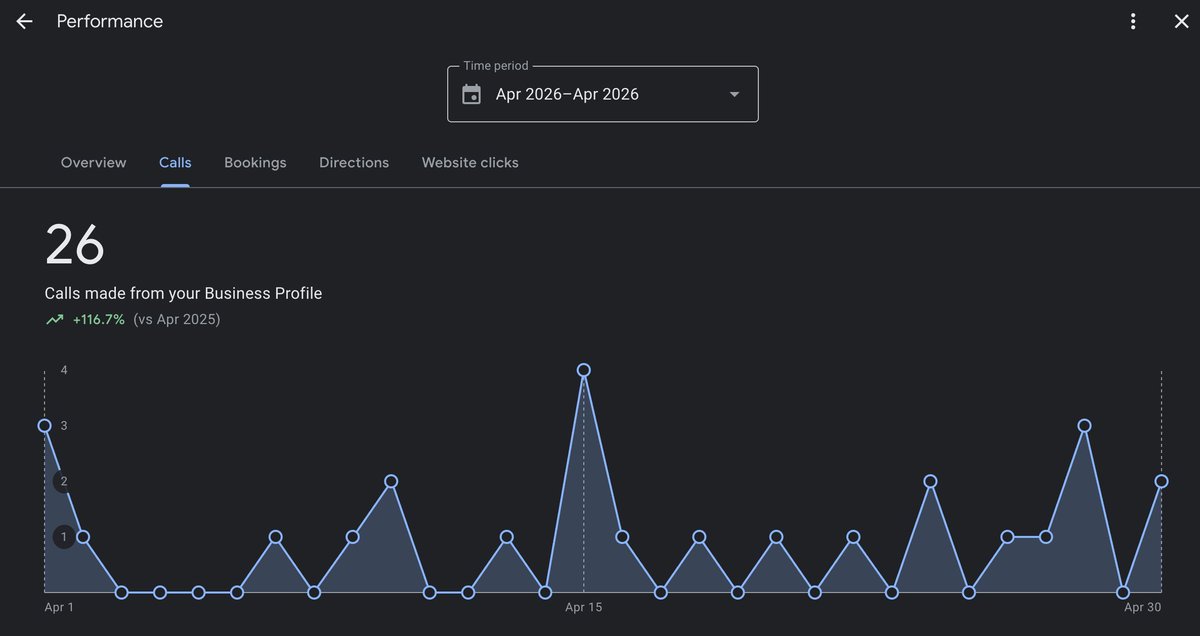
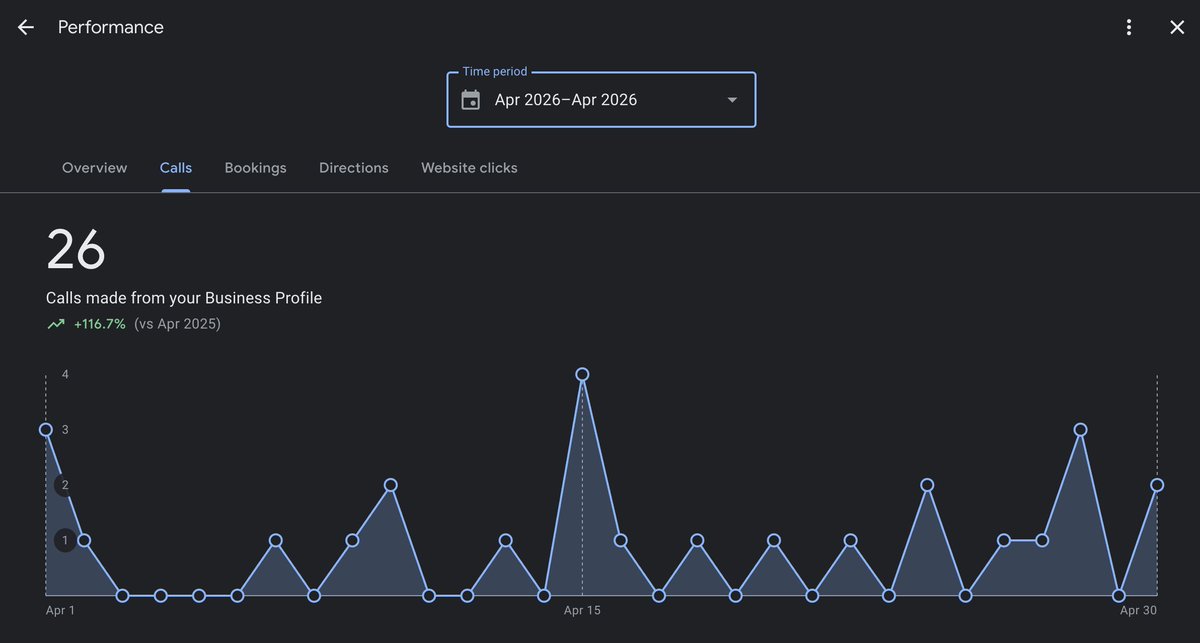
Our client got: 26 qualified inbound calls last month with a 115% year over year call volume increase.
All from SEO, in a competitive tier one city.
Since it came from SEO, their inbound close rate's about 60% from every call that we get to them, which far outpaces PPC.
A paid lead from LSA closes at 8-15% because the homeowner is shopping. They're talking to four contractors and you're competing on speed AND price.
When an SEO lead finds you they picked up the phone because they read your reviews, saw your map pin in their neighborhood, and decided you were the one. Close rates are far higher for these inbound leads.
26 calls × 60% close = ~15 closed jobs. Avg roofing ticket in Charlotte runs $10-25K depending on scope.
That's ~$180K in closed revenue from one month of only organic. Off a retainer that's a tiny fraction of that.
This is where the math for SEO begins to work for most home service businesses since the retainer is meaningless now for the lead volume.
This is the compounding curve that owners who quit at month four never get to see. 116% YoY call volume growth comes from their patience and trust in us.
The owners who can ride out the first 4-6 months of "nothing visible happening" are the ones who end up posting numbers like these.
The ones who can't are still buying leads.
3
3
554