
Sociogenomics, Behavioral Genetics, Statistical Genetics @herasight
Joined September 2018
- Tweets 996
- Following 1,390
- Followers 1,650
- Likes 49,799
38 Photos and videos



Tobias Wolfram retweeted

Jun 14
Five reasons the twin findings of very high heritability of IQ) remain important are:
1. Twin studies capture the entire genome and all types and modes of genetic variant and effect (baring denovo mutations etc.).
2. They capture and expose variance both within and between families:
3. They are the reality on the ground:
a) MZ twins are as similar in IQ as the same person taking the WAIS twice (!)
b) DZ twins sharing half their DNA are only half as similar.
4. If indirect effects of parental DNA are active for IQ, then this is is the extended phenotype of IQ. Rather than something to dismiss as "not h^2", it reveals that the selective benefit of the IQ adaptation includes:
a) Creating high SES niches for one's offspring.
b) Responding to the needs of the infant. That's everything from things as simple as treating crying etc as a need to respond too and effectively solve. More broadly, parental IQ enables the evoked environment: Answering questions about calculus or why the sky is blue accurately, curiously, and responsively. Buying engineering toys if that's the child's interests lie, or art or music or...
c) Supporting training and investing in the offspring's adult journey.
5. If part (or all) of apparent indirect genetic effects result from assortative mating, that too is not to be dismissed. Assortment is key to the ability distribution of the next generation and the variance of IQ and it creates a massive genetic conveyor belt sorting alleles so they end with other alleles point in the same phenotypic direction.
a) People choose mates about as well as they could if they received WAIS scores from potential partners and made maximizing that a top priority.
b) Assortative mating pumps in variance in genetics (making more high (and more low scorers) than would happen at random).
c) The exceptional parents are aligned with their exceptional offspring.
d) If high ability couples fail to have offspring that's a double whammy for the next generation.
There's much more we learn from twins, but that's plenty of reason they are as important as ever and the higher than current SNP-based heritability estimate is important as ever.
As Alex says, academia is perversely silent on all of this.
4
10
50
7,764
Tobias Wolfram retweeted

Jun 13
Fable feels like a polish freelancer. Shows up, speaks in its own dialect, writes the best code you've ever seen, and then disappears
46
139
2,463
164,610
Tobias Wolfram retweeted

Jun 13
European culture cannot stomach the actual conditions required to build. Giving very young, very cracked people absurd resources, freedom, speed, and trust.
They’ll form a committee, write a framework, host a summit, add 50 oversight layers, and that will be it.
Jun 13

it's not lack of compute that's the issze. it's that in Europe, it's unthinkable to pay a guy in his mid 20s $600k salary and give him resources and freedom to train models without having oversight by a committee of gerontocratic professorswho don't keep up with the research
27
54
1,103
75,938
Tobias Wolfram retweeted

Jun 13
ok i went to my first proper academic conference. it was small, like ~40 people focusing on the effects of porn on behavior/intimacy. i think this was my first like high-volume encounter with academia. notes:
*i LOVED some parts of it. the conversations i was overhearing were mentioning studies and confounders and well was that result replicable and asking good questions. curious people who understood clearly what I was doing and asked great questions and wanted to work with my data. In absolute heaven. It felt like I was truly around scientists who were curious about the world and good at finding stuff out about it. I was very rarely bored. they were great.
*people said the structure of the conference was much better than most academic conferences, but i havent really been to conferences and it seemed kinda bad to me. not very efficient. people did not seem interested in efficiency.
*all the conversations felt like they were being choked by the invisible hand of academia. id be like 'well just go research that' and htey'd be like 'no my career' or 'the irb would never'. their timelines for everything are SO LONG. i am used to just doing everything i want immediately. they talk about stuff like faraway future plans. all the juicy stuff is buried layers deep beneath proposals and committees and grants and all of it takes time.
*nobody knows what vibecoding is. i had trouble explaining it; i was like 'you can do a fast exploration of your data with claude here-' and it was like i was talking alien noises. I was like 'no seriously, if you want to build a way to track user behavior you can just ask claude-' and it was like i was screaming into the mist. polite nods. 'yeah tech is crazy huh' type responses.
*zero conception of methods of getting survey respondents outside of academic discipline. absolutely no concept of marketing or making things interesting/palatable to people they interact with. i blame this on school being boring. i was fantasizing about giving everybody a class on how to interface more vividly with the outside world. i think they'd be really good at it it's just outside their culture.
*a world outside academia didn't really seem 'real' to them? people would be like 'i dont like my job' and i'd be like 'have you thought about other ways to do research and make money' and it didn't seem accessible whatsoever. they had a bunch of reasons why all the things i suggested wouldn't work. no fire or interest in it. i think they *could* be interested and a lot of them would be much happier with more novel approaches, but i think there's been so few examples of this actually happening that people just don't know how to conceive of it. like they're not sure what questions to even ask or the first step to try. it's hard to get motivated if you dont' know what to do!
*I found myself fantasizing about making a like, halfway house for academics. There's enormous potential and talent and passion in the individual people, but the pulse in the beast is weak. I think the world is ripe for a good, well-funded institution to swoop in and give an alternative. i have ideas for how this would work, how it could make at least some money, but id need someone else to do the operations cause im too swamped with projects.
76
38
1,555
264,110
Tobias Wolfram retweeted

Jun 7
They should respond.
Jun 7

I believe the invitation from TRHG to Harden & Turkheimer stands and, as Visscher notes, they are free to respond in other outlets. It would seem unusual not to respond to a lengthy scholarly critique of your work after it has been praised by Peter Visscher and Steven Pinker!
3
4
1,029
Tobias Wolfram retweeted

Jun 13
it's not lack of compute that's the issze. it's that in Europe, it's unthinkable to pay a guy in his mid 20s $600k salary and give him resources and freedom to train models without having oversight by a committee of gerontocratic professorswho don't keep up with the research

Btw I believe we have a mostly wrong framing of what could be done in Europe. Italy's Leonardo supercomputer datacenter alone plus Swiss National Supercomputing Centre has more than enough compute to train a very large LLM. It's not something impossible, also there is not magic recipe: it's just scaling, every smart team with the GPUs is doing it. People that fatally believe it is not something within reach are wrong.
121
439
7,307
469,033
Tobias Wolfram retweeted

The problem with the heritability of IQ debate is that almost no one seems to be engaged in it in good faith.
Anti-hereditarians serve up slop nonsense about heritability being 10-15% to their audience, and hereditarians repeat old twin estimates of 80% like a broken record.
Part of the problem is people want to debate this but academia doesn't/can't study it properly because no one funds the data to be collected or they keep it under tight lock and key or explicitly censor it, as has been done in several NIH datasets.
Jun 12

IQ, giftedness, and the heritability thereof is maybe the best example of a divide between *rhetorical* empiricists/technocrats and *actual* experts.
The lib pundits are still in thrall to The Bell Curve; actual geneticists & neurologists have utterly shredded it
42
36
430
51,773
Tobias Wolfram retweeted

Jun 12
The sheer scale of a trillion dollars can be hard to comprehend. Let me put it in perspective. You would be able to buy 42 miles of high speed rail in California with that much money.
Jun 12

The sheer scale of a trillion dollars can be hard to comprehend. Let me put it in perspective. You would have to earn a dollar a year for a trillion years straight to have that much money.
353
2,224
28,332
877,700
Tobias Wolfram retweeted
Jun 8
New paper just published: Creative Achievement: Behavioral Genetic Evidence for Overlap with General Cognitive Ability and for Independent Latent Traits. icajournal.scholasticahq.com…
1
12
32
6,971
Tobias Wolfram retweeted

Jun 11
I found this project pretty chilling, if fascinating: a scenario depicting what will happen to Europe if it doesn't step up on AI. (In short, economic collapse and gutting for parts by China and the US.) europe2031.ai/ a long read/listen, but I hope worth it
6
4
36
5,406
Tobias Wolfram retweeted

Jun 11
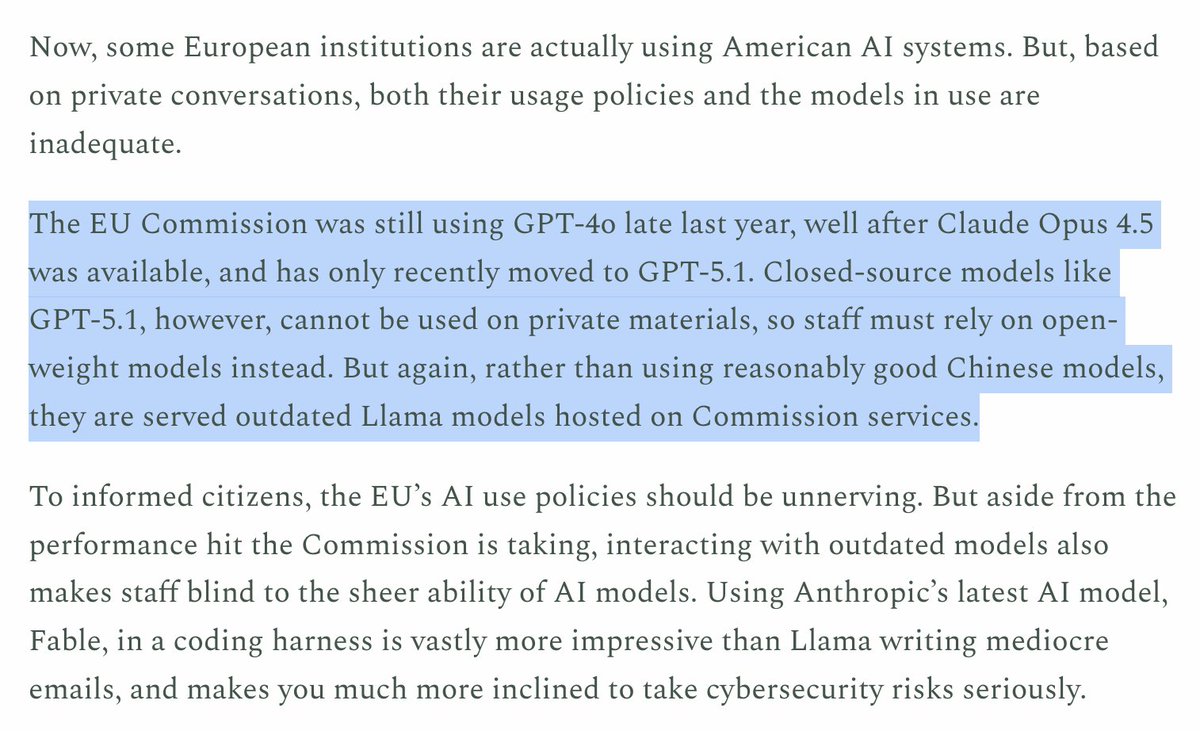
There is a simple reason why European government officials underestimate AI progress: They don't have access to the best systems.
- The EU Commission still used GPT-4o when Claude Opus 4.5 was out.
- For confidential things, staff use open-source models. But not good Chinese models, instead the completely outdated Llama-70b.
If you never see GPT-5.5 or Fable doing research or coding, disbelief is a lot easier.
simongrimm.substack.com/p/ge…
14
34
306
32,167
Tobias Wolfram retweeted
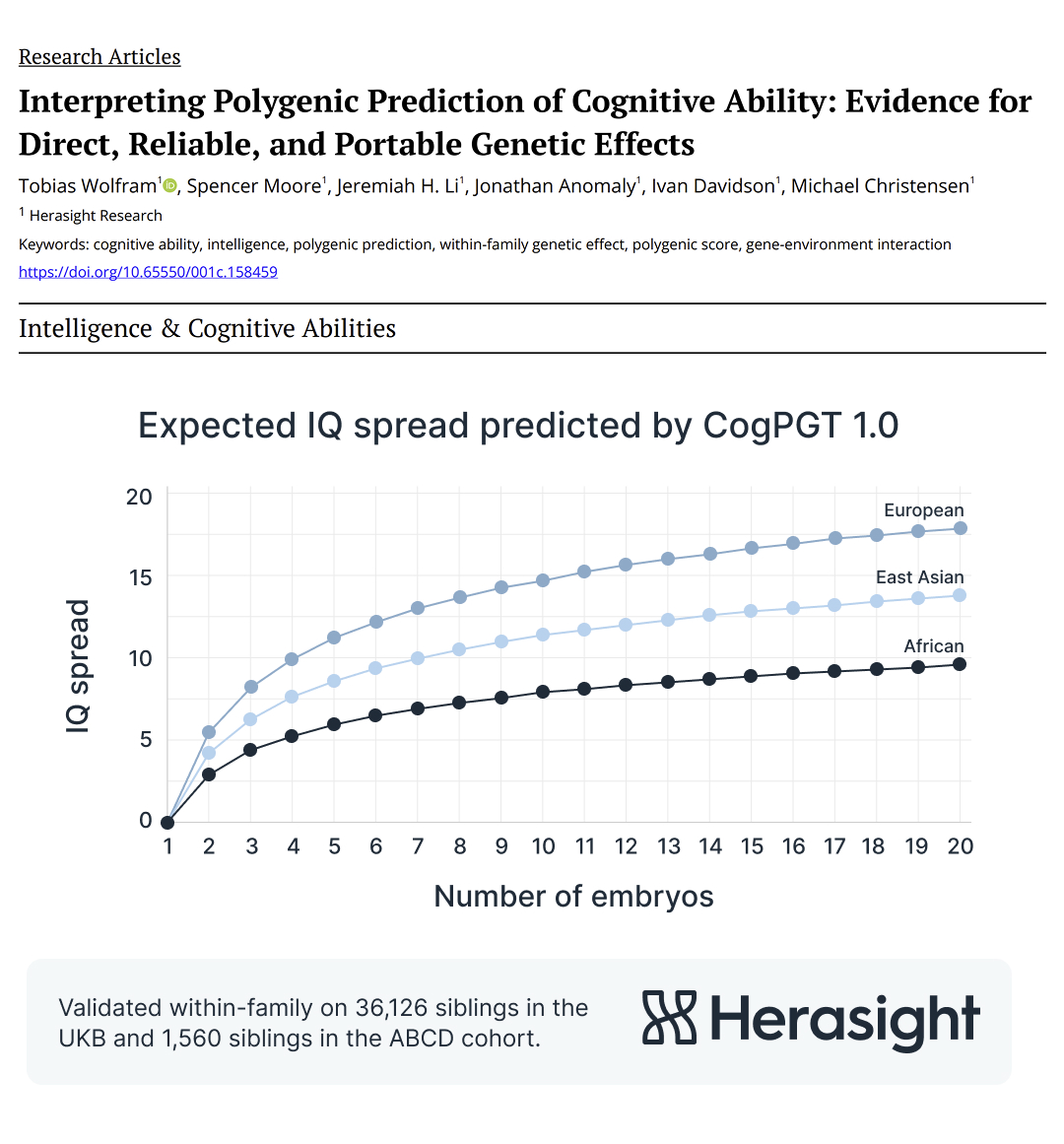
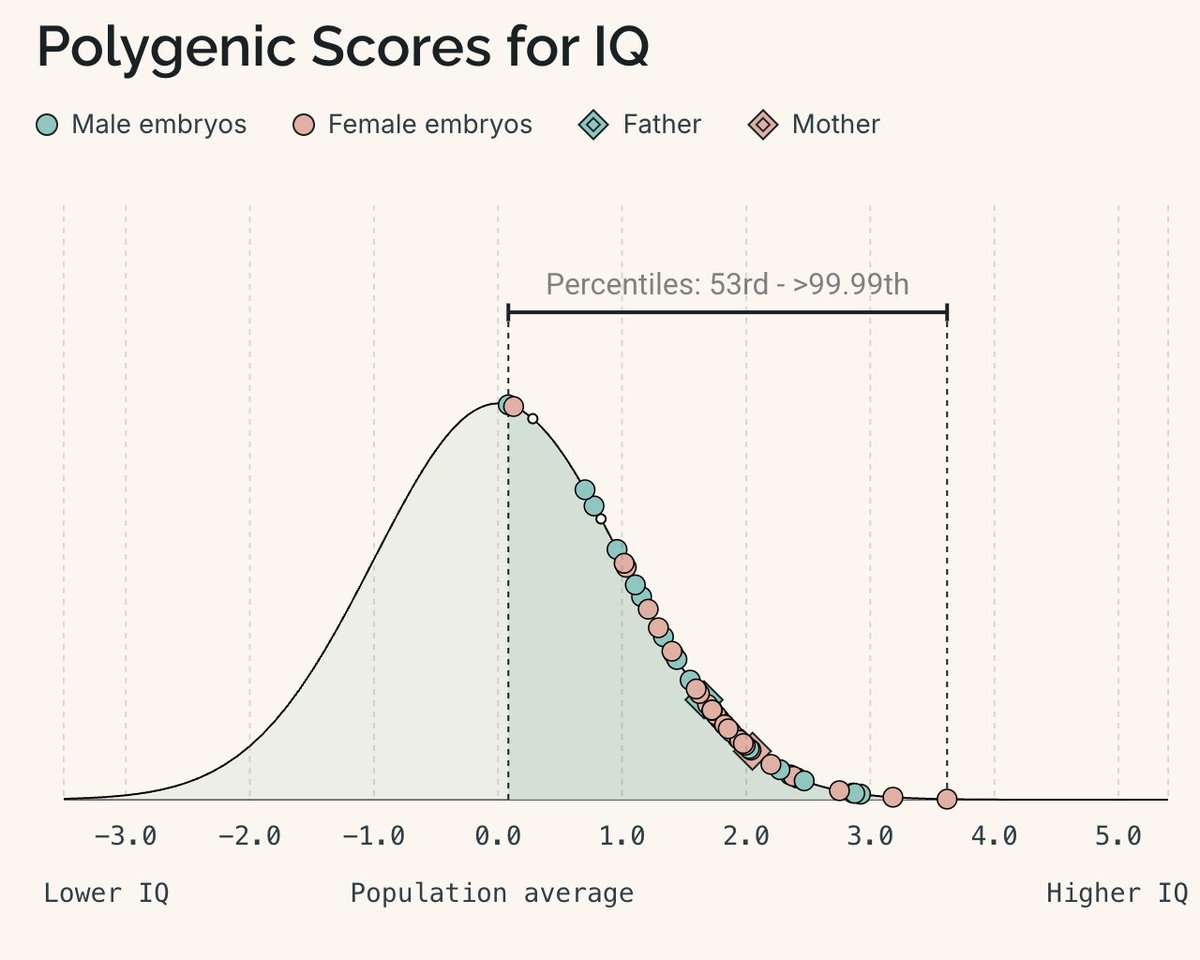
Selection of which embryo to transfer in IVF is currently done based purely on morphology. Polygenic scores give expected trait values and disease risks that can be used in addition. It seems silly to not allow people to see this information to help guide selection.
Jun 10

Crazy new twist in this story: when she asked the doctor which embryo he would have picked without Herasight's screening, he pointed to the one with the lowest IQ.
If they didn't have this data, their kid would have lost about 24 IQ points.
2
5
41
3,522
Tobias Wolfram retweeted

Jun 10
Crazy new twist in this story: when she asked the doctor which embryo he would have picked without Herasight's screening, he pointed to the one with the lowest IQ.
If they didn't have this data, their kid would have lost about 24 IQ points.
May 22
A friend of mine had her embryos screened by Herasight and they found one with an IQ score in the 99.99th percentile
38
30
519
103,871
Tobias Wolfram retweeted

Jun 10
Initiatives like the UK Biobank require massive upfront investment, but returns compound over decades
For example, ~57,000 of the original 500,000 participants recruited between 2006-2010 to the UK Biobank had passed away by end of 2024.
As that number grows, we'll have a unique, deeply phenotyped resource for studying aging and mortality trajectories.
The dataset gets more powerful with time.
Jun 9

The compounding value of multi-dimensional biobanks is extremely mind blowing.
UK Biobank recruited ~500,000 people between 2006 and 2010, collected baseline measurements and biological samples, and continued linking participants to health records as diseases developed over time.
The interesting findings about disease and survival now coming out of it depend on that cohort having been tracked for fifteen-plus years.
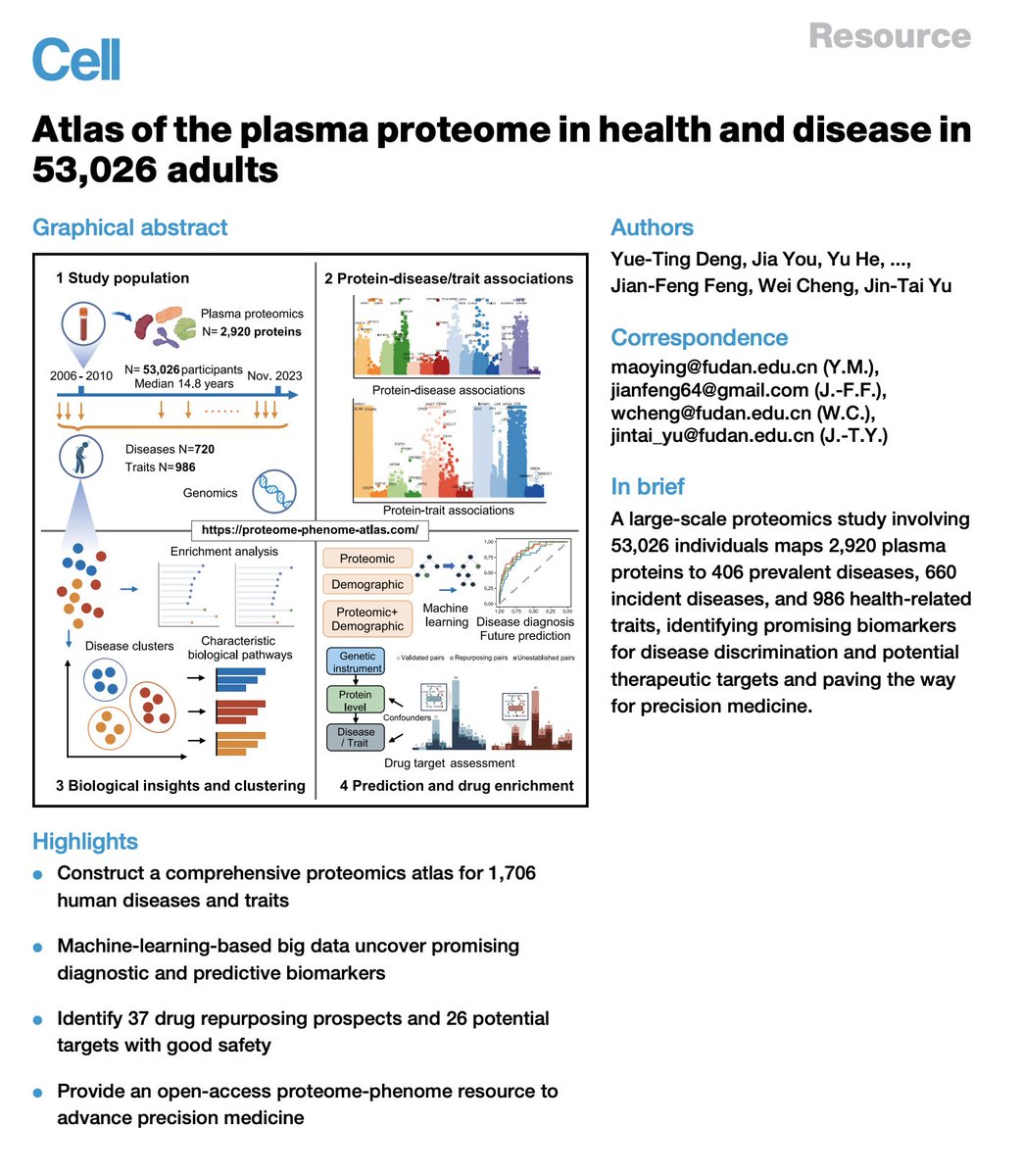
Like this Cell paper using it to connect 2,920 plasma proteins in 53,026 people to hundreds of diseases and health-related traits. That produced hundreds of thousands protein-disease and protein-trait associations from one longitudinal resource. The authors also identified 37 drug-repurposing prospects and 26 potential targets with favorable safety profiles. cell.com/cell/fulltext/S0092…
And there will be more.
Longitudinal time is a non-substitutable input, as we've written about (link below). No amount of money could recreate UK Biobank by next month.
1
16
84
8,448
Tobias Wolfram retweeted
Hanania is right that regulation of medical data imposes costs way beyond any benefits.
It contributes to a research environment where navigating data access and restrictions can become more of a challenge than the science itself, while handing too much power to gatekeepers.

I wrote about the insanity of "medical privacy."
It's hard now to do research that could cure major diseases because we are too worried about the handling of people's personal data, which they themselves appear not to care about.
HIPAA was a mistake. richardhanania.com/p/privacy…
3
15
86
14,931
Tobias Wolfram retweeted
Visscher accuses behavior genetics critics of adhering to a strange law of exceptionalism for human behavioral traits:
"All traits in all species follow the same theoretical laws and rules of evolutionary, population and quantitative genetics and are subject to the same experimental designs and analytical methods, apart from behavioral traits in humans"
However, critics are often far less consistent than this law would suggest. BMI is at least partly a behavioral trait, but is rarely singled out for criticism, for example.
Severe psychiatric and neurodevelopmental conditions are often considered to be amenable to genetic analysis, but not intelligence, even though mutations in the same genes often affect both.
Jun 5
Peter Visscher has published a commentary on my 'Behavioral Genetics and Human Agency' trilogy in Twin Research and Human Genetics. It's a great honor to have such a distinguished scientist describe this labour of love as "a necessary treatise" and "a scholarly piece of work". Peter's commentary is called 'In Defence of Behavioral Genetics' and uses my trilogy (which is itself an extended defence of behavioural genetics) as a springboard to address various criticisms the field has faced over the years. Highly recommended.
doi.org/10.1017/thg.2026.100…
3
12
59
24,980
Tobias Wolfram retweeted
The objection to editing the human germline because it is passed on is one of the weakest arguments against it.
If you can easily edit in a change you can easily edit it out of the next generation - by which time the technology will have advanced further.

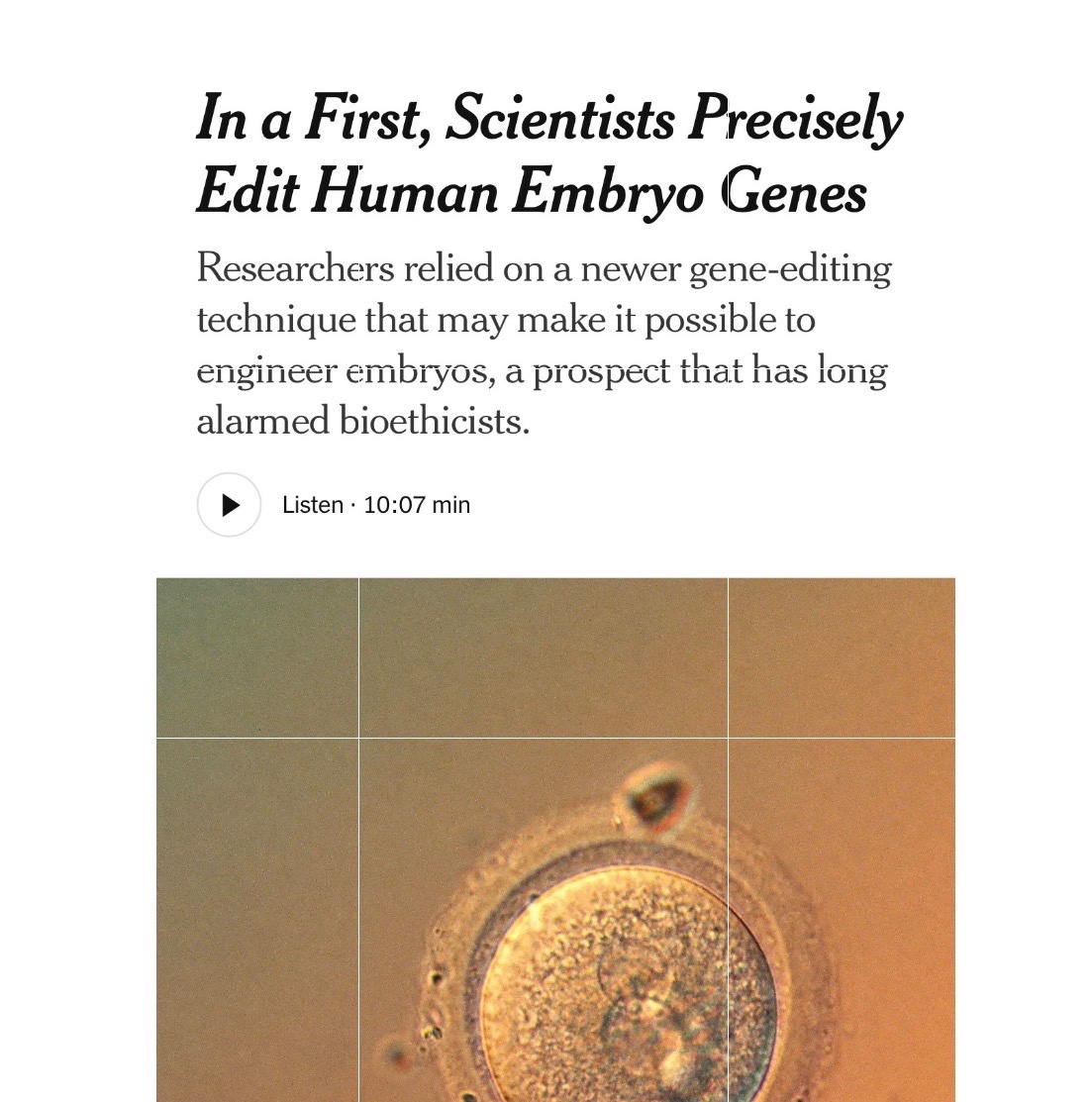
This @nytimes article rightly mentions the eugenic concerns of embryonic gene editing. But there’s another, perhaps even greater concern it doesn’t mention: the potential for these edits (or mistakes) to be passed on generationally. They’re not just editing one embryo’s genes; they’re editing the future of the human race. THAT’S why scientists have long avoided this type of heritable gene editing.
4
12
73
6,864
Tobias Wolfram retweeted
I never understood, why the AD field got trapped in the proxy cases approach, which adds unnecessary noise to a trait that (1) is anyways difficult to accurately define clinically (high clinical overlap across dementia phenotypes) and (2) is common enough (i.e. assembling large numbers of cases should be feasible).
By embracing this approach, the largest AD GWAS datasets now contain substantial numbers of proxy cases also adding noise to all secondary follow-up analyses pursued by other researchers.
This study appears to move away from this paradigm by (1) highlighting signals identified from clinically diagnosed cases and (2) providing summary statistics excluding proxy cases, which should be valuable for downstream analyses.
Actually, the study shows that some of the AD hits from the proxy GWAS were actually associated with neuropathologies other than Alzheimer's.

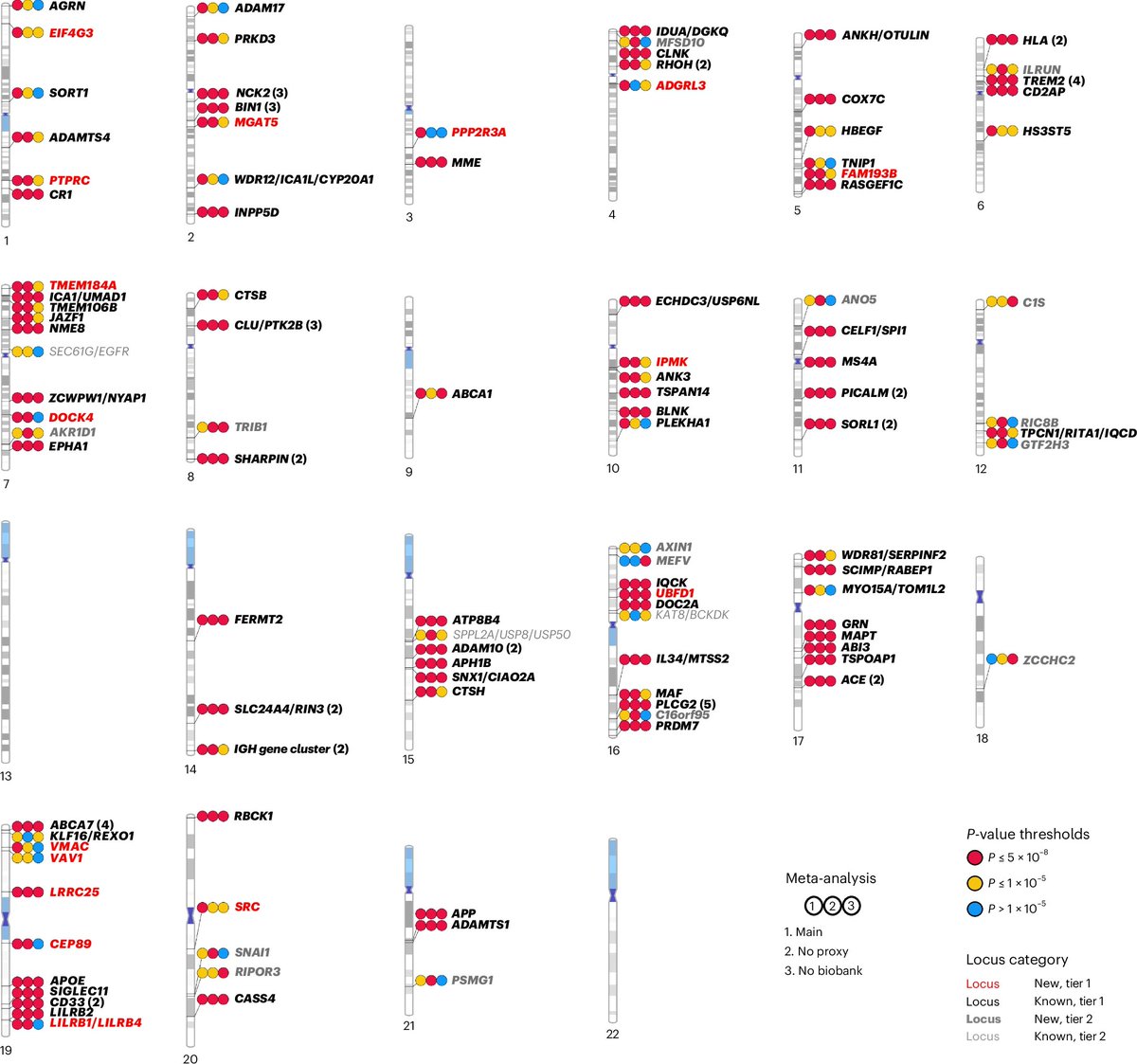
A new GWAS meta-analysis of Alzheimer's disease and related dementias (ADRD) in 72,721 AD cases, 55,960 proxy ADRD cases (=reporting a parent/sibling with dementia), and 849,833 controls.
The study detected 91 loci (16 new), with expression of top genes strongly enriched in microglia. 56 of them were confirmed among clinically diagnosed AD cases.
1
6
34
4,181
Tobias Wolfram retweeted

Jun 5
Peter Visscher has published a commentary on my 'Behavioral Genetics and Human Agency' trilogy in Twin Research and Human Genetics. It's a great honor to have such a distinguished scientist describe this labour of love as "a necessary treatise" and "a scholarly piece of work". Peter's commentary is called 'In Defence of Behavioral Genetics' and uses my trilogy (which is itself an extended defence of behavioural genetics) as a springboard to address various criticisms the field has faced over the years. Highly recommended.
doi.org/10.1017/thg.2026.100…
3
21
105
56,690
Tobias Wolfram retweeted

Jun 4
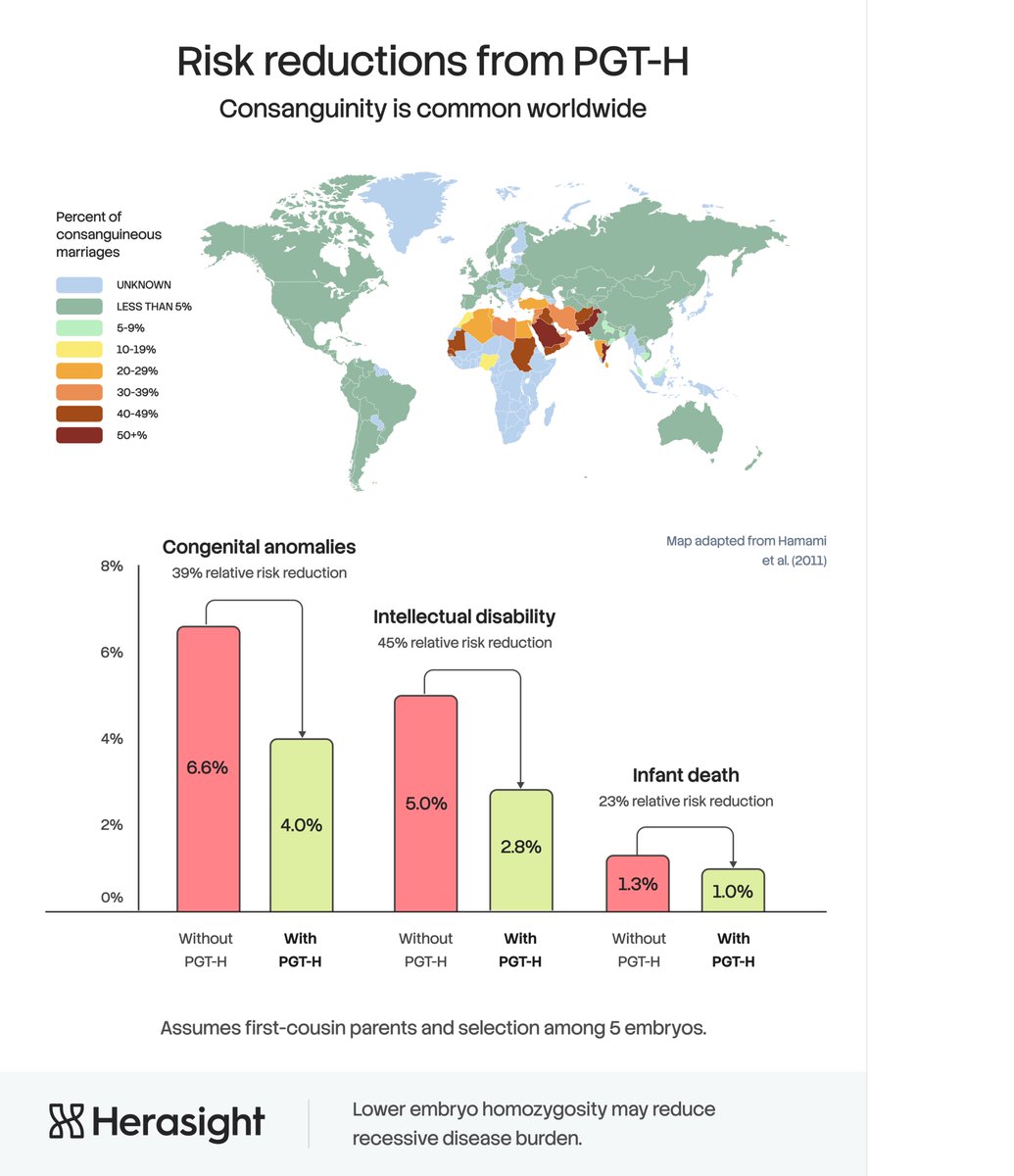
We are very excited to announce PGT-H, a new form of genetic screening for couples with shared ancestry.
We’ve been in talks with the health ministries of several Gulf states. If PGT-H were widely adopted, it would achieve large population health benefits.
Jun 4

Today @herasight reveals PGT-H, a new embryo test that can help reduce disease risk in children from consanguineous couples.
For first-cousin couples, we estimate intellectual disability risk of about 5% without screening, compared with about 2% in the outbred population.
12
41
2,367