
- Tweets 104
- Following 7
- Followers 49
- Likes 108
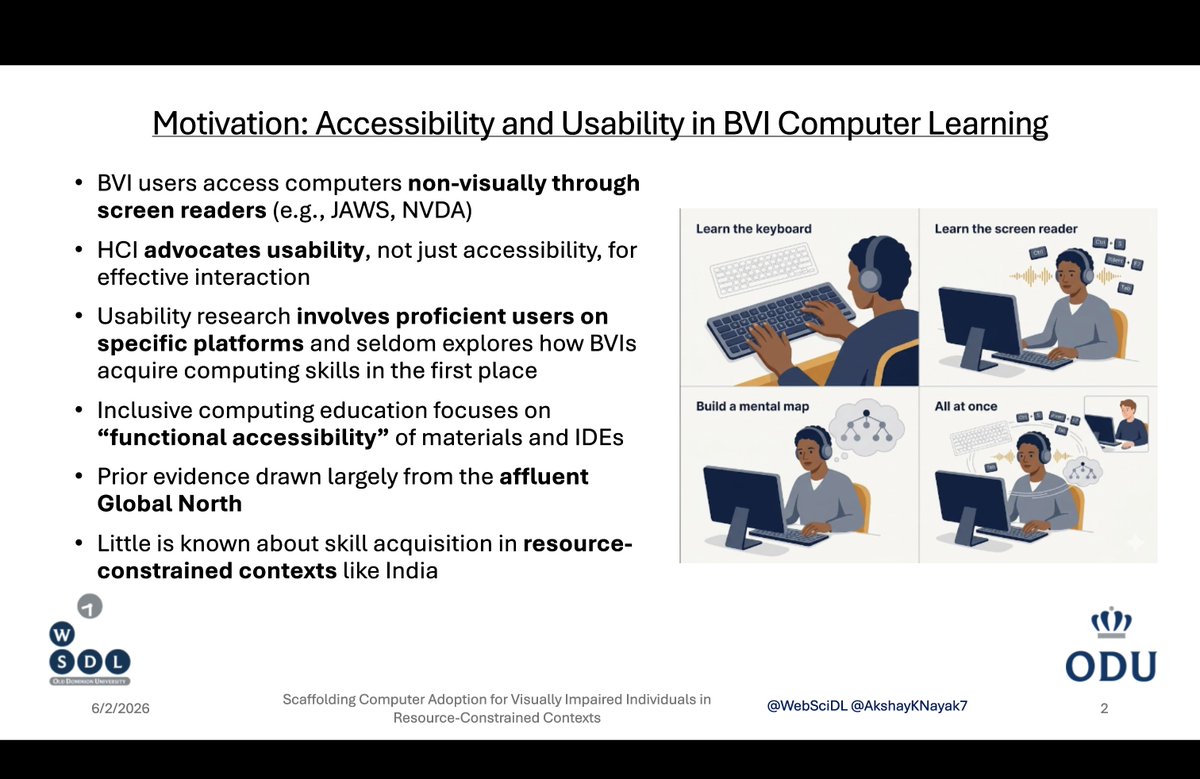
ALT Presentation slide titled “Motivation: Accessibility and Usability in BVI Computer Learning.” The slide explains that blind and visually impaired users access computers non-visually through screen readers such as JAWS and NVDA. It argues that HCI should emphasize usability, not only accessibility, and notes that existing usability research often studies proficient users on specific platforms rather than how BVI learners acquire computing skills. The slide also states that inclusive computing education often focuses on functional accessibility of materials and IDEs, while prior evidence is largely from affluent Global North contexts. A four-panel illustration shows a learner trying to learn the keyboard, learn a screen reader, build a mental map, and manage all of these tasks at once.
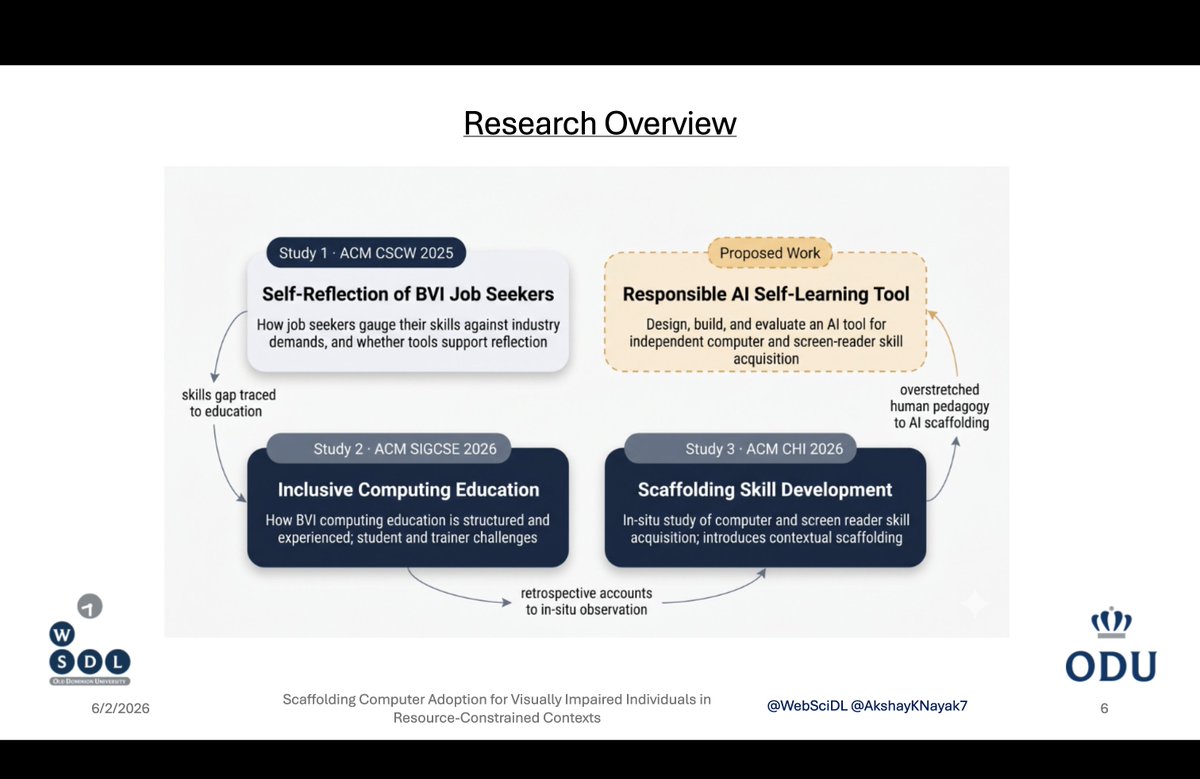
ALT Presentation slide titled “Research Overview.” A flow diagram summarizes three studies and one proposed tool. Study 1, labeled ACM CSCW 2025, focuses on self-reflection of BVI job seekers and how they assess their skills against industry demands. Study 2, labeled ACM SIGCSE 2026, focuses on inclusive computing education and the challenges students and trainers experience. Study 3, labeled ACM CHI 2026, studies scaffolding skill development through in-situ observation of computer and screen reader skill acquisition. A proposed responsible AI self-learning tool is shown as the next step, designed to support independent computer and screen-reader skill acquisition. Arrows connect the studies, showing a progression from skill gaps to education, in-situ observation, and AI scaffolding.
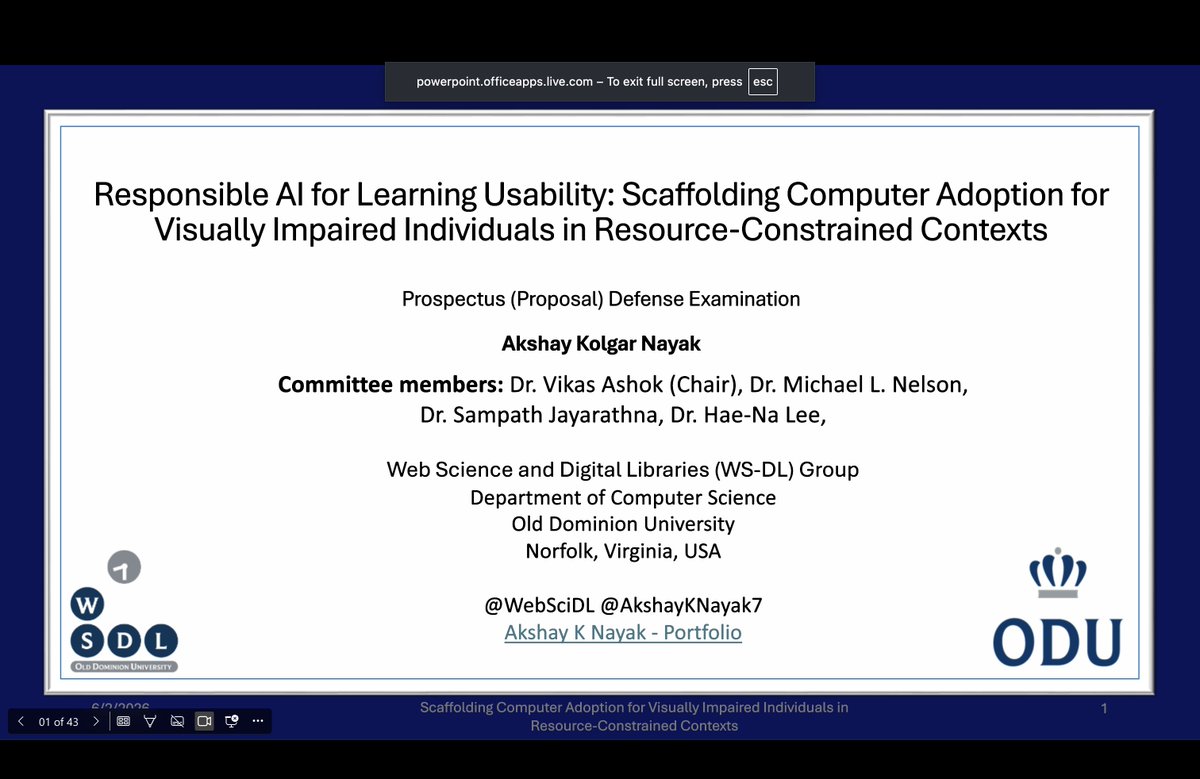
ALT Title slide for a PhD Prospectus Defense Examination. The presentation is titled “Responsible AI for Learning Usability: Scaffolding Computer Adoption for Visually Impaired Individuals in Resource-Constrained Contexts.” The presenter is Akshay Kolgar Nayak. Committee members listed are Dr. Vikas Ashok as chair, Dr. Michael L. Nelson, Dr. Sampath Jayarathna, and Dr. Hae-Na Lee. The affiliation is the Web Science and Digital Libraries group, Department of Computer Science, Old Dominion University, Norfolk, Virginia, USA. The slide includes the WS-DL and ODU logos, the handles @WebSciDL and @AkshayKNayak7, and a portfolio link label for Akshay K Nayak.
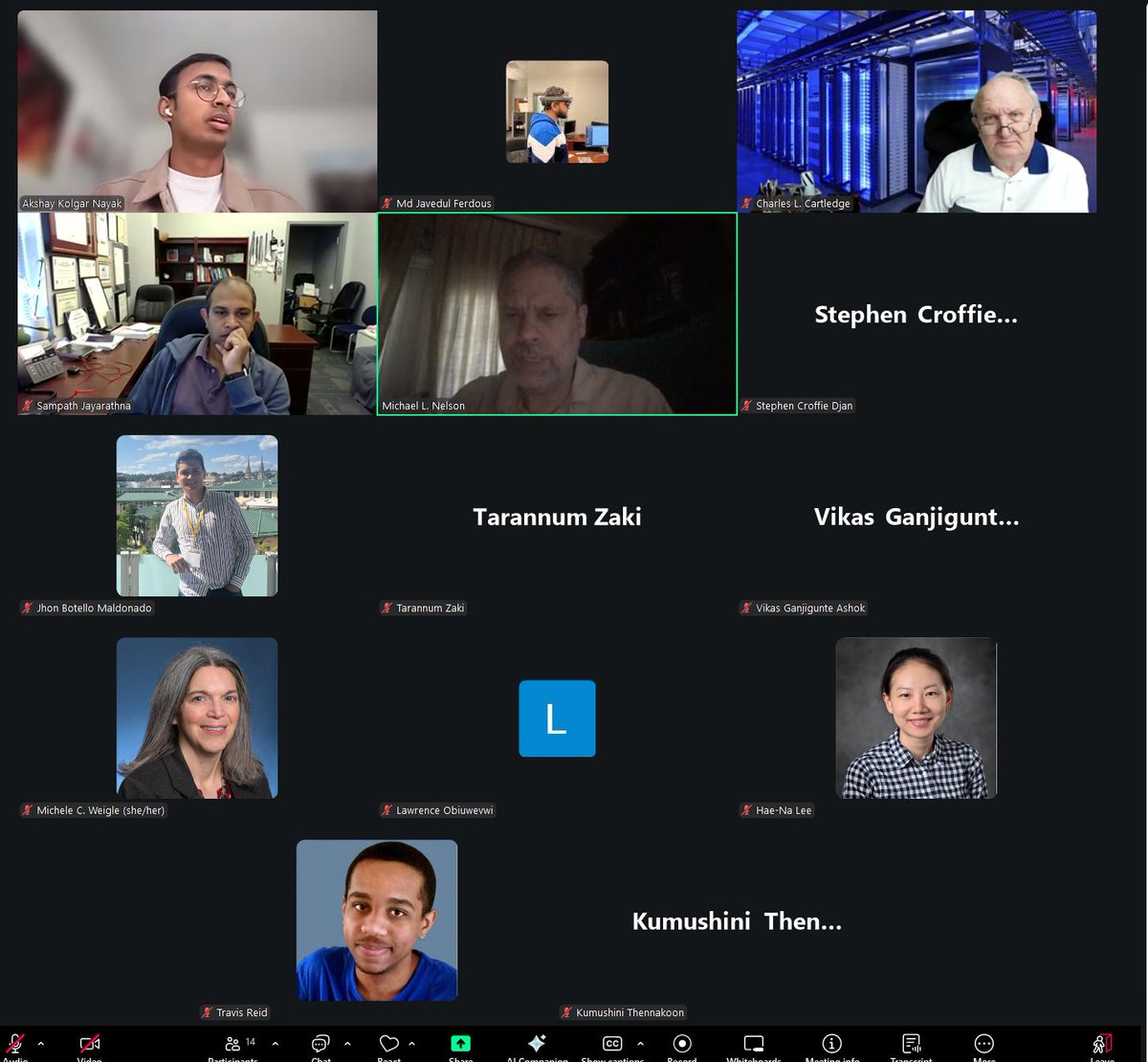
ALT Zoom gallery view from a PhD prospectus defense meeting. The screen shows 14 participants in a grid layout. Some participants have live video on, some use profile photos, and others appear as black tiles with only their names or initials displayed. One participant tile near the center is outlined in green, indicating the active speaker. Most participants appear muted. The Zoom control bar is visible at the bottom of the screen.


ALT A title slide for “AccessMenu: Enhancing Usability of Online Restaurant Menus for Screen Reader Users.” Includes subtitle referencing the ACM W4A 2025 conference. Lists Akshay Kolgar Nayak as the candidacy exam presenter and names committee members Michael Nelson, Michele Weigle, Sampath Jayarathna, Jian Wu, and advisor Vikas Ashok. Bottom shows ODU and WS-DL Group branding and social media handles.
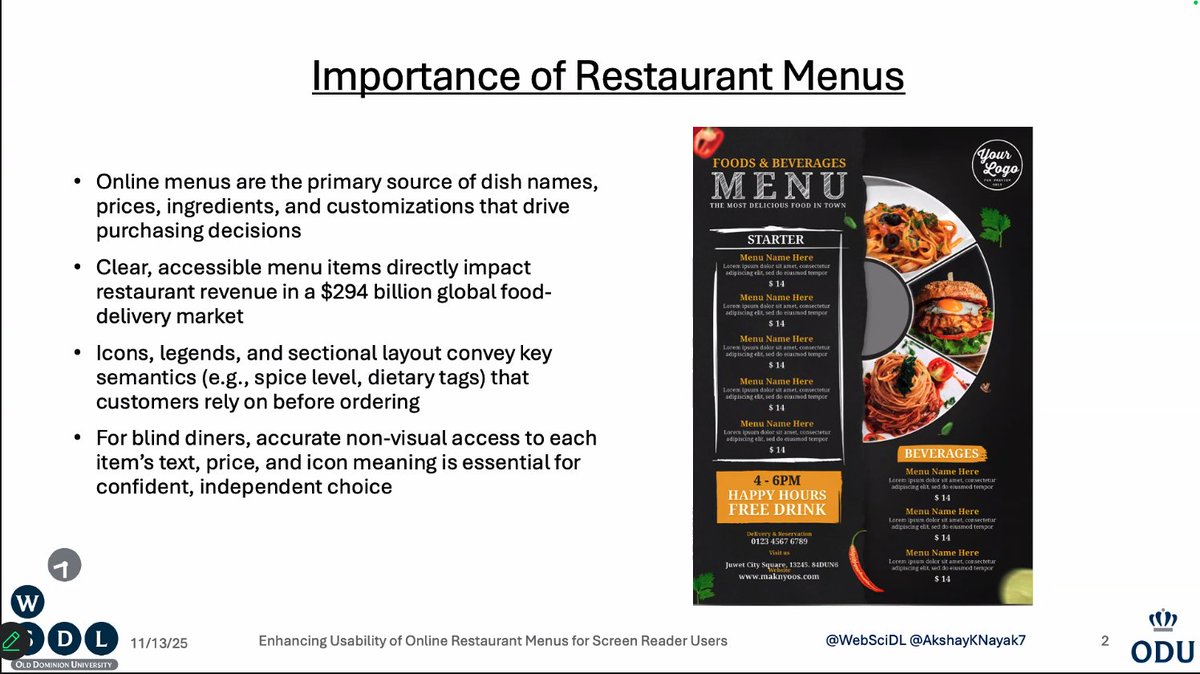
ALT A slide titled “Importance of Restaurant Menus.” Left side contains bullet points describing why online menus matter, including dish information and decision-making. Right side shows a stylized restaurant menu with images of pasta, burgers, and drinks arranged in circular sections, along with labeled starter and beverage items.
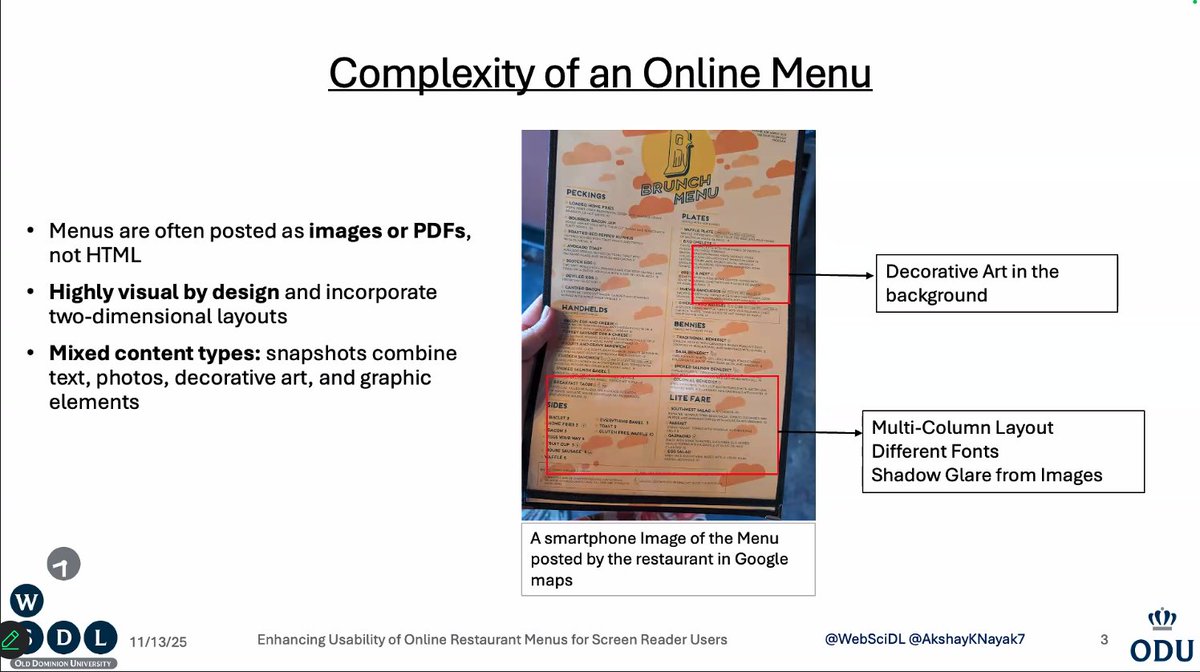
ALT A slide titled “Complexity of an Online Menu.” Left side lists bullet points explaining that menus are posted as images or PDFs, highly visual, and mix text, photos, and decorative graphics. Right side shows a smartphone photo of a brunch menu with decorative art, multiple columns, varied fonts, and glare. Boxes highlight layout complexity such as background art and shadows.
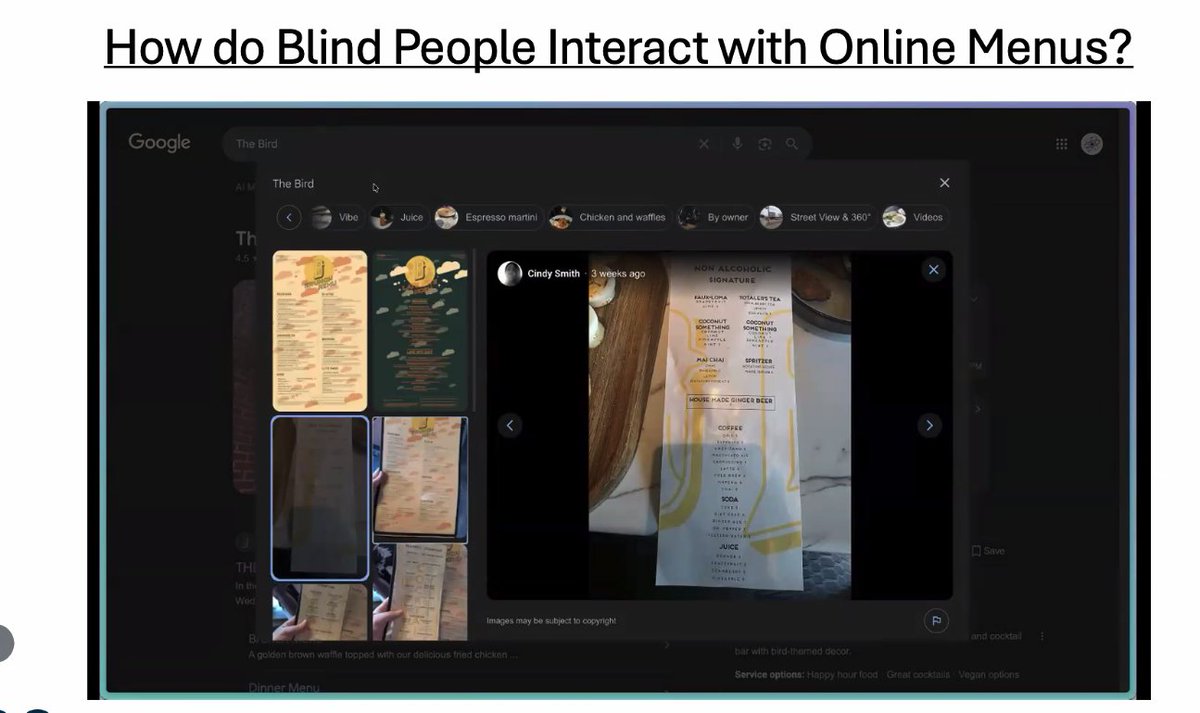
ALT A slide titled “How do Blind People Interact with Online Menus?” showing a screenshot of Google Images displaying various restaurant menu photos. The center shows a large image preview of a tall, narrow menu. Surrounding thumbnails show multiple colorful menu designs posted by restaurants.


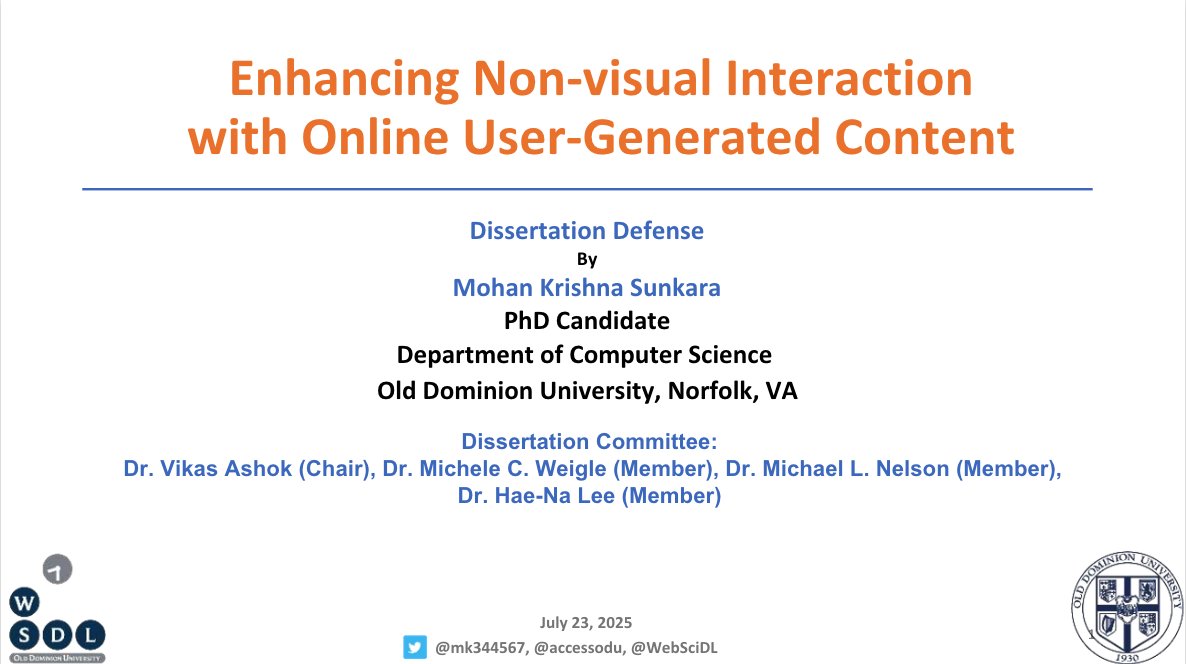
ALT Front Page of the slide
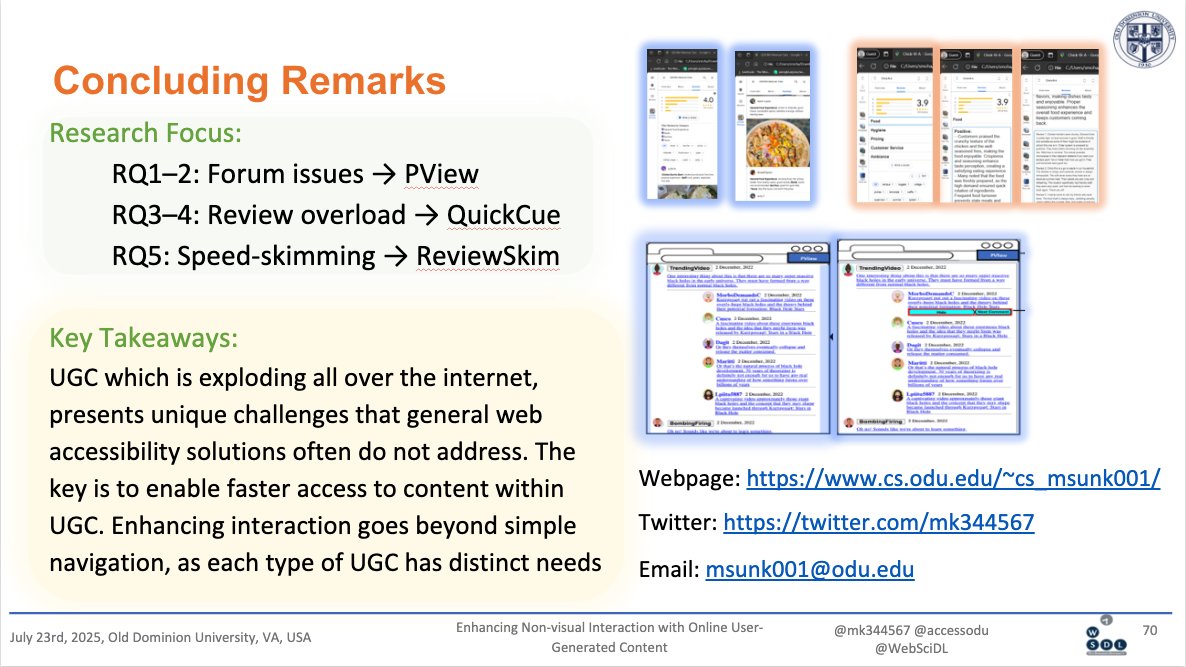
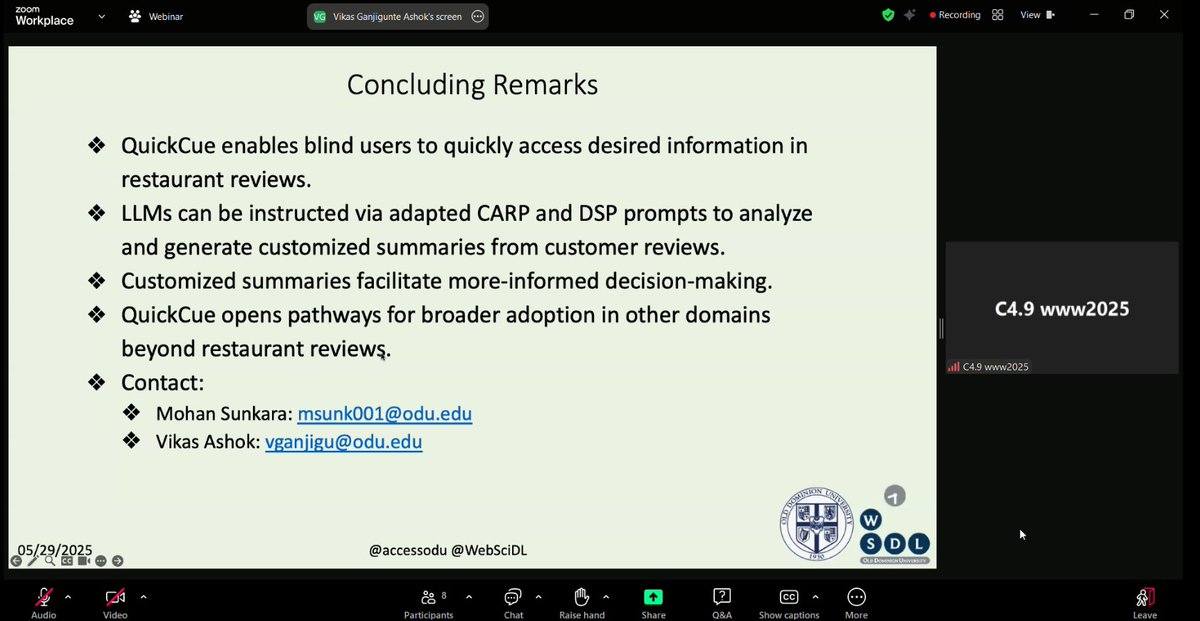
ALT Concluding remarks
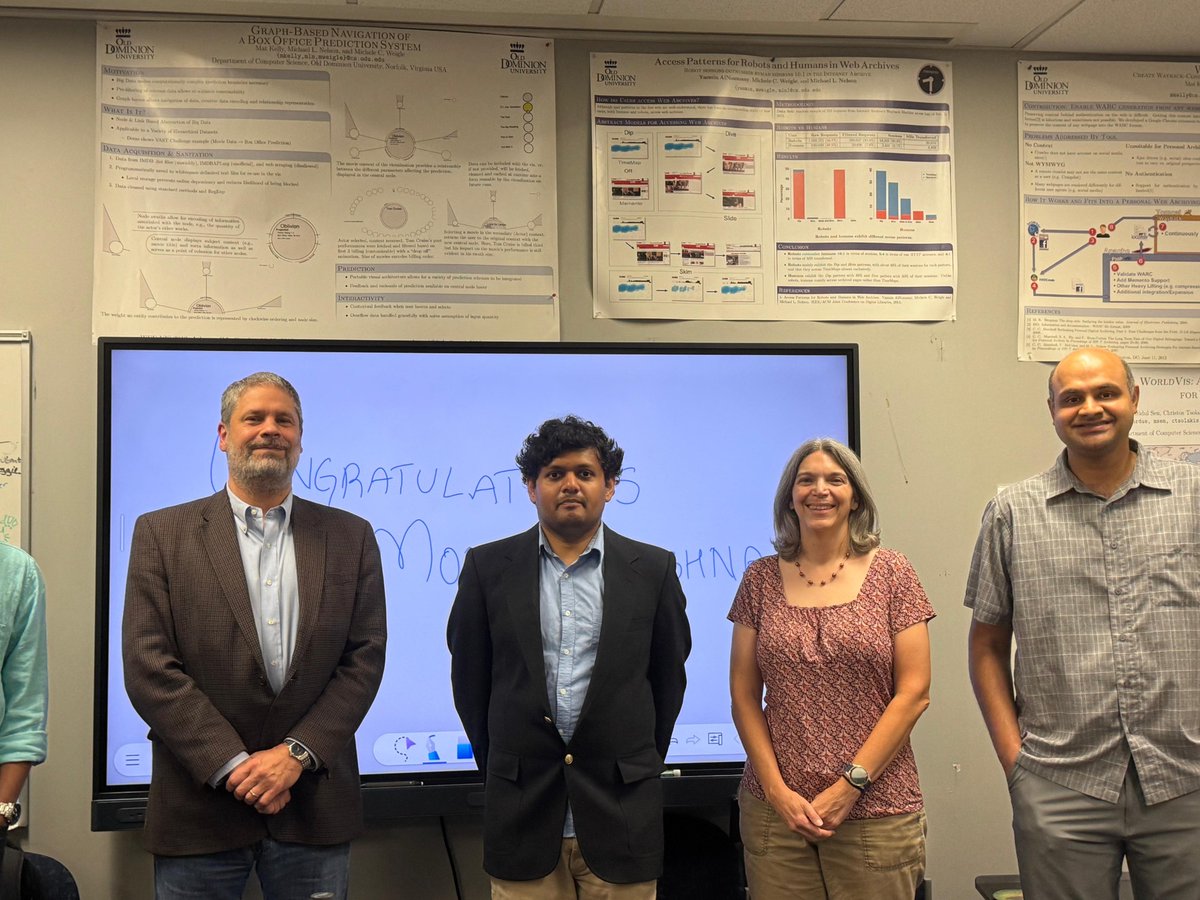
ALT Dissertation committee member
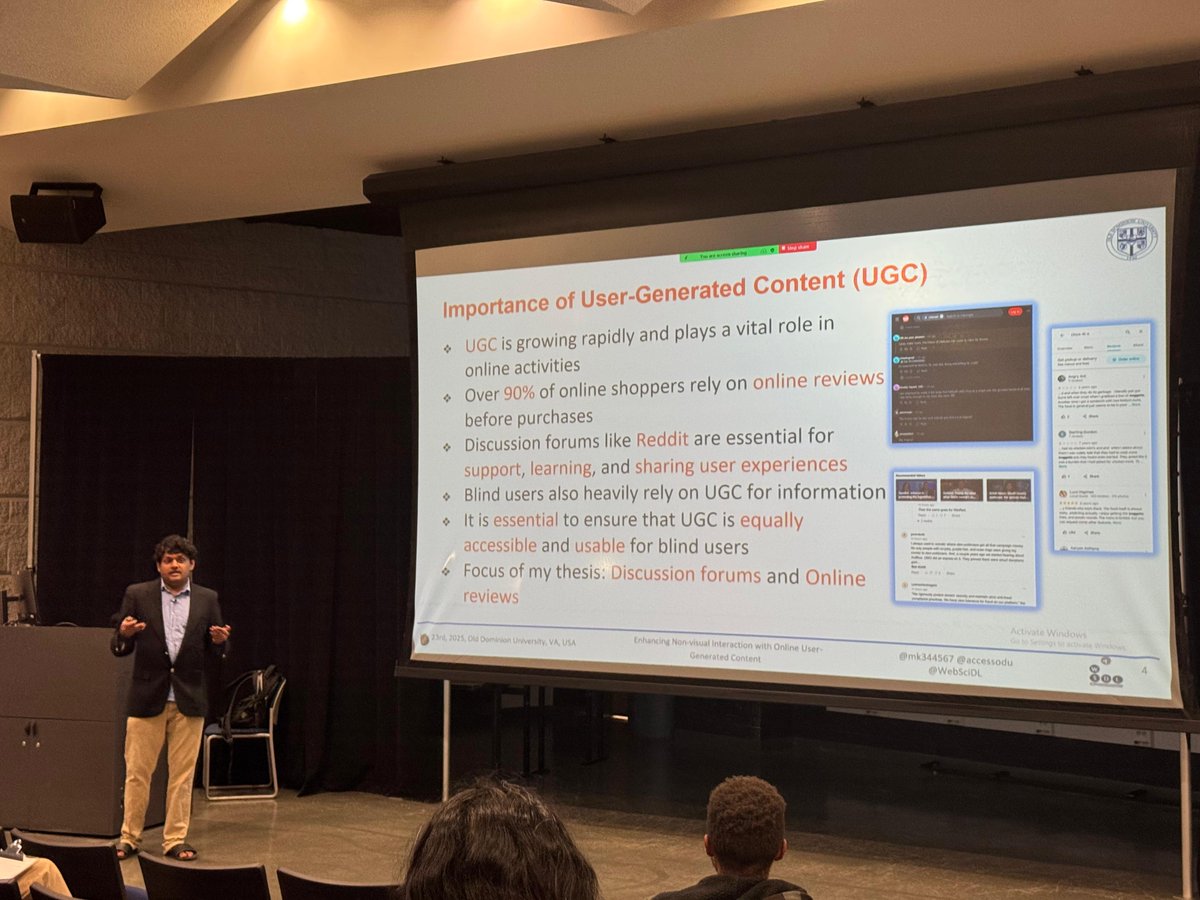
ALT Mohan is demonstrating the importance of user-generated content.
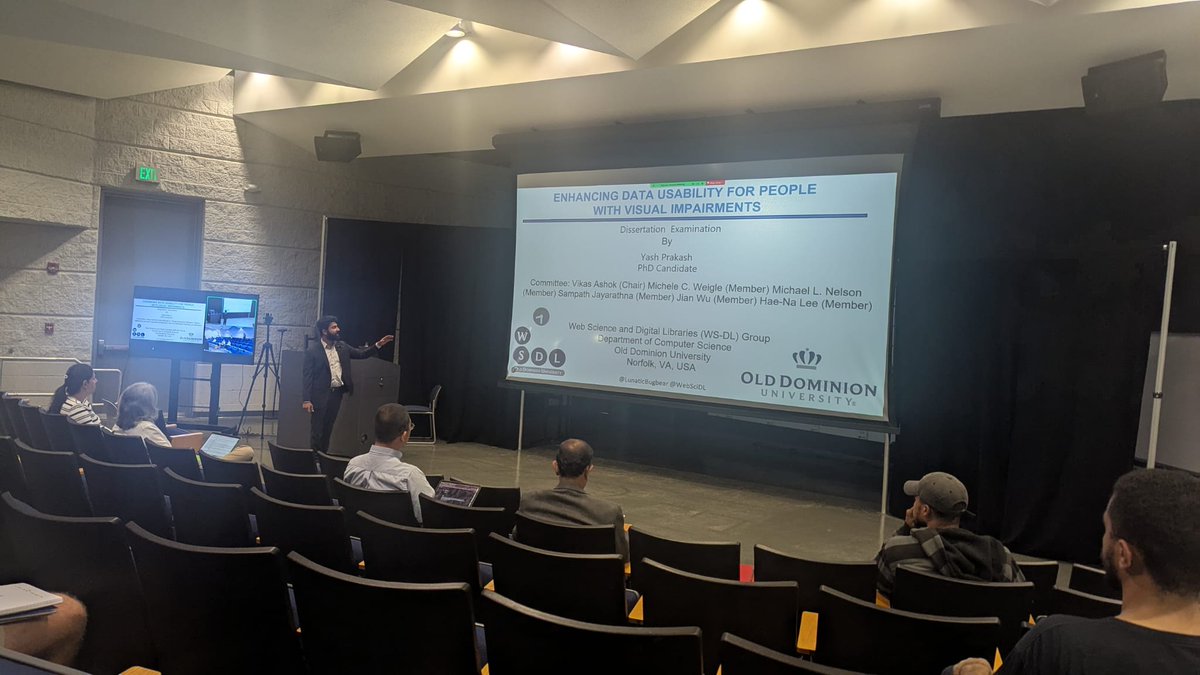
ALT Yash is presenting the initial keynote.
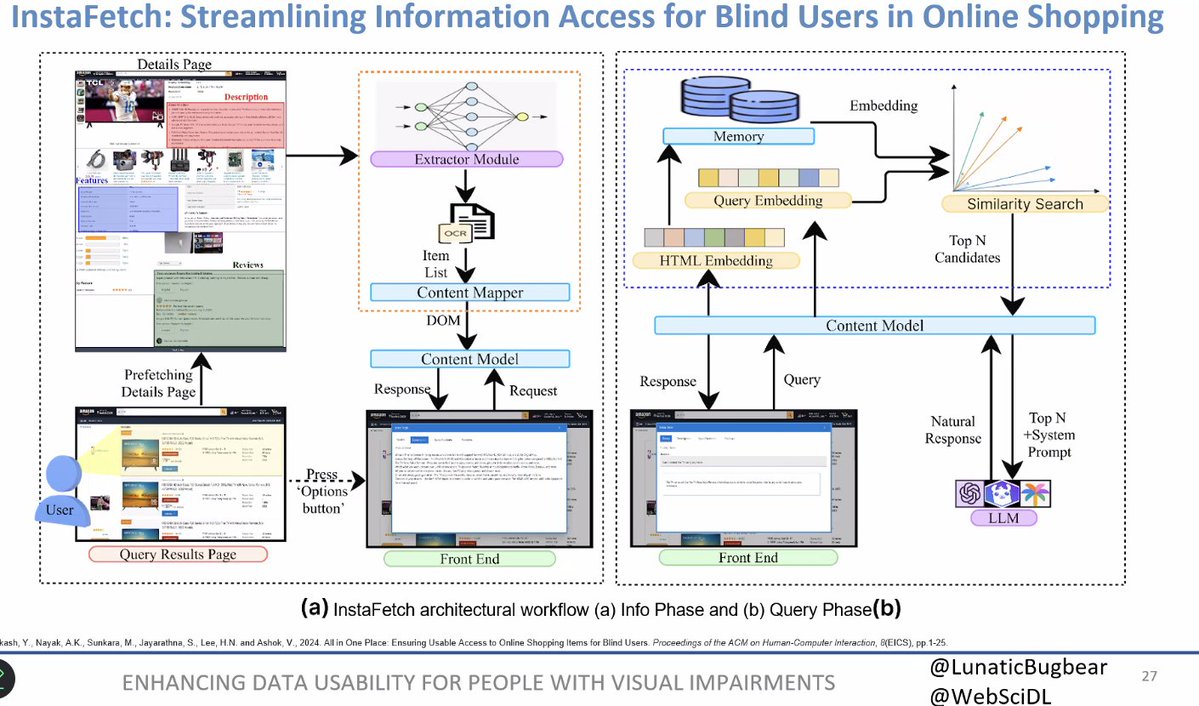
ALT Quick Overview of InstaFetch
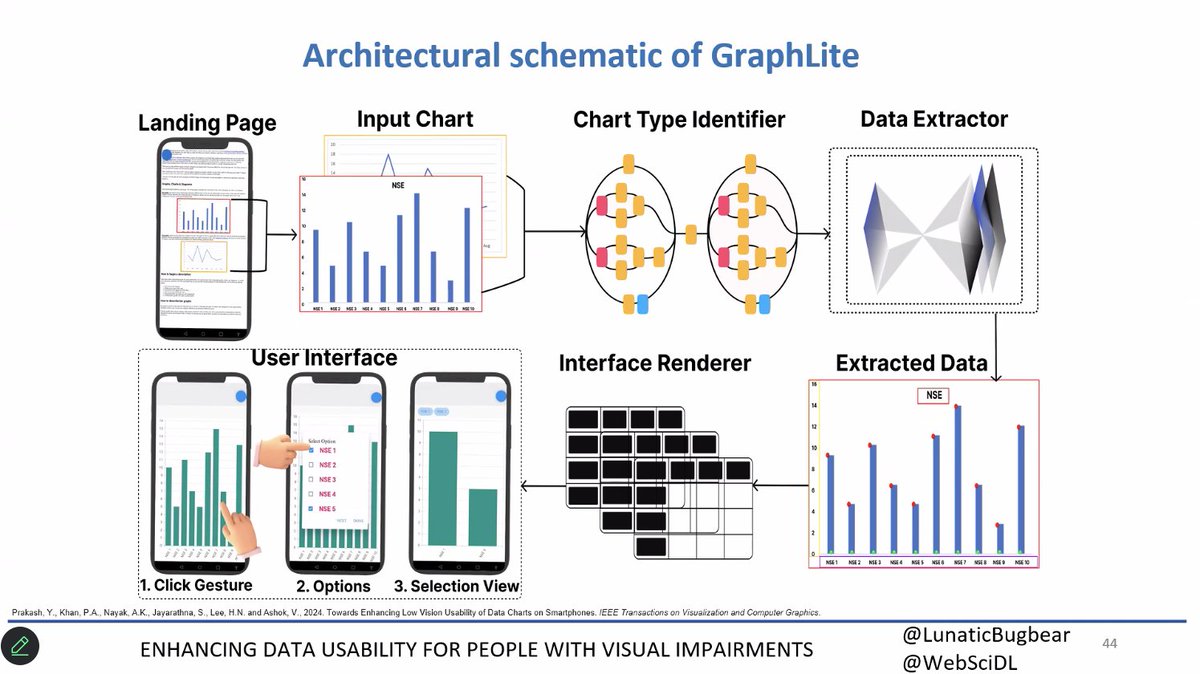
ALT Quick Overview of GraphLite
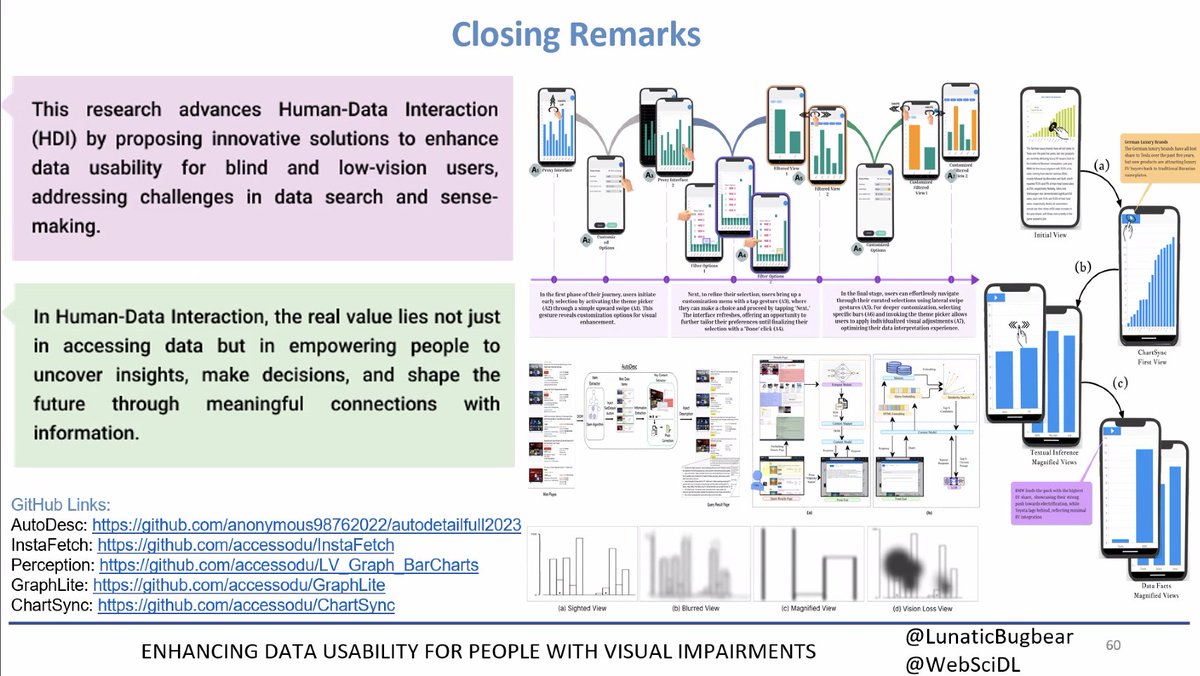
ALT Closing remarks of Yash's work.
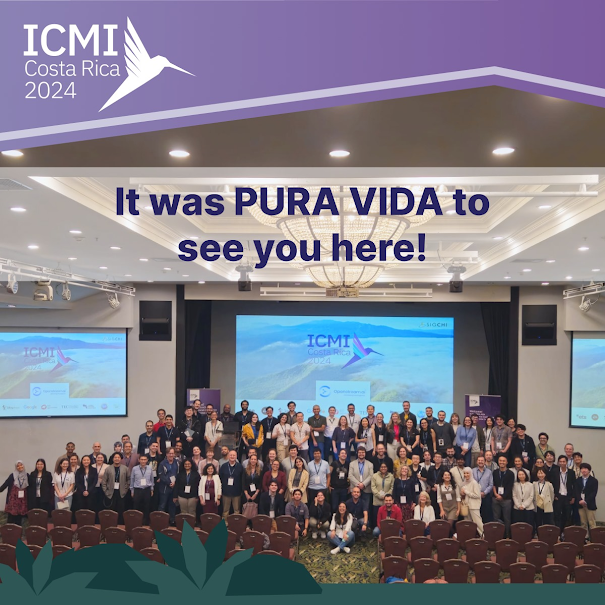

ALT Title of the page Global Accessibility Awareness Day
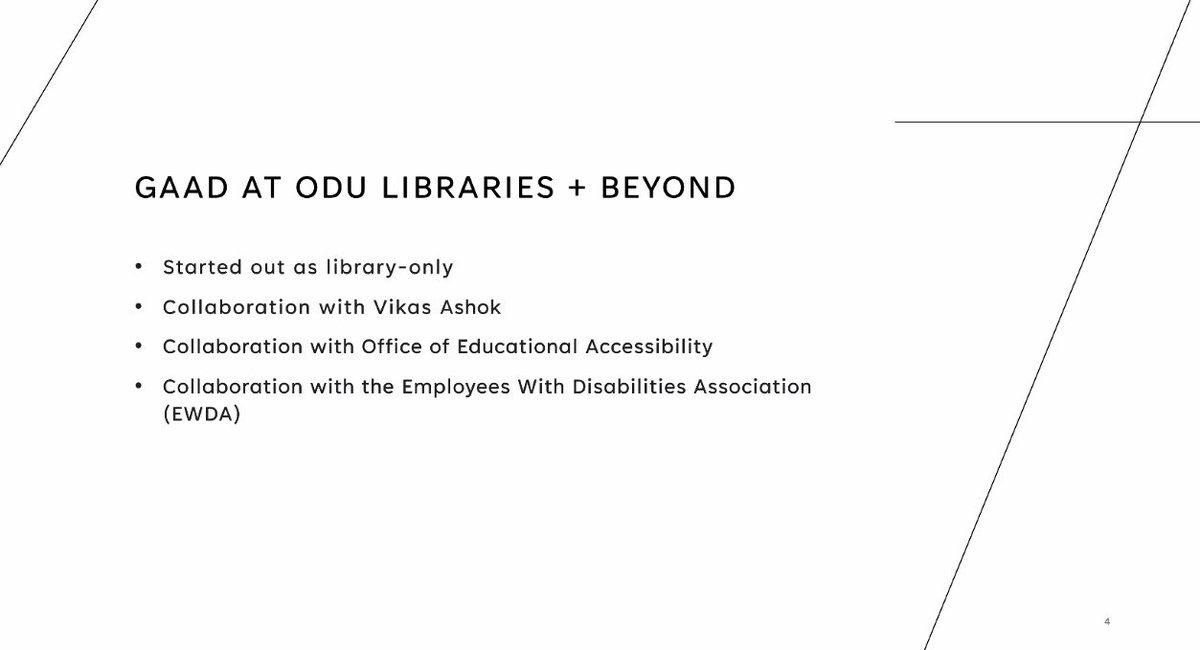
ALT Name of collaboration.
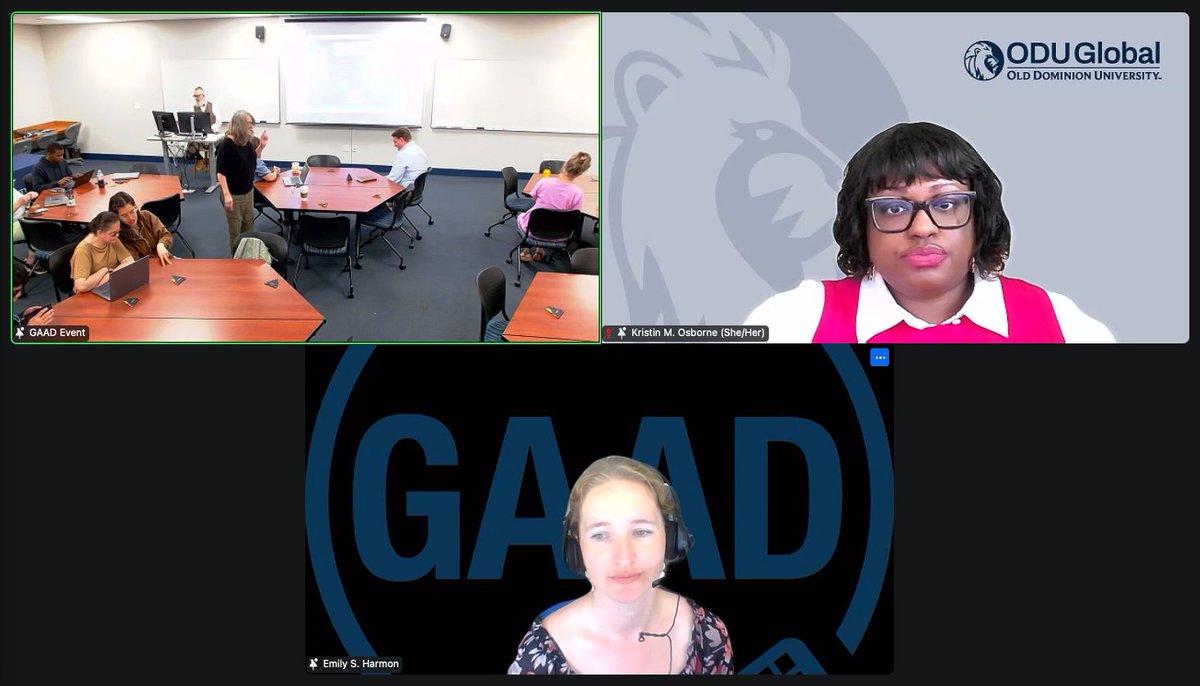
ALT A snippet on Zoom of this event.

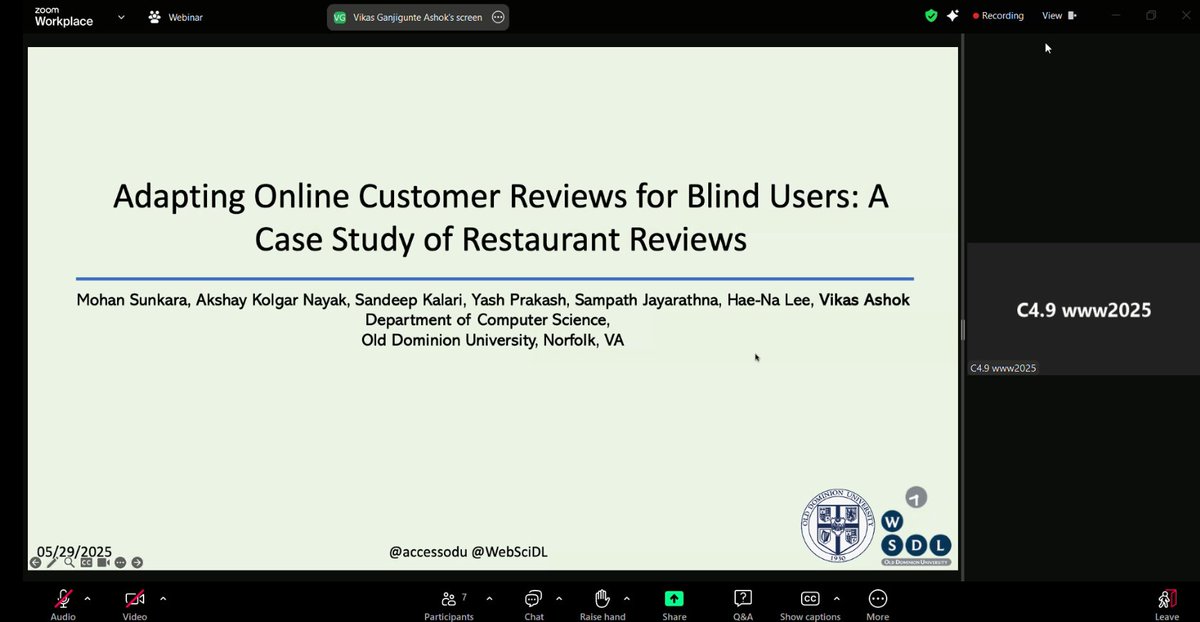
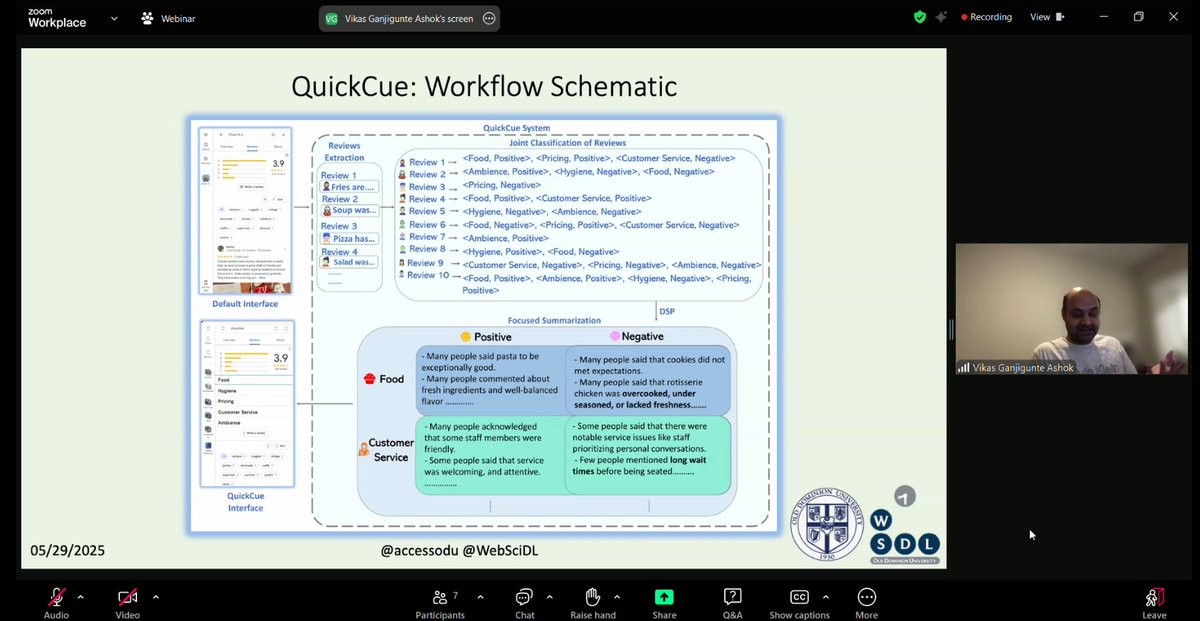
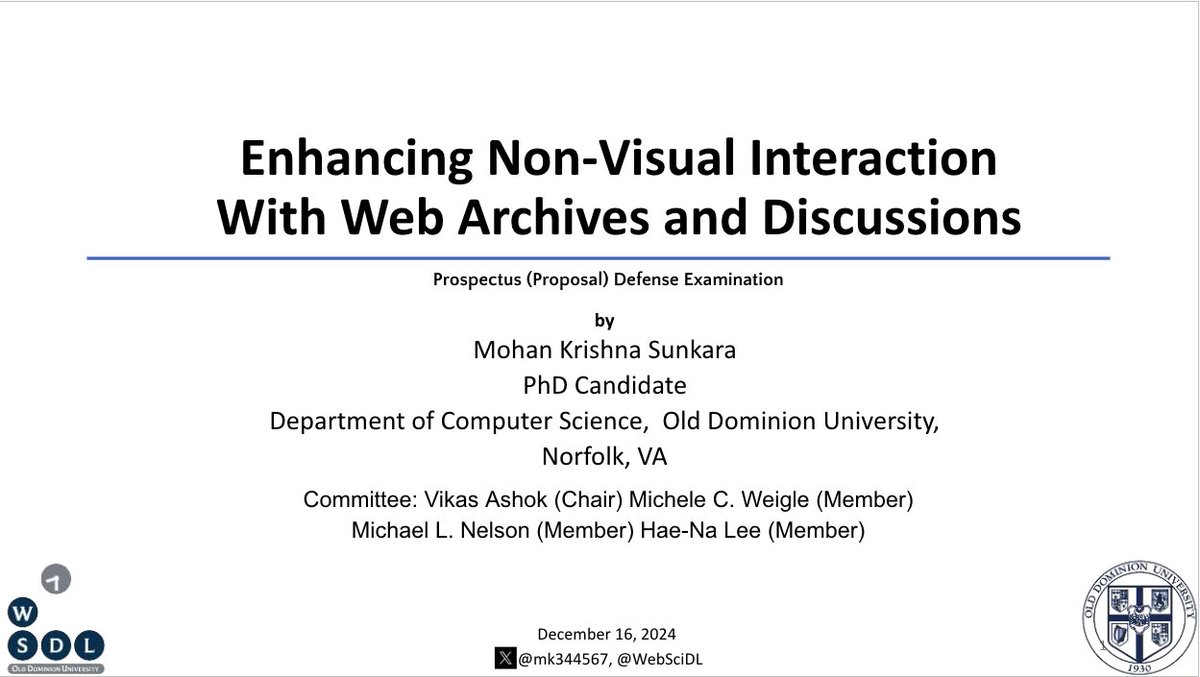
ALT Introducing the title of the proposal.
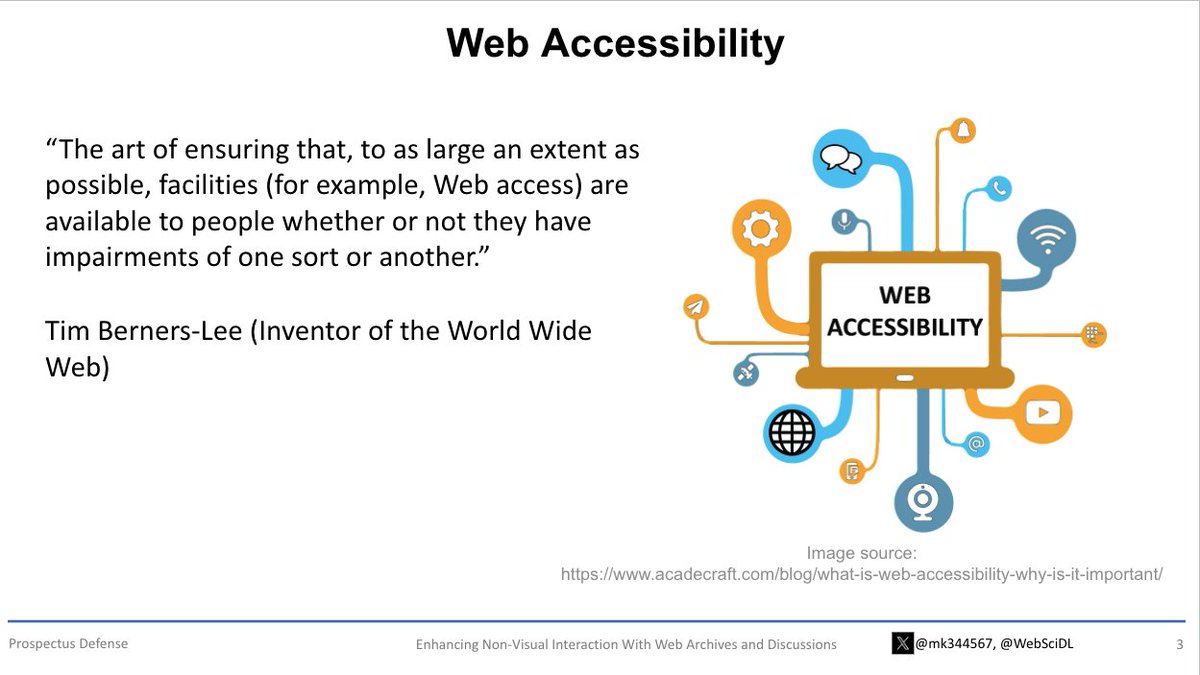
ALT Describing what is Web Accessibility.
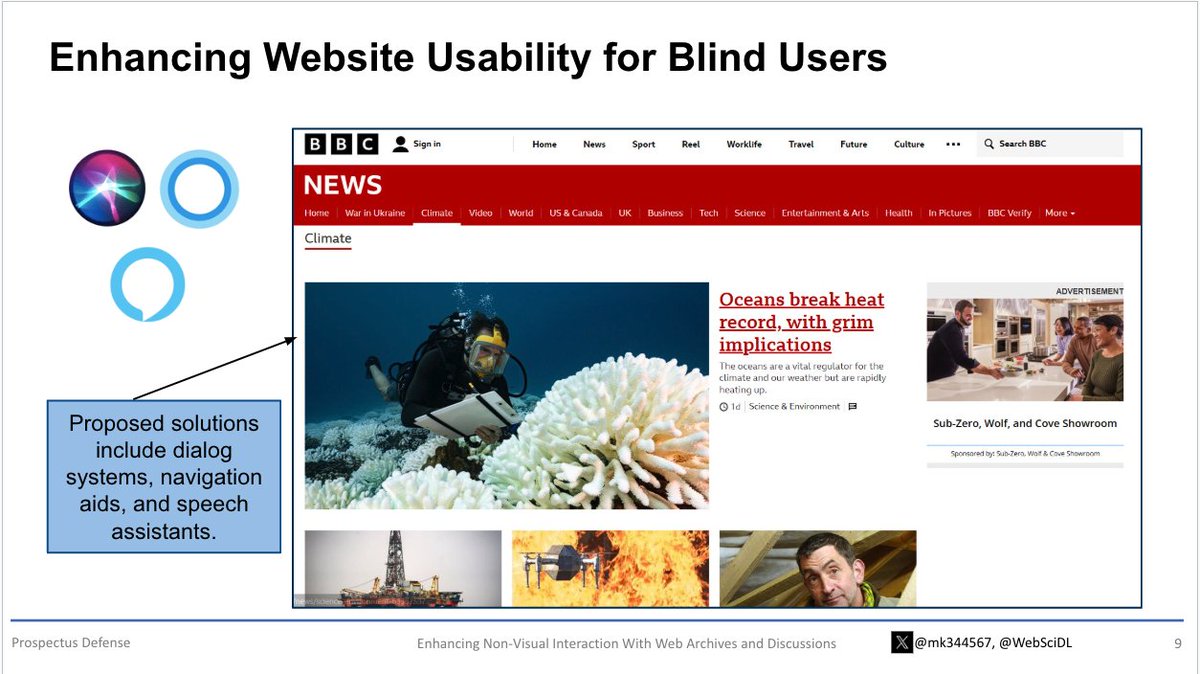
ALT Enhancing Website Accessibility for Blind Users
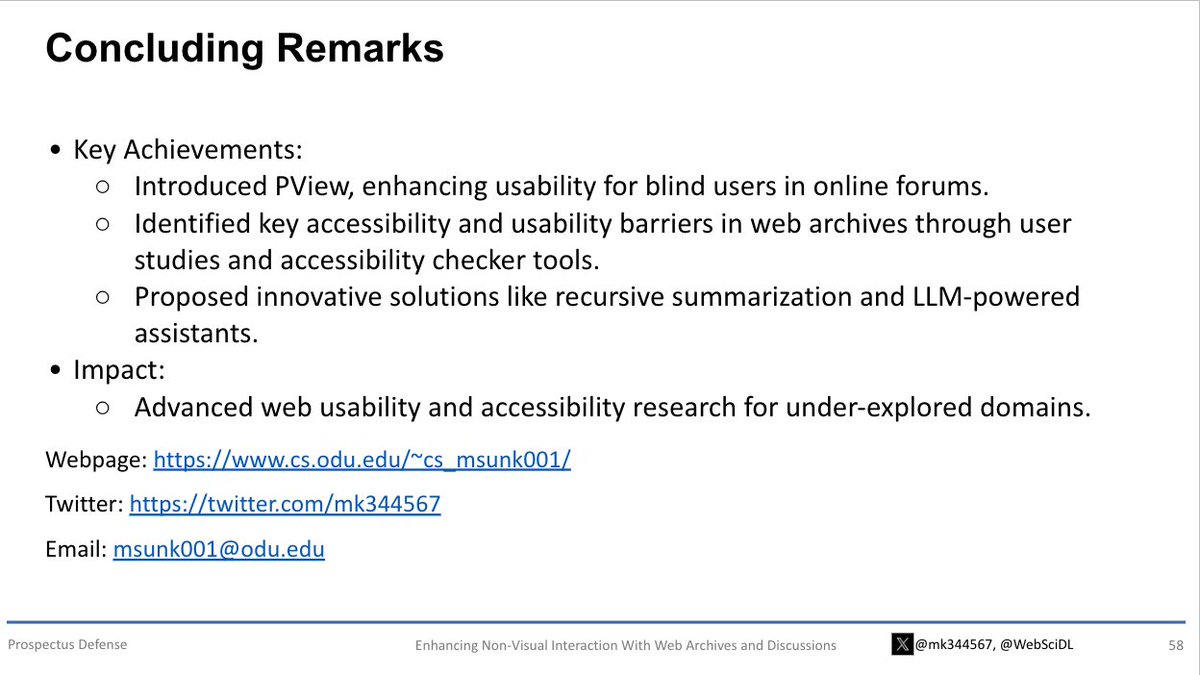
ALT Key takeways from the Proposal.
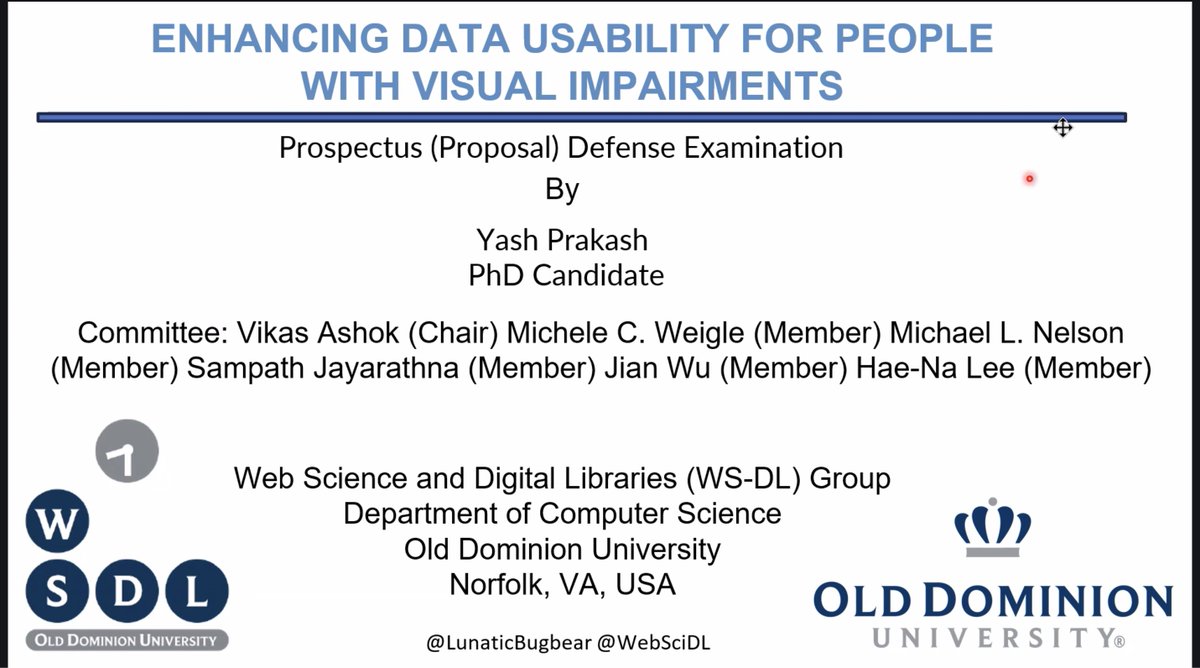
ALT Title: ENHANCING DATA USABILITY FOR PEOPLE WITH VISUAL IMPAIRMENTS
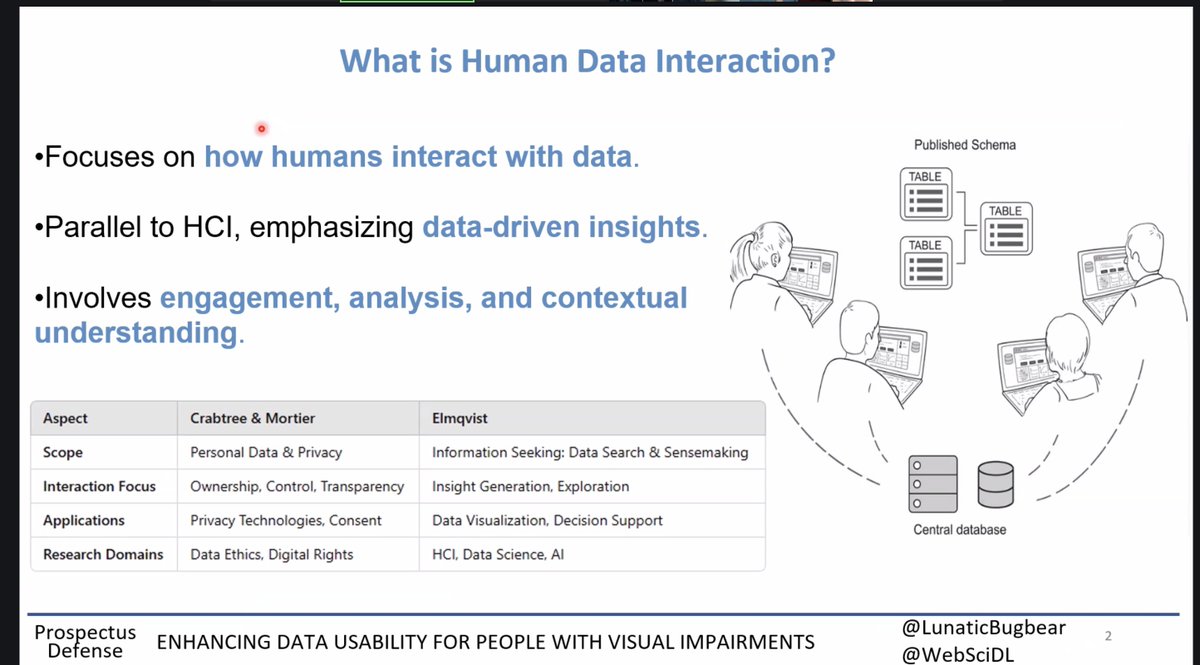
ALT Introduction on HDI.