
vector database for deploying AI agents on your infrastructure. Ship anywhere. Get started for free.
Joined January 2026
- Tweets 412
- Following 6
- Followers 77
- Likes 199
104 Photos and videos




Pinned Tweet

Apr 28
VectorAI DB is now public.
The first vector database built for RAG, semantic search, and real-time AI agents on-prem, at the edge, or air-gapped.
Come throw your hardest problem at it.
Apr 28

We're excited to announce VectorAI DB, the first vector database purpose-built for high-performance, reliable AI at the edge.
RAG isn't dead. It just can't run in the environments that need it most.
In manufacturing, 46% of AI pilots never leave the OT network. Healthcare, defense, and financial services are no different.
VectorAI DB runs RAG pipelines, semantic search, and real-time AI agents on-premises, at the edge, or air-gapped.
Before today, 1,000 devs across three hackathons had already built on it. A maritime AI system. An on-device AI therapist. Cardiac imaging on a closed hospital cluster.
And these are just a handful of what VectorAI DB makes possible.
VectorAI DB is NOW OPEN to the public. Come throw your hardest problem at it.
Download link in the comments.
2
4
7
676
Let's show you how to install and run VectorAI DB in 10 minutes.
You don't need a cloud account, an API key, or a credit card for this one
Here is what you will walk away with:
a working VectorAI DB setup via Docker with a persistent volume mount
a verified install through the local web interface
a connected Python client
and your first similarity search returning ranked results
Prerequisites are just Docker, Python, and your own machine. That is it.
Watch here 👇
youtu.be/H9QM1pTryLM
Jun 15
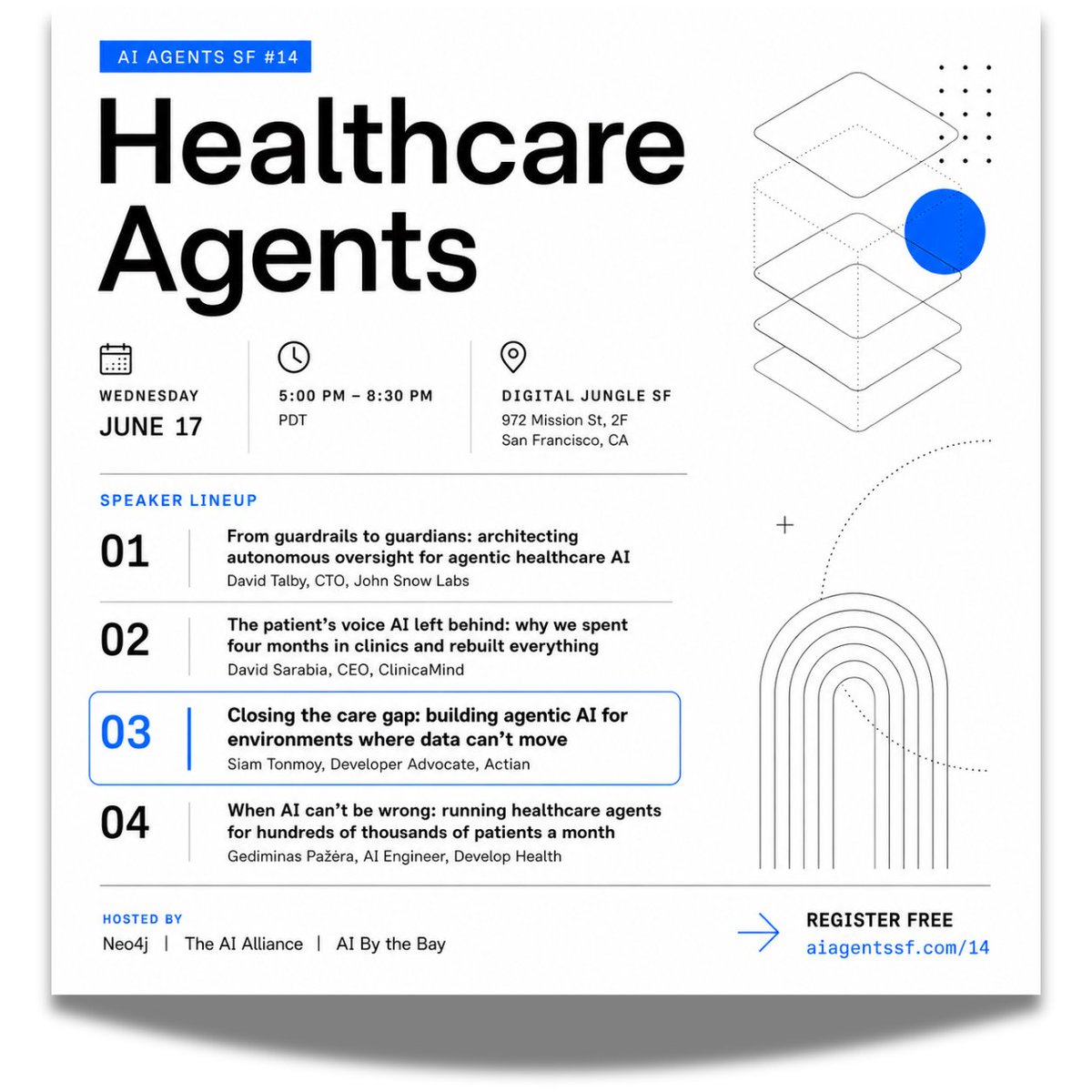
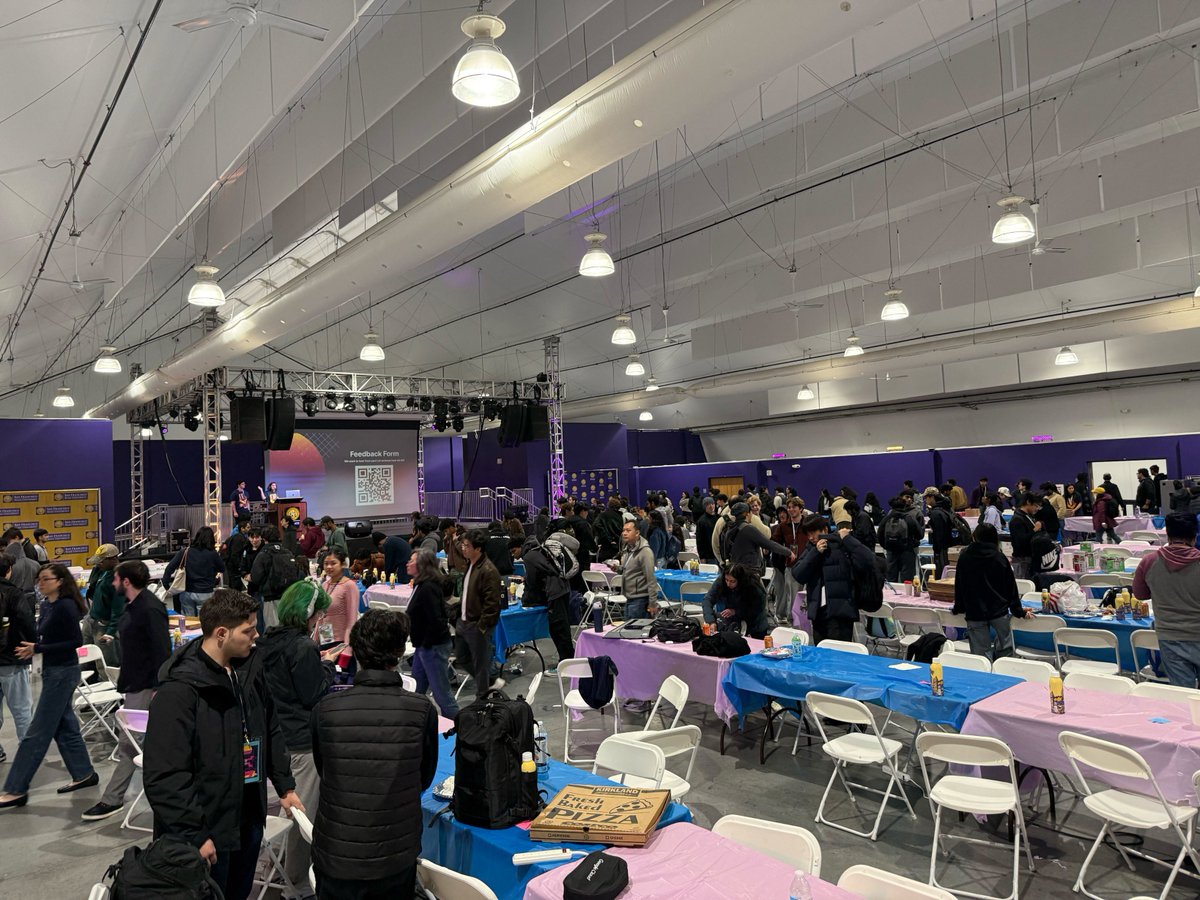
Join us at AI Agents SF #14 this Wednesday, June 17 in San Francisco!
We built VectorAI DB to keep sensitive data on your infrastructure and under your control.
Healthcare is where that constraint is hardest.
Patient records can't leave the building.
Retrieval errors have real consequences.
Most agentic stacks weren't designed with either in mind.
This is exactly the conversation happening at #14, and we are proud to be part of it.
David Talby from John Snow Labs talks through how to architect autonomous oversight for agentic healthcare systems.
David Sarabia from ClinicMind shares why they scrapped everything after four months embedded in real clinics.
Our dev advocate, Siam Tonmoy walks through building agents in environments where data can't move.
Gediminas Pažėra from Develop Health breaks down what it takes to run healthcare agents reliably at over 100,000 patients a month.
Hosted by @Neo4j, The AI Alliance, and AI By the Bay.
If you're building AI in regulated environments and care about what production looks like, registration link is in the first comment 👇🏾
1
1
1
10
Jun 10
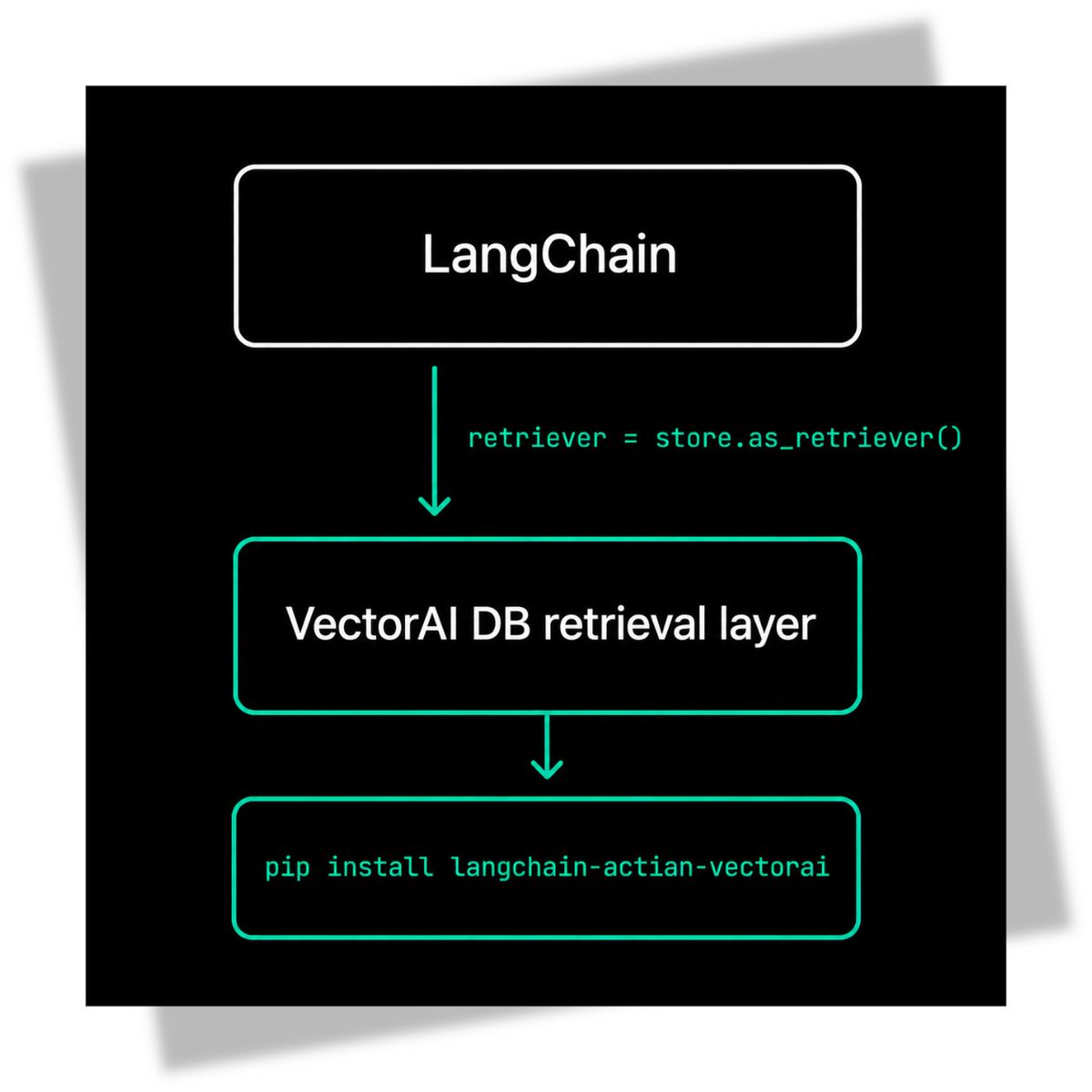
AI agents built on @LangChain
can now use VectorAI DB as their vector store
That means your agents can:
Retrieve knowledge and documents mid-task without leaving your LangChain setup
Run a semantic search with raw or normalized similarity scores
Use MMR search when the agent needs diverse results
Handle all of it async.
Every method ships with an async counterpart
Plug directly into LangChain chains and agents via as_retriever()
One pip install and VectorAI DB is live as your retrieval layer.
Tag someone building agents with LangChain right now!
More info on our docs.
4
9
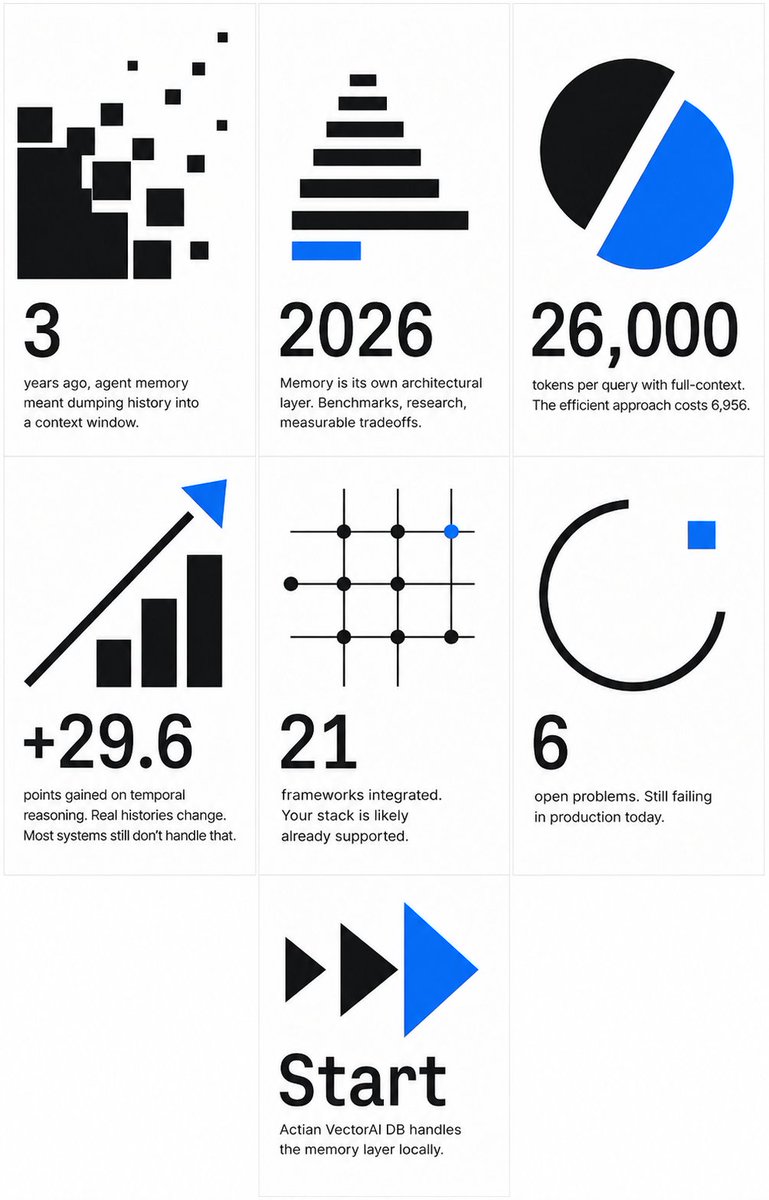
One of the most useful reference documents for anyone building production agents right now is the @mem0ai State of AI Agent Memory 2026 report!
The benchmark results are the most actionable part.
The new token-efficient algorithm scores 92.5 on LoCoMo and 94.4 on LongMemEval at 6,956 tokens per retrieval call.
Full-context approaches cost 26,000.
At production scale that difference lands directly on the inference bill.
The two biggest performance gains came from the two hardest categories:
Temporal reasoning, up 29.6 points
Multi-hop recall, up 23.1 points
The open problems section is equally worth the time. Cross-session identity, memory staleness, and application-level evaluation are still unsolved.
Knowing where the gaps are saves discovering them in production.
Jump in here!
4
2
75
12
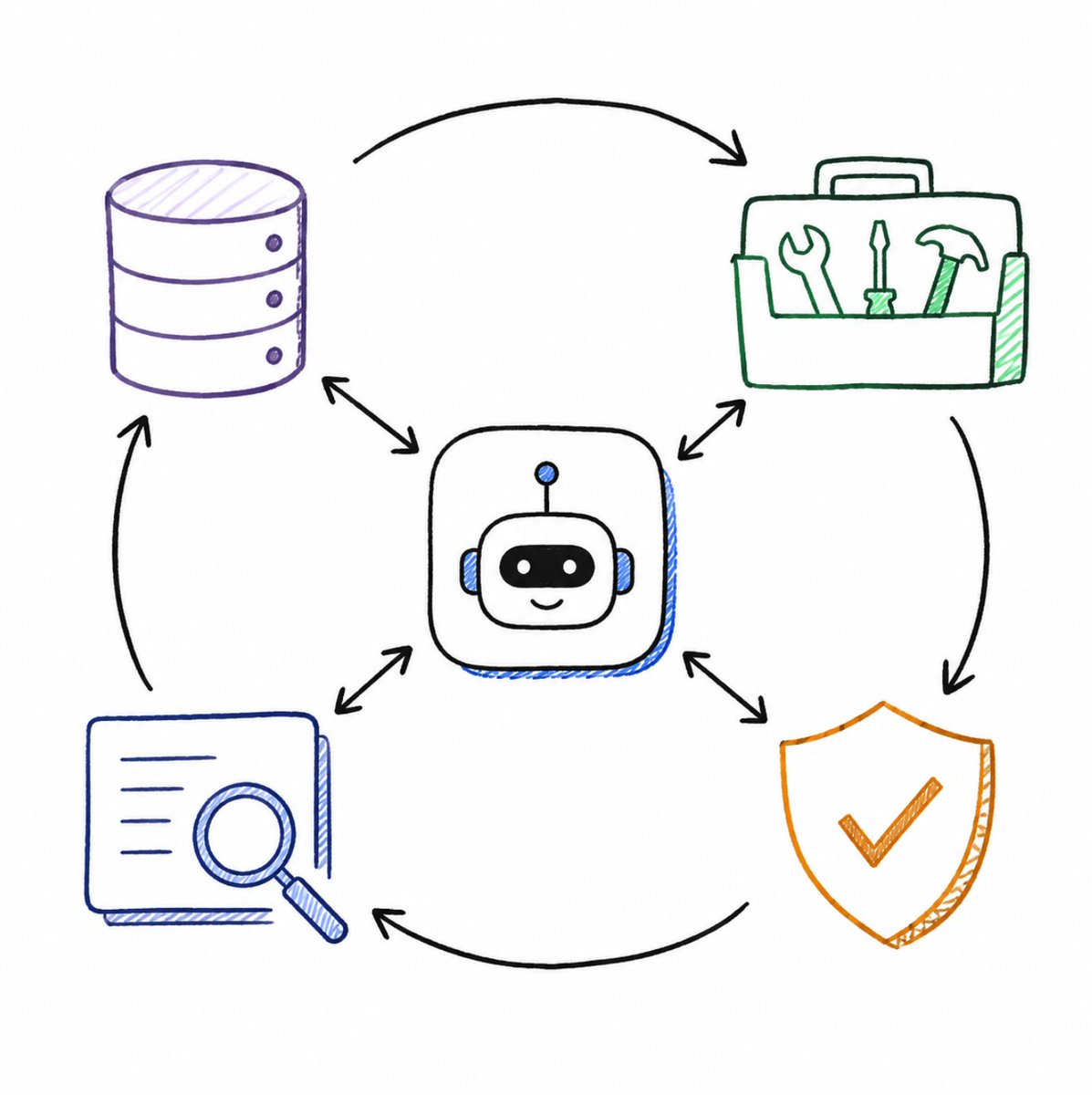
AI loops are quietly becoming more important than prompts.
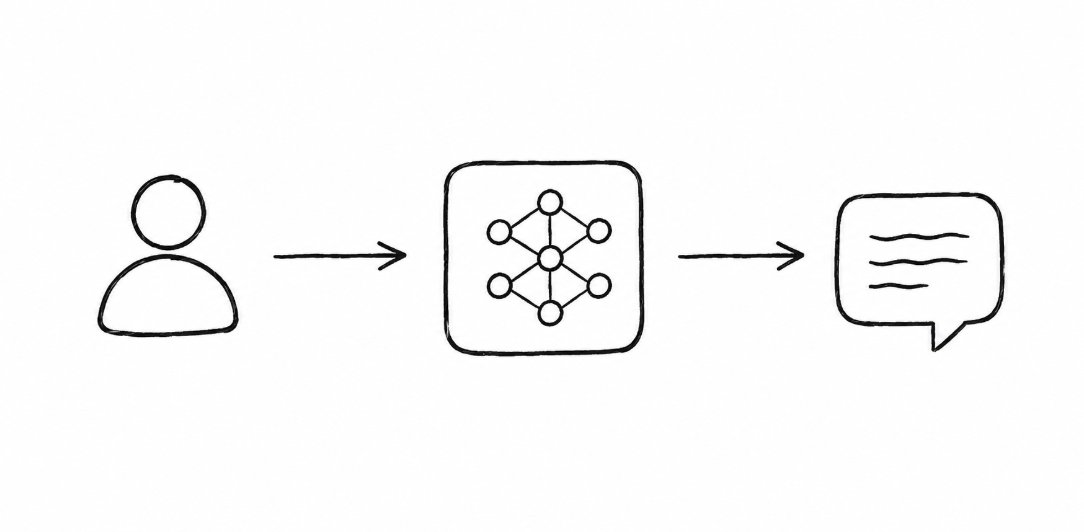
A good prompt can improve an agent.
A good loop can improve a system.
Here's the TL;DR:
• Loops reduce supervision
• Loops improve quality
• Loops create memory
• Loops enable adaptation
• Loops introduce new bottlenecks
Let's unpack it 🧵
1
2
763
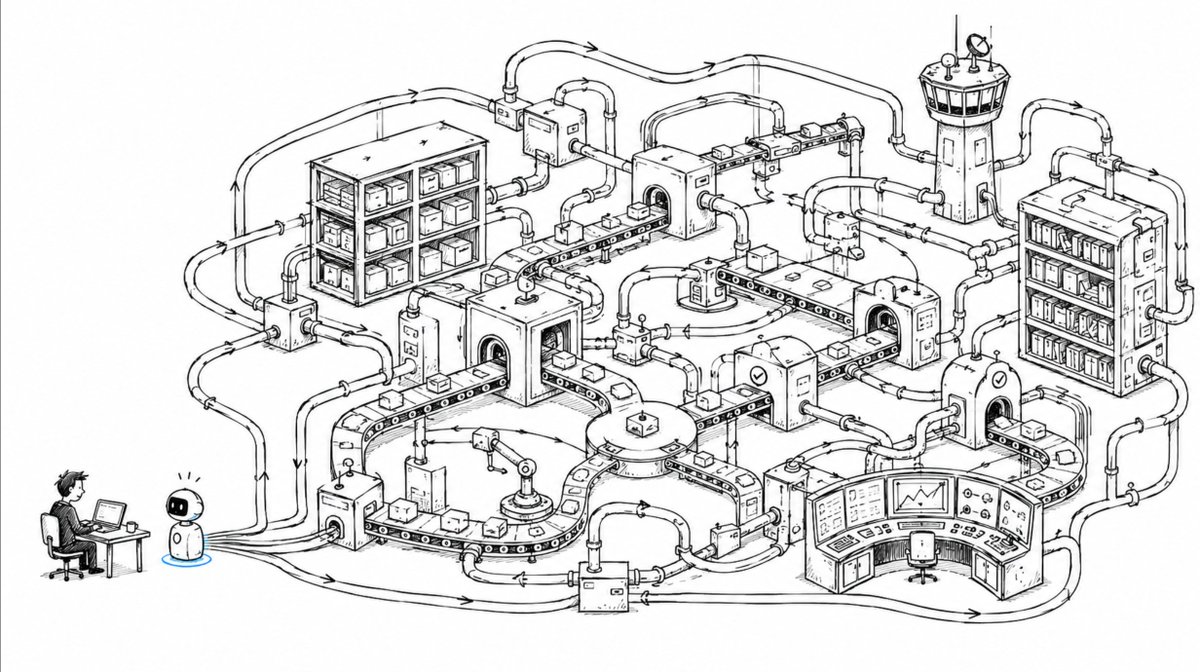
As loops become more common, new bottlenecks emerge:
• Memory retrieval
• Context windows
• Routing
• Observability
• Reliability
• Latency
The challenge shifts from prompting to orchestration.
1
27
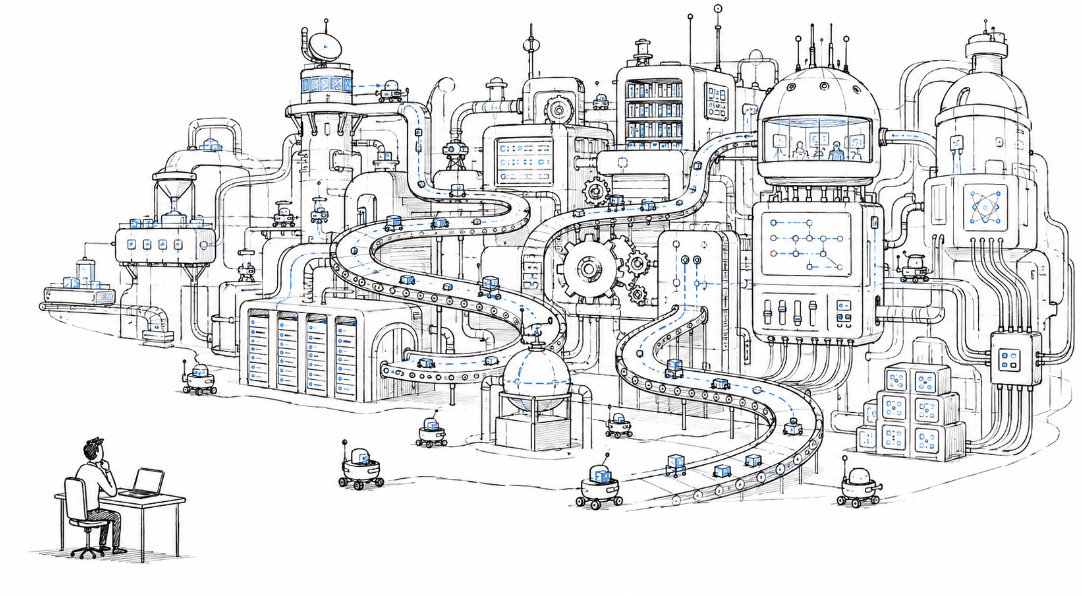
The next generation of AI products won't be defined by prompts.
They'll be defined by how effectively they manage:
• Memory
• Retrieval
• Context
• Feedback loops
The model is increasingly becoming the easy part.
24
The future of AI may be less about prompting models and more about managing what happens between prompts.
Memory.
Retrieval.
Context.
Orchestration.
That's where things get interesting.
Jun 7

Here’s your monthly reminder that you shouldn’t be prompting coding agents anymore.
You should be designing loops that prompt your agents.
9
I just watched this Deep Dive into LLMs like ChatGPT by @karpathy and you should too.
youtu.be/7xTGNNLPyMI?si=lh1I…
14
Interesting how often "runs locally" is becoming a feature again.
Performance.
Privacy.
Reliability.
Sometimes the best network request is no network request.
2
33
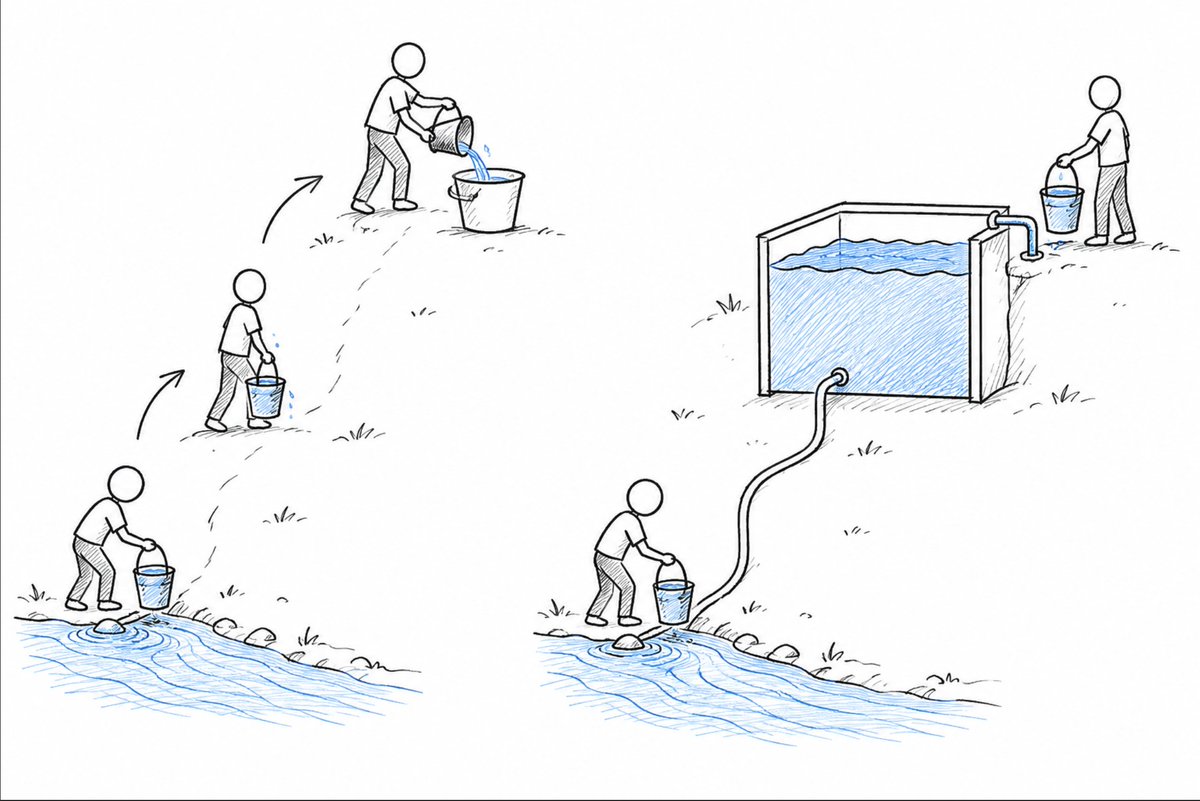
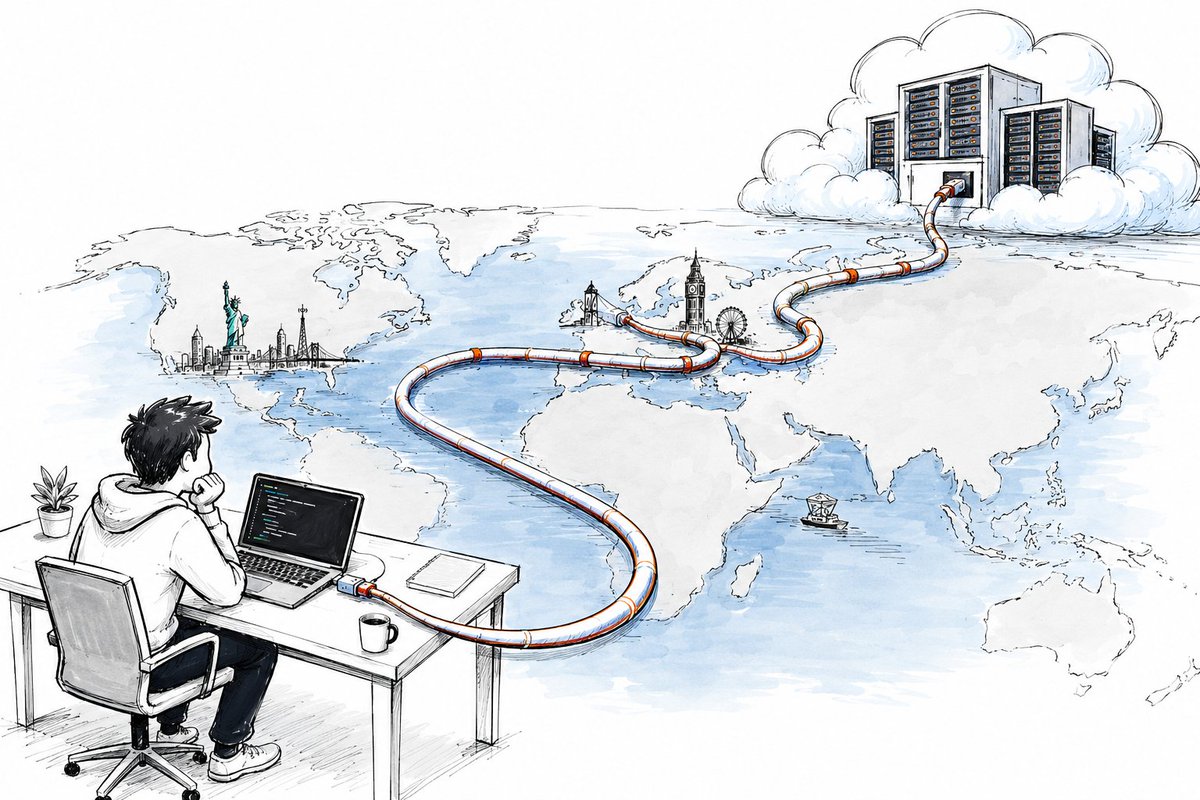
The early internet felt magical because it made distant things feel close.
The next era of computing may be about making distant things local again.
Jun 4

man the early days of the internet were so special
1
16