
Joined May 2021
- Tweets 138
- Following 21
- Followers 40
- Likes 138
30 Photos and videos








Pinned Tweet

May 27
Refuting the slanders against Shaykh Sulayman al-Alwan | @addanimarki
1
2
17
1,930
Abu al-Hasan retweeted

Jun 14
Shaykh ʿAbduraḥmān al-Barrāk - حفظه الله - said:
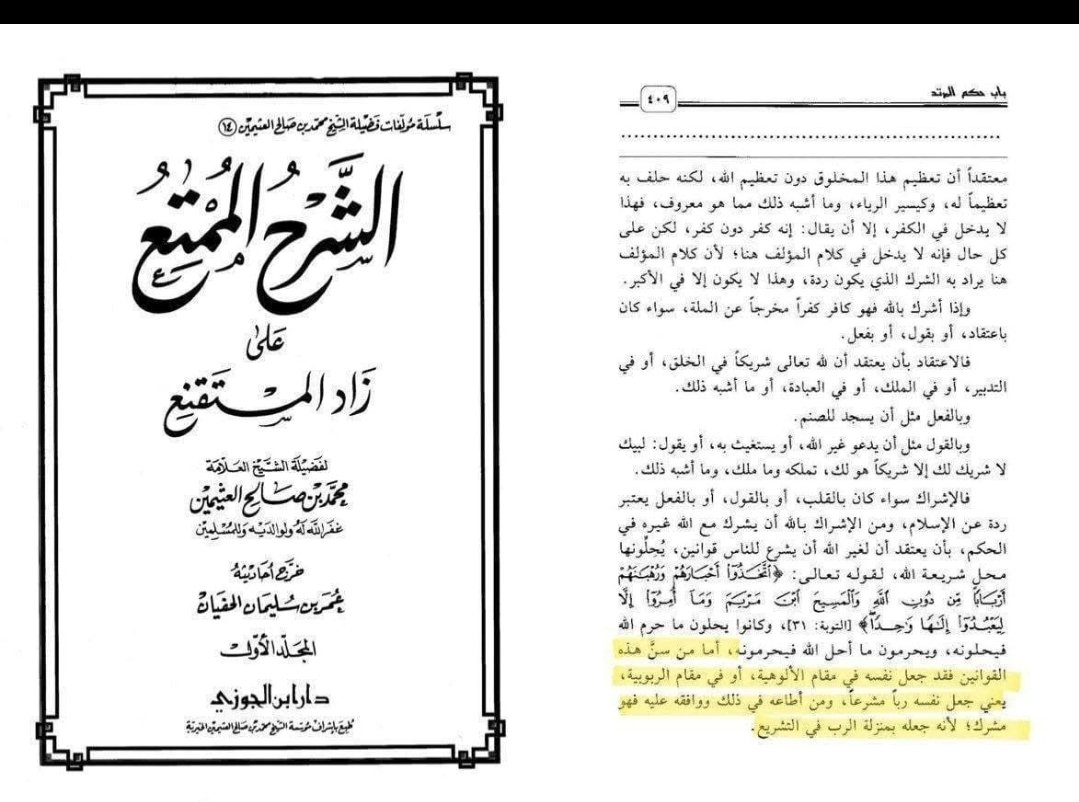
• Those who claim to love the Sharīʿā but still enforce man-made laws are kuffār
• They are basically punishing people for believing in the Qurʾān
• Their actions belie their claim
6
40
1,734
A brother asked me regarding the false retraction of Shaykh al-'Allamah Ibn Uthaymeen رحمه الله تعالى, regarding general legislation (tashri am):
Firstly, we have to check the explanation of Shaykh Ibn Uthaymeen regarding an alim retracting.
1
86
Check episode 2 of that series, and the Last chapter of that episode, you will find "The Phantom Retraction of Ibn Uthaymeen." He explains it better. Although we have our differences, he answers the doubts accordingly. May Allah guide us, him, and you all.
1
62
youtu.be/oHMM8H3Udlw?is=k87J…
Go to 1:48:57
And Allah knows best.
— Abu al-Hasan Ad-Danimarkī al-Hanbalī
108
Jun 12
I have asked my shaykh
"O Shaykh, does du'ā change the qaḍā?"
He replied: "There are three situations between the qaḍā and du'ā; either the du'ā is greater than the qaḍā or vice versa, or they are equal. If the qaḍā is greater than your du'ā, then the qaḍa will fall on you
1
2
689
Jun 12
If your du'ā is greater than the qaḍā then your du'ā will make the qaḍā disappear, if they're equal, then they remain as equals."
I've asked him: "How can we make a du'ā in such a way that, it becomes greater than the qaḍā?"
He replied:
1
2
134
Jun 12
"By the ādāb (ethics) of the du'ā; doing it in waqt al qabūl, doing salawāt etc."
Then I asked: "So a du'ā can change the qaḍā?"
He replied: "Yes. 'ولا يرد القدر إلا الدعاء' '...and nothing repels the fate except the du'ā' — this is a hadith of the Prophet ﷺ"
2
125
Jun 12
Yes he would رحمه الله تعالى. Any other questions?
Jun 12

Final Challenge to the Najdis on Iran and Arab states:
Do you agree with the following statement? If not, explain why.
If Muhammad ibn Abd al-Wahhab were alive today, he would declare takfir upon the rulers and systems of virtually all Arab and Muslim states just as his followers explicitly declared the Ottoman Empire to be a kāfir state, allying with external powers to fight it.
If your answer is yes, then your selective theological criticism of Iran collapses. By your own principles, Iran (and every other Muslim-majority state) should be branded an apostate regime and uniting with them is as good/bad as uniting with any other Arab state.
If your answer is no, then you are either ignorant of the historical and theological positions of Ibn Abd al-Wahhab and early Najdism, or you are subordinating your supposed principles to current political alliances or your hand is forced.
1
15
2,180
Jun 10
Beautiful!
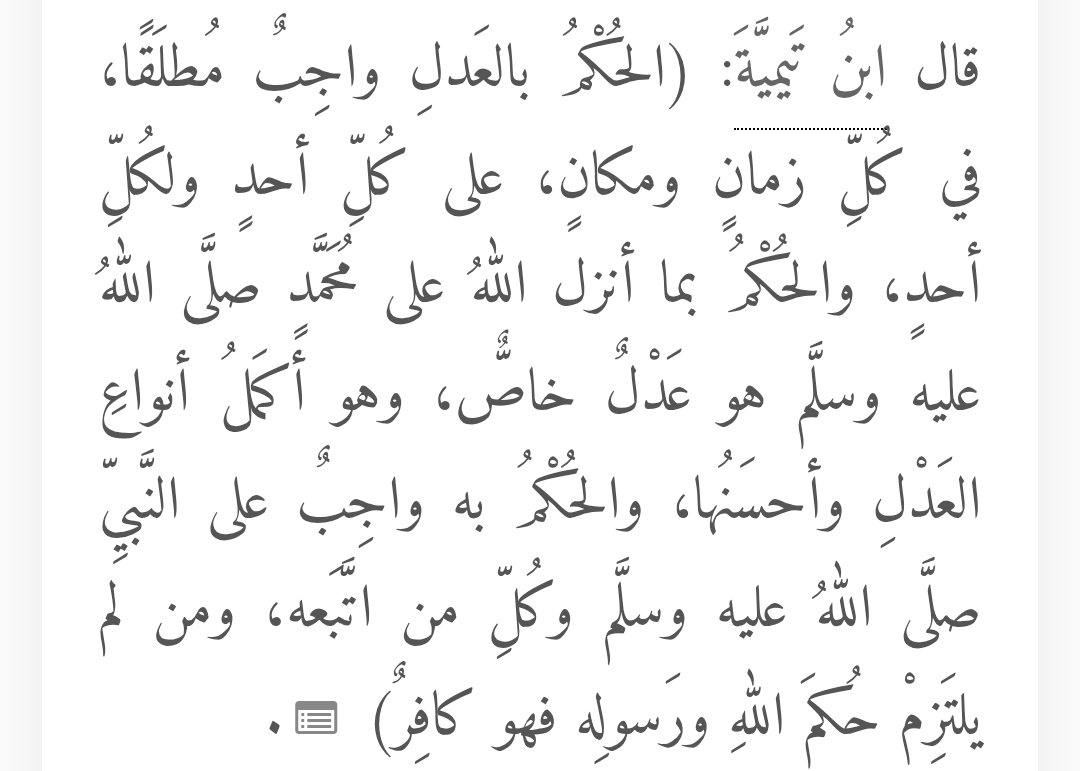
Look what Shaykh ul-Islam Ibn Taymiyyah رحمه الله تعالى says:
"Judging with justice is absolutely obligatory—at all times and in all places—upon everyone and for everyone. Judging according to what Allah has revealed to Muhammad ﷺ is a specific form of justice;

𝐃𝐨𝐞𝐬 𝐒͟𝐡𝐚𝐲𝐤͟𝐡 𝐒̣𝐚̄𝐥𝐢𝐡̣ 𝐀̄𝐥 𝐚𝐬𝐡-𝐒͟𝐡𝐚𝐲𝐤͟𝐡 𝐮𝐬𝐞 𝐭𝐡𝐞 𝐭𝐞𝐫𝐦 “𝐈𝐥𝐭𝐢𝐳𝐚̄𝐦” 𝐮𝐧𝐫𝐞𝐬𝐭𝐫𝐢𝐜𝐭𝐞𝐝𝐥𝐲 𝐢𝐧 𝐭𝐡𝐞 𝐈ʿ𝐭𝐢𝐪𝐚̄𝐝𝐢 𝐬𝐞𝐧𝐬𝐞 𝐨𝐫 𝐜𝐚𝐧 𝐡𝐞 𝐮𝐬𝐞 𝐢𝐭 𝐢𝐧 𝐭𝐡𝐞 ʿ𝐀𝐦𝐚𝐥𝐢̄ 𝐬𝐞𝐧𝐬𝐞 𝐭𝐨𝐨
—
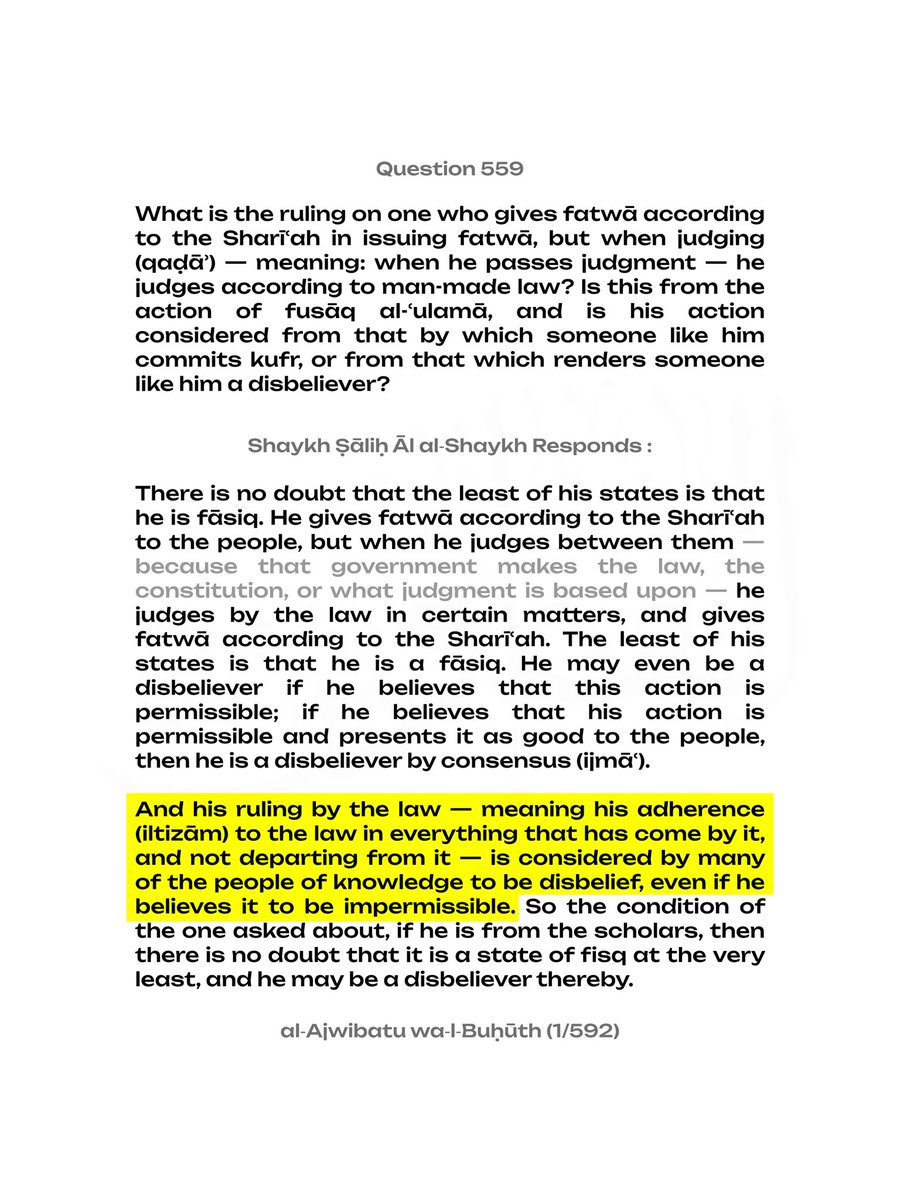
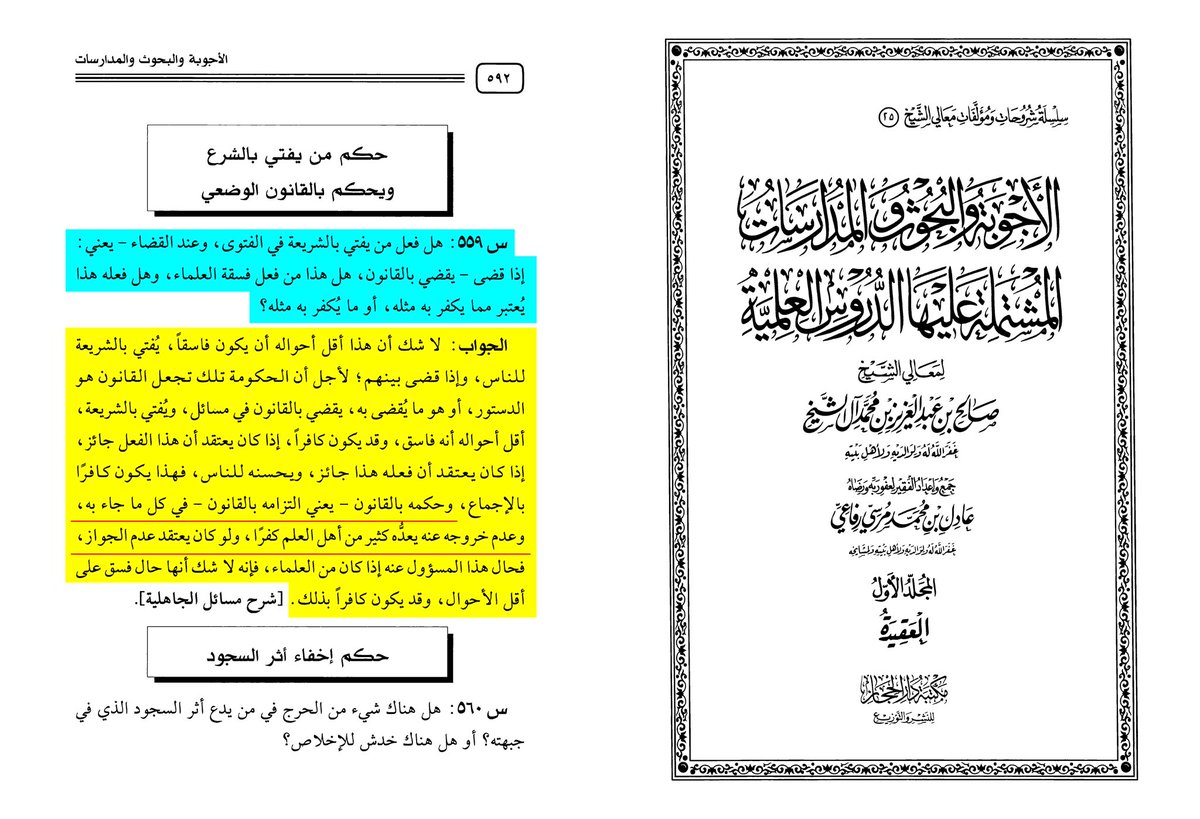
Q 559 : What is the ruling on one who gives fatwā according to the Sharīʿah , but when judging (qaḍāʾ) — meaning: when he passes judgment — he judges according to man-made law? Is this from the action of fusāq al-ʿulamā, and is his action considered from that by which someone like him commits kufr, or from that which renders someone like him a disbeliever?
S͟hayk͟h Ṣāliḥ Āl ash-S͟hayk͟h responds :
“There is no doubt that the least of his states is that he is fāsiq. He gives fatwā according to the Sharīʿah to the people, but when he judges between them — because that government makes the law (qānūn), the constitution (dustūr), or what judgment is based upon — he judges by the law in certain matters, and gives fatwā according to the Sharīʿah. The least of his states is that he is a fāsiq. He may even be a disbeliever if he believes that this action is permissible; if he believes that his action is permissible and presents it as good to the people, then he is a disbeliever by consensus (ijmāʿ).
And his ruling by the law — meaning his adherence (iltizām) to the law in everything that has come by it, and not departing from it — is considered by many of the people of knowledge to be disbelief (kufr), even if he believes it to be impermissible. So the condition of the one asked about, if he is from the scholars, then there is no doubt that it is a fāsiq at the very least, and he may be a disbeliever thereby”
(1/592) الأجوبة والبحوث
—
I say :
The Shaykh makes a clear distinction initially, that who he is referring to is the one who passes on judgement in cases that come to him, as opposed to the one who makes the law or constitution or the reference to which judgements are based upon or referred back to.
He then speaks about how the person who passes fatwa in accordance to the Sharīʿah but passes judgements [upon people] based upon other than the Shari'ah at the very least is a fāsiq, and that he would be rendered a disbeliever if he believed that his action was permissible, justified it, and so on and so fourth. He then attributes the disbelief of such a person as being a consensus amongst the people of knowledge
Right afterwards, he then speaks about the one who adheres (iltizam) to ruling by this man made law in his judgements, in everything that has come by it and he doesn't depart from it, he says this is considered disbelief according to many of the people of knowledge, even if they were to not do istihlal. The Shaykh doesn't bring a consensus in this, which necessitates the fact that the Shaykh uses adherence (iltizam) in the amali sense, and not an iʿtiqādi sense as people wished to say that the Shaykh unrestrictedly only used the term "iltizam" in an iʿtiqādi sense. The reasoning is because if the S͟hayk͟h used iltizām here in the sense he meant iʿtiqād, then this would be considered disbelief by Ijmāʿ, not something a majority held. And he says this in other places.
It's important to note, that the S͟hayk͟h believes the judge who rules by other than the Sharīʿah absolutely in cases of disputes, has become a disbeliever by virtue of his actions even if he didn’t do istiḥlāl, because the act necessitates that he hasn't rejected the Taghut inwardly, and that this action manifests only from a heart which holds the man made laws in high esteem.
1
2
273
Jun 10
it is the most complete and the best kind of justice. Ruling by it is obligatory upon the Prophet (peace and blessings be upon him) and upon all who follow him. Whoever does not have iltizām (i.e., does not adhere) to the hukm of Allah and His Messenger is a disbeliever."
1
93
Jun 10
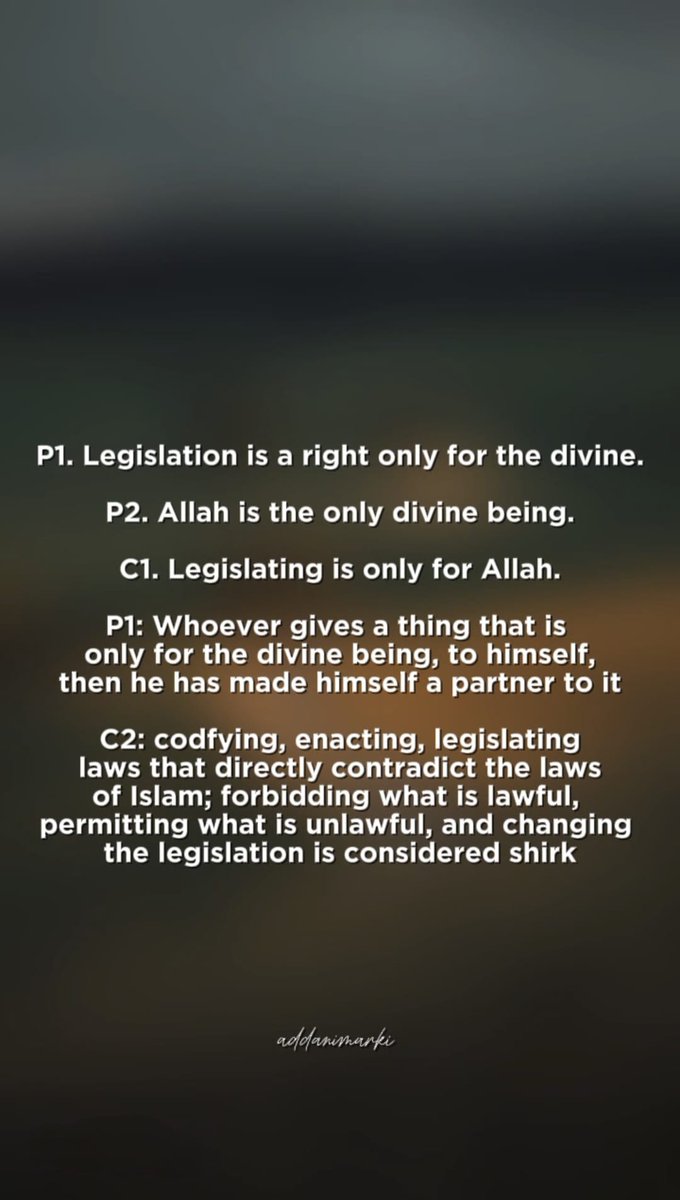
Is every type of General Legislation (Tashrī' 'ām) considered kufr?
This is an important question. Every Muslim should be able to answer this question.
The answer is no, not every tashrī' is considered as kufr akbar.
We can categorise tashrī' into three categories:
1
2
152
Jun 10
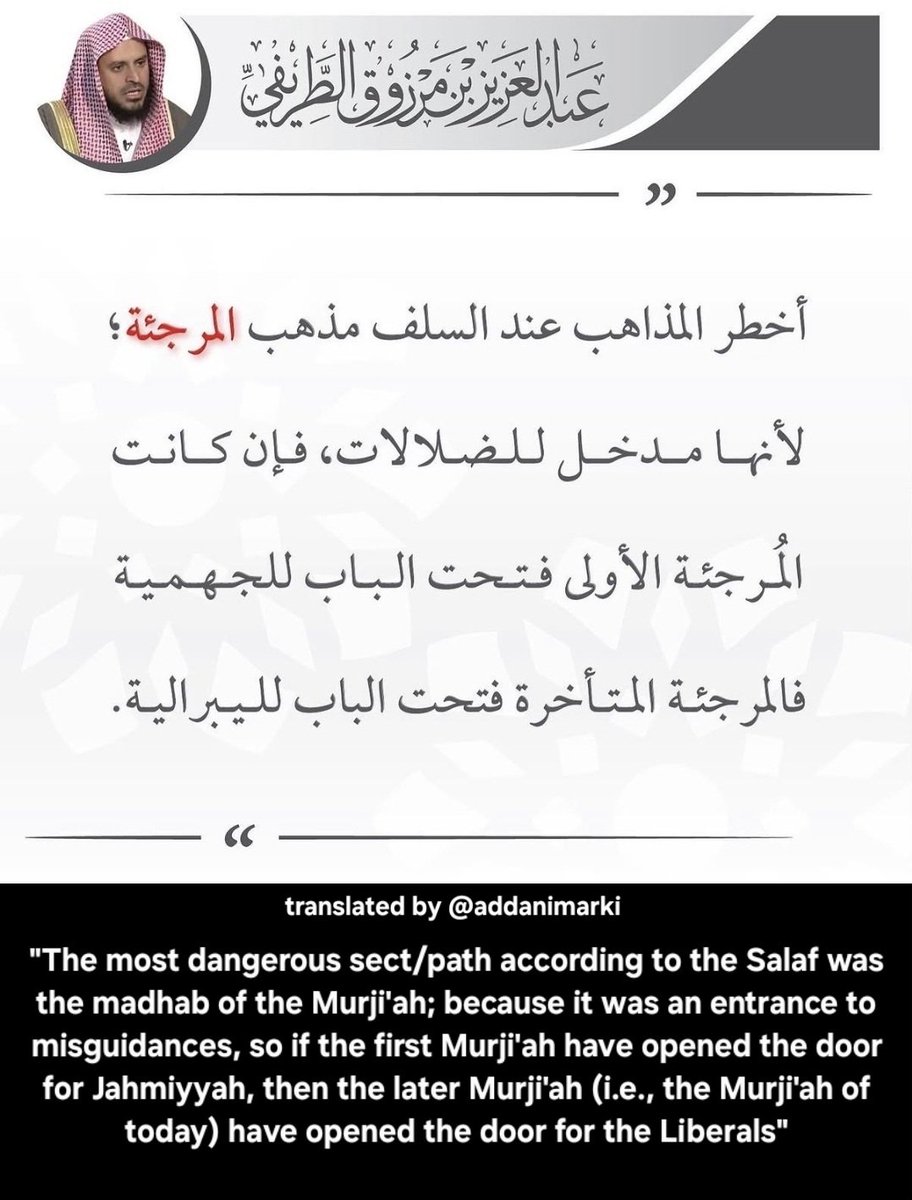
Some brothers have a great gheerah for this Religion, and Tawheed. Due to that, they jump on panels of the Murji'ah on tiktok and its likes, and try to debate them, while being ignorant of the matter.
May Allah bless you ikhwa, but you are damaging it, not helping.
1
1
207