Helping enterprises adopt smarter, safer and faster ways of working! devops ¦ agile ¦ lean ¦ legacy modernisation
- Tweets 1,813
- Following 253
- Followers 148
- Likes 9,880



















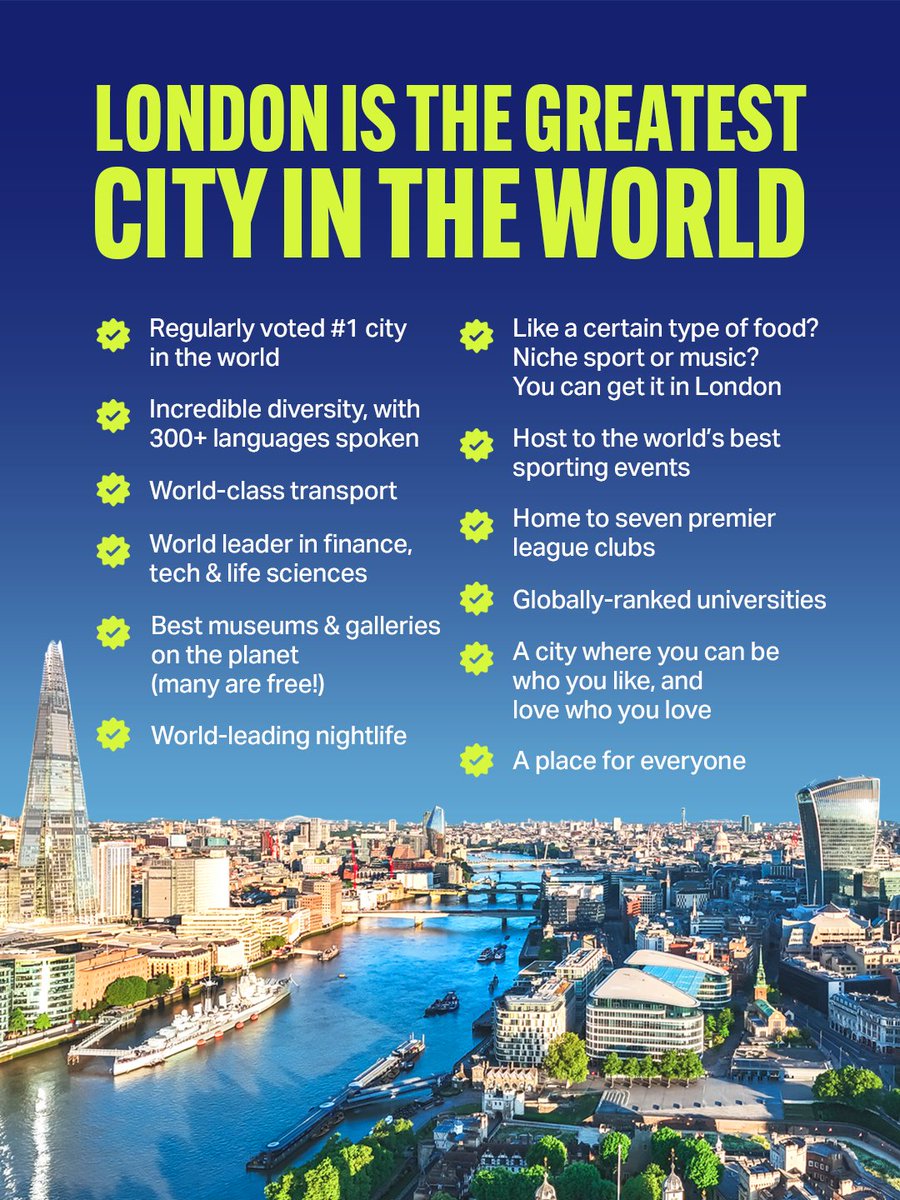
ALT Graphic with the headline “London is the greatest city in the world” set against a bright view of the River Thames with the Shard, Tower Bridge and the city skyline. The text celebrates what makes London special: regularly voted the number one city in the world, incredible diversity with over 300 languages spoken, world-class transport, world leader in finance tech and life sciences, best museums and galleries many free to visit, world-leading nightlife, food sport and music for every taste, host to the world’s best sporting events, home to seven Premier League clubs, globally-ranked universities, a city where you can be yourself and love who you love, and a place for everyone.