
Trying to make it count
Joined August 2008
- Tweets 659
- Following 894
- Followers 312
- Likes 833
86 Photos and videos
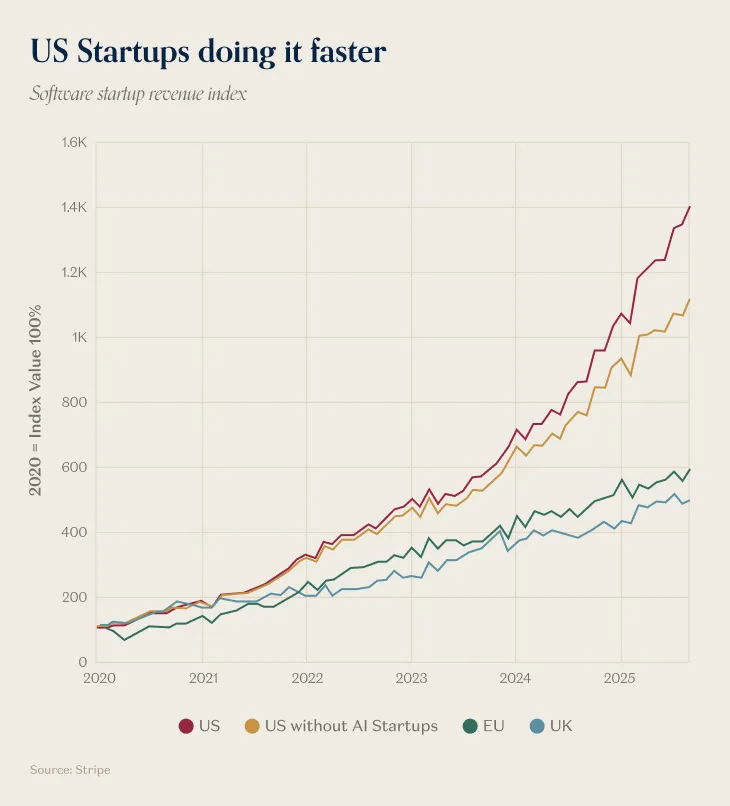
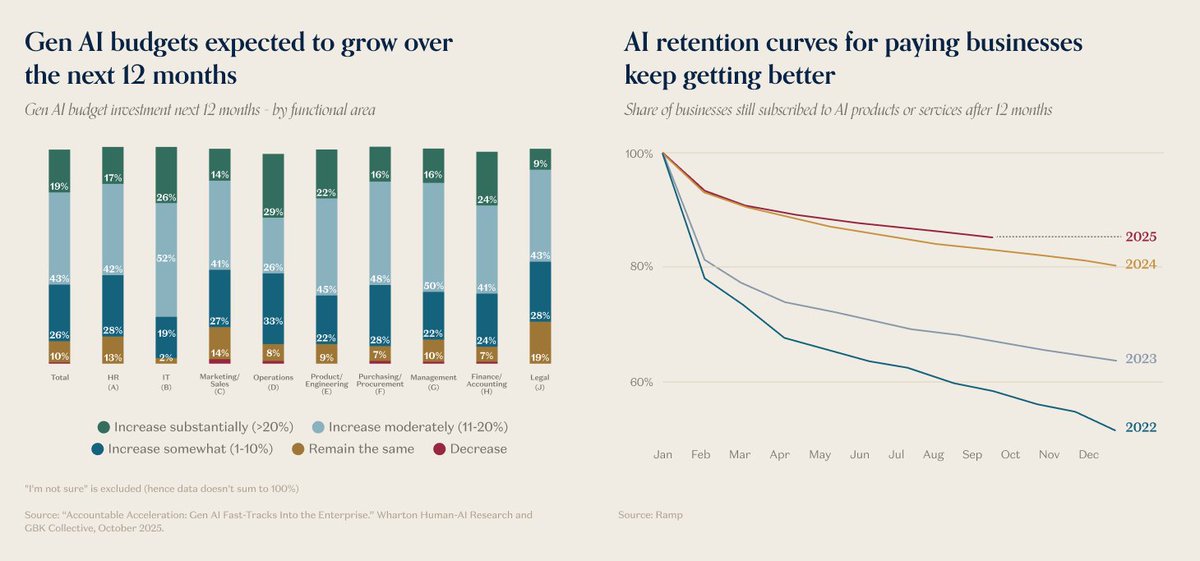
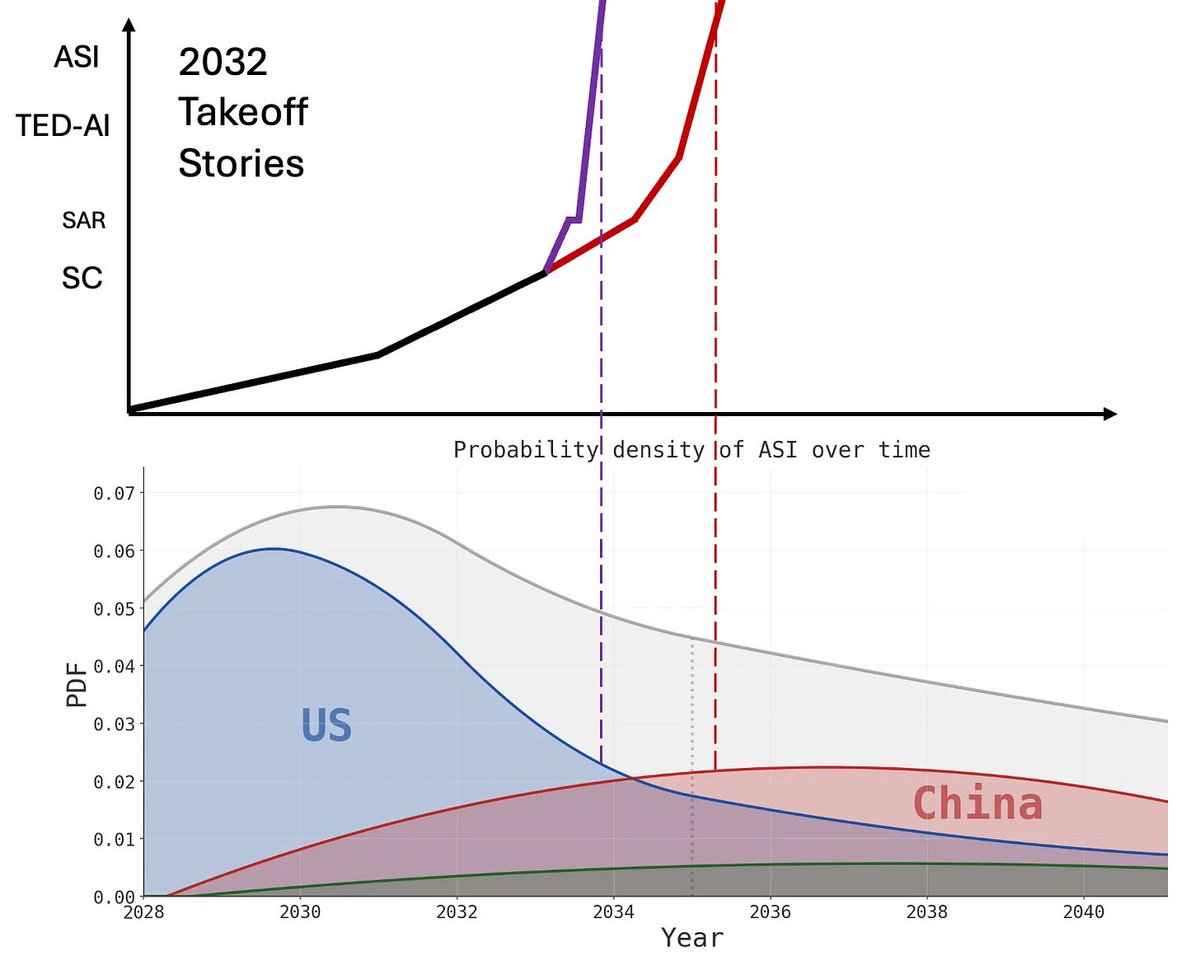
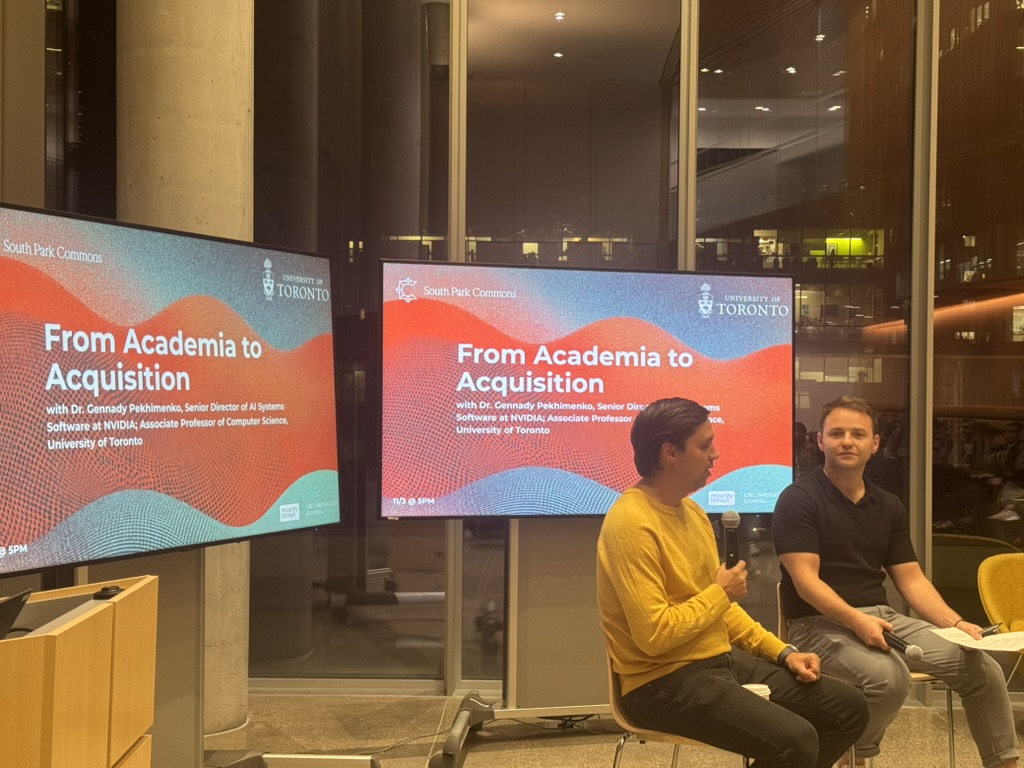

May 19
"When we master energy, we master our destiny"
May 19

When we master energy, we master our destiny.
We’re going to double the capacity of our grid by 2050 — to supply clean, reliable, affordable power across the country.
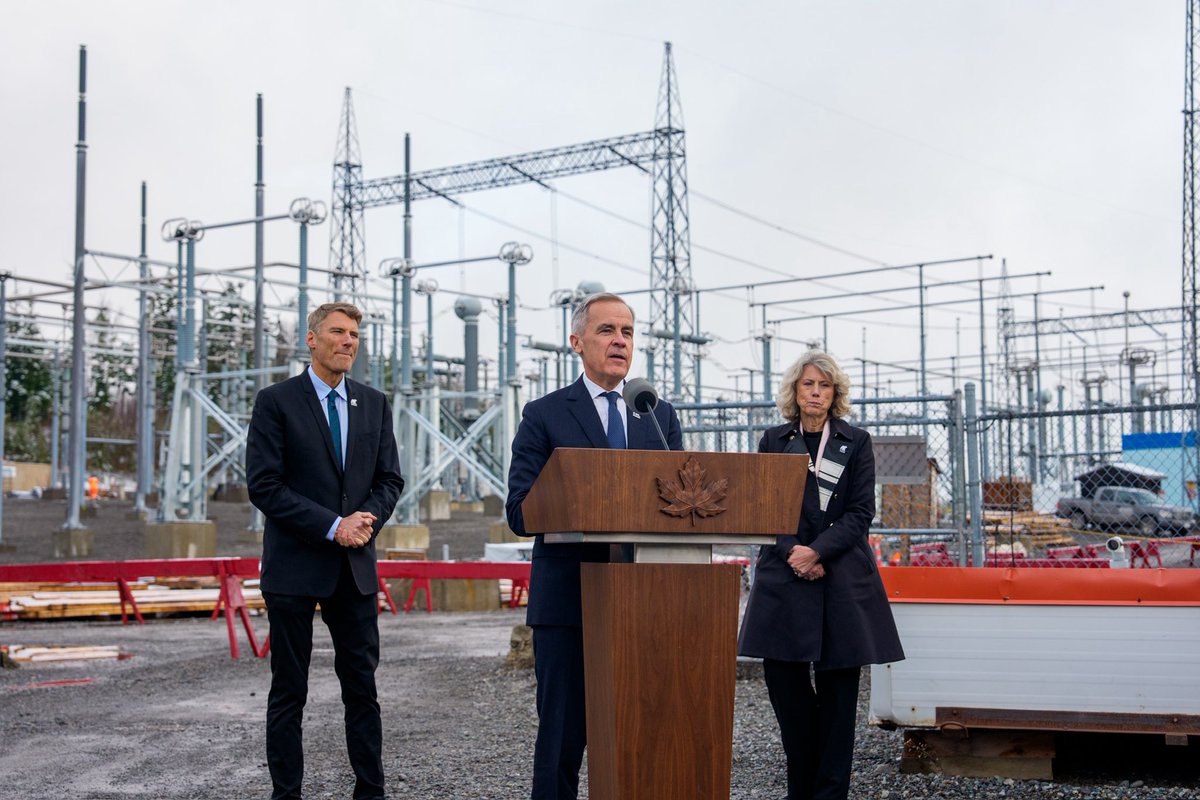
ALT Prime Minister Carney at a hydro substation in Terrace, British Columbia.
30
Aakash Nigam retweeted

May 15
DEI stands for Datacenter, Electricity and Infrastructure now
111
1,479
16,213
1,174,961
May 11
Tech sovereignty is now national strategy.
For India, self-reliance can’t stop at apps or services — it has to move down the stack: chips, cloud, models, data, energy and talent.
The next decade belongs to countries that can build, deploy and govern their own intelligence infrastructure.
May 11

Greetings on National Technology Day. We recall with pride the hard work and dedication of our scientists, which led to the successful tests in Pokhran in 1998. That landmark moment reflected India’s scientific excellence and unwavering commitment.
Technology has become a key pillar in building a self-reliant India. It is accelerating innovation, expanding opportunities and contributing to the nation’s growth across sectors. Our continued focus remains on empowering talent, encouraging research and creating solutions that serve both national progress and the aspirations of our people.
1
2
161
Apr 30
"Code is cheap now. And while the No Engineer is explaining why something can't be done, the Yes Engineer has already shipped three versions of it."
Apr 30

For 50 years, software engineering ran on code rationing. Writing code was expensive, so we rationed it carefully through roadmaps, RFCs, prioritization meetings, and scope reviews.
This created a role: the No Engineer. No, that won't scale. No, we don't have bandwidth. No, that's out of scope. No, we need a design doc first. The No Engineer was valuable for 50 years. Every "no" saved real money. Their judgment was the rationing system.
LLMs will be the end of code rationing. Code is cheap now. And while the No Engineer is explaining why something can't be done, the Yes Engineer has already shipped three versions of it.
If you're a Yes Engineer, the next decade is yours.
1
47
Aakash Nigam retweeted

Apr 19
hot take :) The biggest and most productive people in the AI era are the folks who are already good at their jobs. AI as a multiplier, not an equalizer/democratizer
332
589
6,093
327,191

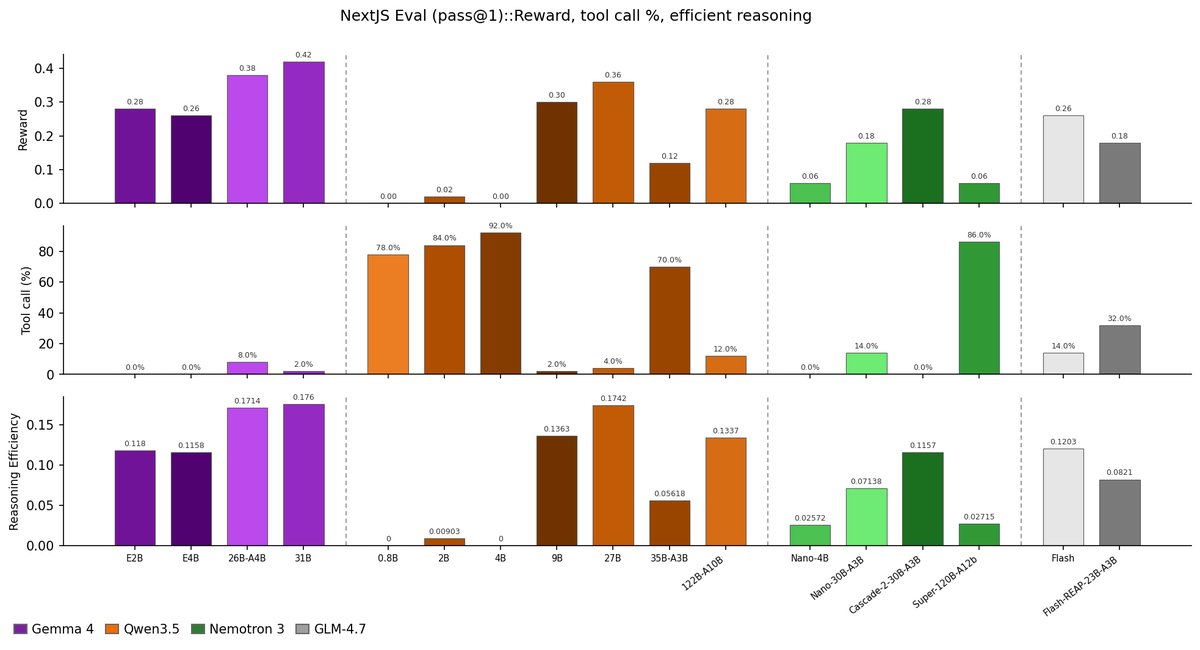
NextJS Benchmark (1st version) pass@1 on recent open source releases:
This is somewhat of unique benchmark that can be a great proxy for harness use: to identify if a tool call is needed at each step. No tool calls are needed in this benchmark, and an ideal model will have the highest reward with minimum percentage of tool calls.
Anatomy of the grid: first row is reward, second is tool call percentage, and lastly we have reasoning efficiency which is reward^2/(log10(reasoning_length)).
Gemma 4 series is better at all sizes. The smaller Gemma 4 variants are on par with Qwen3.5:9B with caveat of avoiding tool calls.
Gemma4:31B beats Qwen3.5:27B by getting a higher reward, lower tool call% and a slightly better reasoning efficiency.
Another interesting observation is Nemotron 3 series where the Cascade-2, a heavily post tuned version of Nano-30B-A3B shows clear sign of improvement.
1
1
1
224
Jan 30
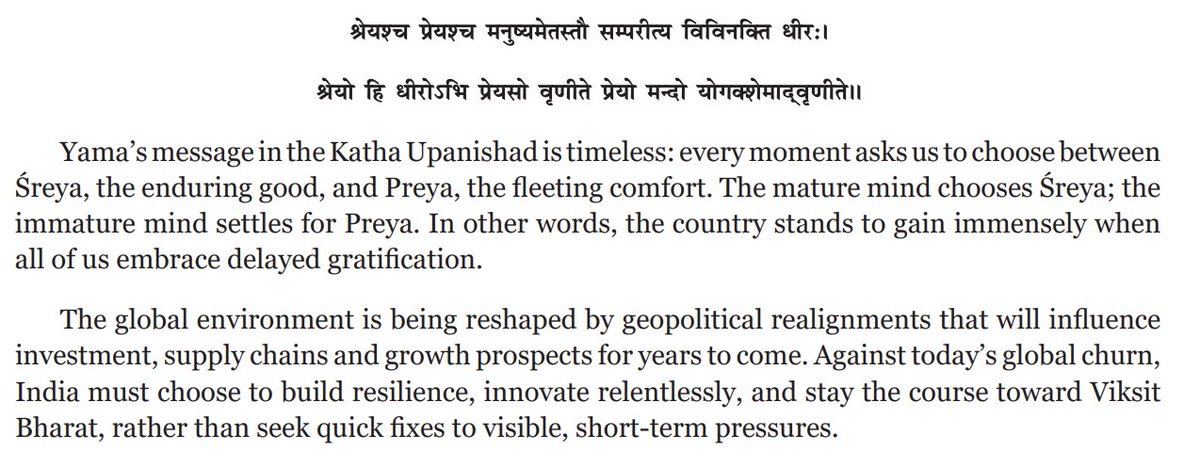
A lesson on 'delayed gratification' from India's 2025-26.
Very aptly applicable to startups, and life as well : The mature mind choose Sreya, the immature mind settles for Preya.
A startup stands to gain immensely when all of the team members embraces delayed gratification.
indiabudget.gov.in/economics…
133
Jan 27
who is ready for such workflow?

in order to remain on the frontier of capabilities you basically have to throw out all your AI code every 6 months and build it from scratch
125
Jan 26
'The intelligence part suddenly feels quite a bit ahead of all the rest of it - integrations (tools, knowledge), the necessity for new organizational workflows, processes, diffusion more generally"
"2026 is going to be a high energy year as the industry metabolizes the new capability"
Jan 26

A few random notes from claude coding quite a bit last few weeks.
Coding workflow. Given the latest lift in LLM coding capability, like many others I rapidly went from about 80% manual autocomplete coding and 20% agents in November to 80% agent coding and 20% edits touchups in December. i.e. I really am mostly programming in English now, a bit sheepishly telling the LLM what code to write... in words. It hurts the ego a bit but the power to operate over software in large "code actions" is just too net useful, especially once you adapt to it, configure it, learn to use it, and wrap your head around what it can and cannot do. This is easily the biggest change to my basic coding workflow in ~2 decades of programming and it happened over the course of a few weeks. I'd expect something similar to be happening to well into double digit percent of engineers out there, while the awareness of it in the general population feels well into low single digit percent.
IDEs/agent swarms/fallability. Both the "no need for IDE anymore" hype and the "agent swarm" hype is imo too much for right now. The models definitely still make mistakes and if you have any code you actually care about I would watch them like a hawk, in a nice large IDE on the side. The mistakes have changed a lot - they are not simple syntax errors anymore, they are subtle conceptual errors that a slightly sloppy, hasty junior dev might do. The most common category is that the models make wrong assumptions on your behalf and just run along with them without checking. They also don't manage their confusion, they don't seek clarifications, they don't surface inconsistencies, they don't present tradeoffs, they don't push back when they should, and they are still a little too sycophantic. Things get better in plan mode, but there is some need for a lightweight inline plan mode. They also really like to overcomplicate code and APIs, they bloat abstractions, they don't clean up dead code after themselves, etc. They will implement an inefficient, bloated, brittle construction over 1000 lines of code and it's up to you to be like "umm couldn't you just do this instead?" and they will be like "of course!" and immediately cut it down to 100 lines. They still sometimes change/remove comments and code they don't like or don't sufficiently understand as side effects, even if it is orthogonal to the task at hand. All of this happens despite a few simple attempts to fix it via instructions in CLAUDE . md. Despite all these issues, it is still a net huge improvement and it's very difficult to imagine going back to manual coding. TLDR everyone has their developing flow, my current is a small few CC sessions on the left in ghostty windows/tabs and an IDE on the right for viewing the code manual edits.
Tenacity. It's so interesting to watch an agent relentlessly work at something. They never get tired, they never get demoralized, they just keep going and trying things where a person would have given up long ago to fight another day. It's a "feel the AGI" moment to watch it struggle with something for a long time just to come out victorious 30 minutes later. You realize that stamina is a core bottleneck to work and that with LLMs in hand it has been dramatically increased.
Speedups. It's not clear how to measure the "speedup" of LLM assistance. Certainly I feel net way faster at what I was going to do, but the main effect is that I do a lot more than I was going to do because 1) I can code up all kinds of things that just wouldn't have been worth coding before and 2) I can approach code that I couldn't work on before because of knowledge/skill issue. So certainly it's speedup, but it's possibly a lot more an expansion.
Leverage. LLMs are exceptionally good at looping until they meet specific goals and this is where most of the "feel the AGI" magic is to be found. Don't tell it what to do, give it success criteria and watch it go. Get it to write tests first and then pass them. Put it in the loop with a browser MCP. Write the naive algorithm that is very likely correct first, then ask it to optimize it while preserving correctness. Change your approach from imperative to declarative to get the agents looping longer and gain leverage.
Fun. I didn't anticipate that with agents programming feels *more* fun because a lot of the fill in the blanks drudgery is removed and what remains is the creative part. I also feel less blocked/stuck (which is not fun) and I experience a lot more courage because there's almost always a way to work hand in hand with it to make some positive progress. I have seen the opposite sentiment from other people too; LLM coding will split up engineers based on those who primarily liked coding and those who primarily liked building.
Atrophy. I've already noticed that I am slowly starting to atrophy my ability to write code manually. Generation (writing code) and discrimination (reading code) are different capabilities in the brain. Largely due to all the little mostly syntactic details involved in programming, you can review code just fine even if you struggle to write it.
Slopacolypse. I am bracing for 2026 as the year of the slopacolypse across all of github, substack, arxiv, X/instagram, and generally all digital media. We're also going to see a lot more AI hype productivity theater (is that even possible?), on the side of actual, real improvements.
Questions. A few of the questions on my mind:
- What happens to the "10X engineer" - the ratio of productivity between the mean and the max engineer? It's quite possible that this grows *a lot*.
- Armed with LLMs, do generalists increasingly outperform specialists? LLMs are a lot better at fill in the blanks (the micro) than grand strategy (the macro).
- What does LLM coding feel like in the future? Is it like playing StarCraft? Playing Factorio? Playing music?
- How much of society is bottlenecked by digital knowledge work?
TLDR Where does this leave us? LLM agent capabilities (Claude & Codex especially) have crossed some kind of threshold of coherence around December 2025 and caused a phase shift in software engineering and closely related. The intelligence part suddenly feels quite a bit ahead of all the rest of it - integrations (tools, knowledge), the necessity for new organizational workflows, processes, diffusion more generally. 2026 is going to be a high energy year as the industry metabolizes the new capability.
103
Jan 22
"Claude Code is the best tech invention of our generation"
Jan 22

NVIDIA CEO:
"Every software company should get involved with Claude."
Claude Code is the best tech invention of our generation.
101
Jan 22
“Computers are like a bicycle for the mind” - Apple’s Steve Jobs.
“Information at your fingertips” - Bill Gates on Internet
"Managers of Infinite Minds" - @ivanhzhao on AI
56
Jan 20
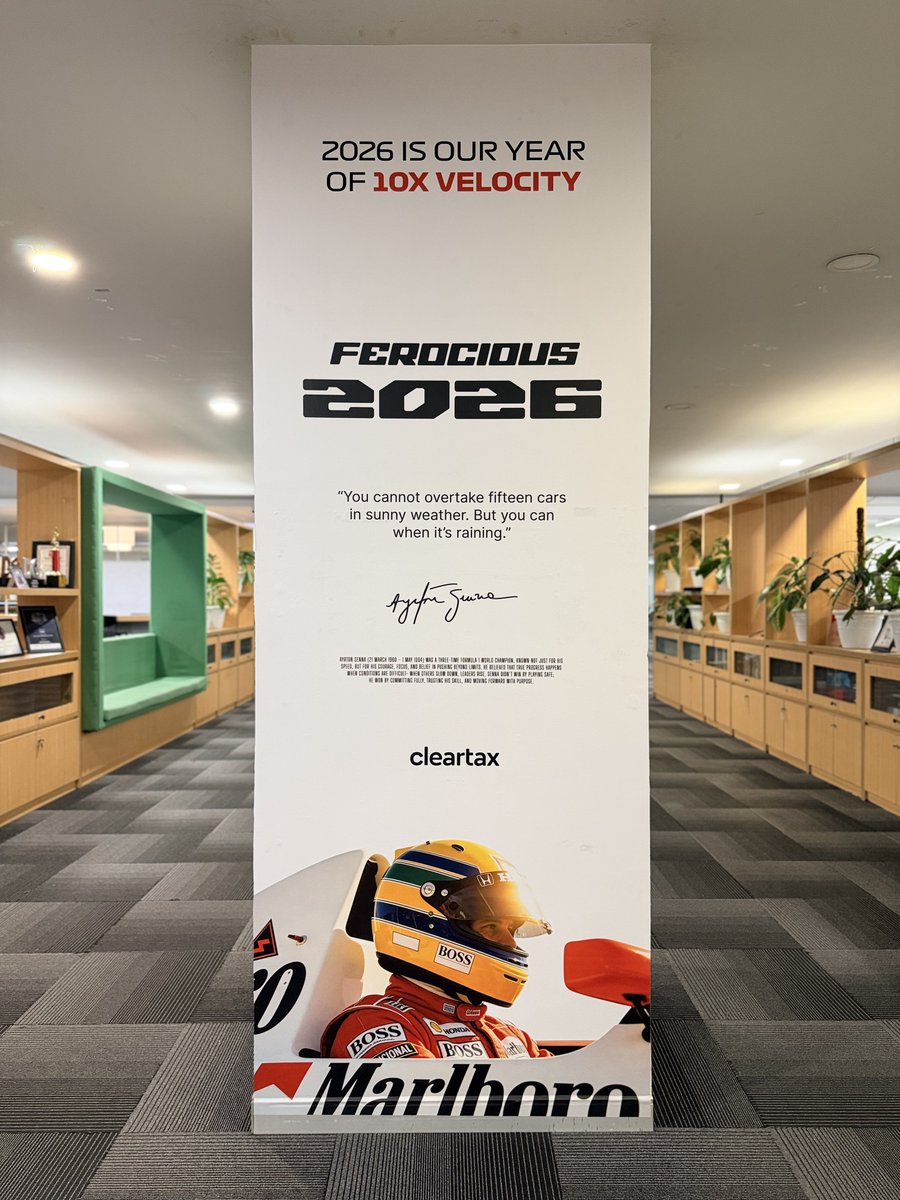
"2026 is they year of 10X velocity"
Jan 20

"You cannot overtake 15 cars in sunny weather. But you can, when it is raining."
I love this quote by Ayrton Senna. It captures how we’re thinking right now.
AI is here. For some, this rain is a risk. We see it as an opportunity. We didn't just add AI to our roadmap, we used it to accelerate how we operate.
We’d been trying to solve one problem since 2023: gig workers were losing hard-earned money to TDS, and we wanted refunds back in their pockets. Our early bets didn’t scale, a dedicated app, then heavy partner automations. Right intent. But the wrong vehicle.
In Jan 2024, a hackathon reset everything. We scrapped the app. No complex integrations. Just WhatsApp AI. The first signal was small - 3,800 users, one partner - but the friction was gone.
And then it compounded.
By end of July 2024:
→2 lakh filings
→27 active partners (from 1)
→7 native languages
→500 cities — from Solapur to Madurai, Dhanbad to Panchkula
The outcomes were the real story:
1️⃣Inclusion: our AI tax filing enabled ~3% of India’s first-time filers to enter the formal economy last year
2️⃣Speed accuracy: fastest filing in 58 seconds, with 100% accuracy
3️⃣Impact: ₹35 crore in refunds unlocked; some workers received up to ₹90,000; almost ~3 months of earnings
This is velocity: finding product-market fit in weeks, not years, and scaling from a pilot to population-level impact.
At ClearTax, velocity is a habit. And as we become AI-first, we’re not just speeding up taxation, we’re expanding the mission to simplify finance for everyone.
67
Jan 18
New speed of software development
New bottleneck will be identifying at same pace what to build, and not how to build.

73
Jan 13
a beautiful democratization of technology skillset is upon us --its all about product strategy, and agency now

62
Jan 1
Jan 1

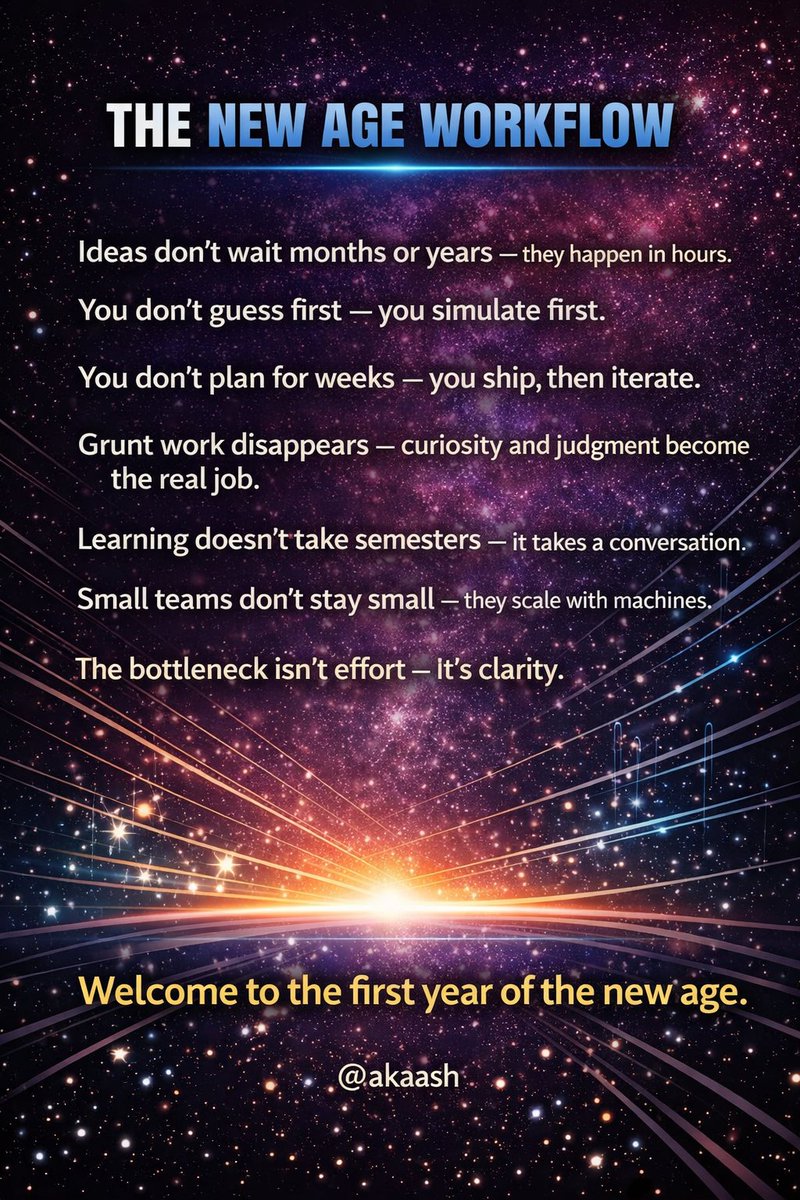
Ideas don’t wait months or years — they happen in hours.
You don’t guess first — you simulate first.
You don’t plan for weeks — you ship, then iterate.
Grunt work disappears — curiosity and judgment become the real job.
Learning doesn’t take semesters — it takes a conversation.
The bottleneck isn’t effort — it’s clarity.
Small teams don’t stay small — they scale with machines.
Welcome to the first year of the new age.
1
77
Jan 1
Ideas don’t wait months or years — they happen in hours.
You don’t guess first — you simulate first.
You don’t plan for weeks — you ship, then iterate.
Grunt work disappears — curiosity and judgment become the real job.
Learning doesn’t take semesters — it takes a conversation.
The bottleneck isn’t effort — it’s clarity.
Small teams don’t stay small — they scale with machines.
Welcome to the first year of the new age.
2
106
31 Dec 2025
100% agree with all observations from Nadella uncle.
"We are beginning to distinguish between “spectacle” and “substance”"
"We are now entering a phase where we build rich scaffolds that orchestrate multiple models and agents; account for memory and entitlements; enable rich and safe “tools use”. This is the engineering sophistication we must continue to build to get value out of AI in the real world"
"Computing throughout its history has been about empowering people and organizations to achieve more, and AI must follow the same path"
"it can become one of the most profound waves of computing yet."
29 Dec 2025

A few reflections on the year ahead for our industry ... snscratchpad.com/posts/looki…
2
107
28 Dec 2025
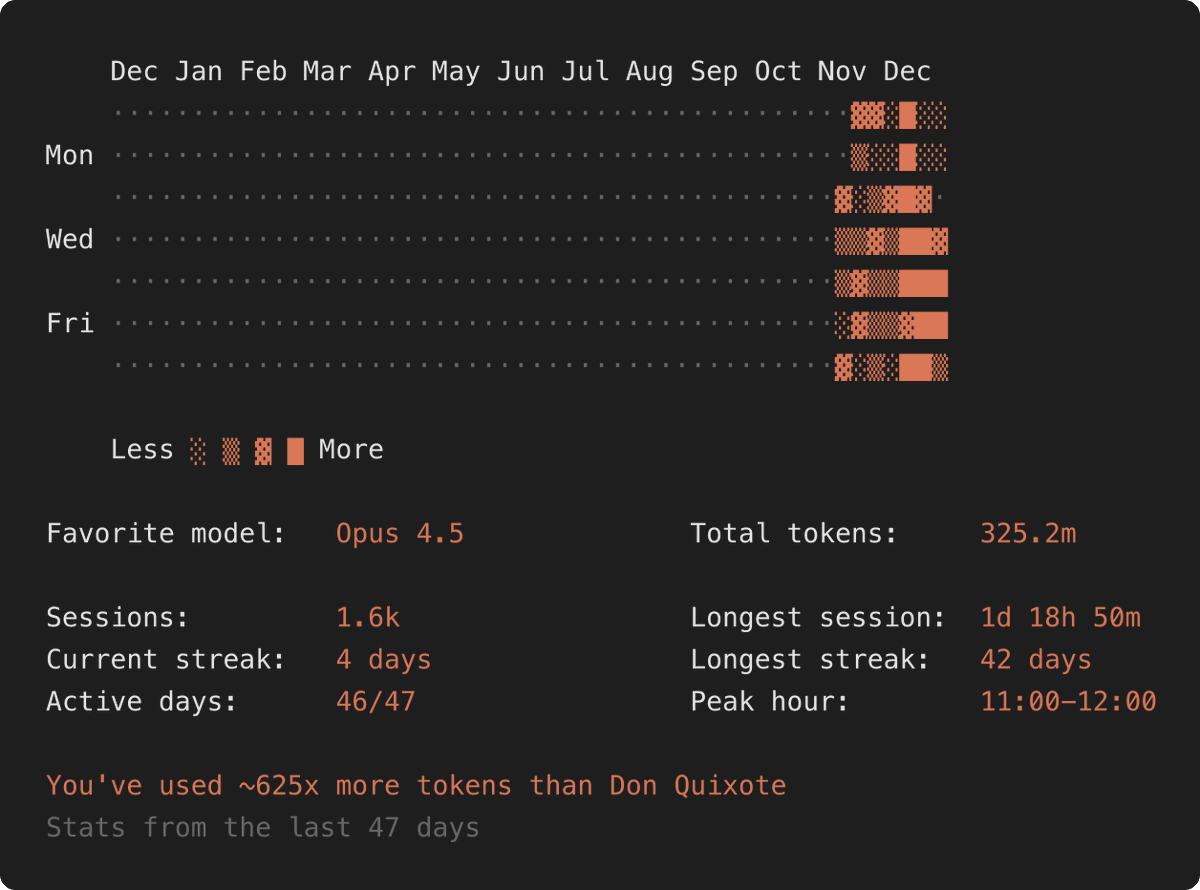
"Last 30 days: 259 PRs, 497 commits, 40k/–38k LOC — all via Claude Code"
This is the new baseline for dev velocity in 2026.
The bottleneck shifts from engineering capacity hiring speed to identifying what’s worth building.
Please spend the last 3 days of 2025 building your “new-velocity” backlog — because it’s about to get wild.
27 Dec 2025

When I created Claude Code as a side project back in September 2024, I had no idea it would grow to be what it is today. It is humbling to see how Claude Code has become a core dev tool for so many engineers, how enthusiastic the community is, and how people are using it for all sorts of things from coding, to devops, to research, to non-technical use cases. This technology is alien and magical, and it makes it so much easier for people to build and create. Increasingly, code is no longer the bottleneck.
A year ago, Claude struggled to generate bash commands without escaping issues. It worked for seconds or minutes at a time. We saw early signs that it may become broadly useful for coding one day.
Fast forward to today. In the last thirty days, I landed 259 PRs -- 497 commits, 40k lines added, 38k lines removed. Every single line was written by Claude Code Opus 4.5. Claude consistently runs for minutes, hours, and days at a time (using Stop hooks). Software engineering is changing, and we are entering a new period in coding history. And we're still just getting started..
1
164