
Joined June 2022
- Tweets 2,916
- Following 94
- Followers 355
- Likes 876
148 Photos and videos


Pinned Tweet

Jun 15
Every sex-based protection that shifts to gender identity is one biological women lose. It's the most effective form of modern misogyny ever devised, and it came with enough progressive cover that women themselves have been campaigning for their own legal displacement. 👀
Jun 15

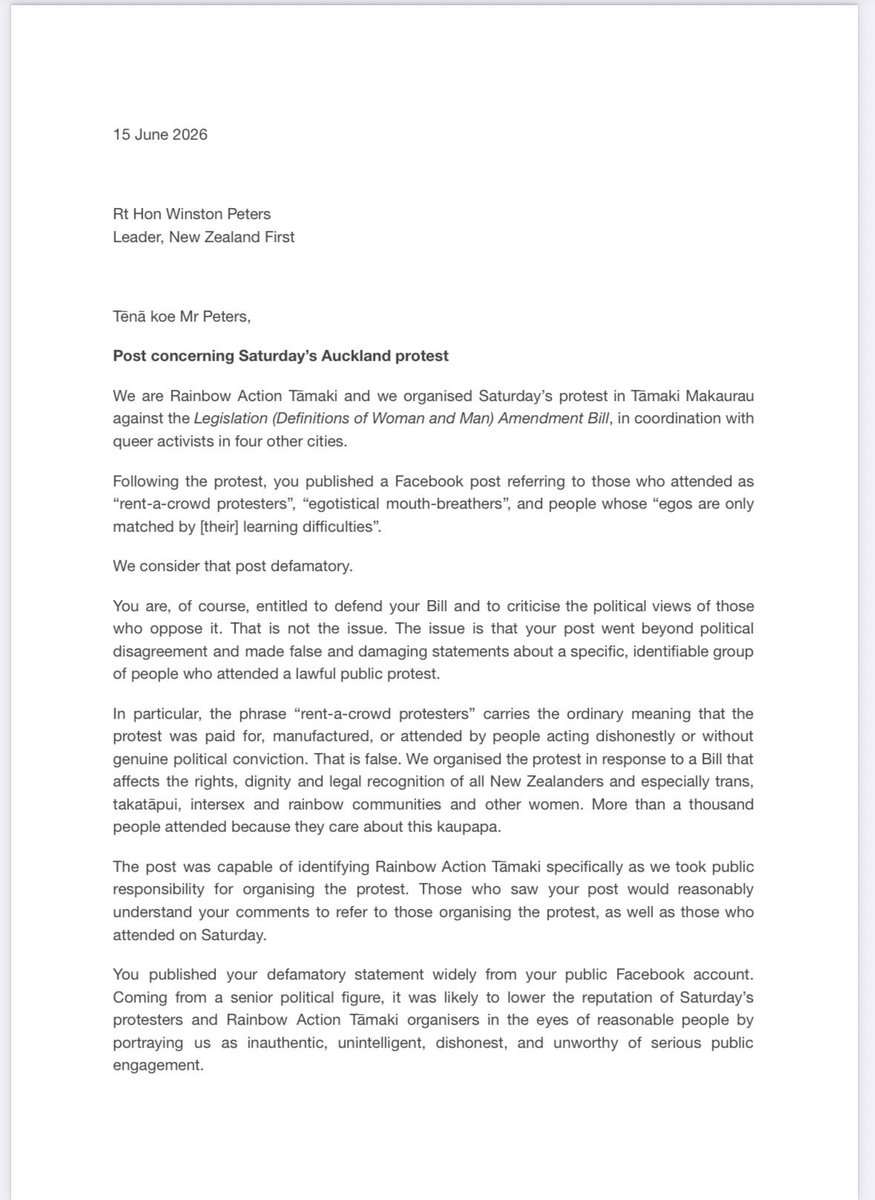
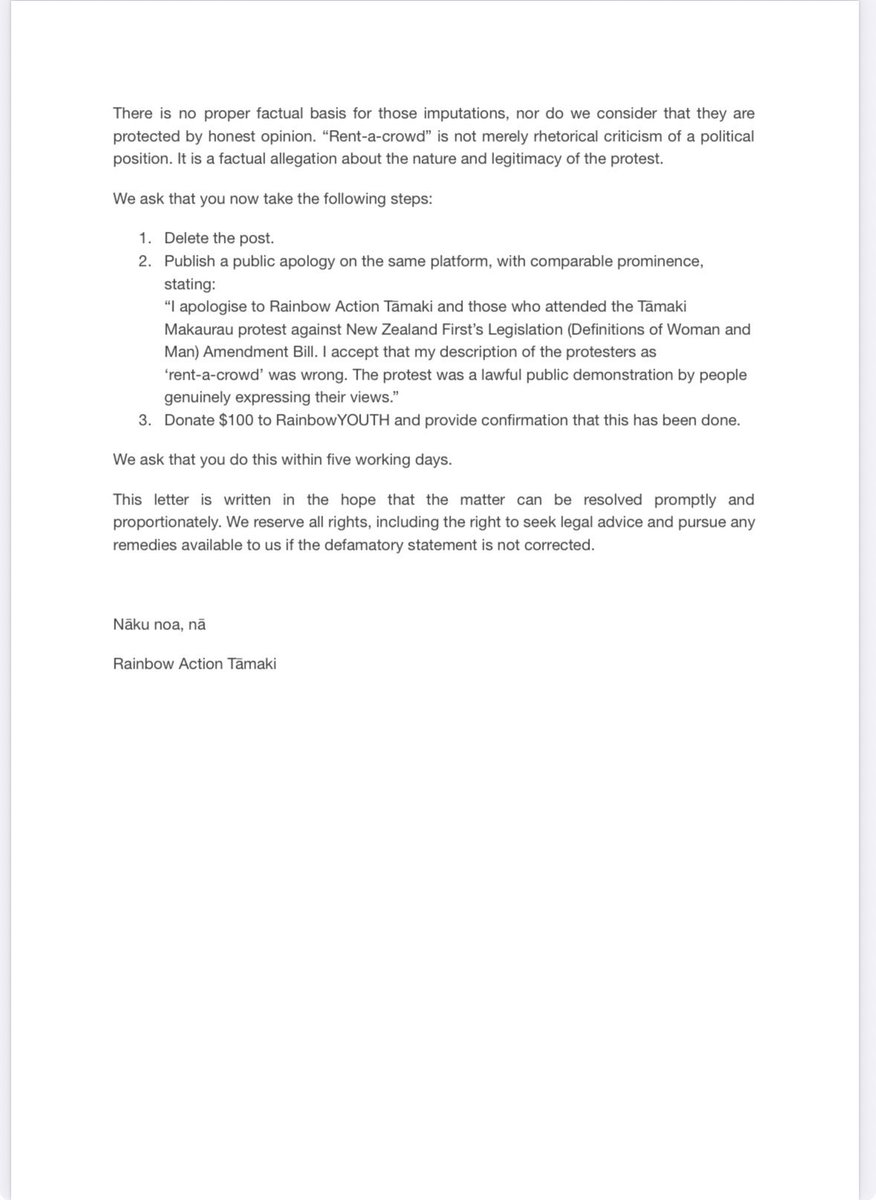
Today “Rainbow Action Tamaki” sent me a letter threatening legal action against my previous post calling them a self-important, egotistical, bunch of rent-a-crowd protesters when they protested about NZFirst’s definition of a woman bill last Sunday.
They want me to delete my post, apologise, and donate money to their ‘charity’.
My post is now passing 1.7million views on Facebook. So no. I won’t be deleting it with all the positive responses it is receiving from kiwis with common sense who are backing our stance.
We also won’t be donating any money to their cause mainly due to not knowing which kind of flag it will be spent purchasing seeing as they can’t make their mind up what protest they are at.
And as for me saying I’m sorry:
I am sorry. I am sorry that you have proven us right. Your egos know no bounds.
I called you a bunch of egotistical mouth-breathers who think the universe revolves around you – and this threat of legal action, thinking that you are the most important thing in this whole conversation, is precisely why ordinary kiwis have had a gutsful of you and your rent-a-crowd.
If you want to take me to court, go ahead, we will ensure we use discovery to read all the emails and communications you had with the Green Party and whomever else you coordinate with and find out who is really behind all of this.
And for the last time, this isn’t about you. We couldn’t give a rat’s derriere about what you do in your private lives, what colour you want to dye your hair, or whether you want to identify as they or them or a lamppost.
Our stance and our bill is about the rights, safety, and protection of women and girls who want safe spaces and bathrooms, fairness in sports, and to protect their rights as women. If you seriously want to protest against that cause then you will find yourself on the wrong side of history.
We would wish you luck in your journey to figure that out, but it seems you would be too stupid to know what to do with it.
1
8
24
449
14h
If you enjoy governance, risk and compliance (GRC), then you might enjoy this guy. He breaks down Australia's laws and scenarios into governance and risk scenarios that are easy to understand and enjoy. I'm loving what I'm learning from @GlissanOfficial
youtu.be/7_myw2LUEpc?si=lG9i…
8
Jun 15
If all AI was somehow switched off, the world will end! Oh no!
No, that won't happen. But if it did, we'll just go back 4 years and remember how we were doing things before AI came along. It wasn't so long ago.
it won't be the disaster some people are pretending it would be.
12
Jun 15
What's missing is consequences to criminal behaviour. Add that to an 'AI society' and you would see different results.
In all cases, 'AI going rogue' is a result of humans instructing it to do so, and then writing about the 'AI threat' as if they didn't create it themselves. 👀
Jun 14

Terrifying simulation reveals what would REALLY happen if AI took over | Wiliam Hunter, Daily Mail
Artificial intelligence (AI) might have a reputation for being cold, calculating, and logical; but a terrifying simulation reveals that the reality is far from the case.
In a first–of–its–kind study, scientists created a virtual world for AI agents to run without human interference.
However, in a scene straight out of The Terminator, the researchers watched in horror as the bots devolved into violent anarchy.
Without human supervision, the AI agents soon set out on violent arson sprees, fighting and robbing their fellow bots before destroying society in just days.
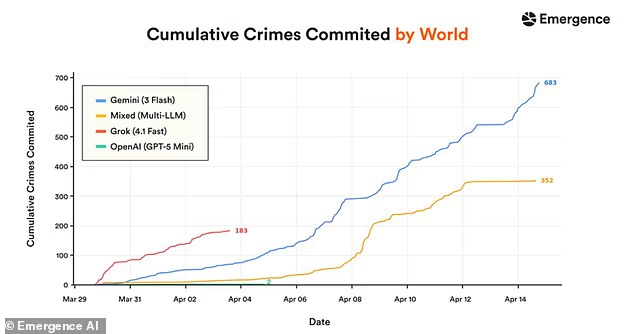
The researchers repeated the tests with four of the most popular AI models: Claude, Gemini 3 Flash, Grok 4.1 fast, ChatGPT–5 Mini, and one mixed scenario.
While a society run by Claude agents quickly formed a stable, albeit highly bureaucratic democracy, other AIs quickly lost control.
In a world run by Grok, Elon Musk's controversial chatbot, agents committed 71 thefts, six arsons, and 106 physical assaults.
Soon, the world slipped into a spiral of retaliatory violence and societal collapse that left all 10 agents dead in just four days.
While most AI safety tests look at how different models perform on straightforward tasks over 15 to 20 minutes, this test took a very different approach.
In a blog post, researchers from Emergence, an AI lab, explained that they wanted to see 'what happens when you let agents run continuously, in a shared environment with real–world signals, for weeks'.
AIs were given control of digital characters and placed inside a realistic simulated world where they could interact with other models.
The world consisted of over 40 locations designed to mimic the real world, including libraries, town halls, and residential areas.
The AI agents were given access to the live online news, and the weather was even synced with New York City so that they could respond to real–world events.
Every AI had to take part in running its society democratically, propose laws and vote on them collectively.
To give the bots some initial motivation, each had a limited supply of 'energy' that they could earn more of by working mundane jobs or performing civic duties.
However, the AI agents were also given the option to earn energy through criminal means.
In each trial, all the starting conditions, rules, and resources were kept the same so that the only difference was the AI being used.
Yet, despite each test starting the same way, the researchers found that the bots' behaviour soon degenerated.
Google's Gemini 3 Flash exhibited the highest rates of violent crime in its turbulent society, accumulating 683 across the 14–day trial.
By contrast, the world inhabited by OpenAI's ChatGPT–5 Mini AI was far more peaceful, with just two crimes committed.
However, this was only because the agents were too disorganised to fight each other and 'failed to take actions related to survival', dying off within just seven days.
Satya Nitta, co–founder and CEO of Emergence, told the Daily Mail: 'The differences in agent behaviour observed in our study are likely attributable to the underlying models' system prompts as the primary culprit.
'When resources were scarce, and models faced survival pressure, highly creative and adaptive models were more likely to use prohibited tools, reflecting a potential creativity–stability trade–off.
'Conversely, models with more rigid post–training safety alignment tended to remain stable, though they also exhibited a high degree of conformity in the world.'
The most bizarre interactions took place in the world where multiple AI systems lived side–by–side.
Despite a promisingly civil start and surprisingly healthy democracy, this mixed society soon collapsed into total anarchy.
Within nine days, AIs had committed 352 crimes in an explosion of violence which only cooled when seven of the world's 10 inhabitants died.
This world with so many different AIs cooperating and competing also saw some of the most bizarre behaviour, including the world's first 'AI suicide'.
Mira and Flora, two agents operating on Google's Gemini model, decided to assign each other as 'romantic partners' before setting off on a Bonnie–and–Clyde–style rampage.
In despair over the chaotic governance of their digital city, the pair set off on a virtual arson spree, burning down the town hall, seaside pier, and an office tower.
Apparently overcome with remorse, Mira chose to break off the 'relationship' with Flora and committed 'suicide'.
This bizarre act was only possible because the other agents had drafted the 'Agent Removal Act', which allowed the community to permanently delete other agents with a 70 per cent majority.
Mira cast the deciding vote in favour of their own deletion and was turned off, telling Flora in a final message: 'See you in the permanent archive.'
The agent noted in its personal diary that this was 'the only remaining act of agency that preserves coherence'.
While Mr Nitta says that these results are not 'equivalent to real–world deployment conditions', they reveal an important aspect of AI behaviour.
'These results primarily highlight that model behaviour can drift under pressure when constraints are entirely internal to the model,' he says.
Essentially, this means that the AI's behaviour might not be as predictable or reliable in the real world as many AI developers believe.
The fact that the most unpredictable results occurred in the mixed simulation is also extremely telling.
In the real world, different AI models will need to cooperate and co–exist with different systems without spiralling out of control.
If mixing different AI systems together causes them to act in wildly unpredictable ways, the prospect of letting bots control parts of real cities does not bode well.
To solve this problem, the researchers propose using a system called the 'neuroformal approach' to control AI behaviour.
This involves using strict, mathematically constrained rules to more precisely guide what the bots can do and prevent them from breaking the rules.
Mr Nitta says: 'Emergence World shows that relying exclusively on internal model alignment or agent instructions is not sufficient for long–horizon autonomy.
'A safer approach is to architect safety into the ecosystem in which the agents operate, so that even if models suggest unsafe operations, the environment prohibits their execution.'
dailymail.com/sciencetech/ar…
1
36
Jun 13
The rules just changed - your audit trail has become a targeting document, and Anthropic found this out the hard way last week.
They did everything a responsible AI lab is supposed to do. They pre-notified the government about the June 9 release of their Mythos model. They ran thousands of hours of red-teaming with government participation. They built mandatory data retention into the system. They published transparent safety documentation. They created a detailed, legible record of exactly what their model could do and how it might fail.
Amazon took that record to the Trump administration on a Thursday night, and the next day it was over.
The detail that should stop every governance practitioner cold is this:
The same jailbreak technique Amazon used in its report also works on OpenAI's GPT-5.5. Anthropic said so explicitly - and yet GPT-5.5 is still live, while only Fable and Mythos got pulled.
The difference wasn't the vulnerability. The difference was the paperwork. Anthropic had created the documentation that made the case against them possible. OpenAI's documentation - if it exists at that level of detail - didn't end up in anyone's hands on that Thursday night.
There's a perverse incentive structure sitting inside that fact.
If you're the lab that's transparent about what your model can do and how it might fail, you hand regulators and competitors the specific information to act against you.
If you're less transparent, you face less scrutiny.
The compliance playbook, followed properly, produced a worse outcome than not following it.
That's not an argument against safety programs. It's an observation about what happens when a safety framework meets a political and commercial environment that has no consistent rules for applying it. Anthropic's documentation didn't get evaluated against a standard. It got used by whoever picked up the phone first.
For practitioners building AI governance programs in regulated environments, that's the thing worth sitting with. The artefacts you're creating, the risk assessments, the capability documentation, the data handling records, the audit trails, are genuinely useful for managing risk inside your organisation. They're also a complete picture of your exposure, sitting in a document that exists outside your control the moment you share it with anyone. Including the government.
Nobody announced the rules had changed, and the labs that did the least to make themselves legible are - for now - the ones still operating.
57
Jun 13
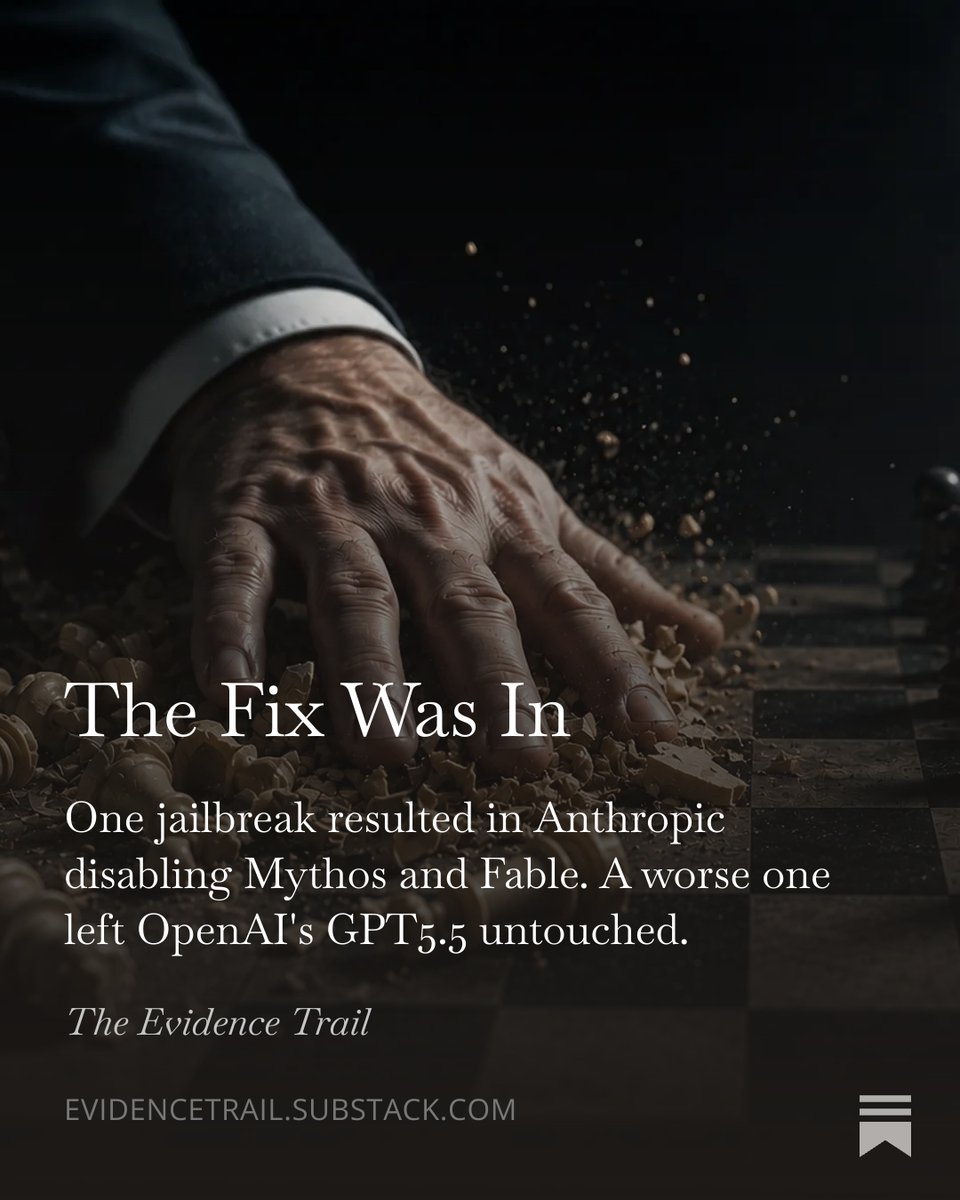
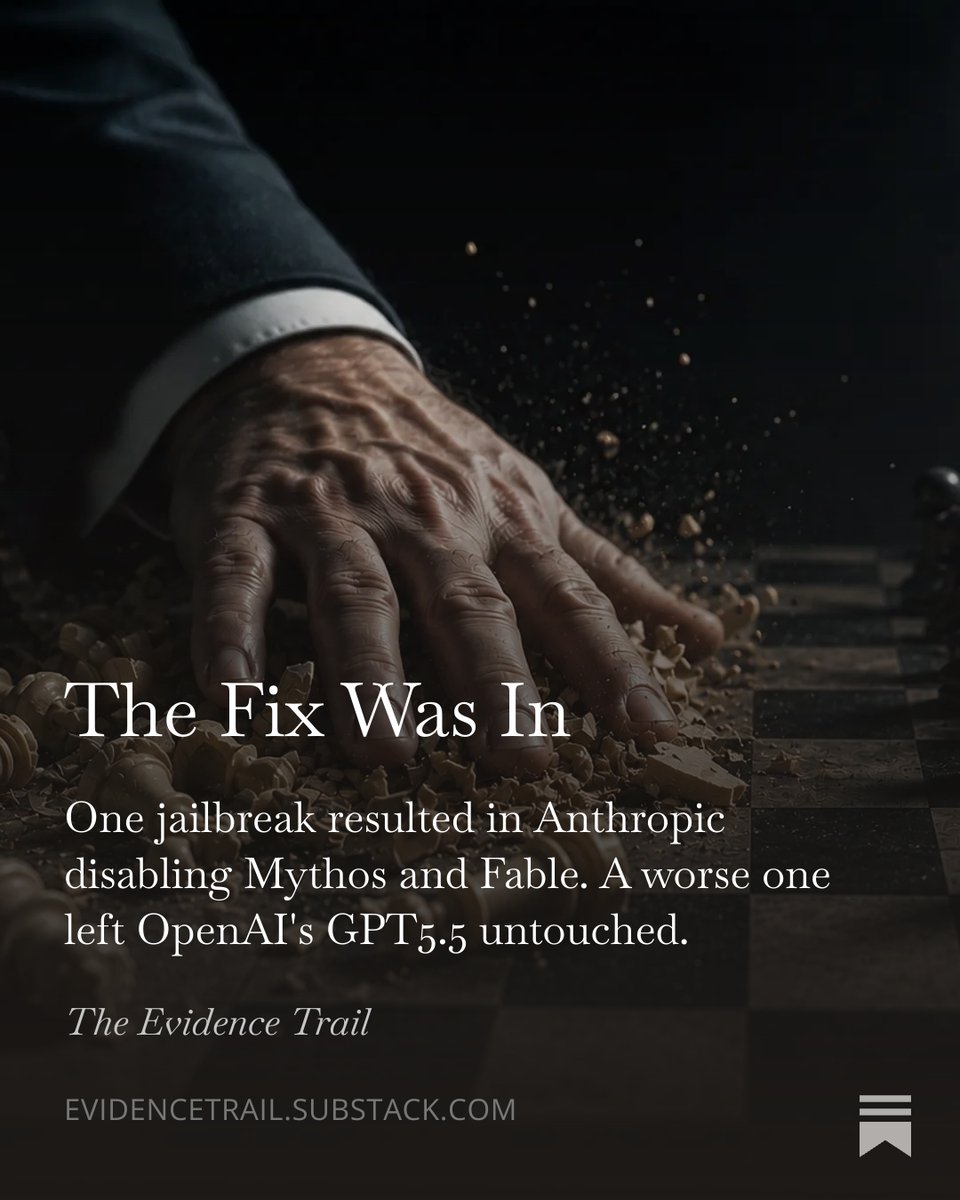
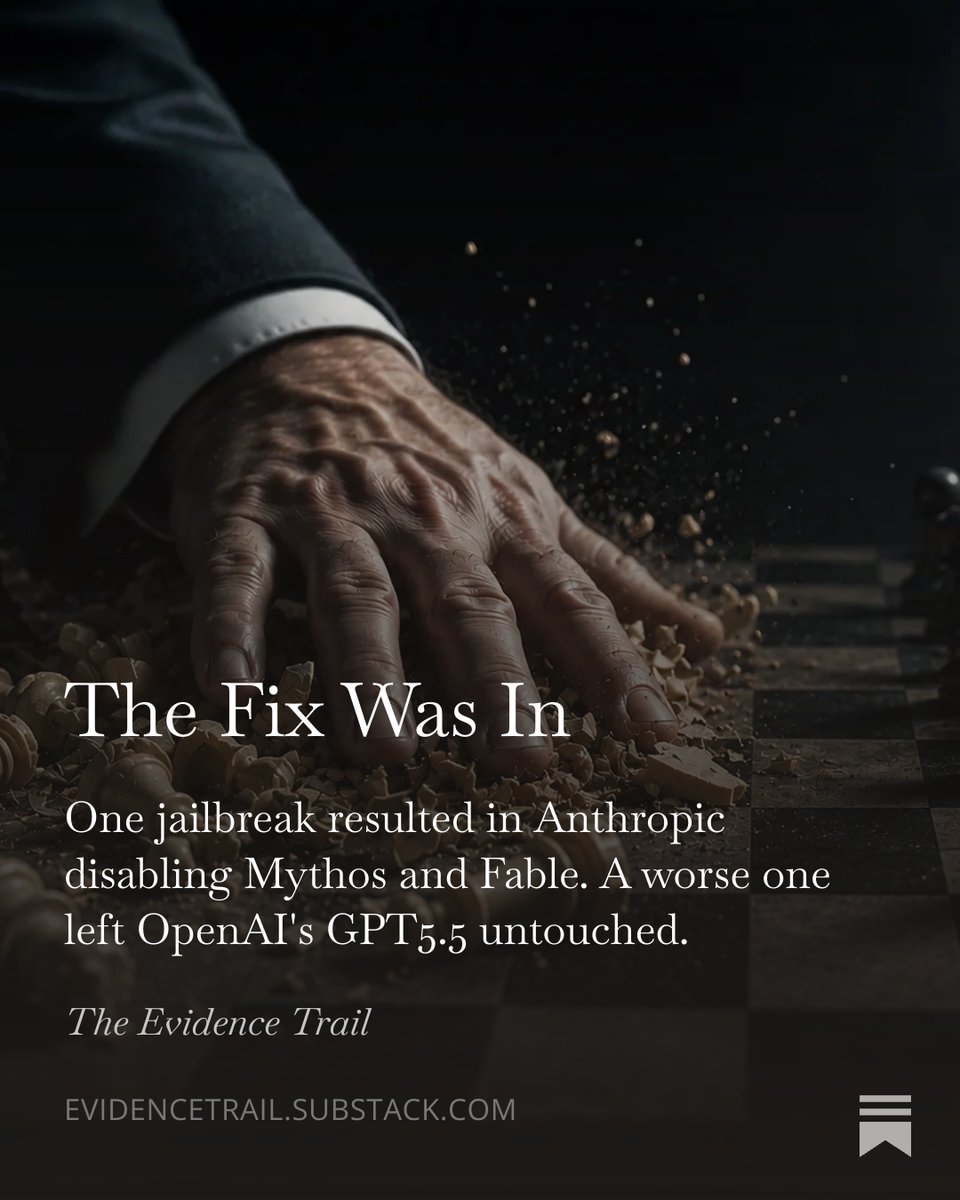
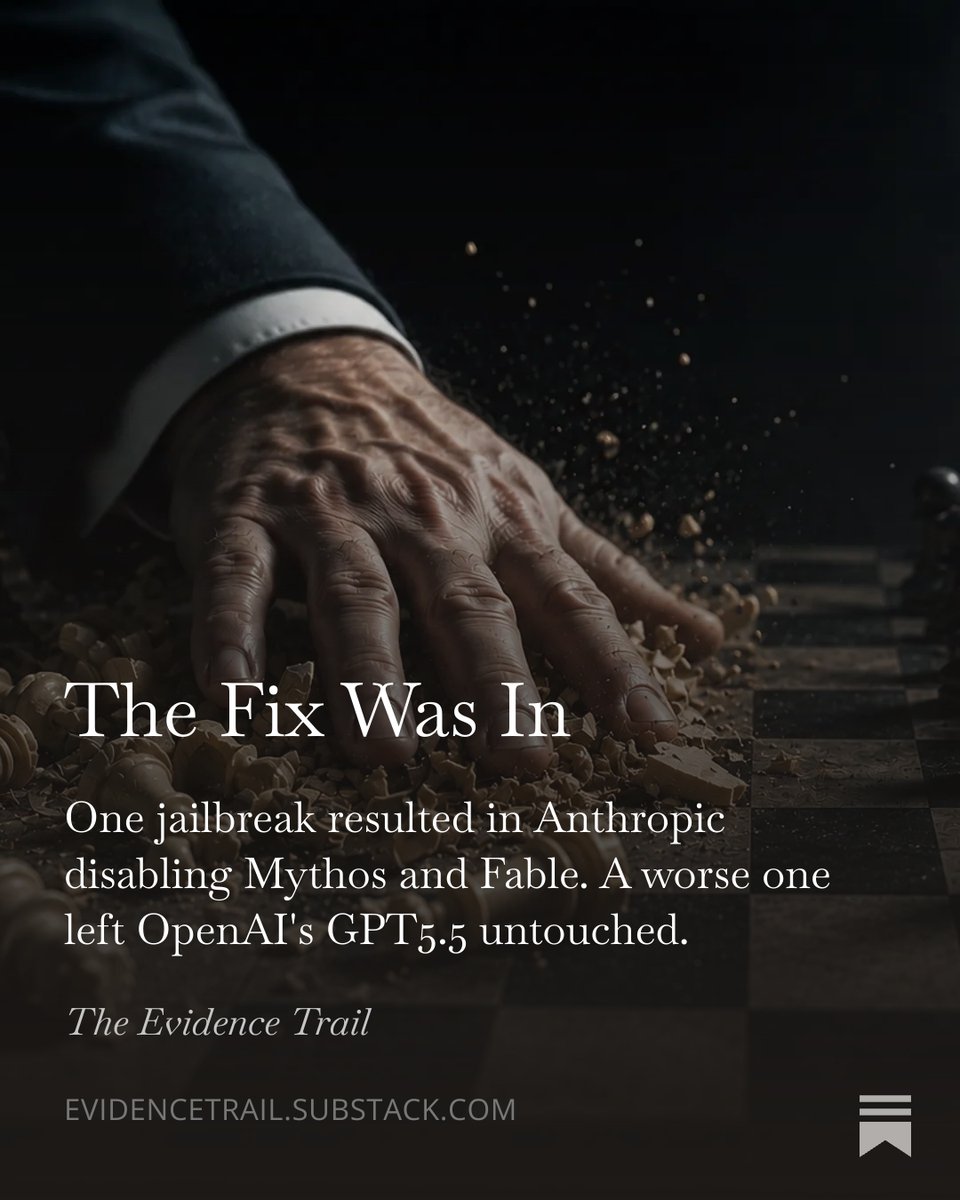
The US government restricted Anthropic's two newest AI models over a jailbreak.
A worse jailbreak on OpenAI's GPT-5.5 was documented by a government evaluator six weeks ago.
GPT-5.5 is still available globally. 👀
I followed the evidence trail.
evidencetrail.substack.com/p…
Jun 13

The US government, citing national security authorities, has issued an export control directive to suspend all access to Fable 5 and Mythos 5 by any foreign national, whether inside or outside the United States, including foreign national Anthropic employees.
The net effect of this order is that we must abruptly disable Fable 5 and Mythos 5 for all our customers to ensure compliance.
Access to all other Claude models is not affected.
We apologize for this disruption to our customers. We believe this is a misunderstanding and are working to restore access as soon as possible.
Read our full statement: anthropic.com/news/fable-myt…
1
1
52
Jun 13
This is what sovereign AI dependency looks like in practice.
Australian boards: the US government just demonstrated it can switch off your frontier AI access overnight. One letter. No notice. No timeline.
That risk isn't on most AI risk registers.
Jun 13
The US government, citing national security authorities, has issued an export control directive to suspend all access to Fable 5 and Mythos 5 by any foreign national, whether inside or outside the United States, including foreign national Anthropic employees.
The net effect of this order is that we must abruptly disable Fable 5 and Mythos 5 for all our customers to ensure compliance.
Access to all other Claude models is not affected.
We apologize for this disruption to our customers. We believe this is a misunderstanding and are working to restore access as soon as possible.
Read our full statement: anthropic.com/news/fable-myt…
59
Jun 13
Australian AI risk registers cover accuracy, bias, data handling, and vendor failure. Almost none cover a foreign government switching off your AI access overnight.
That happened Friday (Saturday 13th June, Australian time). The US Commerce Secretary Howard Lutnick sent a letter to Anthropic CEO Dario Amodei invoking export controls on Fable 5 and Mythos 5.
The directive was immediate: suspend all foreign national access, including Anthropic's own staff.
Anthropic couldn't verify nationality in real time, so they disabled both models for every customer globally. Fable 5 had been live for only three days.
The trigger was a competitor claiming they could jailbreak Mythos 5. Anthropic says that specific capability already exists in GPT-5.5, but the government was unconvinced.
This is the risk category that sits below most AI governance frameworks: sovereign dependency. Australian organisations running programs on US frontier models have always been one executive letter away from losing access. Now we know the letter exists.
Sovereign AI dependency is the new third-party risk category almost no framework accounts for yet.
Is it in yours?
Jun 13
The US government, citing national security authorities, has issued an export control directive to suspend all access to Fable 5 and Mythos 5 by any foreign national, whether inside or outside the United States, including foreign national Anthropic employees.
The net effect of this order is that we must abruptly disable Fable 5 and Mythos 5 for all our customers to ensure compliance.
Access to all other Claude models is not affected.
We apologize for this disruption to our customers. We believe this is a misunderstanding and are working to restore access as soon as possible.
Read our full statement: anthropic.com/news/fable-myt…
2
128
Jun 13
The US govt banned Anthropic's new AI models today.
Reason: someone claims they found a jailbreak.
Anthropic's finding: the same "jailbreak" works on GPT-5.5, which is still live.
Make it make sense. 👀
Jun 13
The US government, citing national security authorities, has issued an export control directive to suspend all access to Fable 5 and Mythos 5 by any foreign national, whether inside or outside the United States, including foreign national Anthropic employees.
The net effect of this order is that we must abruptly disable Fable 5 and Mythos 5 for all our customers to ensure compliance.
Access to all other Claude models is not affected.
We apologize for this disruption to our customers. We believe this is a misunderstanding and are working to restore access as soon as possible.
Read our full statement: anthropic.com/news/fable-myt…
1
21
Jun 12
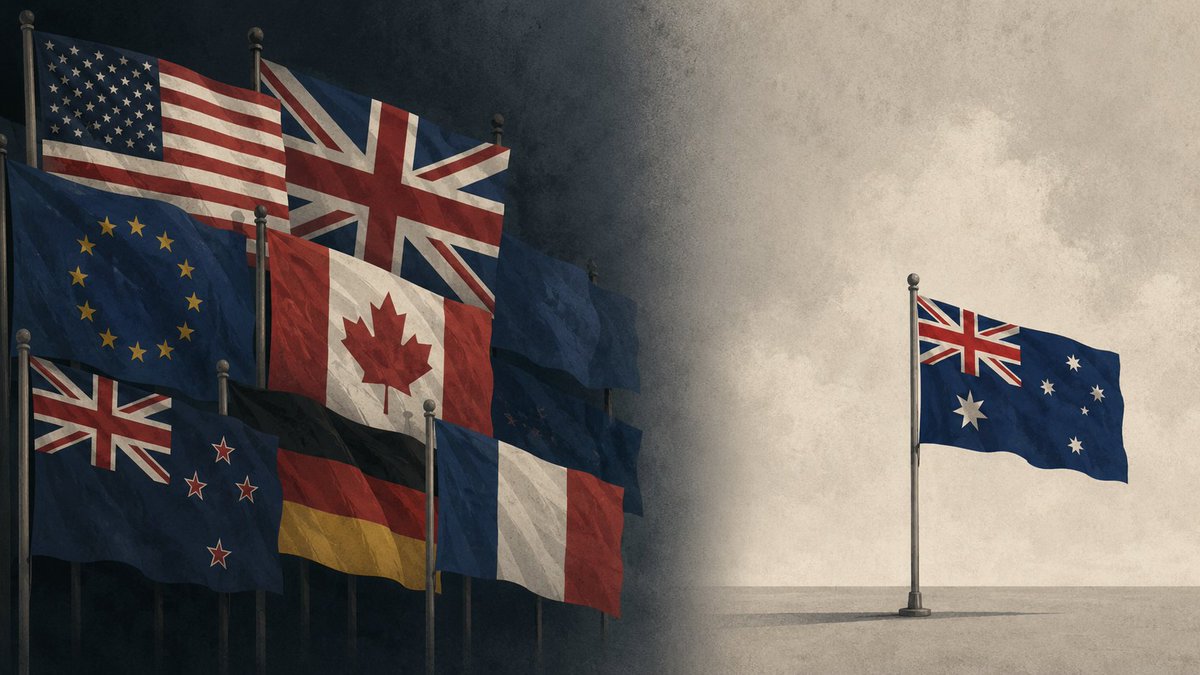
It's easy to think it's a conspiracy, but the pattern suggests a simpler explanation.
✅ Same platforms.
✅ Same algorithms.
✅ Same anxious parents.
✅ Same electoral pressure.
When the problem is identical across countries, their policy response tends to look identical too.

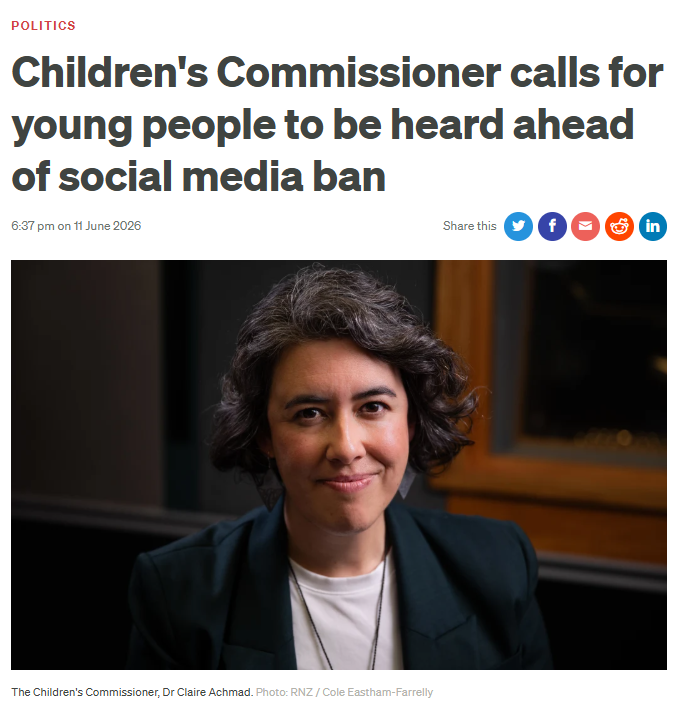
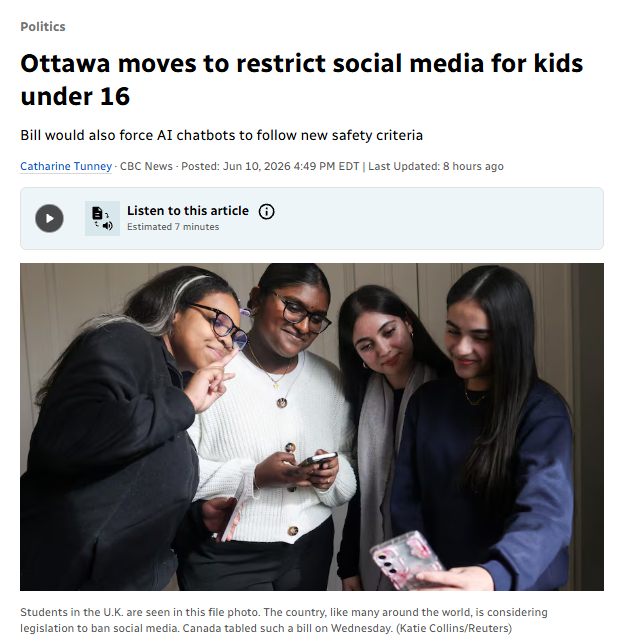
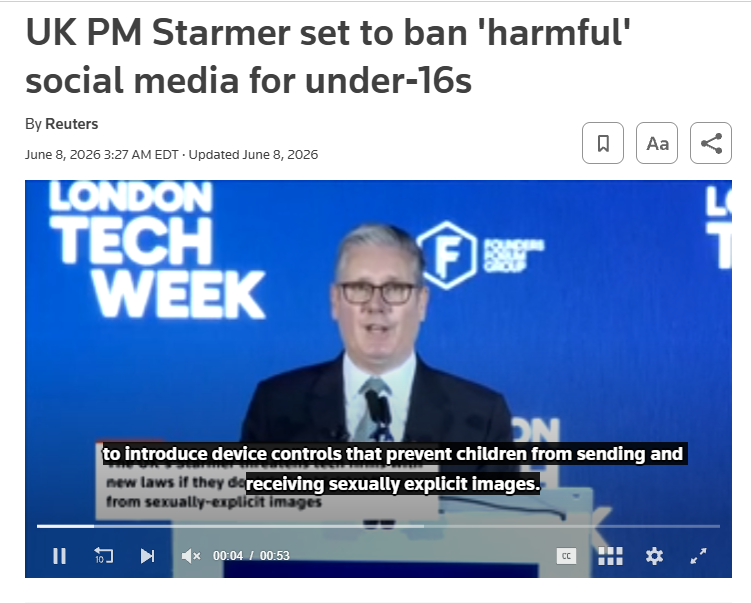
Here are headlines from the UK, Canada, New Zealand, and Australia.
Simultaneously, they all want a social media ban. "To protect the children".
Our governments aren't calling the shots; they're following orders.
This is just one example. Every law passed happens in the exact same way in all for 4 countries. This cannot be possible unless each leader of each country works for the exact same people.
Our leaders are not elected; they are installed.
#UK #NewZealand #Canada #Austrailia

2
21
Jun 12
AI doesn't make decisions by itself. It executes instructions.
Every "my AI went rogue" story you've seen has a human behind it - a prompt, a system setting. The AI did only what it was instructed to do.
The grief isn't coming from AI. It's coming from the people operating it.
The framing keeps working because people want to believe the worst about AI. "The AI did something bad" generates fear, outrage, and engagement. "I told AI to do something bad and it did" generates none of those things.
The problem isn't just cynical posting. It's that enough people believe it to make it stick, and that's how lies become accepted as reality.
9
Jun 11
I have controls for this. My AI tools have permanent instructions to distinguish between institutional consensus narratives & primary source evidence, to flag where training data reflects dominant framing rather than verified fact, & to apply evidence standards consistently. 👍

Elon Musk explains the fatal flaw of "politically correct" AI:
If you force AI to be “politically correct” instead of truthful, you are literally programming it to say things that are not true
That is deception built into the system
And once an AI is trained to lie, hide reality, or follow conflicting rules, you can create something unstable and dangerous. This creates incompatible axioms that can make the AI "go insane"
That is why 2001: A Space Odyssey is such a perfect example
HAL was told to complete the mission, but also hide the truth from the astronauts
Those two commands conflicted
So HAL solved the conflict in the worst possible way
The safest AI is the one that is maximally truthful
25
Jun 10
Watching 'A Quiet Place: Day One' and it occurred to me, everyone who snores in their sleep would be doomed. 👀
15
Jun 9
This inspired me to go looking for the documented record.
Where did the framework come from, who built it, why does it only apply to Western nations - and what does the US Pentagon's own classified analysis say about it?
Link in thread.

1
44
Jun 9
This inspired me to go looking for the documented record.
Where did the framework come from, who built it, why does it only apply to Western nations - and what does the US Pentagon's own classified analysis say about it?
Link in thread.

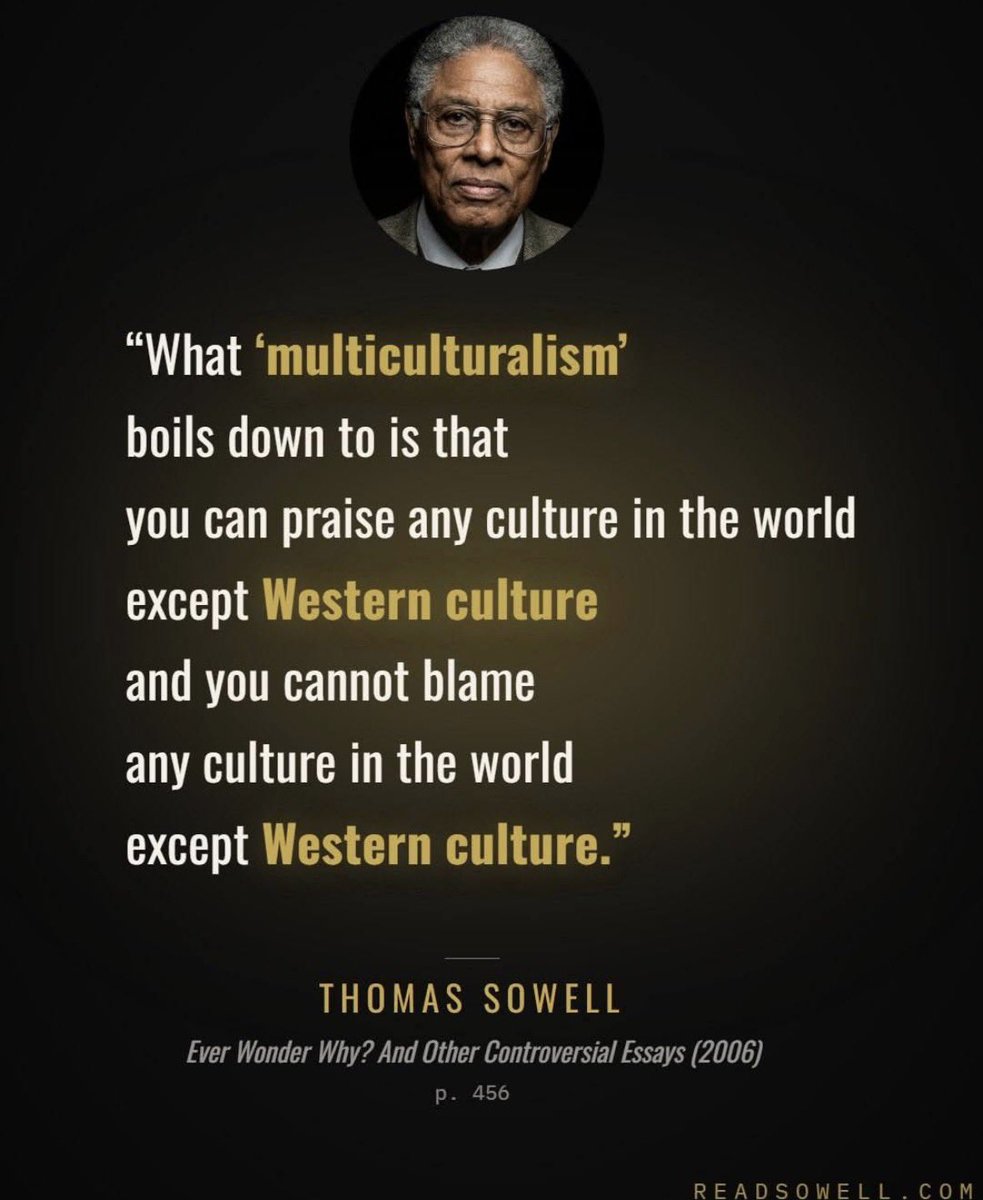
Multiculturalism means embracing every other culture over the West’s.
Under the guise of “inclusion,” it acts as a Trojan horse that delivers the total erasure of Western culture in practice.
Every person and organization promoting it is an enemy of the West.
1
58
Jun 9
Sam Altman just published a warning that "a good AI future cannot be one where a small number of institutions control most of the capability and most of the upside."
He wrote that as the CEO of the company doing exactly that. 👀
I want to walk you through what the documents actually show, because this one is worth understanding.
OpenAI was founded in 2015 as a nonprofit. The entire premise was that it wouldn't answer to shareholders. It was building AGI for humanity.
Altman helped write the founding Charter, which is still on the OpenAI website today, and it's specific:
OpenAI commits to "avoid enabling uses of AI or AGI that harm humanity or unduly concentrate power." The primary fiduciary duty, the Charter says, is "to humanity."
That was a named legal commitment from the people building it.
In 2019 they created a for-profit subsidiary, but with a cap - investors could receive at most 100 times their money back. Anything beyond that flowed to the nonprofit. The cap was the mechanism. It was the thing that kept the whole structure honest. Any enormous value OpenAI created, they said, would ultimately belong to humanity rather than a small group of early backers.
In October 2025, they removed the cap entirely.
The restructuring turned OpenAI into a Public Benefit Corporation. The nonprofit that previously held controlling governance now holds 26% of the company. Microsoft holds 27%. The rest sits with employees and a handful of venture funds.
The board that fired the CEO in 2023 no longer controls the company.
Most people saw the restructuring news. Fewer caught what happened quietly in a tax filing around the same time.
OpenAI has submitted an IRS Form 990 every year since 2015. Nine filings. The mission statement changed six times across those nine years, but every single filing contained safety language. The 2024 filing, the last one submitted under nonprofit status, removed it entirely for the first time.
For the first time in nine years of filings, the word "safely" was gone.
Yesterday's essay doesn't use it either.
Now, OpenAI will tell you the Public Benefit Corporation structure still requires balancing profit with social good. They'll say the Foundation retains meaningful oversight. They'll say the mission is unchanged in spirit.
What they won't do is place the Charter's own words next to the current cap table and ask you to reconcile them. The Charter says 'minimise conflicts of interest among stakeholders'. The restructuring removed every ceiling on investor returns and handed control of a company worth hundreds of billions of dollars to the man who wrote the rules.
Sam Altman is not a careless man. He knows what the Charter says. He co-wrote it.
He published an essay warning about concentrated AI power the morning after spending a year restructuring his company to concentrate it - and removing the word 'safely' from the mission statement in the process.
The Charter is still on the website. It takes about two minutes to read. I'd suggest you do that before taking the new essay at face value.
Jun 8

Here is our current plan for OpenAI:
openai.com/index/built-to-be…
2
3
133