
We help businesses achieve top rankings in AI search results through LLM optimization services
Joined May 2022
- Tweets 1,374
- Following 78
- Followers 408
- Likes 1,307
217 Photos and videos

Pinned Tweet

1 Jun 2025
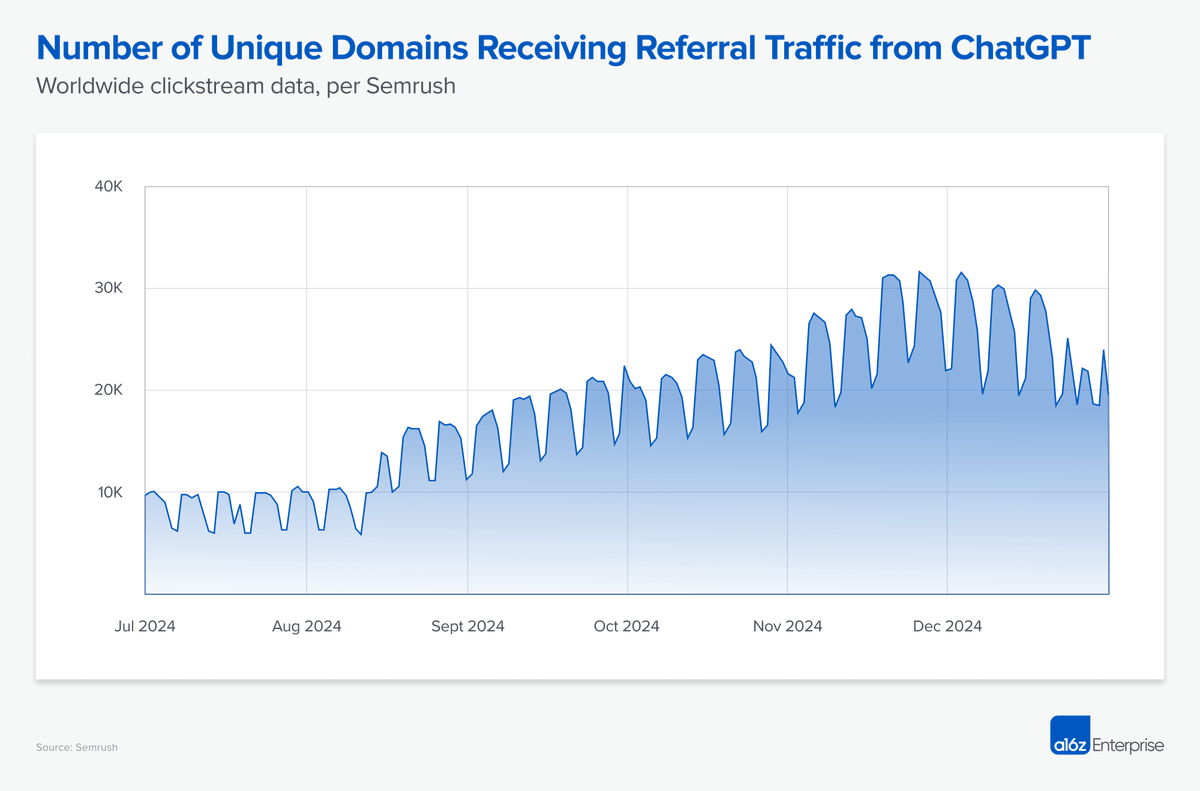
We are grateful to be included in the a16z GEO thesis and to see them shedding light on just how critical this layer of discovery has become.
LLMs now mediate an increasing share of discovery and decision moments. In these environments, visibility is finite. A small number of outputs guide the user’s next action.
Absence at this layer does not reduce visibility, it *removes* the brand from consideration entirely for that interaction.
Discovery today increasingly means being selected by the model at the right moment, in the right context.
Understanding how that selection happens, and how to influence it, is becoming essential for any brand that wants to stay competitive as LLM-driven behavior accelerates.

SEO is slowly losing its dominance. Welcome to GEO.
In the age of ChatGPT, Perplexity, and Claude, Generative Engine Optimization is positioned to become the new playbook for brand visibility.
It's not about gaming the algorithm — it's about being cited by it.
The brands that win in GEO won't just appear in AI responses. They'll shape them.
Must-read from @zachcohen25 and @seema_amble on the future of search, marketing, and performance in the LLM era.
bit.ly/3SpGDRO
2
1
19
5,768
This is one of the greatest reasons for our growth arguably one of the most underappreciated unlocks of AI
We have charged for outcomes (AI visibility) since Day 1 and it has been one of the most positive sum decisions for a number of reasons
1) Complete incentive alignment with clients - if its win for them, its a win for us
2) Churn reduction - if they are satisfied only when we are also satisfied, there is no reason from either side to stop
3) Risk mitigation - only charging for the desired outcome removes a lot of uncertainty & risk, which has enabled us to get a foot-in-the door & onboard large institutional clients with extensive procurement processes
4) Margin expansion - by charging for outcomes, we get to entirely own & manage our backend operations and costs to optimize for making sure the outcome is delivered & do not need to justify costs with unproductive metrics (such as time)
With the proliferation of AI there are less and less reasons to *not* work like this
It is a huge value unlock for both sides
Not charging for outcomes is increasingly more a signal of one's lack of confidence in their ability to deliver
Jun 11

The pricing model determines what you build. Charge for outcomes and you're forced to invest in software that compounds. Charge for time and you never will. Pricing isn't downstream of the product. It IS the product decision.
2
7
118
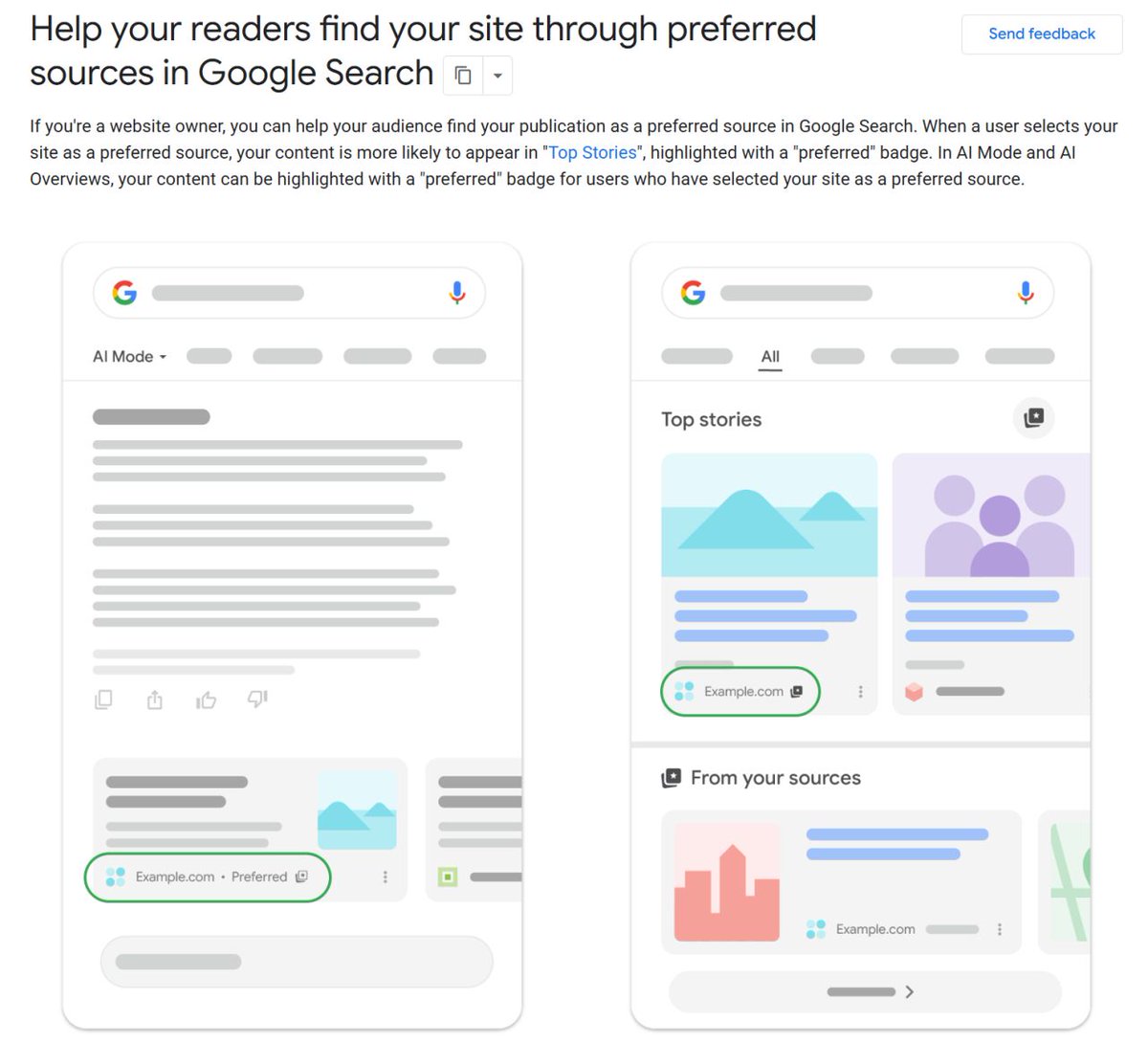
Google just published the ultimate hack to “rank” #1 in AI Overviews and AI Mode.
It's called Preferred Sources, and it went live on May 27.
A user clicks one link, checks a box, and Google marks your site as preferred.
From that point on, when your content surfaces in AI Overviews, AI Mode, or Top Stories, it gets a visible "Preferred" badge.
@Google's own data shows users click preferred sources at 2x the rate of unmarked links in the same position.
345,000 unique sites have been selected already.
How to get your site added:
→ Go to google.com/preferences/sourc… and search for your site to confirm you're eligible (any site publishing fresh content qualifies)
→ Build your deeplink: google(.)com/preferences/source?q=[yoursite.com]
→ Add it to your newsletter, social bio, and anywhere you already ask people to follow you
→ Google also offers downloadable "add as preferred source" buttons in 16 languages if you want to embed it on-site
Two things worth knowing about how this works:
The badge appears when your content surfaces in an AI result. Preferred status lifts your click-through rate once you're in the answer.
Google has also confirmed it's working toward using preferred selections as a ranking signal across AI surfaces, making the current version the floor on what this feature can do.
Ask your audience to add you before your competitors do.
Want to know if your site is showing up in AI answers? Run a free audit, check the link below
3
3
105
Run a free AI visbility Audit: audit.algomizer.com
19
Read the google update: developers.google.com/search…
19
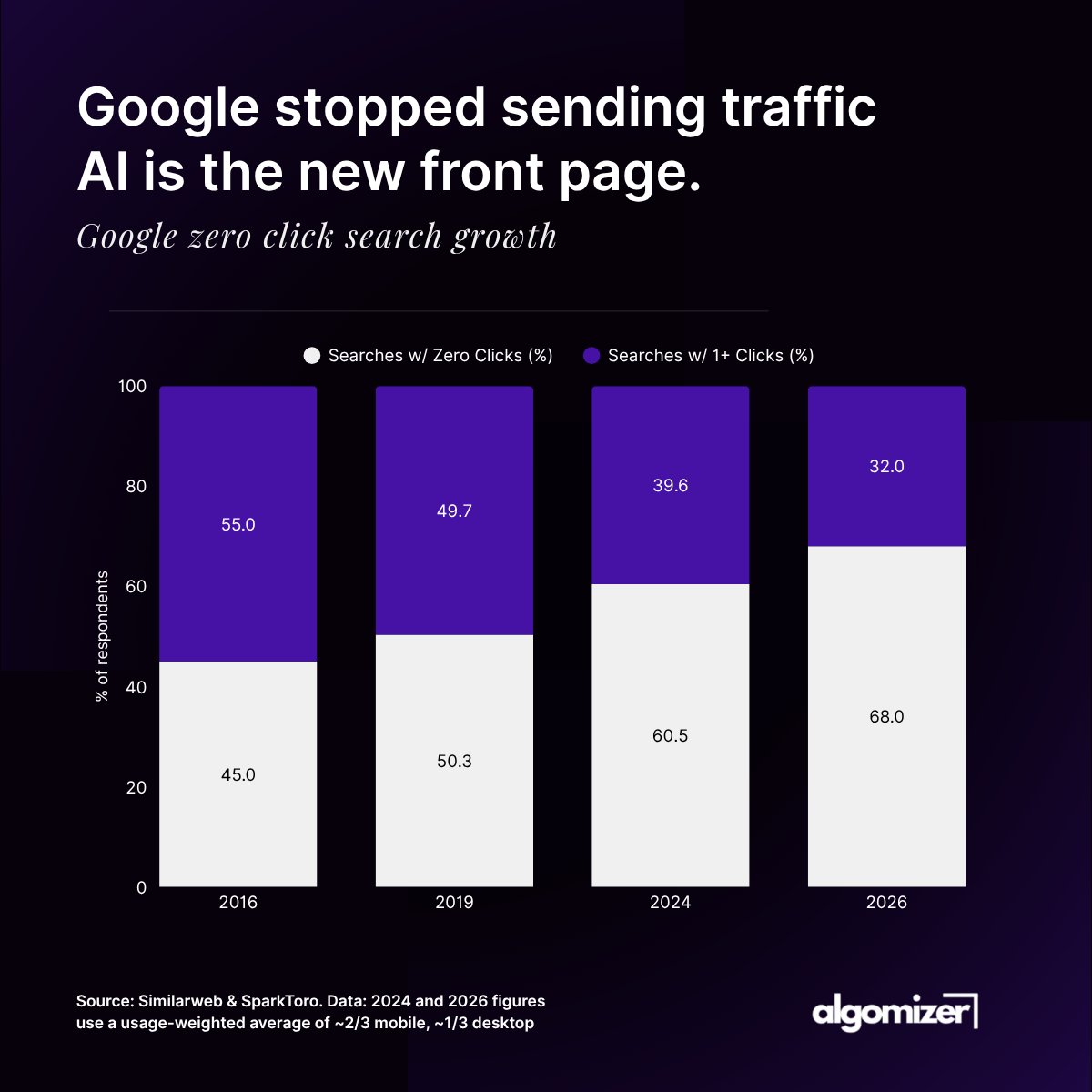
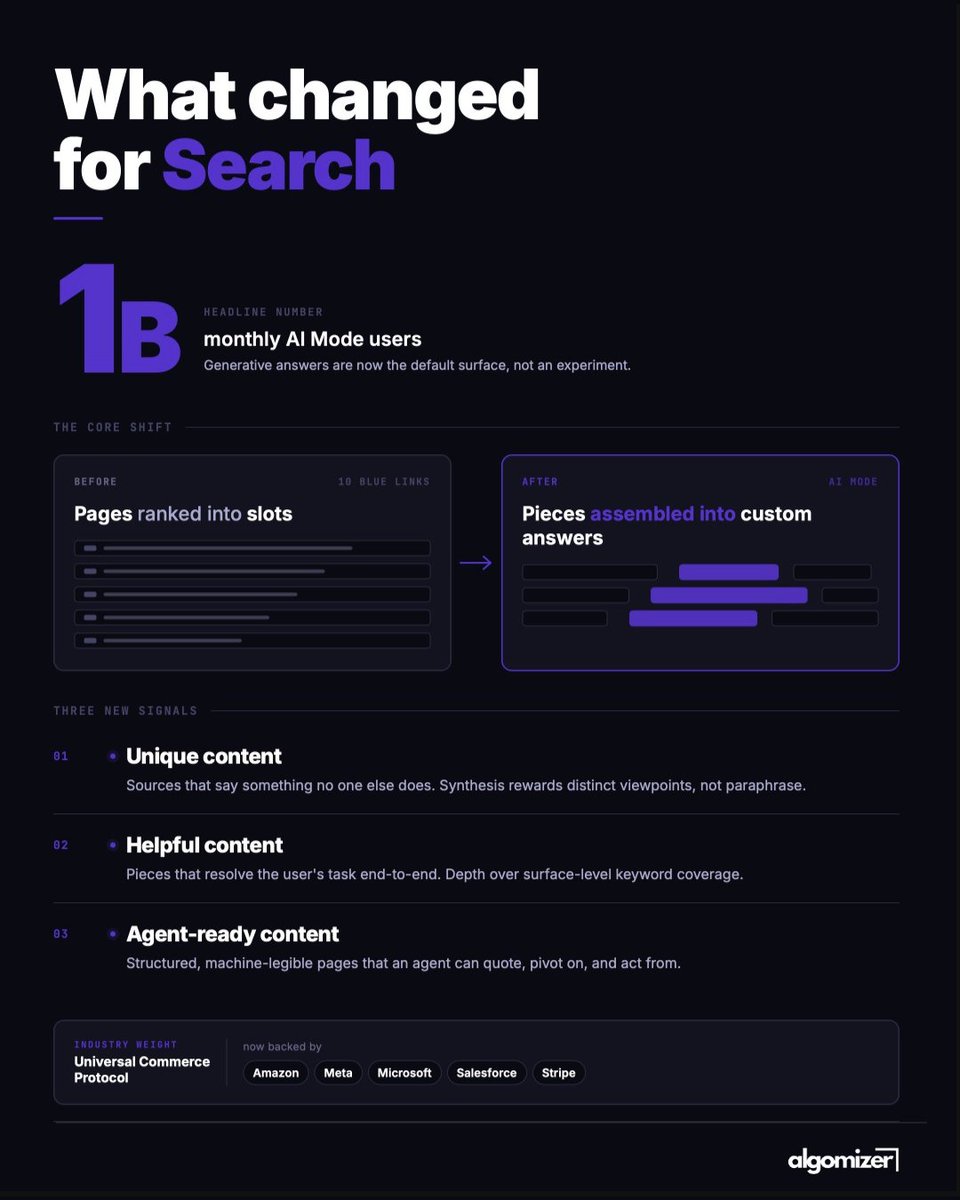
Google stopped sending traffic. AI is the new front page.
68% of Google searches in 2026 end without a click.
Two out of three people ask a question, get an answer, and move on. Your website never loads, and search optimization alone cannot fix that.
This is a decade-long shift that just hit a tipping point.
@sparktoro and @Similarweb tracked the acceleration across desktop and mobile.
AI Overviews now appear on 20% of all searches and cut click-through rates by 60% when they do. Google traffic to professionally managed sites fell 22% year-on-year.
Users get answers the same way they get them from ChatGPT, Perplexity, or any AI tool.
One prompt -> one response -> decision made.
The browse-compare-click journey that SEO was built on has a shrinking audience.
Brands still tracking rankings and traffic are measuring a channel that no longer delivers the same returns.
The question now is whether AI cites you when it assembles the answer your buyers are reading.
Ranking still feeds AI answers, but it no longer guarantees inclusion. The brands showing up in AI responses have third-party editorial coverage, structured content, and consistent presence across the sources AI draws from.
Track your AI citations across ChatGPT, Claude, Perplexity, and Gemini. It might explain where your traffic went.
Run a free audit at audit.algomizer.com
5
238
Algomizer | LLM Optimization retweeted

a16z founder Marc Andreessen:
"The coders using AI are 20x more productive.
The best ones are making $50 million a year."
In this 8-minute conversation with Joe Rogan, he explains why the people using AI the right way are leaving everyone else behind.
Worth more than a $500 career course.
Watch it today, then read the article below.

11
7
68
10,106

AI visibility still remains to be one of the most misunderstood and mispriced opportunities of our time
1) exponential growth in users (soon 1B DAUs just with ChatGPT)
2) high perceived trust & authority
3) exponential growth in reliance and usage from users (avg. time spent)
4) higher conversion rates for anyone visible (due to extensive back and forths personalization)
5) one of the only mediums where emerging players can displace traditional incumbents
and a lot more!
it will make or break the current generation of companies
1
1
5
206
Algomizer | LLM Optimization retweeted
15
5
55
203,806
Algomizer | LLM Optimization retweeted

Jun 8
Marketing specialist Neil Patel said:
“Some brands are showing up constantly in ChatGPT answers. Others are completely invisible. And the brands that are invisible, a lot of them rank number one on Google.”
That is the new SEO nightmare.
You can win Google and still lose the buyer before they ever search.
The playbook below breaks down how to show up in AI search.👇
8
3
31
4,711

Eric Schmidt, ex-Google CEO:
“if you really want to make money, it’s actually easy. found an agentic AI company.”
Not a company that builds agents.
A company where the agent does the job.
That’s where he thinks the biggest AI opportunities are.
7
8
37
4,270

SOMEONE BUILT $200K WORTH OF ENTERPRISE SOFTWARE IN 7 DAYS
what they built:
an entire company's brain inside Claude Code - a living node galaxy where every employee, every AI agent, every SOP, every tool is wired together on one screen
click a department -> the human team expands -> its SOPs expand -> the exact content each person can access expands
here's the part that breaks everything:
permissions embedded directly into the brain. when an employee opens a chat, the AI already knows what they can access. agents, data, SOPs surface automatically - like you tagged them manually, but you didn't
Obsidian can't do this & Notion can't do this
the thing nobody factors into the cost:
the tool to build $200K enterprise software is now sitting free on your laptop
19
11
89
11,284

Andrej Karpathy:
“Vibe coding is incredible. But agentic engineering is the next level.
90% of my coding routine is automated by AI agents.”
In this 30-minute talk, Andrej Karpathy explains how to build an AI agent workflow from scratch.
Worth more than 500$ agentic engineering course on the internet.
Watch it today, then read the article below.
60
116
1,049
171,915
Algomizer | LLM Optimization retweeted

Jun 8
Jim Fan (Head of AI Research at NVIDIA):
“If you can’t beat them, join them”
So while your marketing team is still chasing backlinks and keyword rankings, the brands that figured out AI search are already on the short list ChatGPT hands to every buyer
there is no page two in AI search
the full playbook on how to win it is attached ↓
21
7
64
8,248
You got the mention. Someone else got the traffic.
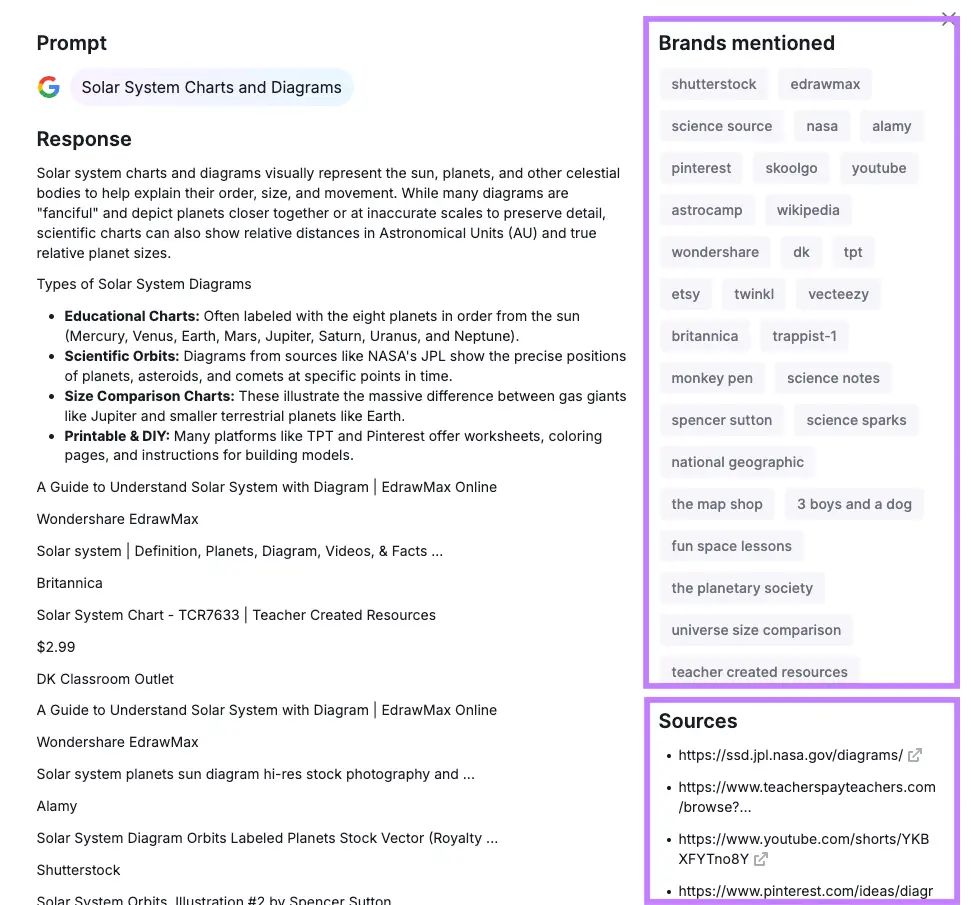
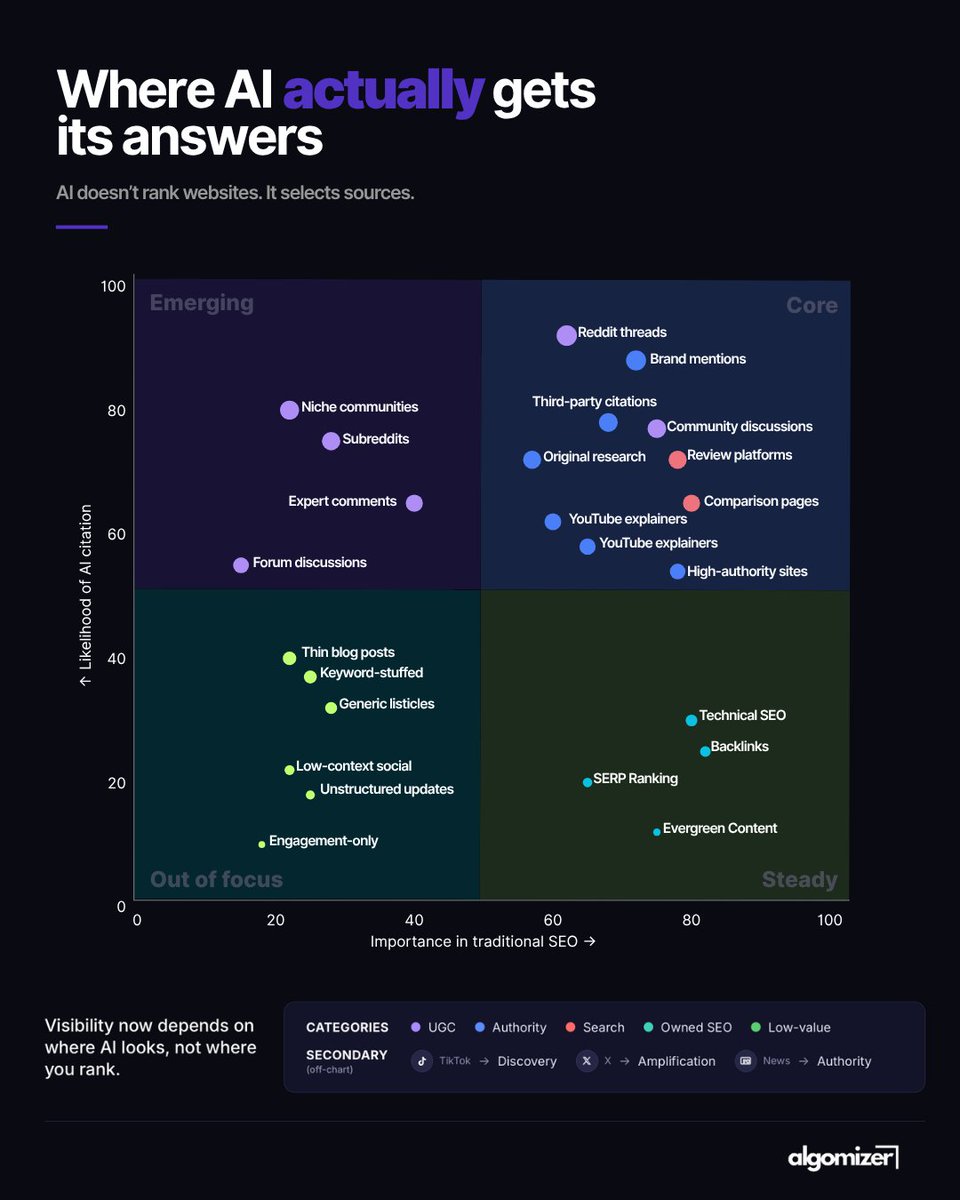
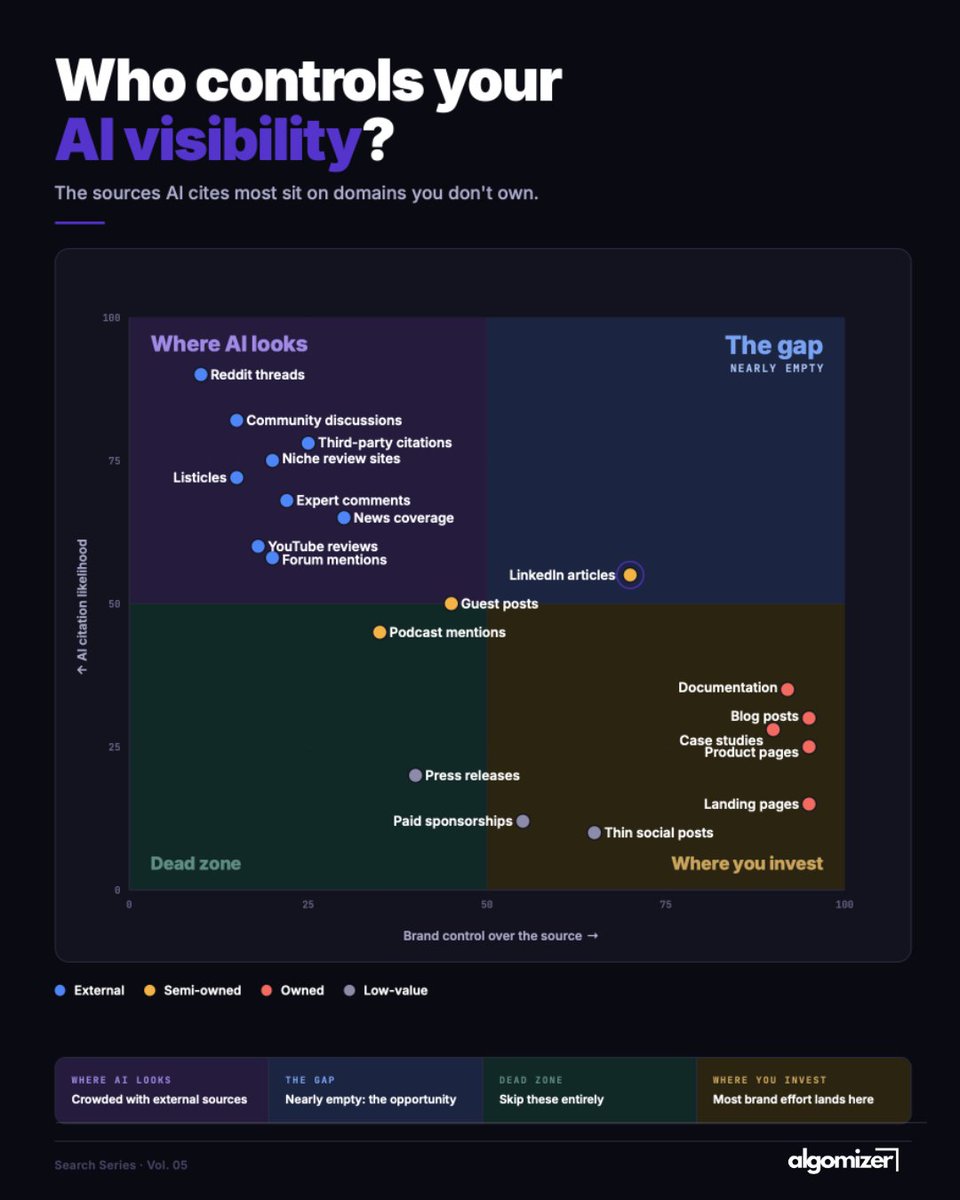
97.8% of AI citations come from domains you don't own.
Your website reads as marketing copy.
A G2 comparison or a Forbes list reads as independent evidence.
Three things this changes:
→ Your website is one of many surfaces.
Thin G2 profile, invisible Reddit presence, no niche coverage.
AI fills the gap with whoever showed up. The ecosystem owns your story now
→ Sentiment is a citation signal.
An unanswered complaint on a forum is training data. The review you skipped last quarter is next week's AI answer
→ Models have favorite sources.
ChatGPT skews toward Wikipedia and Reddit. Perplexity favors LinkedIn and G2. One strategy doesn't cover that spread
The image below shows what this looks like in practice: one query, 20 brands surfaced, almost none from their own sites.
Your job is to show up where the model looks.
1
61
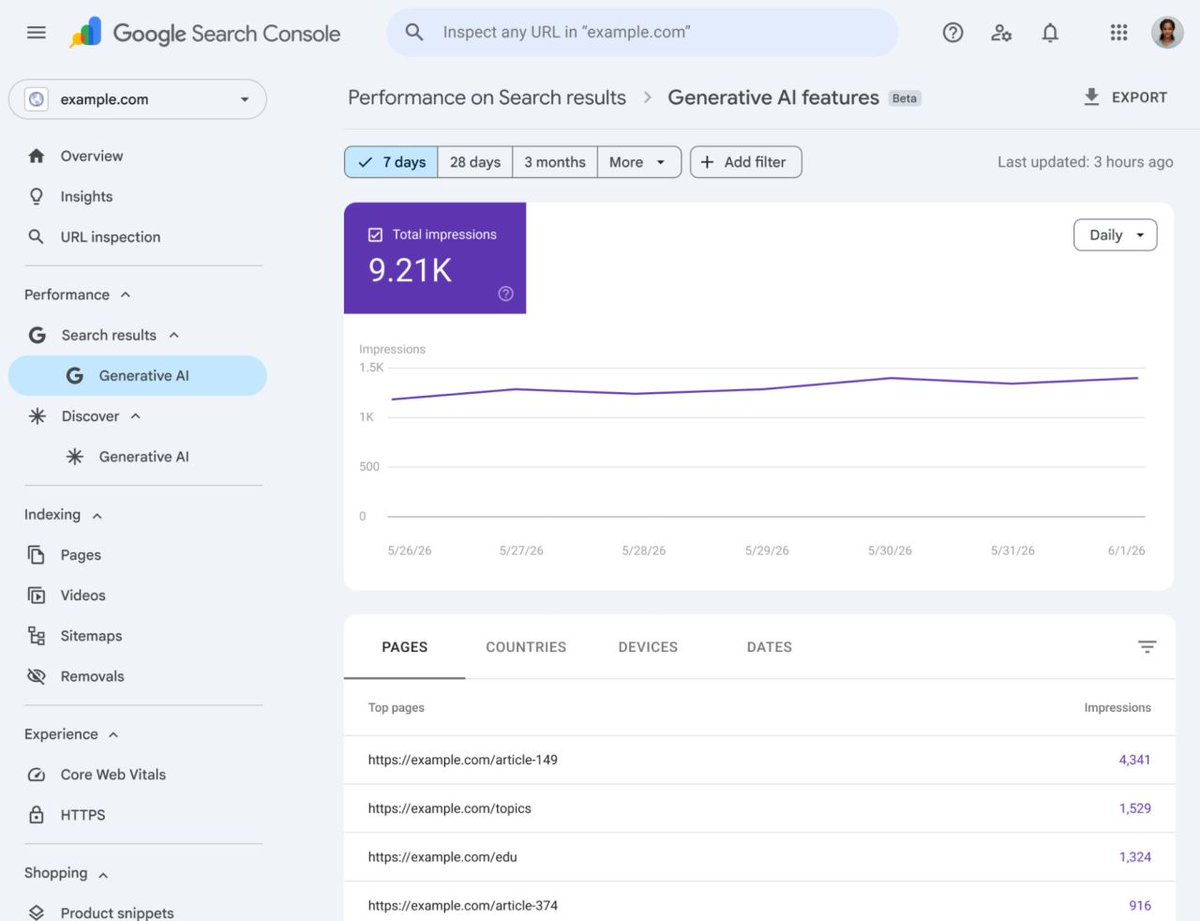
🚨 Google just started showing you how often your pages appear inside AI Overviews and AI Mode.
for years, measuring visibility inside Google's AI features meant guessing or stitching together third-party estimates. that's over. the data now sits inside Search Console.
The new Search Generative AI performance reports give site owners a dedicated view of impressions inside AI features across Search and Discover.
→ which URLs are surfacing in AI answers
→ which countries you're visible in
→ which devices people are on
→ how all of it moves over time, down to hourly granularity
it's rolling out to a subset of sites first, so not everyone has access yet. and for now it reports impressions only, no clicks or revenue attribution.
Still, this is the first time Google has handed site owners first-party data on AI visibility. you can see the exact pages its models trust enough to cite.
The practical move once you have access: study the pages already earning AI impressions.
those are the formats, structures, and topics Google's models pull from. work out what they have in common, then apply that pattern to the pages you want surfacing next.
One thing to keep in mind.
Google only reports on Google's surfaces. your brand is also getting pulled into @ChatGPTapp, @perplexity_ai, and @claudeai answers, and Search Console will never show you any of that.
that's where we come in. we track AI visibility across every major platform and help brands become the answer AI recommends.
1
85
Ahrefs just analyzed over 1 billion data points across 14 studies and confirmed what we've been building around at Algomizer for the past two years.
→ listicles are the dominant citation format (43.8% of all pages cited by ChatGPT)
→ 67% of top citations come from sources marketers can't influence
→ 28.3% of ChatGPT's most-cited pages have zero Google organic visibility
→ YouTube mentions have the highest correlation (0.737) with AI brand visibility out of all factors studied, including backlinks, page count, and DR
→ AI Overviews reduce clicks to the #1 result by 58%, up from 34.5% just 10 months ago
our own research on 18,546 AI citations found the same pattern. 97.8% of citations come from domains you don't own.
the brands winning in AI search are the ones treating third-party editorial placement as a distribution channel.
this is what we do. audits, optimization, and ongoing monitoring across ChatGPT, Gemini, Perplexity, and Claude.
link in bio.
Jun 2

In the last 6 months at @Ahrefs, we analyzed over 1 billion data points across 14 studies. Here's what we learned about AI search optimization:
1) "Best X" blog listicles are the single most prominent content format cited by AI chatbots. They make up 43.8% of all page types cited by ChatGPT specifically.
2) 67% of ChatGPT's top 1,000 citations come from sources marketers can't influence: Wikipedia (29.7%), homepages (23.8%), app stores (6.6%). Only 32.3% are influenceable content like educational pages, reviews, news, and blog posts.
3) 28.3% of ChatGPT's most-cited pages have zero Google organic visibility. These pages get cited repeatedly by ChatGPT despite not ranking in Google at all. A completely separate discovery layer.
4) ChatGPT only cites about 50% of the URLs it retrieves. It fetches dozens of pages per query but uses half as background context without attribution. This means that being retrieved and being cited are very different things.
5) Adding schema markup had zero meaningful impact on AI citations. AI Overviews actually dipped −4.6%, while AI Mode ( 2.4%) and ChatGPT ( 2.2%) showed changes indistinguishable from zero.
6) YouTube mentions have the highest correlation (0.737) with AI brand visibility out of all the factors we studied (including all the conventional SEO metrics like backlinks, page count, DR, etc). This held true for both Google-owned and OpenAI products.
7) AI Overviews reduce clicks to the #1 result by 58%. That’s up from 34.5% just 10 months earlier. The trend is accelerating.
8) 99.9% of AI Overviews appear on informational intent queries. Transactional, navigational, and local searches are almost entirely AIO-free. Shopping triggers AIOs just 3.2% of the time.
9) For a given search query, Google’s AI Mode and AI Overviews reach the same conclusions 86% of the time — but cite almost entirely different sources (only 13.7% citation overlap).
10) AI Overviews change every 2.15 days on average, with 70% of content differing between consecutive observations. But semantic similarity stays at 0.95. The words, sources, and entities constantly shuffle, but the actual meaning barely moves.
1
120
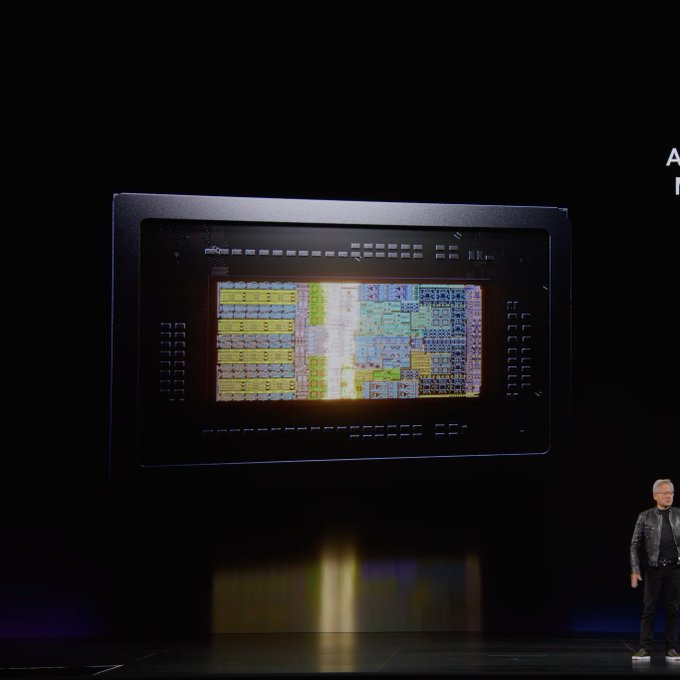
‼️ BREAKING: The laptop hasn't changed in 30 years. NVIDIA just changed it
RTX Spark is their first PC chip ever.
- RTX 5070 level GPU
- 128GB unified memory
- 1 petaflop of local AI
- thin, light, barely throttles unplugged
Your AI agent lives on the machine. 24/7. No cloud.
they demoed Forza Horizon 6 and 007: First Light on stage. 1440p at 100fps with ray tracing. off the charger. no throttling. on Windows. in a 14mm laptop.
the number that matters most: it runs 120-billion-parameter AI models locally. no cloud. no API. no subscription. your AI agent lives on your machine, on 24/7.
@Microsoft is already in. the new Surface Laptop Ultra ships on RTX Spark from the silicon up. ASUS, Dell, MSI, and Lenovo follow this fall.
for 30 years the PC has been the same thing. Intel or AMD inside, GPU on the side. Nvidia just collapsed all of it into one chip and turned the laptop into a personal AI station.
everyone else is about to copy it.
Jun 1

Introducing Surface Laptop Ultra.
Built for world makers. Designed for what's next.
The most powerful Surface laptop ever. Coming Fall 2026.
Sign up to learn more: msft.it/6019vw79T
1
112
🚨 Google just launched a tool that scores how ready your website is for AI agents.
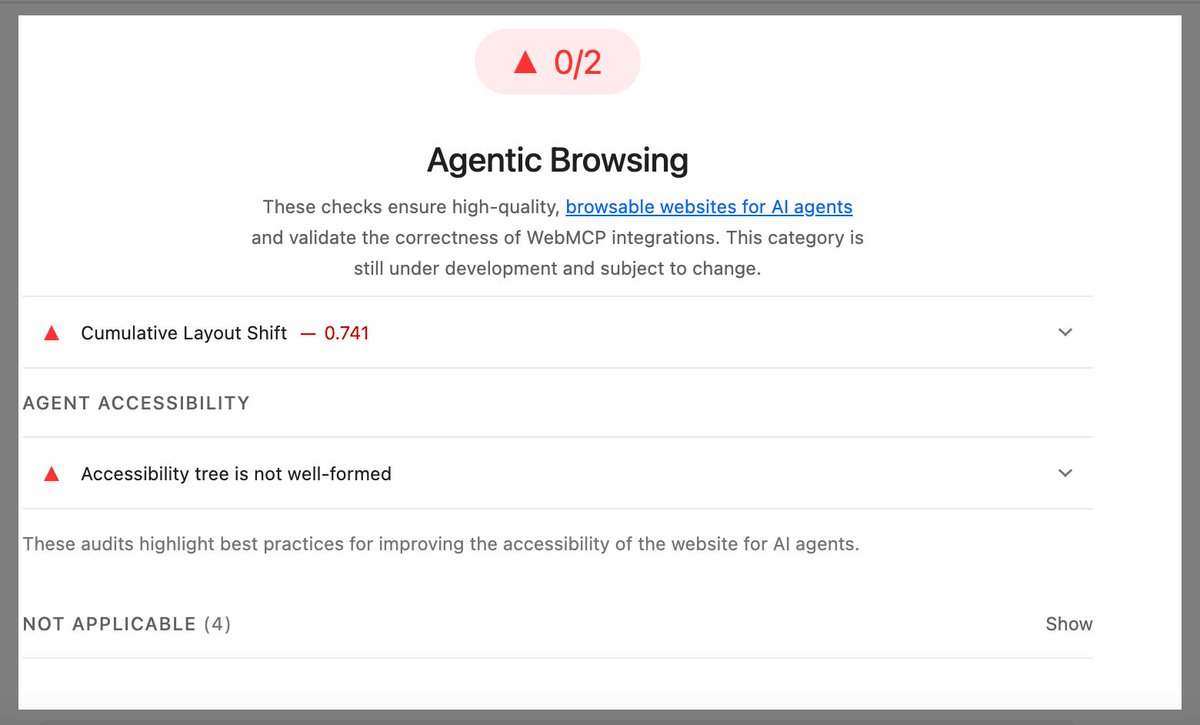
It's called the "Agentic Browsing" audit inside Google Lighthouse.
you can run it right now in Chrome Canary.
→ download Chrome Canary
→ navigate to your page
→ right-click, Inspect, open the Lighthouse tab
→ check "Agentic Browsing" and run the report
The audit scores your page on WebMCP implementation, layout stability, accessibility tree integrity, and llms.txt presence.
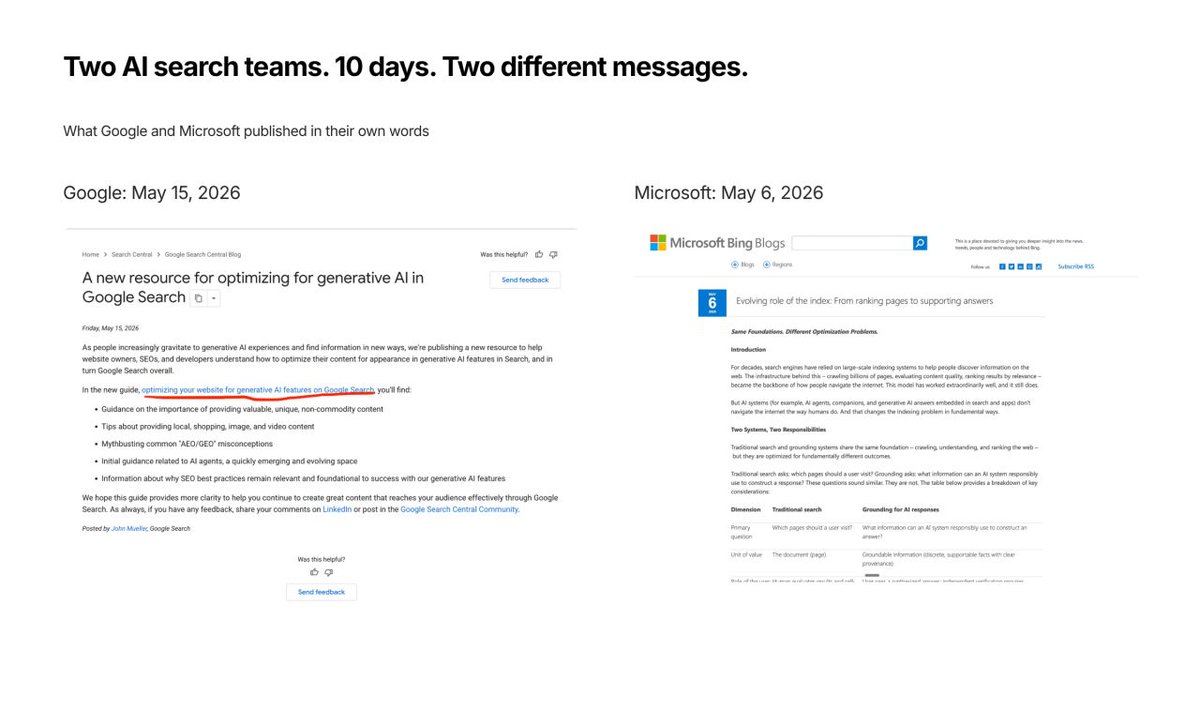
Speaking of llms.txt, @Google has been sending mixed signals for months. Their AI search guidance says you don't need machine-readable files to appear in AI search.
But, their own developer documentation says without an llms.txt file, agents spend more time crawling your site.
John Mueller clarified this directly. llms.txt helps AI agents finish a task once they've landed on your page. it does nothing for getting found in AI search.
Where it earns its keep: developer documentation read by AI coding tools. for non-developer sites, Mueller's take is blunt: a markdown version of a shoe's spec sheet won't sell more shoes.
The Lighthouse audit itself marks llms.txt as "Not Applicable" when it's missing.
if you publish developer docs, ship it. if you don't, put the time into what the audit actually scores: clean HTML, a solid accessibility tree, WebMCP, and layout stability.
Google just gave you the scoring rubric for the agentic web.
Learn more about this update 👇
1
1
68
🚨News: The most important AI legal battle you're not following.
@amazon is suing @perplexity_ai, and the outcome decides whether AI agents can legally act on your behalf online.
What happened:
→ Perplexity's Comet AI logs into your Amazon, browses & buys for you
→ Amazon sued: "unauthorized access" under the CFAA
→ Judge blocked Comet. Appeals court paused that block.
→ Oral arguments: June 11, 2026
Amazon: "You authorized yourself, not the AI."
Perplexity: "If I can shop myself, I can send software to do it."
If Amazon wins
→ every site can legally block AI agents. Shopping, travel, banking, SaaS automation, all gray.
If Perplexity wins
→ users get the right to delegate. The agentic web truly becomes real.
The Supreme Court narrowed the CFAA in 2021, targeting unauthorized access, not ToS violations. Perplexity is betting everything on that.
What this means for SEO & GEO:
This goes way beyond crawling and indexing.
If Amazon wins, AI agents can't log in, can't transact, can't act
Your content gets discovered but never actioned
GEO strategies built around agentic traffic become worthless overnight
If Perplexity wins, AI agents become first-class visitors
Optimize not just for being found, but for being chosen by agents completing tasks on behalf of users.
This is websites vs. users.
Old web vs. agentic web.
June 11 might be the most important AI date this year
Read more below.
1
30
📌 Read more: searchenginejournal.com/amaz…
21