Alief Proud💚• She/They • 8th grade Science Teacher 🧑🔬 • Life long learner 📚
- Tweets 6,400
- Following 1,598
- Followers 559
- Likes 38,380



















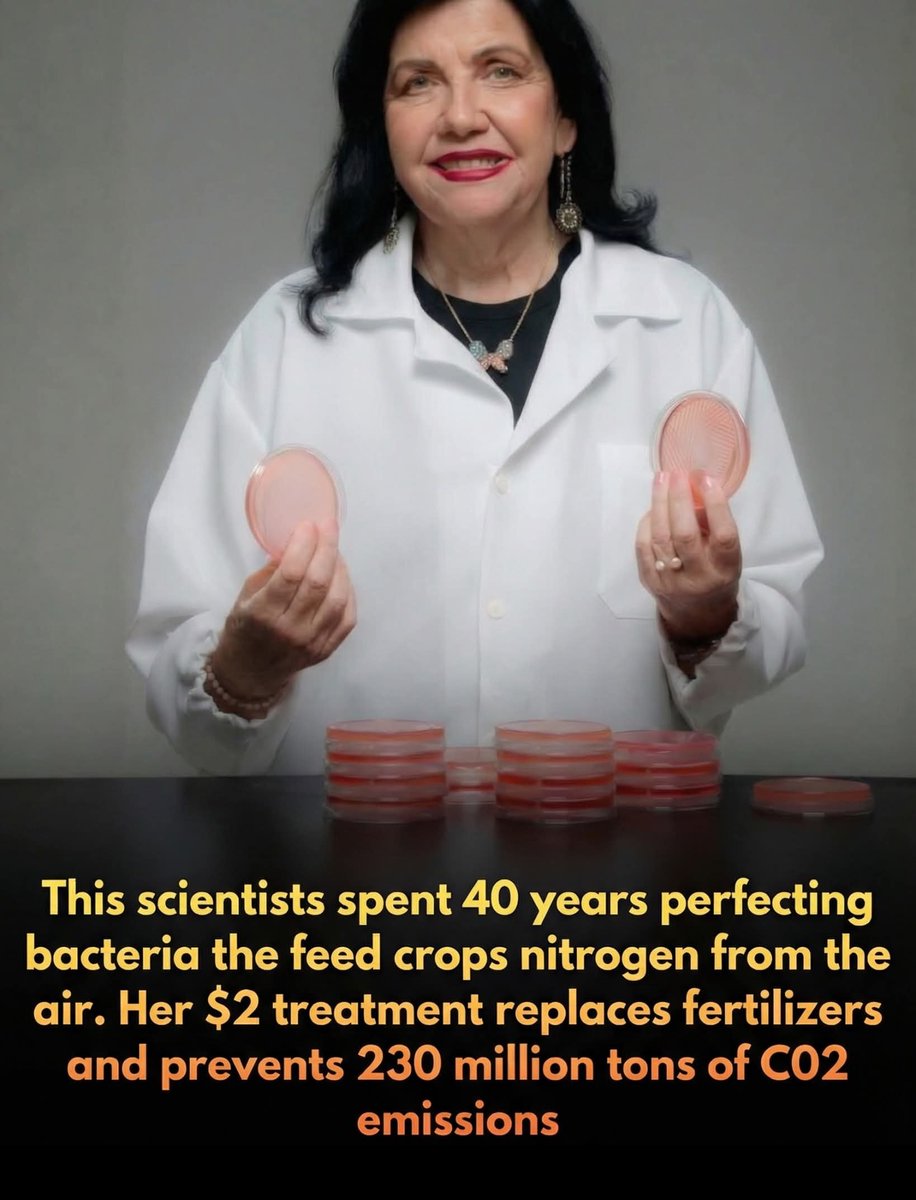
ALT 🚨 Say “goodbye” to fertilizers. Dr. Mariangela Hungria, a distinguished researcher at the Brazilian Agricultural Research Corporation (EMBRAPA), has been named the 2025 World Food Prize laureate for her pioneering work in soil microbiology. Often described as the "Nobel Prize for Food," this honor recognizes her development of over 30 biological technologies that utilize natural bacteria to nourish crops. By harnessing the power of Biological Nitrogen Fixation through specific bacterial strains, Hungria has successfully replaced heavy reliance on synthetic fertilizers, drastically improving the sustainability and yields of soybean and other vital crops across South America. The scale of Hungria’s impact is staggering, with her methods currently applied to more than 40 million hectares in Brazil alone. This agricultural revolution saves farmers an estimated US$40 billion annually while preventing the release of over 180 million metric tons of carbon dioxide equivalent emissions each



ALT Landscape image collage spelling "NASA"