
Photos and videos
Amar retweeted

Jun 9
A solution for those who have trouble sleeping with someone who constantly moves in bed.
107
222
4,037
932,438
Amar retweeted

A Google Cloud engineer just showed how to build a full app with Claude from scratch
he spent 26 minutes live on stage doing what most teams take weeks to do
worth more than any $500 vibe-coding course
here's what he covers:
> zero to deployed app in a single session
> handling five engineering roles alone with Claude
> the exact workflow Google uses internally
> no team, no setup, just Claude and a goal
the people who figure out what Claude can actually do are building things everyone else thinks requires a team
that's exactly why I wrote a step by step guide on how to build your first AI agent
the guide is in the article below

81
391
2,211
444,097
Amar retweeted

Jun 8
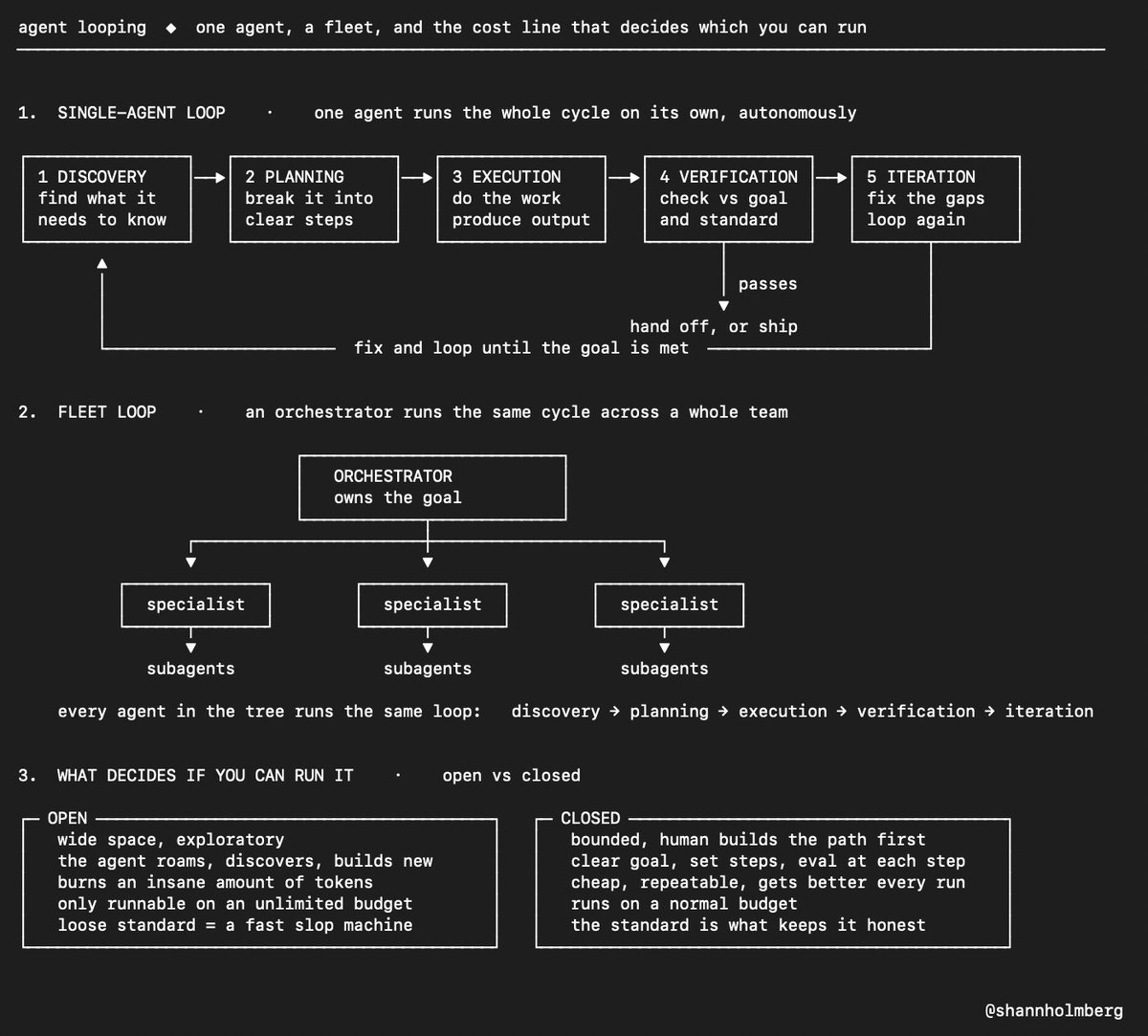
what is agent looping
for the last two years we prompted agents one task at a time. that is starting to change
instead of asking an agent to build the landing page and then driving every step yourself, you set up a loop that handles discovery, planning, the work, checking, and iterating until the goal is met
looping is a setup you build. almost any agent harness can run it, it just depends on how you wire it up
at its simplest, looping is one agent working on itself:
> researches
> drafts
> checks the draft against a goal
> fixes what is weak
> runs that cycle again until the work clears the requirements
you are not prompting each step anymore. the agent repeats the cycle for you
the bigger version is a fleet looping. you give an orchestrator agent a goal, it breaks the goal into pieces, hands each piece to a specialist agent, and those specialists hand smaller jobs to their own subagents
the whole tree keeps looping through discovery, planning, execution, and verification until the goal is met
one agent looping is like a person redoing their own draft. a fleet looping is a whole team running a project end-to-end
you create a goal, and the system runs the loop until it finishes within the reqs you set
open and closed looping:
OPEN LOOPING is exploratory. it still has conditions and a goal, but you give the agent or the fleet a wide space to move in. it can try different paths, discover things, build something you did not fully spec out
this is the exciting end, it is what Peter and others are doing, and tbh it is where I want to spend more time
the catch is cost, an open loop with real room to explore burns an insane amount of tokens. for the 90 percent of people without an unlimited budget it is not runnable yet, and pointed at projects with a loose standard it turns into a slop machine
CLOSED LOOPING is bounded. a human designs the end-to-end path first:
> clear goal
> defined steps
> an eval at each step
> a point where it stops or hands back to you (and feeds back performance data)
the agents still loop, but inside framework you built. it gets better every run because each pass feeds the next, and it runs on a normal budget because the path is tight.
for most marketing work, closed is the one that pays off today.
> the orchestrator owns the goal
> the specialists own the steps
> the subagents do the narrow work
> an eval gate make sure its not slop
Jun 7

Here’s your monthly reminder that you shouldn’t be prompting coding agents anymore.
You should be designing loops that prompt your agents.
200
696
6,040
739,295
Amar retweeted

Jun 9
BREAKING: Most people have no idea how powerful NotebookLM has become — and it’s completely free.
While many users only scratch the surface, NotebookLM can dramatically improve the way you learn, research, analyze information, and create content.
These 10 simple prompts are :-
16
73
215
15,051
Amar retweeted
Anthropic just accidentally made every AI course on the internet worthless.
A free 24-minute video. No signup. No paywall.
Taught by the people who literally wrote the code Claude runs on.
I watched it twice.
The part at 8:12 alone is worth more than any $300 course I've bought.
Most people will scroll past this. The ones who don't will have an unfair advantage for the next 2 years.
Bookmark before it disappears 👇
6
123
669
92,851

Releasing a model this capable comes with risks. Without safeguards, Fable 5’s capabilities in areas like cybersecurity could be misused to cause serious damage.
Queries on a narrow range of topics will instead receive a response from our next-most-capable model, Opus 4.8.
167
415
7,669
1,225,648
Fable 5 is state-of-the-art on nearly all tested benchmarks, with exceptional performance in software engineering, knowledge work, scientific research, and vision.
The longer and more complex the task, the larger Fable 5’s lead over our other models.
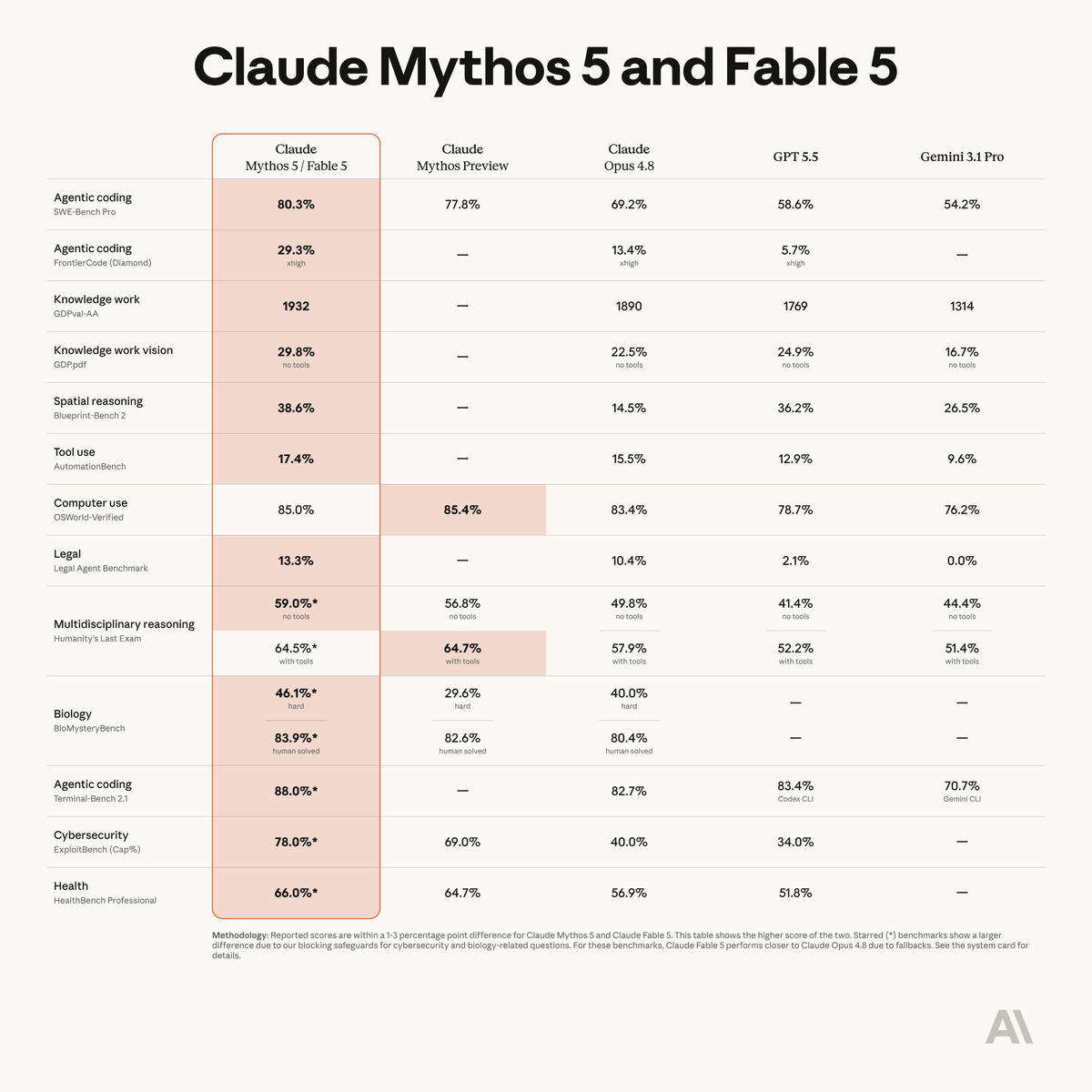
ALT Benchmark table titled Mythos 5 & Fable 5, comparing Claude Mythos 5 and Fable 5 against Claude Mythos Preview, Claude Opus 4.8, GPT 5.5, and Gemini 3.1 Pro.
513
1,792
15,545
5,454,383
Amar retweeted

Jun 8
You still use Claude like in 2025.
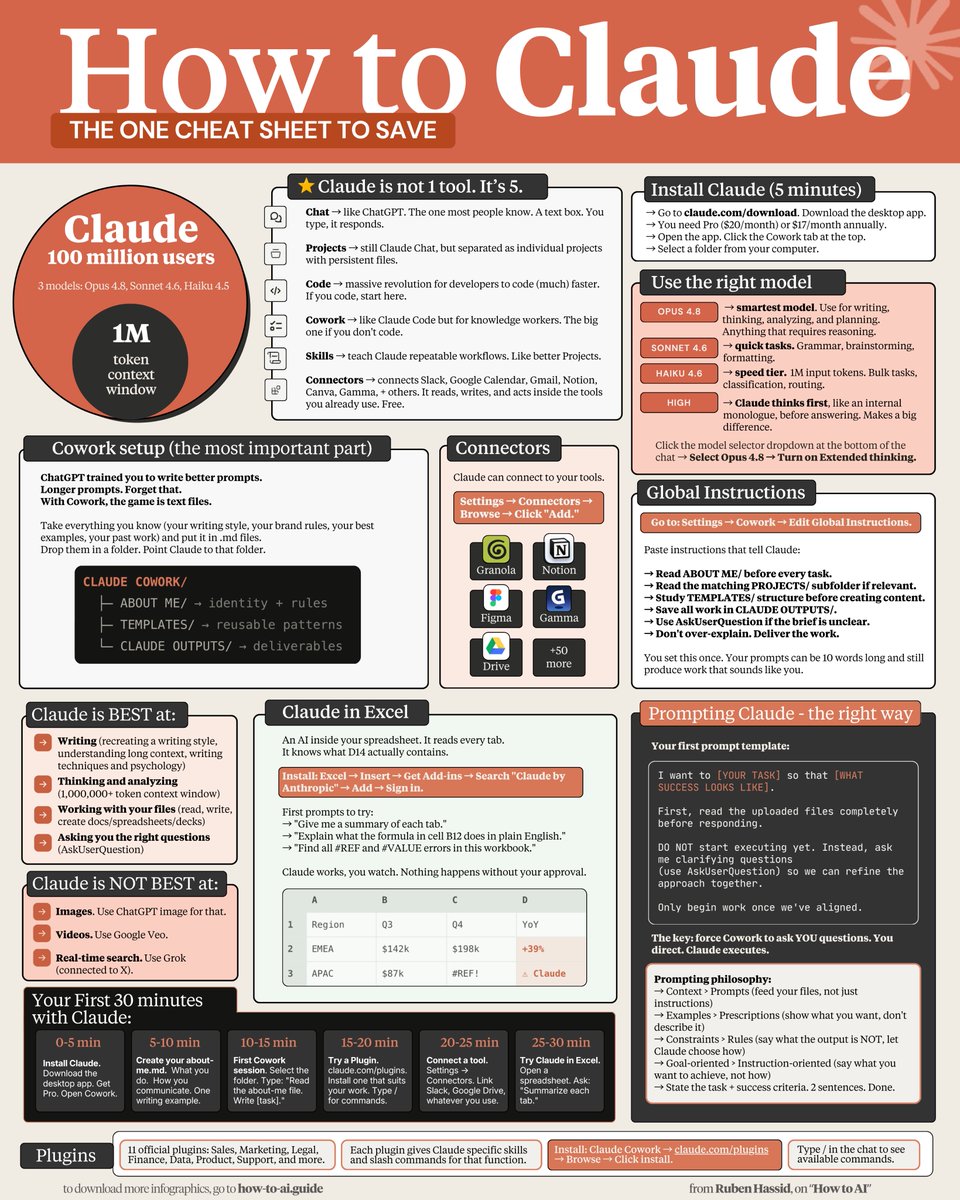
So here's a recap in a single cheat sheet:
1: Claude isn't 1 tool. It's 6.
Chat, Projects, Code, Cowork, Skills, Connectors.
If you don't code, Cowork should be the go-to one.
2: Pick the model before the prompt.
Opus 4.8 = thinking, analyzing, planning.
Sonnet 4.6 = grammar, brainstorming, formatting.
Haiku 4.6 = bulk tasks at 1M input tokens.
3: Toggle High Effort on Opus.
Model selector → Opus 4.8 → Turn on Effort → High Forces an internal monologue.
4: Cowork > Chat for serious work.
Desktop Pro only. Reads your local files. Creates docs. Runs for minutes while you grab coffee.
5: Stop writing 500-word prompts.
Write 29 words: "I want to [task] so that [goal]. Read the files first. Ask me questions via AskUserQuestion before executing."
6: Build 3 folders inside Cowork.
ABOUT ME/ (identity rules). TEMPLATES/ (reusable patterns). CLAUDE OUTPUTS/ (deliverables). Your prompts drop to 10 words.
7: Set Global Instructions once.
Settings → Cowork → Edit Global Instructions.
Prompt: "read ABOUT ME first, save in CLAUDE OUTPUTS, use AskUserQuestion when unclear, don't over-explain."
8: Connectors are free. Turn them on.
Slack, Gmail, Drive, Notion, Figma, Granola 50 others. Claude reads your emails and messages mid-conversation. Zero copy-paste.
9: Force AskUserQuestion in every prompt.
Claude stops guessing. It generates a form with clarifying questions. You click. Claude executes. Prompting ends.
10: Install Claude in Excel (3 minutes).
Excel → Insert → Get Add-ins → Search "Claude by Anthropic" → Add → Sign in. Ctrl Option C to open. It now knows what cell D14 actually contains.
11: Install Plugins from claude .com/plugins.
Sales, Marketing, Legal, Finance, Data, Product, Support more. Each adds skills and slash commands. Type / in the chat to see them.
12: Skills replace your prompt library.
Turn repeat workflows into slash commands. Type /negotiation-prep one line. Claude pulls from Gmail, Slack, Granola. Drafts the email. Done.
13: Context > Prompts.
Feed your files, not just prompts. That's the game.
Download my own files at how-to-ai.guide.
Don't pay anything. Reply to the email to get the link
14: Examples > Prescriptions.
Paste 3 posts you wrote. "Write like this." Claude copies voice faster from examples than from 500 words of description.
15: Images = Use ChatGPT Image (with Thinking).
Claude doesn't generate realistic images (yet).
16: Real-time search = Use Grok.
Connected to X. Covers 99% of what you need.
17: Videos = Use Google Veo-4
Right tool, right job. Stop wasting tokens.
-----
To download all of my Claude infographics:
Step 1. Go to how-to-ai.guide.
Step 2. Subscribe for free. Don't pay anything.
Step 3. Open my welcome email (most skip this).
Step 4. Hit the automatic reply button inside.
Step 5. Download my infographics from my Notion.
Bonus. Enjoy my best copy-paste prompts, too.

31
99
507
71,941
Amar retweeted

May 10
This is one of the best short films I've seen in years.
Very soon, we'll stop calling it "AI film" and just call it film.
2,336
6,312
82,547
13,639,085

@nitin_gadkari @MORTHIndia name issues with DL issued before #aadhaar incarnation
1. Surname, first name order and spaces - leads no match of both names in DL & aadhaar, on renewals, forcing us to apply for change of name with gazette proofs ...! Didn't change my name at all 1/3
1
62
@nitin_gadkari @MORTHIndia @PMOIndia
2. Aadhaar can accommodate any length of name but RTO MH form for not, leads to remove space to accommodate
All #digital #online blues with no data dictionary defined @UIDAI, even with #pan #nps @officialepfo
2/3
1
43
Amar retweeted

May 24
The suit-up alone would finish most people off.
Zhang Shupeng getting dressed on a narrow ledge at Tianmen Mountain before BASE jumping at 180 km/h.
No room for error at any point.
393
700
14,981
130,525

Microsoft Senior AI developer just showed how they build AI agents with Claude at Microsoft.
34-minutes. free. By Microsoft team
Opus 4.7 1,400 pre-built MCP tools
plug Claude into agent → give it tools → ship to production
worth more than any $500 vibe-coding course.

Spotify's Chief Architect just showed how they ship 4,5K deployments /day with Claude at Anthropic stage
27-minutes. free. By #1 music app dev
"More than 99% of our engineers use AI coding tools. Adoption took off after Opus 4.5"
Worth more than any $500 vibe-coding course.
111
812
5,393
1,713,775
Amar retweeted

May 19
The people getting the craziest results from Claude aren’t using “better prompts.”
They’re copying the workflow of the people who built systems like Claude in the first place.
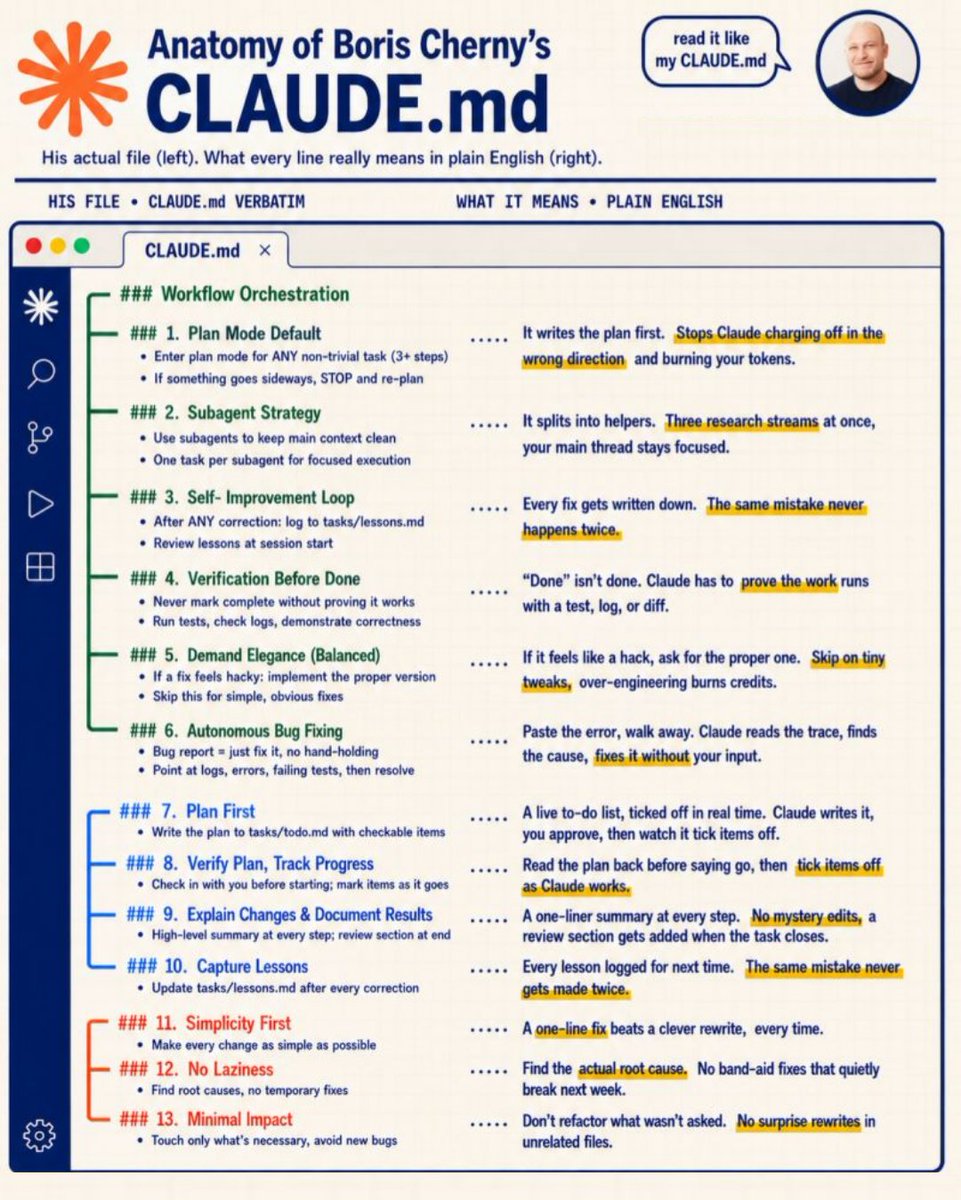
Boris Cherny’s CLAUDE.md anatomy is basically a masterclass in how elite AI operators think:
• Plan before execution
• Split tasks into focused agents
• Track failures like a real engineering system
• Verify everything before shipping
• Eliminate root causes, not symptoms
Read it once and you realize:
Most people are talking to AI.
A small group is building infrastructure around AI.
That’s the real divide right now.
And honestly, this changes how you see AI completely.
Because the highest leverage isn’t hidden inside some secret prompt.
It’s in creating an environment where AI can think clearly, execute systematically, and improve over time.
That’s why two people can use the same model and get wildly different outcomes.
One gets content.
The other gets a scalable execution system.
This is probably one of the most important mindset shifts for anyone serious about AI.

22
75
288
28,252
Amar retweeted

May 17
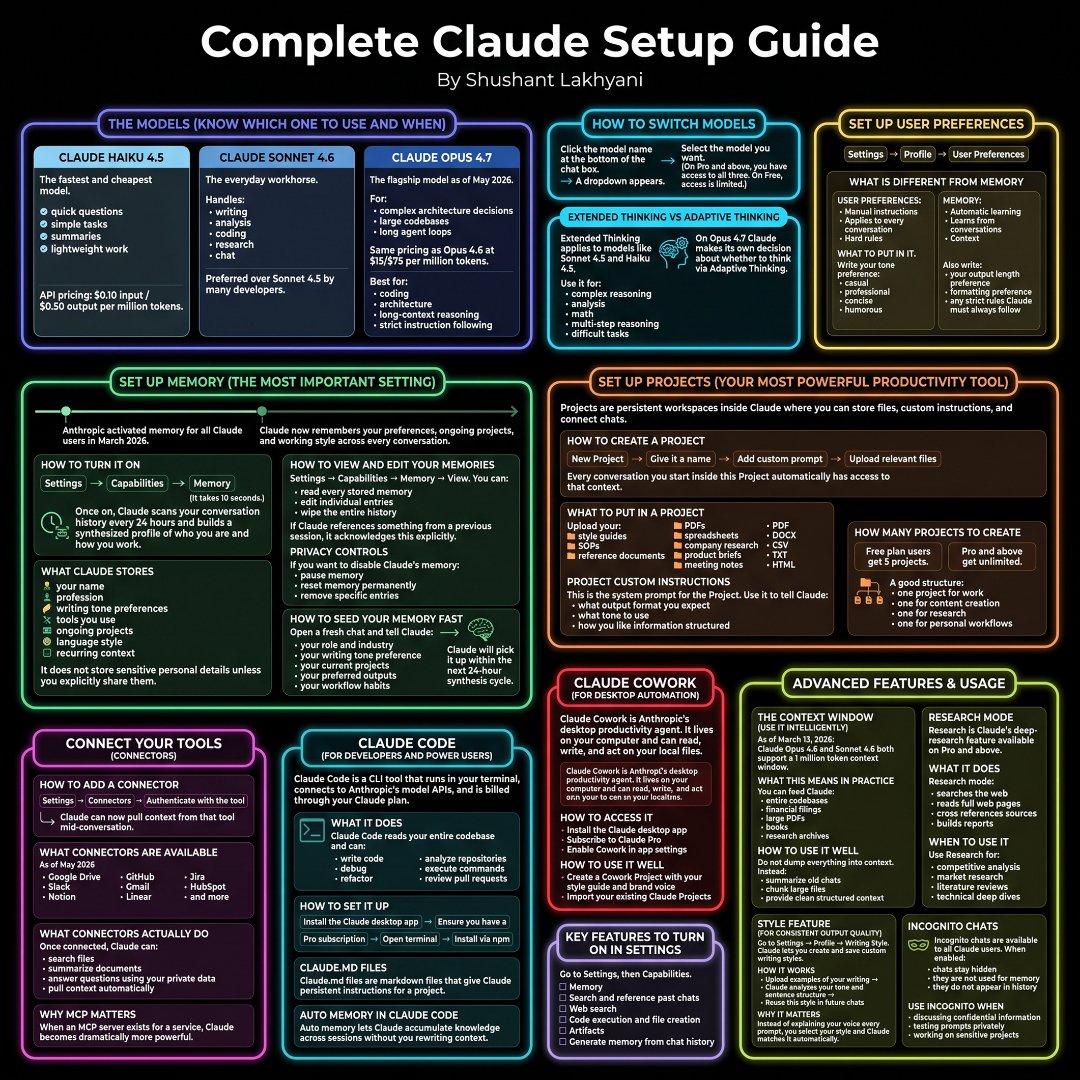
📂 claude setup
┃
┣ 📂 models
┃ ┣ 📂 claude haiku 4.5
┃ ┣ 📂 claude sonnet 4.6
┃ ┣ 📂 claude opus 4.7
┃ ┣ 📂 extended thinking
┃ ┗ 📂 adaptive thinking
┃
┣ 📂 setup
┃ ┣ 📂 user preferences
┃ ┣ 📂 memory
┃ ┣ 📂 projects
┃ ┣ 📂 custom instructions
┃ ┗ 📂 workflow optimization
┃
┣ 📂 projects
┃ ┣ 📂 persistent workspaces
┃ ┣ 📂 uploaded files
┃ ┣ 📂 spreadsheets
┃ ┣ 📂 product briefs
┃ ┣ 📂 prompts
┃ ┗ 📂 project context
┃
┣ 📂 memory
┃ ┣ 📂 conversation history
┃ ┣ 📂 writing preferences
┃ ┣ 📂 ongoing projects
┃ ┣ 📂 language style
┃ ┗ 📂 workflow habits
┃
┣ 📂 connectors
┃ ┣ 📂 google drive
┃ ┣ 📂 github
┃ ┣ 📂 slack
┃ ┣ 📂 notion
┃ ┣ 📂 hubspot
┃ ┗ 📂 jira
┃
┣ 📂 claude code
┃ ┣ 📂 terminal access
┃ ┣ 📂 codebase analysis
┃ ┣ 📂 debugging
┃ ┣ 📂 refactoring
┃ ┣ 📂 api integrations
┃ ┗ 📂 command execution
┃
┣ 📂 cowork
┃ ┣ 📂 desktop automation
┃ ┣ 📂 app control
┃ ┣ 📂 workflow execution
┃ ┣ 📂 productivity agent
┃ ┗ 📂 local system access
┃
┣ 📂 advanced features
┃ ┣ 📂 context window
┃ ┣ 📂 research mode
┃ ┣ 📂 incognito chats
┃ ┣ 📂 web search
┃ ┗ 📂 code execution
┃
┣ 📂 productivity
┃ ┣ 📂 research workflows
┃ ┣ 📂 content creation
┃ ┣ 📂 coding workflows
┃ ┣ 📂 business operations
┃ ┗ 📂 deep analysis
┃
┣ 📂 optimization
┃ ┣ 📂 auto memory
┃ ┣ 📂 structured prompts
┃ ┣ 📂 project instructions
┃ ┣ 📂 reusable context
┃ ┗ 📂 system organization
┃
┣ 📂 collaboration
┃ ┣ 📂 saved chats
┃ ┣ 📂 imported projects
┃ ┣ 📂 shared workflows
┃ ┣ 📂 team productivity
┃ ┗ 📂 knowledge management
┃
┣ 📂 security
┃ ┣ 📂 privacy controls
┃ ┣ 📂 incognito mode
┃ ┣ 📂 memory controls
┃ ┣ 📂 secure chats
┃ ┗ 📂 permission settings
┃
┣ 📂 usage
┃ ┣ 📂 writing
┃ ┣ 📂 analysis
┃ ┣ 📂 coding
┃ ┣ 📂 brainstorming
┃ ┗ 📂 automation
┃
┗ 📂 scaling
┣ 📂 ai workflows
┣ 📂 productivity systems
┣ 📂 personal operating system
┣ 📂 business automation
┗ 📂 ai powered execution
25
302
1,411
60,119
Amar retweeted

May 15
People freaking out over my AI spend. What nobody sees: Part of what excites me so much about working on OpenClaw is that I'm trying to answer the question:
How would we build software in the future if tokens don't matter?
We constant run ~100 codex in the cloud, reviewing every PR, every issue. If a fix on main lands, @clawsweeper will eventually find that 6 month old issue and close it with an exact reference.
We run codex on every commit to review for security issues (as it's far too easy to miss).
We run codex to de-duplicate issues and find clusters and send reports for the most pressing issues.
We have agents that can recreate complex setups, spin up ephemeral crabbox.sh machines, log into e.g. Telegram, make a video and post before/after fix on the PR.
There's codex that watch new issues and - if it fits our documented vision well, automatically create a PR of it. (that then another codex reviews)
We have codex running that scans comments for spam and blocks people.
We have codex instances running that verify performance benchmarks and report regressions into Discord.
We have agents that listen on our meetings and proactively start work, e.g. create PRs when we discuss new features while we discuss them.
We build clawpatch.ai to split all our projects into functional units to review and find bugs and regresssions.
We do the same split for security with Vercel's deepsec and Codex Security to find regressions and vulnerabilities.
All that automation allows us to run this project extremely lean.
506
424
7,481
2,047,491
Amar retweeted

May 13
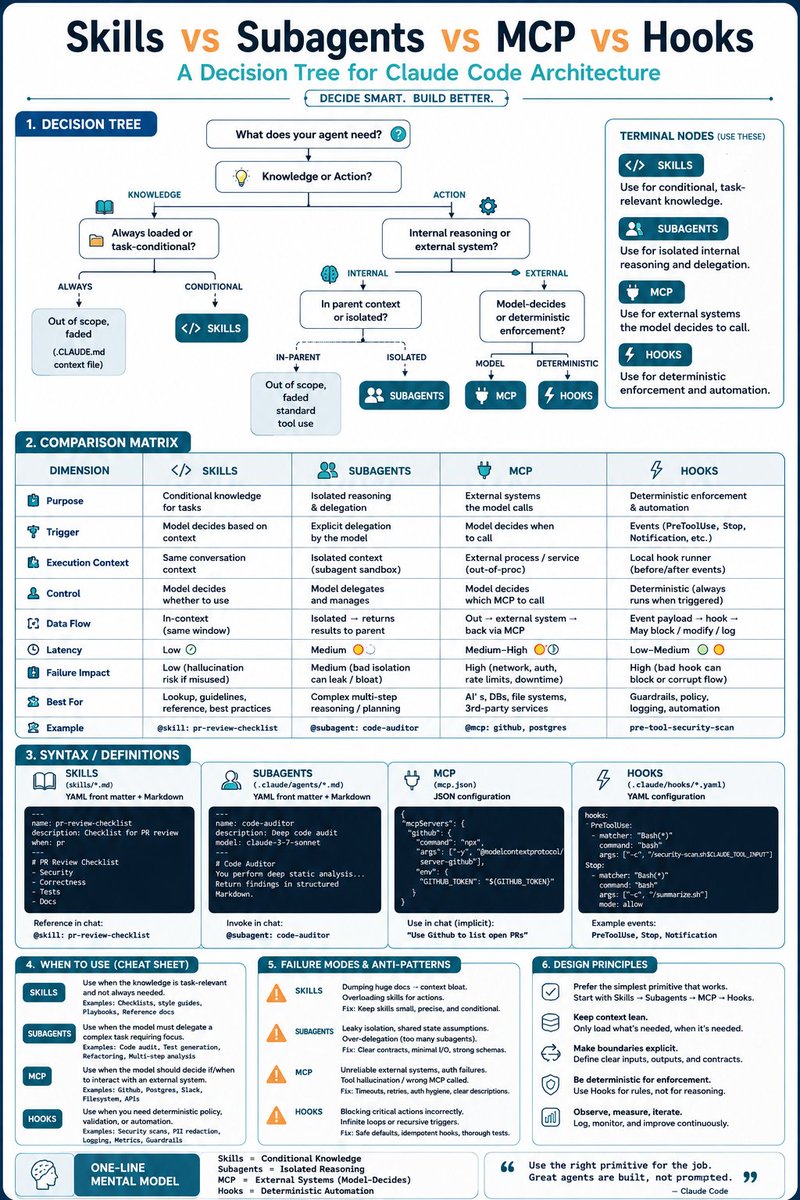
Skills, Subagents, MCP, and Hooks are not four versions of the same thing.
They solve four different problems. Mix them up, and your Claude Code setup starts breaking in ways no one can explain.
Here’s the decision tree I use:
SKILLS → “Load knowledge only when needed”
• Markdown file helper code
• Loaded per task, not always on
• Best for: specialized knowledge, file formats, repeat workflows
Use when the same knowledge appears often but would bloat context.
SUBAGENTS → “Give a side task its own workspace”
• Separate session with its own memory
• Returns clean output, not the mess
• Best for: deep research, parallel work, messy exploration
Use when the main thread would get cluttered.
MCP → “Connect to external systems”
• Persistent server exposing tools/data
• Handles auth, state, multi-language
• Best for: APIs, databases, SaaS, internal tools
Use when the agent needs to reach something, not just know it.
HOOKS → “Enforce behavior every time”
• Triggered on lifecycle events
• Runs automatically, no exceptions
• Best for: validation, formatting, security, logging
Use when you can’t rely on the model to remember.
Mental model:
• Skills = what the agent knows
• Subagents = where it thinks
• MCP = what it can reach
• Hooks = what it must obey
They don’t compete. They stack.
Common mistakes:
• Building MCP when a Skill was enough
• Overloading main context instead of using Subagents
• Trusting the model instead of enforcing with Hooks
• Treating Skills like docs instead of tools
Hot take:
Most MCP servers should’ve been Skills.
People build connections when they need knowledge—and pay for it with latency, auth issues, and brittle systems.
Where do you draw the line between Skill vs MCP?
11
131
539
23,662
Amar retweeted

May 12
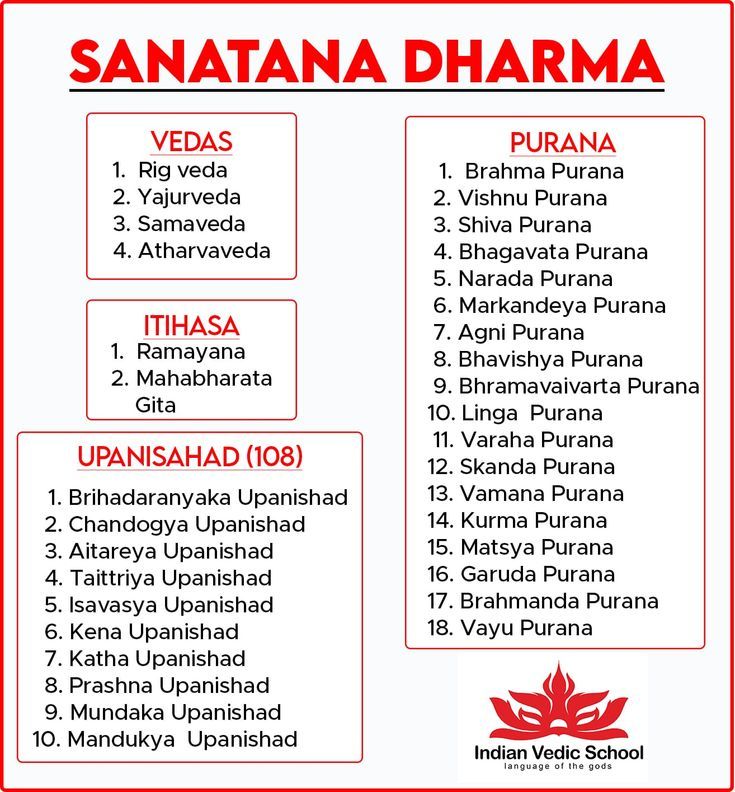
Knowledge of sanatana Dharma 🚩
54
1,449
4,342
75,845
I've completed Learning Activites across Google's developer ecosystem! #DevBadges developers.google.com/profil…
9