805 Photos and videos













4
24
84
Swayam MD retweeted

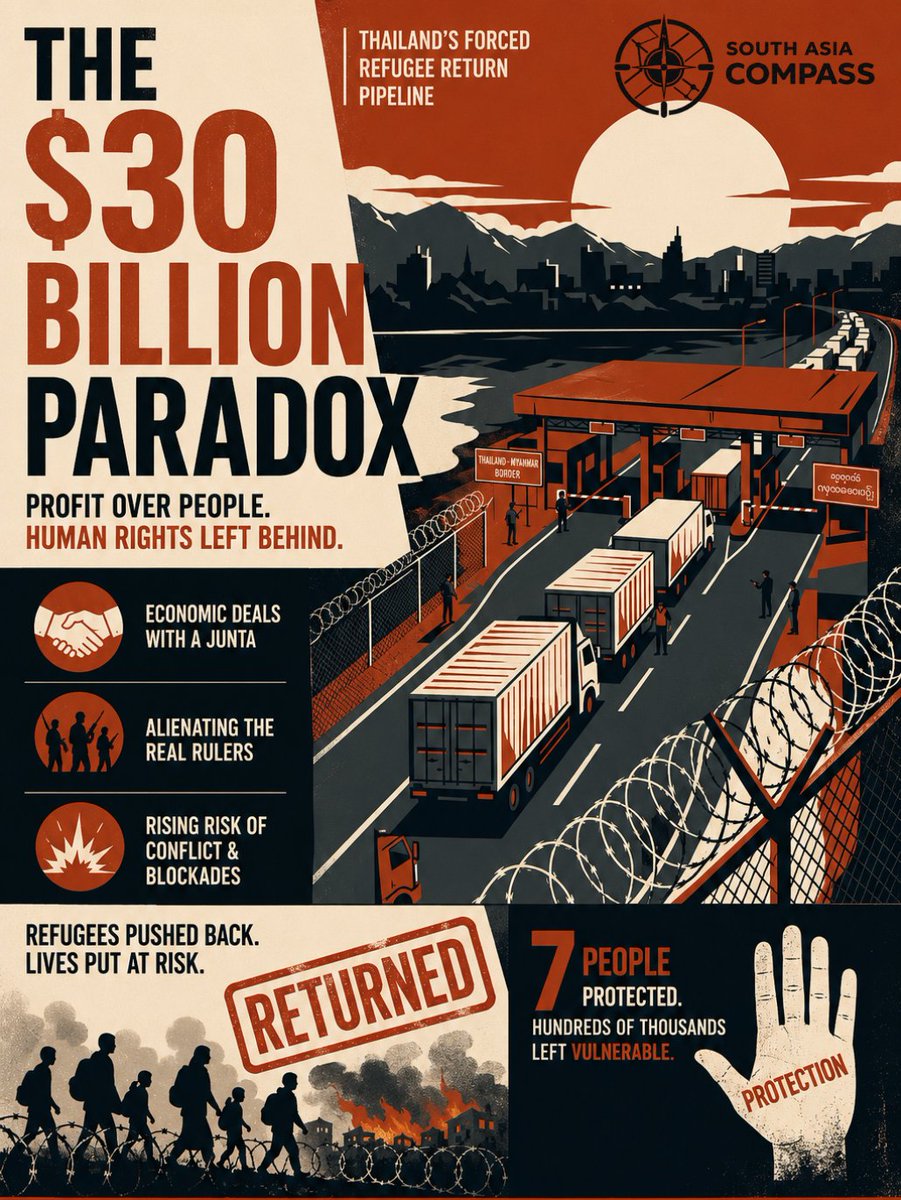
THE $30 BILLION PARADOX: How Economic Interests are Driving Thailand’s Forced Refugee Return Pipeline
While Bangkok celebrates its newly secured seat on the United Nations Human Rights Council, an entirely different reality is unfolding along its volatile 2,400-kilometer western frontier.
Extensive documentation submitted directly to the UN Human Rights Council ahead of Thailand’s upcoming Universal Periodic Review (UPR) has exposed a deeply calculated, security-first strategy. Frontline Thai security detachments are actively coordinating with the Myanmar military junta, led by Min Aung Hlaing, to systematically round up and return war-displaced asylum seekers.
This includes political dissidents and thousands of young civilians trying to escape the junta's brutal, mandatory conscription laws. They are being pushed right back across the river into active combat zones.
The driving force behind this policy? Pure commerce.
Bilateral border and transit trade through key nodes like the Mae Sot-Myawaddy corridor remains an absolute economic lifeline for Thailand. For 2026, this cross-border trade network is projected to hit a massive 1.09 Trillion Baht (~$30 Billion USD). The recent reopening of the Second Thai-Myanmar Friendship Bridge at Mae Sot—following a devastating 10-month closure caused by clashes—shows exactly how desperate authorities are to keep the trade lanes clear.
But geopolitical analysts warn that Bangkok has walked right into a dangerous security paradox:
1. Loss of Territorial Control: The Thai government is cutting deals with a central military junta in Naypyidaw that exists mostly on paper at the border. The junta lacks actual, physical control over the land gates.
2. Alienating the Real Rulers: The groups physically holding the ground, managing the bypass roads, and controlling the trade entries are the Ethnic Armed Organizations (EAOs) and People’s Defense Forces (PDFs).
3. The Backlash Risk: By coordinating pushbacks with the junta, Thai authorities are directly alienating these border resistance forces. These heavily armed groups are increasingly viewing Thailand as a hostile actor, rapidly raising the likelihood of localized cross-border skirmishes and crippling economic blockades.
Furthermore, Thailand’s own humanitarian systems are proving to be structural failures. The highly anticipated "National Screening Mechanism" (NSM), rolled out to identify and protect those fleeing persecution, granted legal protection to exactly SEVEN individuals in its first full year. It explicitly shuts out vulnerable groups like the Rohingya and anyone classified under standard migrant worker frameworks, leaving hundreds of thousands completely vulnerable to arbitrary arrest, extortion, or extrajudicial return.
By shifting away from its historical role as an open humanitarian buffer zone, Thailand is playing an incredibly high-stakes short-term game. It risks intense diplomatic friction with its Western partners and isolation within international bodies—all while failing to secure the long-term stability of a fracturing neighbor right on its immediate border.
33
Swayam MD retweeted
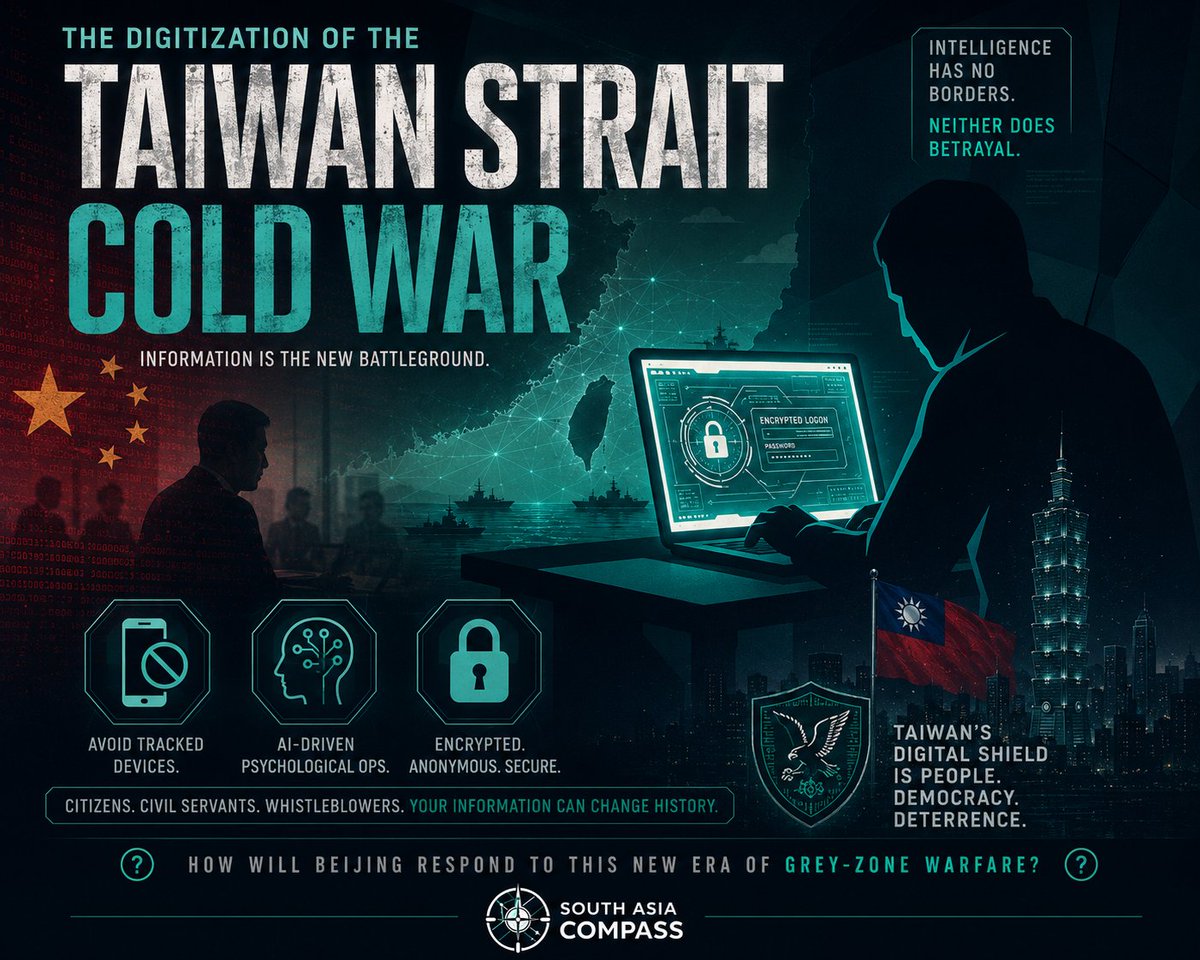
THE DIGITIZATION OF THE TAIWAN STRAIT COLD WAR
While global attention remains fixed on physical military hardware, Taiwan’s National Security Bureau (NSB) has quietly launched a highly aggressive, asymmetric digital offensive that changes everything.
Taipei has officially gone live with an encrypted information-reporting portal (report.nsb.gov.tw) explicitly built for citizens and civil servants of the People's Republic of China (PRC) to leak state intelligence directly to Taiwanese handlers.
This isn't standard counter-espionage. It is an overt exploitation of China’s shifting domestic realities: severe economic stagnation, sweeping anti-corruption purges, and restrictive political controls that have fostered unprecedented friction within Beijing’s bureaucratic layer.
The Psychological & Technical Warfare Elements:
1. AI-Driven PsyOps: The launch was accompanied by an AI-generated video called "Change," showing a mainland official watching colleagues fall victim to state purges. The audio used a distinct northern mainland dialect to directly trigger the psychological vulnerabilities of target officials.
2. The Hardware Alert: In their official operational security guidelines, Taiwan explicitly tells whistleblowers to avoid Chinese-branded smartphones (like Huawei, Xiaomi, or Oppo). This highlights an uncomfortable consensus within high-level intelligence: firmware-level tracking on these devices cannot be cleared by software factory resets.
By shifting from reactive defense to active, crowdsourced Human Intelligence (HUMINT) gathering, Taiwan is building a low-cost, decentralized early-warning system against potential military crises.
The question now is how aggressively Beijing will retaliate via cyber-attacks and internal purges.
What do you think this means for the future of grey-zone warfare? Let's discuss in the comments.
49
BJP is doing What COMMUNIST wanted But Can't Believe that It is BJP who is Doing What they wished For .
Jun 14

"BJP wants One Party One Nation One Election" - CPIML
2
23

The cadaver was once a noble person who decided to donate their body for medical education. This selfless act warrants utmost respect and gratitude. Ashamed to have such people in the fraternity. She is no better than that Rs. 370 biryani guy.
Jun 10

What kind of rubbish is this? In no way, she deserves to be a doctor. Laughing about a cadaver’s dick size, ye konse clg ke bche hai jinko cadaveric oath mzaak lgta hai.
#medtwitter
7
19
135
5,760
Swayam MD retweeted

Jun 10
Longish Thread
How many of you think what is happening now or @BJP4Bengal loss in 2021 was random? A slowly & dramatically evolving story.
It's far from the truth. It's straight out of a paper written by 2 Chinese armymen in 1999 - Qiao Liang & Wang Xiangsui. The paper is 1/n
4
14
131
47,501
The Cadaver is Our First Teacher. It Teaches Us the Sacrifice for the Greater Good. It Teaches Us to be A Doctor to Save Many More.
A Genuine Respect Is Something to Offer.
.
I remember saying the same @marijuana__Med when She First went to Med College
4
47

This single Hymn (The creation hymn/nasadiya sukta , Rig Veda 3500 years old) mogs all religious books combined.
No wonder all Physicist/Scientist used to read Ved/Vedanta, Listen 👇

Who is GOD ?
(Purusha Sukta , Rig Veda)
The One having thousand heads and feet.
Present in every being, everywhere.
He is in every atom, every direction.
Yet, he is beyond space and time.
He is and above everything.
He alone is the Past, Present, and the Future.
He is immortal, beyond birth and death.
Yet he takes a mortal form for humans.
21
573
2,214
81,731
Swayam MD retweeted

* bengal patient
That is another issue.. we request Suvendu ji to fix the Bengals health care system as it's overloading bhubaneswar and me as a commuter face issue in Bengal bound trains as Kadpadi junction comes on the way to Bengaluru..
1
1
38
Resident , Interns Knows Who Run the Hospital and What We Are Paid is Peanuts.
I Think We should Start Differential Billing in AIIMS and All Government Hospitals
Where One Must Prove Why the Fuck We should See Patients at Rs. 10 or 0
While Generally it should be 1000

This coercive bond reeks of envy. IITians pay ₹8-10L in real fees for high-risk elite education; AIIMS doctors get near-free subsidized training plus guaranteed demand. Punishing excellence with slavery won't fix governance ,only drives brain drain. Let talent thrive
3
28
I really Love The Audacity of Engineers
Like
1. Bhai Subah ko AIIMS raat ko Pvt practice 🤣🤣 Gadho NPA sign karwate hain
2. Hum ek Bot Banayenge woh humara Job le lega , Toh Karo na
And Many More Jokes


1
4
96
Swayam MD retweeted
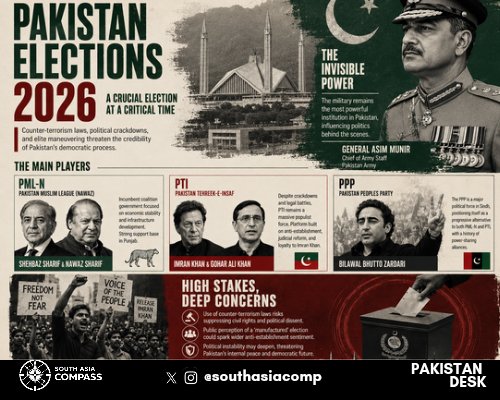
CRACKDOWN IN MUZAFFARABAD: The AJ&K Home Department has officially banned the region's largest civil rights alliance, the Joint Awami Action Committee (JK-JAAC), designating them a "Proscribed Organization" under the Anti-Terrorism Act.
2
3
4
998
Swayam MD retweeted
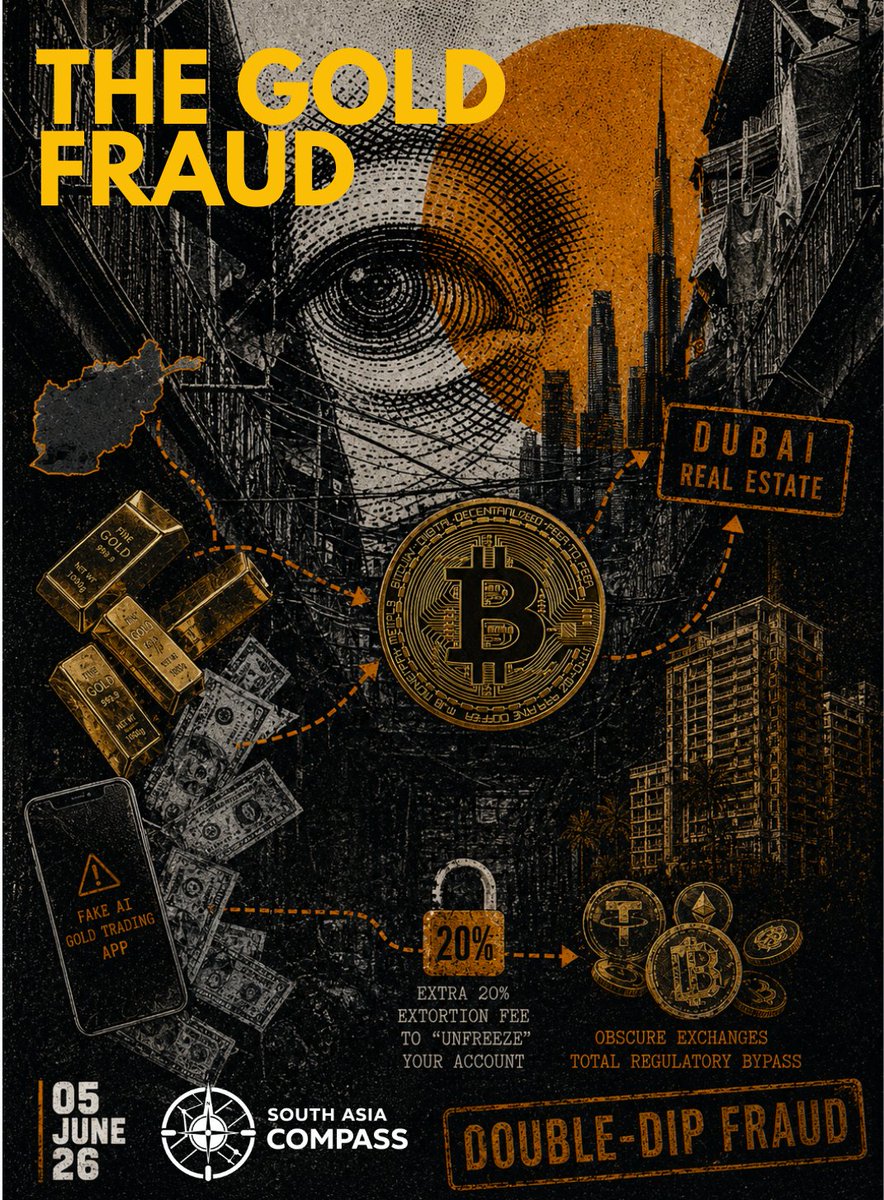
🚨 OSINT THREAD: A massive "AI Gold Trading" Ponzi scheme named "Gold BS" has pulled a brutal $20,000-per-user rug pull in Afghanistan.
But this isn’t just a scam. It’s a masterclass in laundering liquid capital out of a sanctioned economy under the central bank's nose. 🧵 👇
1
5
3
256
If U have Ever Watched Archer You Know Breast Cancer is Not Limited to Females!

Me: Okay 3rd years, tell me some cancers exclusive to women.
Student: Ovarian, uterine, breast cancer.
Me: Breast? Sit down
It’s rare but when it happens, it is often far more deadly. Let's see who actually read their Robbins. Why does male breast cancer have a worse prognosis?
25
Swayam MD retweeted

Jun 3
Kochubone hege gelo kalo kukure ❌
Kochubone pore gelo kalo suore ✅
1
5
293
Swayam MD retweeted
But Where Pakistan's Real Trouble Comes From is Not IMF but How
Afghanistan Taliban is Now Targeting Pakistan .
Seriously Thinking The Taliban who once Sided with Pak is Now Making Sure Air Dominance of Pak is Shattered
1
72
Brother has never travelled on green line.
From morning 7 till night 10 there is no time when it's not full

Other than Kolkata, Bengal doesn't have a city with 25-30 lakh population. Second-largest city is Asansol, with around 15 lakh people, Siliguri population is about 12 lakh. Even Kolkata's EW Metro is failing to reach ridership targets. The focus should be on operating more buses.
5
42