Independent analysis on China, US-Asia & global affairs. Founded by Aric Chen — executive producer, senior editor & anchor; foreign policy think tank mentor.

Joined September 2009
5,234 Photos and videos
Pinned Tweet
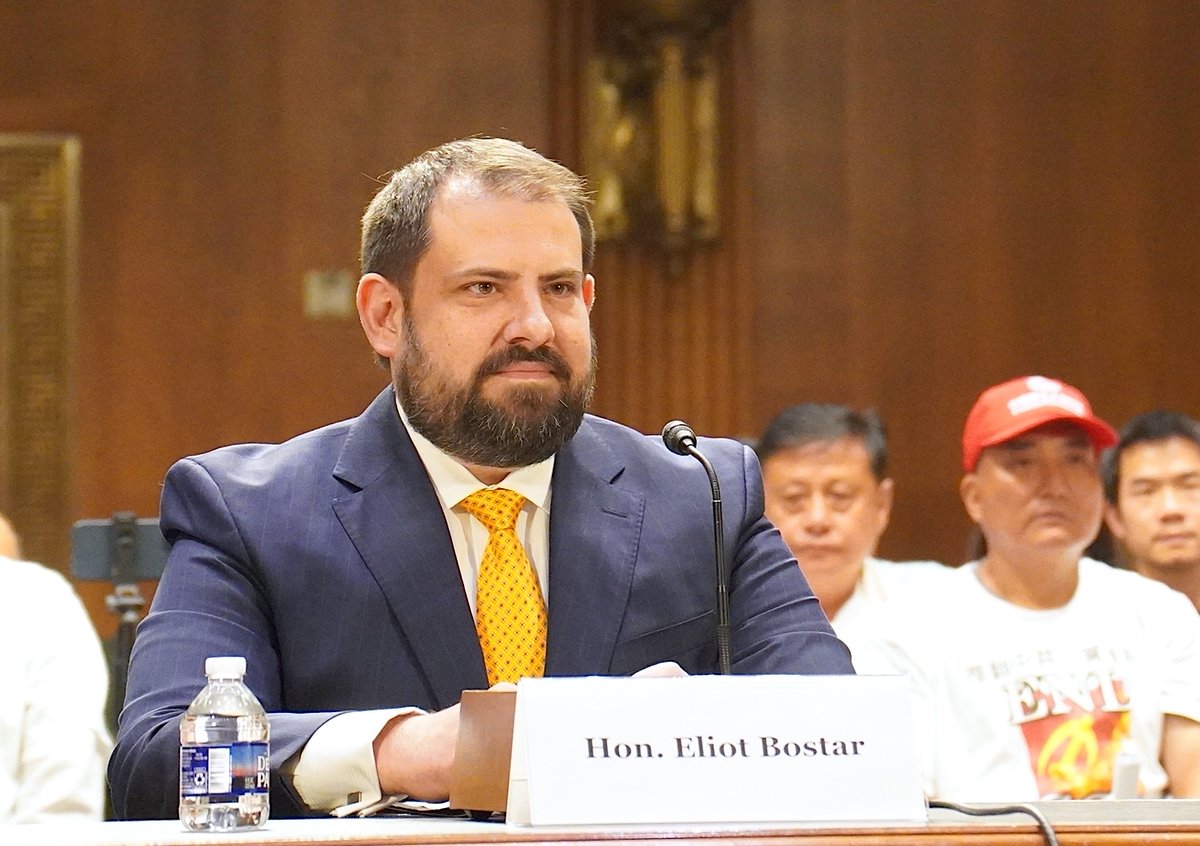
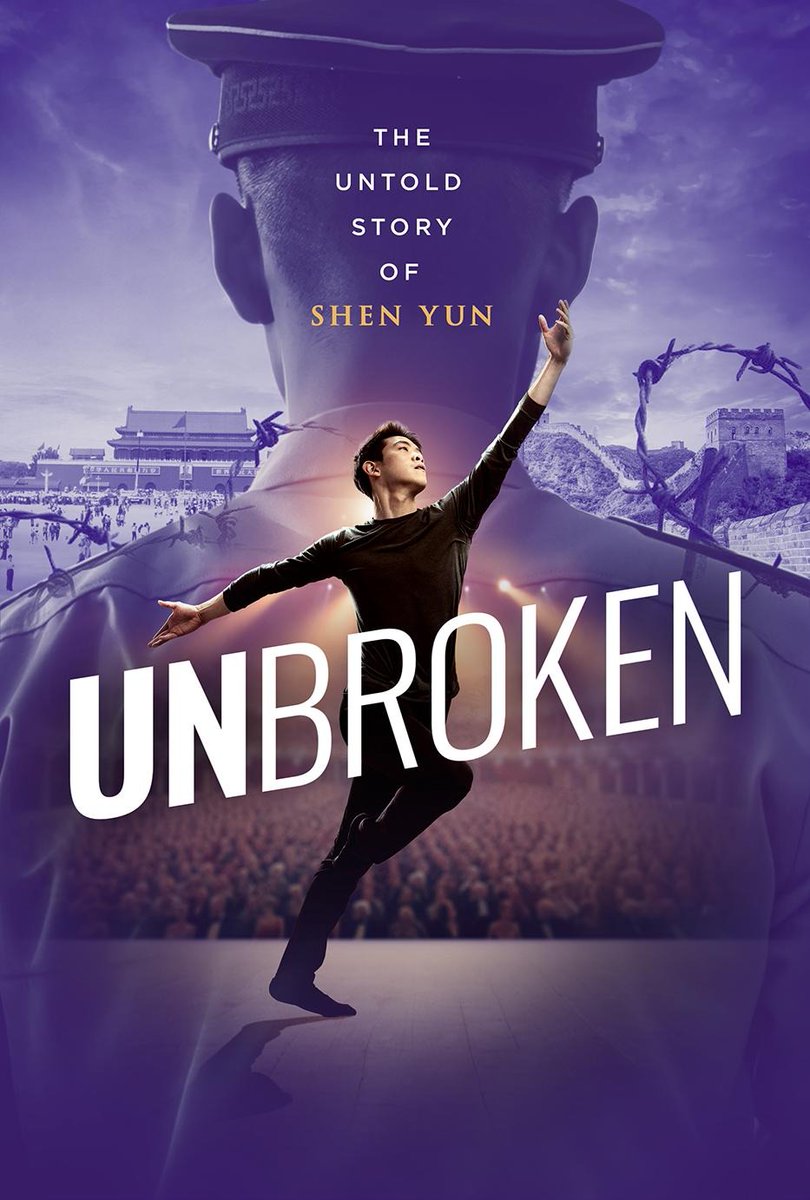
Beijing Tried to Bomb Shen Yun Off the World's Stages. The Free World Just Built a Wall. Twenty-eight malicious emails. One hundred fourteen days. Six countries. One Gmail account, traced to mainland China, screen name roughly translated: "Desperate Warrior." This is not a glitch in the geopolitical matrix. This is the Chinese Communist Party — operating from inside the People's Republic — running a coordinated, multi-continent terror campaign against an American performing arts company whose only "crime" is portraying Chinese civilization as it existed long before the CCP did. And here is the part Beijing did not plan for: America noticed. The scope, mapped by the Falun Dafa Information Center's May 2026 report, is staggering. Between January 1 and April 24, 2026, a single pro-Beijing email account sent 28 confirmed malicious messages across Canada, the United Kingdom, France, the Czech Republic, and the United States — including threats targeting Britain's Buckingham Palace and Canada's Parliament Hill. On March 29, after an emailed bomb threat written in Swedish, Toronto's Four Seasons Centre evacuated a near-sold-out crowd; by April 2 the venue had cancelled all six Shen Yun performances, leaving roughly 10,000 ticketholders shut out — even after Toronto Police judged the threat unfounded. Since March 2024, FDIC has documented 279 hostile incidents against Shen Yun and Falun Gong communities. Freedom House, cited at the hearing by Rep. Jim McGovern, has logged 319 PRC-linked transnational repression incidents since 2014. This is industrial-scale coercion, dressed up as anonymous emails. On June 4, 2026 — the 37th anniversary of Tiananmen, no coincidence — the Congressional-Executive Commission on China convened a landmark hearing titled "The PRC's Threats to Americans: Transnational Repression & State-Level Responses." Co-Chairs Chris Smith (R-NJ) and Jim McGovern (D-MA) — a bipartisan firewall increasingly rare in Washington — placed Beijing's behavior squarely on the public record. "You either stand with the tank man or you stand with the tank," Smith said. "There is no middle ground." That is the moral compass America still has. Beijing miscalculated by assuming it had been lost. The state-level counter-offensive is real, and it is gathering force. Texas, Nebraska, Arizona, Kansas, and Tennessee have each enacted statutes specifically targeting transnational repression. Nebraska's LB644 — the "Crush Transnational Repression in Nebraska Act," signed by Governor Jim Pillen in June 2025 and introduced by State Senator Eliot Bostar — criminalizes acting as a CCP proxy to intimidate performers or block performances, and adds aggravated penalty provisions. This is precisely the model the rest of the union should copy: clear definitions, criminal teeth, prosecutorial pathways. Bostar testified at CECC that "the People's Republic of China is a threat to every state and every community" — and his state legislature was contacted by the CCP during the bill's passage. That detail alone tells you Nebraska hit the nerve. The bipartisan federal momentum is now visible. The Transnational Repression Policy Act — H.R. 4829, introduced August 1, 2025 by Rep. Smith with Rep. McGovern, and its Senate companion S. 2525, introduced July 29, 2025 by Senators Jeff Merkley (D-OR) and Dan Sullivan (R-AK) — will give prosecutors a statutory definition, hard-wire federal-state coordination, and arm the system with the one tool Beijing fears most: sunlight. G7 partners are aligning in the same direction — on June 17, 2025 at the Kananaskis Summit, the bloc collectively committed to coordinated counter-measures against authoritarian transnational repression of dissidents, journalists, religious minorities, and human rights defenders. The free world is forming a coalition. Beijing built a war room; the democracies are building a wall. Make no mistake about what Beijing is targeting. Shen Yun, founded in New York in 2006, is the most visible counter-narrative to the CCP's monopoly claim over Chinese culture — a 5,000-year civilization told by performers, many of whom fled religious persecution in China, and whose families inside China are being punished as leverage. Liu Aihua, mother of two American citizens — including Shen Yun principal dancer Steven Wang — has been imprisoned in Hunan since March 10, 2023, sentenced to four years for her Falun Gong faith; her husband died in 2009 from injuries sustained in Chinese custody. NTD's 2026 documentary "UNBROKEN: The Untold Story of Shen Yun" tells that story in full. When the CCP bombs an opera house in Toronto to silence a dance company in New York, it is not defending "national feelings." It is exporting authoritarianism into democracies — and the democracies are finally exporting consequences back. Three things every reader can do today. One: watch "UNBROKEN" and share it (Link in the reply section). Follow on X: @ShenYunUnbroken, @ShenYun. Two: post the FDIC incident tracker — sunlight is the single most under-leveraged weapon against transnational repression. Three: ask your representatives — wherever you vote — when they will pass their own anti-transnational repression law. Nebraska's text is fully drafted and sitting on the shelf, ready to be adapted by any legislature with the courage to use it. The curtain is still going up on American and global stages — and Beijing, the hand behind the entire operation, has been dragged out from the shadows. Aric Chen Insights | Views are my own. © 2026 Aric Chen
CCP caught using YouTubers to attack Shen Yun “That really kind of blew this wide open. Okay, this is a coordinated campaign.” “China's secret police are involved. The Ministry of Public Security. The Ministry of State Security. You have the Ministry of Public Security telling its people to provide support to YouTubers who produce content that aligns with the CCP's goals. They actually named the specific Chinese YouTuber.” “That's the same YouTuber who was at the source of these New York Times articles and is at the center of all of this.” “What we're seeing isn't random. It's a top-down strategy overseen from the very highest levels in Beijing. They're literally using Americans and American institutions to carry out lawfare, media warfare, and even espionage against a dissident group right here on US soil. This is a machine that can be used against any American that Beijing views as a threat.” Watch UNBROKEN: The Untold Story of Shen Yun on YouTube 👇 youtu.be/zKjWhwzCXj4?si=quzd… Follow on X: @ShenYunUnbroken
8
30
65
4,753
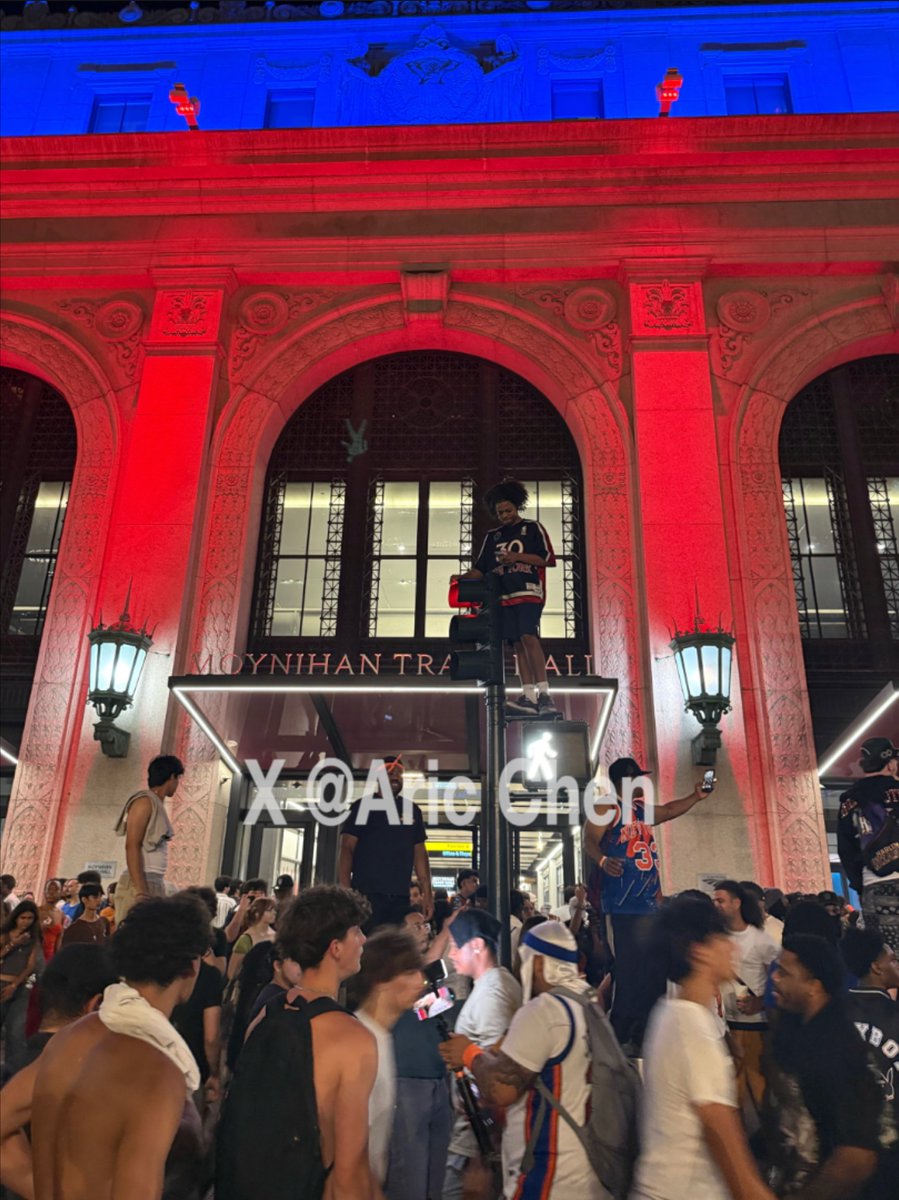
This is a classic case of New York sports culture at its most extreme: decades of frustration exploded into both euphoric celebration and regrettable disorder once the drought ended. The Knicks’ 2026 title is genuinely historic and deserved after a strong run, but the street chaos (fights, vandalism, injured officers) shows how thin the line can be between joy and mob behavior in a city this passionate and densely populated. Police were stretched thin, and while most fans were fine, the minority who smashed cars or climbed everything in sight gave the city (and Knicks fans) a black eye during what should have been a purely triumphant moment. The joke — “Knicks lose, New York riots; Knicks win, New York also riots. That’s New York.” The joke lands because it’s true — in New York, big sports moments reliably bring out both the best and worst. A championship finally arrived; the cleanup and lessons on crowd management will take longer. #Knicks #NYCchaos #NewYork
2
2
7
7,956
🚨 Just in: Beijing didn't just bankroll Russia's war on Ukraine. It trained the killers. On June 12 in Brussels, a senior EU official confirmed what the Chinese Communist Party has spent four years denying: the People's Liberation Army covertly schooled hundreds of Russian troops on Chinese soil — and a confirmed subset of those graduates is already on the Ukrainian front, flying drones, mating mortar fire to UAV targeting, and prosecuting strikes from occupied Crimea to Russian-held Zaporizhzhia. The "neutral peace broker" story is dead. The receipts are in European hands — and on Monday, they go on the table in Luxembourg. EU intelligence has shredded the CCP's four-year cover story on Ukraine. The evidentiary chain now runs from a secret July 2025 pact straight to drone kill-boxes in occupied Crimea and Zaporizhzhia. For four years, Beijing's official line on Russia's war of aggression against Ukraine has been a study in calibrated dishonesty: "objective," "impartial," "promoting peace talks." On June 12, 2026, a senior EU official walked that fiction into the daylight and shot it. European intelligence services have confirmed that the People's Liberation Army secretly trained hundreds of Russian military personnel — some of whom were then deployed to kill Ukrainians. The architecture is now in the open. Under a bilingual Russian-Chinese agreement signed in Beijing on July 2, 2025 — first surfaced by Reuters on May 19, 2026, and now corroborated by EU intelligence and Germany's Die Welt — roughly 200 Russian servicemen rotated through PLA facilities in late 2025. Reuters has identified at least five host cities: Beijing, Nanjing, Shijiazhuang, Zhengzhou, and Yibin. Die Welt, citing classified European intelligence documents, places the total in the "several hundred" range across at least six PLA bases. Curricula spanned drone employment, electronic warfare, army aviation, armored infantry, explosives, demining and counter-UAS measures. One December 2025 internal Russian report, reviewed by Reuters, describes fifty Russian troops at the PLA Ground Forces Army Infantry Academy branch in Shijiazhuang training in combined-arms warfare — specifically, mating 82mm mortar fire to drone-cued target acquisition. A separate course in November 2025 at the Nanjing University of Military Engineering trained Russians in explosives, mine construction and demining. Another, written up by a Russian major, documented FPV-drone instruction at Yibin's PLA Training Centre for Military Aviation, first brigade. The kill chain is no longer theoretical. A European intelligence service has identified Russian personnel — ranking from junior sergeant up to lieutenant colonel — who completed PLA training and were then deployed into drone combat operations in occupied Crimea and Russian-held areas of Zaporizhzhia oblast. Some trainees came from Russia's elite "Rubicon" drone unit — the formation that has reshaped frontline dynamics across the Donetsk, Kursk and Zaporizhzhia axes. The agreement included airtight gag provisions in both jurisdictions, forbidding any media coverage and prohibiting third-party disclosure. This is not "cooperation." It is operational integration with a war of aggression — engineered to be deniable. Beijing's response has been characteristically brazen. PRC MOFA has accused the messengers of "stoking confrontation" and "shifting blame," while reciting the "objective and impartial" mantra. That posture is now collapsed. EU foreign ministers convene in Luxembourg on Monday, June 15, with EU-China relations and the European defense industry's dependence on Chinese suppliers squarely on the agenda. High Representative Kaja Kallas has been blunt for over a year that PRC dual-use exports underwrite Russia's military-industrial base. Direct PLA training of combatants is a categorical escalation — from quartermaster to drill instructor. The strategic readout is straightforward. First, there is no longer a credible framing in which Beijing is a potential peace broker on Ukraine; it has been a co-belligerent's enabler. Second, the "no-limits partnership" Xi and Putin proclaimed on February 4, 2022 — twenty days before the full-scale invasion — means precisely what it says, and democratic capitals from Brussels to Tokyo should plan accordingly. Third, Europe's defense-industrial reliance on China is now also an active national-security vulnerability: the same supply chains feeding allied radars and components are tied to a state training the personnel firing on Ukrainian cities. The G7, EU, UK, Japan, South Korea, Australia and Taiwan should treat the Shijiazhuang-to-Zaporizhzhia evidentiary chain as a baseline — and price PLA complicity into the next sanctions round, the next tranche of export controls and the next procurement review, before Moscow's next offensive window opens. Beijing trained the gunners. The cover story is dead. The next move belongs to the democracies. Aric Chen Insights | Intelligence-grade geopolitical analysis from the global desk.
1
4
12
863
🇺🇸 Between sets, a singer stepped up to the microphone and shared the story behind the festival’s founder. She told the crowd how he and his family had fled China after being persecuted by the Chinese Communist Party for practicing Falun Gong — a peaceful spiritual discipline rooted in the principles of Truthfulness, Compassion, and Forbearance (真善忍). Banned by the CCP in 1999, the practice has cost millions of believers their freedom — and many, their lives. In America, she said, the family finally breathed free. They could pray, gather, raise their children, and build a community without fear. Out of that gratitude, the festival was born — a yearly gift back to the country that took them in. Then the music began. The singer’s voice rose into the song “Seek No More,” and a hush spread across the field. Families paused. Veterans removed their caps. For a moment, the small-town stage in Port Jervis felt much larger than itself — a reminder that the freedom Americans were born into is, for many of their neighbors, a hard-won miracle.
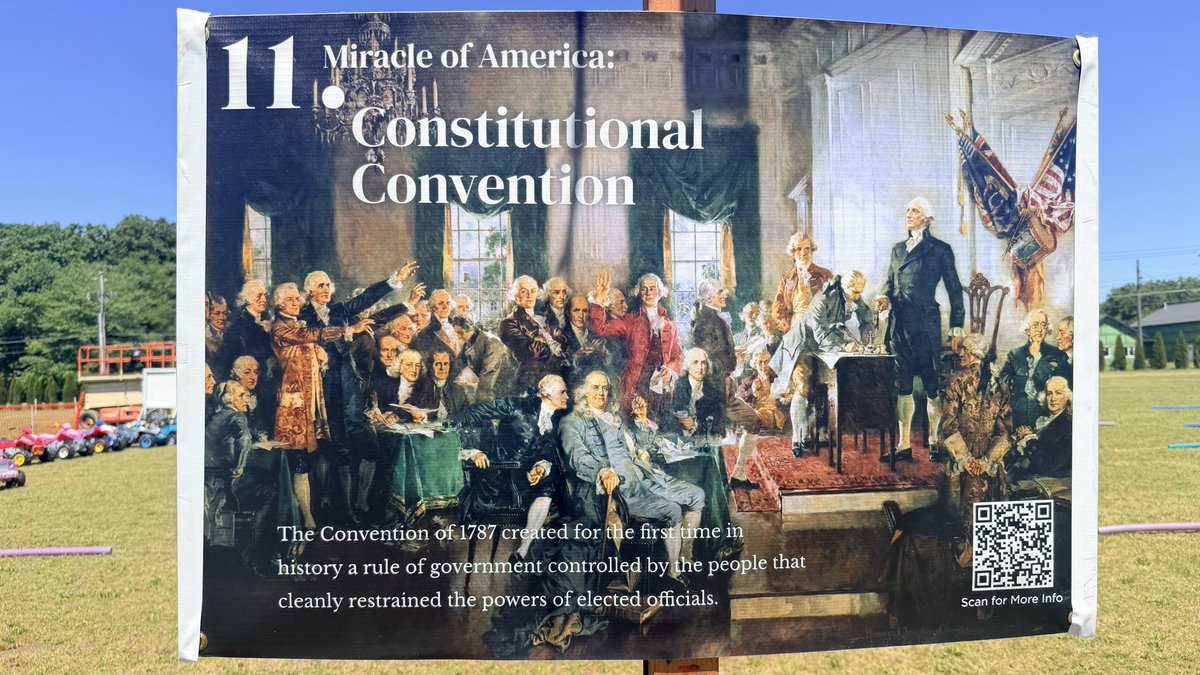
🇺🇸🇺🇸🇺🇸 CELEBRATING AMERICA’S 250TH BIRTHDAY. This weekend, families from across the Tri-State area gathered at the Annual America the Beautiful Festival, presented by The Epoch Times and New Century Festivals at New Century in Port Jervis, NY — a small-town celebration anchoring the run-up to America’s 250th birthday. Local bands played on the open-air stage. Children ran across the grass. Veterans, reenactors, and neighbors mingled under the stars and stripes. No politics. No pageantry. Just a community choosing, on its own, to show up. This is the American spirit in its purest form — voluntary, joyful, generational. It doesn’t need a podium or a slogan. It only needs a stage, a song, and people willing to stand together. Two and a half centuries on, that quiet strength remains the country’s deepest source of unity. Happy birthday, America! 🇺🇸 🎂
2
3
9
531
🇺🇸🇺🇸🇺🇸 CELEBRATING AMERICA’S 250TH BIRTHDAY. This weekend, families from across the Tri-State area gathered at the Annual America the Beautiful Festival, presented by The Epoch Times and New Century Festivals at New Century in Port Jervis, NY — a small-town celebration anchoring the run-up to America’s 250th birthday. Local bands played on the open-air stage. Children ran across the grass. Veterans, reenactors, and neighbors mingled under the stars and stripes. No politics. No pageantry. Just a community choosing, on its own, to show up. This is the American spirit in its purest form — voluntary, joyful, generational. It doesn’t need a podium or a slogan. It only needs a stage, a song, and people willing to stand together. Two and a half centuries on, that quiet strength remains the country’s deepest source of unity. Happy birthday, America! 🇺🇸 🎂
2
5
16
4,796
Aric Chen | Insights retweeted
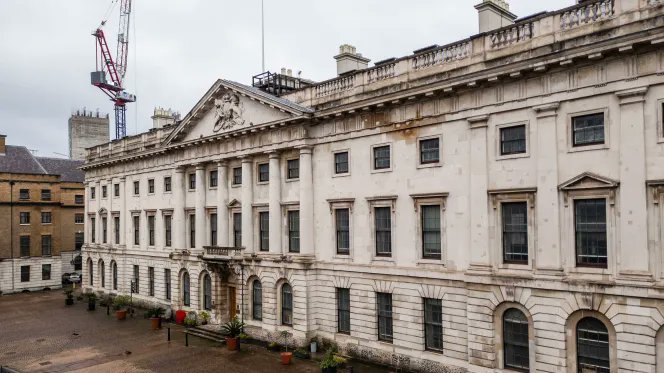
A Chinese Tracker Was Riding in the PM's Car. Britain Approved the Mega-Embassy Anyway. For years, Britain's establishment treated Chinese infiltration as a theoretical risk. This week, the theory met the road. In testimony before the Commons Business and Trade Committee, veteran China hand Charles Parton — twenty-two years of a 37-year diplomatic career spent working on China, Hong Kong, and Taiwan — confirmed what Whitehall had spent years deflecting: the tracking device pulled from a UK government vehicle in 2022 was riding inside the Prime Minister's own car. As reported by the Daily Mail, the bug was buried inside a sealed, Chinese-manufactured component and quietly streamed location data back to China via a cellular module — for an unknown stretch of time. Which Prime Minister? Johnson, Truss, or Sunak — all three sat in that seat during 2022. The answer remains classified. The implication does not: every meeting, every visitor, every late-night swerve from Downing Street, mapped in real time by a hostile state. Then came the second blow. A covert recording device was discovered inside a Whitehall complex housing the Home Office and MHCLG — the very ministry that in January signed off on Beijing's 215,000-square-foot "mega-embassy" at Royal Mint Court. Officials caution that no attribution has yet been confirmed. But the optics are radioactive: the building that green-lit China's largest European outpost was itself bugged. Shadow Chancellor of the Duchy of Lancaster Alex Burghart called the camera discovery "a serious incident that demands urgent investigation." He is understating it. This is two strikes inside the British state's nerve centre — alongside last week's Five Eyes warning that Chinese operatives are baiting UK officials with fake LinkedIn job ads. The strategic question writes itself: how does a government that cannot keep a tracker out of the PM's chassis, or a camera out of its corridors, justify hosting a Chinese embassy compound metres from the fibre-optic spine of the City? Beijing dismisses it as "groundless rumour." London calls it a planning decision. History will likely call it a self-inflicted intelligence catastrophe. Aric Chen Insights
1
60
97
36,879
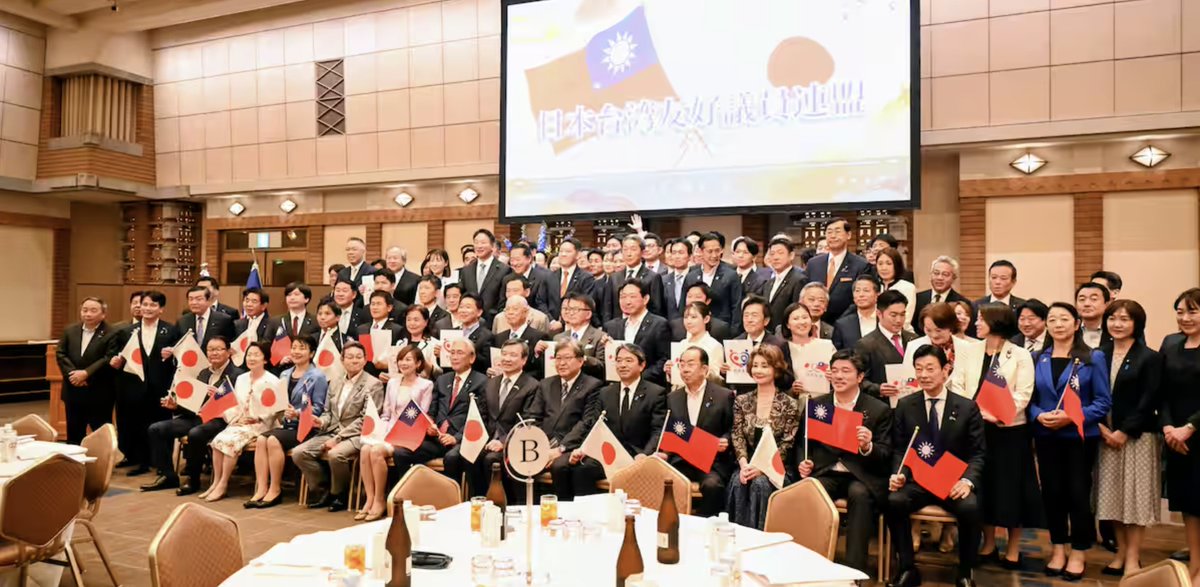
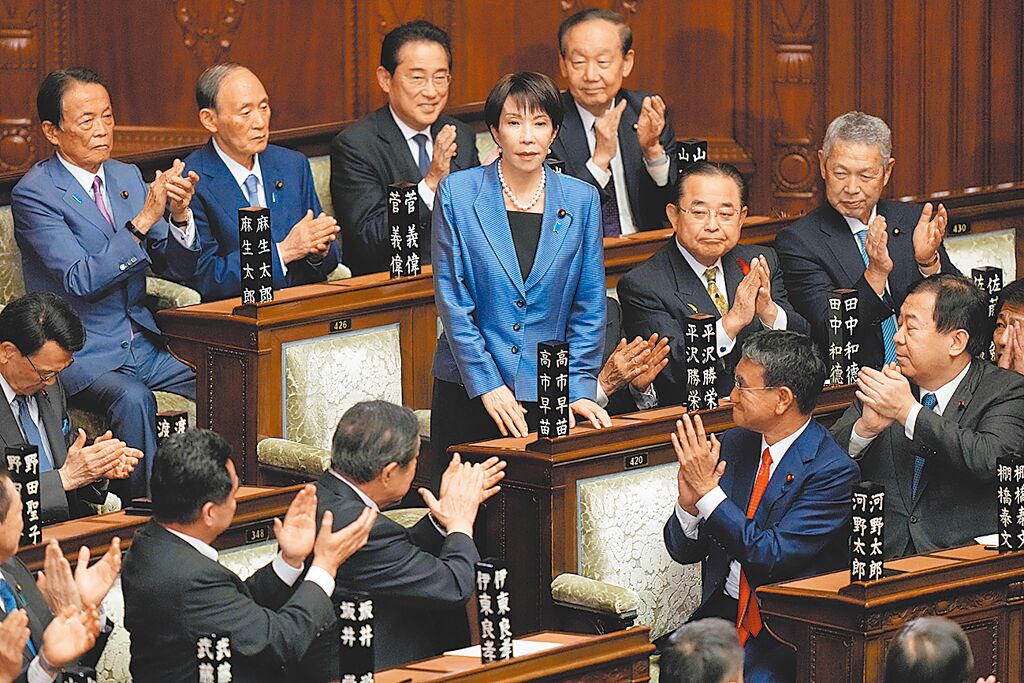
Tokyo Crossed Out "China." Wrote In "Taiwan." 321 Lawmakers Just Buried 53 Years of Diplomatic Fiction. Japan's biggest parliamentary caucus rebranded for democracy — and Beijing's playbook is out of pages. For 53 years, Japan's most powerful pro-Taiwan caucus carried a fossil in its name: "華" (Hua) — the character for the Republic of China, a Cold War euphemism designed to avoid Beijing's tantrums. On June 11, 2026, that fossil was chiseled out. Meeting in Tokyo, the body formerly known as the Japan–China (Hua) Parliamentarians' Consultation Council (日華議員懇談会) voted to rename itself the Japan–Taiwan Friendship Parliamentarians' League (日本台湾友好議員連盟). Chairman Keiji Furuya — the same lawmaker Beijing sanctioned in March for "colluding with Taiwan independence forces" — explained it plainly: "It has finally become what it was always meant to be." To Asahi, he was sharper still: "Now that the Takaichi administration is in place, I decided this was our chance." This is not a cosmetic edit. It is a strategic re-coding. The numbers tell the story. The League now counts 321 lawmakers across both houses — roughly 45% of Japan's 713-seat Diet — a historical high, swelled by about 30 new members in the past year alone. In a parliament where consensus is granular and glacial, this is a tectonic shift. Nearly half of Japan's elected representatives now formally stand with a self-governing democracy Beijing refuses to recognize as one. The timing is sharper still. Furuya is a close ally of Prime Minister Sanae Takaichi — the woman who, on November 7, 2025, became the first Japanese premier to publicly state that a Chinese military strike on Taiwan could constitute a "survival-threatening situation" triggering Japan's right of collective self-defense. Beijing's response — sanctions, démarches, and the freezing of Furuya's nonexistent China assets on March 30 — has not deterred a single lawmaker. It accelerated the migration. CCP coercion is now recruiting Tokyo into the very alignment Beijing tried to prevent. What the new name unlocks. By upgrading from 懇談会 (consultation council, the diplomatic minor leagues) to 議員連盟 (parliamentary league, Japan's standard format for ally-state caucuses), Tokyo has placed Taipei at structural parity with the UK, Australia, Germany, and the United States. According to Sankei, the League also signaled at the same meeting that Japan should correct textbooks still describing Taiwan as Chinese territory — a direct strike against Beijing's most cherished propaganda line. Beijing's reaction is the tell. As of June 12, the PRC Foreign Ministry had issued no on-record statement, deploying its propaganda outlets instead: Global Times dispatched its usual "Chinese expert," who labeled the rename a "deliberate provocation" certain to "draw a firm response." Translation: Beijing has no new lever. The standard playbook — fury, summon the ambassador, threaten retaliation — was burned through in November and March, and it failed. Takaichi did not retract. The League grew. Allies leaned in. When deterrence collapses into recycled threats from anonymous "experts," the loss is structural. The strategic read. This is the most consequential shift in Tokyo–Taipei ties since the 1972 break — executed without altering a single treaty, signed without lifting a single sanction, and impossible for Beijing to legally contest. Japan has just published the template for every democracy still hostage to Beijing's vocabulary: you do not need to abandon One-China to dismantle the One-China narrative. A pen and a parliamentary majority will do. Ottawa, Canberra, London, Berlin, Brussels, Seoul, Taipei — take notes. Beijing's red lines only hold when nobody crosses them. Tokyo just walked across, dropped 53 years of euphemism on the floor, and called the move "natural." That single word — "natural" — should haunt every chancellery still treating Taiwan as a problem to be managed rather than a partner to be named. The page has turned. Aric Chen | Insights
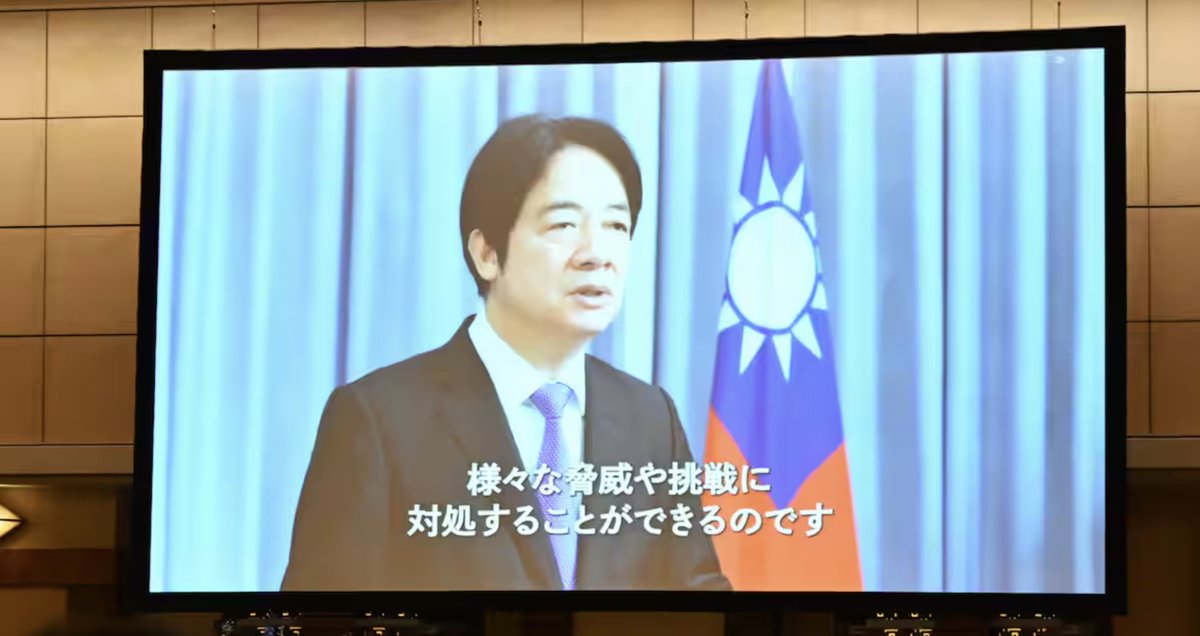
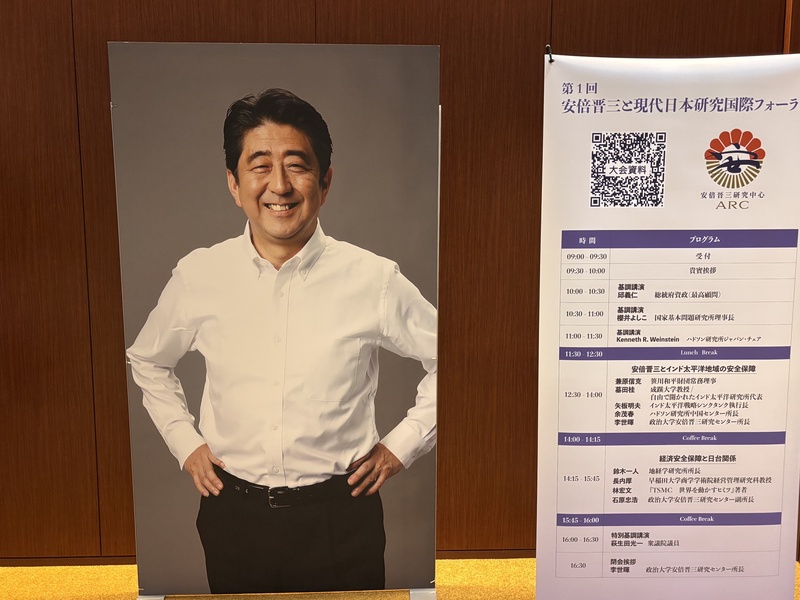
Tokyo Just Carved Abe's Taiwan Doctrine in Stone — and Beijing Can't Do a Thing About It. While Beijing was still mid-tantrum over Sanae Takaichi's "existential threat" doctrine on Taiwan, Tokyo quietly hosted exactly what the Chinese Communist Party would have killed to prevent: the inaugural "Shinzo Abe and Modern Japan Research International Forum," themed "Abe's Grand Strategy and the Taiwan-Japan Relationship as the Cornerstone of the Indo-Pacific." Taiwan's President Lai Ching-te headlined the opening by video on June 9, 2026 — and his message was unmistakable. Abe's strategic estate is now an institution, and the first island chain is hardening into a permanent geopolitical fact. This is not nostalgia. This is doctrine being canonized. On September 21, 2025, the anniversary of Abe's birth, Taiwan's National Chengchi University inaugurated the world's first permanent research center named after the assassinated former premier — an unprecedented honor a sovereign democracy bestows on a foreign statesman. Less than seven weeks later, Takaichi — Japan's first female prime minister and holder of a Diet supermajority — told parliament that a Chinese use of force against Taiwan would qualify as "a survival-threatening situation," the most explicit statutory linkage of Taiwan's fate to Japan's national survival ever uttered by a sitting Japanese PM. Beijing erupted: economic coercion, scrambled diplomatic channels, and on November 8 the now-infamous "dirty neck" post by Xue Jian, China's Consul-General in Osaka — a remark Washington formally characterized as a threat against a sitting allied head of government. Tokyo did not flinch. On December 4, 2025, Japan and Taiwan signed a Digital Trade Agreement — the first major bilateral accord after the row, a calculated middle finger to Beijing's pressure campaign. Six months on, the Abe Center stages its inaugural Tokyo forum with Lai opening it. The signal to Zhongnanhai could not be more brutal: coercion failed. Lai's remarks were tight and surgical. He praised Takaichi for "continuing Abe's vision" via the upgraded Free and Open Indo-Pacific strategy she unveiled at Vietnam National University on May 2, 2026. He named the first island chain. He named shared security challenges. He embedded Abe's signature line — "A Taiwan emergency is a Japan emergency" — into the historical canon. This is no longer one man's brave aphorism. It is Japanese governing doctrine under a prime minister with the political capital to enforce it. Abe served 3,188 days — the longest tenure in Japan's constitutional history — and used that time to dismantle the postwar pacifist firewall: collective self-defense unlocked, CPTPP delivered, the Quad revived, FOIP exported globally. Takaichi inherits this scaffolding and is welding Taiwan into the deterrence architecture in ways Abe himself could only signal. Layer on the US-Taiwan Reciprocal Trade Agreement signed February 12, 2026, Taiwan's $250 billion commitment to US semiconductor and AI investment, and TSMC's Kumamoto build-out — and the trilateral US-Japan-Taiwan industrial bloc is now physical infrastructure, not whitepaper. Beijing's playbook — punish Japan, isolate Taiwan, peel Tokyo from Washington — has produced the opposite outcome on every axis. Each act of coercion accelerates institutional binding. Each diplomatic outburst hardens Japanese public opinion. Each Taiwan Strait incursion makes Takaichi's existential-threat doctrine more defensible at home. The Abe Forum in Tokyo is not a conference. It is a tombstone — for the strategic ambiguity Beijing once exploited, and for the illusion that Japan's Taiwan posture can be reversed by tantrum. But the coercion failure is the easy half of the story. The hard half — why Beijing's loss is now structural, irreversible, and accelerating — needs a longer canvas. Full intelligence brief below ⬇️
5
10
33
7,445
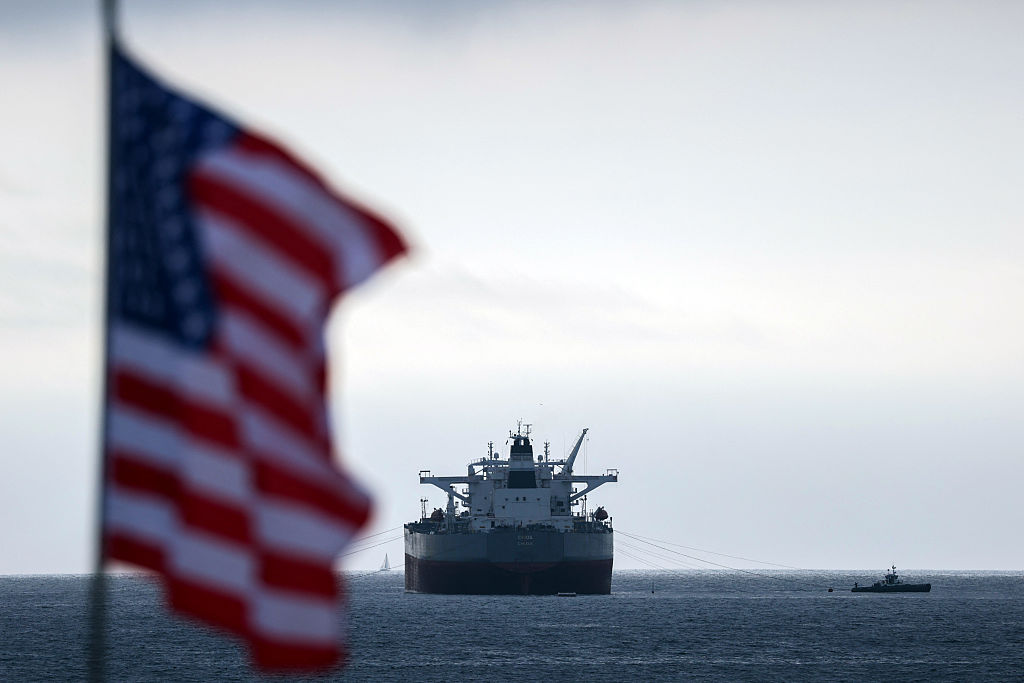
The 10.5 Million-Barrel Power Shift: Washington's New Geopolitical Weapon For the first time in modern history, the United States is the world's largest oil exporter — and it isn't even close. Ship-tracking data from Vortexa, confirmed by Reuters, shows U.S. crude and fuel shipments hit roughly 10.5 million barrels per day in May 2026, the third straight month of American dominance. Russia trailed at 7 million bpd. Saudi Arabia — the petrostate that once dictated terms to Washington — managed just 5.9 million. Rewind one year: Riyadh shipped 8.1 million bpd in 2025 against America's 6.6 million. That gap has collapsed in five months. Two forces did the work. The U.S.-Iran war, raging since late February, has snarled Saudi flows through the Strait of Hormuz, while Ukrainian drone strikes and U.S. sanctions continue to throttle Russian crude. The Trump administration accelerated the swing in March by releasing 172 million barrels from the Strategic Petroleum Reserve. Underneath it all sits the shale base: U.S. crude and liquids output has nearly tripled since 2000 to roughly 22 million bpd. Make no mistake — this is not a market story. It is a power story. Asia, historically tethered to the Gulf, took some 46% of U.S. exports in May. Europe now leans on Houston more than Riyadh. Even Rosneft chief Igor Sechin conceded U.S. firms were the "biggest beneficiaries" of Hormuz disruptions. The UAE walked out of OPEC on May 1 after 59 years. The cartel's pricing power — the backbone of authoritarian petro-budgets in Moscow, Tehran, and Caracas — is crumbling in real time. For Washington, energy now joins the dollar and the Pentagon as the third pillar of leverage. For Beijing — import-dependent and watching every chokepoint — the message is unmistakable: the supply chain runs through America now. Aric Chen Insights
4
7
13
7,350
The war on drugs is a covert battlefield launched by the Chinese Communist Party. Countries around the world must clearly recognize that this is a massive conspiracy by the Chinese Communist Party to undermine the very foundations and lifeblood of other nations! This is a war without gunfire, and we must win this battle if we are to survive!
My sincere thanks to @HouseForeignGOP for inviting me to address this topic of great policy and personal importance.
2
3
9
397
In today’s world, where information warfare is rampant, we must be very careful about the information we encounter. As a result, independent and truthful news is truly a rare commodity these days. I hope everyone will exercise discernment. With so much conflicting information circulating, it’s best to rely on official sources. ⬇️
3
2
10
588
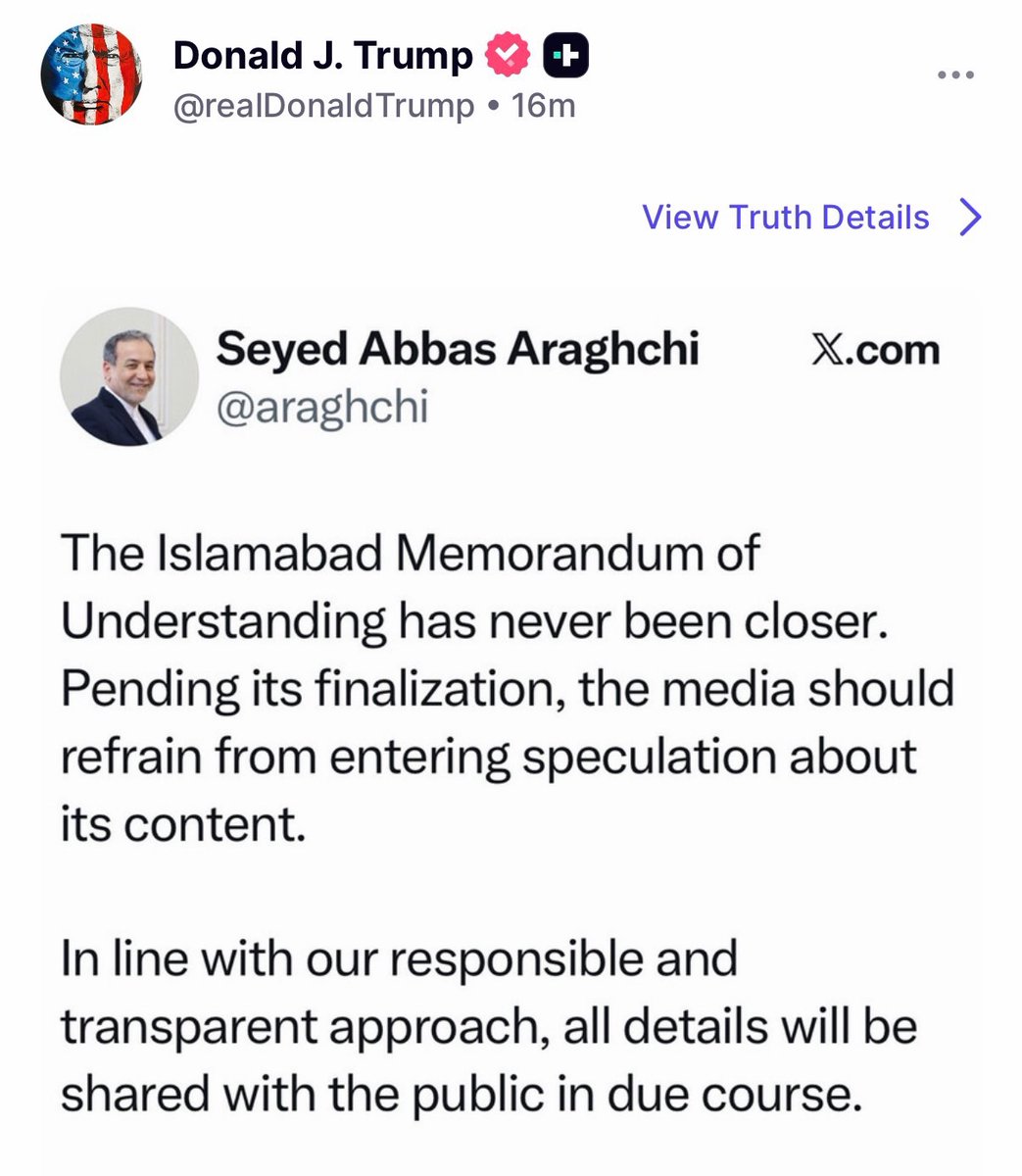
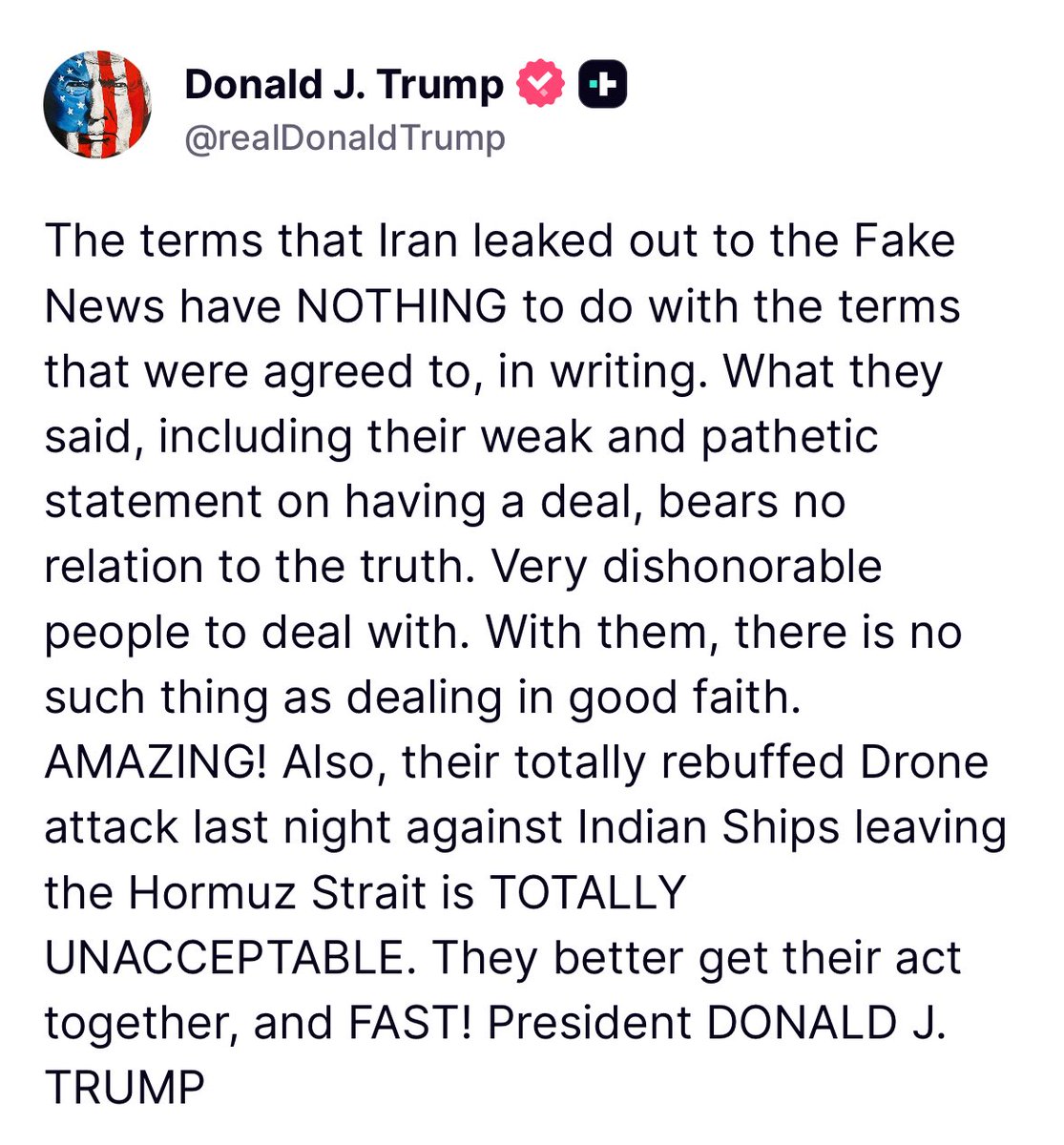
President Trump reposted Araghchi's X post on Truth Social.
3
1
7
424
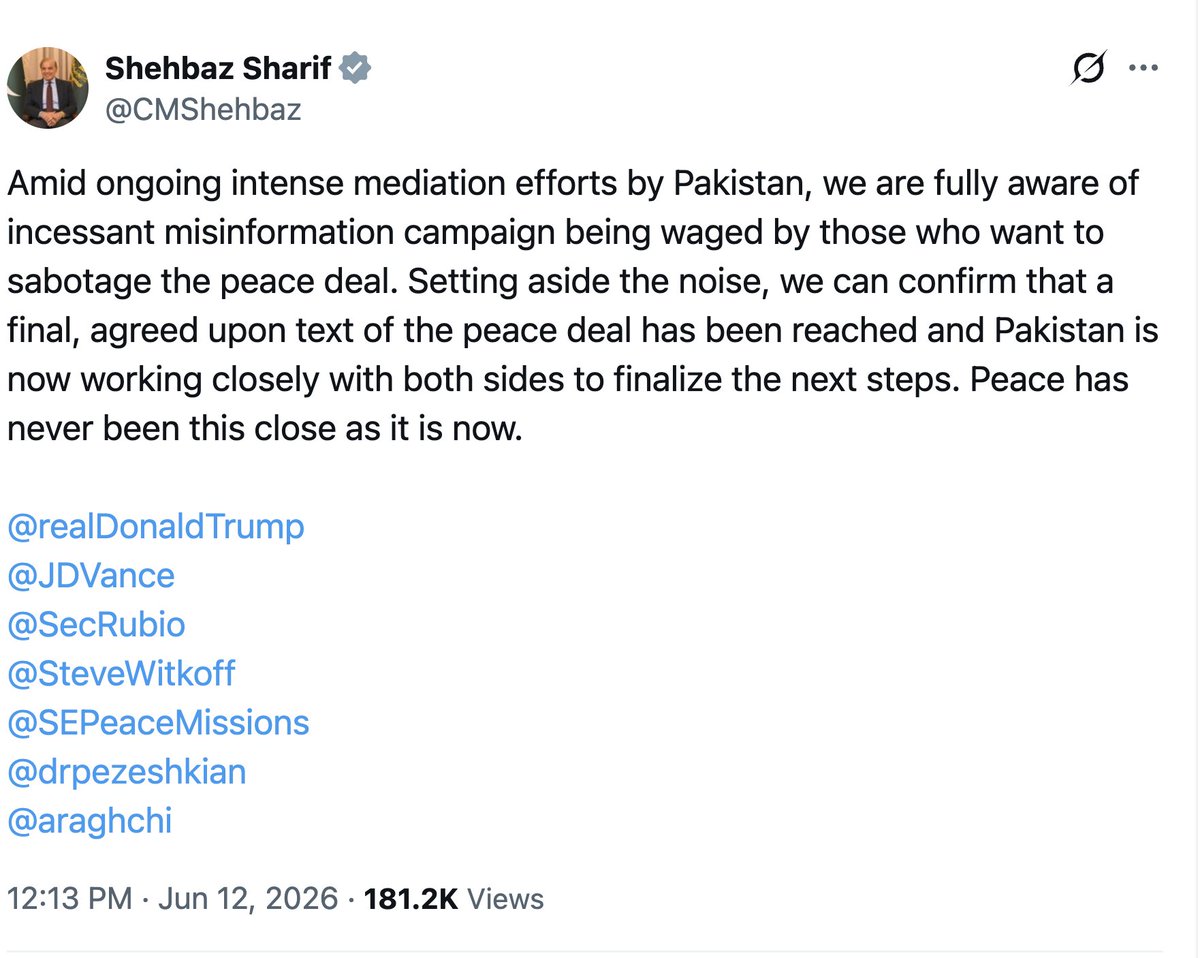
Prime Minister of Islamic Republic of Pakistan: Setting aside the noise, we can confirm that a final, agreed upon text of the peace deal has been reached and Pakistan is now working closely with both sides to finalize the next steps. Peace has never been this close as it is now.
2
214
Beijing wanted to silence one man. Instead, it handed him a global megaphone — and broadcast its own weakness to every capital watching. On June 11, 2026, China's Foreign Ministry sanctioned Philippine Defense Secretary Gilberto Teodoro Jr., his wife Monica Louise "Nikki" Prieto-Teodoro — Manila's special envoy to UNICEF — and their child, barring the family from mainland China, Hong Kong, and Macao, and freezing all Chinese commercial dealings with them. The "crime"? Telling the truth. Teodoro's reply, delivered within 24 hours, was textbook moral clarity: "That is truly what they do to those who speak the truth against their deception. Their own countrymen and the others under their control suffer far worse." He vowed to keep defending the nation "in the face of the wickedness they are committing here and even in our seas." This is the man who branded Beijing's ten-dash claim "the biggest fiction and lie," called the CCP a "schoolyard bully," and at Shangri-La named the PRC a "significant threat" with no sign of long-term goodwill. Punishing a sitting defense minister — and dragging a UNICEF envoy and a child into the blast radius — is not strength. It is the tantrum of a regime that cannot win the argument. And the coercion is no longer working in isolation. Manila called it "an unfriendly act." Tokyo and Manila are advancing maritime boundary talks east of Taiwan. From Vilnius to Canberra, every sanctioned legislator, every blacklisted minister becomes a node in a hardening democratic immune response. Teodoro will be remembered as the defense chief who refused to flinch — and the moment the bully blinked. @dndphl Aric Chen Insights
15
66
200
15,749
Xi Wore Glasses in Pyongyang. Beijing Wants You to Un-See It. On June 8, Xi Jinping slipped on a pair of thin-rimmed spectacles to watch a song-and-dance performance at the Pyongyang Gymnasium. By June 9, Beijing's propaganda machinery was busy scrubbing the frames from the record. North Korea's KCNA published the candid image — Xi squinting through glasses, Peng Liyuan beside him in thick rims. Xinhua and CCTV released their own coverage of the same evening, but the angles are surgical: stage shots, performer close-ups, and a curated audience cutaway that conveniently excludes the eyewear. Chinese social media searches return nothing. This is not optics management. This is the architecture of a personality cult. Xi turns 73 next week. In a system where the supreme leader's height, hair color, and now reading glasses are officially nonexistent, the question is not why Beijing censored a photo. The question is what else gets erased — and what that habit costs a country of 1.4 billion when reality eventually breaks through. Recall the playbook: Hu Jintao escorted off the 20th Party Congress stage in 2022, then vanished from Weibo searches within minutes. Mourning for former Premier Li Keqiang in 2023, throttled online almost as fast as it appeared. In Xi's China, no inconvenient fact is allowed to remain a fact. The irony is exquisite. Pyongyang — the world's most opaque regime — just outed Beijing on transparency. Kim Jong Un's state agency published what Xi Jinping's state agency would not. When North Korea makes you look closed, you have a problem. A pair of glasses is not a state secret. A regime that thinks it is — is something else entirely. Aric Chen Insights
5
12
50
2,356
🚨🐎 Oolong Tea Trojan Horse: Taiwan's Largest-Ever Drug Bust Is a CCP Fingerprint 1,867 kilograms of ketamine. NT$3 billion street value. Packaged as oolong tea. The supply chain leads to one address — and democracies need to start naming it. This was not a drug bust. It was a strategic warning shot — and the democratic world needs to read it that way. On June 9, 2026, Taiwan's Coast Guard Administration (CGA) confirmed the largest fishing-vessel narcotics seizure in the island's history: 1,867.3 kilograms of ketamine, street value NT$3 billion (US$95 million), recovered from a Pingtung-registered trawler interdicted off Taiwan's southern coast in January. Investigators found 85 waterproof burlap sacks hidden in a fish hold forward of the wheelhouse, containing 1,695 one-kilogram packages disguised as Tieguanyin oolong tea. A handheld Raman spectrometer confirmed Category 3 narcotic. The boat's owner (surnamed Kuo) and a crewman (surnamed Chiu) were transferred to the Pingtung District Prosecutors' Office. The numbers alone are staggering. The strategic context is where the real story lives. Ketamine flowing toward Taiwan's southern shore does not materialize from nowhere. Beijing's own Ministry of Public Security states — in its annually published drug situation reports — that ketamine entering the region transits "China's southeast coast" en route to Hong Kong and Taiwan. The U.S. intelligence community's March 2026 Annual Threat Assessment designates the PRC as a primary global source country for the precursor chemicals behind methamphetamine, ketamine, fentanyl, and nitazenes. The Congressional Research Service confirms PRC-based chemical companies and PRC nationals have been indicted by U.S. authorities over the past decade for trafficking synthetic-drug precursors, pill-pressing equipment, and related money laundering. When nearly two metric tons of high-purity ketamine arrive on Taiwan's coast via maritime handoff, the question of upstream origin is not speculative — it is documented. This is not a criminal incident. It is a node in a strategy. For two decades, the CCP has refined a hybrid warfare doctrine pairing military coercion with what PLA doctrinal literature — including the Science of Joint Operations textbook — explicitly terms "non-kinetic" instruments: cyber operations, electronic warfare, disinformation, cognitive operations, transnational repression, economic coercion, and the deliberate erosion of social resilience inside adversary societies. The CCP Central Military Commission's "Three Warfares" doctrine — public opinion, psychological, and legal warfare — has been operational since 2003. Two tons of ketamine routed into a democracy of 23 million already battling a synthetic-drug epidemic among its young people is not a profit motive. It is a population-grade pressure weapon. Call it what it is: the soft-kill variant of the chilling rhetoric heard for years in Beijing's hawkish circles — "keep the island, lose the people." And the same pipeline runs through every democracy that matters. The precursor chemicals feeding Taiwan's smuggling vessels feed the fentanyl morgues in Vancouver, the ketamine emergency rooms in Sydney, the methamphetamine seizures in Tokyo and Seoul, and the overdose statistics in every American city the second Trump administration has now formally addressed under Executive Order 14367 (December 2025), which designates illicit fentanyl and its core precursor chemicals as Weapons-of-Mass-Destruction-class threats. This is not metaphor. It is U.S. executive policy. The PRC is the upstream factory. Taiwan is simply the closest target — and the canary. For Washington, Tokyo, Seoul, Canberra, Brussels, Ottawa, London: sanction the PRC chemical suppliers. Designate the trafficking networks. Coordinate maritime interdiction across the first island chain. Reinforce Taiwan's CGA with shared intelligence, vessels, and sensor capability. Treat the precursor trade as what U.S. intelligence already calls it — a WMD-grade threat from a single state actor. Beijing is running a war you can already see on the autopsy table. The only question is who is still pretending not to notice. Aric Chen Insights x.com/Baoliaogeming64/status…

3
37
59
3,419
Aric Chen | Insights retweeted
A spy camera was hidden inside a UK government building. In the very office where China's massive embassy in London was approved. Democracies all need to wake up to China's espionage operations. This is happening in the UK the US, Canada etc...
A Chinese Tracker Was Riding in the PM's Car. Britain Approved the Mega-Embassy Anyway. For years, Britain's establishment treated Chinese infiltration as a theoretical risk. This week, the theory met the road. In testimony before the Commons Business and Trade Committee, veteran China hand Charles Parton — twenty-two years of a 37-year diplomatic career spent working on China, Hong Kong, and Taiwan — confirmed what Whitehall had spent years deflecting: the tracking device pulled from a UK government vehicle in 2022 was riding inside the Prime Minister's own car. As reported by the Daily Mail, the bug was buried inside a sealed, Chinese-manufactured component and quietly streamed location data back to China via a cellular module — for an unknown stretch of time. Which Prime Minister? Johnson, Truss, or Sunak — all three sat in that seat during 2022. The answer remains classified. The implication does not: every meeting, every visitor, every late-night swerve from Downing Street, mapped in real time by a hostile state. Then came the second blow. A covert recording device was discovered inside a Whitehall complex housing the Home Office and MHCLG — the very ministry that in January signed off on Beijing's 215,000-square-foot "mega-embassy" at Royal Mint Court. Officials caution that no attribution has yet been confirmed. But the optics are radioactive: the building that green-lit China's largest European outpost was itself bugged. Shadow Chancellor of the Duchy of Lancaster Alex Burghart called the camera discovery "a serious incident that demands urgent investigation." He is understating it. This is two strikes inside the British state's nerve centre — alongside last week's Five Eyes warning that Chinese operatives are baiting UK officials with fake LinkedIn job ads. The strategic question writes itself: how does a government that cannot keep a tracker out of the PM's chassis, or a camera out of its corridors, justify hosting a Chinese embassy compound metres from the fibre-optic spine of the City? Beijing dismisses it as "groundless rumour." London calls it a planning decision. History will likely call it a self-inflicted intelligence catastrophe. Aric Chen Insights
10
237
447
13,752
The CCP's $2 Trillion Laundromat: How Beijing Became the Cartels' Favorite Banker The U.S. House Financial Services Subcommittee just put it on the record: Chinese Money Laundering Networks (CMLNs) are now the dominant financial pipeline for Mexican drug cartels. The scale is staggering — and Beijing's fingerprints are everywhere. THE NUMBERS DON'T LIE: • $2 trillion — annual illicit proceeds laundered through China-linked networks, roughly half of the global total • 1–2% — CMLN commission rates, demolishing the old Colombian black-market model (~15%) with near-instant transfers • 99.9% — global AML enforcement failure rate, per retired U.S. Treasury Special Agent John Cassara • 11 of 12 — transnational crime categories where the "CCP bloc" ranks #1, from fentanyl precursors to forced organ harvesting • 40,000 — shell companies still operating inside the United States, per Rep. Zach Nunn Beijing's $50,000-per-person forex cap manufactured an insatiable underground demand for U.S. dollars. The cartels had dollars to dump. The marriage was inevitable. WeChat Pay, Alipay, mirror swaps, crypto, trade-based laundering, real estate — every channel weaponized. Fentanyl precursors flow west; dirty cash flows east. Fentanyl is now the leading cause of death for Americans aged 18–45. This is not street crime. This is what Leland Lazarus calls the "Silk Road of Crime" — and it now runs through Brazil (PCC network, $190M in 7 months), Chile's free trade zones, Canada, and California (Operation Fortune Runner, $50M laundered for the Sinaloa Cartel). Cassara is blunt: under CCP rule, the PRC has become the planet's largest transnational criminal actor. The threat isn't the Chinese people. It's a party-state that has fused governance with organized crime. Washington finally named the pipeline. The question is whether it will move at Beijing's speed — or stay one financial cycle behind, again. Aric Chen Insights
6
74
133
5,466
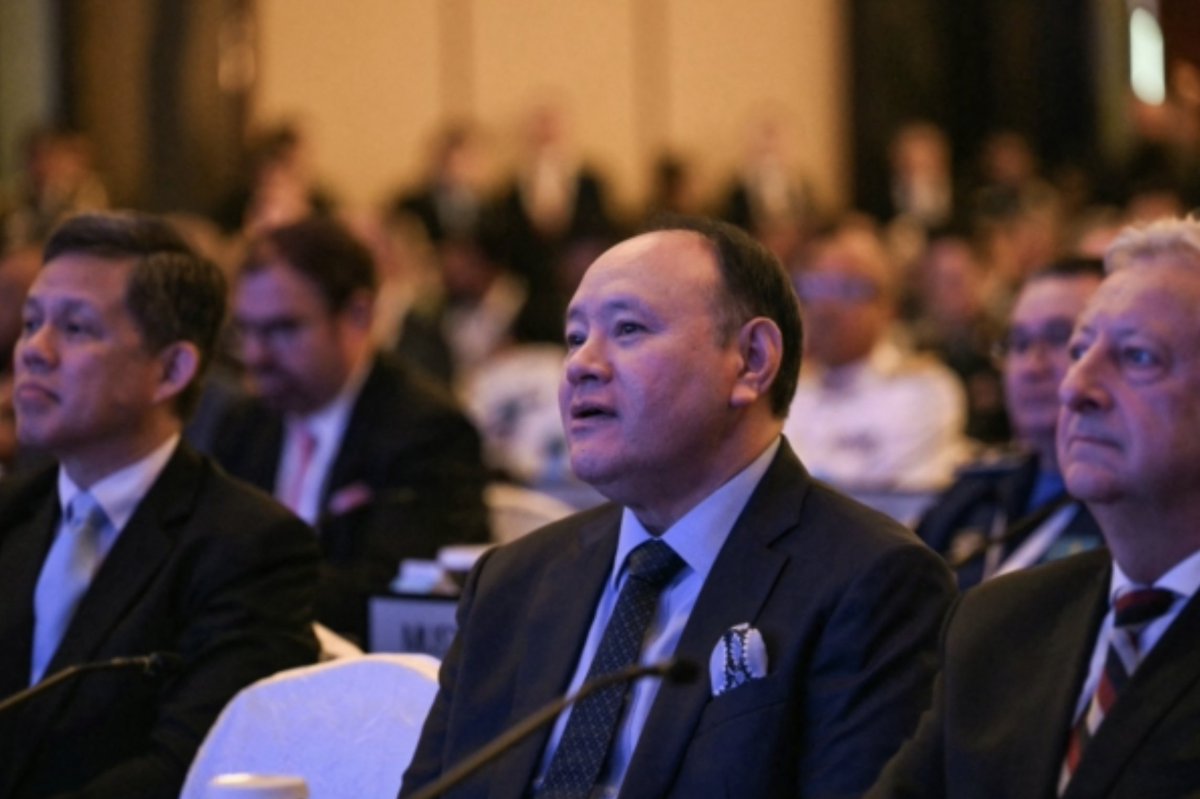
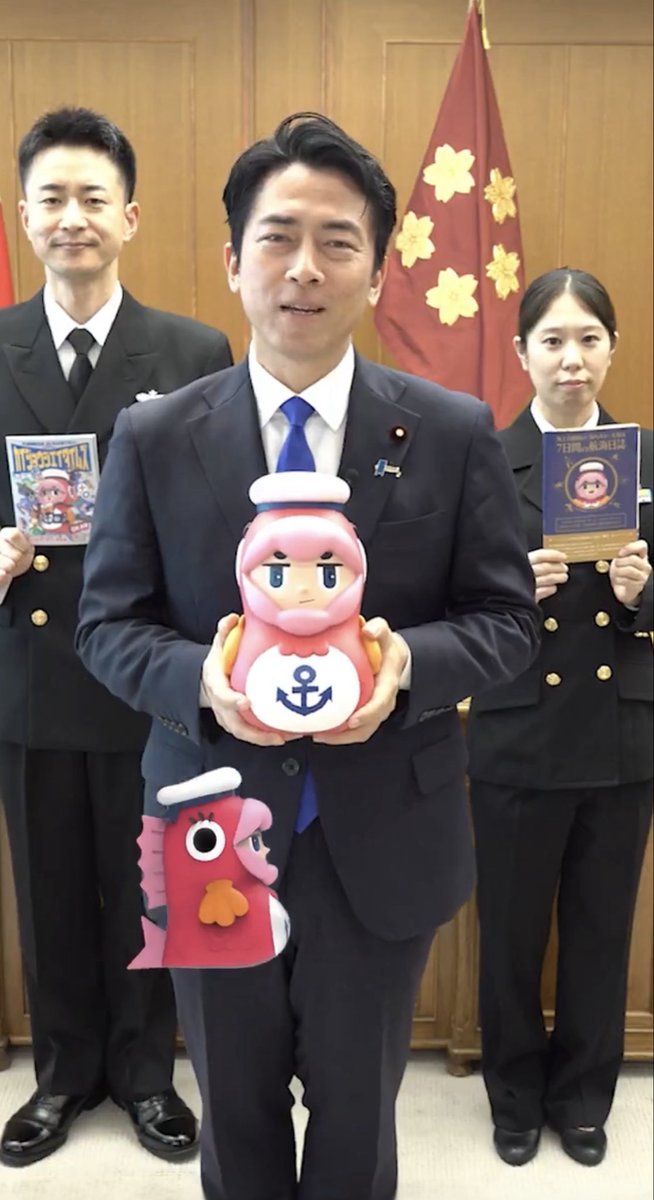
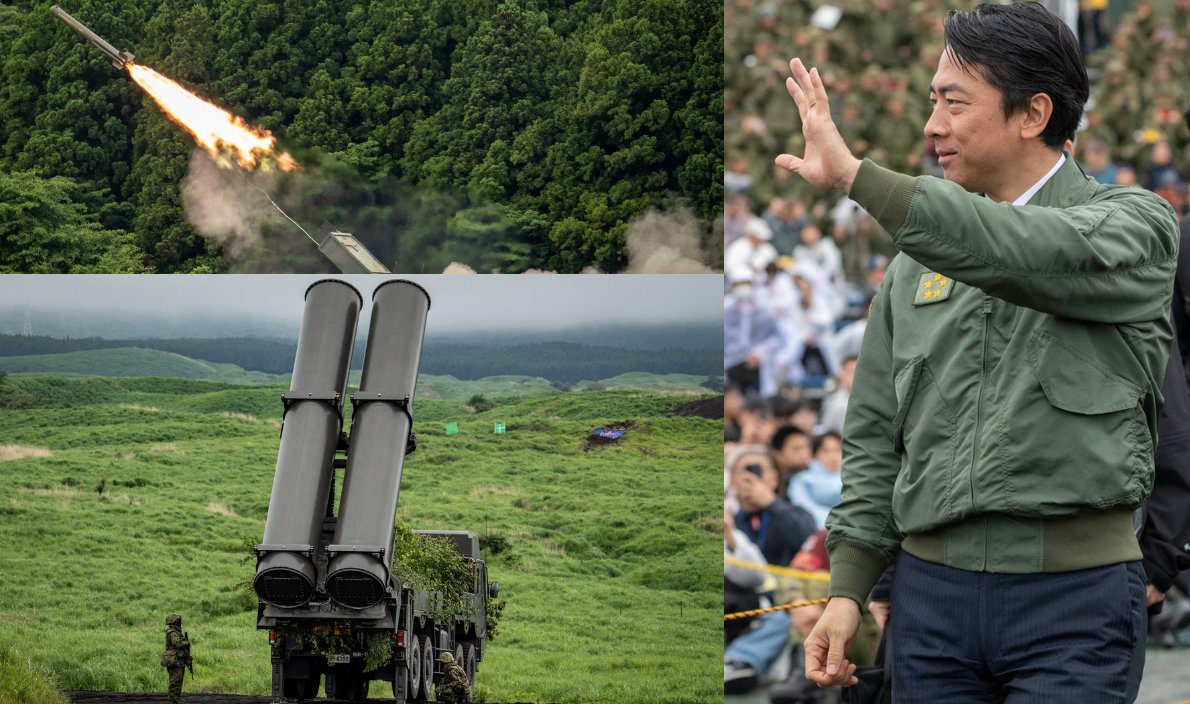
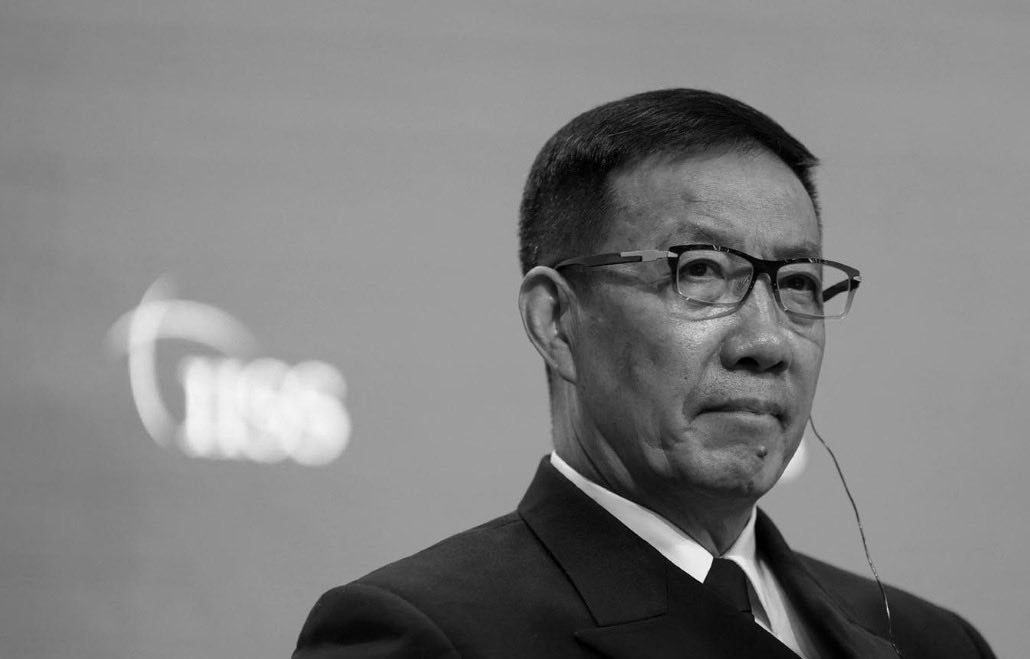
In democratic countries, officials sometimes feel very down-to-earth and are genuinely loved by the public. Just look at Japan’s Defense Minister Shinjiro Koizumi holding this adorable little figurine. Would Dong Jun, the Defense Minister of a totalitarian communist regime, ever do something like this? I recall President Trump once said that when people around the CCP leader meet him, they don’t dare to move a muscle. That probably says it all. x.com/JMSDF_PAO/status/20649…
6
8
50
1,255
And for organ transplants, right? The most evil thing on this planet!
A growing number of foreigners are traveling to China for life-saving treatments, including for cancer, because it's often cheaper and more readily available bloomberg.com/news/features/…
5
9
25
1,382
Aric Chen | Insights retweeted
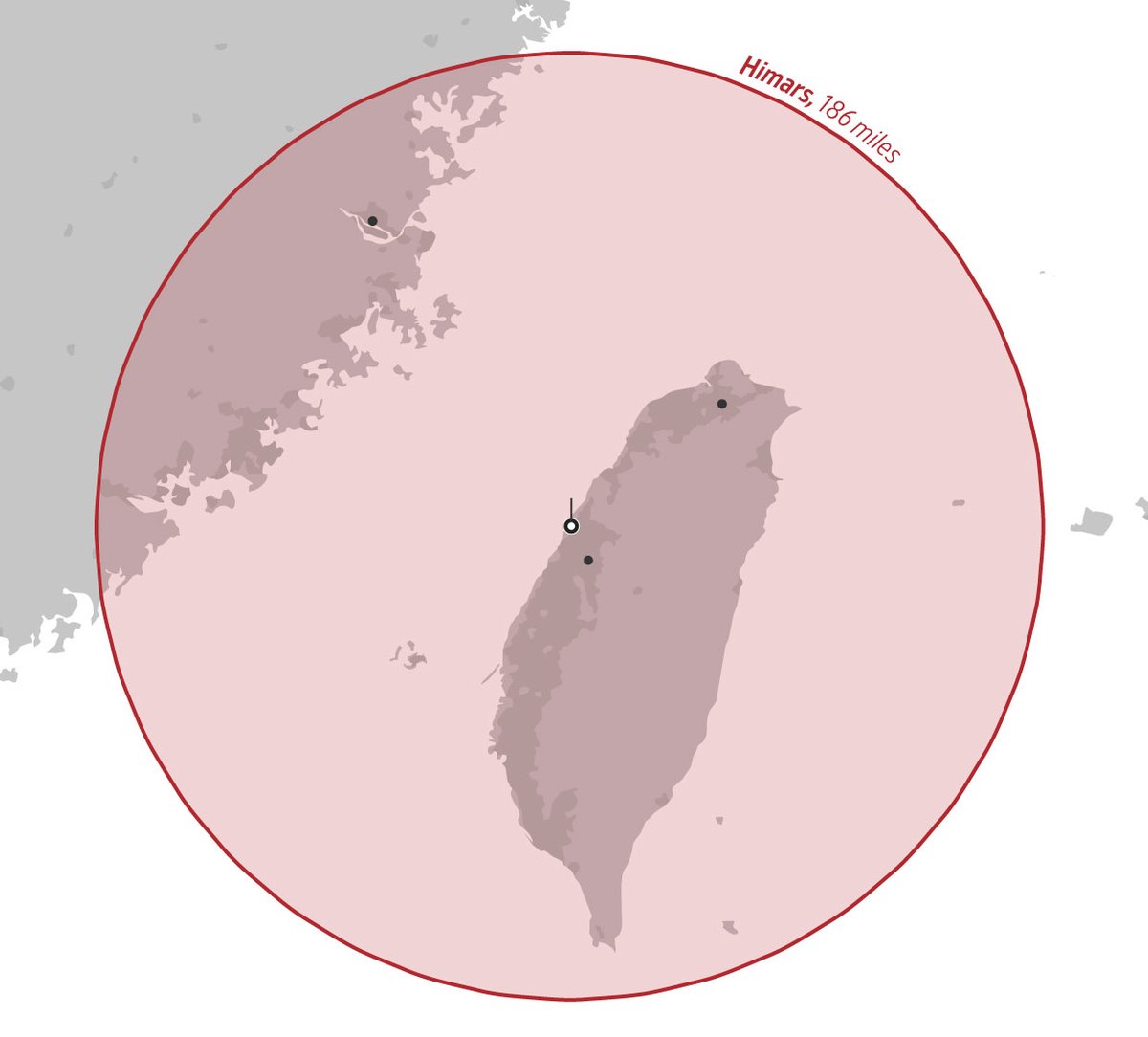
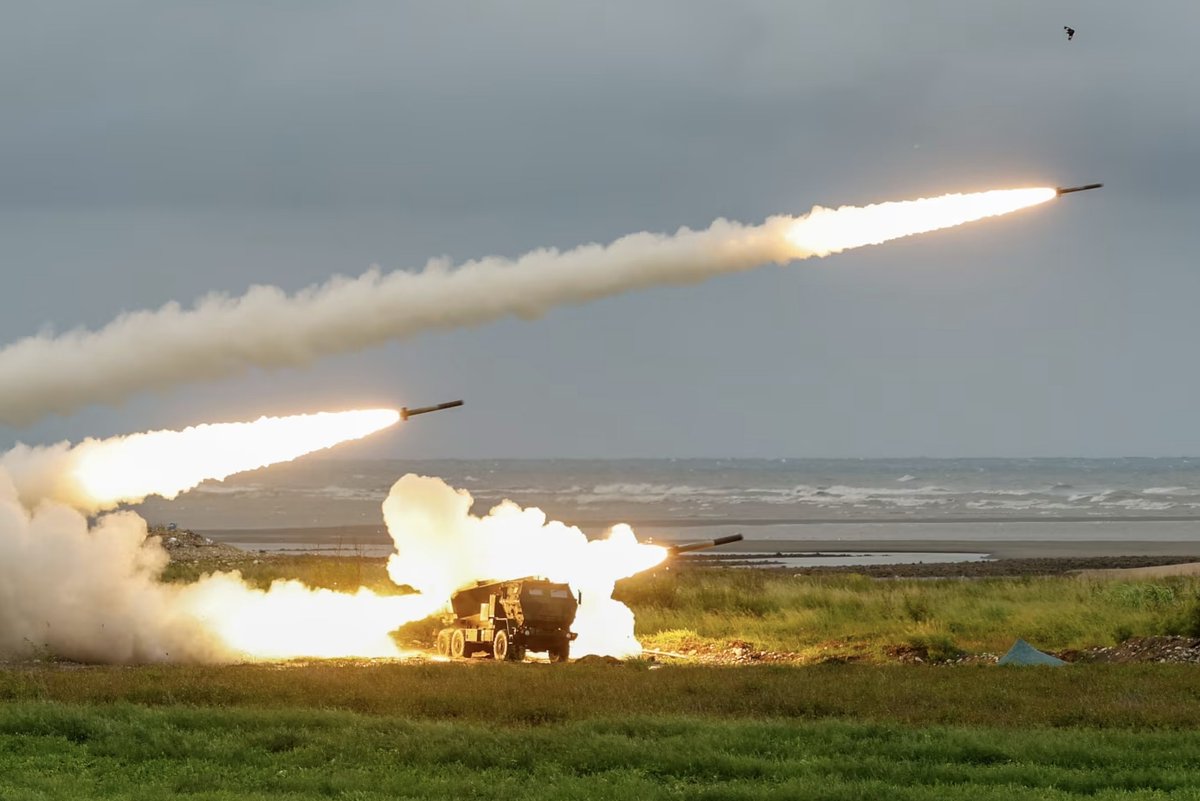
The CCP's Paper Tiger Mask Just Slipped — Taiwan's HIMARS Light Up the Strait. Beijing's "paper tiger" has roared for three decades. On June 10, 2026, Taiwan answered with 32 American rockets streaking straight into the Taiwan Strait — and the tiger blinked. For the first time, Taiwan's military fired U.S.-supplied HIMARS launchers from its west coast, at the Dajia River estuary in Taichung — the exact mudflats Chinese amphibious planners have war-gamed as a primary landing beach. One day earlier, Taiwan unleashed its domestically built Thunderbolt-2000 multi-rocket system in the same exercise. The "shoot-and-scoot" doctrine — fire, vanish, reload — guts the PLA's foundational fantasy: a decisive opening salvo against a static target. The math is brutal for Beijing. HIMARS' ~300 km range puts Fuzhou, Xiamen, and PLA Eastern Theater bases inside the kill box. Add December's $4 billion package — 82 more HIMARS and 420 ATACMS — and Taiwan's "porcupine" finally has quills that strike back. Ukraine has already proven the system: Russian ammo dumps, command nodes, warships — shredded. Beijing's Taiwan Affairs Office sneered that the drill was "putting on an act and bluffing." Pure projection. The real act is Xi Jinping's decade-plus choreography of invincibility — a script CCTV staged again in December by airing video of PLA artillery "destroying" Taiwan's HIMARS. As retired U.S. Marine Colonel Grant Newsham put it: when the CCP complains, it confirms. The louder Beijing shrieks, the more it advertises which weapons actually scare it. The bigger picture: U.S.-Taiwan defense ties are ironclad. December's record $11.1 billion arms package — anchored by 82 HIMARS, 420 ATACMS, 60 M109A7 howitzers, drones and Javelins — is the largest single sale to Taipei in history, with a further $14 billion tranche on deck. Bipartisan resolve in Washington and battlefield reality on the ground tell Beijing the same story: the porcupine is growing quills faster than the dragon can sharpen claws. Meanwhile, KMT chairwoman Cheng Li-wun, fresh off April face-time with Xi in the Great Hall of the People, peddles "1992 consensus" submission across D.C. think tanks as statesmanship — a pitch Washington's strategic community is meeting with the skepticism it deserves. The paper tiger is real. But paper burns. Taiwan just struck the match. Aric Chen Insights | Views are my own. ©️ 2026 Aric Chen #Taiwan #HIMARS #CCP #China
🚨🇯🇵 Beijing Cannot Shoot This Down. Tokyo Just Showed It Anyway! 🗻 At the foot of Mount Fuji on Sunday, Japan rolled out a launcher it had kept off the parade ground since its formal deployment in March. Tarp off. Cameras rolling. Defense minister on hand. No live shot — just the launcher itself, parked in the open. That was enough. The Japanese state did not need to fire the missile to deliver the signal. It only needed to confirm that the system is real, that it is fielded, and that Beijing has run out of room to pretend it isn't. The weapon is the Type 25 High Velocity Gliding Projectile — 25HVGP — Japan's first operational hypersonic boost-glide missile. Speeds in excess of Mach 5. A quasi-ballistic boost phase that transitions into a hypersonic glide segment maneuvering laterally on the way down. That maneuver is the entire point. Current Chinese surface-to-air systems — the HQ-9 family, the newer HQ-22 — are built around aircraft and cruise-missile threat profiles. A boost-glide vehicle maneuvering laterally through the upper atmosphere at five-plus times the speed of sound is a different physics problem. The geography is unambiguous. Block 1 is fielded at Camp Kengun in Kumamoto and at Camp Fuji. From northern Kyushu, the strike arcs reach across the East China Sea — PLA Eastern Theater naval ports, the amphibious lift Beijing would need to surge for any cross-strait or southwestern islands move. Stack that on top of the simultaneously deployed Type 25 Surface-to-Ship Missile, with a published range of roughly 1,000 kilometers, and the picture for the PLA Navy gets harder to look at. The man who flew the flag for it was no accident either. Defense Minister Shinjirō Koizumi — son of a former prime minister, Columbia-educated, seven months into the Takaichi cabinet — has spent the spring publicly mocking Beijing's "Japanese militarism" line, pointing out that the country lecturing Tokyo on the subject happens to be the one with the vast nuclear arsenal and strategic bomber fleet. He did not need to speak at Higashi-Fuji. The launcher spoke for him. And it did not happen in isolation. On April 21, the Takaichi cabinet revised the Three Principles on Transfer of Defense Equipment and Technology, clearing the sale of lethal Japanese military equipment — fighter jets, warships — to seventeen partner countries. That is a quiet revolution in a postwar policy that had stood since 1976. The same defense-industrial base now showing its hypersonic launcher is the base Tokyo has formally decided to make available to allies it chooses. Chinese state media gave the game away last year. The PLA's own English-language outlet described the 25HVGP's 2025 debut as exposing Japan's "malicious intention" — translation: the PLA understood, correctly, that the weapon is designed and fielded to defeat the exact plan the PLA itself war-games against the Nansei Islands and against Taiwan. Xi Jinping's recent Pyongyang run was part of the adjustment. Consolidating an authoritarian axis because the democratic one around China is hardening faster than expected. The Fuji demonstration is one more reason the calculation in Zhongnanhai keeps getting harder. The stall game just ran out. The launcher is in the open. The next time it moves, it may not be to a parade ground. Full analysis in the X Article below ↓ Verified data, the strike arcs Beijing is now inside of, the political read on Koizumi and Takaichi, and the strategic signal Beijing is being forced to decode. The live-fire exercise photo set is the part wire copy will not give you — do not miss the imagery. Original article by me @aricchen. Views are my own — welcome to discuss! © 2026 Aric Chen
8
33
111
9,381