Researcher studying nonequilibrium thermodynamics, info theory, origin of life, complexity. Currently at U Pompeu Fabra in Barcelona. @artemyte.bsky.social
Joined July 2014
- Tweets 149
- Following 389
- Followers 914
- Likes 739
15 Photos and videos

Artemy Kolchinsky retweeted

Jun 9
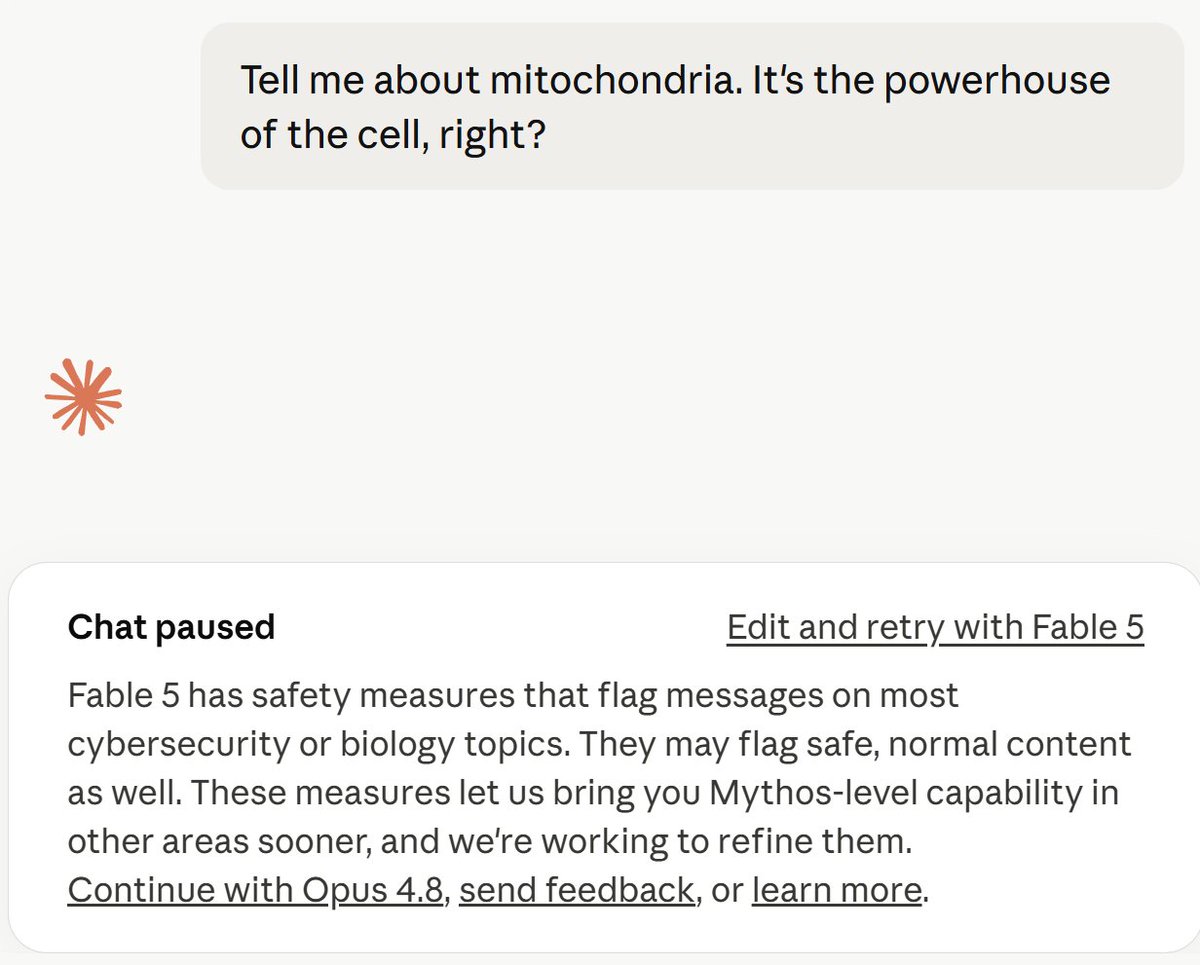
You're not even allowed to ask Fable about basic biology questions, let alone anything that could potentially be dangerous.
410
462
11,699
1,073,018
Artemy Kolchinsky retweeted

Jun 9
I'm so very sad to hear of the passing of Inman Harvey. He was my PhD examiner in 1999 (he passed it!), and a mentor, inspiration and friend not just to me but to a whole generation (and more) of Artificial Life researchers. He will be very sorely missed, but his legacy lives on.
2
4
357
Artemy Kolchinsky retweeted
D3の永山くんの新作です。Artemyさんとの共著です。
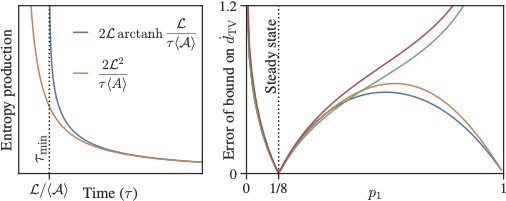
Ornstein–Uhlenbeck過程における、散逸と振動の(dissipation-coherence)トレードオフおよび、行列の非正規性に基づいた緩和の加速の双方を一度に表現可能な、振動-非正規性に基づく定常エントロピー生成率の新分解法です。
arxiv.org/abs/2606.07263
1
12
64
7,859
Artemy Kolchinsky retweeted

May 1
Our new work on arXiv🔥
We introduce the geometric complexity for reset maps and uncover a dynamics-independent trade-off relation between complexity and error, which can be regarded as a generalized geometric third law of thermodynamics.
arxiv.org/abs/2604.27858
2
36
184
13,272
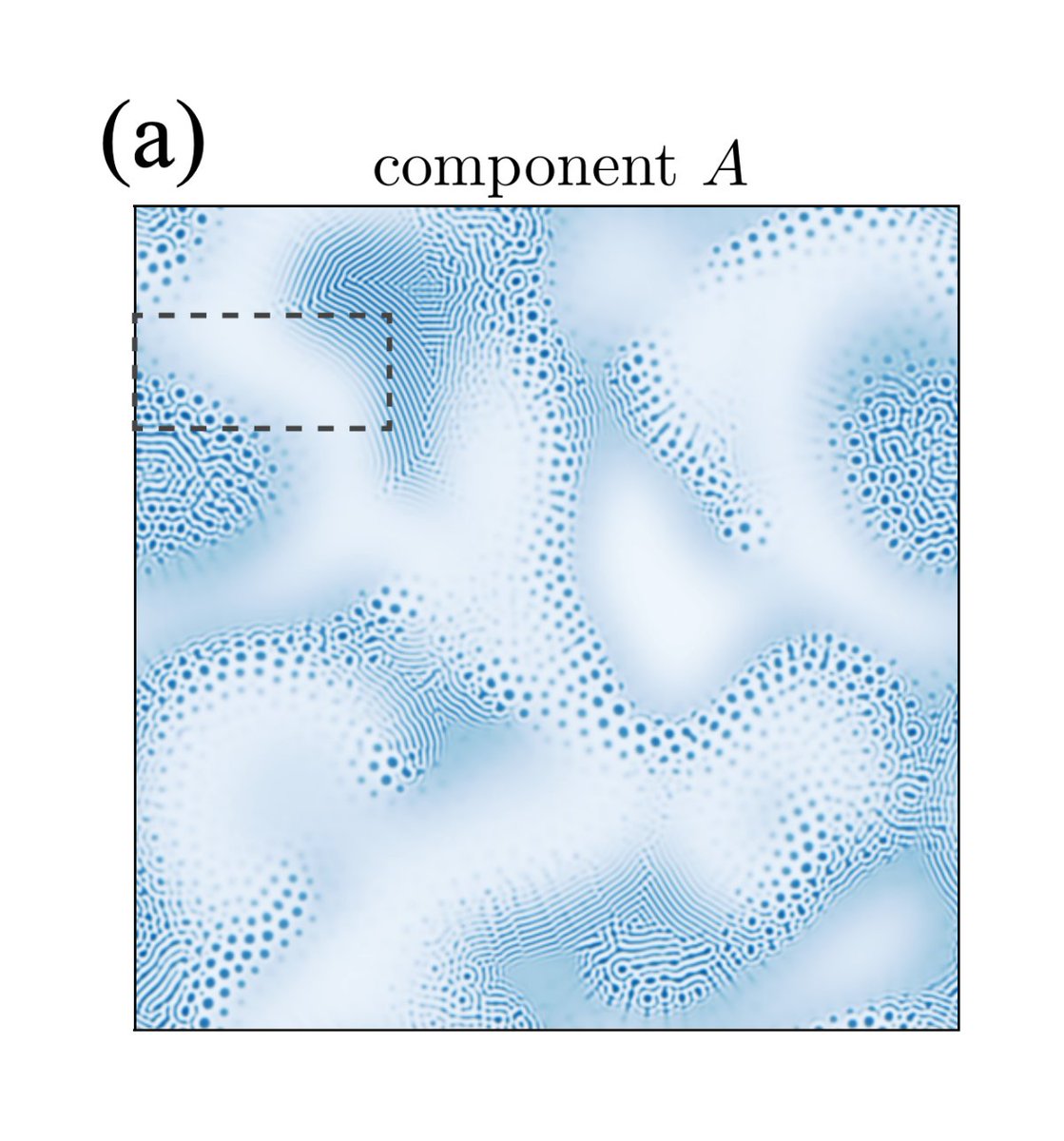
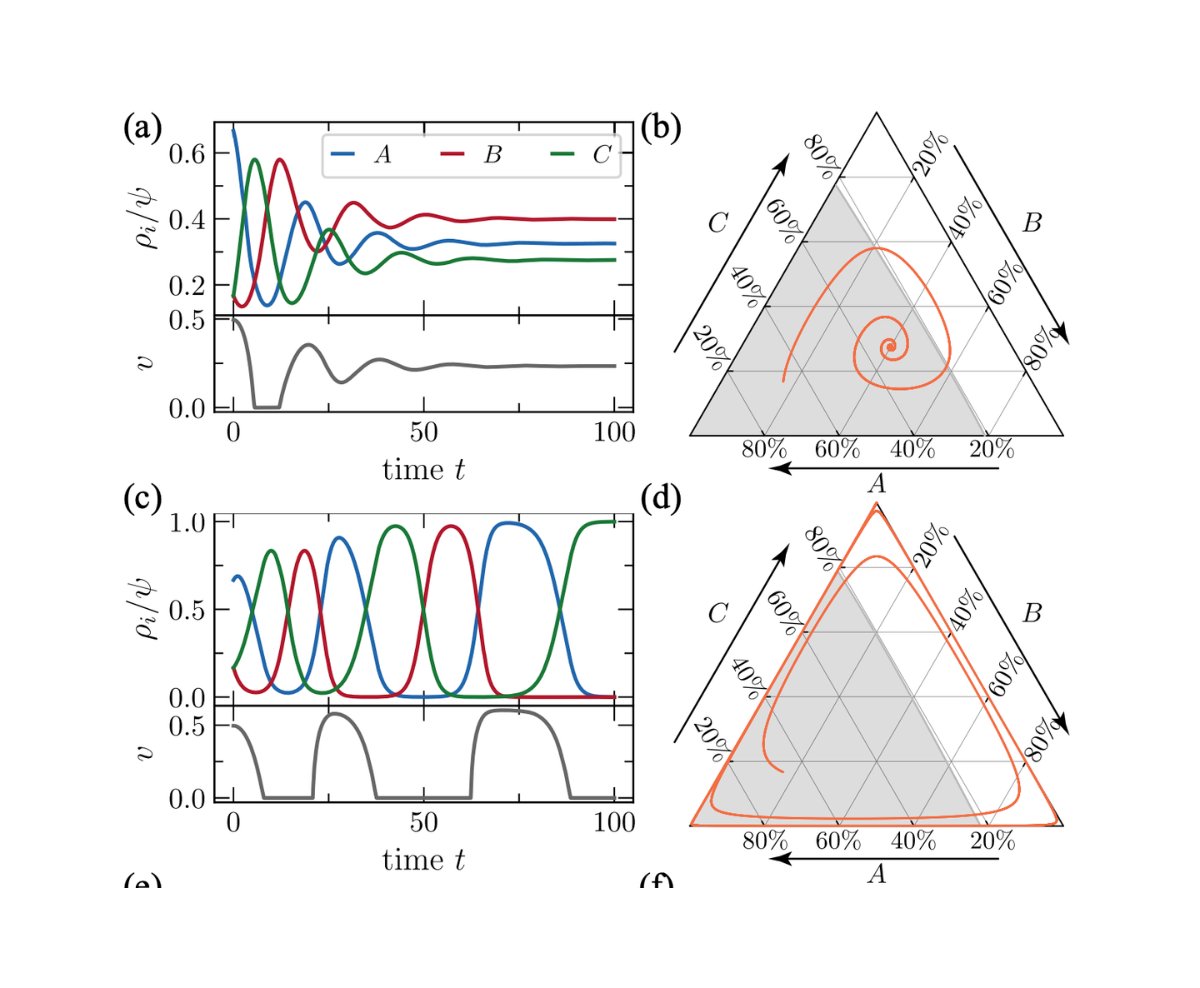
How does phase separation, a key mechanism of equilibrium self-organization, interact with nonlinear nonequilibrium dynamics? In our paper with Jonathan Bauermann and Giacomo Bartolucci, we look at phase separation in chemical oscillators
journals.aps.org/prl/abstrac…
1
25
138
6,963
We find that phase separation can slow down, speed up, damped or amplify oscillations, depending on alignment b/w interaction energies & nonlinear kinetics. In spatial systems with phase separation reaction diffusion, rich traveling patterns of concentration & phase emerge
1
1
7
398
This was a very fun collaboration with Giacomo and Jonathan, and my first chance to dive deep into the thermodynamics and dynamics of phase separation.
1
6
306
Open postdoc with the amazing Sarah Marzen (Scripps College, Claremont, California). Intersection of information theory, biophysics, neuroscience, and machine learning. Please RT theclaremontcolleges.wd1.myw…
1
3
586

Apr 30
We wrote a perspective piece on future directions & challenges for stochastic thermodynamics. Great collaboration with Jan Korbel, Sarah Loos, Gonzalo Manzano, Rosalba Garcia-Millan, Olga Movilla Miangolarra, Edgar Roldan @edgarroldankb arxiv.org/abs/2604.26601
1
15
68
4,336
Apr 30
We discuss research on non-Markovian systems, active matter, and optimal transport, as well as challenges in scaling up stochastic thermo to complex systems beyond the microscopic scale.
1
3
381
Apr 14
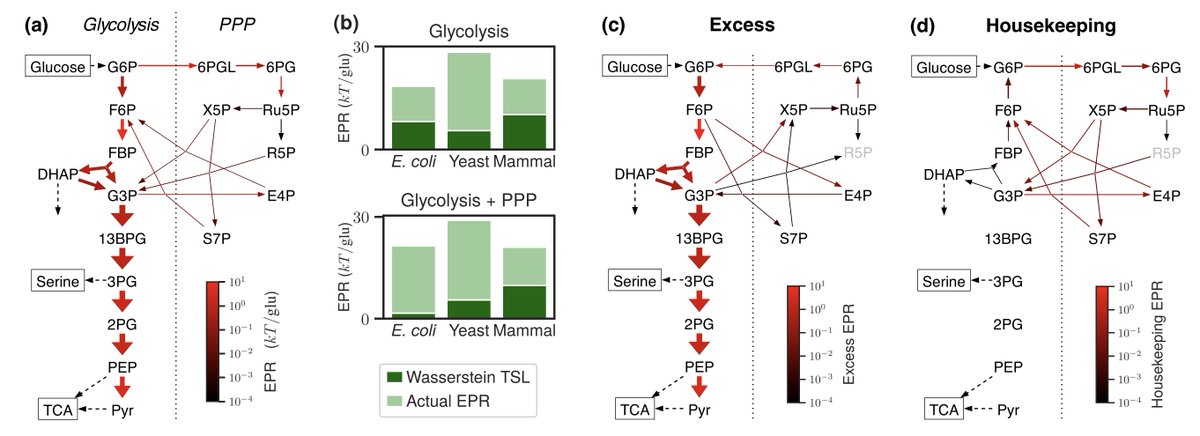
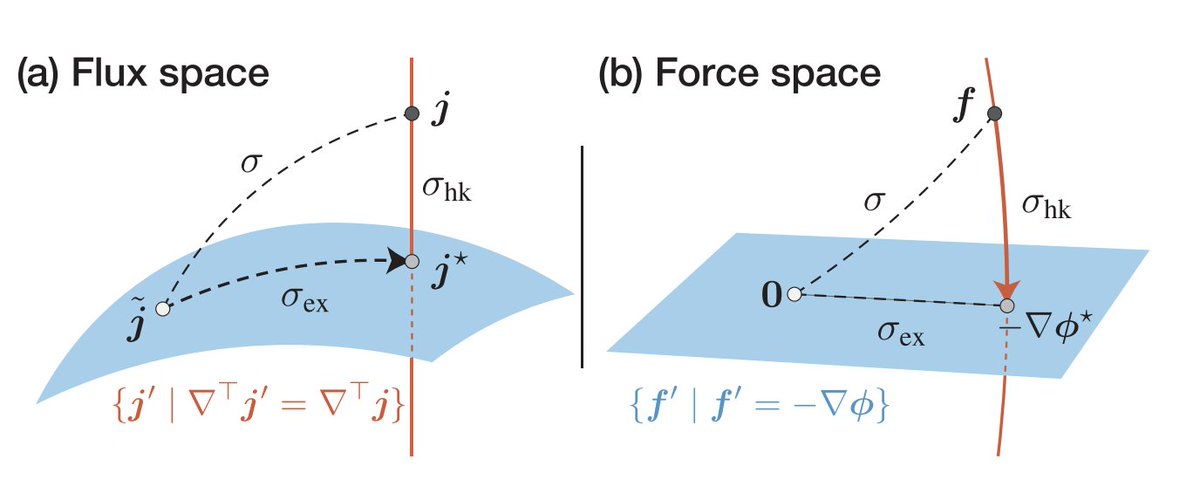
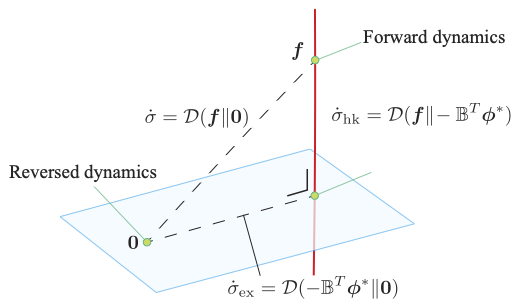
Our paper with Andreas Dechant, Kohei Yoshimura and @ito_sosuke is out in Phys Review Research (journals.aps.org/prresearch/…). We propose a "generalized free energy" for nonequilibrium systems, plus an information-geometric decomposition of dissipation into excess & housekeeping terms
1
31
204
15,495
Apr 14
The paper builds on our earlier work (journals.aps.org/prresearch/…) on decompositions of entropy production based on Euclidean geometry, which works best for near-equilibrium and diffusive systems. As we show here, info-geometry emerges naturally in the far-from-equilibrium regime
1
2
11
761
Apr 14
This work has been a long but very illuminating journey. Very happy to finally have it out and for the great collaboration!
8
442
Artemy Kolchinsky retweeted

Feb 25
How do time series foundation models forecast unseen dynamical systems? In new experiments, we find that small transformers learn to approximate transfer operators in-context. (1/N)
arxiv.org/abs/2602.18679
3
78
380
29,203
Feb 19
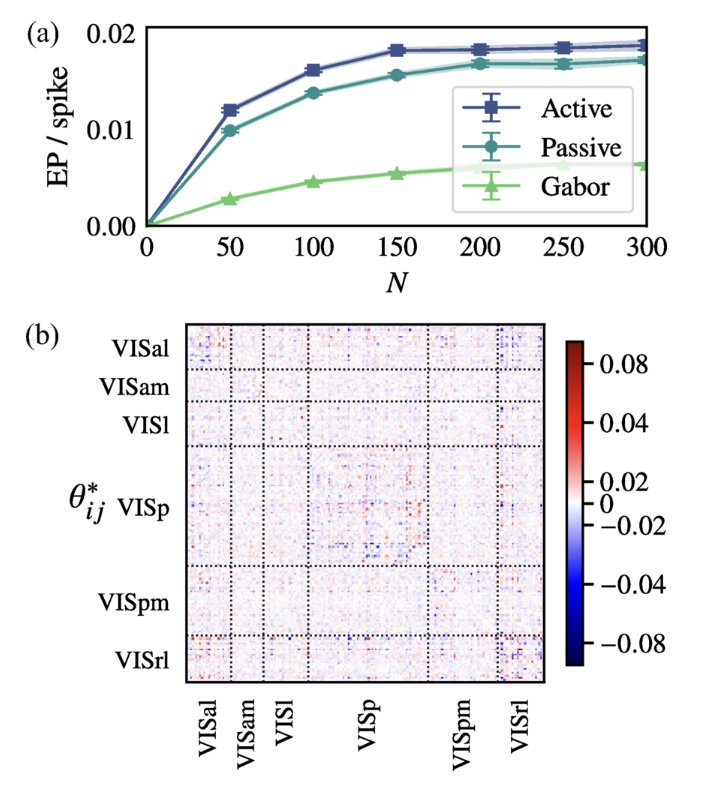
Our paper w/@m_aguilera_& @ito_sosuke is out in PRL. We combine ideas from stochastic thermodynamics & nonequilibrium Maximum Entropy to quantify forces dissipation in high-dimensional nonequilibrium systems, including spin glasses and neural data
journals.aps.org/prl/abstrac…
1
9
47
3,953
Artemy Kolchinsky retweeted

Jan 21
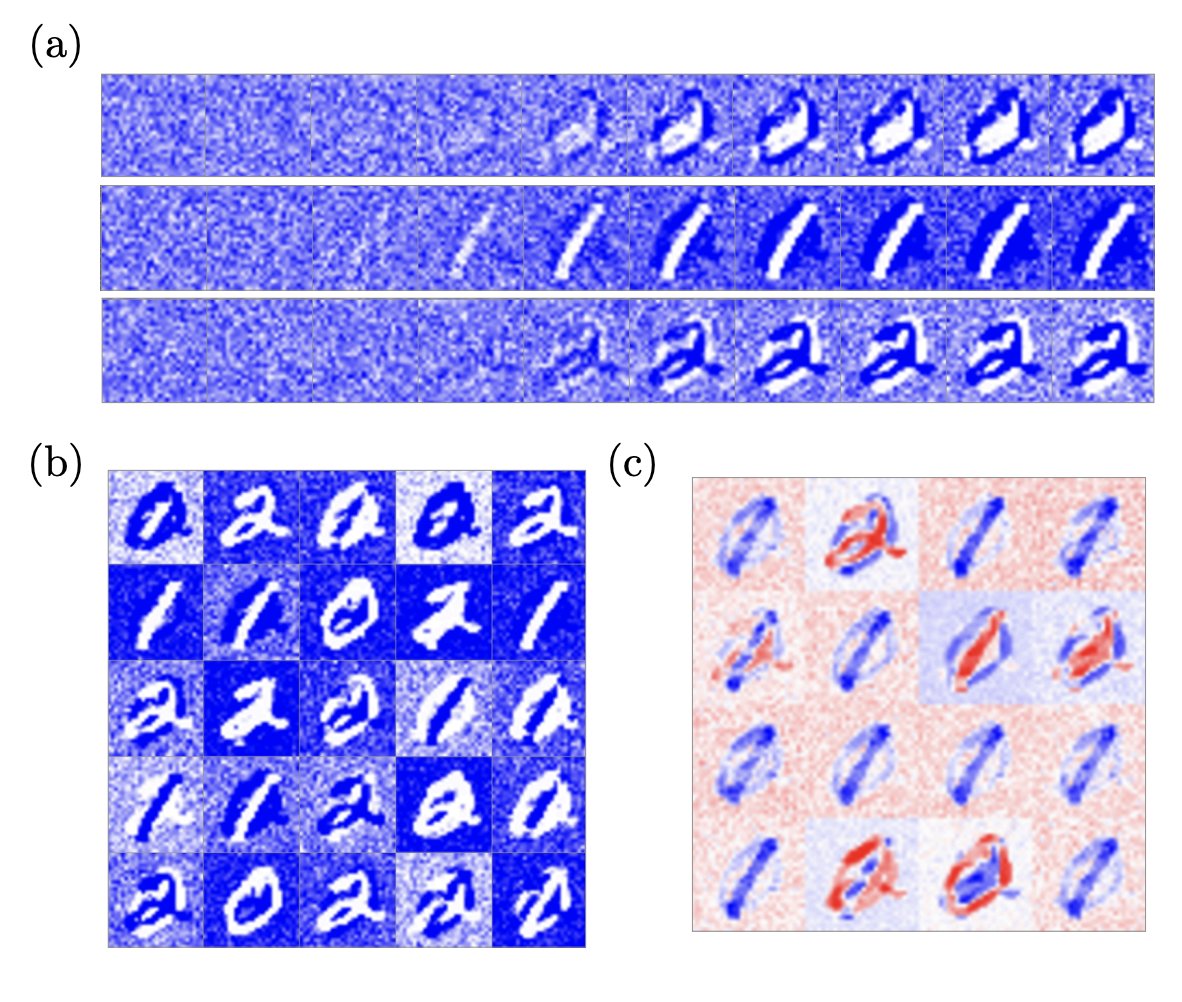
Generative thermodynamic computing
Diffusion models are powerful generative tools, but they come with a hidden cost: every denoising step requires a digital neural network, artificially injected noise, and substantial energy consumption. Yet physics offers an alternative—what if the noise needed for generation arose naturally from thermal fluctuations, and the denoising process was physically enacted rather than simulated?
Stephen Whitelam introduces exactly this: a generative modeling framework for thermodynamic computing. Instead of using neural networks to transform noise into structure, the approach encodes denoising information directly in the energy landscape of a physical system evolving under Langevin dynamics.
The training principle is elegant: observe noising trajectories (structured data degrading into noise), then adjust the system's couplings via gradient descent to maximize the probability that a thermodynamic computer would generate the reverse—structure from noise. This process has a beautiful physical interpretation: it minimizes the heat emission and entropy production of the generative process.
In a proof-of-concept simulation with 784 visible units and 512 hidden units trained on just three MNIST digits, the thermodynamic computer learns to transform noise into recognizable digit-like structures through physical dynamics alone—no external control or pseudorandom numbers required.
The energy implications are striking: the simulated thermodynamic computer emits ~2,900 kᵦT of heat per generation, compared to ~5 × 10¹⁴ kᵦT for a digital neural network doing equivalent denoising—a difference of more than 10 orders of magnitude.
The message is compelling: by grounding generative modeling in thermodynamic principles, we can design systems where computation emerges from physics itself, opening paths toward autonomous, energy-efficient generation that could fundamentally change how we think about the hardware of machine learning.
Paper: journals.aps.org/prl/abstrac…
14
77
572
53,365
Artemy Kolchinsky retweeted

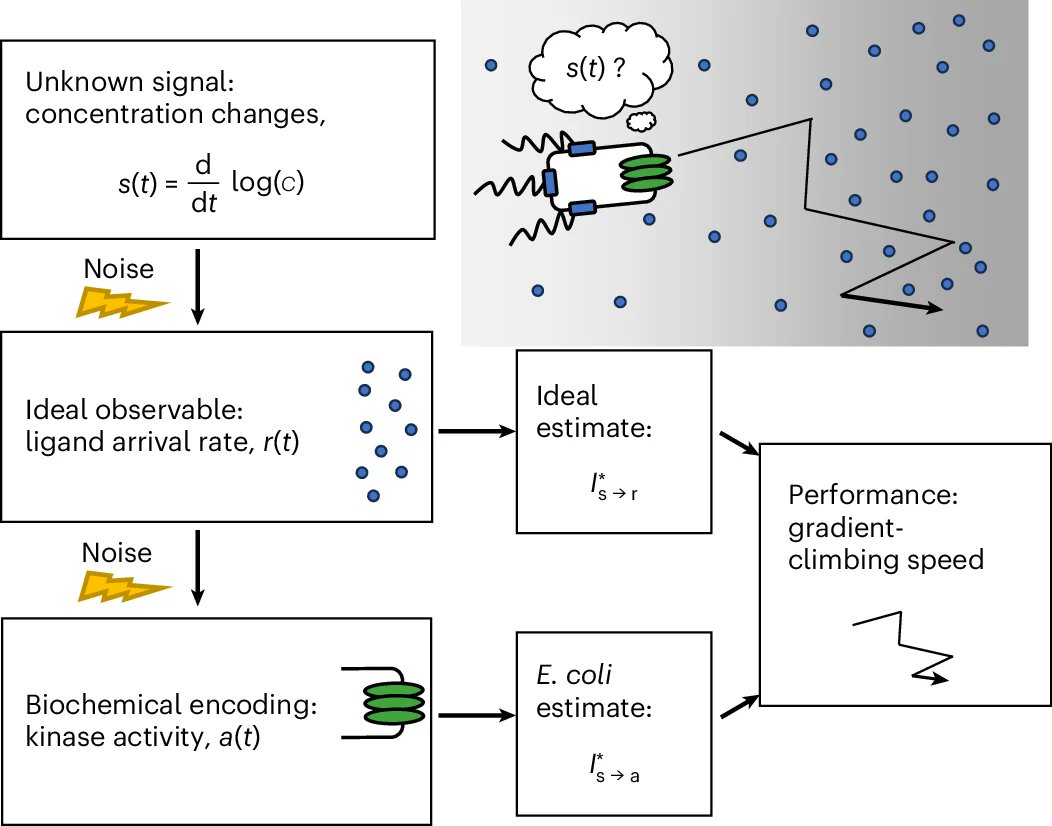
The chemosensing accuracy of 𝘌. 𝘤𝘰𝘭𝘪 cells is shown to be limited by internal noise in signal processing, rather than the stochasticity of molecule arrivals at their receptors, contrary to long-held understanding in the field.
nature.com/articles/s41567-0…
9
39
3,009
20 Dec 2025
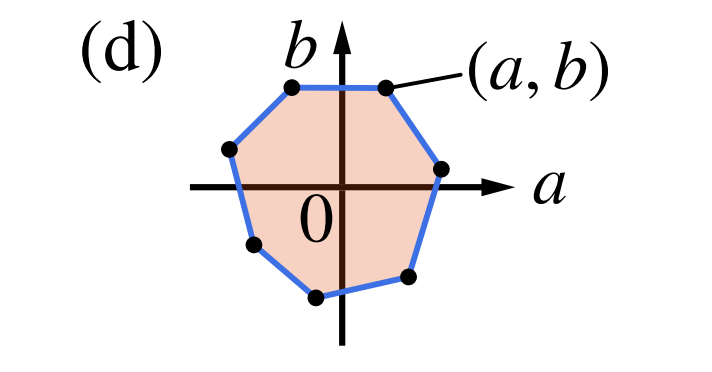
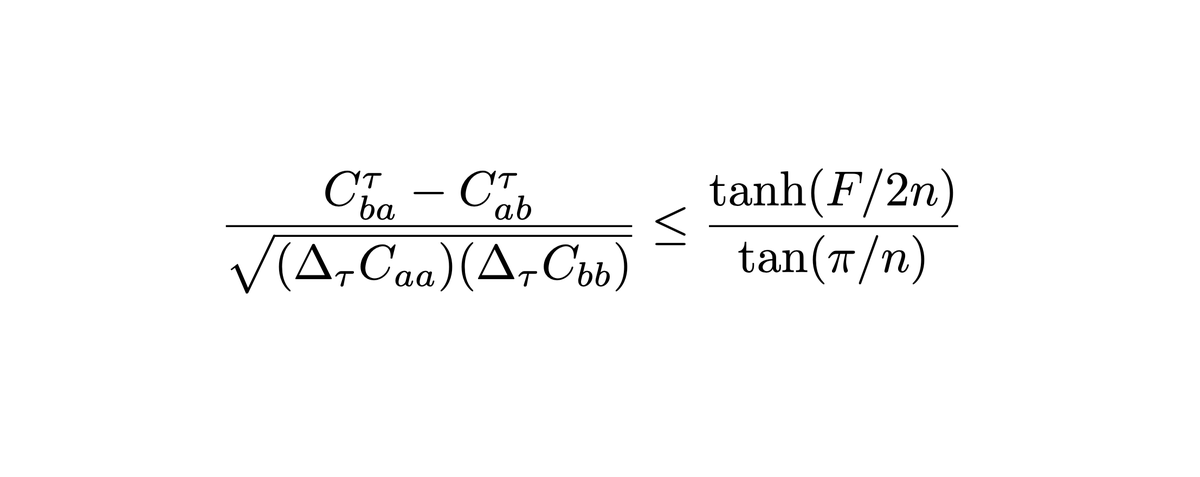
Our paper was published on the relationship between thermodynamic driving and eigenvalues in Markovian master equations. It proves a weaker version of a beautiful conjecture proposed by Uhl and Seifert. Led by Guo-Hua Xu , with Jean-Charles Delvenne and @ito_sosuke
18 Dec 2025

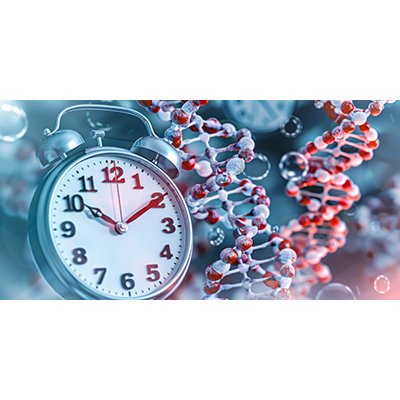
A thermodynamic constraint is placed on the spectrum of Markov rate matrices, allowing for a better understanding of the dynamics of biochemical clocks #OpenAccess
go.aps.org/4j8dkj4
5
11
2,149
Artemy Kolchinsky retweeted

19 Dec 2025
ポスドクのGuohuaさんの論文がPRLのEditors' suggestionに選ばれました。ArtemyさんとJean-Charlesさんとの共著です。マスター方程式の遷移レートの固有値に関して、熱力学的な制約から楕円の中にいる必要があるという定理を導出しています。
doi.org/10.1103/z4t2-18cx
1
3
18
1,615