
Joined June 2008
- Tweets 1,929
- Following 2,899
- Followers 496
- Likes 6,224
872 Photos and videos





Pinned Tweet

Building Trusted AI for the Future. Let's get in touch! #trustedai #trustworthyai #ai #europe
@DFKI @vision_claire @eu_tailor uk.dfki.de/DFKI_NEWS_ePaper/…
ALT https://uk.dfki.de/DFKI_NEWS_ePaper/epaper-DFKI_News_49_e/#14
1
5
André Meyer-Vitali 👁️👁️ ndrmyrvtl.bsky.social retweeted

🥷🏻 "Pssst, @Conf_CLeaR authors, come closer"..."Got your paper rejected?" 😢 "DON'T WORRY! We got you covered 😘" claramas-workshop.github.io/…
#causality #agents #ai @AAMASconf @JulienSiebert
1
28
CfP: 2nd Workshop on Model-based System Engineering and Artificial Intelligence - MBSE-AI Integration!
Submit your papers concerning both AI for SE and SE for AI by Dec. 18.
lnkd.in/emBdkvBP
#ai #software #system #engineering #dev @MODELSWARDConf - @IRTSystemX - @DFKI
38
Goodbye X/eggs/echse/... You never flew high as a bird. Looking for a blue sky, henceforth. See you at ndrmyrvtl.bsky.social. 🐤
26
André Meyer-Vitali 👁️👁️ ndrmyrvtl.bsky.social retweeted

27 Aug 2024
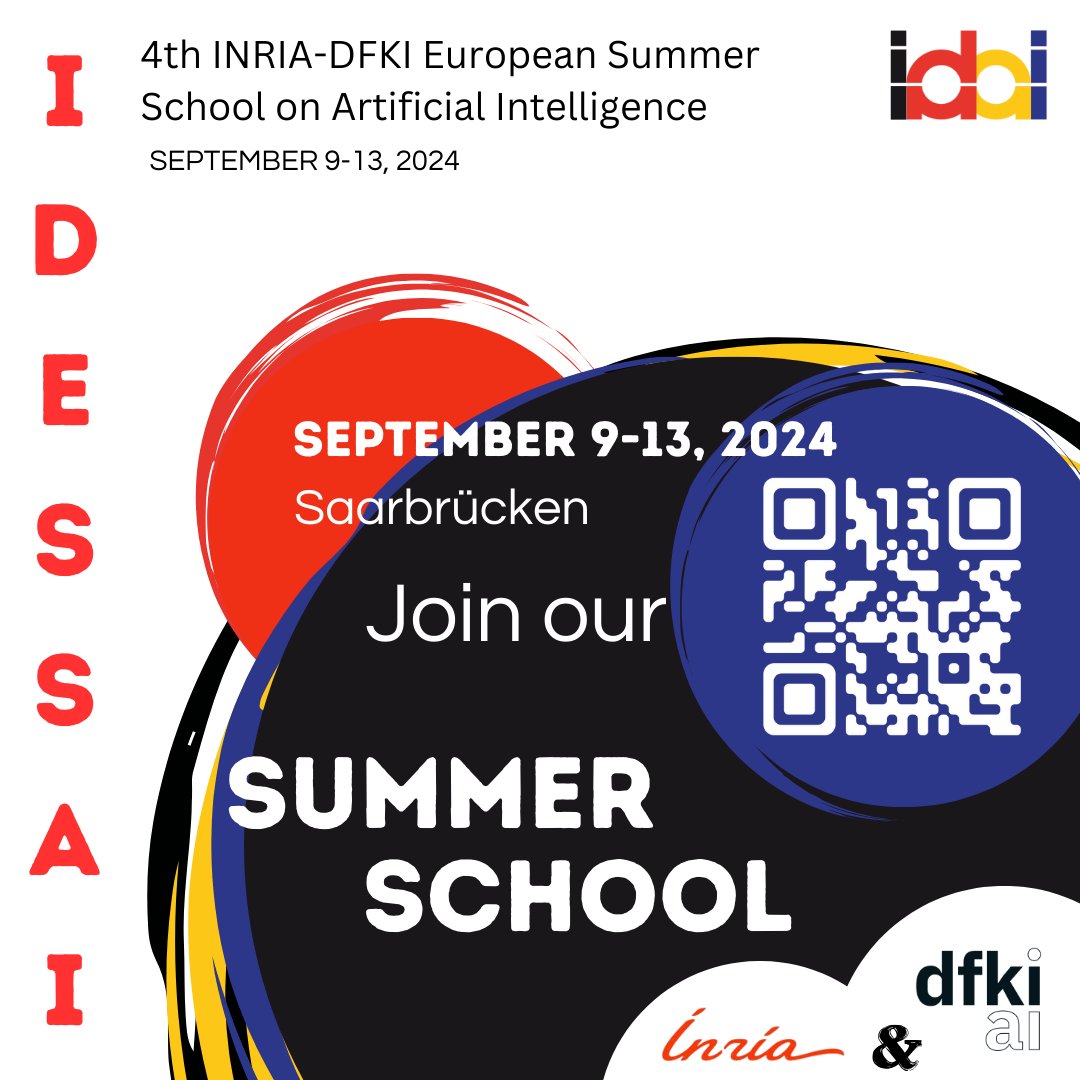
🎓 Exciting news for PhD students in AI! @DFKI & @Inria are hosting the 4th Annual AI Summer School at the @Saar_Uni. Topics: Large AI Models, Robotics & more. Present your research, learn, and network! 🚀
📅 Don’t miss it. 👉 bit.ly/4g4AHbd
#AI #PhD #Saarland
1
3
239
André Meyer-Vitali 👁️👁️ ndrmyrvtl.bsky.social retweeted

7 Aug 2024
🌟 New TAILOR #ImpactStory! 🌟
Discover "The TAILOR Handbook of Trustworthy AI" by Umberto Straccia & Francesca Pratesi. Promoting ethical AI for all! Read more: tailor-network.eu/the-tailor…
#TrustworthyAI #AISafety
2
6
228
Let's build AI systems that we can trust, built on standardised metrics and principles.
31 Jul 2024

New #ImpactStory: "Standardisation to Allow AI Access to Critical Services."
@atomax & @CMraidha discuss aligning AI with values & certifying its safety. Read more: Read more: tailor-network.eu/standardis…
#TrustworthyAI #AI #TechInnovation
16
André Meyer-Vitali 👁️👁️ ndrmyrvtl.bsky.social retweeted
17 Jul 2024
🌟 New TAILOR #ImpactStory! 🌟 Check out our #TrustworthyAI in Education initiative by Peter Flach & @PerelloNieto, with @BarryOSullivan & VISION. Read more: tailor-network.eu/trustworth… #AI #PhD #Innovation #Collaboration #AIResearch #Education
5
3
4
309
André Meyer-Vitali 👁️👁️ ndrmyrvtl.bsky.social retweeted
4 Jun 2024
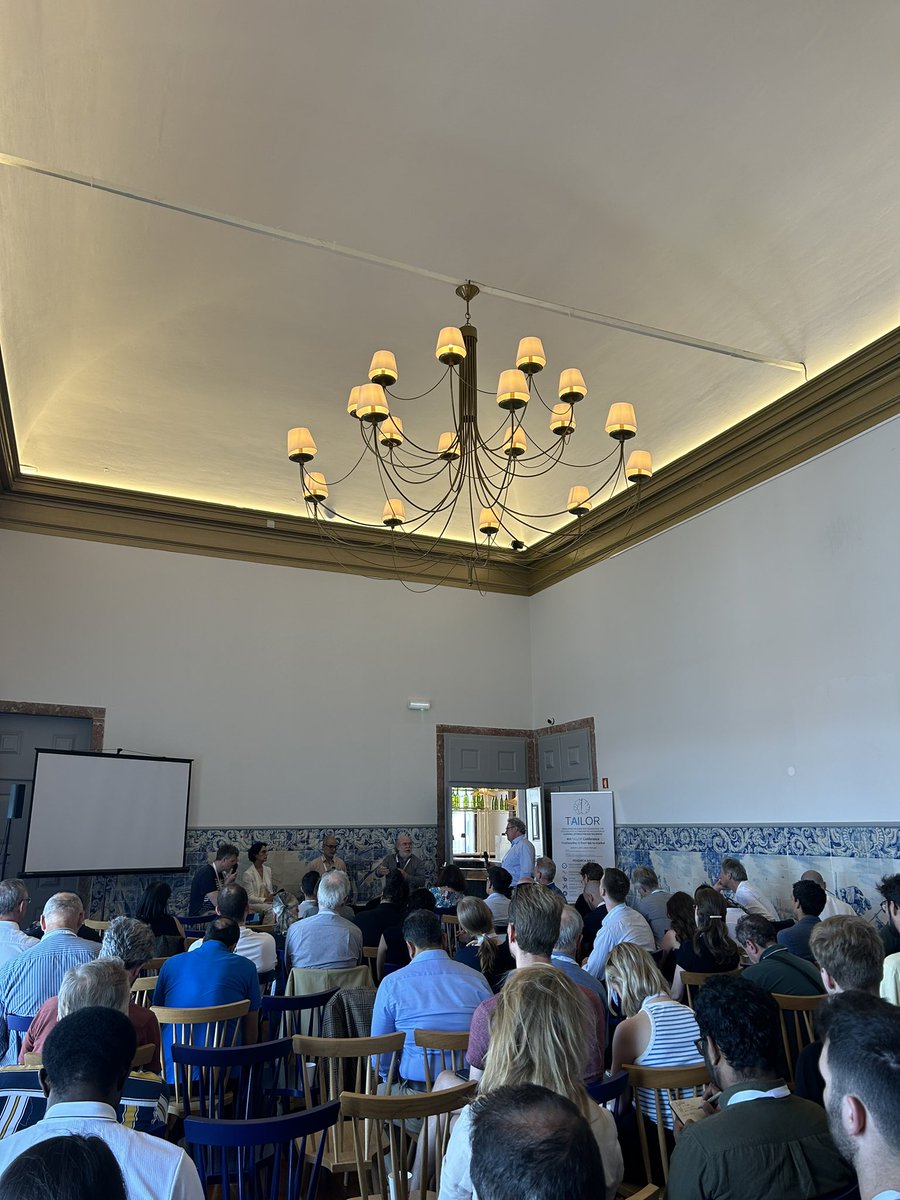
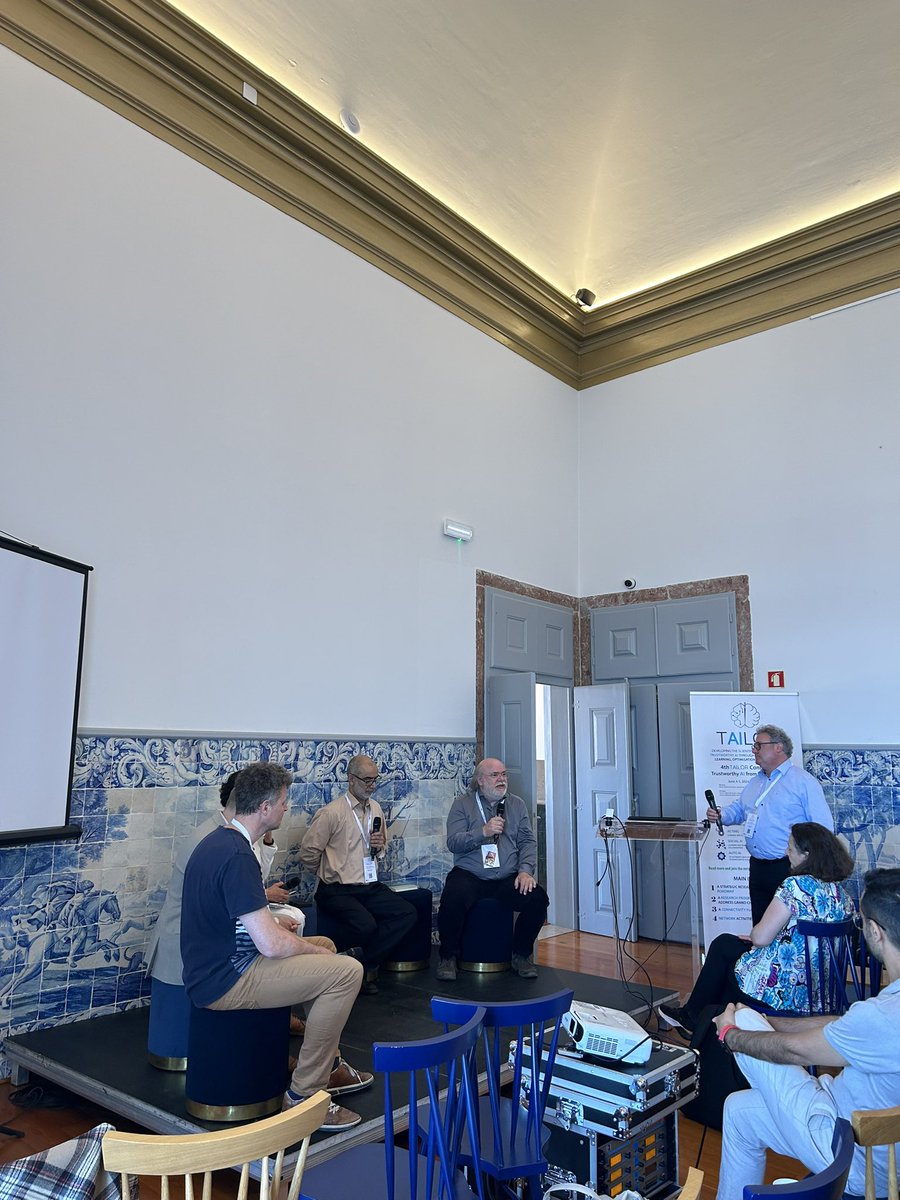
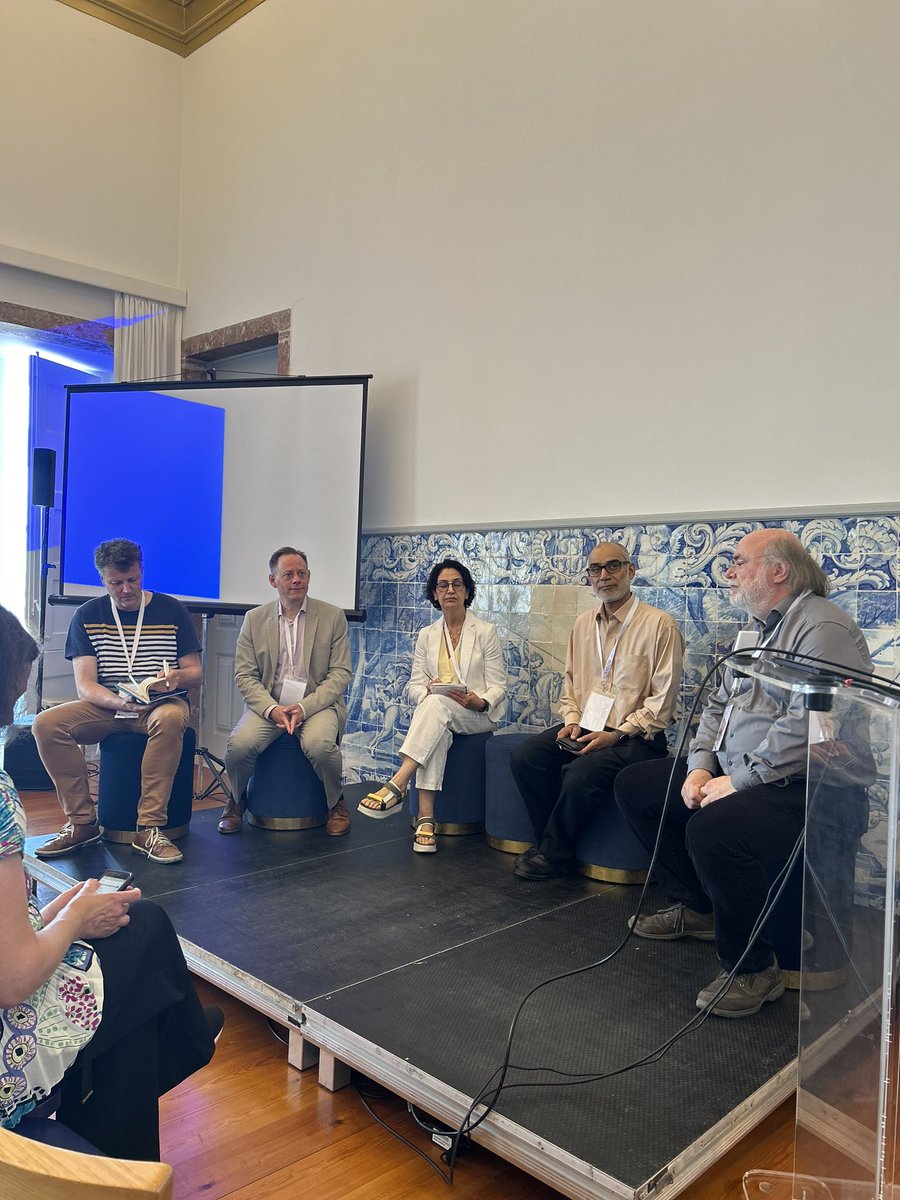
We are now going on with the Session 2: Industry collaboration and transfer, chaired by @atomax and @slusallek
How the collaboration and transfer process between academia and industry can be improved?
W/ @wicomulder, @FredrikHeintz
1
5
141
André Meyer-Vitali 👁️👁️ ndrmyrvtl.bsky.social retweeted

23 Apr 2024
🌟 Don't Miss Out! 🌟
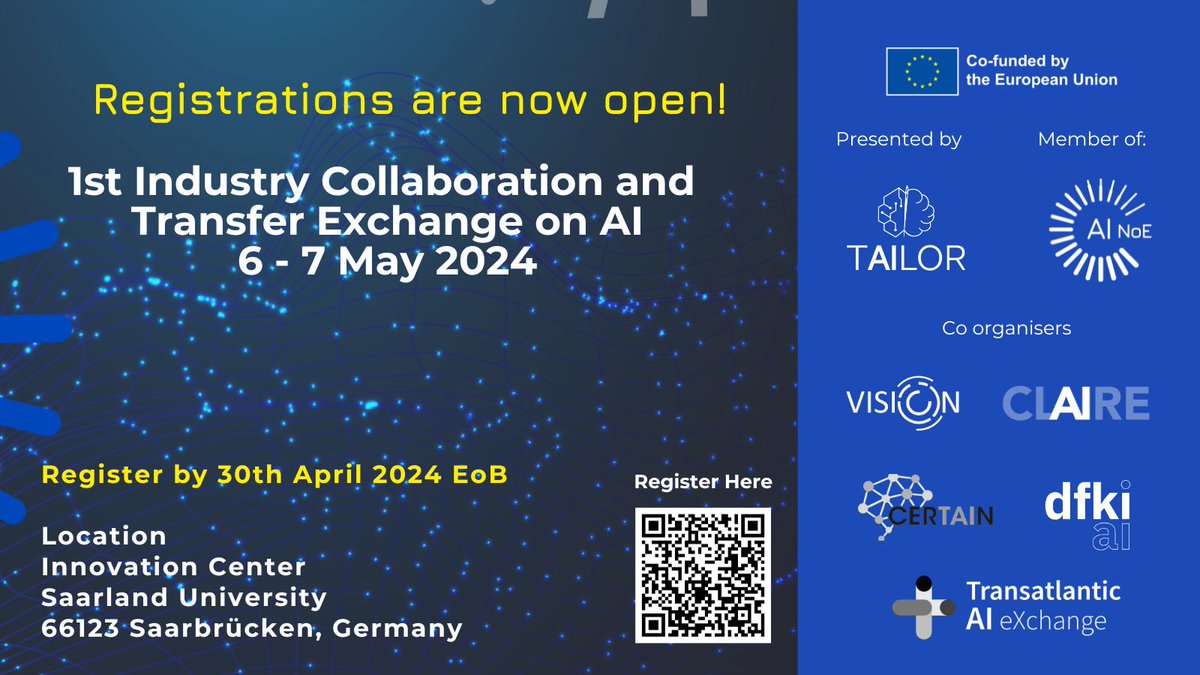
Be part of the 1st Industry Collaboration and Transfer Exchange on AI - "From Research to Market" organised by the TAILOR industry collaboration and transfer group! 🤝
📅 When: 6th and 7th May 2024
📍 Where: Innovation Center, Saarbrücken
1/5
1
3
4
220
André Meyer-Vitali 👁️👁️ ndrmyrvtl.bsky.social retweeted

19 Apr 2024
Im @Research_Table haben @ReinhardKarger und ich heute eine Standpunkt zu innovationsfreundlicher KI-Regulierung.
table.media/research/standpu…
1
5
512
André Meyer-Vitali 👁️👁️ ndrmyrvtl.bsky.social retweeted
5 Apr 2024
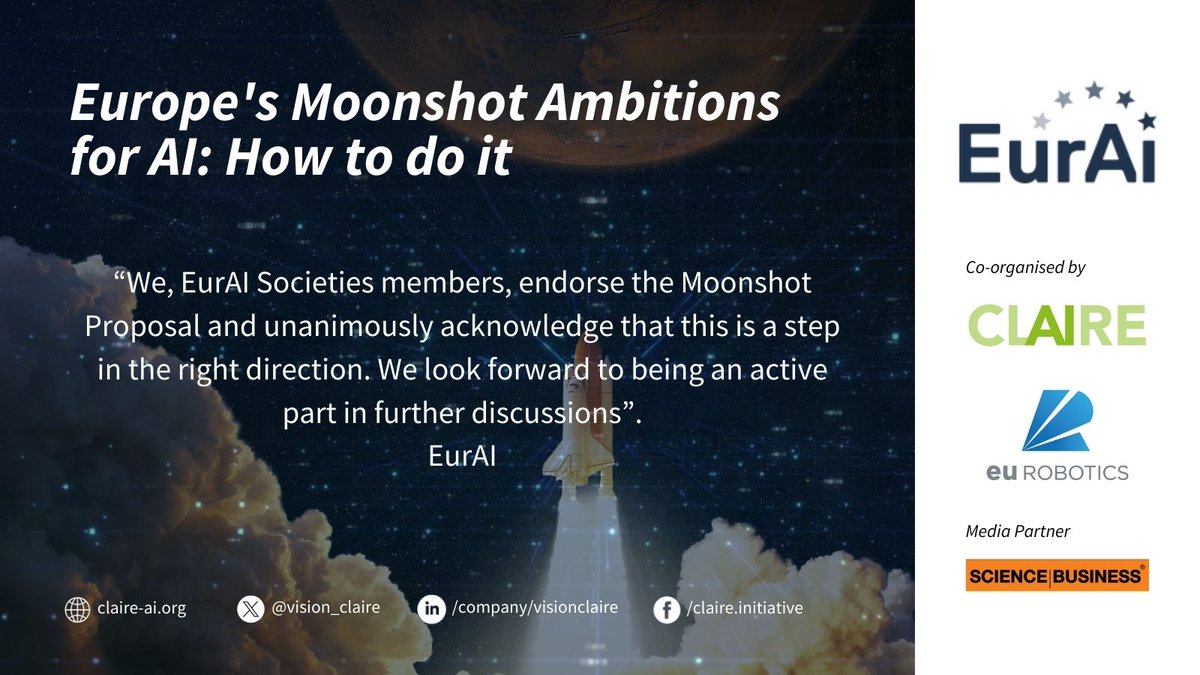
🚀 Exciting Update from the @EurAI_ECCAI!🚀
📢 Stay tuned for insights and outcomes!
🤝 Co-organised by CLAIRE and @eu_Robotics, with support from @scibus
1/2
1
1
3
184
André Meyer-Vitali 👁️👁️ ndrmyrvtl.bsky.social retweeted
4 Apr 2024
🚀 Europe's Moonshot Ambitions for AI: How to Do It* event is happening in Brussels, Belgium.
🤝Co-organised by CLAIRE and @eu_Robotics, with support from @scibus.
1/3
1
2
4
174
André Meyer-Vitali 👁️👁️ ndrmyrvtl.bsky.social retweeted
4 Apr 2024
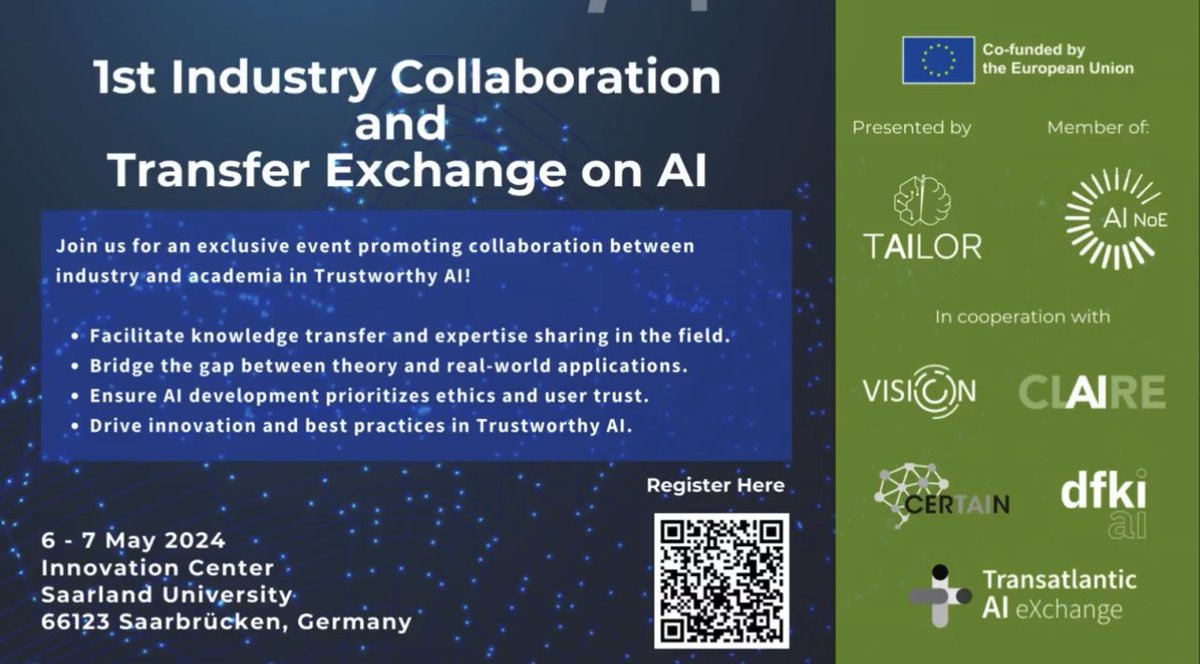
🌟 Exciting News! Join us at the Innovation Center, Saarbrücken, for the 1st Industry Collaboration and Transfer Exchange on AI, themed "From Research to Market"! 🌟
📅 Date: 6th & 7th May 2024
📍 Location: Innovation Center
🔗 Register Here: lnkd.in/db3Fn376
1/3
1
2
4
151
André Meyer-Vitali 👁️👁️ ndrmyrvtl.bsky.social retweeted

26 Mar 2024
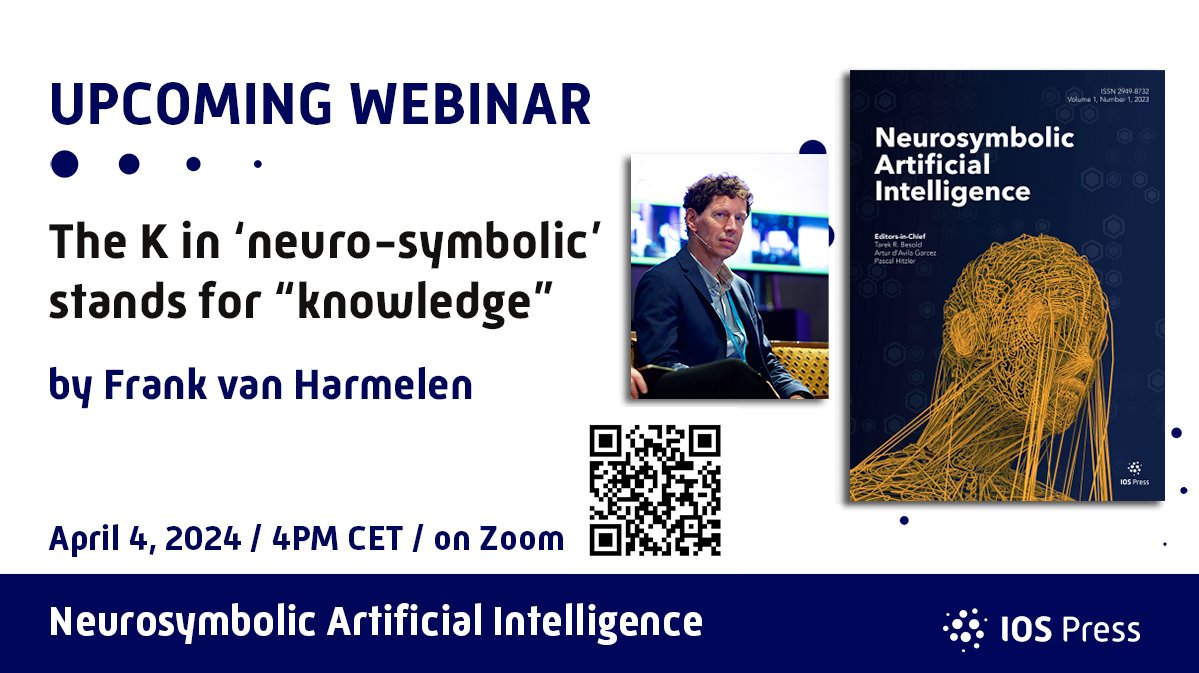
📢 Calling all AI enthusiasts! Get ready to supercharge your knowledge with our upcoming NAI webinar by @FrankVanHarmele. Hosted by @pascalhitzler, uncovering key insights and practical tips. Reserve your seat today, us06web.zoom.us/meeting/regi… #Webinar #NAI
1
4
5
4,211
Don't miss this opportunity.
3 Apr 2024

My online talk for the new Neuro-symbolic AI Journal: "The 'K' in neuro-symbolic stands for knowledge". This Thursday (4 April), 16h (A'dam time), free online registration at us06web.zoom.us/meeting/regi… And: take a look at the new journal: neurosymbolic-ai-journal.com… #NAI
29
André Meyer-Vitali 👁️👁️ ndrmyrvtl.bsky.social retweeted
28 Mar 2024
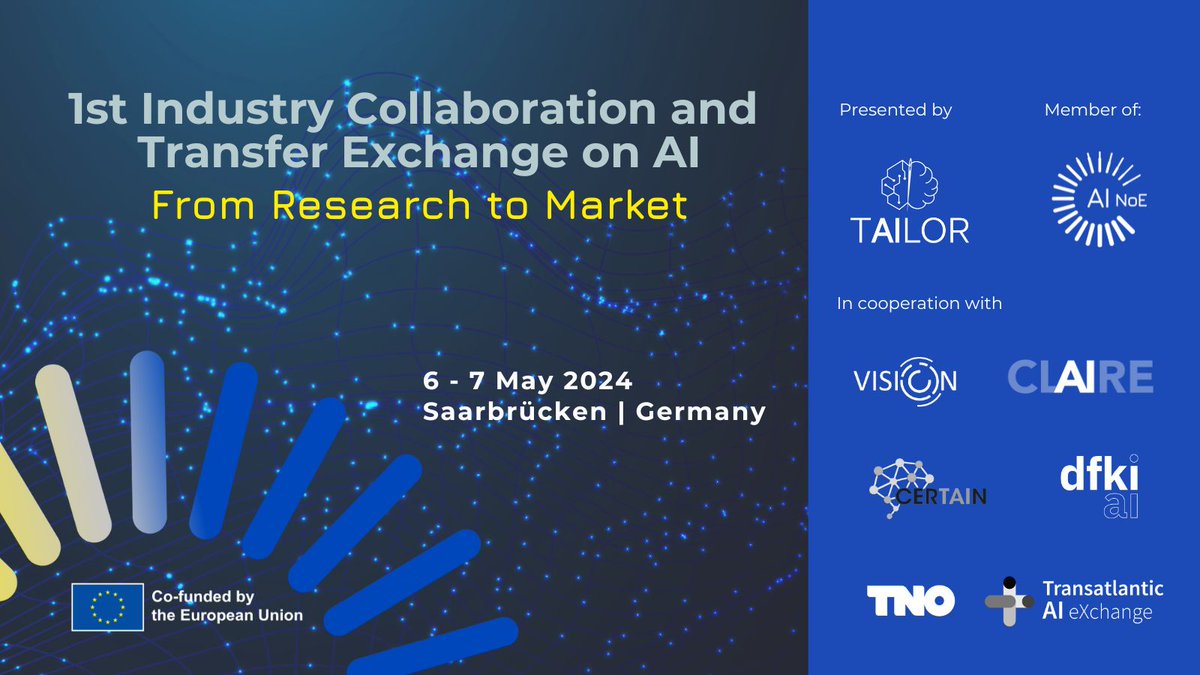
🚀 Don't Miss Out! Register Now for the 1st Industry Collaboration and Transfer Exchange on AI 🤖
1/6
1
2
3
177
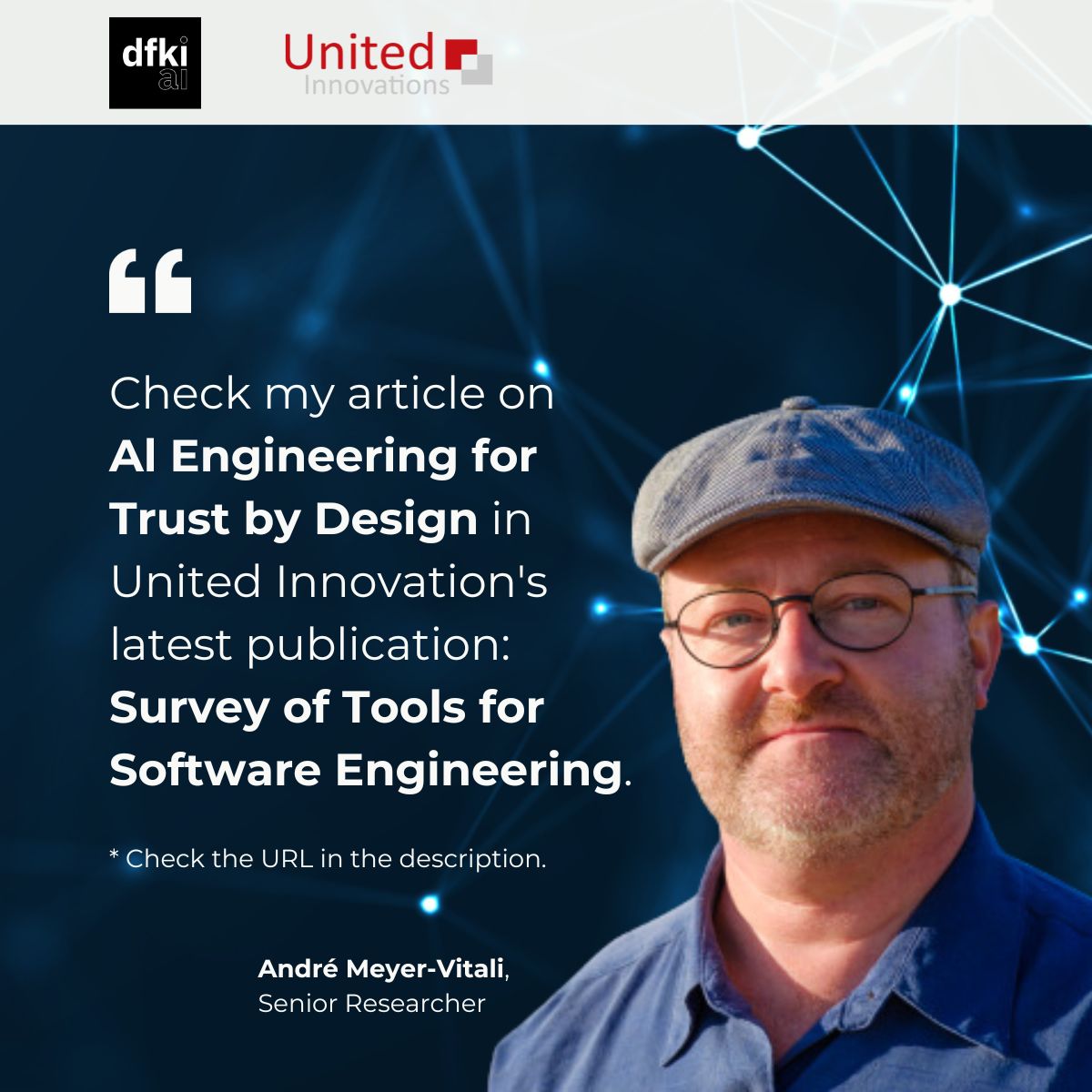
In the recent "Survey of Tools for Software Engineering" by #UnitedInnovations, I published an article on "AI Engineering for Trust by Design". Which aspects should be considered when developing trustworthy AI systems? ➡united-innovations.eu/publik…
#dfki #AI #TrustbyDesign #GFFT
30
André Meyer-Vitali 👁️👁️ ndrmyrvtl.bsky.social retweeted
14 Mar 2024
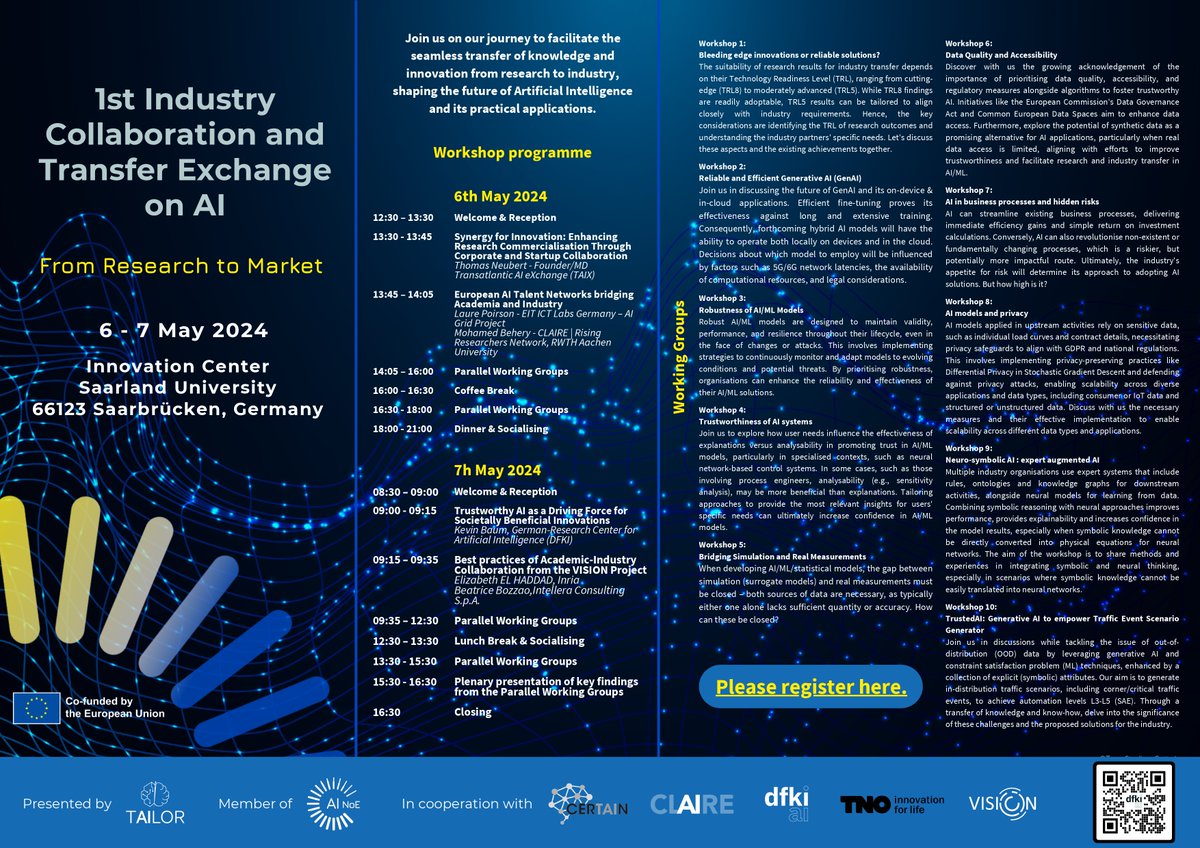
Get ready for the 1st Industry Collaboration and Transfer Exchange on AI – “From Research to Market”! Join us on May 6-7 in Saarbrücken, Germany, as we shape the future of AI research and its practical applications in the market. tailor-network.eu/events/1st…
2
4
131
Join our workshop on Trust in Human-Agent Teams (MultiTTrust3) during HHAI 2024. The CfP is now available. #ai #trust #trustworthyai #human #agent #team #collaboration #interaction easychair.org/cfp/MultiTTrus… multittrust.github.io/3ed/ hhai-conference.org/2024/
33
André Meyer-Vitali 👁️👁️ ndrmyrvtl.bsky.social retweeted

18 Feb 2024
A good example for demonstrating the computational role of a world-model is a "street map".
A map permits you to compare
distances and choose routes without
actually driving through the same city before. More importantly, a map allows you to circumvent unanticipated obstacles (say a street closed for construction) without having to buy a new map, in which the obstacle is marked.
Likewise, it enables the city planner to
assess what effect a local change would
have on the traffic pattern in the city
prior to implementing that change.
To appreciate this feature, imagine that, instead
of a map, your GPS gives you a left-right-forward instructions at every corner, so that
you arrive at your destination optimally.
Theoretically, this GPS system should be as good as a map. Yet most drivers prefer having both, GPS and a road map. Why? Suppose you hit a street closed for construction. The GPS provides you almost no help to get out of the predicament. The map, on the other hand guides you wisely toward finding an alternate route around the blocked street.
Note that this advantage of maps to handle unanticipated changes only works when the changes are local, that is, road construction in one street leaves all other streets in tact. The map is useless if the construction transforms a large number of streets all over the city.
The GPS system can be improved, of course, to emulate this capability of a map, by storing a right-left-forward instruction for each and every possible street closure event. But this would necessitate a substantial increase in storage space.
We should use this metaphor when we seek ways of testing whether a system has a model of the world or not.
16 Feb 2024

I should add that I touched on this dilemma in this interview ucla.in/3L91Yvt and I plan to elaborate in an upcoming paper. ML folks are not concerned with this dilemma because they haven't seen how the "world model" trick works for humans, some have never seen a world model.
3
7
36
19,325