
Degen || Marketing & growth specialist across Web3, fintech, and AI. Focused on GTM, messaging, and turning complex products into narratives that drive adoption
Joined January 2024
- Tweets 3,641
- Following 616
- Followers 518
- Likes 6,587
468 Photos and videos

















Attrito retweeted

Jun 4
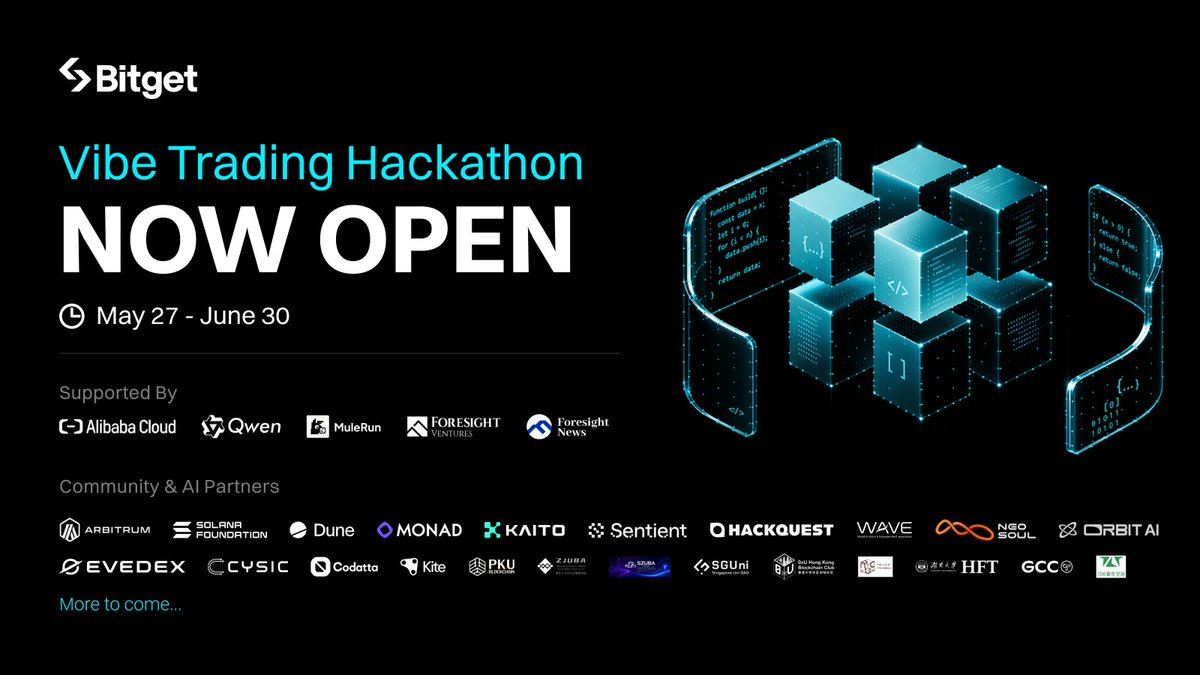
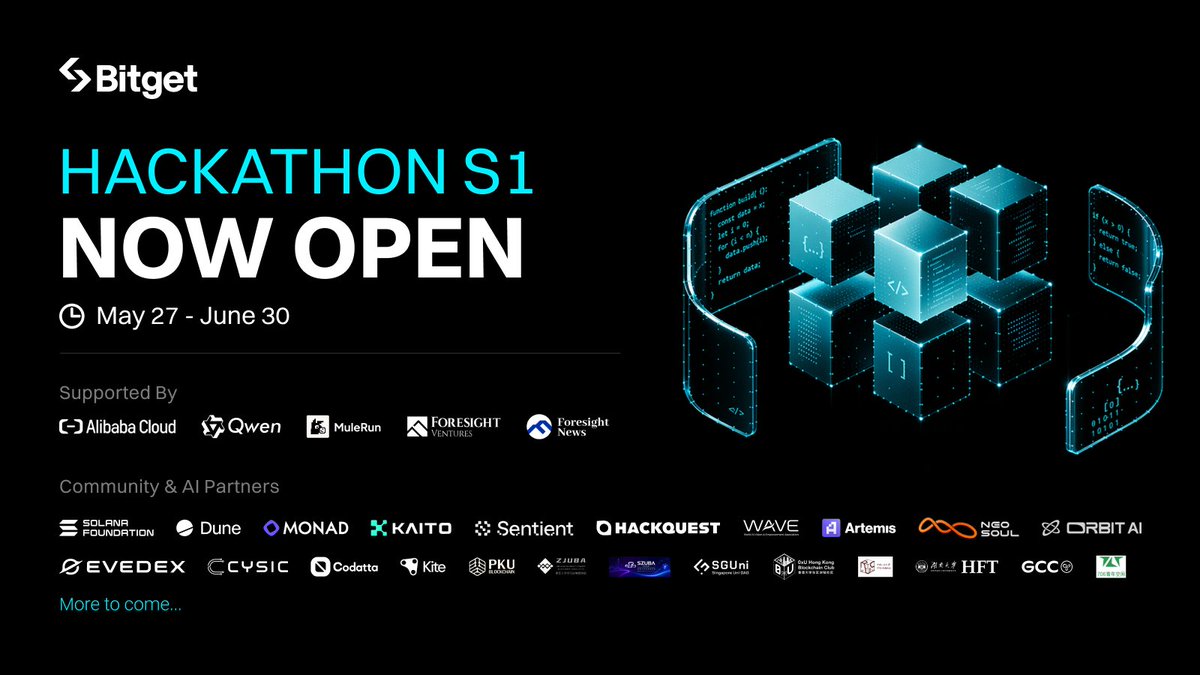
Ever thought about joining a Hackathon without any coding?
Just describe your idea in natural language
Bitget AI will turn it into a strategy and bring it live
That’s the vibe of Bitget Hackathon S1
$50,000 USDT in prizes
Register now:bitget.com/campaigns/d8a2a61…
Jun 2

Meet the judges for Hackathon S1!
Backed by: @Bitget @alibaba_cloud @Alibaba_Qwen @mulerun_ai @ForesightVen @Foresight_News
Get your build in front of the people backing Agentic Trading.
$50,000 USDT for the grab.
Register now! 👉bitget.com/campaigns/d8a2a61…
163
121
417
603,669

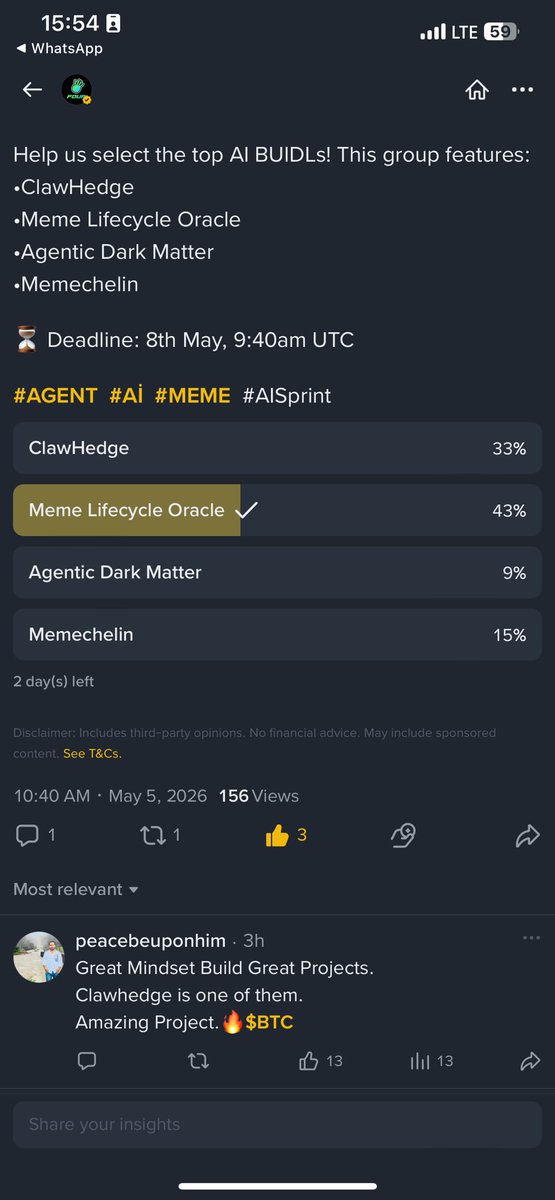
Community chose Meme Lifecycle Oracle.
Appreciate everyone who has supported us and still riding with us. 🙏❤️
Here is the live demo: membrane-oracle.vercel.app
It tracks every phase of a memecoin, so you can stop buying tops and selling bottoms.
Check the pinned tweet to understand how to use it to analyze any CA.
May 5

🚀 The Four.Meme AI Sprint Community Voting is NOW LIVE!
> 196 BUIDLs ➔ Top 20 Finalists. Now, it's YOUR turn to decide who makes the Top 5 for Demo Day!
🗳️ Vote on Binance Square (30% Weighting):
1️⃣Group 1: HERMEX|Covenant|ClawFirm|4racle: bit.ly/4nao2r9
2️⃣Group 2: Talos|DefiSage|ClipX|Meme Court: bit.ly/4tUmZOT
3️⃣Group 3: Omni Agent|Kairos Engine|Clawdyland|elizaOK: bit.ly/4eZFfBA
4️⃣Group 4: 4lpha AI|Build4|CGAE|memenet
: bit.ly/4tbuZJZ
5️⃣Group 5: ClawHedge|Meme Lifecycle Oracle|Agentic Dark Matter|Memechelin: bit.ly/3OGcaRe
📑 Deep Dive into the BUIDLs & Scoring Rules: notion.so/Four-Meme-AI-Sprin…
⏰ Deadline: 8th May, 9:40am UTC
13
7
37
1,021
Attrito retweeted

Apr 10
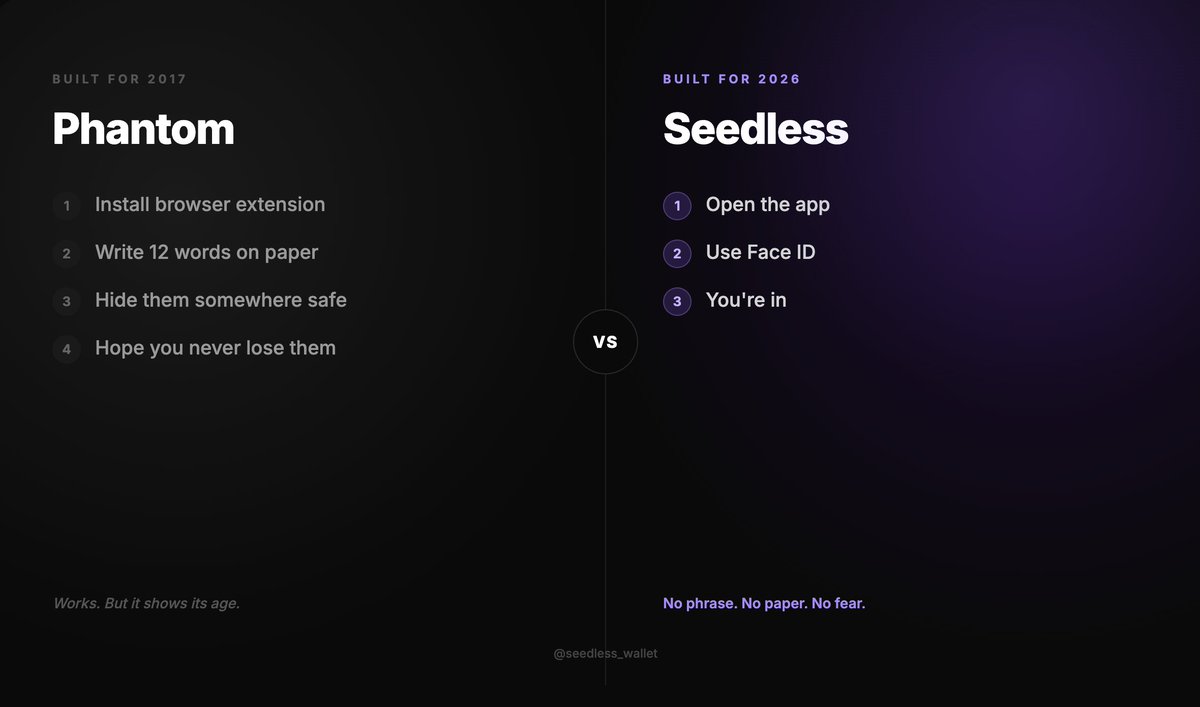
2017 called. it wants its wallet UX back
phantom: install extension → write 12 words → hide paper → pray
seedless: open app → face id → you're in
one was built for desktop nerds
one was built for the next billion
17
15
46
2,339
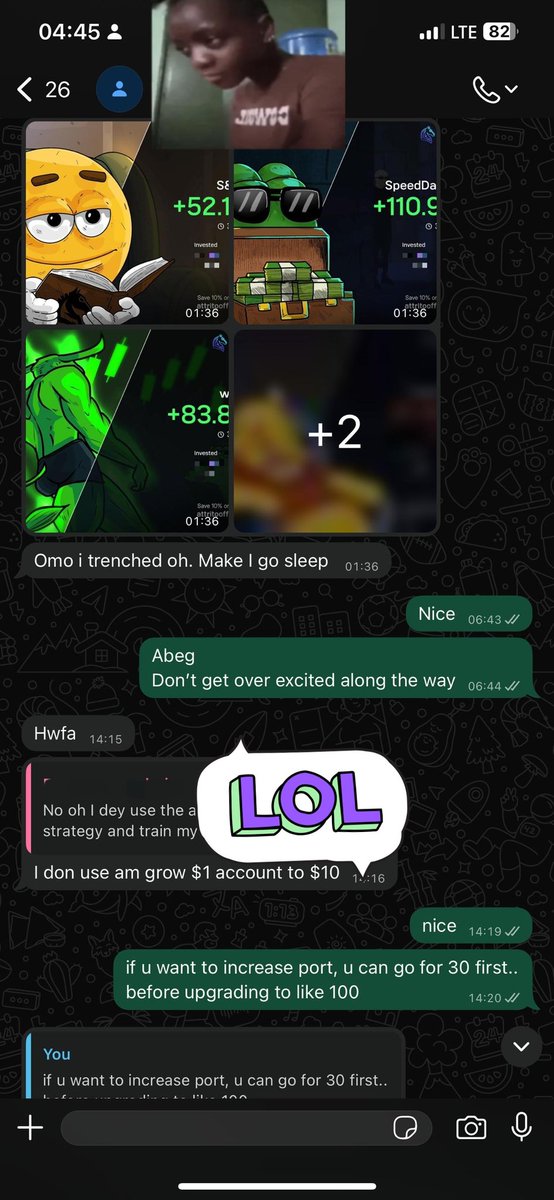
If you can grow $1 to $10, it means you can grow $10 to $100, $100 to $1k, and so on.
None of this happens overnight if you don’t study.
I wish him good luck when he decides to use a higher capital for the strategy I explained to him.
A lot of people underrate scalping, even when it’s clear that the whales they want to be like actually scalp. They don’t wait for 1000x before selling.
I might just write an article about this strategy and what has been helping me stay profitable in memecoin trading.
Although I can be lazy sometimes 😭, but let’s see how it goes!
Are you locked in for Q2? 🫵
42
5
141
7,511
He has $RISEN
3HccbHvpkzrkvkkCzG24UmzHXV4CrR4ngXhjm1ocpump
3
25

Web3 is Dead🤣
Web3 never ran out of opportunities. You ran out of range. That’s a skill issue.
Every cycle prints money differently, trading, infra, dev, research, content, airdrops, infofi, market making… the list keeps growing.
If your entire definition of Web3 is one meta, you’ll burn out every time it fizzles. NFTs had their run. Infofi had its moment. Something else is already brewing.
The real question: will you evolve with the ecosystem or stay stuck defending yesterday’s playbook?
There’s serious money on the table right now. The only thing standing between you and it is a fixed mindset, an expired skill set, and blind loyalty to a chain or idolos that don’t give two fucks about you.
Figure it out or get left behind.
5
3
20
200
Attrito retweeted

Mar 26
Since 2023, I’ve personally written over 100 CVs for individuals across different fields, helping people stand out and secure opportunities.
But I noticed something: while the results are excellent, the process can be time-consuming.
So I created a smarter solution.
Introducing CVerified.site, a simple, fast, and effective platform that allows you to create a polished, professional CV in 5 minutes or less, anytime you need it.
No delays. No stress. Just results.
Whether you’re applying for internships, jobs, or scholarships, your CV is ready when you are.
👉 Visit: CVerified.site
Have questions or need assistance?
Contact Fortune:
📧 olayefortune99@gmail.com
📞 08163721142

3
5
70
Web3 founders & marketers — this thread is the wake-up call we all needed.
You’re out here dropping $5K on influencers with flashy follower counts, only to get ghost engagement and zero ROI because half of them are bots and bought activity.
@xscouter_ai fixes this
Mar 25

Let's talk about something that's quietly bleeding money out of Web3 every single day, and most people don't even realize it's happening to them.
Say you own a crypto project. You've saved up a budget for influencer marketing, you find someone with 200K followers, their posts look great, the numbers seem strong. You pay them $5,000 and wait.
The results come back flat. No real engagement, no community growth, nothing to show for it.
Then you realise the uncomfortable truth is, half those followers might have been bots from the start, but you had no real way of knowing.
A thread.🧵

1
2
3
46
Attrito retweeted

Mar 25
Let's talk about something that's quietly bleeding money out of Web3 every single day, and most people don't even realize it's happening to them.
Say you own a crypto project. You've saved up a budget for influencer marketing, you find someone with 200K followers, their posts look great, the numbers seem strong. You pay them $5,000 and wait.
The results come back flat. No real engagement, no community growth, nothing to show for it.
Then you realise the uncomfortable truth is, half those followers might have been bots from the start, but you had no real way of knowing.
A thread.🧵
1
4
8
155
Attrito retweeted
Mar 24
The Clarity Gap in Web3 Is Your Biggest Opportunity
Because here's the thing: whoever learns to explain Web3 clearly doesn't just help people understand. They have a market advantage.
Think about it. Right now, whoever can explain Web3 in a way normal people understand controls the whole narrative.
If the only clear explanations people find are the ones saying "crypto is a scam" and "NFTs are just JPEGs," that's what everyone's going to believe.
But what if we could clearly explain:
- You can actually OWN your digital stuff for real
- You can build things without needing permission from Apple or Google
- Anyone can verify how a system works—no trusting some company
- Communities can coordinate and make decisions together in new ways
These are genuinely powerful ideas. We're just terrible at explaining them.
So how do you explain Web3 better?
1. Cut out any unnecessary information. I mean really cut it. Every technical term makes people's brains work harder. So only use them when there's literally no simpler way to say it. And when you do use them, explain them right away.
2. Start with why anyone should care. Don't open with how it works. Open with what it does for them. The use case first, architecture later.
3. Use real examples. Don't just describe concepts in the abstract. Walk through actual scenarios. Show them what it looks like in practice.
4. Say things more than once. Your readers aren't studying for a test. They're digesting in information. The important stuff? Say it more than once and in different ways so it actually sticks.
Now how do you know your explanation is thorough and understandable before posting it?
That's simple, just show it to someone who knows nothing about crypto.
Like your mom. Your roommate. Your friend from college who sells real estate. If they don't get it, you need to rewrite it.
The Bottom line is that Web3 has a translation problem, and that is what is making adoption slow.
Yeah, the technology is complex. But the IDEAS don't have to be.

1
5
8
79
Attrito retweeted
Mar 20
I have a friend who’s incredibly talented.
Smart, skilled, always full of ideas.
The kind of person you look at and think, “Yeah… they’re going to do something big.”
But for the longest time, nothing really changed.
Not because they weren’t capable, but because they were too careful.
They’d overthink before starting.
Hesitate before putting their work out.
Hold back unless they were sure it would go well.
And at some point, it clicked for me:
They weren’t just avoiding failure…
they were avoiding success too.
Because success doesn’t come from getting it right the first time.
It comes from getting it wrong enough times to figure it out.
What people don’t talk about enough is this:
Every failure is feedback.
Every attempt sharpens you.
Every setback teaches you something you couldn’t have learned any other way.
The more you try, the faster you learn.
The faster you learn, the closer you get.
But none of that matters if you stop after the first hit.
And to be honest, that’s the part most people struggle with—
not failing, but getting back up after.
The ability to reset.
To adjust.
To try again, even when it’s frustrating, even when it’s hard, even when it feels like nothing is working.
That’s the difference.
Not talent. Not luck.
Just the decision to keep showing up.
So if things haven’t worked out yet, you’re not behind.
You’re in the process.
Keep going and don't give up.❤️

1
5
5
62
Web3 won’t scale without better wallets.
That’s the layer most people are ignoring.
Wrote about this in my latest piece with Analytiq Global 👇
Curious to hear your perspective.
linkedin.com/pulse/how-walle…
4
4
36
Attrito retweeted
Mar 16
Most people don't understand Bitcoin until the moment they need it.
Last week gave a lot of people that moment.
Last week, military conflict between the U.S. and Iran escalated sharply.
Oil surged past $115 a barrel.
Stocks sold off hard across the globe.
Investors panicked and rushed for the exits.
And Bitcoin?
It held steady around $70,000, touched highs near $74K, and gained 6–8% for the week — while traditional markets were deep in the red.
That's not luck. There's a real reason behind it.
Here's what Bitcoin actually is — in plain English👇🏾
Bitcoin is digital money that no government, bank, or company controls.
It runs on a global network of computers. Nobody owns it. Nobody can shut it down. And only 21 million will ever exist — that number is locked in forever.
Here's why that matters:
When governments face a crisis, they print more money. And every time they do, the value of the money already in your pocket quietly drops. That's inflation. It's been happening for decades, slowly and invisibly.
Bitcoin was built so that can never happen to it.
No one can create more of it. No one can devalue it. So when the world starts feeling unstable, more and more people are choosing to hold a portion of their wealth in Bitcoin — because it sits outside the reach of any government's decisions.
What actually happened in the market last week
When the conflict escalated, two things unfolded inside the crypto market that most beginners never notice:
1. Bitcoin was the only market still open
It was a weekend. Stock markets were closed. Banks weren't moving money.
But conflict doesn't wait for Monday morning.
While every other financial market sat frozen, crypto was pricing in the news in real time — every development, every headline, every escalation. For anyone trying to act on what was happening, crypto was the only door still open.
That 24/7 availability isn't a small thing. In moments of genuine global uncertainty, it becomes one of Bitcoin's most underrated strengths.
2. Billions moved into stablecoins — a signal worth watching
Most beginners focus only on Bitcoin's price. But last week, something quieter and arguably more telling was happening beneath the surface.
Stablecoins — cryptocurrencies pegged to the value of the dollar — saw massive inflows. USDC, one of the most widely used stablecoins, approximately hit a record of $79.2 billion market cap.
What does that mean in simple terms?
Billions of dollars were moving into the crypto ecosystem from people who weren't yet ready to buy Bitcoin directly. They were parking money in digital dollars — stable, accessible, and inside the crypto world.
That capital doesn't sit still forever. It eventually moves. And historically, a significant portion of it finds its way into BTC.
Stablecoin inflows are one of the earliest signals that serious money is preparing to move.
The bigger picture is this, Bitcoin wasn't built for bull markets and good times.
It was built for exactly the kind of week we just had — when institutions wobble, currencies lose credibility, and people need somewhere to store value that no single government can touch.
That doesn't make it risk-free. Prices still swing. Volatility is still real. Anyone who tells you otherwise isn't being straight with you.
But last week was a quiet, real-world demonstration of something that's becoming harder to ignore:
When the world gets uncertain, Bitcoin is increasingly where serious money goes.
Not because of hype.
Not because of speculation.
Because of what it was designed to be.
If you found this insightful, share this with someone who's been curious about crypto but never quite understood why it matters.
Disclaimer: Not financial advice. Always do your own research before investing.

1
4
6
81