
Moderator @BitgetAfrica | Product Manager @PatternsID📊 | Creator @Coinmarketcap | AI Postman
Joined December 2019
- Tweets 3,630
- Following 1,497
- Followers 1,964
- Likes 15,986
461 Photos and videos


Pinned Tweet

May 12
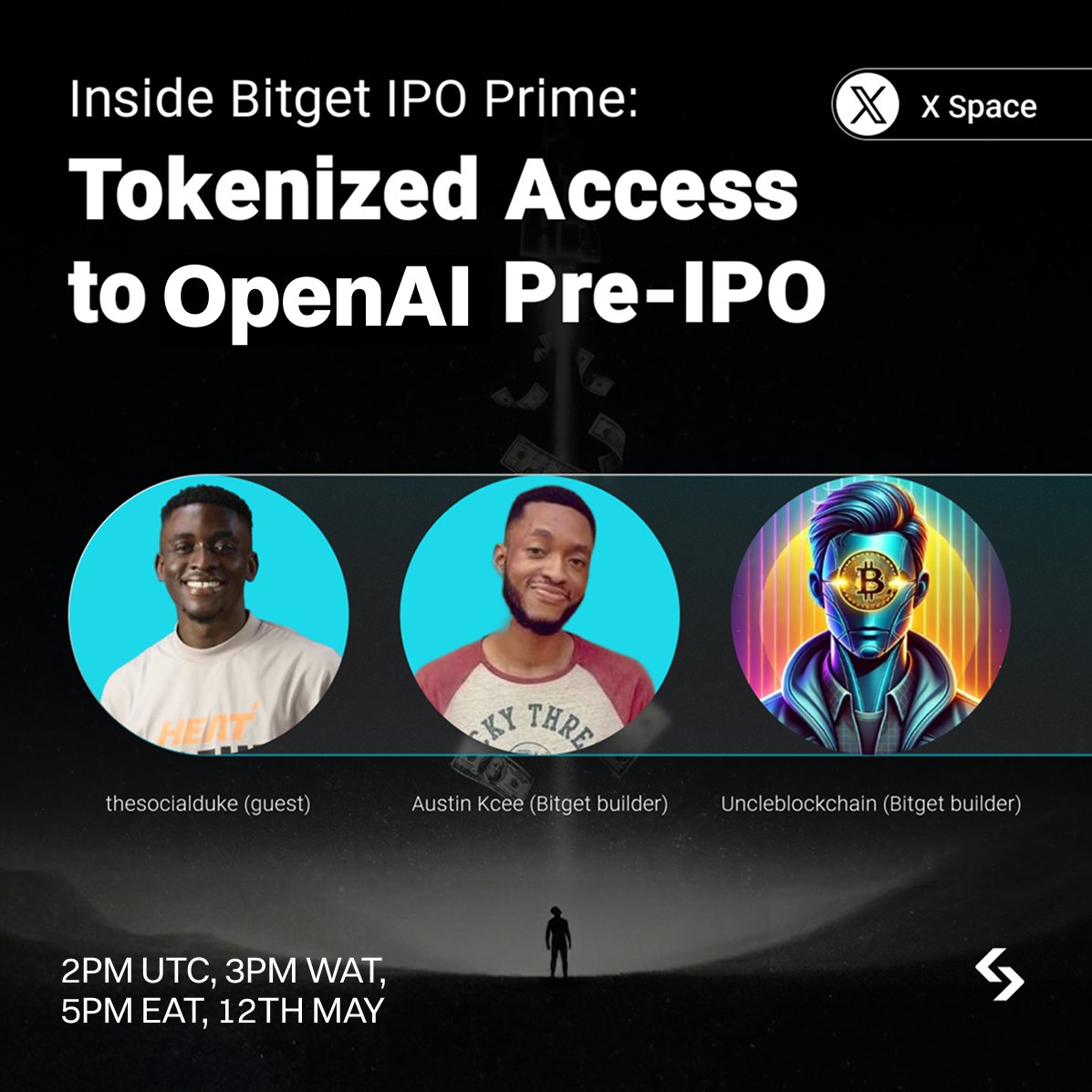
Excited to co-host this one with the @BitgetAfrica team! We’re going deep into Bitget IPO Prime and how tokenized pre-IPO access is finally opening doors for regular folks, starting with preOPAI
Expect real talk, sharp insights, and good energy all the way. It’s going to be a wonderful session, I promise.
⏰ Come hang out with us at 2PM UTC today
Everyone is warmly invited!
May 12

What if you could access companies like #OpenAI before they go public? 🤔
We’re diving into how Bitget IPO Prime makes this possible through tokenization
💰 100 USDT giveaway!
🗓️ TODAY!
⏰ 2PM UTC | 3PM WAT | 5PM EAT
Be there! 🫵🏿
5
23
712
21h
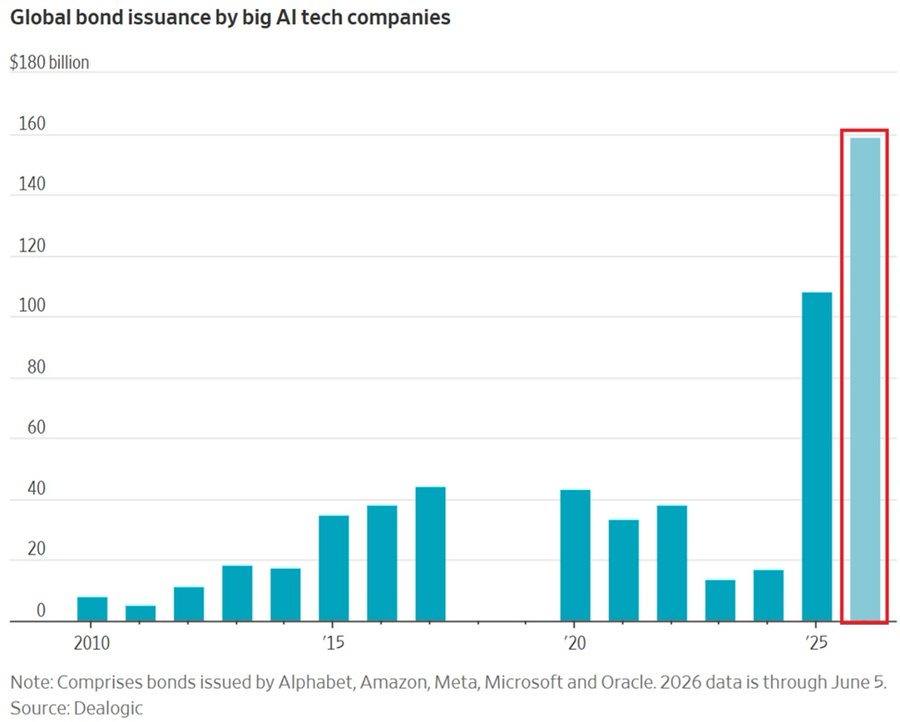
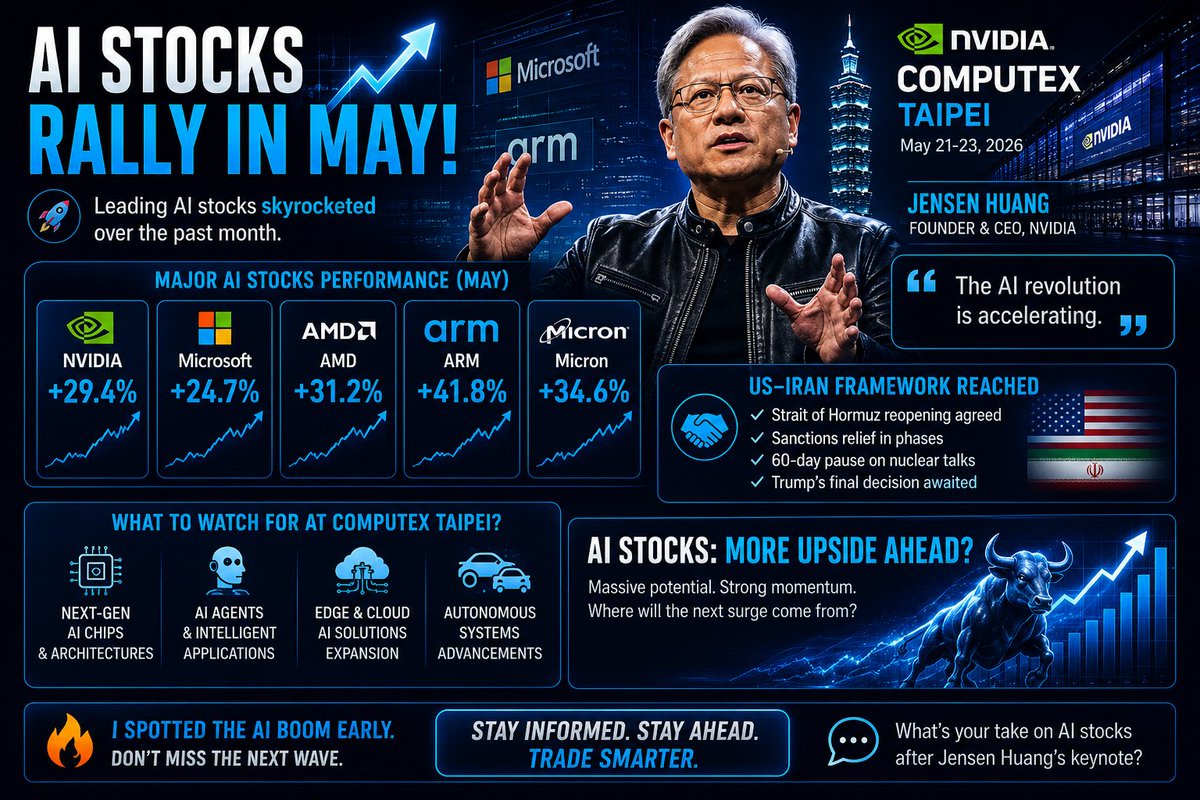
The AI arms race is now a debt arms race.
Alphabet, Amazon, Meta, Microsoft, and Oracle borrowed $159 billion in corporate bonds in the first half of 2026 alone. That's more than they borrowed in the entire 5 years from 2020 to 2024... Combined.
Oracle by itself took on $43 billion in debt since September. Morgan Stanley expects global AI-related borrowing to hit $570 billion this year: More than double last year. These companies are so convinced AI is the future that they're mortgaging their balance sheets to get there first.
If they're right, it's the greatest capital allocation in history. If they're wrong, it's the greatest debt bubble since the housing crisis.
1
3
27
KCee retweeted

Jun 12
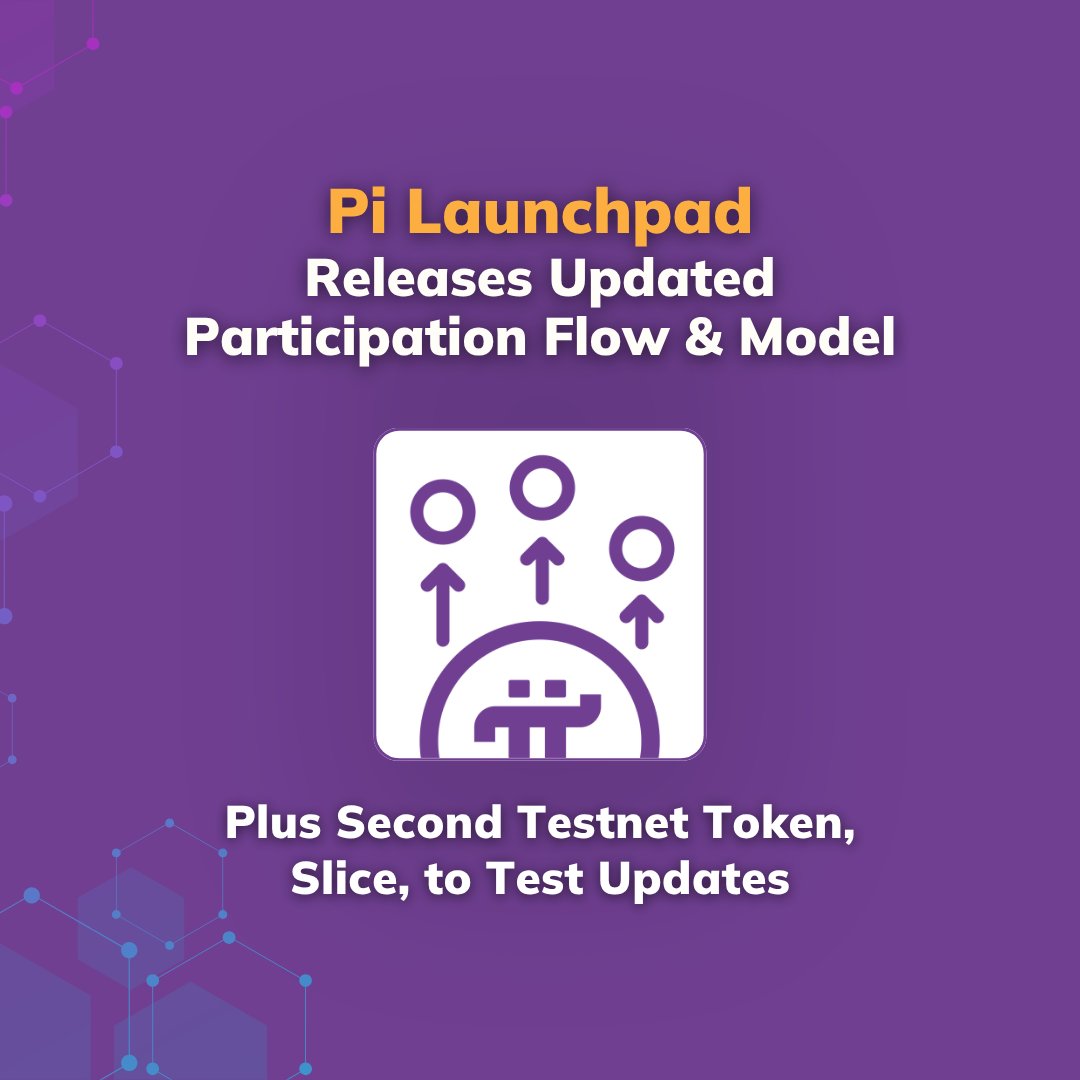
Pi Launchpad has updated its participation flow and model, incorporating data and feedback from the first Testnet token that launched on Pi Day 2026!
The first Launchpad test token attracted over 478,000 participating Pioneers and generated valuable feedback on the Launchpad mechanism. That feedback has now been incorporated into a simpler participation flow, updated Launchpad mechanics, and an improved user experience.
A second test token “SLICE” is now live on Testnet to help evaluate if the updates can achieve these goals, and to give Pioneers another chance to learn the new ecosystem token mechanics. As a reminder, SLICE is a Testnet token and will never go onto Mainnet.
To participate:
• Open Pi Launchpad in Pi Browser
• Review the SLICE test token and project
• Choose a commitment amount in Test-Pi
• Confirm participation
• Engage with the Slice of Pi app and provide feedback
Participation will remain open until Pi2Day on June 28.
Learn more on the Pi home screen!
622
1,293
5,392
140,821
Jun 12
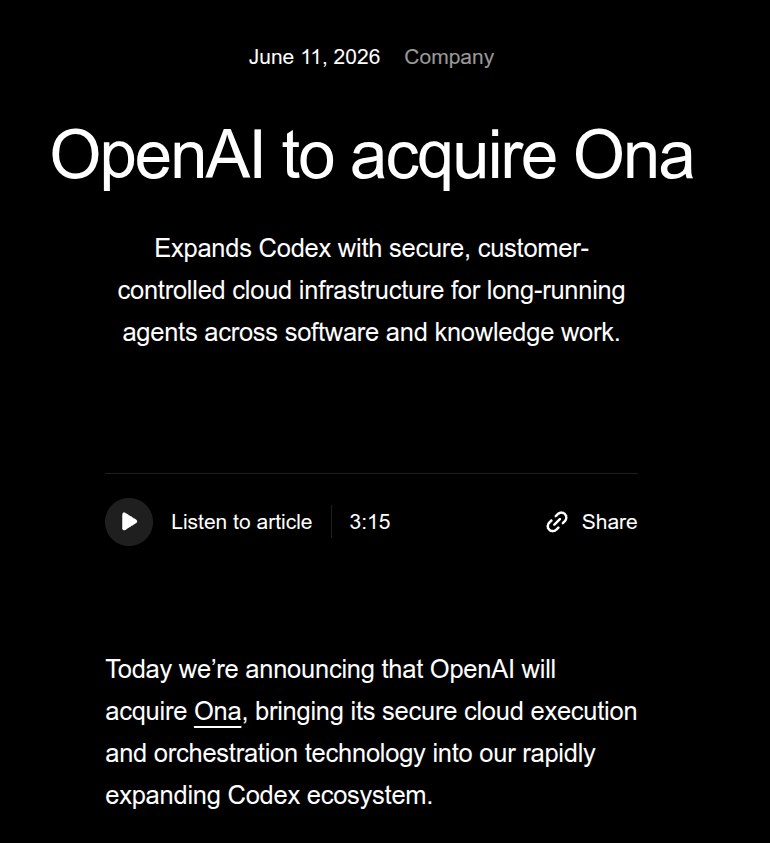
OpenAI acquires Ona to expand Codex agent capabilities
OpenAI has announced the acquisition of Ona, aiming to provide Codex agents with persistent, secure cloud workspaces. This strategic move allows agents to maintain an active environment, enabling commands to run and context to be preserved even after users disconnect.
Codex, which currently serves about 5 million weekly users—a 400% increase—faces limitations when agents require continuous access to specialized tools, files, and system logs for complex tasks.
By integrating Ona, OpenAI addresses the need for controlled, auditable agent operations within secure enterprise cloud boundaries. This change supports scenarios such as automated testing, code refactoring, bug fixes, security analysis, and multi-step workflows.
2
22
Jun 12
🚀SpaceX ($SPCX) is now trading on the Nasdaq.
Shares opened at approximately $172, marking a nearly 27% jump from the IPO price of $135 and signalling strong investor demand in the company’s public market debut.
4
47
Jun 11
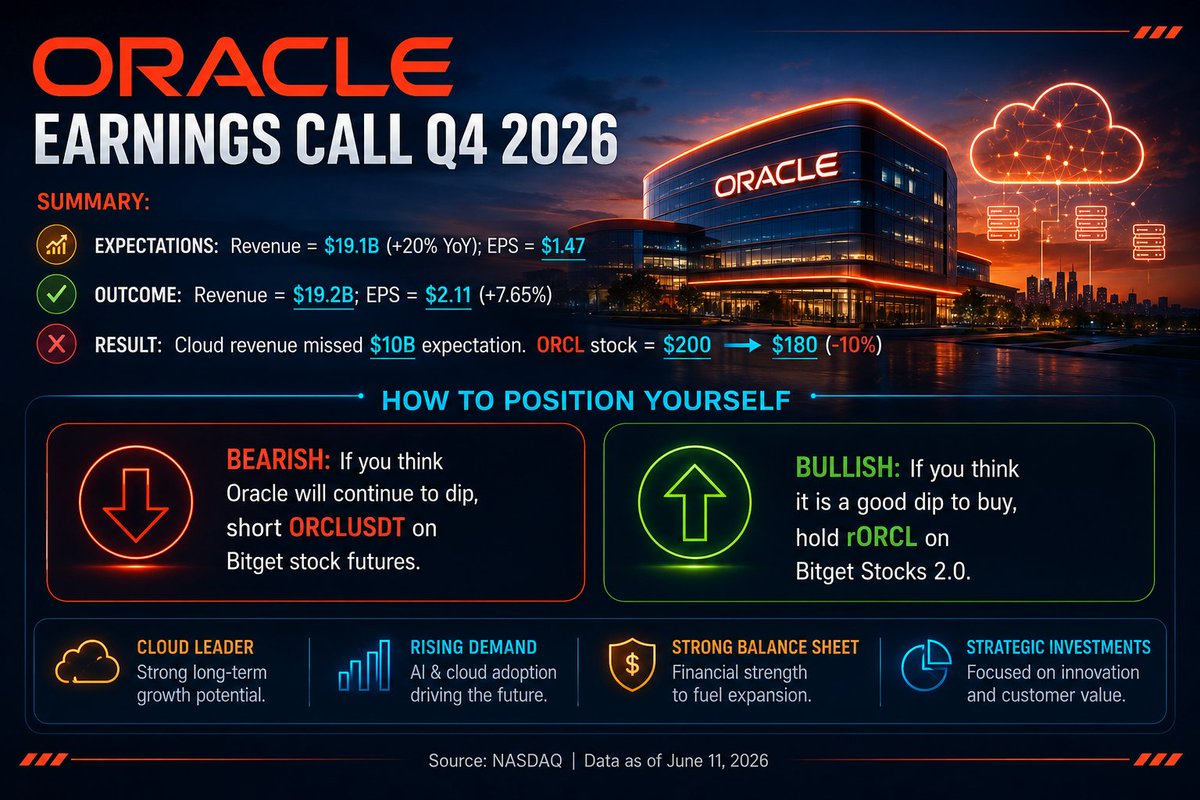
Last night, I was up checking the markets after Oracle’s earnings came out.
They beat expectations again, revenue at $19.2B and EPS a solid $2.11, yet the stock still dropped 10%, from $200 to $180 after hours. I’ve been caught out before with these “beat but miss the whisper” moments, especially with big tech names.
Just one soft cloud number and suddenly everything changes. It’s a good reminder that the market cares about future prospects, not just past numbers.
For me, this seems like a nice opportunity to buy rather than panic. Oracle’s enterprise edge remains strong, so I went ahead and grabbed some rORCL on Bitget Stocks 2.0.
Easy to hold, and I’ll also get free rNVDA rewards in a few days. If you’re worried about more downside on the cloud side, their stock futures let you short ORCLUSDT smoothly with super low 0.04% fees.
I’ve been trading US stocks on Bitget for a while now, and it just feels easier, no settlement issues, real NASDAQ depth, and 1:1 backing.
Plus, the rewards from the current event are already coming in nicely.
What’s your plan with this? #BitgetStocksUpgrade
2
1
6
40
Jun 11
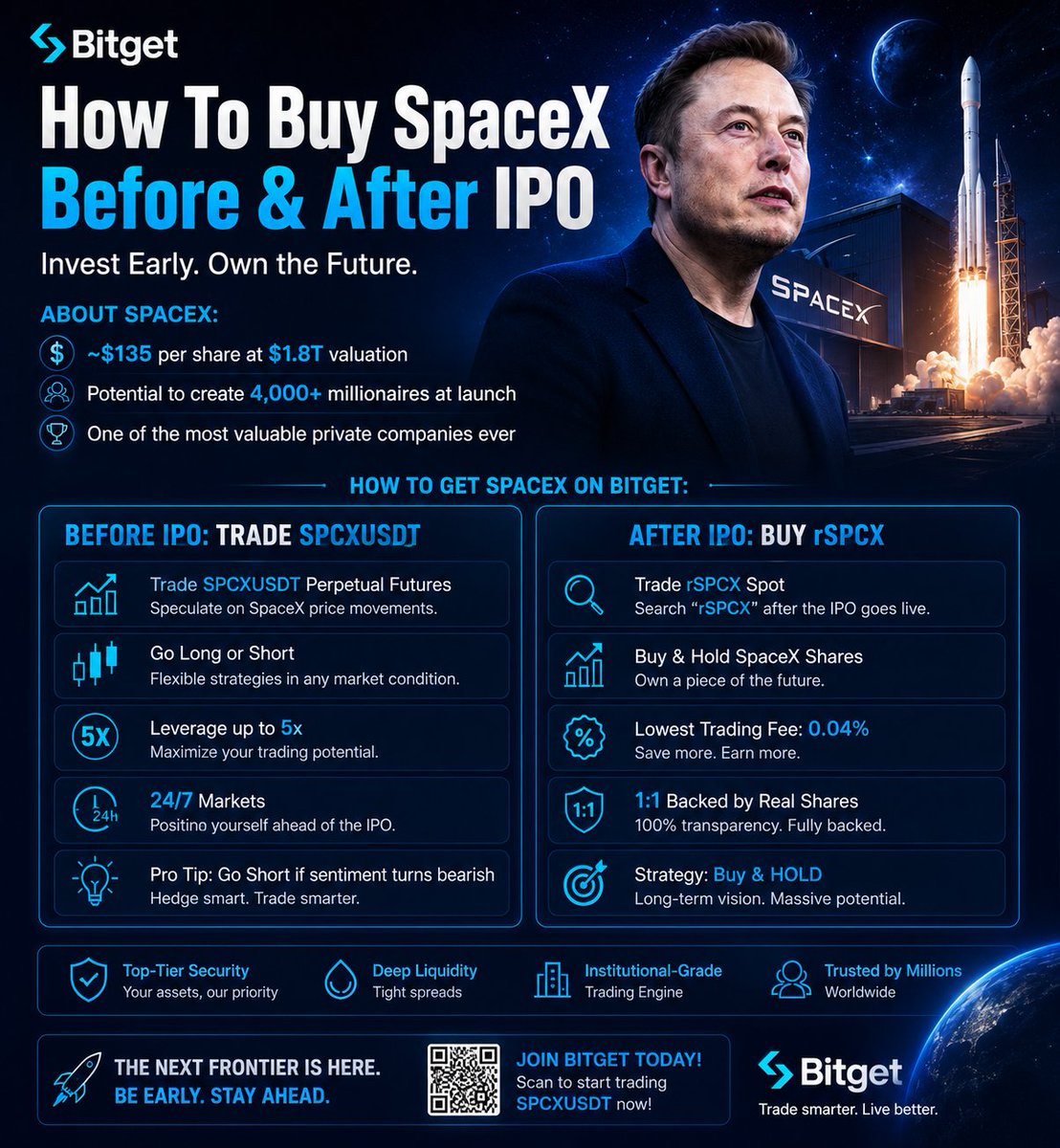
Just watched Elon’s rocket tests last week and thought, “This isn’t hype, this is the real deal.”
Tomorrow SpaceX drops at $135 a share with a staggering $1.8T valuation, the biggest in history, and it’s already set to make thousands of new millionaires on launch day.
I’ve traded plenty of big IPOs, but this one feels different, the kind that separates people who sit on the sidelines from those who actually position smartly.
If you’re bullish long-term like me, grab rSPCX on Bitget Stocks 2.0, it’s backed 1:1 by real shares, super low 0.04% fees, and you even get free rNVDA five days later.
Want to play the short-term volatility?
You can long or short SPCXUSDT with up to 5x leverage before the IPO even lands.
Either way, don’t just watch the IPO, get in early.
What are you doing for SpaceX tomorrow, holding, trading, or sitting out?
Drop your plan below 👇🏼.
#BitgetStocksUpgrade
1
3
9
57
KCee retweeted

Jun 9
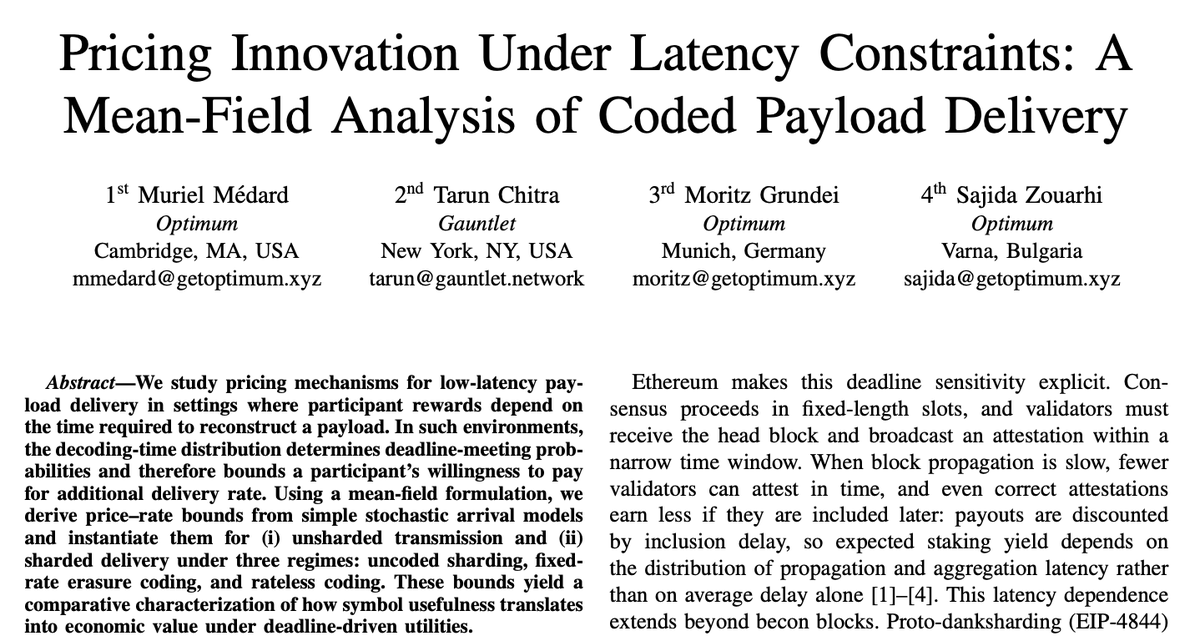
Speed is Money: What you need to know about Optimum's new latency pricing research 🧵
(Full paper can be found at arxiv.org/pdf/2603.20426)
39
41
222
14,056

Jun 9
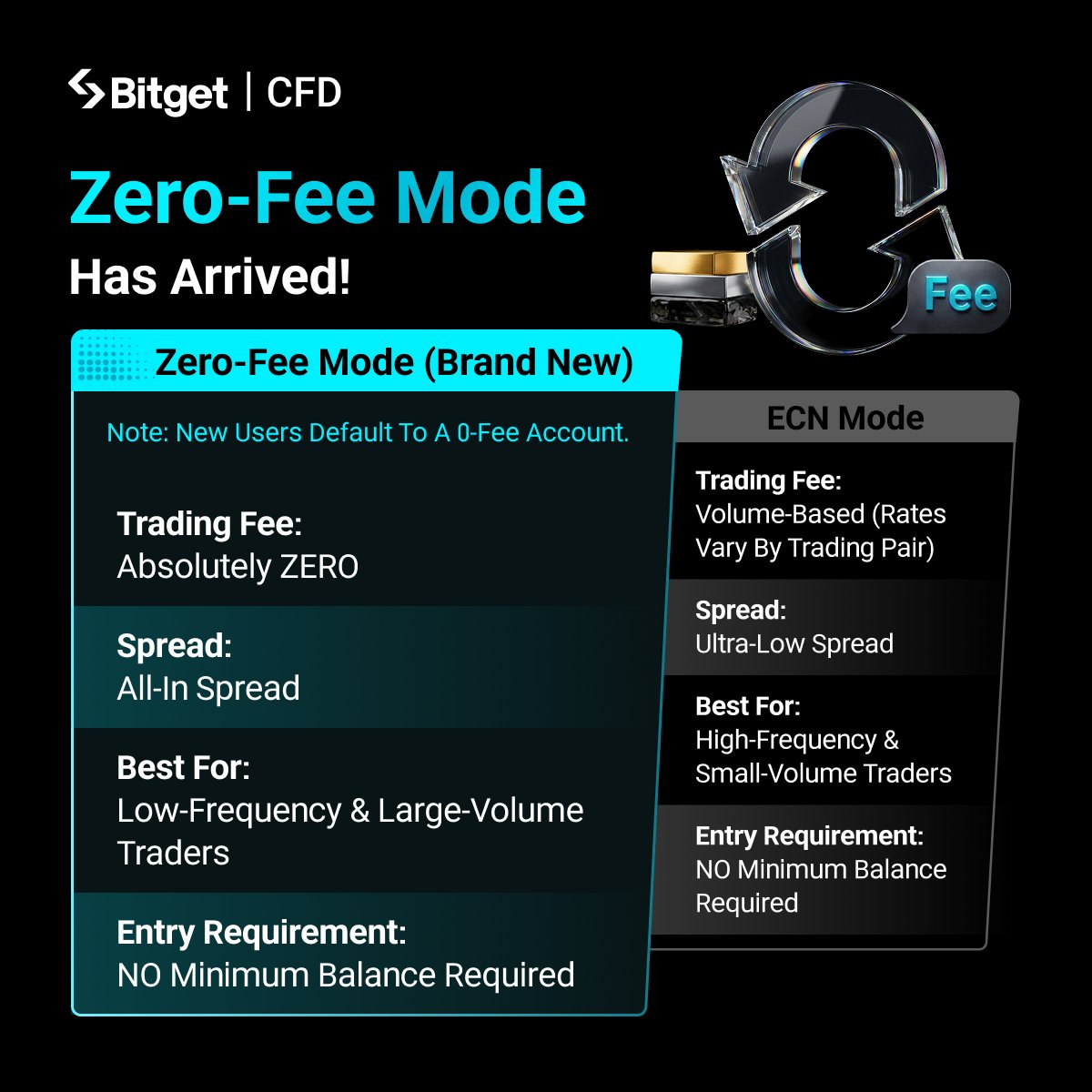
Back then, when I was trading CFDs the wrong way. I’d use the same mode for everything and wonder why my profits got taken by fees.
Then Bitget dropped the two-mode system and it finally got better for me. Now I run my trades in Zero-Fee mode because those positions can sit for days or even weeks.
No commissions quietly eating my profits, while I wait for the trend to play out. But when I’m scalping on shorter timeframes, I switch straight to ECN mode for those super tight spreads that actually let me get in and out without slippage killing the trade.
It’s simple: match the mode to your style. Long-term, low-frequency? Zero-Fee is perfect. Short-term, high-frequency? ECN gives you a big advantage.
I’ve been way more consistent since I started doing this on Bitget, up to 500x leverage on oil, forex, metals, and 24/5 trading so I never miss the move.
What about you? Which style are you running right now?
Drop it below 👇🏼
4
2
5
38
Jun 9
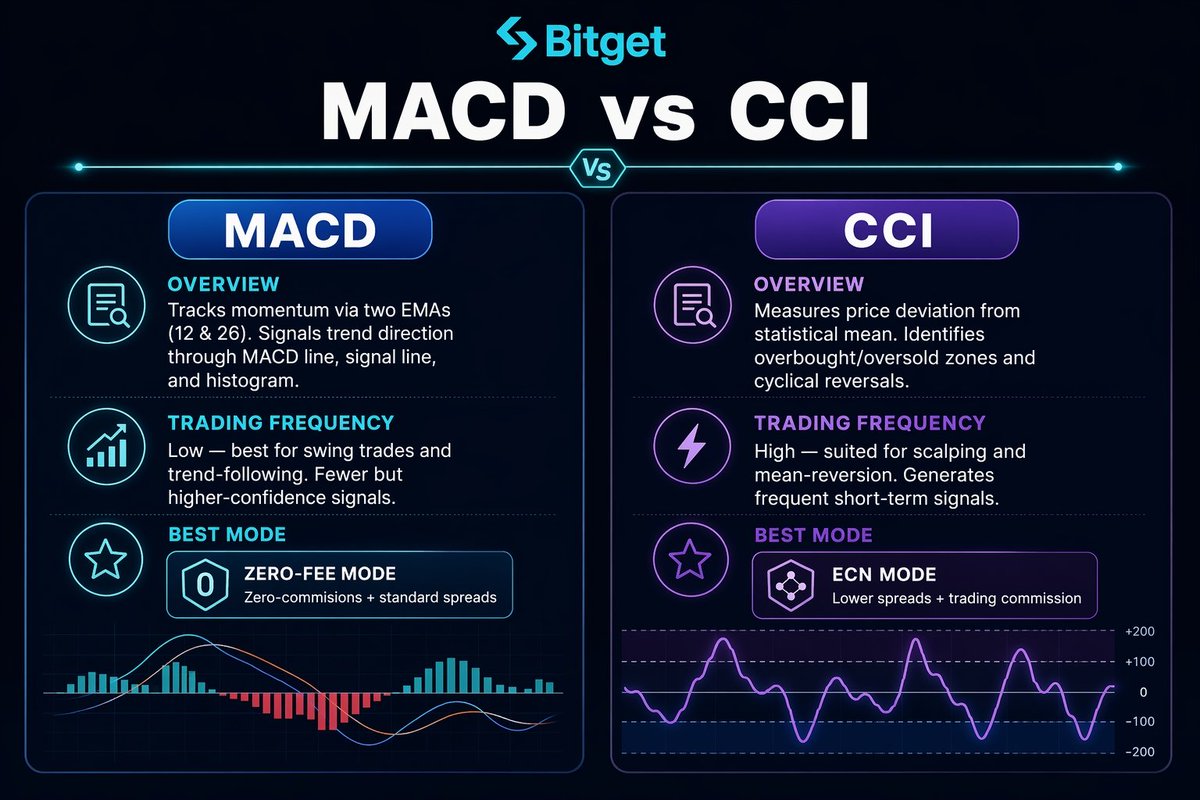
Guys, also check these guides. It's going to be helpful as well
(Practical MACD guide for the patient traders: bitget.com/academy/practical…)
(CCI guide for the fast movers: bitget.com/academy/cci-commo…)
1
28
Jun 9
This is awesome, that 25% SOXL move you just nailed in one day actually made me smile, those AI chip moves have been topping the headlines.
I’ve been trading rSOXL myself on Bitget Stocks 2.0 along with rTER and rLMT, and the real NASDAQ liquidity, crazy low 0.04% fees, plus free rNVDA tokens just for buying any stock… it honestly makes the wins hit different. #BitgetStocksUpgrade


2
2
4
31
KCee retweeted
Jun 8
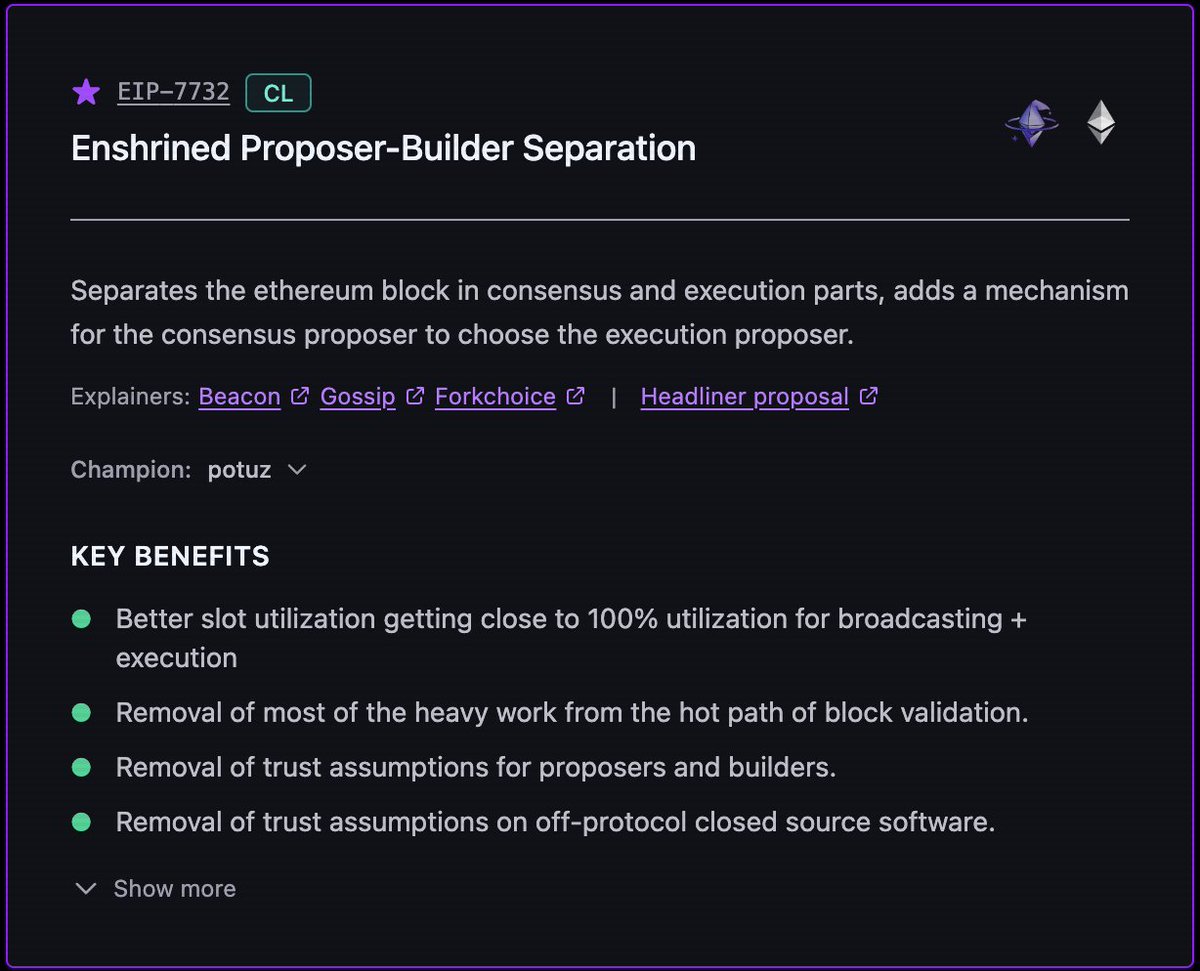
𝐞𝐏𝐁𝐒, 𝐬𝐥𝐨𝐭 𝐭𝐢𝐦𝐢𝐧𝐠𝐬, 𝐚𝐧𝐝 𝐬𝐜𝐚𝐥𝐢𝐧𝐠 𝐚𝐩𝐩𝐫𝐨𝐚𝐜𝐡𝐞𝐬
Ethereum is targeting Q3 for the next major upgrade, Glamsterdam. ePBS is the headliner, restructuring the deadlines within a slot to allow for larger blocks (higher gas limit & more blobs).
In the current slot structure a block has to be selected, proposed, propagated and attested to by the network in under 4 seconds. Increasing block size means more data has to reach nodes in the same short amount of time, and you run into bandwidth constraints.
ePBS buys more time for data propagation by separating blocks into the consensus block, execution payload, and blobs, and changing the deadlines for when those different parts of the block need to arrive.
Instead of the entire block needing to reach validators before the 4 second mark, they only need to receive the consensus block- a cryptographic commitment to a certain block & set of blobs. They make their attestation without receiving the execution payload, then have the remainder of the slot to receive that payload and verify it. Blob data is propagated separately giving nodes the full 12 seconds to receive it.
This scheme makes it easier to increase the gas and blob limits, which is good for some additional scaling. However, it's more of a sidestep than a true solution to the bandwidth bottleneck.
If you want to unlock serious throughput gains you need to improve how fast and efficiently data can move across the network. That's the key to increasing block size while ALSO shortening slot times.
Removing the bandwidth bottleneck means fundamentally upgrading the way data moves across Ethereum. Optimum's Random Linear Network Coding approach propagates Ethereum blocks with lower latency AND in a way that won't slow down as the size of blocks increase, OR as the network becomes larger and even more decentralized.
Scale the L1.
39
30
204
11,148
Jun 8
Just wrapped up a quick CFD scalp on Gold this morning, watched it bounce after that brutal 18% drop and caught a nice move without paying a single commission.
Recently, I switched to Bitget’s new Zero-Fee Mode yesterday and it felt like finally removing the hidden tax I’ve been paying on other platforms.
For casual traders like me who don’t hammer the market 50 times a day, this is a huge opportunity: standard spreads, zero trading fees, and still up to 500x leverage on forex, oil, metals, whatever you want.
I used to overthink every entry because fees ate my edge. Now I can actually test ideas on US indices or the DXY comeback without the platform taking a cut first.
High-frequency guys can flip back to ECN for tighter spreads, but for most builders and traders watching the charts on the go, Zero-Fee just makes sense.
If you trade CFDs, do this now: App → Bottom Nav “TradFi” → top-right “…” → Account Mode → switch to Zero-Fee.
Same on web under Preferences. Cheaper trading means you keep more of what you actually earn.
Stop leaving money on the table.
2
2
5
35
Jun 8
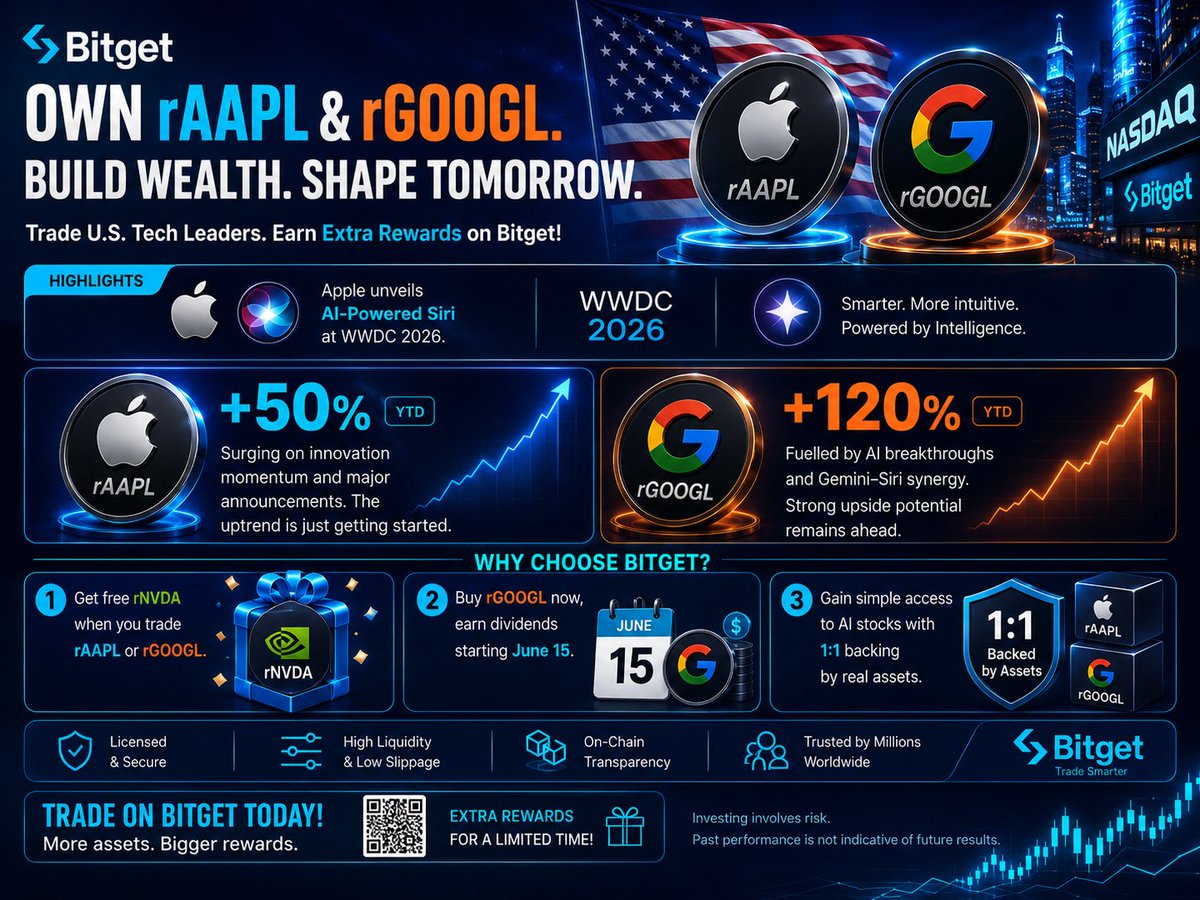
I've been trading tokenized stocks for a while now, and one thing I've learned is that the real money often comes when big tech finally turns hype into something you can actually use every day.
Apple's WWDC 2026 feels like exactly that moment. A Gemini-powered Siri could finally make your iPhone feel like a smart agent instead of just a voice assistant, handling complex tasks across apps with Google's AI brains behind it.
From what I've seen in past integrations, this kind of partnership doesn't just boost adoption; it lights a fire under both stocks.
I'm expecting fresh momentum for rAAPL (already up 50% YoY on AI bets) and even stronger legs for rGOOGL (up 120% YoY thanks to Gemini's wins).
Personally, I'm positioned in both on Bitget ahead of the keynote. My simple setup: buy rAAPL or rGOOGL now while the event buzz builds, lock in rGOOGL dividends dropping June 15, and score free rNVDA tokens as a bonus.
It's a clean way to get 1:1 backed AI exposure without the usual headaches, liquid, rewarding, and timed perfectly with real-world news.
If you're watching the AI race like I am, this is one of those setups where the same catalyst lifts two giants.
Don't sleep on it. 👀 #BitgetStocksUpgrade
3
6
33
KCee retweeted

May 31
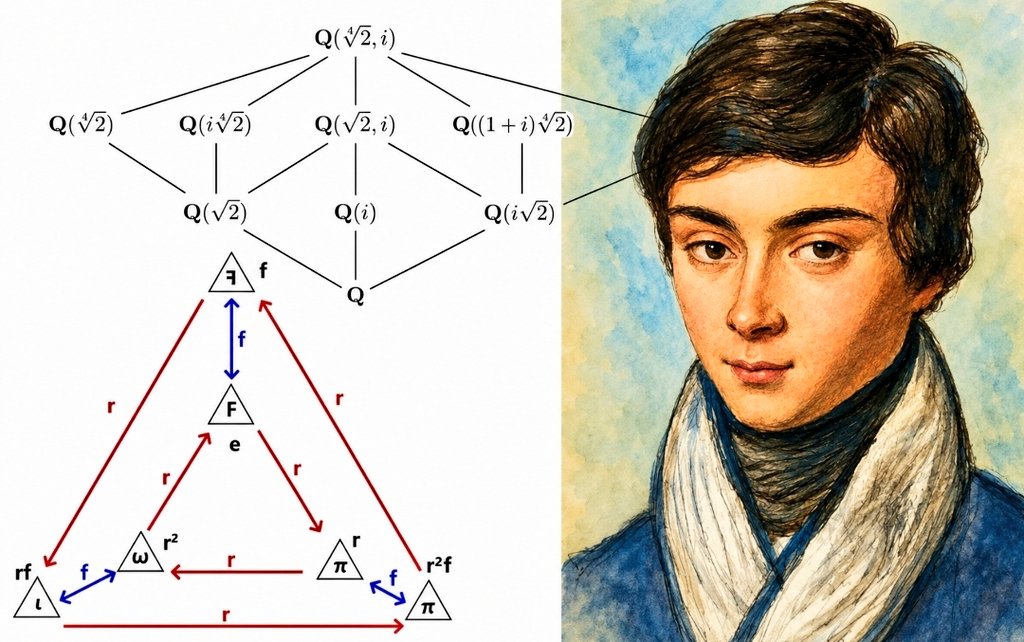
Today marks the death anniversary of Évariste Galois, a French mathematician and political activist.
He wrote his most important work at just 18 years old and died in a duel at 20.
Galois solved a long-standing, widely studied problem: he proved there is no universal formula for solving polynomial equations of degree 5 or higher.
He uncovered a profound link between two branches of mathematics—group theory and field theory.
Through this, he founded entirely new mathematical fields that paved the way for countless researchers afterward.
It’s staggering to imagine what he might have achieved had he lived longer.
23
103
545
30,114
KCee retweeted

Jun 5
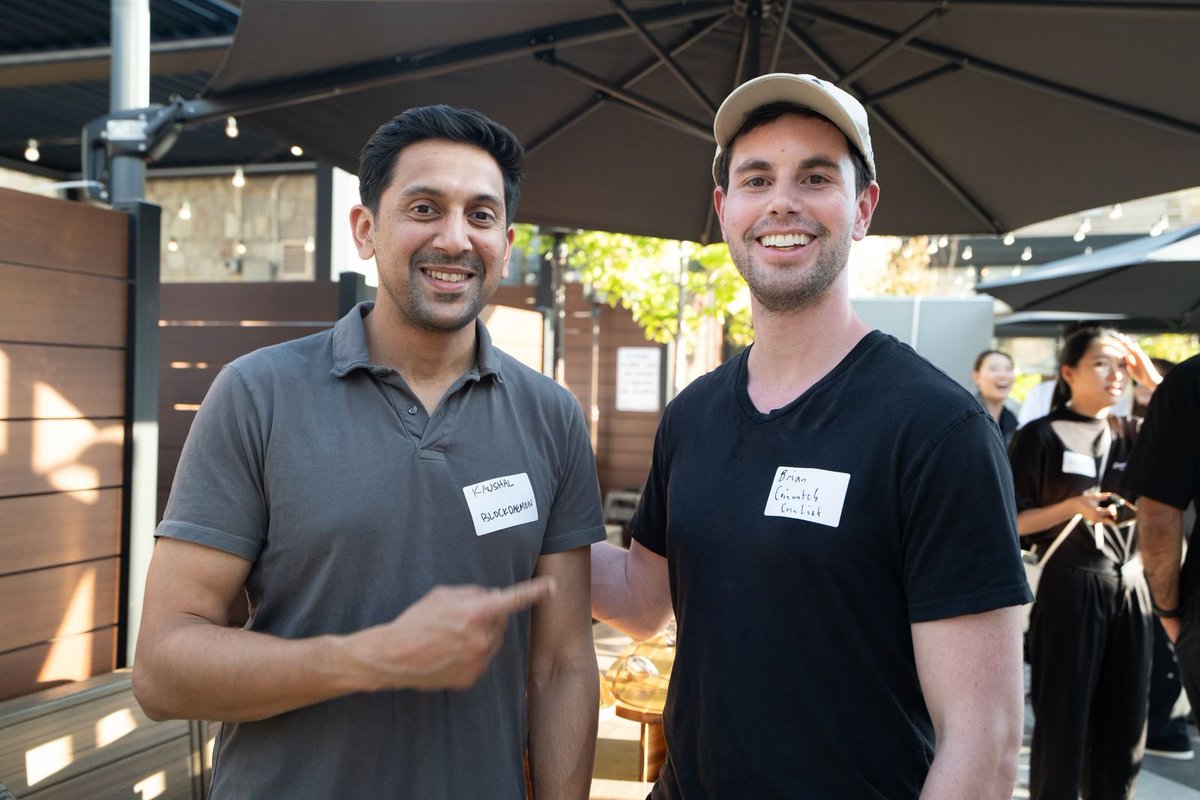
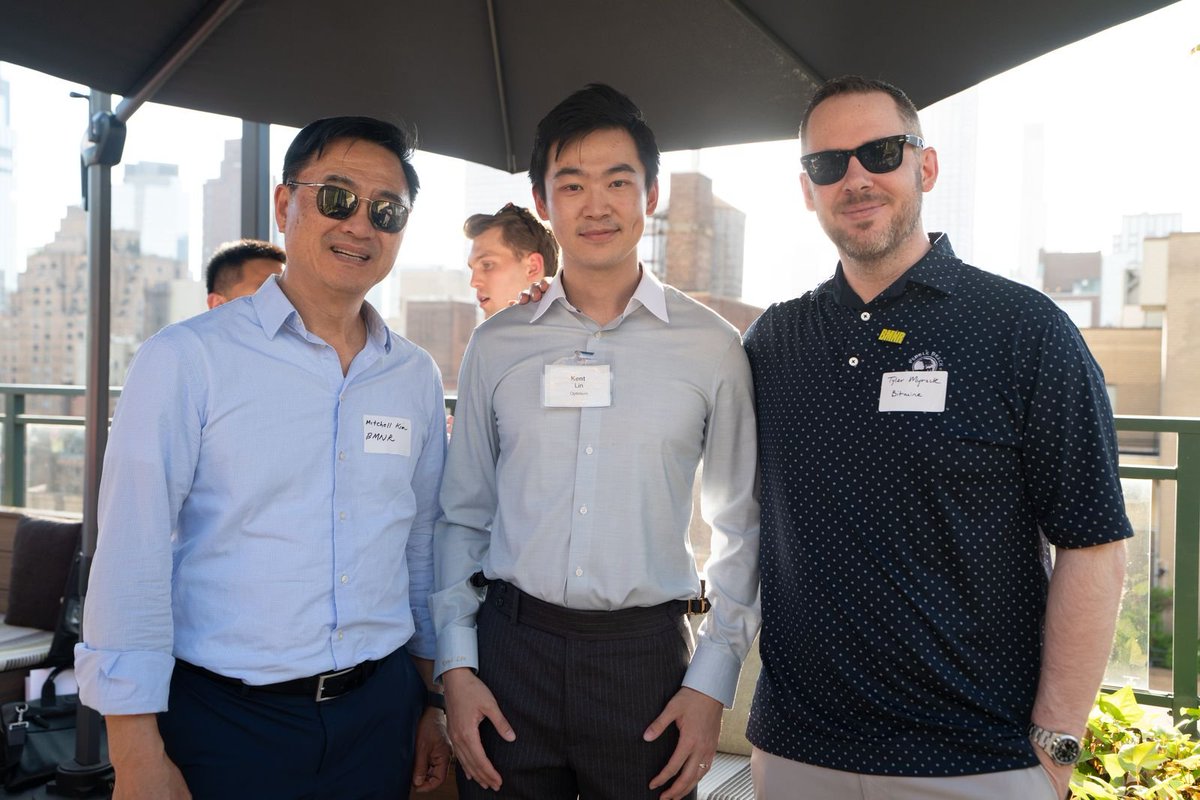
It was a pleasure to co-host Top of the Block!
Jun 5

The TAM is the entire global financial system & the ticker is $ETH.
Cheers from the Optimum team, @BitMNR, @1kxnetwork, @BlockdaemonHQ and @Auros_global here at last night's Top of the Block event we hosted in NYC. 🥂
Catch us next week at @ethconf!


17
6
67
1,074
Jun 6
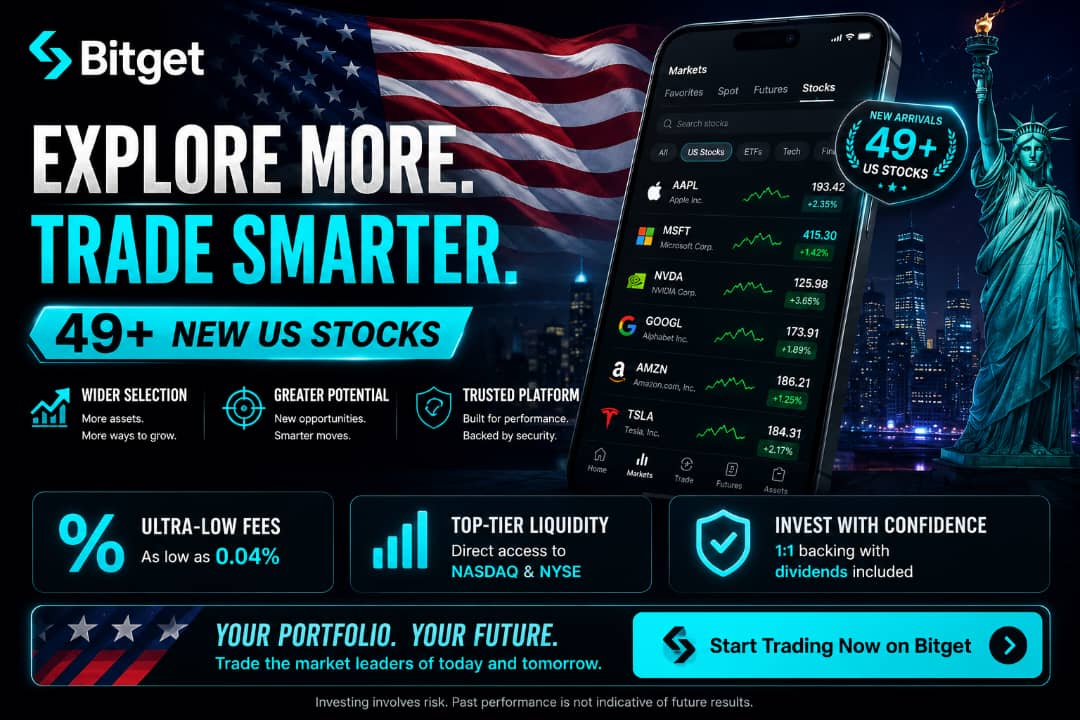
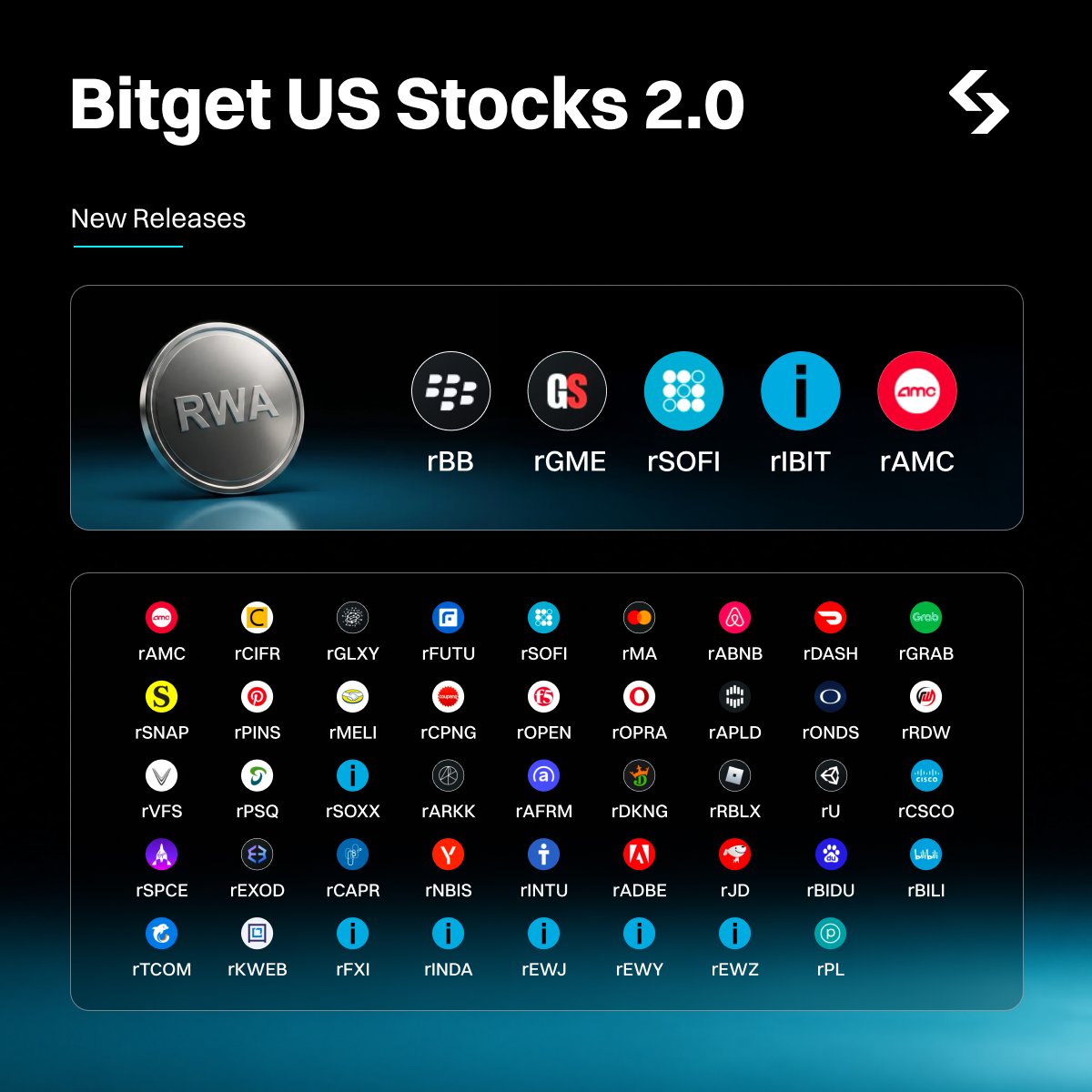
Just last week, I was scrolling TradeTalk and spotted Bitget dropping 49 fresh US stocks, felt like Christmas came early for anyone chasing real market exposure.
I’ve been testing a few myself, and honestly, it’s a game-changer compared to the usual crypto-only platforms. The depth is legit (straight from NASDAQ/NYSE), fees are stupidly low at 0.04%, and you actually get the dividends and interest.
No more guessing if your “stock token” is backed 1:1. Right now the ones buzzing hardest are rSOFI (that first bank-issued stablecoin plus Mastercard tie-up has me genuinely excited for real adoption), rSOXX (broadest AI play in one ticker, up 35% YTD and still feels early), and rCOHR crushing earnings on data center demand.
I jumped into a small position on rSOFI because the Q1 profit growth and upcoming catalysts feel way more solid than the hype stocks I’ve burned on before.
If you’re trading any of these on Bitget, grab the free $rNVDA while you’re at it and drop your own take as well.
#BitgetStocksUpgrade
2
1
7
47
KCee retweeted
Jun 5
Network Update: Upgrade to protocol 24 has been completed successfully.
Great job to all Nodes! This was one of the most challenging migrations.
Next up will be v25, deadline June 18.
1,089
1,673
7,863
221,965
Jun 4
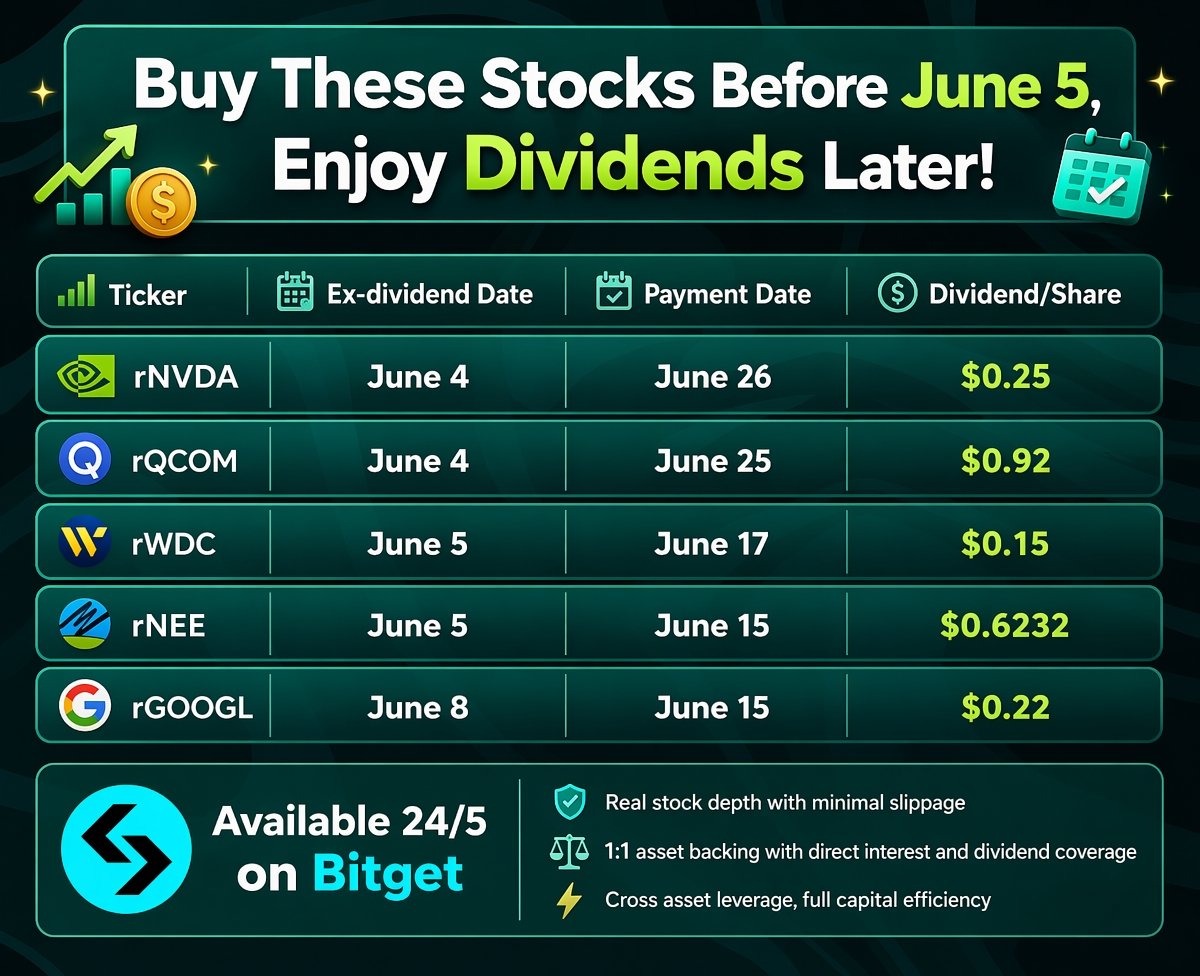
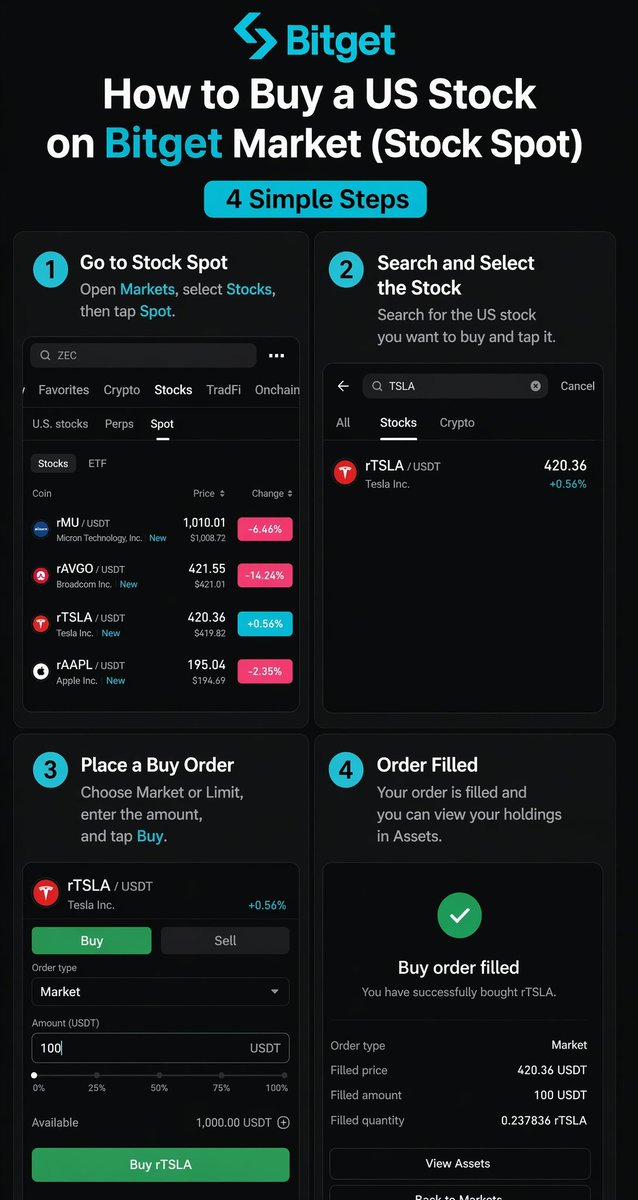
Dividend season is here and I’m already positioning..
Today’s ex-dividend for rNVDA and rQCOM, then rWDC rNEE tomorrow, and rGOOGL on Monday.
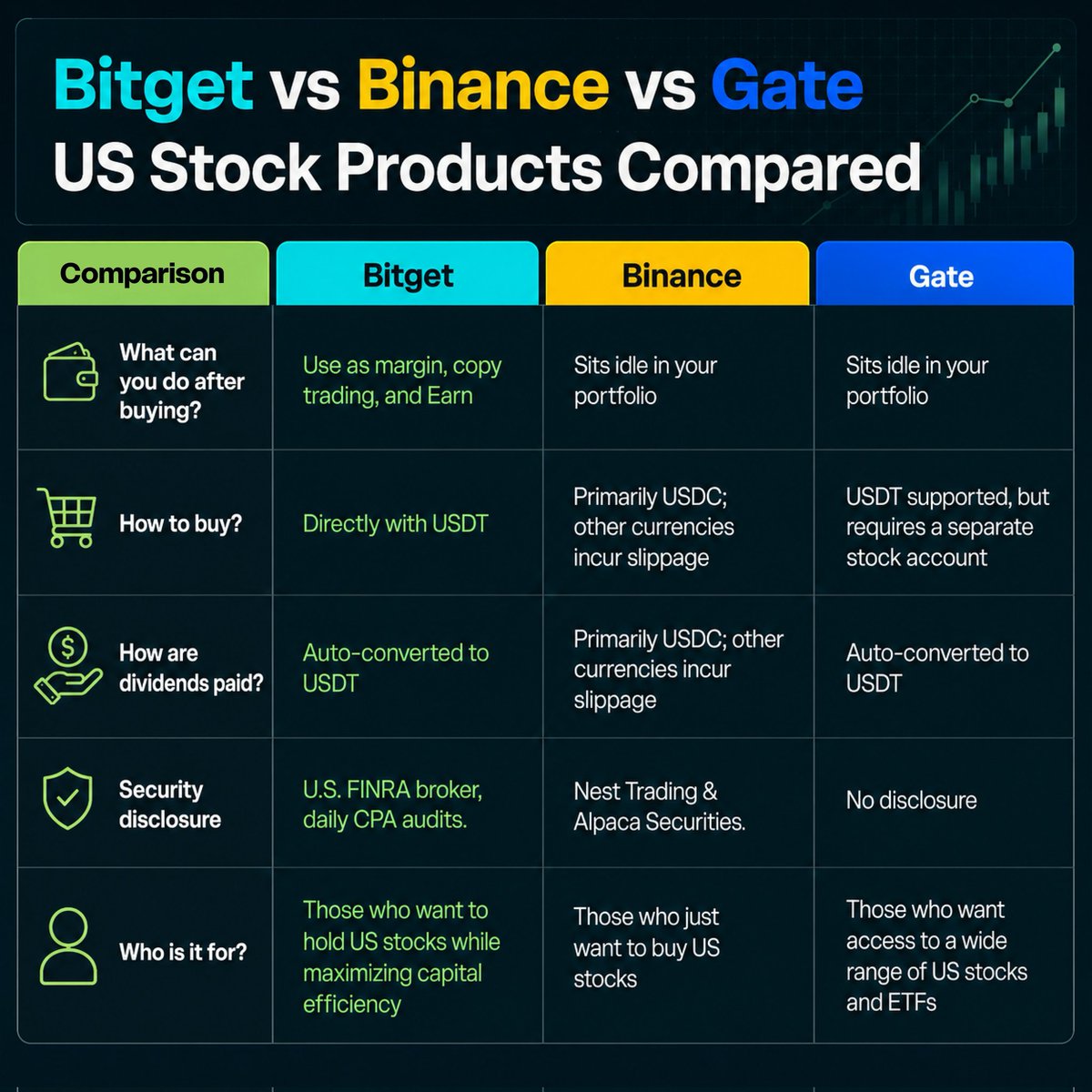
I’ve always liked the idea of getting paid just for holding quality companies' stocks, and #Bitget makes it way better than other platforms with super low 0.04% fees, real stock depth, 1:1 backing, and actual dividend coverage.
The 24/5 trading low-timeframe charts give me way more flexibility than Binance or Gate, so I’m buying and holding these names now to catch the payouts while also stacking some free rNVDA through the ongoing event.
Who else is locking in dividends this week?
2
1
7
32