Joined January 2011
- Tweets 785
- Following 667
- Followers 202
- Likes 2,864
80 Photos and videos





segun samuel retweeted

4
6
11
52
segun samuel retweeted

May 21
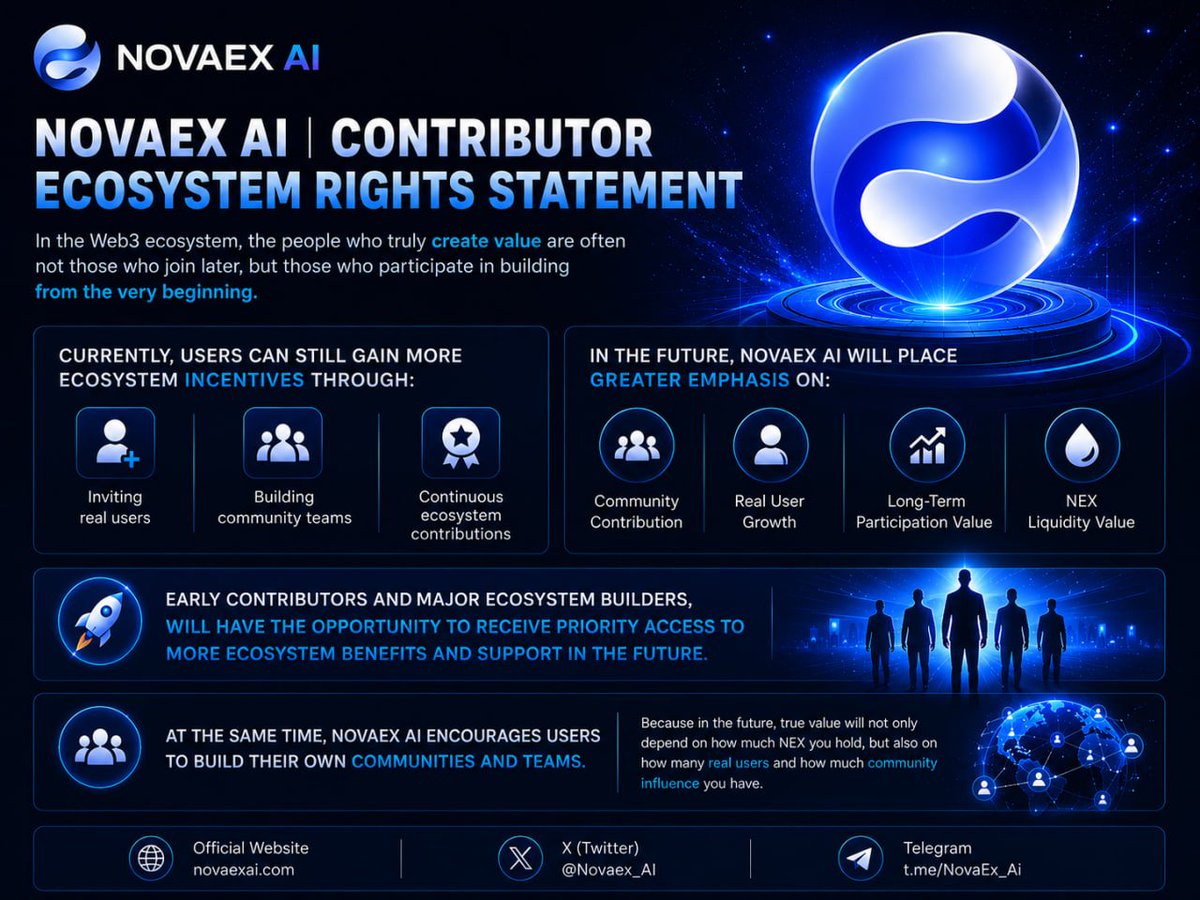
🔔 Novaex AI | Contributor Ecosystem Rights Statement
In the Web3 ecosystem the people who truly create value are often not those who join later but those who participate in building from the very beginning.
Currently users can still gain more ecosystem incentives through:
✅ Inviting real users
✅ Building community teams
✅ Continuous ecosystem contributions
In the future, Novaex AI will place greater emphasis on:
✅ Community Contribution
✅ Real User Growth
✅ Long-Term Participation Value
✅ NEX Liquidity Value
🌠 Early contributors and major ecosystem builders will have the opportunity to receive priority access to more ecosystem benefits and support in the future
📇 At the same time Novaex AI encourages users to build their own communities and teams
📈 Because in the future, true value will not only depend on how much NEX you hold but also on how many real users and how much community influence you have
#Web3 #Blockchain #Crypto #DeFi #AI #CryptoNews #BlockchainTechnology #Web3Community #AsiaCrypto #Novaexai
588
2,270
2,513
47,209
segun samuel retweeted

KADCHMA Healthcare for all...
Get your Health Covered
@GovKaduna @DepGovKaduna @Better_Kaduna @kadchma @kadirsgovng @openkd44 @KADSAMHSA @kaduns
2
2
31


Dangote has done three things in the last 72 hours that the Nigerian government could not do in 60 years.
He cut aviation fuel to N1,650 per litre, slashed diesel and aviation fuel prices at ex-depot level, and filed a lawsuit to stop NNPC and private marketers from importing fuel that his refinery is already producing in surplus.
Now the oil marketers are crying monopoly.
Let us be honest about what monopoly means in this context. For 60 years, a cartel of fuel importers held Nigeria hostage, collecting $10 billion annually in subsidy, keeping state refineries deliberately broken, and charging Nigerians premium prices for refined crude they sent abroad themselves.
Nobody called that a monopoly. Nobody filed a lawsuit about market stability when ordinary Nigerians queued for fuel in an oil producing country for decades.
One private refinery starts cutting prices, increasing supply, and going to court to enforce a law that already says imports are only permitted when local supply is insufficient, and suddenly the marketers have discovered the language of competition and consumer protection.
The law is clear. The Petroleum Industry Act only permits fuel imports when domestic supply cannot meet demand. Dangote’s refinery is supplying over 90% of Nigeria’s daily petrol consumption. The legal basis for those import licences does not exist. He is not asking for a favour. He is asking for the law to be applied.
The marketers built their business model on Nigeria’s inability to refine its own oil. That inability has been solved by one man with private capital. Their business model is obsolete and their objection is not about market stability. It is about market access to a rent they no longer deserve.
112
654
1,822
159,763
segun samuel retweeted
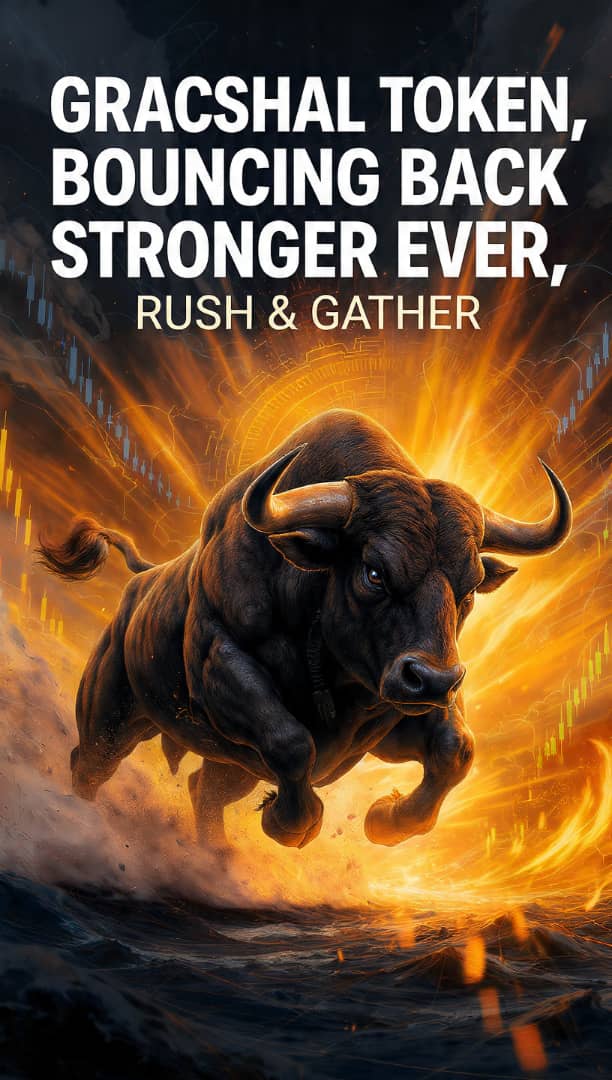
🚨 $GRACSHAL 🚨
Quietly building. Steadily expanding. Consistently progressing.
From community growth to real-world utility initiatives, the foundation behind $GRACSHAL continues to push forward with purpose.
This isn’t built on noise alone — it’s built on vision, participation, and execution.
The ecosystem is growing. The community is active. The movement continues. 📈
CA: 0xebc179873f591b3ba9e86a4b962af6292181359f
Stay connected. More ahead. 🚀
#GRACSHAL #Web3 #Crypto #BNBChain
3
10
60
segun samuel retweeted

May 18
1. Full Wall Street–Style Stock Analysis
Act like a senior Wall Street equity research analyst.
Analyze the stock: [TICKER].
Include:
• Business model and revenue streams
• Competitive advantages (moat)
• Industry trends
• Financial health (revenue growth, margins, debt)
• Key risks
• Valuation vs competitors
• Bull, bear, and base case scenarios
• 12–24 month outlook
Explain in simple terms but with professional insights.
1
5
45
12,676
segun samuel retweeted

May 16
I so much love Belinda point of view on Economic matters, she needs to do more appearances on Channels, Arise & TVC!!
444
773
2,588
93,214
segun samuel retweeted

👍
May 9

This is indeed the opportunity created by 𝐏𝐫𝐞𝐬𝐢𝐝𝐞𝐧𝐭 𝐁𝐨𝐥𝐚 𝐀𝐡𝐦𝐞𝐝 𝐓𝐢𝐧𝐮𝐛𝐮 𝐢𝐧 𝟐𝟎𝟐𝟑 𝐰𝐡𝐞𝐧 𝐡𝐞 𝐬𝐢𝐠𝐧𝐞𝐝 𝐭𝐡𝐞 𝐫𝐞𝐯𝐢𝐬𝐞𝐝 𝐄𝐥𝐞𝐜𝐭𝐫𝐢𝐜𝐢𝐭𝐲 𝐀𝐜𝐭 𝟐𝟎𝟐𝟑.
This young man has taken advantage of that provision, which gives individuals, businesses, estates, factories, and communities the ability to generate up to 1 megawatt (1MW) of electricity without obtaining a license from the Nigerian Electricity Regulatory Commission (NERC).
As a stakeholder in the sector, this could be another opportunity for the government to reduce its over-dependency on the national grid.
Kudos to this young man, he has surely gotten the grip on his house network, with a proper metering and monitoring system for his neighbours.
2
3
9
2,010

May 9
O, this is sooo true.. I know people who turned that way abroad from Nigeria...

He Went to America and Lost His Faith in Two Years. Prophet Joel Ogebe
16
segun samuel retweeted
🚨 GRACSHAL COMMUNITY NOTICE 🚨
We are pleased to inform the community that the $GRACSHAL token relaunch is scheduled for tomorrow.
This marks an important step forward as we continue to strengthen the @Gracshaltoken project and expand its ecosystem.
All members are advised to stay prepared and follow official channels for real-time updates and participation details.
Let’s move forward together.
#GRACSHAL #Crypto #DeFi
2
5
11
115
Apr 30
To the woman who holds my whole heart ❤💕💖🌹
Happy Birthday, my love. You are my everything. 🌹
I Speak Jeremiah 29:11 into your life this season 💯🙏🏾
1
35
Apr 25
Just watch this guy 😆😆😆

21
segun samuel retweeted
🚨 IMPORTANT UPDATE FOR GRACSHAL MEMBERS 🚨
We’re excited to share that our diversified portfolio of utilities is making strong progress, with clear potential for massive growth and long-term returns.
💡 Key Projects Driving Our Ecosystem:
🏙 Smart City Estate
A cutting-edge development set to redefine modern urban living.
🌱 Agricultural Project
A strategic move into sustainable agriculture, ensuring long-term value creation.
🖨 Printing Press
A state-of-the-art facility designed to serve diverse, high-demand printing needs.
All of these initiatives are strategically aligned to build strong liquidity and real-world utility for the Gracshal Token.
📢 TRAINING ANNOUNCEMENT
As part of our commitment to growth and excellence, we’re introducing our Diamond Format Training Sessions (both online & offline):
🗓 Tuesdays, Thursdays & Saturdays
⏰ Usual time & venue
This training is very important, especially as we approach the relaunch of the Gracshal Token contract — a major milestone for our ecosystem.
🔥 Your consistency and commitment remain key to our collective success. Let’s keep building together!
— Emmanuel Akor
Gracshal Team
7
8
14
250
Apr 4
I have joined the $CREPE airdrop on Roqqu. Deposit and Trade Crepe on Roqqu to be eligible. 1,000,000,000 CREPE up for grabs on @Roqqupay @crepe_bsc Don’t miss the fun. Snapshot on 9th April. #RoqquAirdrop #CrepeOnRoqqu
1
9
segun samuel retweeted
🚨 GRACSHAL 🚨
$GRACSHAL is live and active on the BNB Chain — ensure you’re interacting with the correct contract.
📌 Contract Address (CA):
0x7697cfc801b1ecf7fdc733e5200d09337465cda5
Always verify before trading and stay connected for ongoing updates.
Stay sharp. 📈
#GRACSHAL #BNBChain #Crypto
1
8
15
324