
Joined April 2021
- Tweets 1,722
- Following 346
- Followers 92
- Likes 7,377
28 Photos and videos














Bazcryptic retweeted

22 Jul 2025
Imagine being Powell right now.
Brought inflation down from 9% to 2% while keeping the unemployment rate at 4%.
Stocks, Bitcoin, and Gold are all at all time highs.
And people are demanding he resign.
1,790
1,237
18,226
1,365,954
Bazcryptic retweeted
Jan 14
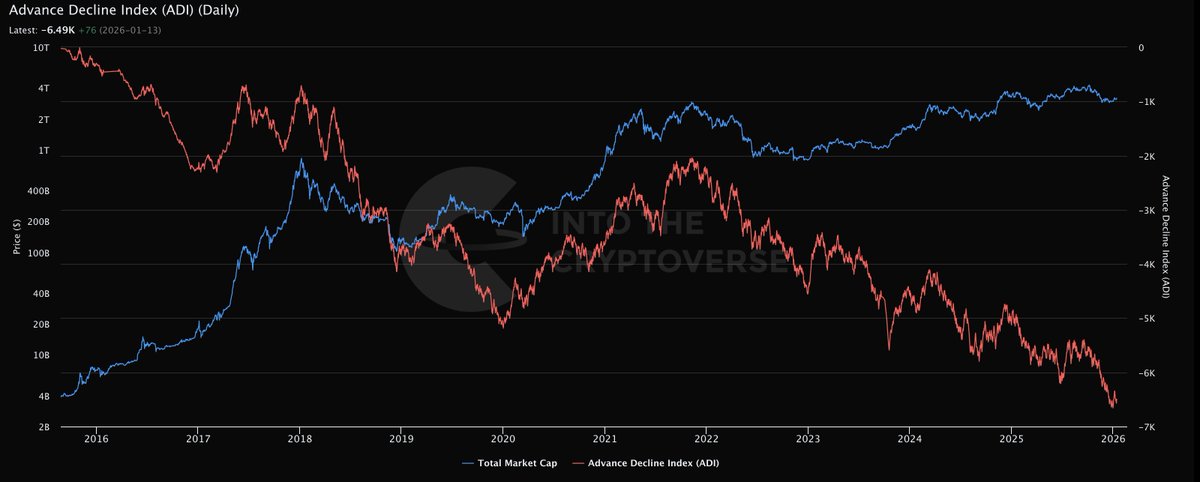
Don't try to manufacture the crypto bull market in 2020-2021. The Advance Decline Index of the top 100 cryptocurrencies has been in a brutal downtrend since 2021.
The uptrend you see in 2020-2021 is the bull market people remember, when the BTC bull market was accompanied by breadth throughout the asset class.
However from late late 2021-2026, the ADI of the top 100 cryptocurrencies has been decreasing.
BTC's bull market was more of a defensive positioning play (people selling alts and buying BTC) plus some institutions buying BTC.
The broader altcoin market did not participate because there a general lack of interest in the crypto markets to begin with, and as more and more altcoins were minted, liquidity was spread thinner and thinner.
BTC's bull market masked some of the underlying weakness in altcoins for years. But now that BTC has stalled out for the last year, the weakness in the altcoin market has become much more apparent and harder for people to ignore.
x.com/intocryptoverse/status…
Jan 11

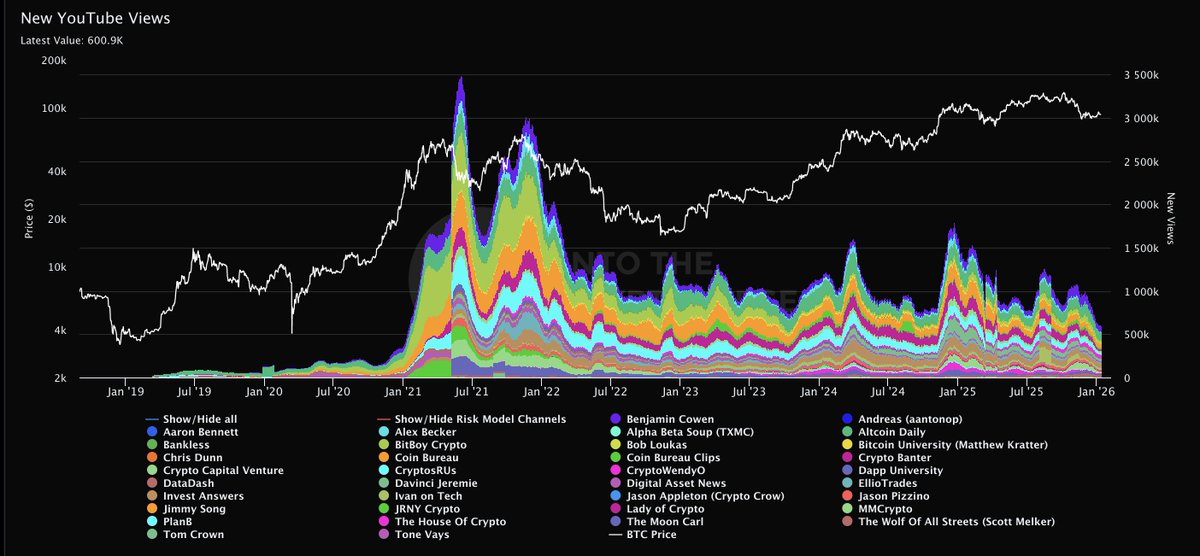
Here is a 30 day moving average of views to a lot of different crypto youtube channels.
So it's not just X and an algorithm change.
Viewership to crypto has been dropping across platforms.
194
100
1,295
143,432
Bazcryptic retweeted

Two things can be true at the same time.
It can be good that Maduro is gone.
And it can still be wrong for the U.S. to decide it was our right to remove him.
What if China had swooped into Caracas and dragged Maduro to Beijing after meeting him just hours earlier? Russia?
Regime change isn’t noble just because you agree with the result. If the roles were reversed - if Russia or China had done this - Americans wouldn’t be debating nuance — we’d be calling it blatant aggression. History shows the powerful rarely stop at “removing a bad guy” once they’ve crossed the line into military intervention.
Sovereignty matters - not just who wins.

What’s happening in Venezuela fits a pattern that’s been repeated for decades – crisis isn’t an accident, it’s leverage.
The U.S. has a long history of intervening when governments challenge its strategic or economic interests. Sometimes that meant coups. Sometimes assassinations. Sometimes invasions.
Usually a combined effort between the CIA to destabilize, the World Bank and IMF to give a predatory loan to the new government and then US corporations entering the country.
Full control.
In the modern era, it often means sanctions, financial isolation, diplomatic delegitimization, and support for alternative power structures.
The method evolves. The objective doesn’t.
Venezuela didn’t collapse in a vacuum. Years of corruption and mismanagement weakened the state – then external pressure finished the job. Sanctions choked oil revenue, restricted access to global finance, and accelerated economic breakdown. Once institutions fail and people are desperate, political outcomes become easier to shape.
This isn’t unique.
Chile didn’t “choose” Pinochet – the U.S. actively destabilized Allende before backing a coup. Iran didn’t lose Mossadegh organically – he was removed after nationalizing oil. Guatemala, Brazil, Iraq – different countries, same logic. Crisis creates openings. Openings get exploited.
Regime change doesn’t usually announce itself. It arrives disguised as concern – for democracy, for stability, for human rights – after pressure has already hollowed out the state.
By the time the outcome arrives, it’s framed as inevitable.
Venezuela today isn’t about Maduro.
It’s certainly not about helping the Venezuelan people (although that may be a positive side effect).
It’s about a system that repeatedly uses economic pain and political chaos as tools to assume control.
Shock doesn’t just break societies – it makes them malleable.
And history shows that once a playbook works, powerful actors don’t abandon it.
They perfect it.
Welcome to the USA.
211
52
677
118,898
Bazcryptic retweeted

Trump campaigned on an “America First” platform. Now he wants to "run" Venezuela?
60% of Americans live paycheck to paycheck. Health care is collapsing. Housing is unaffordable.
Trump should address these major crises at home and end his illegal military adventurism abroad.
22,944
25,601
90,456
3,354,988

26 Nov 2025
RT @BobLoukas: The Peak - Bitcoin 4 Year Cycle Video
"The Top is Likely In".
Appreciate any shares on other platforms and a RETWEET.
ht…

264
Bazcryptic retweeted

16 Nov 2025
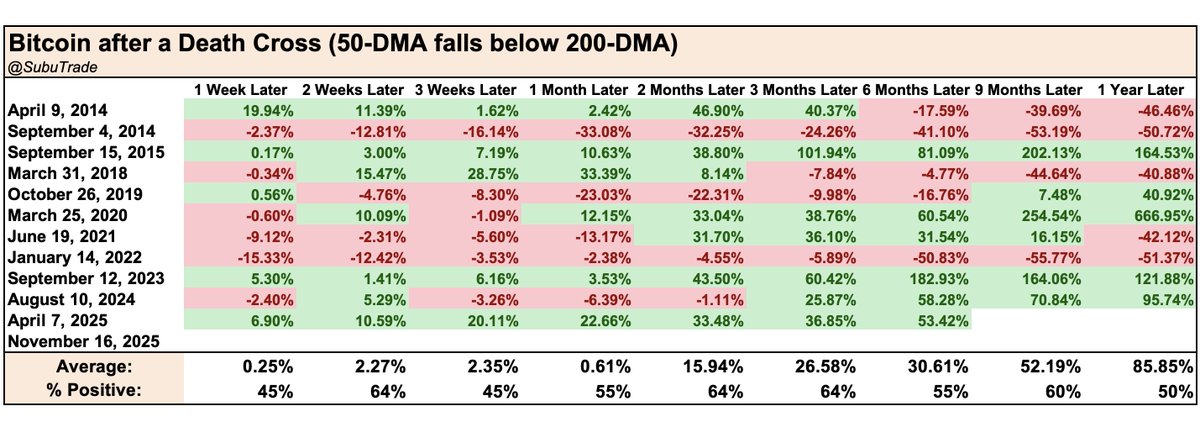
Here's what Bitcoin did after historical Death Crosses
72
150
1,152
556,769
Bazcryptic retweeted
13 Nov 2025
Had a great time speaking at Bitcoin Amsterdam

163
71
2,657
167,512
Bazcryptic retweeted
12 Nov 2025
Bitcoin Fear and Greed
m.youtube.com/watch?v=2MxHH7…
52
29
552
164,715
Bazcryptic retweeted
10 Nov 2025
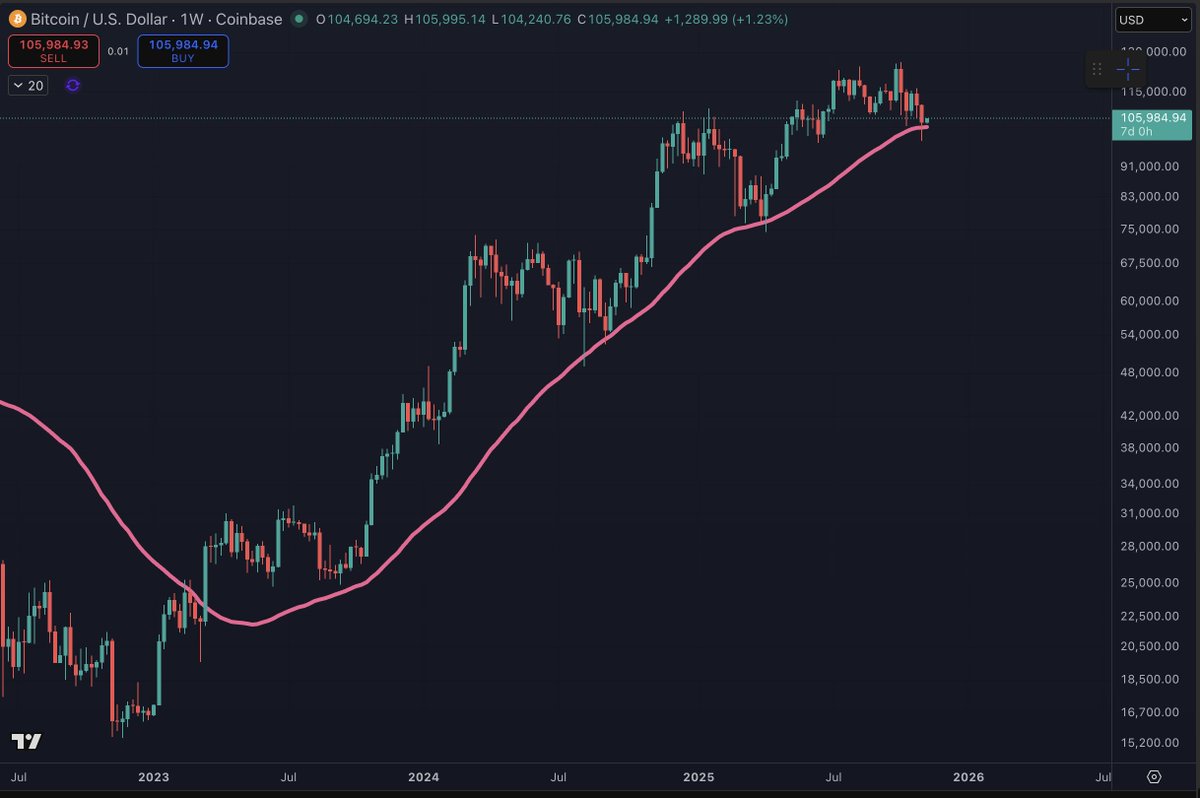
Bitcoin managed to close above the 50W SMA
511
713
9,787
449,918
Bazcryptic retweeted
31 Oct 2025
Bitcoin: Doooooobious Spookulation
youtube.com/watch?v=nrjQUkOm…

89
32
1,197
112,206
Bazcryptic retweeted
30 Oct 2025
The Fed Announces QT Will End in December
youtube.com/watch?v=PvDskt21…
69
49
811
210,595
Bazcryptic retweeted
29 Oct 2025
Current stresses in money market accounts will likely cause the Federal Reserve to announce an end to quantitative tightening (QT)
223
226
3,816
423,949
Bazcryptic retweeted
14 Oct 2025
Powell: "We may be approaching the end of our balance sheet contraction in the coming months"
QT will be ending soon.
439
645
8,963
433,491
Bazcryptic retweeted
14 Oct 2025
The reason I said back in August that it was not ALT season was because I expected ETH to get rejected on its 1st attempt at all time highs.
ALT/BTC pairs went lower while ETH/BTC should put in a higher low.
What happens next for ALTs depends on ETH's ability to break $5k
8 Aug 2025
This is not alt season.
This is ETH season
Let’s not confuse the two
225
239
4,126
362,879
Bazcryptic retweeted
11 Oct 2025
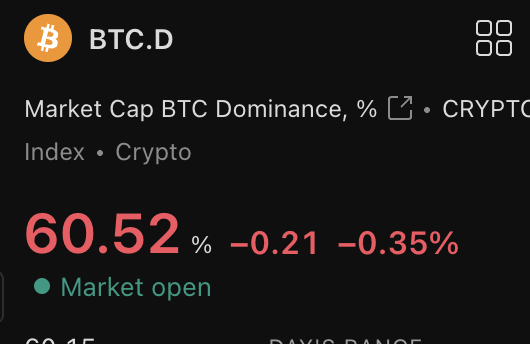
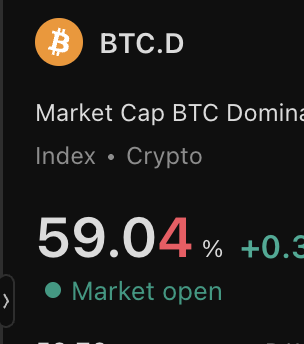
Large liquidation cascade yesterday sent #BTC dominance soaring above 60%.
I still think in the short-term it continues to climb
233
136
2,265
296,109
Bazcryptic retweeted
9 Oct 2025
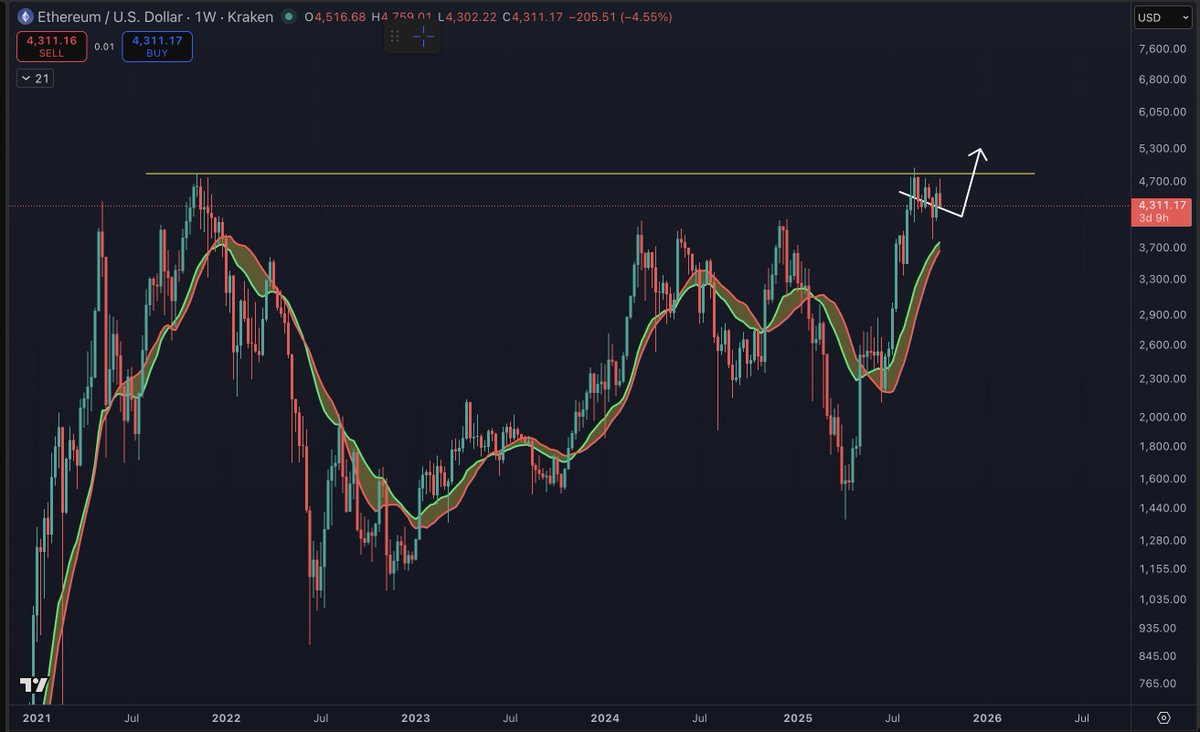
I think Ethereum continues this choppy price action until the bull market support band catches up.
Could take many more weeks.
381
261
3,537
290,462
Bazcryptic retweeted
10 Oct 2025
Bitcoin Dominance: The Final Rotation is already Happening
youtube.com/watch?v=fkXRo-28…
82
30
739
199,839
Bazcryptic retweeted
7 Oct 2025
#Ethereum: Dubious Speculation
youtube.com/watch?v=CBwvg-Vu…
57
34
535
143,284
Bazcryptic retweeted

7 Oct 2025
“Stuck between a rock and a hard place.”
📺youtu.be/CBwvg-Vust8
7
16
253
77,719
Bazcryptic retweeted
8 Oct 2025
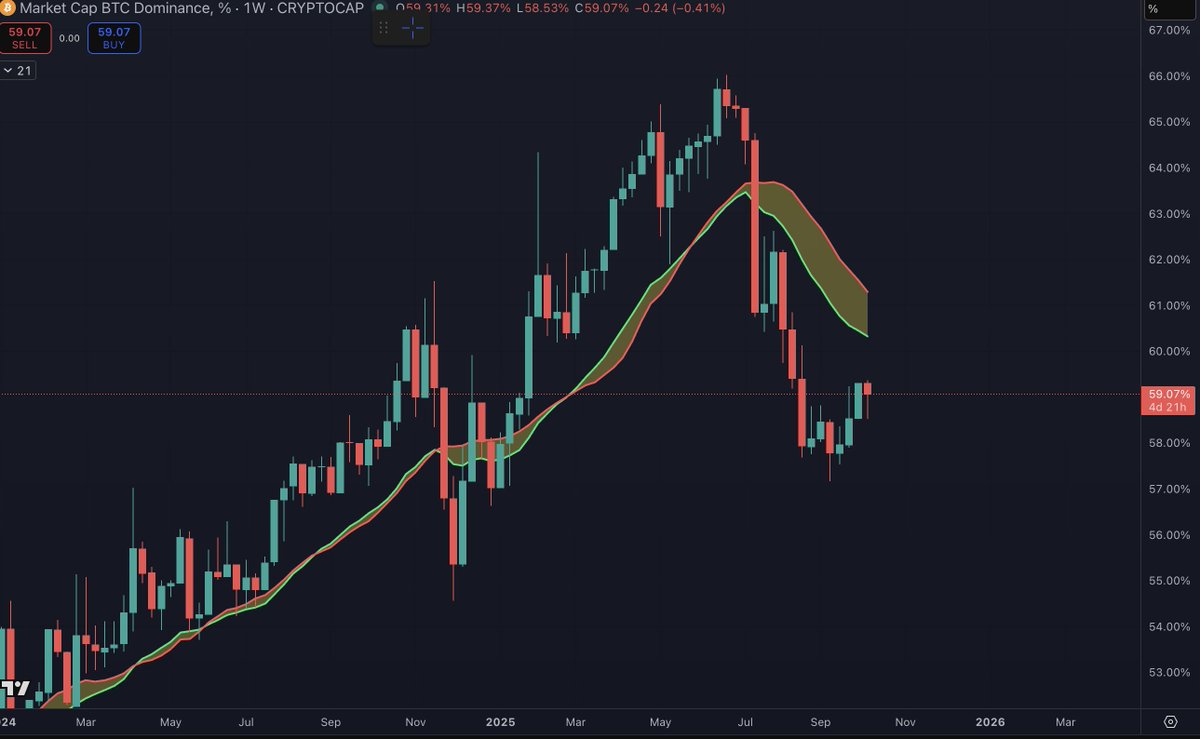
Bitcoin Dominance continues to grind higher while so many are convinced that it won't.
Liquidity shall flow back to the king
336
208
2,885
219,785