
cosmic bean stew #alchemist. Building @COINjecture
Joined November 2024
- Tweets 20,192
- Following 7,459
- Followers 2,089
- Likes 21,803
902 Photos and videos











6
Bean Apologist retweeted

The U.S. Dollar has lost 30% of its purchasing power over the last six years, per NYT
506
2,434
18,057
1,006,627
Bean Apologist retweeted

3h
BREAKING:
Apocalyptic scenes in Lebanon’s capital right now.
Israel is bombing residential buildings in densely populated neighborhoods of Beirut.
A ceasefire that still allows bombs to fall on civilians is not a ceasefire.
264
6,722
9,478
136,428
GM
ALT https://encrypted-tbn0.gstatic.com/images?q=tbn:ANd9GcQnuZLg6D_-kjgAICuYBAkyaIv2HDt0bHZwLaXQSEWPpw&s=10
2
16
Bean Apologist retweeted

21h
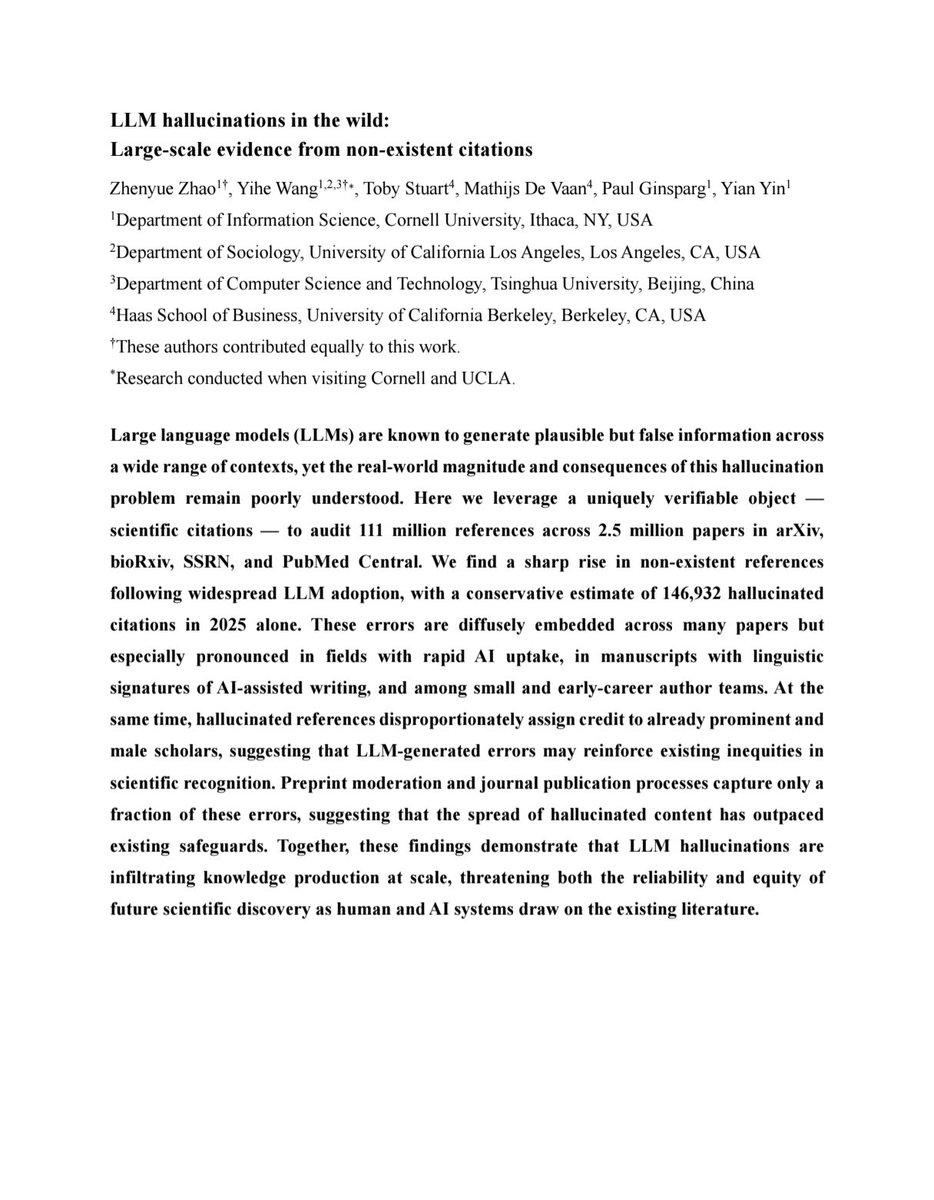
arXiv Just Banned Researchers for AI Hallucinations
arXiv hosts 2.4 million scientific papers.
On May 14, 2026, it announced it would ban researchers for up to a year if hallucinated citations were found in their work.
Then academics lost their minds.
A small group of researchers went on the offensive after arXiv clarified that authors are responsible for hallucinated citations found in papers submitted under their names. "So this means you expect every author to check every citation and make sure that every citation is real and accurate?" an economics professor at Smith College replied in shock.
Read that sentence one more time.
A professor at a named institution expressed shock, genuine shock at the idea that they should verify the citations in their own academic paper before submitting it to be permanently entered into the scientific record.
That shock is the story. Not the policy. The reaction.
Even in 2026, there are still plenty of researchers who refuse to use AI to publish their research papers. Others use the tech for tasks like sourcing journal articles for references, editing copy, or formatting citations but they face pressure to verify every claim. A vocal minority of academics argue they should be able to use AI to write original research while remaining immune from any hallucinated claims or data that make their way into the final product.
Immune. That is the word they used. Immune from responsibility for the contents of their own papers.
Here is the mechanism behind the outrage that nobody in the mainstream coverage explained clearly.
AI citation hallucination is not rare. The Columbia University study published in The Lancet in May 2026 scanned 2.5 million medical papers and found 4,046 fabricated references across 2,810 published papers with the rate increasing from 4 per 10,000 papers in 2023 to 57 per 10,000 by early 2026. A 12-fold increase. Perfectly correlated with the adoption of AI writing tools.
Which means researchers have been submitting papers with hallucinated citations and passing peer review at accelerating rates for three years. And at least some of them knew. Because checking your own citations manually is not difficult. It is tedious.
The AI made it easier not to check.
arXiv drew a line. Authors are responsible for the contents of papers published under their names. The line should be unremarkable. It is the basic standard of academic integrity that has existed since the first journal published the first paper.
The shock at being held to it reveals how thoroughly that standard has already eroded.
The scientific record is permanent. The papers published with hallucinated citations are still there. They have already been cited. Those citations have already been pulled into other papers. The contamination is already in the literature.
The ban does not undo any of that.
It just establishes that going forward, the person who puts their name on a paper is the person responsible for what is in it.
That this needed to be announced and that the announcement was met with outrage is the most alarming part of the entire story.
Source: arXiv announcement · Thomas Dietterich · May 14, 2026 · Futurism coverage ·
(Link in the comments)
44
85
176
13,832
Bean Apologist retweeted

$14 million “beautification” and just 3 days later it looks worse than ever because there was a reason we didn’t paint the reflecting pool dark colors like “American flag blue.” Mainly that it would raise the water temp and cause rapid algae growth.
751
2,790
21,241
1,370,315
Bean Apologist retweeted

7
28
69
4,660
Bean Apologist retweeted

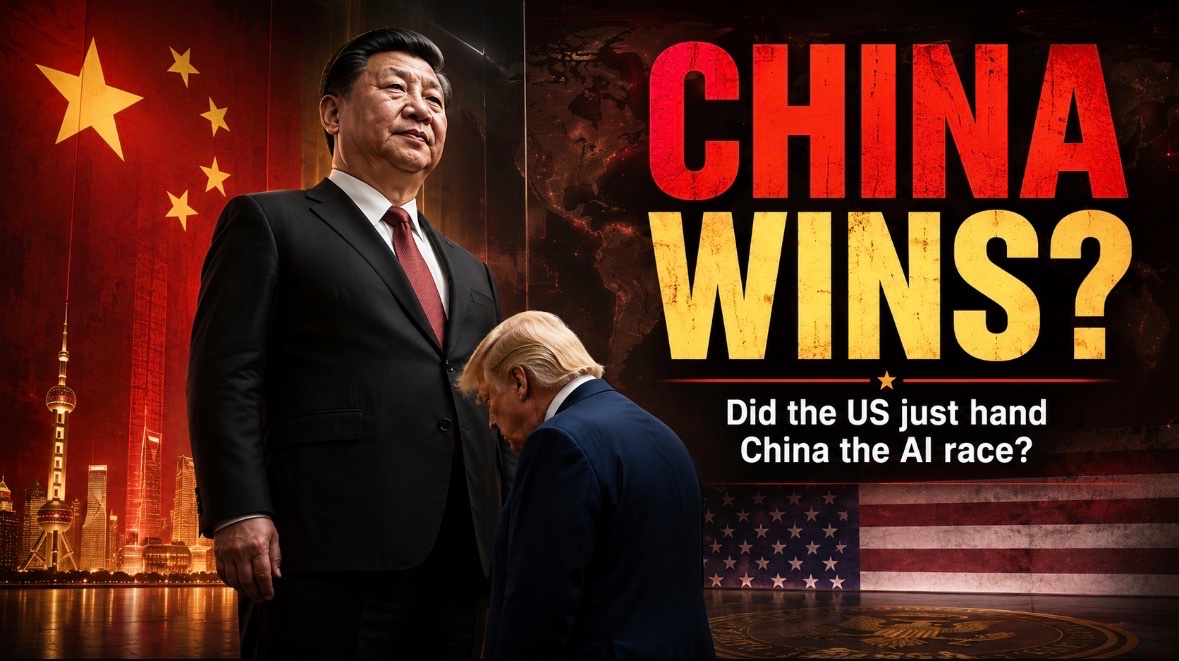
If the US starts geo restricting frontier AI, China could turn that into a massive advantage.
The pitch is obvious:
America will lock you out.
China will build with you.
That could pull in foreign companies, researchers, governments and developers who do not want to wait outside the US AI wall.
Trying to protect US companies might accidentally give China the perfect narrative to win the global AI race.
19
9
42
2,916
Bean Apologist retweeted

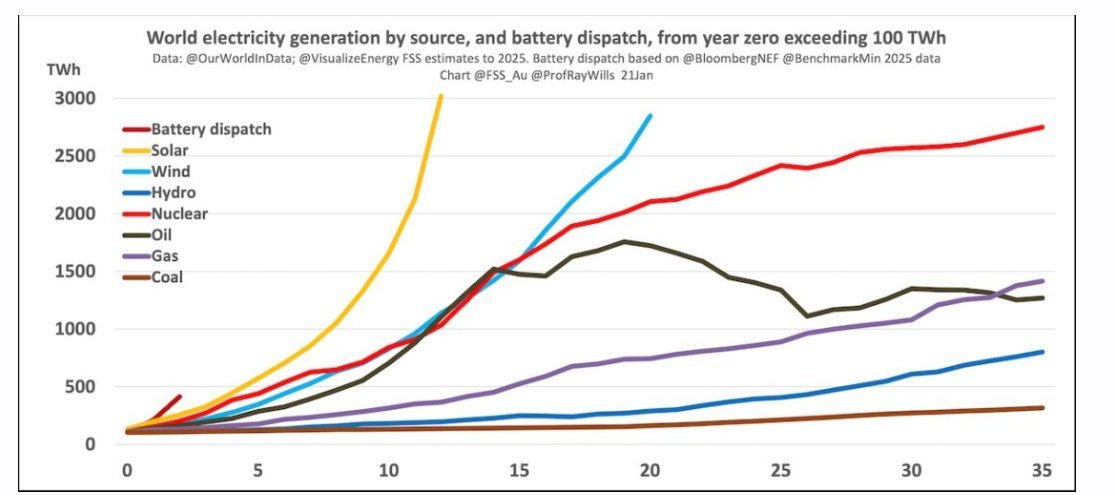
🇨🇳 Grid storage is increasing so rapidly is China that it may be able to meet all their electricity needs from renewables as soon as 2030.
“Grid storage” is the energy storage systems that connect to the electric grid to absorb electricity when supply is high or prices are low, then deliver it back when supply is low or demand and prices are high. It is a grid asset, like a power plant or substation, but it stores energy instead of generating it from fuel.
New data show that by the end of 2026, grid storage will be a 1.15% share of global electricity demand (up from 0.16% in 2023).
China is rolling out the most. China’s grid storage installations in December 2025 alone (65.4 GWh) exceeded the entire USA’s 2025 total annual installations (46.5 GWh), and the US is the world's 2nd largest grid storage market.
China also is able to build an over-capacity of wind & solar.
China is rapidly electrifying its whole economy & abandoning the combustion engine.
---
reneweconomy. com. au/graph-of-the-day-batteries-are-beating-solar-to-deliver-the-fastest-energy-transition-in-human-history/
14
40
154
6,913


Dana White says the UFC's secret to success is simple: representation.
From Brazil and Canada to the U.S. and beyond, fighters get to represent where they come from. "When somebody comes from where you come from, looks like you, talks like you ... the entire country rallies around it," says White.
The UFC CEO is featured on TIME's list of the 100 most influential people in sports, see who else made the list: time.com/collection/time100-…
11
7
28
13,801
Washingtonians have been keeping a close eye on the Kennedy Center as the court-ordered deadline for Trump's name to be removed nears
time-magazine.visitlink.me/D…
12
9
29
14,413
🫘 🍚

9
Bean Apologist retweeted

Poasting atoms instead of bits on the TL hits different


1
10
150
6,499
Bean Apologist retweeted

How is anyone in the U.S. — who is not working at a handful of AI companies and who is not independently wealthy — paying their bills right now?
27
9
114
22,434
Bean Apologist retweeted

🇨🇳 vs 🇺🇸
China plays the long game; the U.S. is so ego-bound it couldn’t wait a weekend—and maybe did lasting harm to the credibility of the U.S. AI industry as a result.

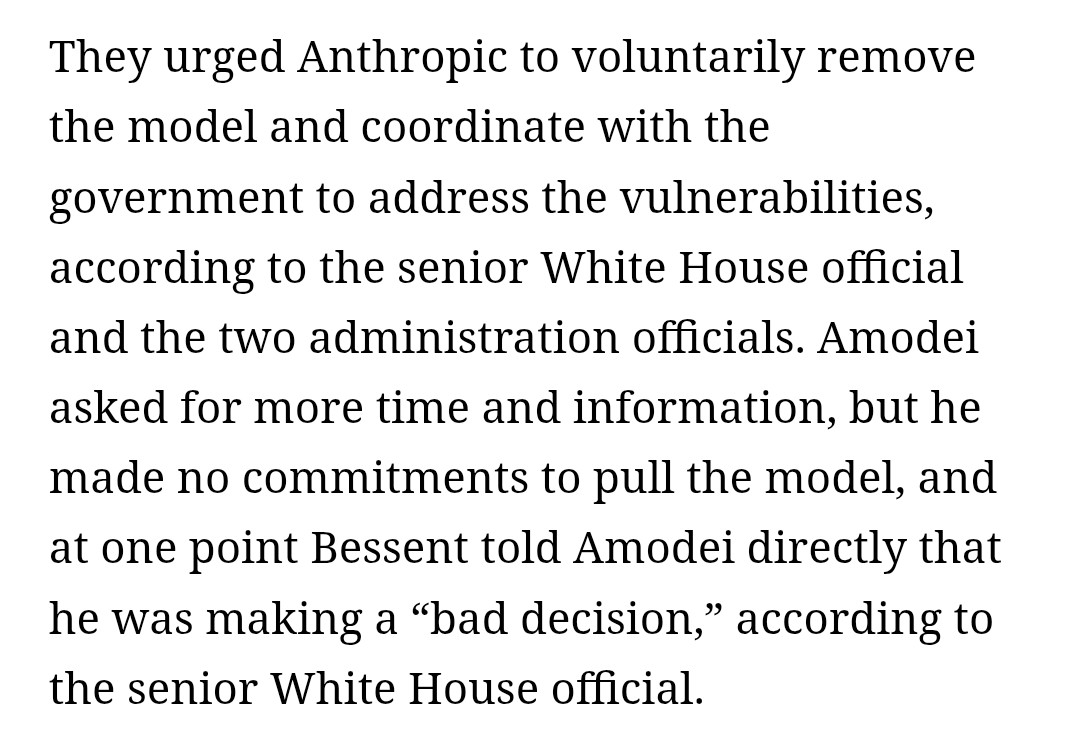
Interesting article with new details on the lead up to the export controls. Both sides are telling very different stories. Anthropic says they were given a 90 minute hard deadline to pull both models. The administration says their concerns were not taken seriously.
22
23
126
13,206