
Microbes, Evolution, Stats, Physics
Joined August 2015
- Tweets 679
- Following 104
- Followers 1,714
- Likes 902
37 Photos and videos
Benjamin Callahan retweeted

29 Jun 2023
Our latest: The taxonomic resolution of 16S sequencing doesn't stop at the species level when using modern long-read techniques. Serovars from 16S...
biorxiv.org/content/10.1101/…
#NCStateMicrobiome
28
80
8,476
Benjamin Callahan retweeted

17 Jun 2023
Love that @bejcal called using data only in the original paper “a crime against data” - make it findable & usable so it has many lives/uses! #NMDC #ASMicrobe
1
4
659
24 May 2023
decontam functionality is now available through QIIME2. Thanks Jorden Rabasco and QIIME team.

@QIIME2 2023.5 is now available & includes new parallel computing support w @ParslProject, ability to resume failed pipeline runs, provenance replay, decontam actions, and much more. Thank you to all who contributed! #microbiome #bioinformatics forum.qiime2.org/t/qiime-2-2…
9
25
2,539
Benjamin Callahan retweeted

7 Feb 2023
Excited to finally share our work showing the diversity of Gardnerella in the vaginal microbiome!
When I started this project a few years ago, all Gardnerella was considered a single species. Here we add to the rapidly expanding knowledge of the diversity of this genus.
7 Feb 2023

Did you know: It is not rare for every known genomospecies of Gardnerella (all 14!) to be present in a vaginal microbiome sample? And how ecologically different are these Gardnerellas?
Our latest preprint, led by Hanna Berman:
biorxiv.org/content/10.1101/…
#NCStateMicrobiome
4
23
2,258
7 Feb 2023
Did you know: It is not rare for every known genomospecies of Gardnerella (all 14!) to be present in a vaginal microbiome sample? And how ecologically different are these Gardnerellas?
Our latest preprint, led by Hanna Berman:
biorxiv.org/content/10.1101/…
#NCStateMicrobiome
3
10
38
7,306
Benjamin Callahan retweeted

20 Jan 2023
STAMPS @ MBL is back in 2023! Jul 19-29 in Woods Hole ☀️🏖️💻
STAMPS has trained thousands of microbial ecologists (of all stripes!) in the bioinformatic and statistical analysis of microbiome data 🌟🧠🦠
Join us for #STAMPS2023 and be one of them! 😻🥳📈
3
50
140
35,896
3 Nov 2022
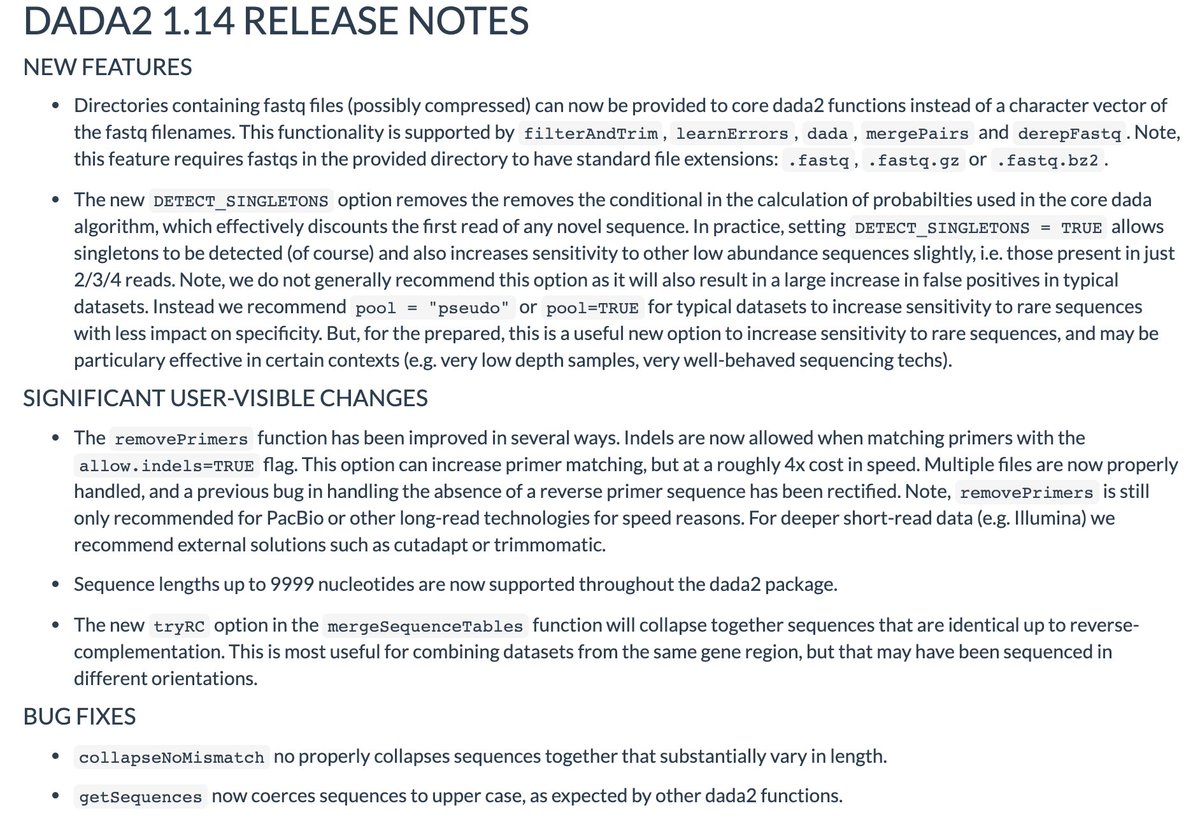
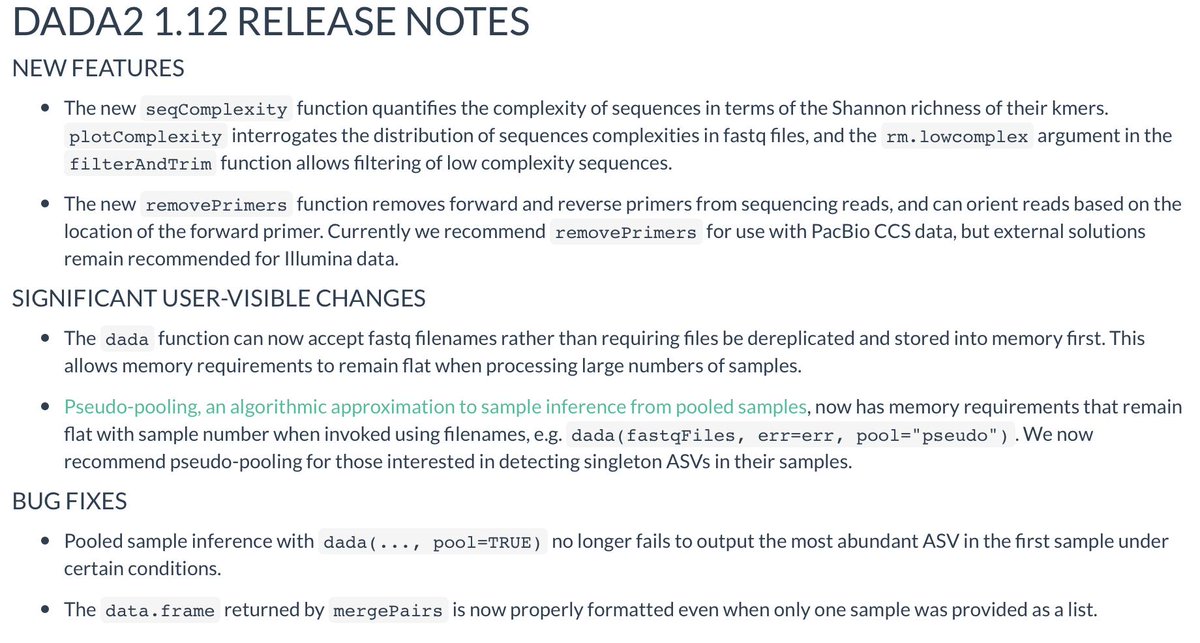
DADA2 1.26 release is live on Bioconductor. The package now natively compiles and runs on ARM architectures like the Apple M1/M2 chips.
bioconductor.org/packages/re…
2
28
138
Benjamin Callahan retweeted

17 Oct 2022
Calling all students and microbiome professionals! Join the IMMSA Bioinformatics Working Group to address "How do we define how accurate a microbiome profile is?" forms.gle/TAA39T1fLxrCMAFw8. Meeting will be on zoom Thursday Nov 10, 2022 at Noon eastern time!
2
3
8
Benjamin Callahan retweeted

14 Oct 2022
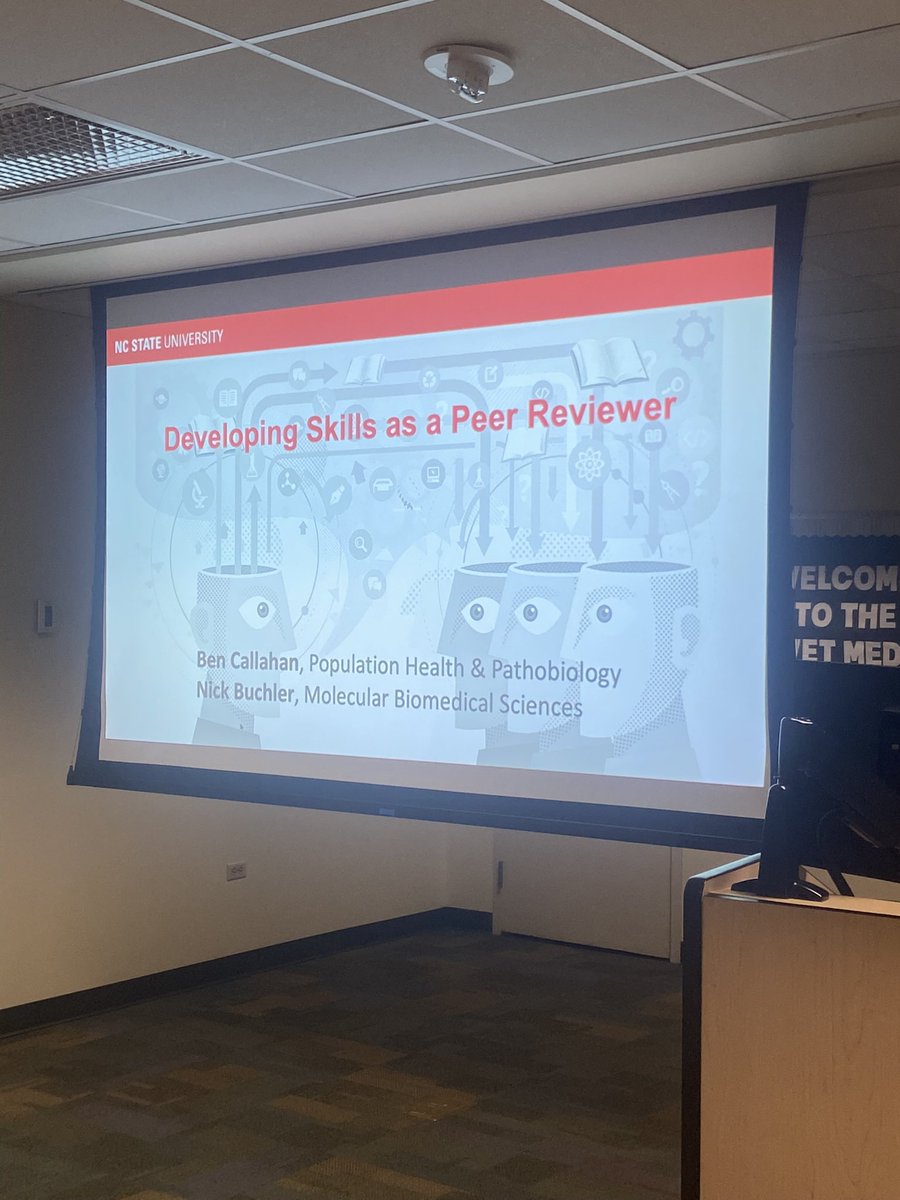
Our researchers aren’t just solving problems, but also sharing their expertise with early-career scientists!
Yesterday, @bejcal and @buchler_nicolas gave a fantastic seminar to our postdocs on the skills and importance of peer reviewing!
1
8
Benjamin Callahan retweeted

2 Oct 2022
This manuscript addresses the mixed and inconsistent findings related to the associations between the vaginal microbiome and preterm birth in current literature. 1/
1
1
1
Benjamin Callahan retweeted

30 Sep 2022
The Nucleic Acid Observatory project at MIT is hiring an experimental scientist to help lead our efforts to develop an environmental metagenomics monitoring system to detect catastrophic biothreats
linkedin.com/posts/michael-m…
1
6
13
28 Sep 2022
Out latest work led by @DavidHuangCZ1 is out on medRxiv: "Meta-Analysis Reveals the Vaginal Microbiome is a Better Predictor of Earlier Than Later Preterm Birth"
medrxiv.org/content/10.1101/…
2
7
19
28 Sep 2022
Thanks to @CraigGin for help all along the way, and our co-authors who helped us understand and effectively use their primary research. (and apologies for not knowing your twitter handles!)
Benjamin Callahan retweeted
6 Sep 2022
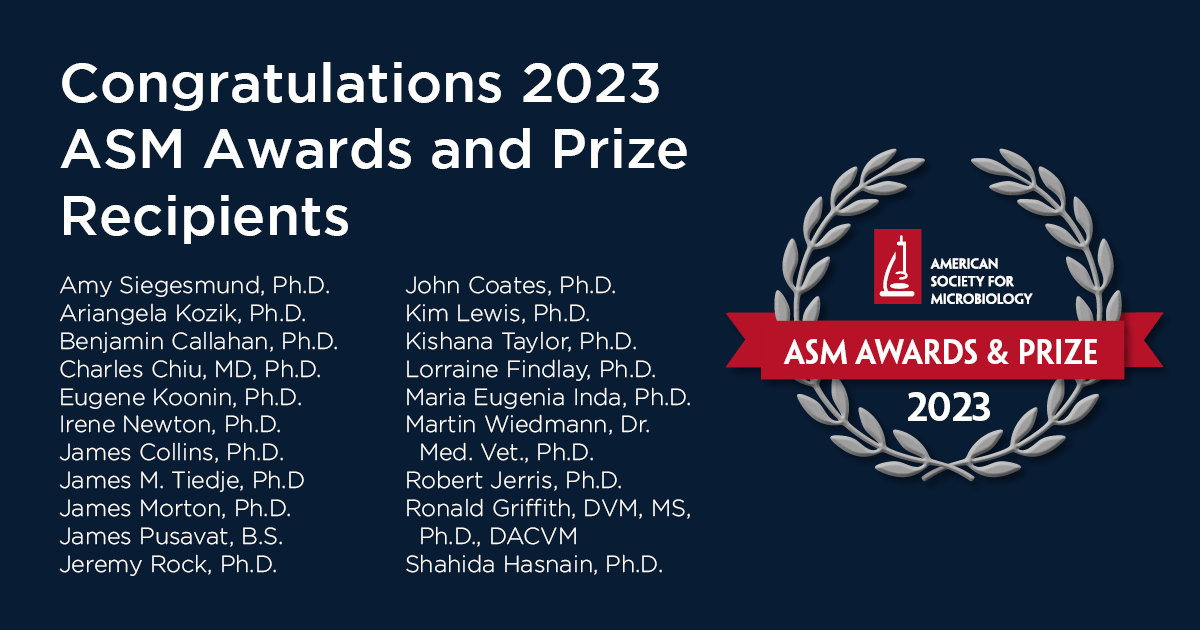
Congrats to CVM's Dr. Ben Callahan (@bejcal), Assistant Professor of Microbiomes and Complex Microbial Communities, on being awarded the American Society for Microbiology's Microbiome Data Prize!
6 Sep 2022

ASM is pleased to announce the recipients of the 2023 ASM Awards and Prize. The awards recognize individuals who have made significant contributions to advancing the field, their careers and their institutions. Read the press release for more information: asm.social/Ln
1
4
14
Benjamin Callahan retweeted
23 Aug 2022
New preprint alert! 🚨🥳😻
When we first put out the “MWC model” paper, there was a lot of concern about how negatively impactful the problem of unequal detection efficiencies in microbiome taxonomic profiling is.
A thread🧵…
1/
1
22
52
22 Aug 2022
Our latest work led by @mikemc423 on bioRxiv goes deep on "Implications of taxonomic bias for microbial differential-abundance analysis": biorxiv.org/content/10.1101/…
Metagenomic sequencing is biased. When are differential abundance (DA) results still valid?
#NCStateMicrobiome 1/
1
24
96
22 Aug 2022
A few quick hits: There are right(er) and wrong(er) ways to measure absolute abundances. Great care is needed to correctly estimate small non-zero differential abundances. And while taxonomic bias can interfere with DA analyses, it doesn't make all such results invalid.
6/
1
1
22 Aug 2022
This preprint builds on our previous work developing a quantitative model for taxonomic bias in metagenomic sequencing: doi.org/10.7554/eLife.46923
Thanks to our collaborators @AmyDWillis @archaearama and @JTNearing
7