Canal en español para la comunidad hispanoparlantepara comprar y difundir sobre la mejor tecnología de telecomunicaciones del presente y futuro, AST SPACEMOBILE
Joined May 2023
- Tweets 11,500
- Following 252
- Followers 2,970
- Likes 48,839
1,686 Photos and videos

SpaceMobileNow retweeted
Próxima parada torre de lanzamiento! #asts #falcon9 @AST_SpaceMobile @SpaceX $ASTS
youtube.com/shorts/7l53zdyDi… vía @YouTube
1
5
621
SpaceMobileNow retweeted
$ASTS: AST SPACEMOBILE CATALYST SEASON
A review of what has been and what is to come
Upcoming Catalysts:
☑️BB8 - BB10 Launch on Falcon 9
☑️BB11 - BB13 Delivery to Florida and Launch on Falcon 9
☑️$1B J-LEO Japan Project Decision
☑️BB14 - BB16 Delivery to Florida and Launch on Falcon 9
☑️Block-2 BlueBird batch launches every month
☑️FCC STA to Test 900MHz Military Applications with US Space Development Agency
☑️T-Mobile Definitive Commercial Agreement
☑️Executing MLAs w/ Ariane, Mitsubishi, Relativity and others
☑️Golden Dome (SHIELD Awarded, NOBLE Up Next)
☑️Execution of other DoW, SDA, DIU, and other Military Awards
☑️FirstNet Investment and Definitive Commercial Agreement
☑️FCC Approval of Ligado Modification Application
☑️Execution of more Definitive Commercial Agmts w/ Prepaid Revenue and/or Investment w/ More ~60 global MNOs
☑️Beta Testing w/ AT&T and FirstNet in 2H 2026
☑️Updates on Google Services Agmt Partnership
☑️Initiation of Research Coverage by JP Morgan, Morgan Stanley, Goldman Sachs, others
☑️Expansion of 13x contracts w/ Department of Defense, Space Development Agency, Defense Innovation Unit, Missile Defense Agency and more
☑️FCC 5G Fund grant
☑️Progress on 12 to 32x Block-2 BlueBirds in currently in Production
☑️Proposal for PNT Service Accepted by FCC as Alternative to GPS
☑️Initial Commercial Service w/ AT&T, Rakuten, Verizon, Vodafone in early 2027
☑️Securing $500M of EXIM and IFC non-dilutive Funding
☑️Pursuit of L- and S-Band Spectrum Licenses Globally
☑️Pursuit of Additional Lowband Spectrum in US
☑️EU Allocation of 2GHz MSS Spectrum to SatCo JV
☑️Strategic Partnerships and Investments to Focus on AI Data Center Opportunity
☑️Catalysts the SpaceMob have yet to Contemplate
Recently Completed Milestones:
✅Brazilian Regulator Anatel Approved AST SpaceMoble for Commercial Service and Allocated 10MHz x 10MHz of S-Band Spectrum
✅AT&T, Verizon and T-Mobile Joint Venture Formation
✅Achieved 99Mbps performance with Block-1 BlueBird
✅Execution of MLA w/ United Launch Aliance
🚨 FCC Approval for Full US SCS Commercial Service🚨
✅$45M Verizon Commercial Prepayment Unlocked
✅BB7 💐 Launch on Blue Origin New Glenn-3
✅Demonstrated 150mbps Peak Speed w/ Block-2 BlueBird
✅7x New Design Composite Rings Delivered to Midland
✅Acquisition of New Manufacturing Space in Midland, TX focused exclusively on Micron production
✅Telus Definitive Commercial Agreement w Strategic Investment and $200M Committed Revenue (speculated)
✅Partnership with Orange
✅Partnership with Taiwan Mobile
✅Partnership with AXIAN Telecom
✅Satellite Connect Europe Partnership (“SCE”) with Telefonica
✅SCE Partnership with Orange
✅SCE Partnership with CK Hutchinson
✅SCE Partnership with Sunrise Switzerland
✅SCE Partnership with Vodafone Romania
✅SCE Partnership with VodafoneThree UK
✅SCE Partnership with Vodafone Ireland
✅AST Awarded $30M Prime Contract by US SDA for Halo Europa Program
✅$63M to 71M of 2H 2026 Revenue
✅Development of AI Engine to Dynamically Manage Satellite Capacity and Spectrum Efficiency = Seeking 3-10x Capacity Improvement
✅Disclosed over $1.2 billion in Aggregate Contracted Revenue Commitments from Commercial Partners
✅Raised $1.08B 2.25% Convertible Note resulting in $4B of Pro Forma Cash
✅BB6 Unfolding Phased Array
✅AST Awarded Prime Contract Position on US Missile Defense Agency SHIELD Program
✅Filed w/ FCC to modify Existing License to use S-Band spectrum outside of the US
✅$175M Saudi Telecom prepayment to be made by 2025YE
✅BB6 Launched from India on ISRO LVM3
✅Micron Production to Support 6x a Month by End of Q3 2025
✅Expanded Manufacturing Floor Space to 500,000 Square Feet
✅2,000 Global Workforce
✅Established Germany as SatCo JV operations center, filed constellation with ITU
✅Closed $420M bridge financing to support Ligado spectrum transaction
✅Saudi Telecom 10-Year Definitive Commercial Agreement w/ $175M prepayment and over $1.8B value
✅Confirmed L- and S- band Spectrum to be Incorporated into Next 3GPP release
✅Verizon Definitive Commercial Agreement
✅Raised $1.15B 2.0% Convertible Note resulting in $3.2B of Pro Forma Cash and Liquidity
✅Successful Video and Voice Testing with Bell Canada
✅US Bankruptcy Court confirms AST and Ligado L-band spectrum transaction transaction, deal now only subject to FCC appoval
✅Acquired Global S-Band Spectrum Priority Rights held Under International Telecommunication Union
✅Successfully Completed the First-ever Native Voice Call (VoLTE) and Rext (SMS) with a Standard Cell Phone using AT&T Spectrum and Core Network
✅Hired JR Wilson as Chief of Networks and Spectrum, formerly AT&T VP of Tower Strategy, Roaming & In-Building Solutions
✅Raised $575M 2.375% Convertible Note w/ Capped Call struck at $120, resulting in $1.5B of Pro Forma Cash on Balance Sheet
✅Repurchased $360M of $460M 4.25% Convertible Note
✅Entered into $550M of Non-Recourse Senior Secured Term Loan to fund Ligado Transaction
✅Secured $100M Equipment Loan Facility
✅Moved to Russell 1000 from Russell 2000 Index
✅Demonstrated World's First Tactical NTN Connectivity over Standard Mobile Devices with Defense Prime Fairwinds Technologies
✅Announced Latest MNO Partnership with Vodafone Idea of India
✅Hired Jennifer Manner as SVP of Regulatory Affairs and International Strategy, Former NTIA Senior Advisor of Space and Policy and EchoStar SVP of Regulatory Affairs
✅FCC Accepts AST’s Application for US Commercial Service
✅FCC Chair Brendan Carr and Senator Ted Cruz visit HQ in support of AST
✅Verizon and AT&T Spectrum Lease Agreements filed w/ FCC
✅FCC grants STA for beta testing w/ AT&T, Verizon, Vodafone, Bell Canada, and Rakuten
✅FCC grants STA for Firstnet Evaluation on Public Safety Band 14
✅AST SpaceMobile Forms SatCo Joint Venture w/ Vodafone to Better Serve European market, Selects Luxembourg as HQ and Germany for NOC
✅Secured $43M and $20M Contracts w/ US Space Development Agency and Defense Innovation Unit
✅AST5000 ASIC Development Finished and Integration into Block-2 Sats in Q2 2026
✅Successful Video Calls Completed w/ AT&T, Verizon, Vodafone and Rakuten
✅Exercised Multi-launch Agmts w/ SpaceX, Blue Origin and ISRO
✅Reached 3,800 Patent & Patent pending Claims
✅Initiation of Research Coverage by Bank of America, Clear Street, Roth Capital, Cantor Fitzgerald, Oppenheimer and William Blair
✅Established Coordination Agmt w/ US National Science Foundation Covering Satellite and Ground-based Astronomy Operations
✅Closed $460M 4.25% Convertible Debt Funding
✅Signed 2-3x Additional Global MNOs, Bringing the Total to 53x Covering 3.2B Subscribers
✅Opened European Research Center w/ Vodafone and University of Malaga in Spain
✅Signed Deal w/ Singapore’s Defense Science and Technology Agency
✅Joined 5G Automotive Association, which Develops and Promotes 5G-based Solutions for Connected Autonomous Vehicles
14
47
387
21,452
Vamos!!!!! $ASTS

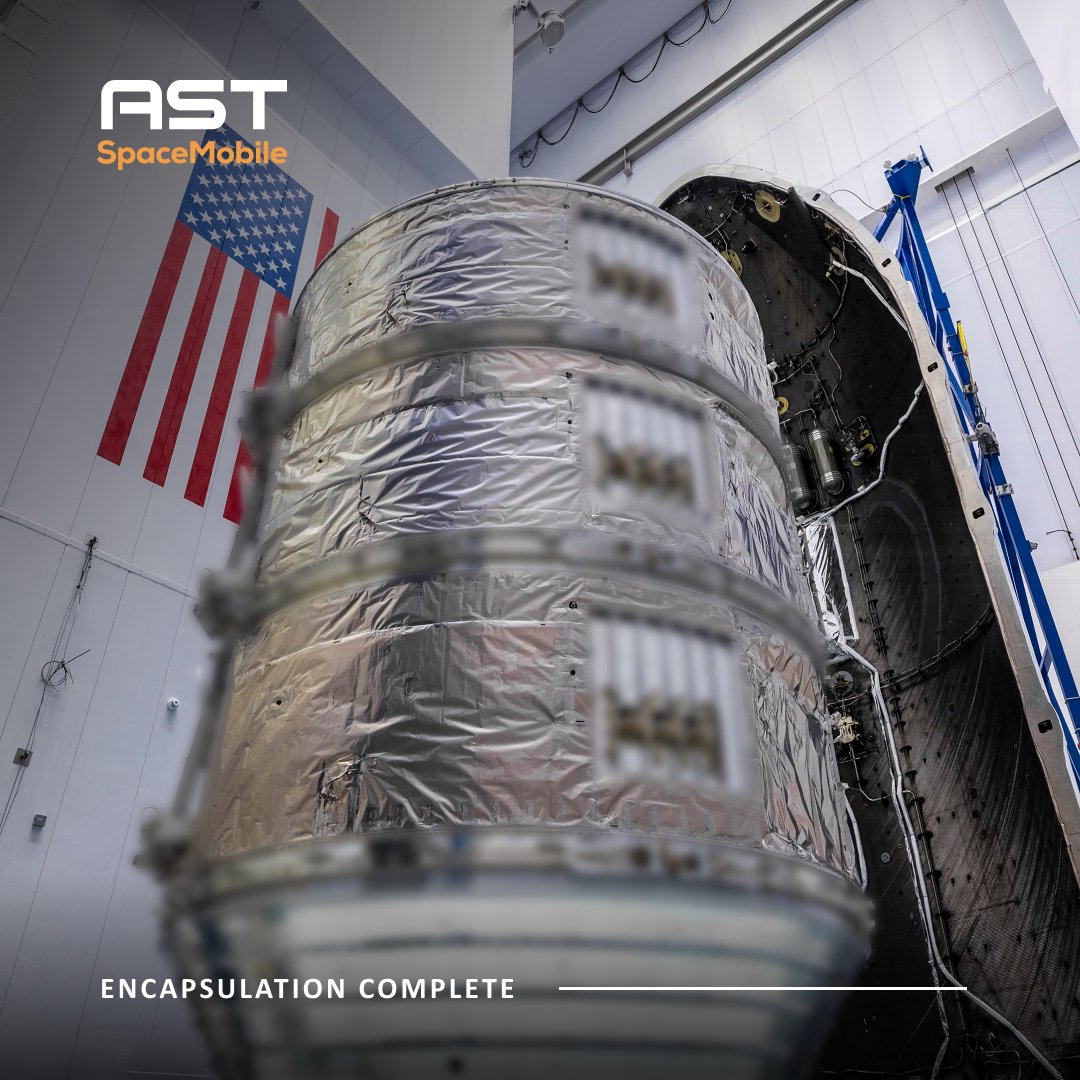
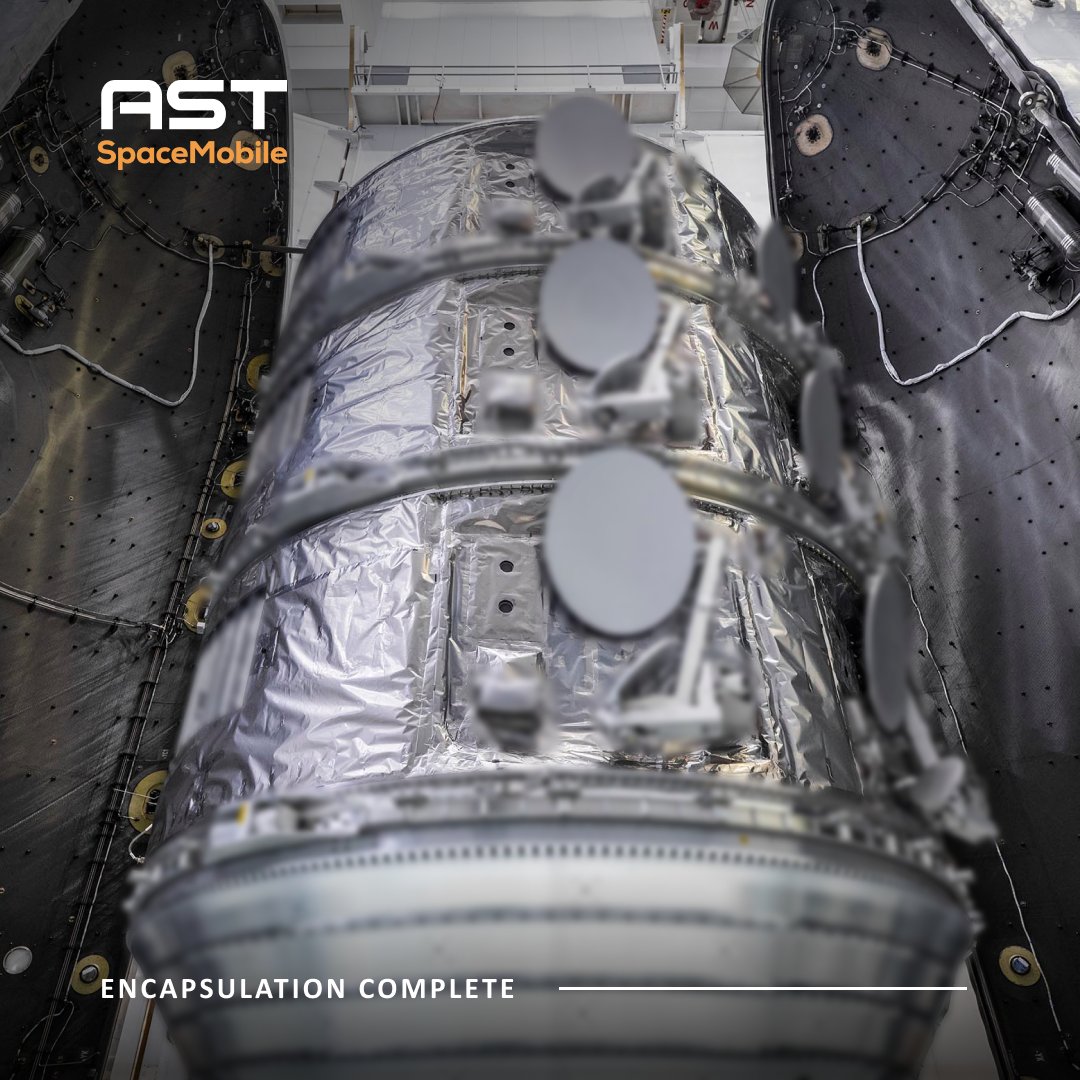
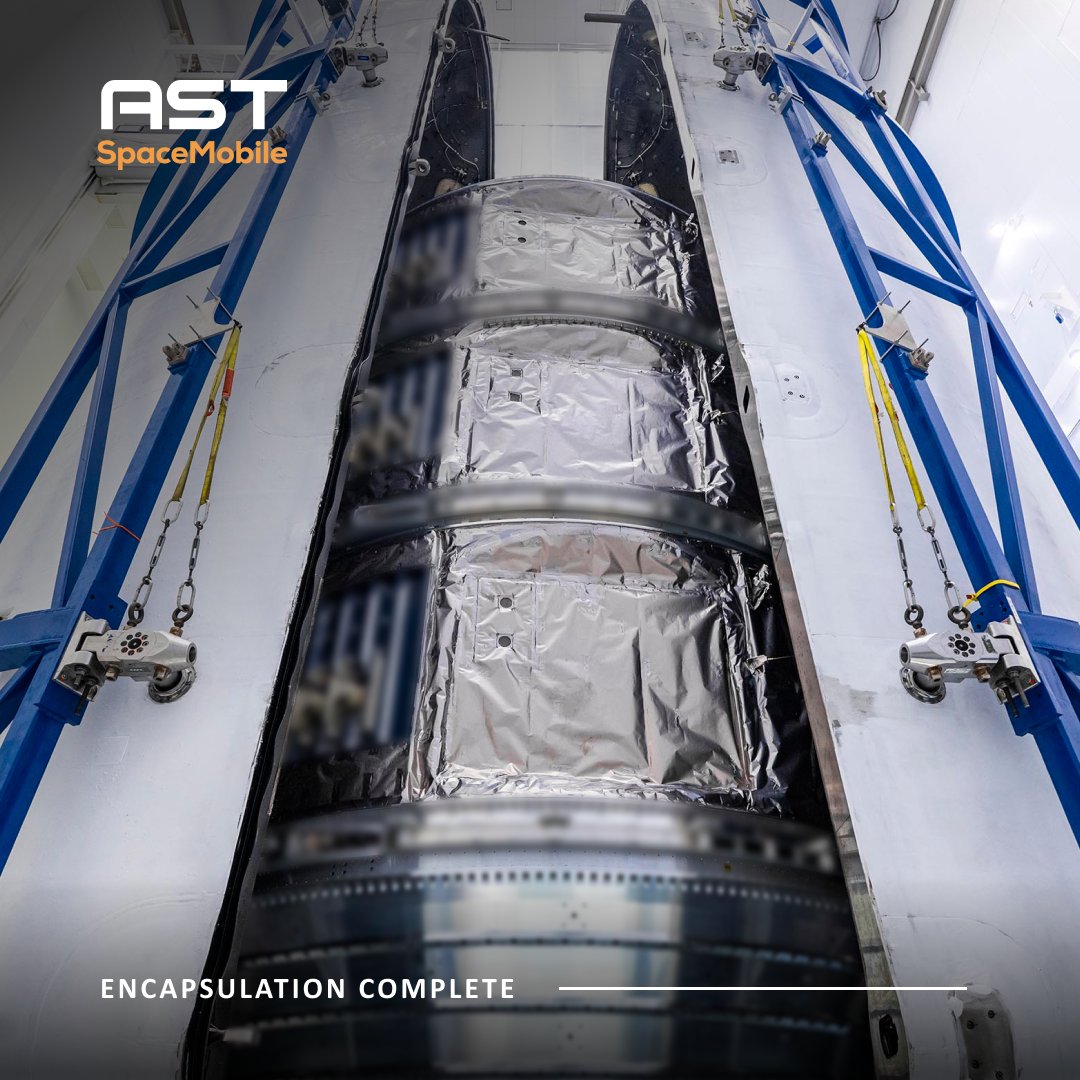
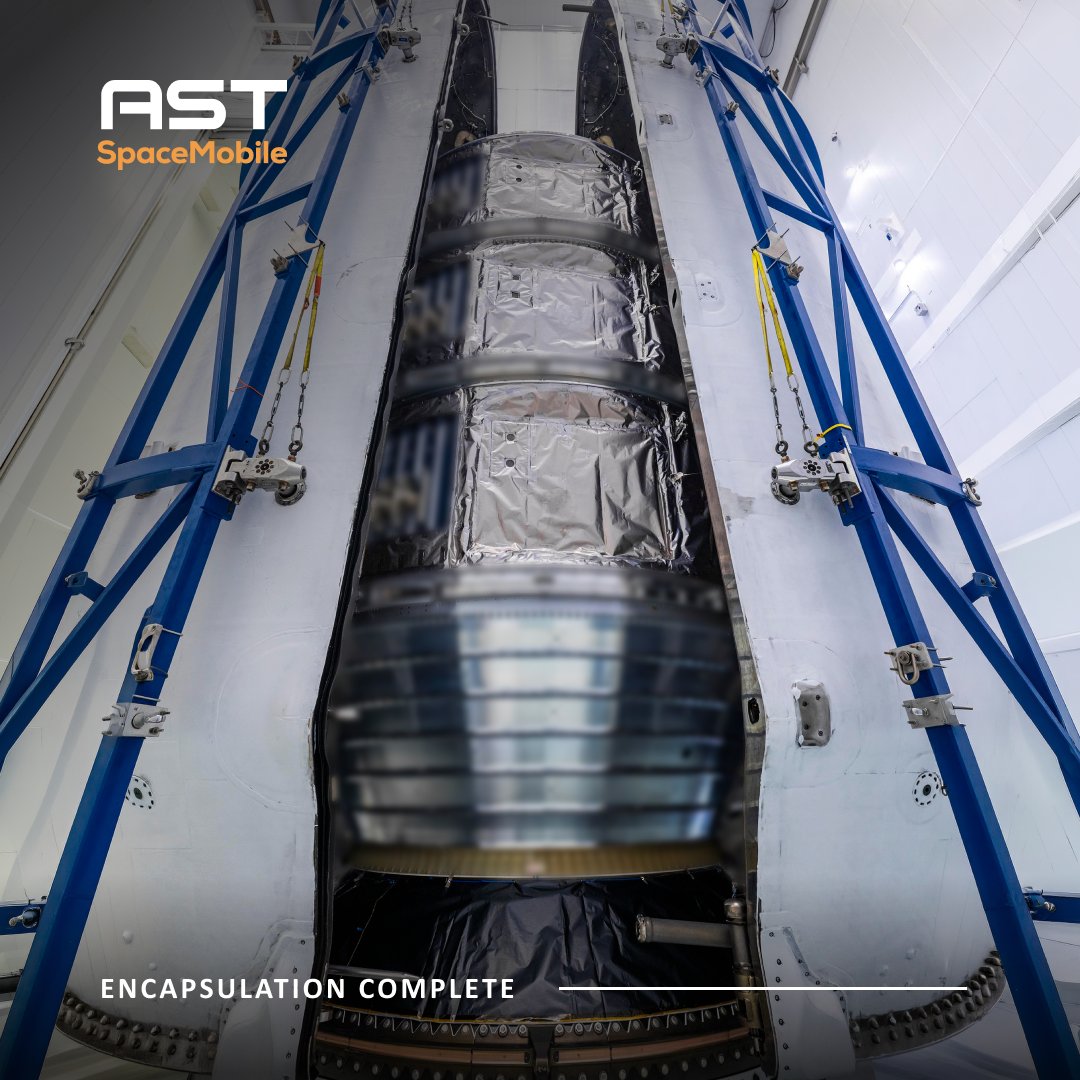
Encapsulation complete.
BlueBirds 8, 9, and 10 are now secured inside Falcon 9's fairing ahead of launch.
A stacked configuration powered by advanced carbon fiber structures, engineered to withstand ascent forces comparable to carrying a fully loaded space shuttle orbiter during launch. 💪
Next stop: launch. 🚀🚀🚀🚀🚀🚀🚀🚀🚀🚀
Built in Texas. Broadband from space. Designed to connect directly to everyday smartphones. 🌎📶📱
#ASTSpaceMobile #Broadband #ConnectingtheUnconnected #BlueBirds
1
1
24
836
SpaceMobileNow retweeted

Encapsulation complete.
BlueBirds 8, 9, and 10 are now secured inside Falcon 9's fairing ahead of launch.
A stacked configuration powered by advanced carbon fiber structures, engineered to withstand ascent forces comparable to carrying a fully loaded space shuttle orbiter during launch. 💪
Next stop: launch. 🚀🚀🚀🚀🚀🚀🚀🚀🚀🚀
Built in Texas. Broadband from space. Designed to connect directly to everyday smartphones. 🌎📶📱
#ASTSpaceMobile #Broadband #ConnectingtheUnconnected #BlueBirds
146
541
2,994
274,310
SpaceMobileNow retweeted

Jun 15
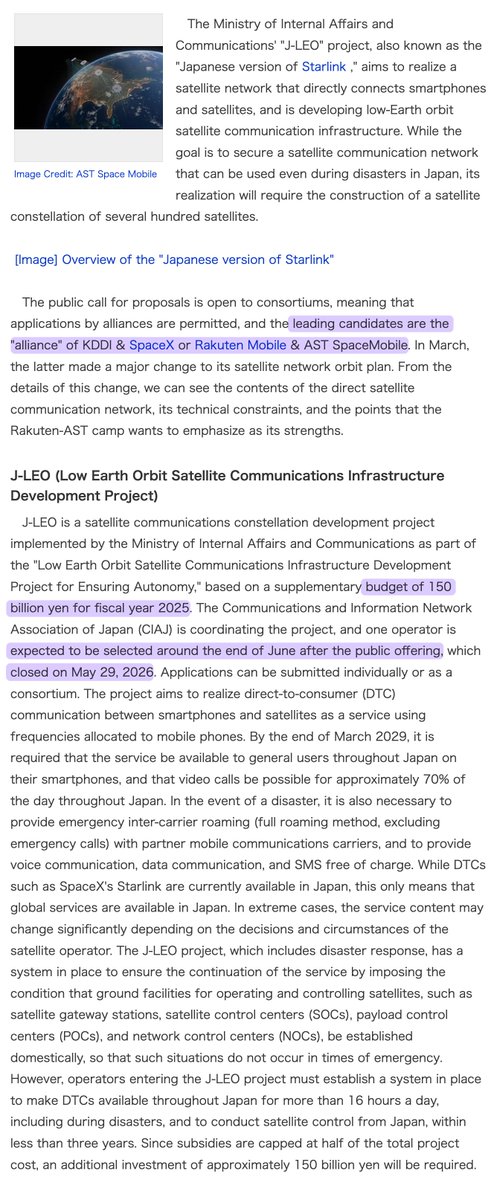
$ASTS - AST SpaceMobile could be awarded $1 billion this month 👀
"one operator is expected to be selected around the end of June"
The J-LEO Project is a massive Japanese government initiative aimed at building an autonomous, domestic satellite network to allow smartphone-to-satellite connectivity.
Backed by a substantial $1 billion budget through the Ministry of Internal Affairs and Communications (MIC), the program focuses on:
* Providing direct-to-smartphone communication (DTC).Ensuring that vital satellite ground infrastructure is physically located in Japan for national security and autonomy.
* Guaranteeing free emergency services (SMS, data, and voice) during national disasters.
Currently, two major consortiums are competing for the project:
Rakuten Mobile partnering with AST SpaceMobile
KDDI partnering with SpaceX.
Exciting times.
44
94
697
186,350

Jun 12
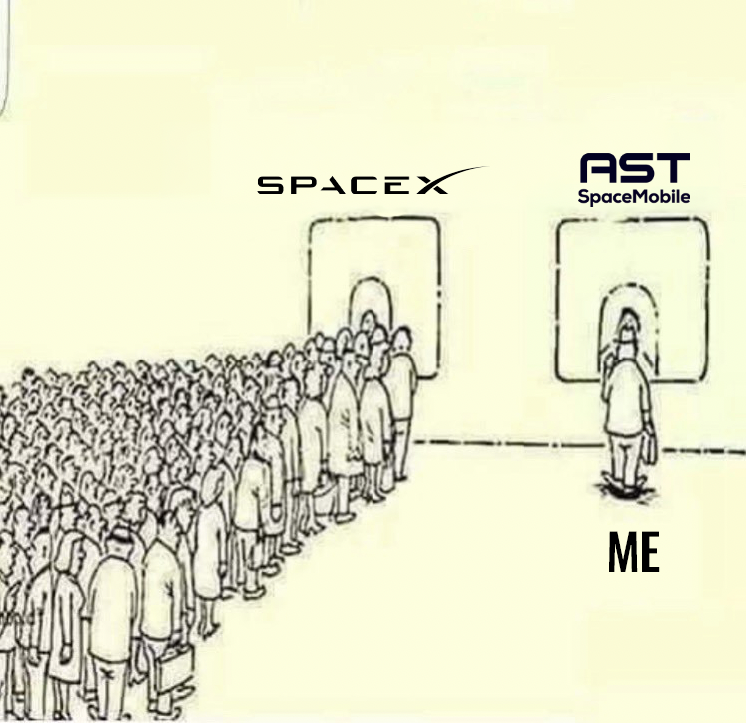
Que implica la salida a bolsa de @SpaceX para @AST_SpaceMobile $ASTS ? youtube.com/shorts/ptY1PYraz…
1
3
852
SpaceMobileNow retweeted

Jun 11
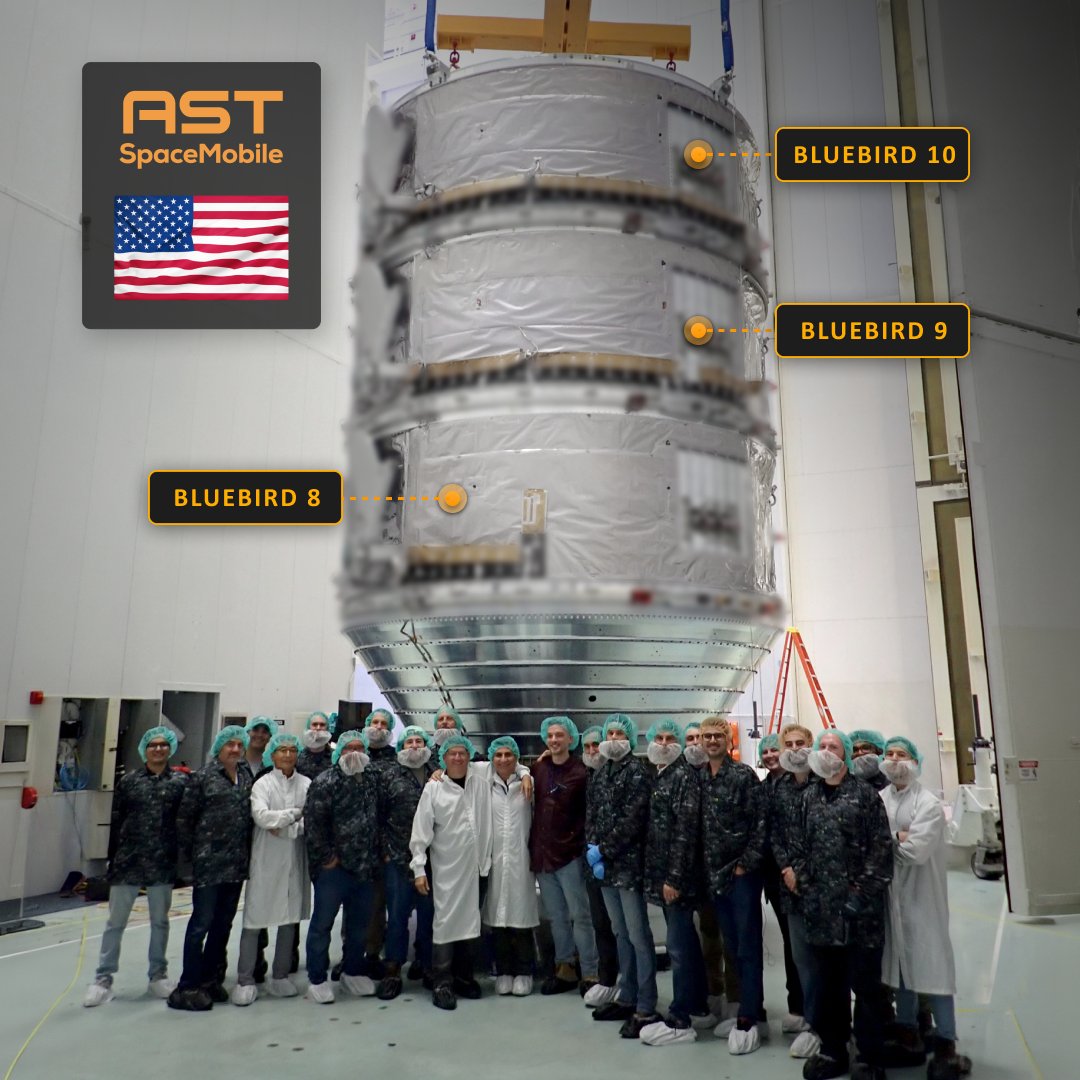
$ASTS: Did you know that SpaceX is going to launch 3x AST SpaceMobile Block-2 BlueBird satellites into LEO next Wed June 17th?
Also the stock broke above $100 and was heading towards $120 in anticipation of launch before the Iranian conflict flared up again.
AST SpaceMobile Announces Launch Date for BlueBird Satellites 8, 9, and 10
businesswire.com/news/home/2…
21
39
427
40,108
SpaceMobileNow retweeted

Jun 10
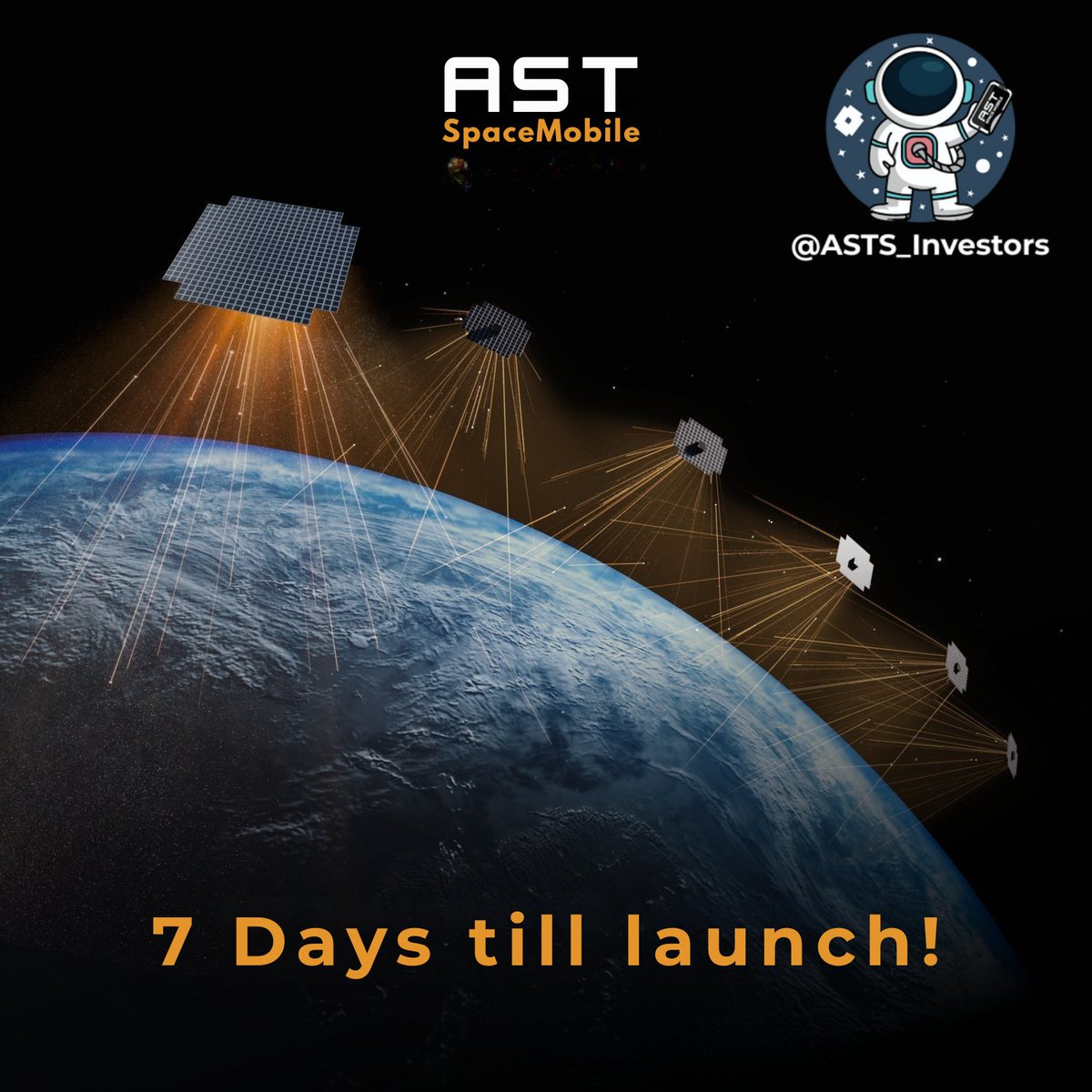
HAPPY LAUNCH WEEK 🚀
This time next week, BlueBirds 8-10 will be launching into orbit 🧇
$ASTS
4
22
348
10,914
SpaceMobileNow retweeted
Jun 9
Ya tenemos fecha de lanzamiento! 17de junio $ASTS @AST_SpaceMobile @SpaceX
youtube.com/shorts/QuDE-rNwa…
1
6
1,037
SpaceMobileNow retweeted
AST SpaceMobile Announces Launch Date for BlueBird Satellites 8, 9, and 10
businesswire.com/news/home/2…
204
579
3,118
471,340
SpaceMobileNow retweeted
Jun 8
Dos noticias importantes esta semana para @AST_SpaceMobile
$ASTS @SpaceX
#asts youtube.com/shorts/4oZIot7sP…
1
10
1,487
Jun 5

5
1,104
Jun 3
$ASTS
Seguimos a la espera de nuevos lanzamientos con #falcon9 @SpaceX @AST_SpaceMobile
youtube.com/shorts/HbdplaDWe…
6
954
SpaceMobileNow retweeted
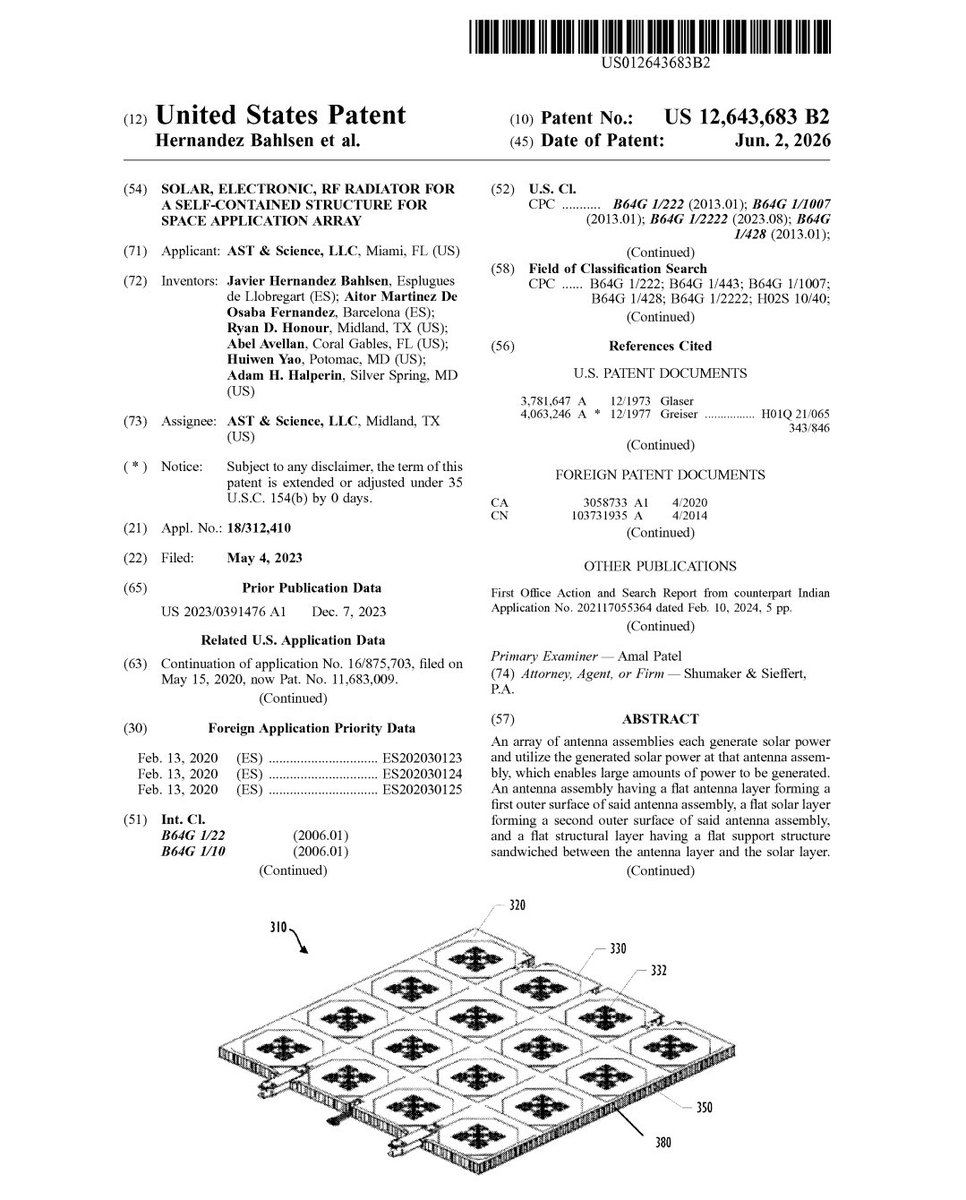
AST SPACEMOBILE SECURES ANOTHER PATENT
This is a continuation of another patent that AST holds.
The invention essentially turns the antenna array itself into a power generating surface, with solar cells and antenna layers integrated into a single flat structure.
This can reduce mass, improve power efficiency, simplify spacecraft design and maximize usable surface area which is a critical advantage for large-scale D2D satellites.
Credit to @TheodorusAtheos for the find $ASTS
4
36
382
14,471
Jun 3
Fuertes declaraciones! $ASTS
Jun 2

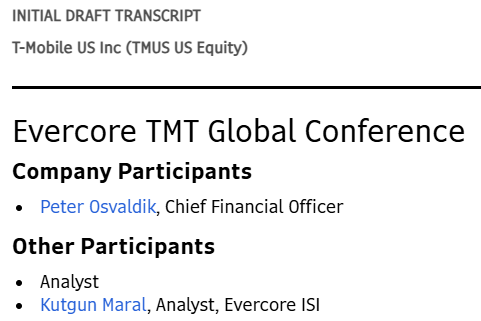
$ASTS: The CFO of T-Mobile was at Evercore today and was asked about satellite service as a potential terrestrial competitor. His response was very defensive and clearly directed towards Starlink (350km orbit, thousands of satellites, V2, etc).
I've never seen T-Mobile respond like this about Starlink. In prior periods, they would have said they're happy with their partnership and that Starlink Mobile is a complementary service. Instead Peter goes into a detailed dressing down of Starlink.
As we've known, not all is well in the Magenta paradise.
Kutgun Maral: Analyst Evercore ISI
Understood. And maybe switching gears a little bit, but still talking about competition. You can fill-in the gaps over here, but I want to talk about satellite. And, there are certain satellite operators that sound pretty confident in their ability to compete with broadband against -- not with broadband, but against terrestrial providers in direct-to-sell. Can you help us understand whether there's a real business case for these satellite operators and especially as they kind of move towards their next-gen satellite launches and/or close on some of their spectrum deals?
Peter Osvaldik: T-Mobile CFO
Yeah. Well, the short answer is No. There's no effective way for them to compete with a terrestrial network and they're not limited by money or number of satellites. They're limited by the laws of physics. And here, let me get into that a little bit more. Two fundamental things that are the problem.
One of those being just signal power. So when you're thinking about a terrestrial network, you've got a site that's probably I'm going to go kilometers now for the second, like a kilometer away from you, obviously has a lot of spectrum and is putting out a lot of power.
Compare that to, for example, a satellite, remember, these are different constellations in the broadband satellites, a satellite that's 350 kilometers up, which is probably as low as you can go. You go any lower, you're going to have a lot of propellant needed to keep the things stabilized, which means you get in a catch-22 cycle of then larger power arrays, which mean more atmospheric drag, which just so 350 kilometers is probably the lowest that you can go.
So now you're trying to send a spectrum signal think about this is like a garden hose, water through a pipe. And you're trying to shoot at 350 kilometers away to a mobile device. It's a lot different than the broadband product, which is shooting to an outdoor large antenna. You're trying to not only shoot a small mobile device, but it's mobile.
And the problem is the basic physics of that water through the -- through the pipe and through the outlet is what we call OpenSignal loss. And this is just the amount of signal loss that you get with no obstruction is not just linear in terms of the distance, it's actually an inverse square.
And you cannot put enough power. You can put 100,000 satellites up with all the spectrum of all three MNO operators and you will never be able to project enough power to overcome that OpenSignal loss of 350 kilometers. What that practically means is by the time you get down to earth where the mobile phones are, you don't have enough signal to overcome things like roofs, glass, modern vehicles. And so you cannot provide a reliable experience to customers in 70% of the time where they spend is in buildings or in cars, modern vehicles.
So you can't service a customer in 70% of the time that they're spending on a mobile device. And again, you can put up all the satellites you want to, the fundamental laws of physics will not allow you to generate a beam signal strong enough to actually overcome obstacles. So that's the first and most basic reason why it cannot be a competitor to terrestrial networks.
The second is capacity. And there's a theoretical limit also to the beam size. When we do estimates around one of the operators out there who is going to have a of V2, a D2C or D2D, however you want to think about it satellite, that beam size is significant. For example, if you think about Manhattan, New York, where you're in New York a lot, that beam size is roughly multiple six to 15 times depending on how you define Manhattan, but multiples the size of Manhattan.
And that V2 service is going to be able to provide a decent service, outdoor service, see the previous conversation I had to about 10 concurrent users. So think about that. A beam size larger than the size of Manhattan that can reliably provide service to 10 concurrent outdoor users. It's just not an experience that customers demand.
And so for those two fundamental reasons, it's just not an over-comeable situation. Now that doesn't mean it doesn't have a place. Like we've long said, it has a great complementary place in outdoor areas, particularly areas like national parks where the economics just don't make sense to build a terrestrial network, but it can be a great added complementary benefit for customers and that's where we see it play-out. That's where we see the hotspots are. If I look at the last week of data, D2D traffic on our network was count the zeros, 0.002% of traffic. And that's because it -- for the first two reasons, I said, it's just not where 70% of people are, but it does make sense in that place where terrestrial networks just don't make feasible economic sense.
And that was the whole purpose of the JV is how do we make this a win-win for satellite operators, for consumers and make it economically viable for the carriers as well. So how do we stimulate competition in this space, give consumers the coverage in those few limited outdoor areas like national parks where, by the way, by pulling our spectrum together, we can take care of the hotspot needs of a Yosemite or a Yellowstone National Park and have it be a great complementary service. That was the whole thought process behind this.
But in terms of a competitor to a mobile network operator, it's just not physically possible. And this is also the reason why we said, well, well, you've given them an MVNO, said, well, it doesn't differentiate you, like there's no differentiation. So no, we're not going to give them an MVNO. It doesn't make sense for us to give them an MVNO The answer is no.
1
22
4,611
SpaceMobileNow retweeted
Jun 2
$ASTS: The CFO of T-Mobile was at Evercore today and was asked about satellite service as a potential terrestrial competitor. His response was very defensive and clearly directed towards Starlink (350km orbit, thousands of satellites, V2, etc).
I've never seen T-Mobile respond like this about Starlink. In prior periods, they would have said they're happy with their partnership and that Starlink Mobile is a complementary service. Instead Peter goes into a detailed dressing down of Starlink.
As we've known, not all is well in the Magenta paradise.
Kutgun Maral: Analyst Evercore ISI
Understood. And maybe switching gears a little bit, but still talking about competition. You can fill-in the gaps over here, but I want to talk about satellite. And, there are certain satellite operators that sound pretty confident in their ability to compete with broadband against -- not with broadband, but against terrestrial providers in direct-to-sell. Can you help us understand whether there's a real business case for these satellite operators and especially as they kind of move towards their next-gen satellite launches and/or close on some of their spectrum deals?
Peter Osvaldik: T-Mobile CFO
Yeah. Well, the short answer is No. There's no effective way for them to compete with a terrestrial network and they're not limited by money or number of satellites. They're limited by the laws of physics. And here, let me get into that a little bit more. Two fundamental things that are the problem.
One of those being just signal power. So when you're thinking about a terrestrial network, you've got a site that's probably I'm going to go kilometers now for the second, like a kilometer away from you, obviously has a lot of spectrum and is putting out a lot of power.
Compare that to, for example, a satellite, remember, these are different constellations in the broadband satellites, a satellite that's 350 kilometers up, which is probably as low as you can go. You go any lower, you're going to have a lot of propellant needed to keep the things stabilized, which means you get in a catch-22 cycle of then larger power arrays, which mean more atmospheric drag, which just so 350 kilometers is probably the lowest that you can go.
So now you're trying to send a spectrum signal think about this is like a garden hose, water through a pipe. And you're trying to shoot at 350 kilometers away to a mobile device. It's a lot different than the broadband product, which is shooting to an outdoor large antenna. You're trying to not only shoot a small mobile device, but it's mobile.
And the problem is the basic physics of that water through the -- through the pipe and through the outlet is what we call OpenSignal loss. And this is just the amount of signal loss that you get with no obstruction is not just linear in terms of the distance, it's actually an inverse square.
And you cannot put enough power. You can put 100,000 satellites up with all the spectrum of all three MNO operators and you will never be able to project enough power to overcome that OpenSignal loss of 350 kilometers. What that practically means is by the time you get down to earth where the mobile phones are, you don't have enough signal to overcome things like roofs, glass, modern vehicles. And so you cannot provide a reliable experience to customers in 70% of the time where they spend is in buildings or in cars, modern vehicles.
So you can't service a customer in 70% of the time that they're spending on a mobile device. And again, you can put up all the satellites you want to, the fundamental laws of physics will not allow you to generate a beam signal strong enough to actually overcome obstacles. So that's the first and most basic reason why it cannot be a competitor to terrestrial networks.
The second is capacity. And there's a theoretical limit also to the beam size. When we do estimates around one of the operators out there who is going to have a of V2, a D2C or D2D, however you want to think about it satellite, that beam size is significant. For example, if you think about Manhattan, New York, where you're in New York a lot, that beam size is roughly multiple six to 15 times depending on how you define Manhattan, but multiples the size of Manhattan.
And that V2 service is going to be able to provide a decent service, outdoor service, see the previous conversation I had to about 10 concurrent users. So think about that. A beam size larger than the size of Manhattan that can reliably provide service to 10 concurrent outdoor users. It's just not an experience that customers demand.
And so for those two fundamental reasons, it's just not an over-comeable situation. Now that doesn't mean it doesn't have a place. Like we've long said, it has a great complementary place in outdoor areas, particularly areas like national parks where the economics just don't make sense to build a terrestrial network, but it can be a great added complementary benefit for customers and that's where we see it play-out. That's where we see the hotspots are. If I look at the last week of data, D2D traffic on our network was count the zeros, 0.002% of traffic. And that's because it -- for the first two reasons, I said, it's just not where 70% of people are, but it does make sense in that place where terrestrial networks just don't make feasible economic sense.
And that was the whole purpose of the JV is how do we make this a win-win for satellite operators, for consumers and make it economically viable for the carriers as well. So how do we stimulate competition in this space, give consumers the coverage in those few limited outdoor areas like national parks where, by the way, by pulling our spectrum together, we can take care of the hotspot needs of a Yosemite or a Yellowstone National Park and have it be a great complementary service. That was the whole thought process behind this.
But in terms of a competitor to a mobile network operator, it's just not physically possible. And this is also the reason why we said, well, well, you've given them an MVNO, said, well, it doesn't differentiate you, like there's no differentiation. So no, we're not going to give them an MVNO. It doesn't make sense for us to give them an MVNO The answer is no.
37
45
414
138,173