
Joined March 2021
- Tweets 20,790
- Following 1,021
- Followers 190
- Likes 52,311
939 Photos and videos











Pinned Tweet

5 Jul 2022
J'ai pris rdv chez un psy. C'était la fois de trop aujourd'hui. J'en et marre, je vais retrousser mes manches et travailler sur moi même pour plus que ça m'arrive. Trauma attention à toi, maintenant c'est ka guerre et c'est moi qui vais gagner.
3
14
pourquoi pour que les isramerde tue devant un public encore plus grand le peuples palestiniens ?

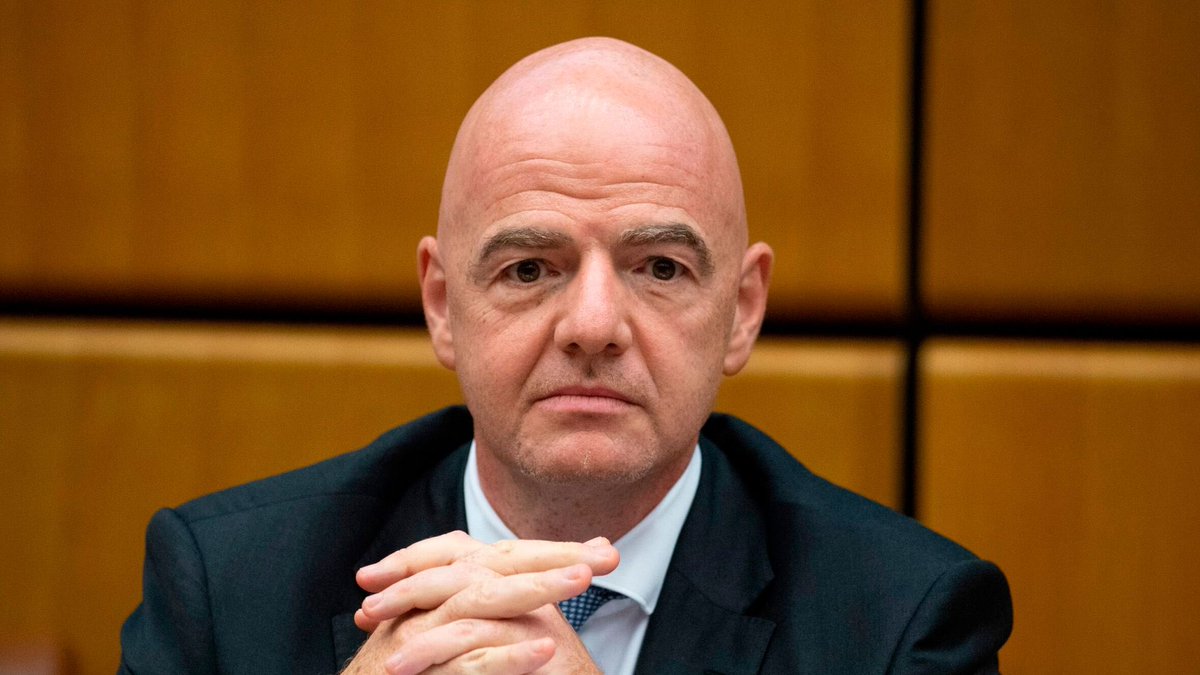
FIFA is proposing that the opening match of their upcoming under-15s football festival should be Palestine against Israel. (via The NYT)
(nytimes.com/athletic/7360929…)


5
il serait temps d'admettre que le couple et harceler par la famille beckam

So let me get this straight: David & Victoria sent their 14 yr old daughter to show up unannounced to Brooklyn’s house, he wasn’t home but paparazzis were conveniently there to capture the moment and make him look like the “bad guy” for turning his little sister away?
85
hera retweeted

#LivelyvWayfarer
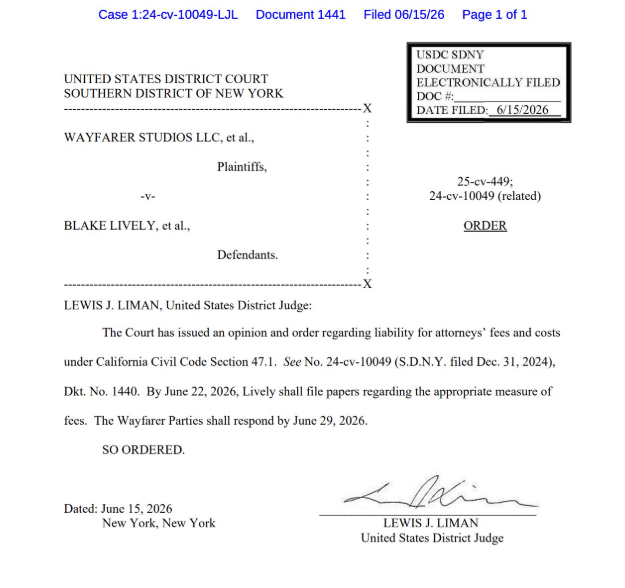
Judge Liman has issued a new order requiring Lively to file documents regarding the amount of attorney's fees she seeks. See below. It will be interesting to see how much Lively's lawyers will claim.
The one thing Lively's lawyers should bear in mind is that they don't want to lose credibility with the judge by seeking a ridiculous amount. As I have pointed out in a previous post, they sought $800,000 in the Texas case against Wallace for essentially the same thing. The New York Times is seeking to recover more than $150,000 in attorney’s fees and costs for prevailing in the same/similar defamation suit. Thus, it would be tough for Lively's lawyers to justify seeking "millions" in attorney's fees for the same defamation action.
7
7
59
4,194
c'est des malades

FTP: LAPD killed her dog. He was wearing his Knicks jersey.
His name was Jameson. A golden doodle. One of the sweetest, most gentle breeds alive.
A neighbor called a noise complaint. That's it.
20 officers showed up. Then a helicopter. For a noise complaint in an apartment complex.
And they shot Jameson dead. In front of his owner. In front of her child.
No warning. No de-escalation. Nothing.
The media is barely covering this. No headlines. No outrage.
Like it never happened.
If this was your dog... your child watching... how would you feel?
Jameson deserved better. That little boy deserved better. His mama deserved better.
10


je regarde pas de base ça change rien 😂
14h

On te donne 100 000 € aujourd’hui… mais en échange, tu ne pourras regarder aucun match de la Coupe du Monde 2026… Tu acceptes ? 🤔 ⚽💸
3
hera retweeted

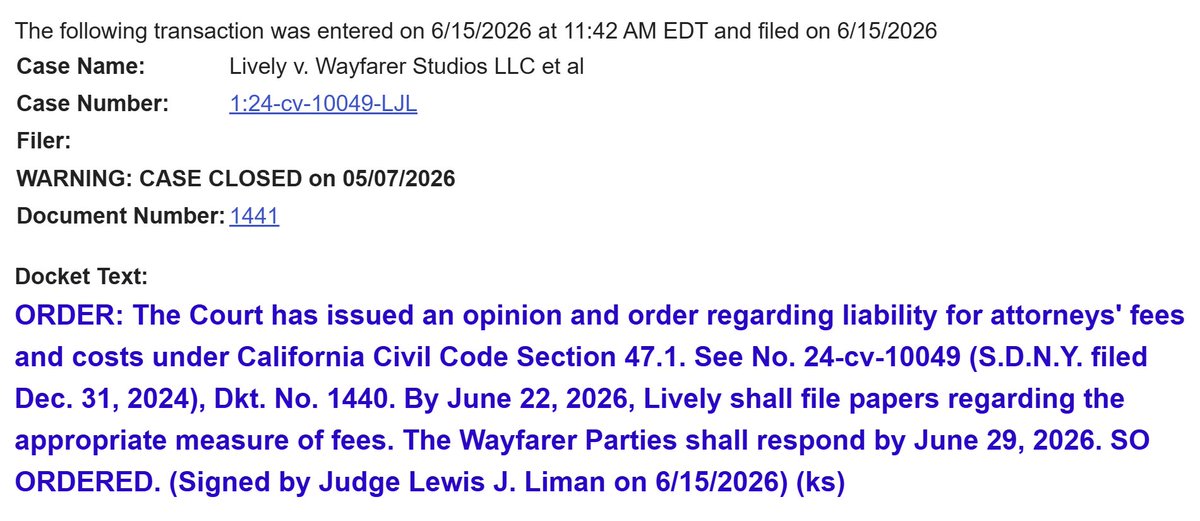
lets see how much Blake Lively's team overcharged her for terrible work.

Hollywood Hearsay: in Lively v Baldoni, Judge Liman this morning has set a schedule to brief how much has to be paid in attorneys fees. Inner City Press is on it -
amazon.com/dp/B0DWC8BH55
2
6
63
2,434
c'est marrant la @CroixRouge à fait chiez pour rentrer dans mon immeuble via l'interphone, sonne et toque à ma porte je m'énerve et réduisant NON et maintenant en 2heures sa a sonner une quinzaine de fois à mon interphone.
mais quel coïncidence incroyable dit donc
2
46
hera retweeted

Elle a soi un problème mental soit un problème intestinal et apparemment, elle a mis un papier pour ne pas salir.
Ce qui est vraiment dégueulasse, c'est de la filmer.
2
1
29
1,019
hera retweeted

A young woman in Texas gives birth in her car. When rushed to the hospital, doctors will quickly realise that the baby is not her own and neither is the blood she’s covered in.
Maternal Instinct is now on Netflix.
4
10
59
37,909
hera retweeted

Jun 14
The cruelest part of terror is how quickly it turns grief into a countdown.🎬
What would you do if you watched your friend die and realized the same thing was coming for you?
11
88
861
431,251
hera retweeted

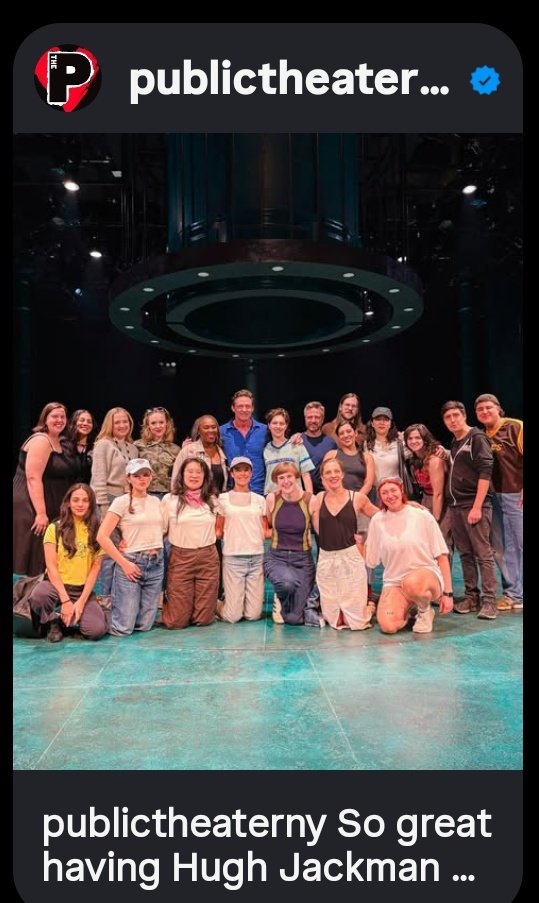
Did Blake Lively get Isabela that cheap acting gig?
A few days after Hugh Jackman visited PublicTheaterNY Isabela Ferrer was tagged as a new cast member.
THEY THINK WE ARE STUPID.
It's time to make some real noise, friends. I'm serious. REAL noise.

5
6
79
3,130

hera retweeted

Jun 13
🚨 TRUMP: "I am not a rapist. I have never raped anyone."
Iran: "He is a pedophile and he declared war on us to stop the news about Epstein."
671
17,464
126,837
9,752,574
hera retweeted

Jun 14
In 2015, Pixar's Coco was four years into development and badly stuck. Story artist Adrian Molina couldn't leave it at the office. So at night he wrote script pages nobody asked him for, and emailed them to the director. By late 2016, he was co-director of the film.
The original version had a problem it took years to name. The story was about a boy learning to say goodbye to someone he loved. That sounds like any Pixar film. The trouble is that Día de los Muertos, the Day of the Dead, is not about grief. The holiday is the opposite: you do not say goodbye. You keep the dead alive through memory and celebration. Unkrich admitted the team was making "a story antithetical to what Día de los Muertos is all about." The whole approach was discarded.
What came next required multiple trips to Mexico. Oaxaca, Guanajuato, Michoacán, Mexico City. The crew sat with local families, visited their homes and grave sites. Pixar shot tens of thousands of photographs of street detail and architecture to reproduce later in animation. Disney had already stumbled badly here: the studio tried to trademark the phrase "Día de los Muertos" in 2013 and faced a public backlash within 12 hours. They dropped the attempt and brought in cultural consultants, including playwright Octavio Solis and cartoonist Lalo Alcaraz, who had been among the loudest critics of the bid.
Then there's "Remember Me." The Frozen songwriters, Robert Lopez and Kristen Anderson-Lopez, got an unusual brief: write one song that means two completely different things. Lopez called it the difference between showmanship and "a song as a gift to someone you love." They wrote the big mariachi version first, then worked backward to find the same melody as a quiet lullaby. Both versions appear in the film. The lullaby's full meaning lands only in the final minutes, when it unlocks Mamá Coco's memory.
The song works like the title. You spend the whole film thinking "Remember Me" belongs to de la Cruz. The movie title pulls the same trick with Miguel. Both work the same way: planted at the beginning, resolved at the same moment. Six years of development, a discarded story, a midnight email, and one song written to mean two things.
Jun 13

COCO (2017) is named after a character who spends most of the movie quietly sitting in the background. Pixar lets Miguel take center stage for almost the entire journey, then reminds you in the final minutes why the film was called COCO all along.
5
19
144
16,370
hera retweeted

Jun 14
Filistin bayrağı açan Lamine Yamal tüm İsrail’de protesto ediliyor, formaları yırtılıyor.
O halde biz de Yamal’a çok büyük destek verelim!
Yamal’ı sevenler bu tweeti beğensin ve paylaşsın 🇵🇸
177
2,743
12,576
146,509
hera retweeted

Jun 13
os livros dela são MUITO problemáticos, november 9 praticamente fala de uma garota que teve o corpo incendiado e adivinha quem eh o par romântico dela?? Exatamente o responsável pelo crime. podiam parar de adaptar os livros dela



179
1,007
13,283
532,281
hera retweeted

Jun 13
🇵🇭 Se revelan nuevas imágenes impactantes del terremoto de magnitud 7,8 que sacudió Filipinas el pasado 8 de junio.
1,554
4,817
54,502
11,749,715
ce mec et un lâche genre en 35 ans d'amitié et de travail commun il avait pas vue que Franco faisait de la merde ? il le savait et tant que sa lui rapportanit du fric c'était nickel. mainte il et "ho non je savais pas c'est un vilain je le vois plus"

Seth Rogen hasn't spoken to James Franco in a "long time" and has "no plans" to work with him again:
"I have not worked with him in years. But the personal side of it is just so nuanced, and it involves people that I don’t know if I should be dragging into this. I don’t know what I would benefit from getting deeply into it. Nothing has changed since the last time I talked about all this, and I haven’t worked with him in a really long time and I have no plans to.” variety.com/2026/film/news/s…

50
hera retweeted

Jun 14
🚨 Eşiyle Maldivlere tatile gitmek isteyen Netenyahu'ya kötü haber..
Maldivler, Netenyahu ve İsrail pasaportu olan herkesin Ülkeye girişini yasaklandığını duyurdu..
238
5,202
36,861
4,729,107