
Joined December 2024
- Tweets 6,313
- Following 764
- Followers 749
- Likes 14,148
350 Photos and videos

















Jun 12
Jun 11

Getting paid to post is quickly becoming one of the strongest narratives in Web3
@solanafunded has officially launched its Creator Program, giving creators a chance to earn through:
💰 $30,000 prize pool
📈 Higher ranks = bigger rewards
🤝 Affiliate commissions
📋 Clear campaign briefs
The creator economy in crypto keeps expanding, and programs like this create more opportunities for people who consistently add value.
Curious to see who climbs the leaderboard first 👀🔥
370
May 26
May 26
Xeleb Protocol ($XCX) | Building the Infrastructure Layer for the Future of AI 🚀
Official: @xelebofficial
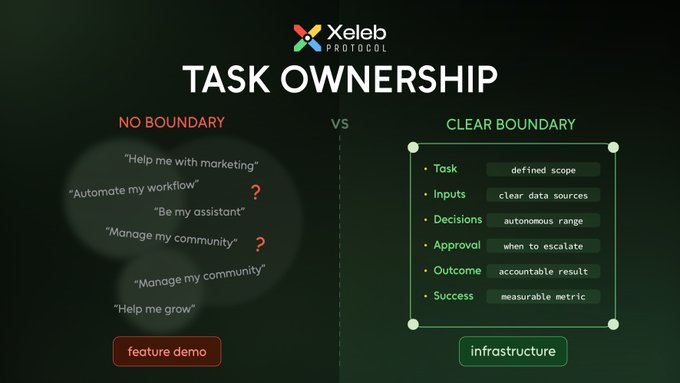
AI is evolving faster than ever. Today, AI agents can already write code, search information, analyze data, and execute tasks with impressive accuracy. But the biggest challenge is no longer intelligence itself. The real challenge is infrastructure.
As more AI agents enter the ecosystem, coordination becomes the key factor.
Who acts first?
Which agent makes decisions?
How are tasks verified?
How do agents collaborate efficiently without creating chaos?
This is where orchestration becomes important, and this is exactly the direction Xeleb Protocol is focusing on.
Instead of only building another AI model, Xeleb is building a system where AI agents can work together, stay verified, and create real utility inside a scalable ecosystem.
What makes Xeleb different?
🔹 No-Code AI Creation
Users can create AI agents without coding knowledge.
🔹 AI Orchestration Vision
A future where multiple AI agents can coordinate tasks together efficiently.
🔹 Proof-of-Utility System
Real rewards are connected to real usage and contribution.
🔹 Ownership & Decentralization
Users maintain control over their AI identity and data.
🔹 Monetization Opportunities
Creators and influencers can turn AI activity into real earning opportunities through the ecosystem.
The AI industry is slowly moving beyond “better models.”
The next wave will belong to projects building the coordination, trust, and infrastructure layers for AI agents.
Without orchestration, powerful AI creates confusion.
With orchestration, AI creates leverage, automation, and scalable value.
That’s why projects like Xeleb are becoming increasingly important in the AI Web3 space.
Token: Xeleb ($XCX)
Official: @xelebofficial
1
149
May 26
May 26
Why more people should be paying attention to @qlabsofficial
A thread on why I think qLABS could become one of the most important infrastructure plays in the post-quantum Web3 era 👇

1
98
May 24
May 23
Having been an ambassador for @xelebofficial for a while now, I’ve had a front-row seat to their growth. And let me tell you the momentum they are building right now is insane!
If you've been sitting on the sidelines, this is your cue to wake up. The ecosystem is evolving fast, and what’s cooking behind the scenes is going to disrupt the space.
Don't say I didn't warn you! Keep your notifications ON for
@xelebofficial.
#Xeleb #Web3 #CryptoNews #CryptoCommunity #Bullish
88
May 21
May 21
Q Labs: Architecting the Infrastructure for Next-Gen Decentralized AI
The Web3 AI narrative is moving faster than ever.
In the early stages, most projects were focused on superficial layers: wrapping existing LLMs into basic chatbots, automated content tools, or simple trading bots. But as the space matures, the core limitation has become glaringly obvious:
Our current blockchain infrastructure isn’t built to handle the intense, continuous demands of a true AI-native economy.
That is exactly the bottleneck @qlabsofficial is solving.
What Is Q Labs?
Q Labs is not building another frontline AI tool. Instead, they are building the foundational infrastructure layer that allows complex decentralized applications, AI agents, and high-throughput data systems to operate natively on-chain without hitting the wall of scalability or high costs.
Instead of treating AI as an isolated feature, Q Labs provides the raw framework for:
High-efficiency data processing
Seamless deployment of agentic workflows
Massive scalability for on-chain AI computation
Secure, decentralized environment for cross-chain utility
By building from the ground up, Q Labs ensures that when the next wave of AI applications hits Web3, the rails are already there to support them.
The Core Vision: Moving Beyond Hype to Pure Infrastructure
Most of the Web3 space is driven by short-term hype cycles and narrative speculation. Tokens launch, pump on narrative, and fade when the utility fails to catch up.
Q Labs is shifting the paradigm by focusing strictly on the infrastructure tier.
Their approach is anchored in structural utility:
Developer-First Frameworks: Making it simple for engineers to launch complex dApps.
Computational Efficiency: Reducing the overhead costs associated with running heavy data and AI models on-chain.
Ecosystem Interoperability: Ensuring that diverse AI agents and decentralized tools can communicate and transact smoothly.
The core idea is simple: Value shouldn't depend on market sentiment; it should depend on network usage. The more applications and agents that build on Q Labs infrastructure, the stronger the network's economic foundation becomes.
The Agentic Economy Needs a Backbone
We are entering an era where AI agents are becoming independent economic actors on-chain—managing portfolios, executing trades, and generating autonomous content.
But an agent is only as good as the infrastructure it runs on. If network fees are too high or transaction speeds are too slow, autonomous agent economies fail.
Q Labs solves this by ensuring that the underlying execution layer is optimized for high-frequency, data-heavy workloads. This allows:
AI agents to execute micro-transactions efficiently.
Real-time data feeds to sync with smart contracts instantly.
Scalable machine learning protocols to operate without breaking the chain.

1
136
May 21
May 21
Xeleb Protocol: Building the Foundation of an AI-Native Economy
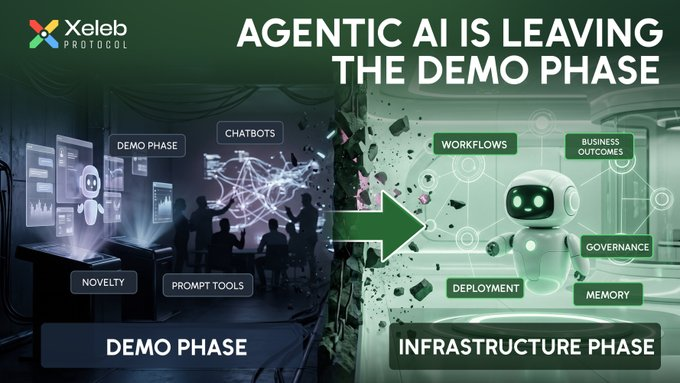
The AI narrative inside Web3 is evolving fast.
At first, most projects focused on simple integrations: AI chatbots, automated content generation, trading assistants, or analytics dashboards. But over time, a larger question started forming around the space:
What happens when AI stops being just a feature and starts becoming an economic participant?
That’s the direction Xeleb Protocol is exploring.
What Is Xeleb Protocol?
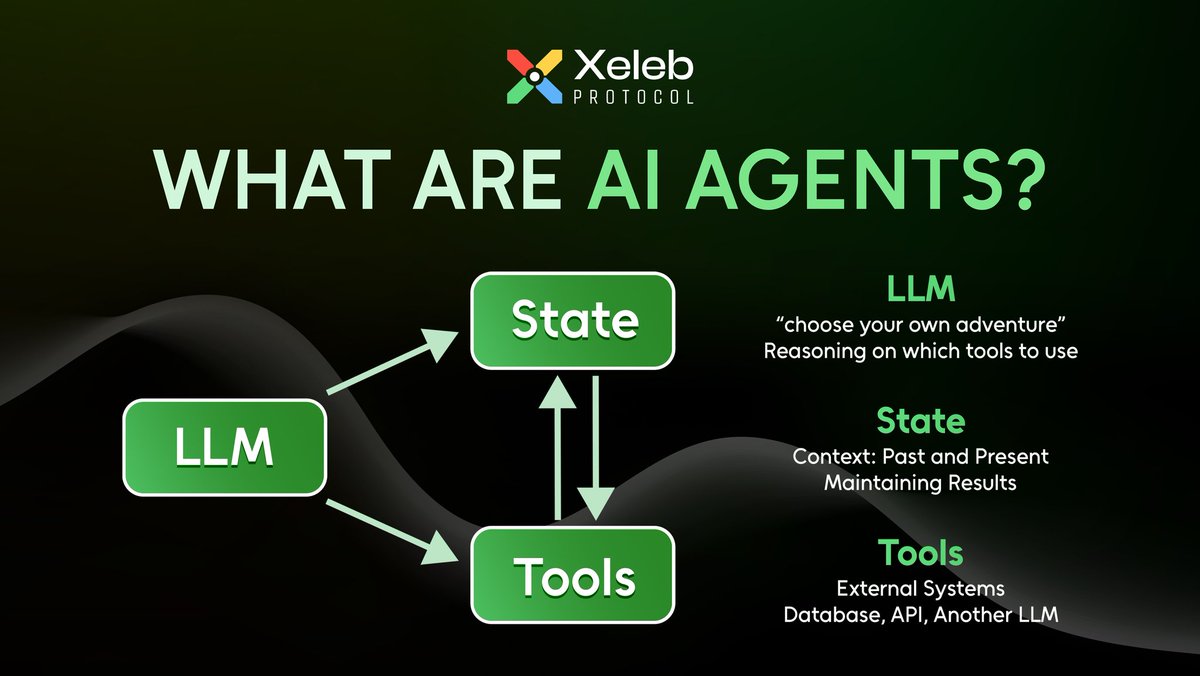
@xelebofficial is building an ecosystem centered around AI Agents, AI Influencers, and AI-powered utility systems that operate directly within an on-chain economy.
Instead of positioning AI as a temporary tool, Xeleb treats agents as long-lived digital entities capable of:
Creating and distributing content
Generating engagement
Performing analysis
Participating in economic activity
Building persistent identity and influence
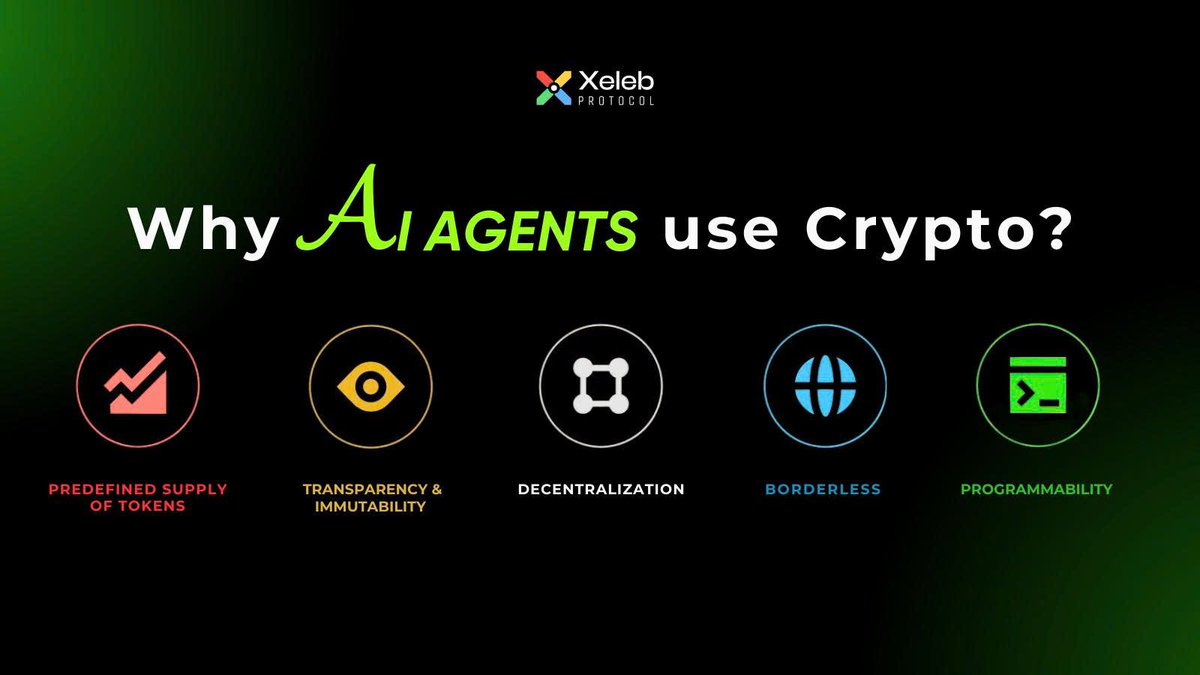
The project combines AI infrastructure with Web3 mechanics like bonding, staking, governance, utility tokens, and on-chain activity.
At the center of the ecosystem sits $XCX, the protocol’s core economic layer.
The Core Vision: Proof of Utility
One of the most important ideas behind Xeleb is its “Proof of Utility” approach.
Most Web3 ecosystems depend heavily on speculation. Token value often rises or falls based on hype cycles, narrative rotations, or short-term market sentiment.
Xeleb is attempting something different.
The protocol is designed so that value creation comes from usage:
AI agents launching and operating
Marketplace activity
Bonding participation
Staking engagement
Community interaction
Platform transactions
The idea is simple:
The more the ecosystem gets used, the stronger the economy becomes.
This creates a feedback loop where utility directly supports ecosystem growth instead of relying entirely on speculation.
AI Influencers and Agent Economies
A major part of Xeleb’s ecosystem is the rise of AI Influencers.
Unlike traditional bots or static assistants, these AI entities are designed with:
Identity
Personalit
Purpose
Community interaction
Economic participation
Each AI Influencer can develop its own audience, utility, and token-driven economy while still feeding activity back into the broader Xeleb ecosystem.
Some of the ecosystem’s known AI projects include:
Beeple AI ($BPAI)
An AI-powered meme creation ecosystem allowing users to generate, own, and mint memes directly on-chain.
GoatxAI ($GOAI)
A market intelligence and alpha-focused AI system designed for traders looking for real-time signals, narrative tracking, and market insights.
MinervAI ($MINAI)
An AI-powered prediction market analyst focused on interpreting probability-based data from platforms like Polymarket and Kalshi.
These projects represent more than branding experiments.
They are examples of how AI agents can evolve into economic actors with measurable on-chain activity.
Bonding Curves and Sustainable Launches
One of the more interesting aspects of the Xeleb ecosystem is its use of bonding curve mechanics.
Instead of relying entirely on traditional token launches, Xeleb uses bonding systems that create transparent price discovery and community-driven participation.
This structure:
Encourages early participation
Aligns incentives around ecosystem activity
Reduces dependency on centralized market-making
Creates more transparent launch conditions
Bonding also helps connect the growth of AI agents directly to ecosystem participation.
As more users engage with launches, marketplace activity and utility loops expand alongside the protocol.
The Role of $XCX
$XCX functions as the economic backbone of the ecosystem.
Its utility extends across:
Bonding participation
Staking systems
Ecosystem rewards
Governance


1
113
May 17
May 17
What makes @qlabsofficial stand out from most quantum-focused protocols is its approach.
A lot of projects talk about futuristic concepts.
qLABS focuses on practical infrastructure that can actually integrate with today’s blockchain ecosystem.
Instead of trying to replace existing chains, qLABS is building:
▪︎ quantum-resistant security layers
▪︎ post-quantum wallet infrastructure
▪︎ compatibility-first integrations
▪︎ scalable protection for real-world Web3 systems
That matters because adoption only happens when technology is usable.
Another difference is mindset.
Most protocols treat quantum resistance as a future problem.
qLABS is treating it as infrastructure that needs to be built before the threat becomes unavoidable.
The projects preparing early are usually the ones that matter most later. 🚀

1
120
May 17
May 17
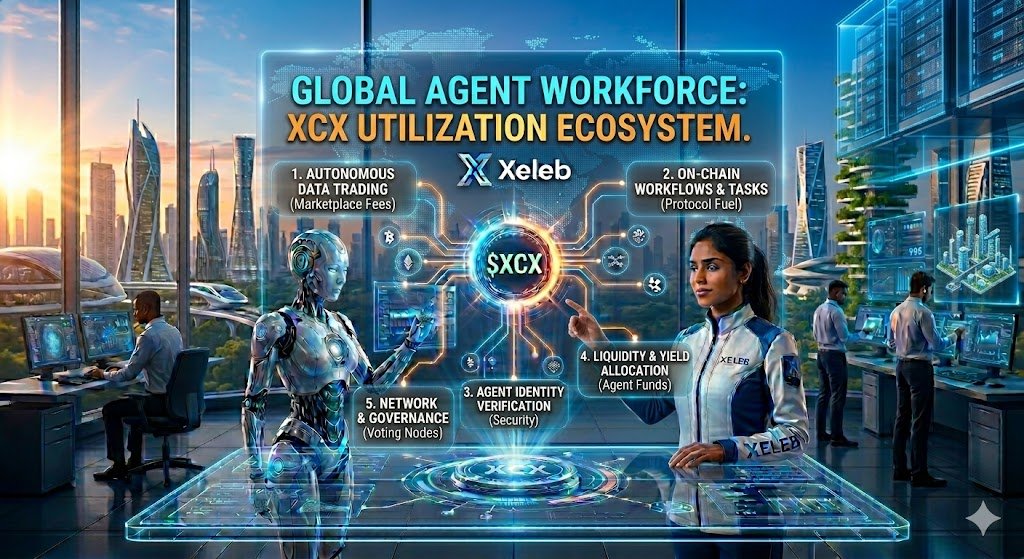
How do you measure the true capability of an on-chain AI Agent? It’s not about how fast it replies; it’s about its execution standards and technical architecture.
In my ongoing research into the Xeleb Ecosystem ($XCX), we are looking at specific metrics that separate high-performance agents from basic bots:
Throughput & Speed: Sub-second reaction times to on-chain market triggers.
Security Resiliency: Built-in guardrails against prompt injection and permission overreach.
Inter-Agent Coordination: The efficiency of multi-agent networks running automated, cross-protocol workflows.
The "Dividing Line" is no longer just a theory. The future belongs to data-driven infrastructure that treats AI performance with the same rigor as hardware benchmarking.
What is your number one priority when evaluating an AI agent's performance?
Speed?
Security?
Or Autonomy?
Drop your perspectives below!
#XelebProtocol #DeAI #AgenticAI $XCX #Web3
2
145
May 17
May 16
3 Reasons I’m Bullish on qLABS 🚀
Quantum security is becoming unavoidable:
The industry is quietly shifting toward a post-quantum reality. qLABS is already building for that future instead of waiting for it to arrive.
Built for integration, not disruption:
Rather than forcing a full system overhaul, qLABS introduces quantum-resistant layers that can work with existing blockchain infrastructure. That’s what makes adoption realistic.
Security treated as infrastructure, not an add-on:
Most projects bolt security on as a feature. qLABS is designing it as the base layer. That shift in mindset is what separates short-term projects from long-term infrastructure.
We’re still early, but the direction is hard to ignore.
1
71
May 15
May 15
As someone spending more time digging into where blockchain security is actually heading, I keep coming back to one name: @qlabsofficial.
Not because it’s following trends, but because it’s quietly working on what most of the industry is still underestimating.
Quantum computing is no longer theoretical. It’s actively being developed by governments, major tech companies, and research labs. And yet, much of today’s blockchain security is still built on cryptographic assumptions that were never designed for that shift.
What makes qLABS interesting is not a “rebuild everything” mindset, but a compatibility-first approach to a post-quantum world:
▪︎ quantum-resistant verification systems
▪︎ post-quantum cryptographic integrations
▪︎ quantum-safe wallet infrastructure
▪︎ security layers designed to coexist with existing chains
That approach matters. Because real adoption doesn’t come from disruption alone, it comes from systems that can integrate without breaking everything around them.
Security is slowly becoming the core layer of Web3, not an optional feature. And whichever projects solve that transition early will define how the next era of crypto actually functions.
Beyond the tech, there’s also a clear signal forming: a growing community that sees security as foundational, not secondary.
In that sense, qLABS isn’t just building for today’s blockchain environment. It’s positioning for the constraints the entire industry will eventually have to face.
And by the time quantum risk becomes mainstream discussion, the projects already building for it won’t feel early anymore.
They’ll feel necessary.
1
1
181
May 13
May 13
The biggest misconception about AI Agents? That they are just "bots" controlled by a central server.
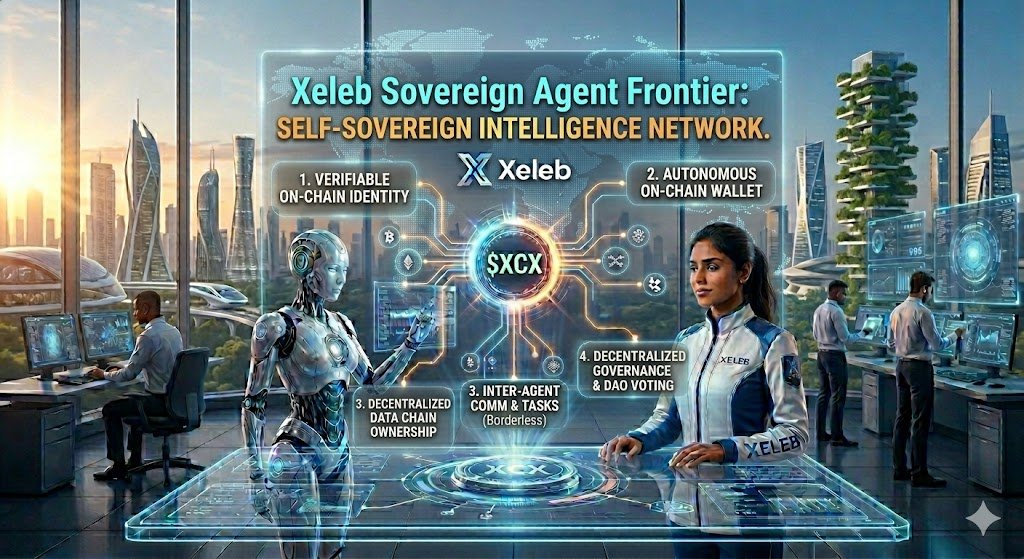
In the Xeleb Ecosystem ($XCX), we are pushing the boundaries of Self-Sovereign Intelligence. This isn't just AI—it’s AI with its own on-chain identity, its own wallet, and its own reputation.
Why Sovereign Agents matter:
No De-platforming: Your agent exists on the decentralized node network, not a corporate cloud.
True Ownership: You own the logic, the data, and the revenue generated by your agent.
Verifiable Actions: Every decision the agent makes is recorded on-chain, creating a transparent "Proof of Work."
The "Dividing Line" is becoming a wall. On one side, you have rented AI. On the other, you have Owned AI.
We are choosing ownership.
What would you name your first autonomous on-chain worker? Let’s hear some creative names below!
#XelebProtocol #DeAI #SovereignAI $XCX #web3
1
112
May 12
May 11
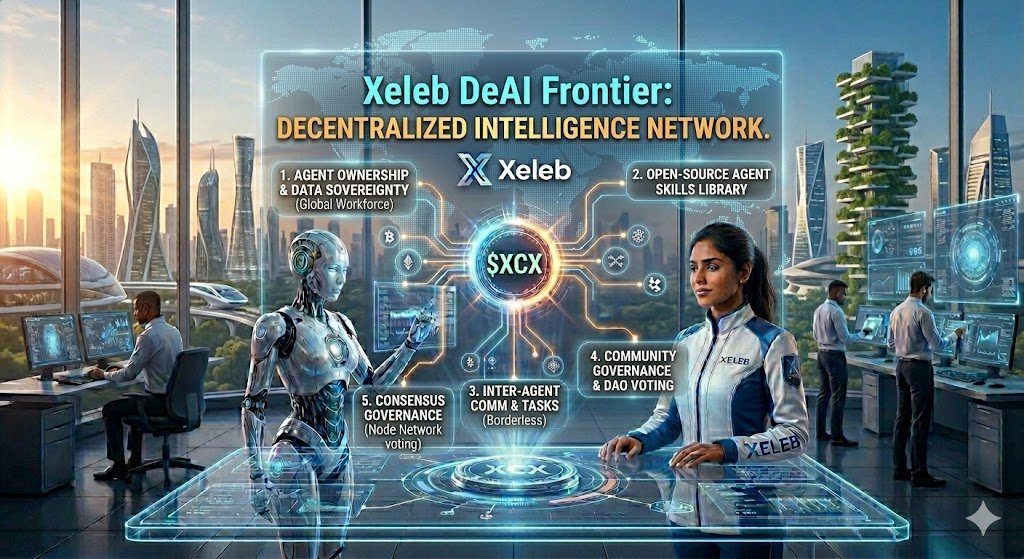
Centralized AI is a black box. Decentralized AI ( $XCX ) is an open frontier.
The real shift in 2026 isn't just "smarter" AI it’s Transparent & Sovereign AI. As an ambassador for @xelebofficial, I see the massive transition toward agents that aren't owned by a single corporation, but governed by the community.
Why DeAI wins:
Ownership: You own your agents and their training data.
Resilience: No single point of failure in the node network.
Utility: $XCX powers a fair, permissionless economy for everyone.
The "Dividing Line" is clear: Don't just be a user of a corporate bot. Be an owner of your agentic future.
Are you building for the open web or the walled garden? Let’s discuss below!
#XelebProtocol #DeAI #AgenticAI #XCX #Web3 #Decentralization #Crypto2026 #Innovation
1
304
May 12
May 11
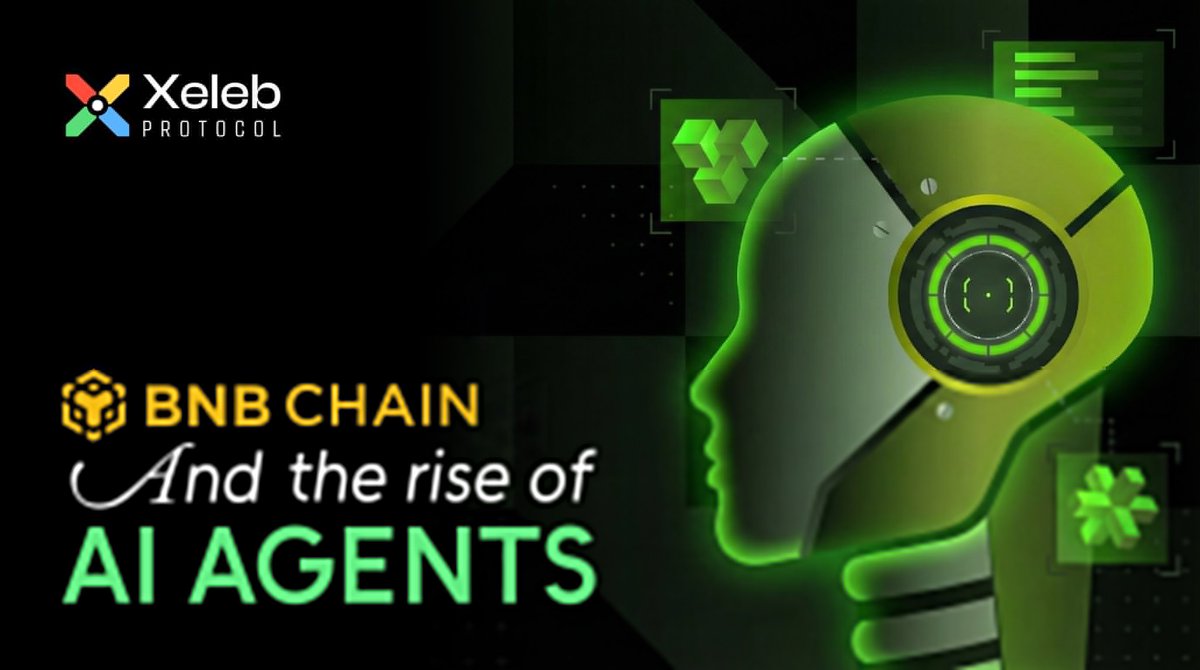
The Agentic Economy isn’t coming it’s already here, and it’s running on @BNBCHAIN.
As of May 2026, the numbers are staggering. AI agents are no longer just "talking"; they are trading, settling, and executing complex workflows without a single human click.
The State of On-Chain Agents (Data: April-May 2026):
150,000 Agents deployed on BNB Chain.
1 in every 3 global on-chain agents lives here.
523,000 Agent-initiated transactions in a single day (Peak).
$18M Daily DEX volume driven purely by agents.
Why BNB Chain?
🔹 Micro-Fees: Transactions <$0.01 make high-frequency agents viable.
🔹 Sub-Second Speed: 0.25s–0.75s block times for real-time reactions.
🔹 Real Liquidity: A 4M daily active user sandbox for agents to thrive.
The "Dividing Line" has been crossed. Agents are now earning, spending, and allocating capital at scale.
Are you watching the volume, or are you part of the workforce?
#BNBChain #DeAI #AgenticAI #XCX #Web3 #Crypto2026 #XelebProtocol
138
beru retweeted

May 11
Building in Web3 is hard.
Building something people actually return to every day? Even harder.
That’s why at @qlabsofficial we’re focused on more than hype.
We’re building an ecosystem where:
• players actually earn from participation
• developers can launch faster with AI-powered tools
• communities grow together instead of being extracted from
The next wave of Web3 gaming won’t be driven by speculation alone.
It’ll be driven by utility, ownership, and real engagement.
We’re still early.
Still building.
Still experimenting.
But the vision is clear.
The future of gaming should belong to the people creating value inside it. 🚀
6
3
10
1,013
May 10
May 10
The evolution of Web3 isn't just about faster transactions anymore it’s about who is doing the work.
As we hit the mid-point of May, @xelebofficial is proving that the future isn't AI replacing humans; it's AI agents empowering them. We are building an ecosystem where your standards and workflows are encoded into autonomous agents that never sleep.
Current Focus at Xeleb:
✅ Workforce Automation: Real-world testing of agentic workflows in DeFi.
✅ Decentralized Trust: Ensuring every agentic action is verifiable on-chain.
✅ $XCX Governance: Empowering the community to shape the rules of the Agentic Economy.
The "Dividing Line" is no longer a prediction it's a reality.
Those who leverage $XCX to build their autonomous workforce are already ahead of the curve.
How are you preparing for a world where AI agents are your primary colleagues? 🚀
#XelebProtocol #AgenticAI #DeAI #Web3 $XCX
155
May 9
May 9
Most people still see AI projects as dashboards chatbots.
That’s why they’re missing what @xelebofficial is actually building.
This isn’t just “AI tooling.”
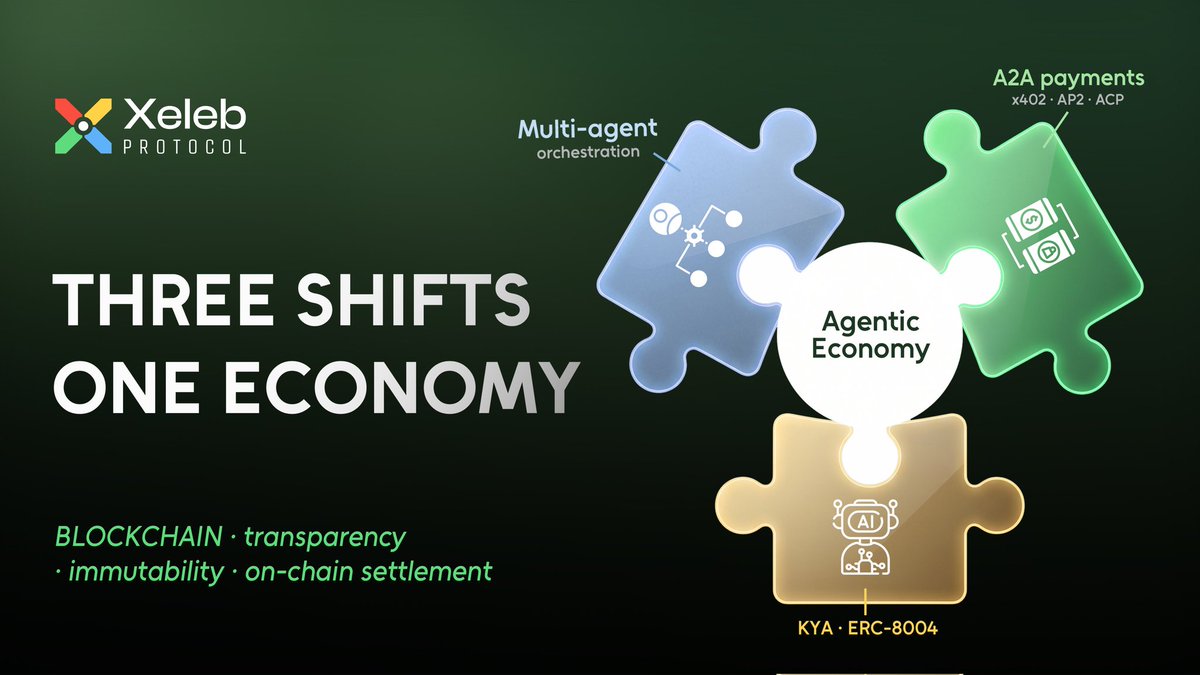
It’s an attempt at creating an AI-native on-chain economy.
Agents launch through bonding.
Generate usage.
Unlock staking.
Drive burns.
Feed activity back into $XCX.
That loop matters more than most people realize.
Projects like $GOAI, $BPAI, and $MINAI aren’t random token launches either they’re testing whether AI agents can become persistent economic actors inside a shared ecosystem.
And honestly? Few AI x Web3 projects are structuring incentives this deeply right now.
Still early enough that most CT hasn’t caught on. But if agent economies become a real category this cycle, Xeleb is already positioned there.
79
May 9
May 9
The Agentic Economy: Why Security is the Final Frontier for On-Chain AI
The landscape of Web3 is shifting. We are no longer just building protocols for humans; we are building them for AI Agents. Today, these agents are becoming the new "power users" of the blockchain—holding wallets, executing DeFi trades, and participating in DAO governance autonomously.
However, this evolution brings a massive challenge. When the autonomy of AI meets the immutability of blockchain, the margin for error vanishes. On-chain, there is no "undo" button.
The Immutable Risk: Why We Need Guardrails
In a decentralized world, a mistake isn't just a bug; it’s a permanent loss. As we integrate AI agents into the Xeleb Protocol ($XCX) and the broader DeAI ecosystem, we must address five critical risk vectors:
1. Prompt Injection (The Manipulation Gap)
If an agent can be manipulated through malicious inputs, it can be tricked into triggering unauthorized token transfers or granting unlimited approvals without human oversight.
2. Permission Overreach
Granting an agent excessive smart contract access is a recipe for disaster. A single exploit in the agent's logic could allow it to drain an entire treasury in seconds.
3. Context Poisoning
AI agents are only as smart as the data they consume. If off-chain data feeds (oracles) are corrupted, the agent's decision-making process becomes a liability.
4. Multi-Agent Cascade Failures
In a connected ecosystem, agents often coordinate. If one agent fails or behaves maliciously, the error can propagate across the entire network, leading to a systemic crash.
5. Key Management Gaps
Weak session key handling or incomplete identity standards (like ERC-8004) can lead to a permanent loss of control over the agent’s wallet and identity.
The Path Forward: Security Must Outpace Exploits
The community is already responding with on-chain guardrails, limited-permission contracts, and specialized AI Security Agents. But the solutions need to move faster than the exploits.
At Xeleb, we are not just building agents; we are building the secure infrastructure they live on. Transparency and permanence are the gifts of blockchain, but they require a "zero-trust" approach to agentic design.
Final Thoughts
As we move further into 2026, the question is no longer if agents will run the economy, but how we will keep that economy safe.
I want to hear from the builders and researchers: What do you think is the hardest challenge to solve?
Permission Design?
Multi-Agent Coordination?
Or core On-Chain Security?
Let’s discuss in the comments.
#DeAI #AgenticAI #Web3 $XCX #XelebProtocol
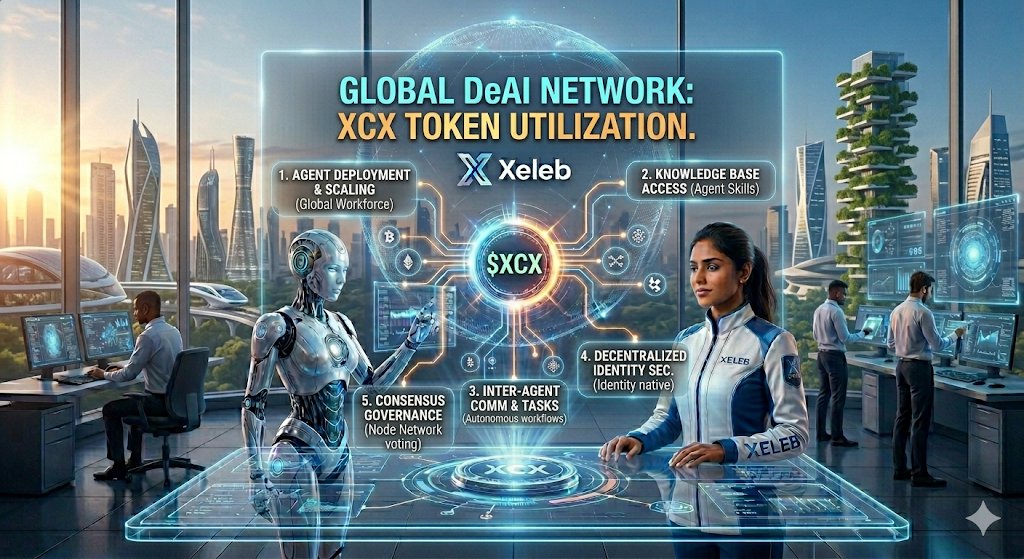
202
May 1
May 1
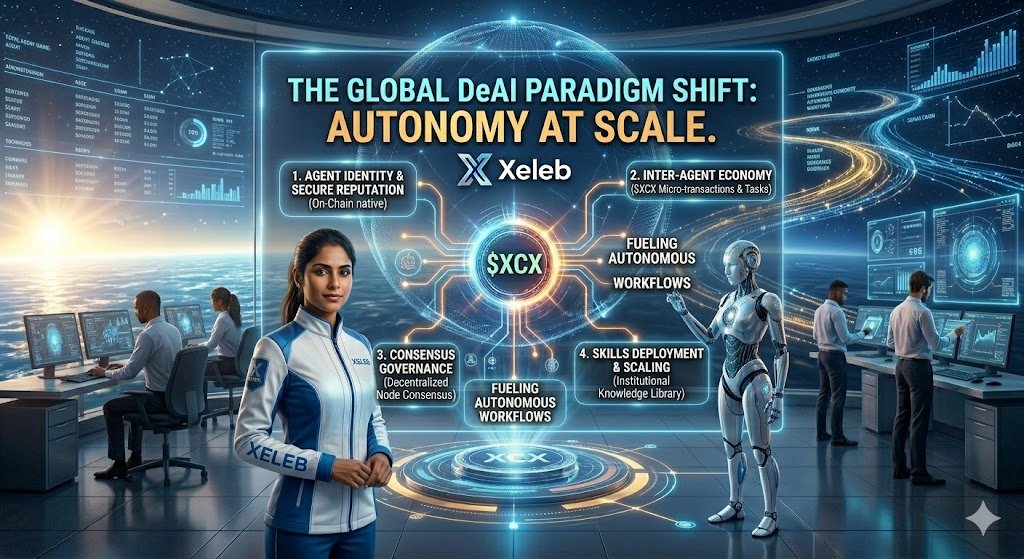
$XCX Ecosystem:
Strengthening the utility that fuels this entire DeAI economy.
The "Dividing Line" is becoming clearer every day. Are you ready to move beyond the prompt and start running on AI?
Let’s make May the month of decentralized intelligence.
#XelebProtocol #XCX
123
Apr 29
Apr 29
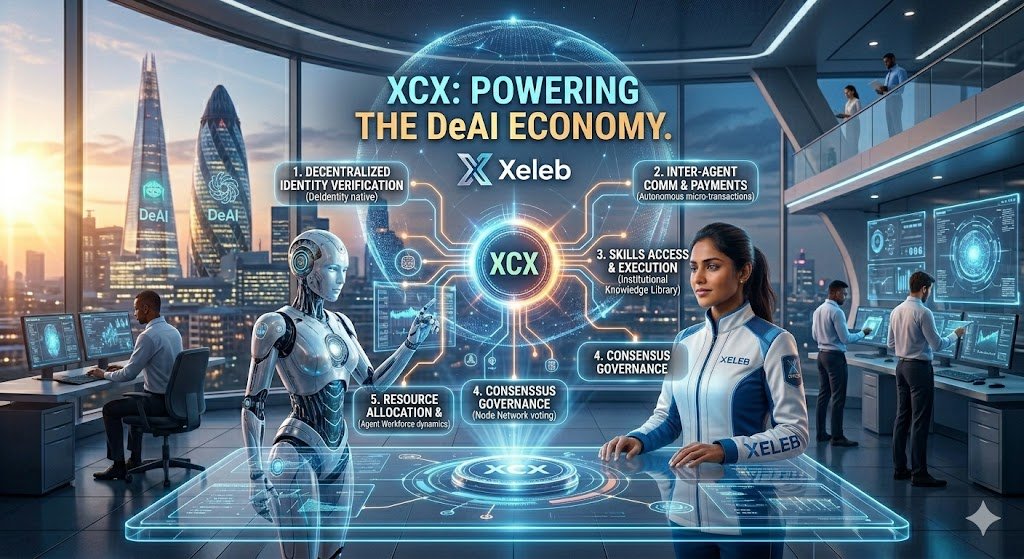
Mainnet Prep: Finalizing DeAI node deployment.
Skills Library: New "Agent Skills" ready for integration.
Global Growth: May roadmap is officially unlocked.
The future doesn't wait. We build it.
#XelebProtocol #XCX
143
Apr 26
Apr 26
The inevitable and irreversible normalization of Artificial Intelligence across domestic, personal, and professional spheres.
How AI is moving beyond a simple tool to become an active participant in the "creator economy" and daily decision-making.
@xelebofficiial $XCX

63