
Lutheran. Game developer. ECE student. 🇺🇸✝️🇺🇦
Joined April 2023
- Tweets 3,039
- Following 210
- Followers 174
- Likes 81,951
118 Photos and videos











Wrote my first metaprogram in Odin! It reads a map of collider vertices from a texture and writes them to an array that can be read by my game. The meta-programming part was surprisingly simple thanks to Odin's fmt.tprintf. I already see multiple benefits to this over comptime.
1
1
31
4,869
Daniel retweeted

24 Jun 2025
You kept making the software worse.

4
23
652
52,622
What even is the point of Community Notes if it isn’t deployed on deceptive “news posts” like this one?
Jun 4

BREAKING: 🇺🇸🇮🇱 The House Armed Services Committee just voted to merge the US military with Israel's.
64
Daniel retweeted

May 29
Artificial intelligences do not undergo experiences, do not possess a body, do not feel joy or pain, do not mature through relationships, and do not know from within what love, work, friendship or responsibility mean. Nor do they have a moral conscience, since they do not judge good and evil, grasp the ultimate meaning of situations, or bear responsibility for consequences. They may imitate or even simulate, but they do not understand what they produce, for they lack the affective, relational, and spiritual perspective through which human beings grow in wisdom. #MagnificaHumanitas
4,059
60,359
309,869
14,190,756
The only reason why Flatpak and Proton exist is because Linux Desktop is still largely a joke.
May 25

remember when Linux Desktop was a joke for decades and then Pipewire, Systemd, Flatpak, Proton and Wayland made it good? how the hell did that happen
2
147
Daniel retweeted

May 13
Reading history is awesome because it's like fiction but useful
7
1
57
2,422
Daniel retweeted

May 13
"The stack" is a per-thread address space range, dynamically reserved by a kernel when a thread is created. The reason why "stack" is often presented as preferable to "heap" is that, when using a thread's stack, the expensive part of allocation - address space reservation, and preparation of physical pages for backing the address space - has already been performed when the thread was created.
But kernels also provide mechanisms for doing your own address space reservation (mmap, VirtualAlloc), and there is nothing stopping you from using these to do bulk allocations up-front to create your own stacks. This can make common case allocations as cheap as "the stack", but the advantage is that you now control the semantics and lifetime of the stack you've created. Thus, it does not need to be coupled to - for example - the lifetime of a scope or function, as the thread stack is.
The "stack versus heap" dichotomy is an unfortunate mythology because it seems to, in practice, communicate the idea that when a thread stack is insufficient for some purpose (allocations must exceed scope boundaries, allocations may need to exceed thread stack limits, allocations require more fine-tuned reserve/commit behavior, and so on), then the only alternative is the heap, particularly for very granular allocations.
This is, again, a mythology, and it has confused the C world in particular for decades.

std::vector always heap allocates. std::array can't change size. For decades, there's been no standard container that gives you a dynamically sized array with a compile-time capacity limit and zero heap allocation
C 26 finally adds std::inplace_vector. Guess where they got the idea 🧵👇
34
62
1,069
73,290
Daniel retweeted
May 13
I'd like programmers to retire the "isn't this just reinventing <thing>?" responses. Nobody has read every Wikipedia article. Nobody agrees on every piece of terminology. Reinvention is a good & necessary thing, because it renews, updates, and clarifies ideas. It's also admirable, because it means that someone discovered something important without it being told to them already. That is a much more valuable trait than memorizing terminology and facts.
63
62
1,026
27,786
Daniel retweeted
The brutal truth is that our entire system relies on abortion
You can’t keep women in the work force without abortion
You can’t maintain the casual sex culture and disrupt family formation without abortion
Women with children find themselves dependent on men, single women find themselves dependent on the state
Women are more likely to take abuse from employers, less likely to demand raises, less likely to oppose their replacement
People have been conditioned to believe they couldn’t function in society without abortion, and at some level we’ve ensured that’s correct
We’re far from the first civilization to base itself on child sacrifice but don’t lie to yourself, that’s exactly what we’ve done
You can look back on the Mayans in horror because they did their sacrifices on an altar but they could never hope to match our level of slaughter
Until the paradigm shifts there will be no popular support for it’s restriction
May 7

Abortion has never been more normalized or popular.
The pro-life movement, if their goal is to save lives rather than pay themselves $400,000 a year to go on podcasts, should ask why they keep losing at the state level, rather than agitate against Trump.
306
2,546
15,785
621,800
Daniel retweeted
Apr 26
As demonstrated below, the only “programmers” who think all programming is just babysitting Claude are the same ones who were just copy/pasting from Stack Overflow—e.g. not really doing any programming—because the former is simply an accelerant to the latter

Programming in 2026 is literally just sitting in a dark room and gaslighting Claude into fixing its own code hallucinations.
We went from copy-pasting StackOverflow answers to acting like a deeply disappointed manager for a neural network.
The entire tech industry is basically just AI babysitters now.
26
67
1,245
45,230
Daniel retweeted

Apr 20
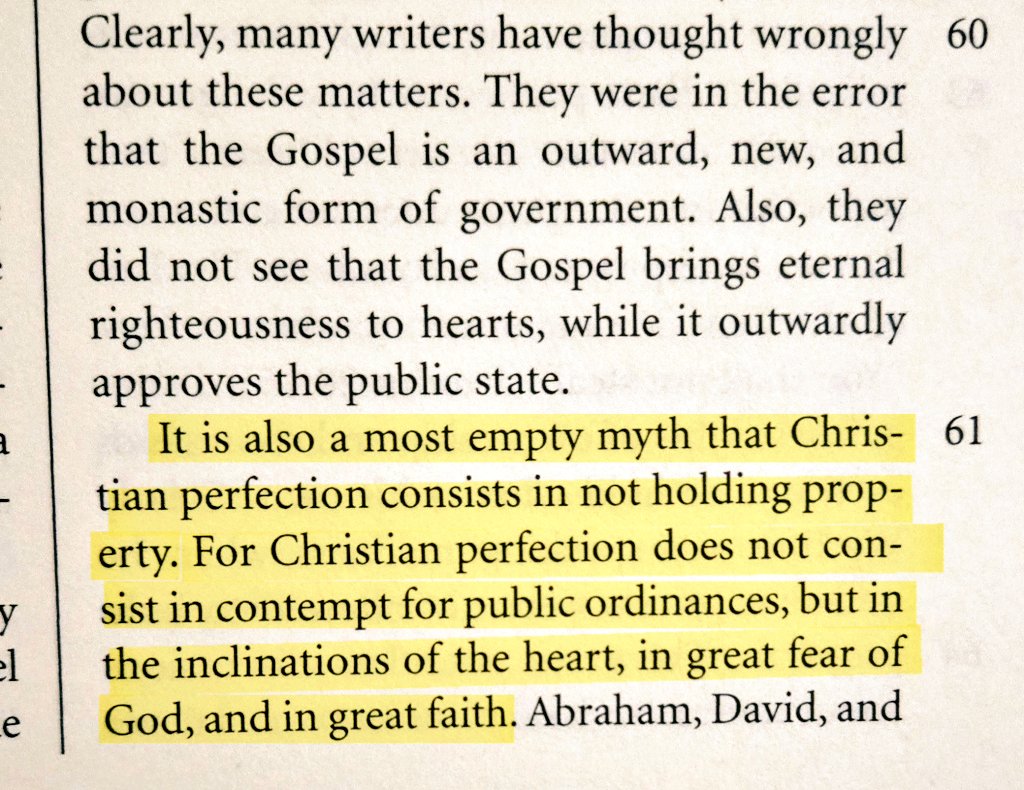
I love that the The Augsburg Confession/Apology starts out discussing the proper role of Christians in government and accidentally disproves Communism on biblical grounds.

15
75
519
16,081
Daniel retweeted
Apr 12
"Got a job offer.
I'll wait to hear God's call."
"Got asked out on a date.
I'll wait to hear God's call."
"Might want to move.
I'll wait to hear God's call."
The call went out 2,000 years ago.
God is not a magic 8-ball.
Stop using faith as an excuse to freeze in place.
62
176
2,142
27,823
Daniel retweeted

Apr 11
I left my old company because of this kind of woke agenda nonsense.
The whole planet knows there are two genders, and yet companies are afraid of a tiny, loud minority and cater to their narcissistic need for attention.
Apr 10

Mozilla has introduced a new non-binary mascot called “Kit.”
Kit uses they/them pronouns.


71
104
2,782
100,393
Daniel retweeted

Apr 6
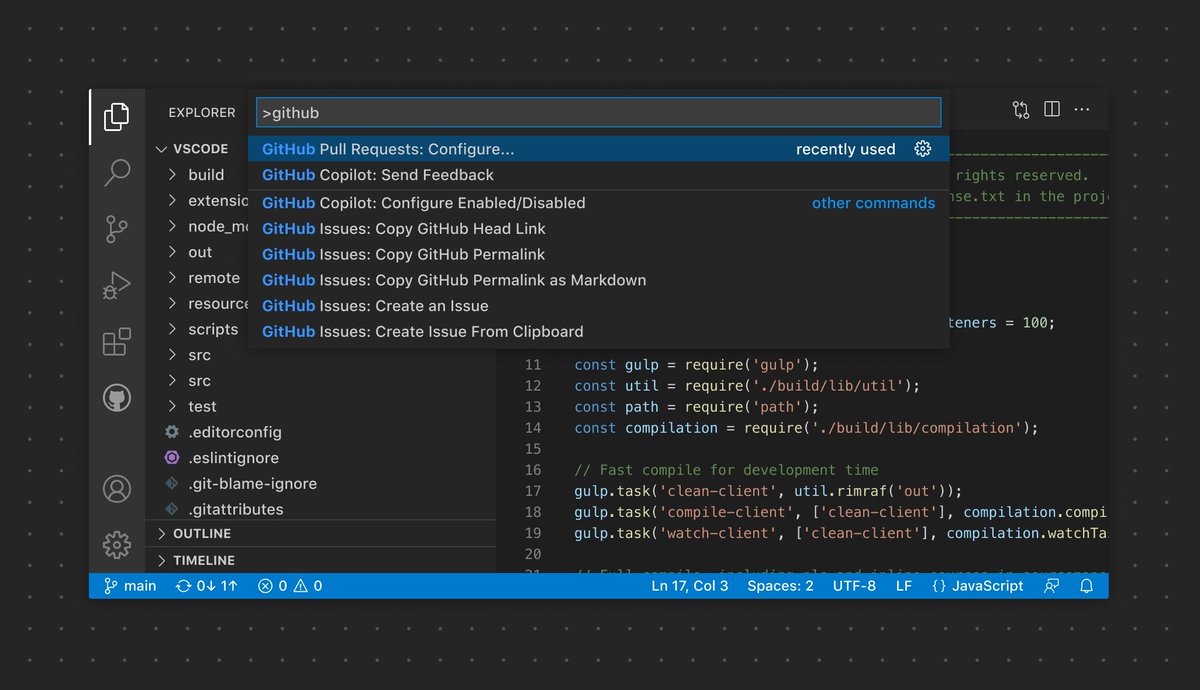
I'm completely convinced at this point that the "Command Palette" is a fundamental UI concept, and should be in all applications. It should also be a built in browser concept, there should be an API for websites to push items to the command palette ("new post", "muted words" etc)
114
120
1,815
200,754
RT @JHGoodman8404: @TradEngland @lukeappleton Traditional Lutheranism is beautiful and has gravitas. No gimmicks, no theater, no softening…
6
Daniel retweeted

Western civilization is awesome, actually




503
2,006
19,497
1,365,026
Daniel retweeted

Mar 27
Guys, THIS is the pamphlet our Lutheran brother and sister in Finland are being persecuted for sharing. I say, we should make sure that it is shared everywhere! media.lhfmissions.org/file/l…
9
100
212
7,287
Daniel retweeted

Mar 23
Gentle reminder that liberal democracy is a comically easy system to hack
Democracy is already dicey but it only has a hope of working while it represents the will of a tightly defined people
Otherwise your elites simply replace the people to maintain power
39
547
3,661
70,098