
Progressive music, electric cars, fast software, and liberty. Decentralize the economy and the Internet.
Joined March 2012
- Tweets 23,196
- Following 433
- Followers 815
- Likes 126,165
1,553 Photos and videos








Brian Hauer retweeted

That is hilarious, actually.
Econs of the Left, 1976: "Socialism is better than Capitalism for Growth!"
Econs of the Left, 2026: "Socialism is bad for growth, and that's good!"
Jun 13

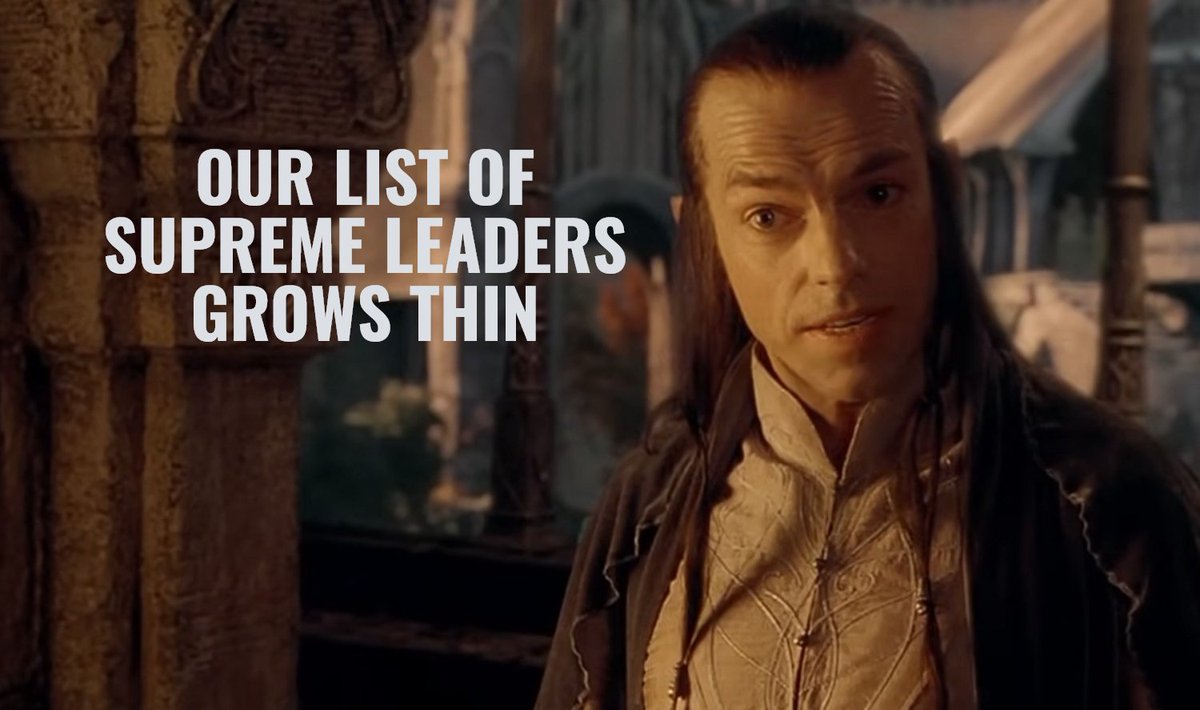
There was once a that socialism would work better than capitalism. This was mostly wrong and post-1989 it seemed like we'd agree on market economies plus a welfare state.
But an injection of green degrowth has birthed "socialism will wreck the economy — in a good way!"

12
75
521
30,791

Brian Hauer retweeted

Jun 13
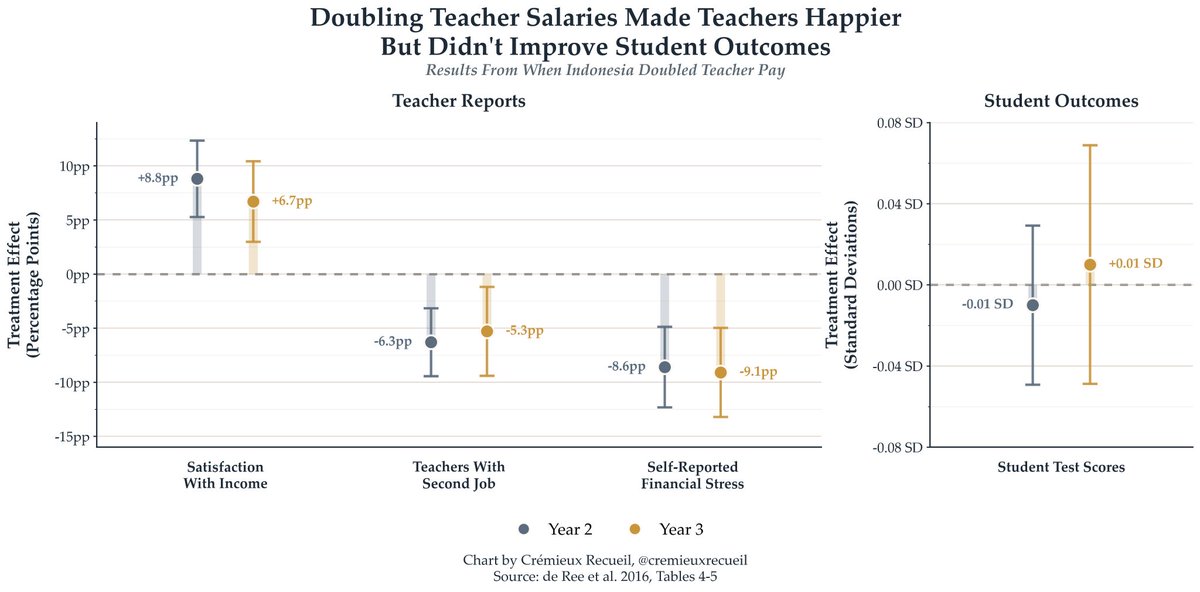
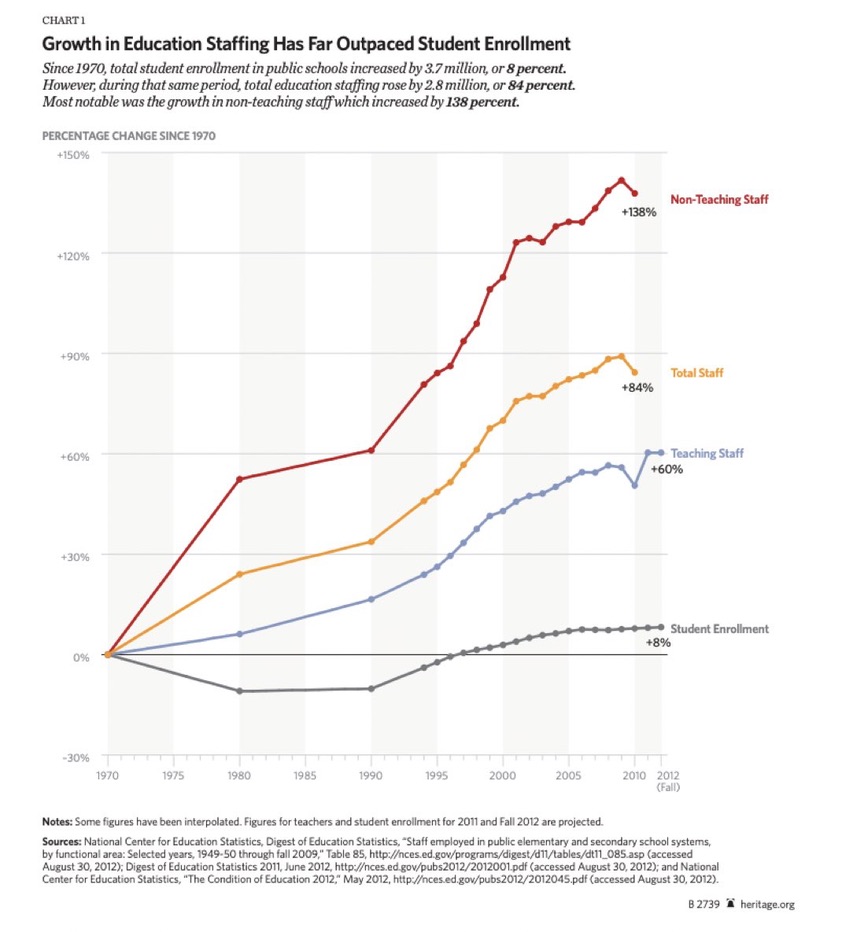
Throwing more money at public schools, even doubling teacher salaries, has virtually no effect on student outcomes.


Jun 12

Elon Musk: Trillionaire
Jeff Bezos: Billionaire
Public School Teachers: Can anyone help me get some pencils for my students?
124
1,137
9,036
504,554
Brian Hauer retweeted

Jun 13
Ro you are so far off the reservation of reality I'm not sure you can come back. Basic math proves this assertion wrong.
And maybe more importantly do you think Elon would be worth $1T if you ever got your hands on this "wealth" earlier in cycle? Walk this back to every person who was asked to (forced) to give his money to gov't instead of investing it. All of Elon's wealth is in stock, earned from his own investment in capital and work.
Its really hard to understand how your head got into this space. I fear its a disease of ignorance. Perhaps its a political opportunism, but that's even more pathetic if you know better.
3
3
102
1,376
Brian Hauer retweeted

Jun 12
We're gonna abundance so much, you may even get tired of abundance. And you'll say, please, please, it's too much abundance. We can't take it anymore. Mr. Musk, it's too much, and I will say no it isn't, we have to keep abundance, we have to abundance more, we're gonna abundance more!
Jun 12

odd I don’t see any of the “abundance democrats” posting about the combined spaceflight / satellite constellation and telecommunications / AI company today, which is experiencing the largest IPO in human history — I would have thought they’d be excited!
217
425
5,594
306,040

Jun 12
RT @JessicaBRiedl: Musk's Social Security contributions are capped because his benefits are also capped.
I thought Social Security's point…
159

0.3% of the water consumed by US golf courses last year

BREAKING: Amazon data centers used 2.5 billion gallons of water in 2025
Community note
Amazon's data centers withdrew 2.5 billion gallons of water in 2025, down 2% from 2024 despite expansion, or less than 0.1% of annual U.S. landscape irrigation. aboutamazon.com/news/sustainab…
434
2,674
42,894
5,983,178
Brian Hauer retweeted

Jun 12
Whether Elon or Larry has a $500B or $1T does not impact my life in the slightest.
If they were taking it from me, I'd be outraged, but economics is not a pie, and I'm busy baking my own.
Good for them, I guess. At least we know the system works as intended: it's the American Dream we profess to care about, after all.
Jun 12

I'm delighted that Musk is a trillionaire. Anyone else happy for him?
94
68
1,124
35,166
Brian Hauer retweeted

Jun 11
I re-play this game every summer, and I will be doing so again.
Jun 11

This is the best Zelda game.
You are allowed to have a personal favorite that isn't this one, but Link to the Past is one of the few perfect games ever made.
It ages like fine wine. It's pixel perfect graphics and wonderful soundtrack are timeless. It's gameplay is laser smooth.
In 40 years it will still be perfect.
Search your feelings. You know it to be true.

11
2
98
9,586

Okay, now the physics. Because his thermos analogy self-destructs on closer inspection.
He's right that vacuum eliminates conduction and convection. But his conclusion - that radiated heat is "ineffective at processor temperatures" - is exactly backwards.
Stefan-Boltzmann law: P = εσAT⁴
Radiation scales with the fourth power of absolute temperature. At 80°C / 353K, a high-emissivity surface radiates on the order of 800-900 W per square meter. Raise the temperature and heat rejection climbs fast. Vacuum doesn't kill radiation - in space, radiation is the mechanism you design around.
That's where the thermos analogy falls apart. A thermos suppresses all three heat-transfer paths: vacuum handles conduction and convection, while silvered low-emissivity walls suppress radiation. Space radiators do the exact opposite - maximize area, emissivity, view to cold space, and heat transport to the radiator panels. He accidentally described the problem, then missed the standard engineering answer.
Reports on the AI1 concept describe roughly 110 m² of deployable liquid radiators for a compute payload in the ~120 kW sustained / 150 kW peak range. That's not an ignored problem. That's the cooling system.
Could the design still have hard thermal-engineering challenges? Absolutely - sunlight, Earth infrared, albedo, pointing, radiator temperature, pump loops, mass, and margins all matter. But "space is a vacuum, therefore it dies in minutes" isn't the argument. Satellites, probes, the ISS, and spacecraft electronics have been rejecting waste heat by radiation for decades.
13
8
369
8,570

Brian Hauer retweeted

These are the side-effects of hiding scrollbars. Scrollbars should be visible at all times. An empty scroll track without a thumb-slider positively indicates that there is nothing to scroll in this window.
This is even more critical when the window is nearly full and UI has hover-to-show scrollbars: You don't need to waste time trying to scroll to see if it is going to scroll.

Tip: prevent scrollbars from re-wrapping text.
Using "scrollbar-gutter: stable" fixes this
9
11
295
13,085
Brian Hauer retweeted

Jun 5
Normal person: Piketty, your plan is incompatible with freedom.
Piketty: But of course, and that's not the only great thing about it.

This plan is incompatible with freedom- a global class of planners telling us how long to work, how much we can grow, what we can eat. It is also completely wrong. All advances for climate (including the huge drop in battery and solar and wind costs) have come (and will come) from more innovation, more competition, firms that grow and invent and innovate and produce energy solutions that replace fossil fuels. If you enforce degrowth in the West you will kill for ever the climate agenda.
8
42
451
22,355
Brian Hauer retweeted

Jun 6
I just bought a Tesla Model Y
Full Self Driving is one of the most impressive pieces of technology I’ve ever experienced.
I now wish I’d got it a year ago.
420
339
6,403
8,577,191
Brian Hauer retweeted

If self-driving cars are 8x safer than human drivers and we refuse to deploy them because of one bad case, we are choosing to let hundreds of thousands of people die per year to protect our feelings about control.
316
447
4,927
147,260
Jun 5
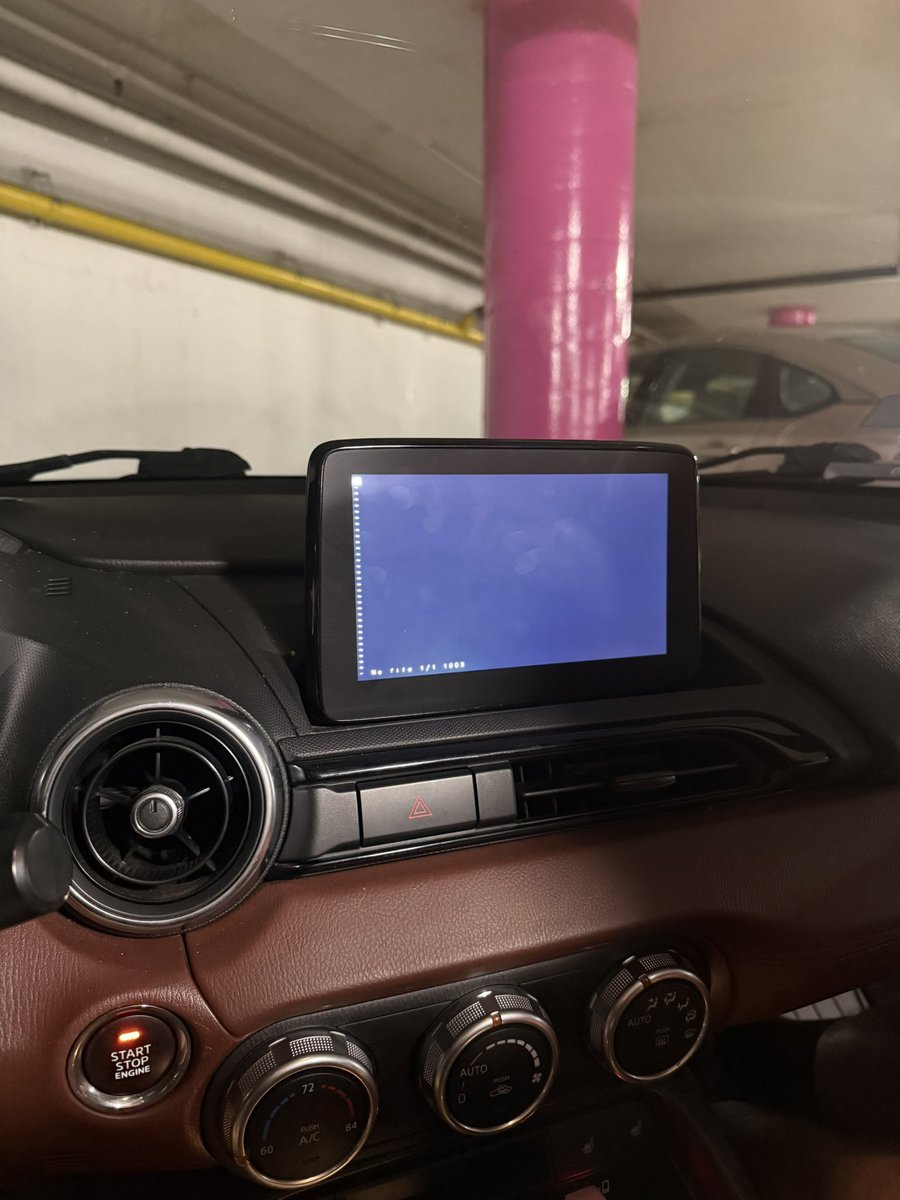
🤣 New “exit vim” challenge unlocked.

thanks to Claude Mythos i was able to open vim on my car infotainment screen, just to end up bricking it because the terminal does not support the colon key and restarting the car doesn’t restart the headunit
1
67
Brian Hauer retweeted

Jun 4
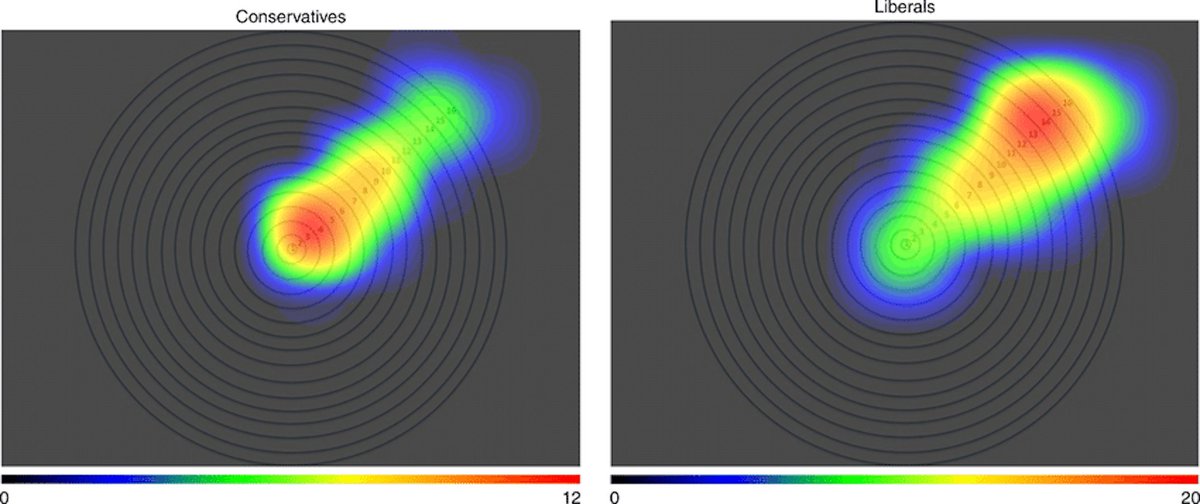
I’ll simply never get tired of gawking at this graph
How on earth did they decide that ONE-DIMENSIONAL data should be illustrated as a heatmap on polar coordinates
What on earth were they thinking?

100
219
12,445
466,990
Brian Hauer retweeted
Jun 4
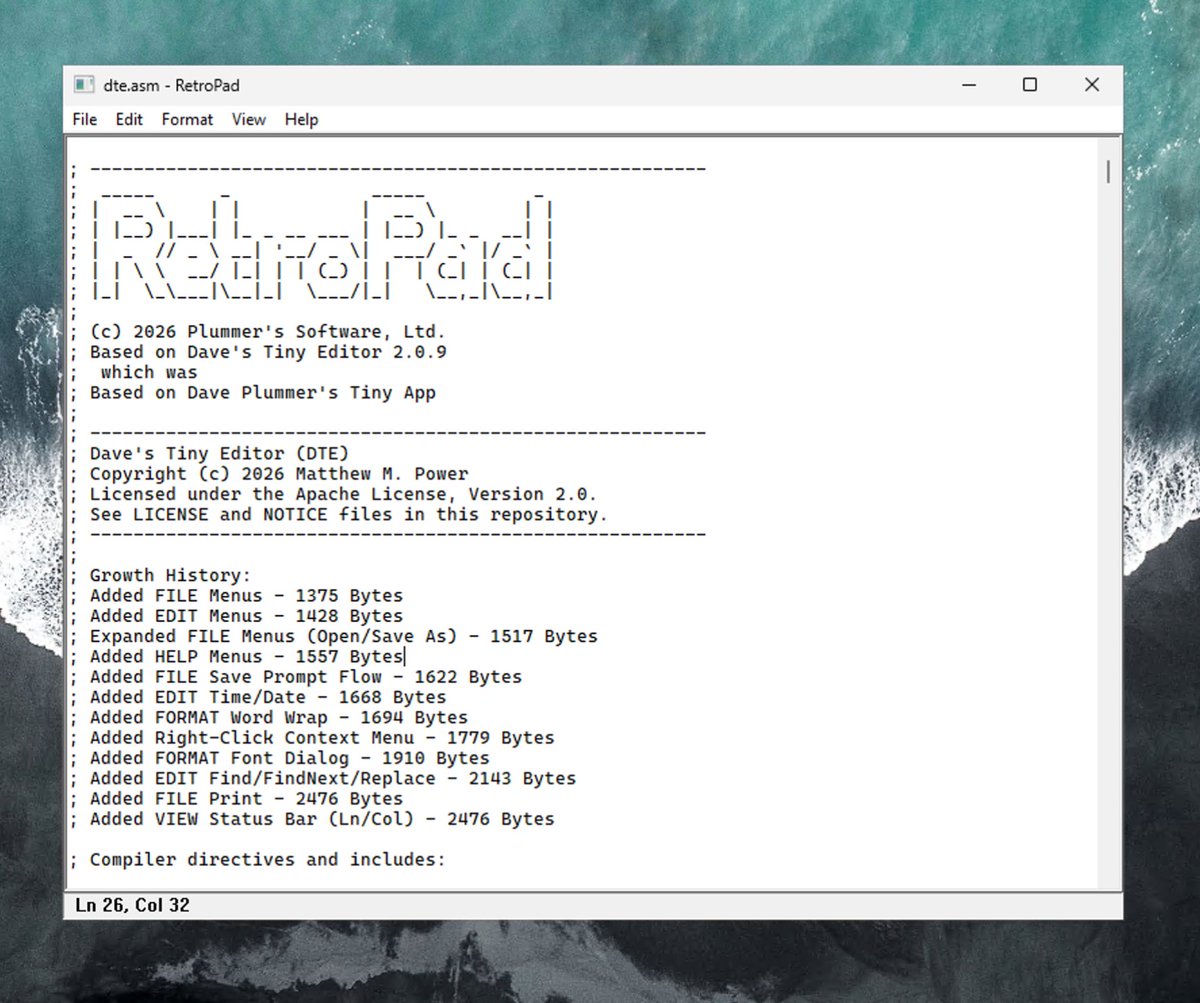
I managed to get RetroPad, my full-feature-parity version of Notepad from XP, down to 2686 bytes of tight x86 assembly.
I checked in the exe to make life simpler, so you don't need masm on hand!
Episode coming shortly... follow so you don't miss it!
Code: github.com/PlummersSoftwareL…
59
78
1,010
33,294
Jun 4
My favorite part of this is the ridiculous way he stands back up.

1
60
Brian Hauer retweeted

Jun 2
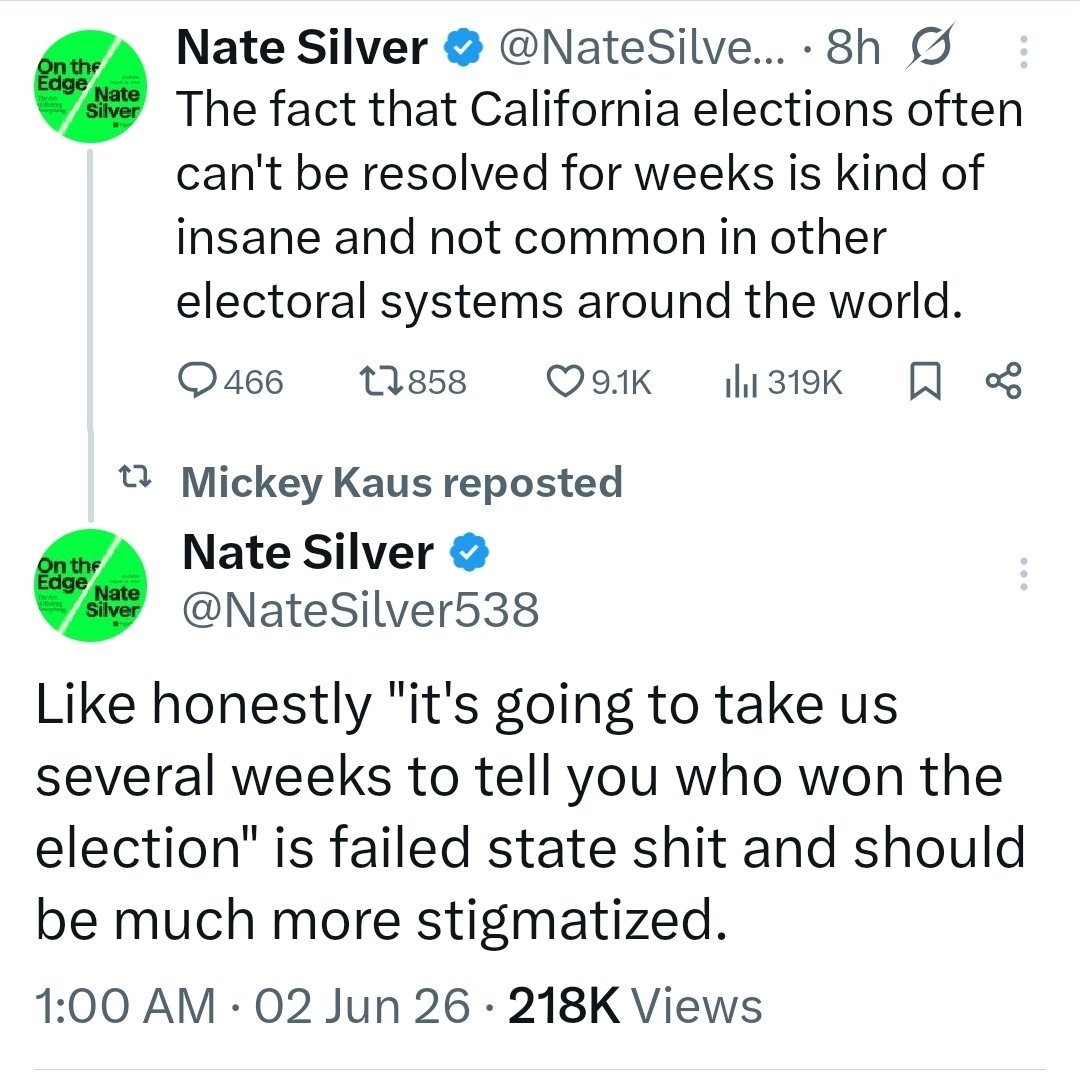
A government that can't count votes in a timely manner shouldn't be allowed to run so many aspects of our lives.
127
665
4,943
126,605