
7,639 Photos and videos

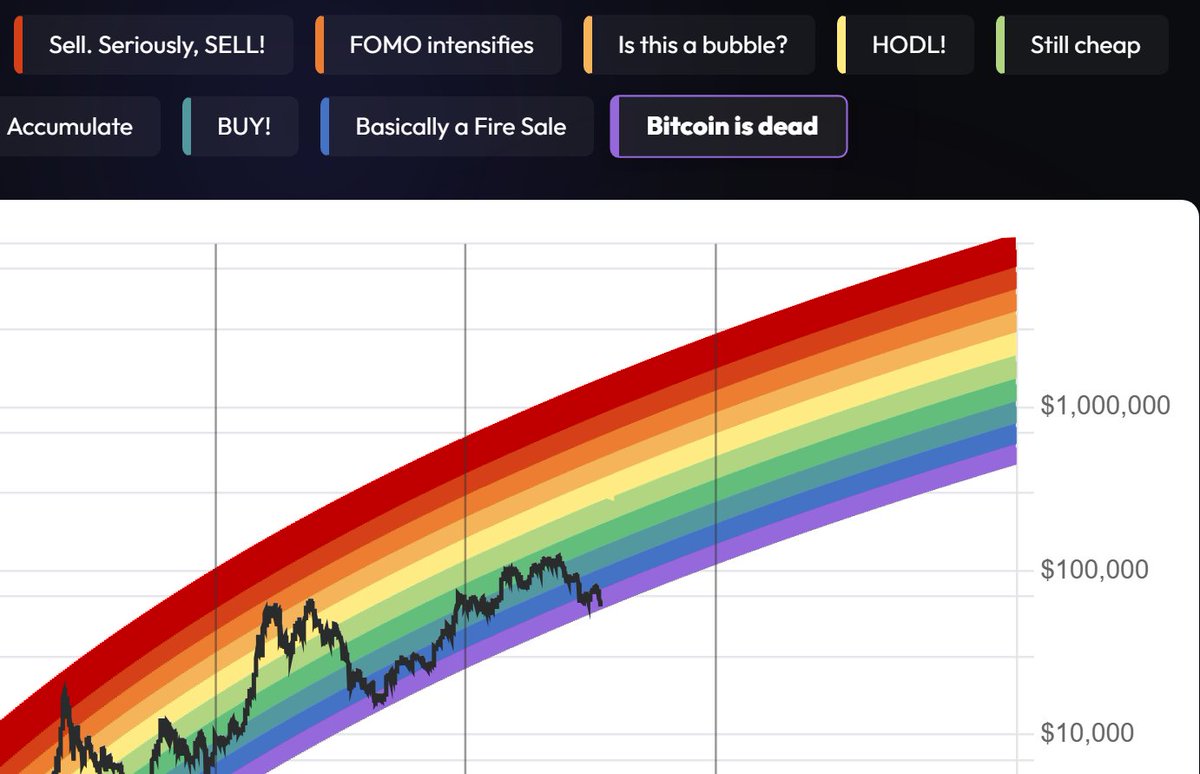
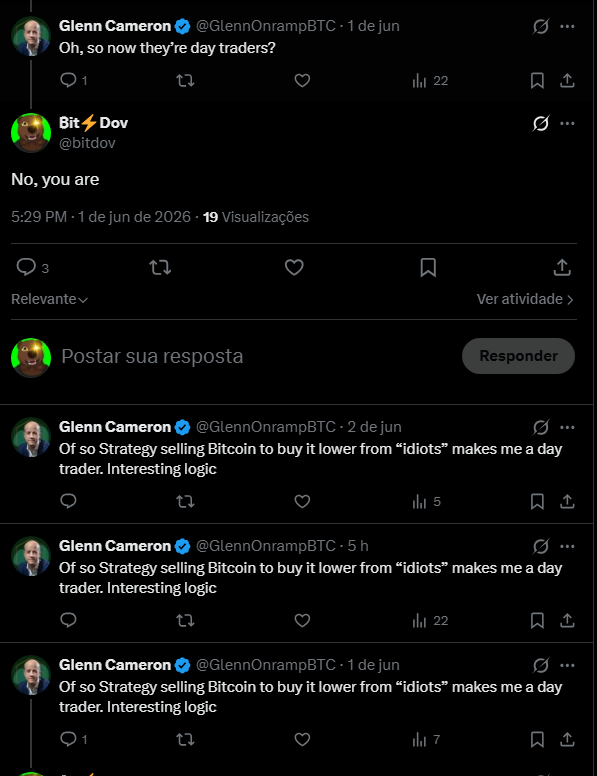





Note to self: Nunca se esqueça, #Bitcoin não é meio de troca ou dinheiro. Bitcoin é uma ferramenta para trazer liberdade às mãos dos indivíduos. Bitcoin é um gigante neutro que serve o indivíduo. Bitcoin não é uma tecnologia substituível, é uma revolução pacífica em andamento. ☮️
58
158
1,449


₿it⚡️Dov retweeted

Jun 4
TOTAL SHOCK 😲
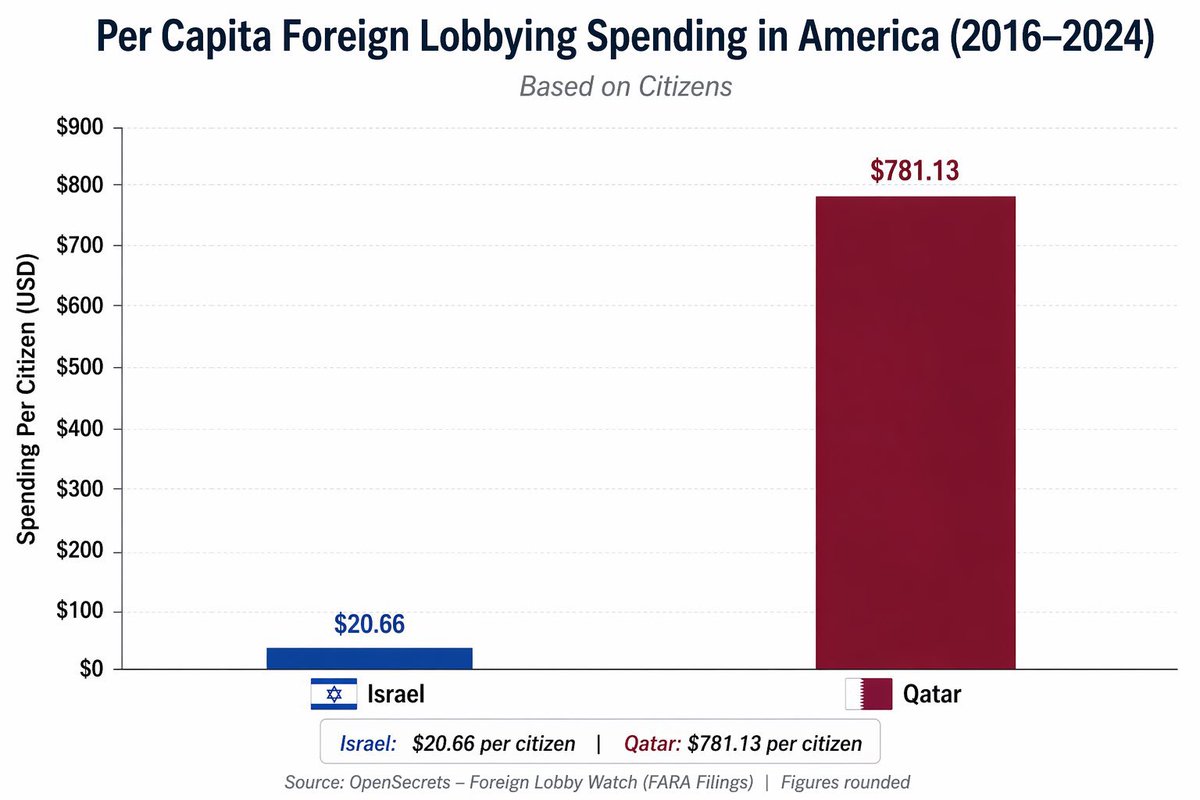
Qatar spent almost a billion dollars convincing me Jews control my life...
And I fell for it!
167
570
2,986
53,594
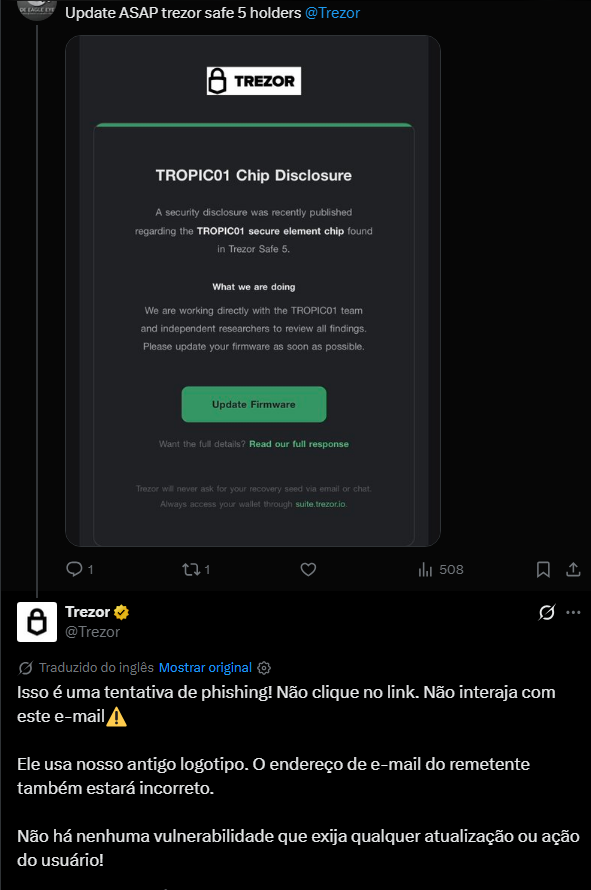
Se você tem uma Trezor Safe 7 e ficou sabendo de uma possível vulnerabilidade, saiba que ela é somente em caso de acesso físico ao dispositivo, exige equipamento especializado e não conseguiria extrair a sua chave.
O maior perigo para todos os usuários de hardwallets é phishing!
3
4
84
2,364
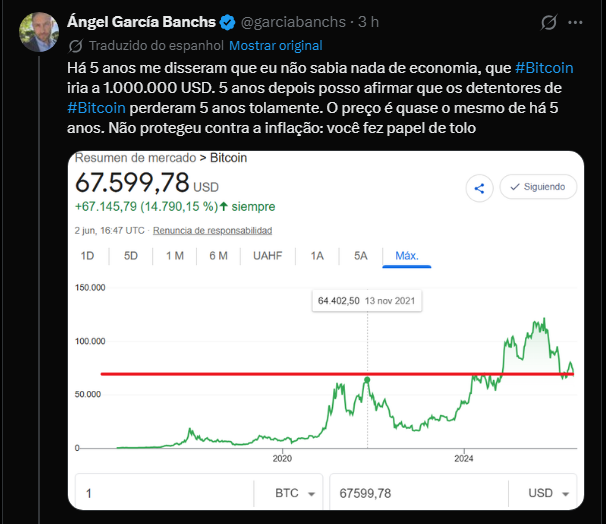
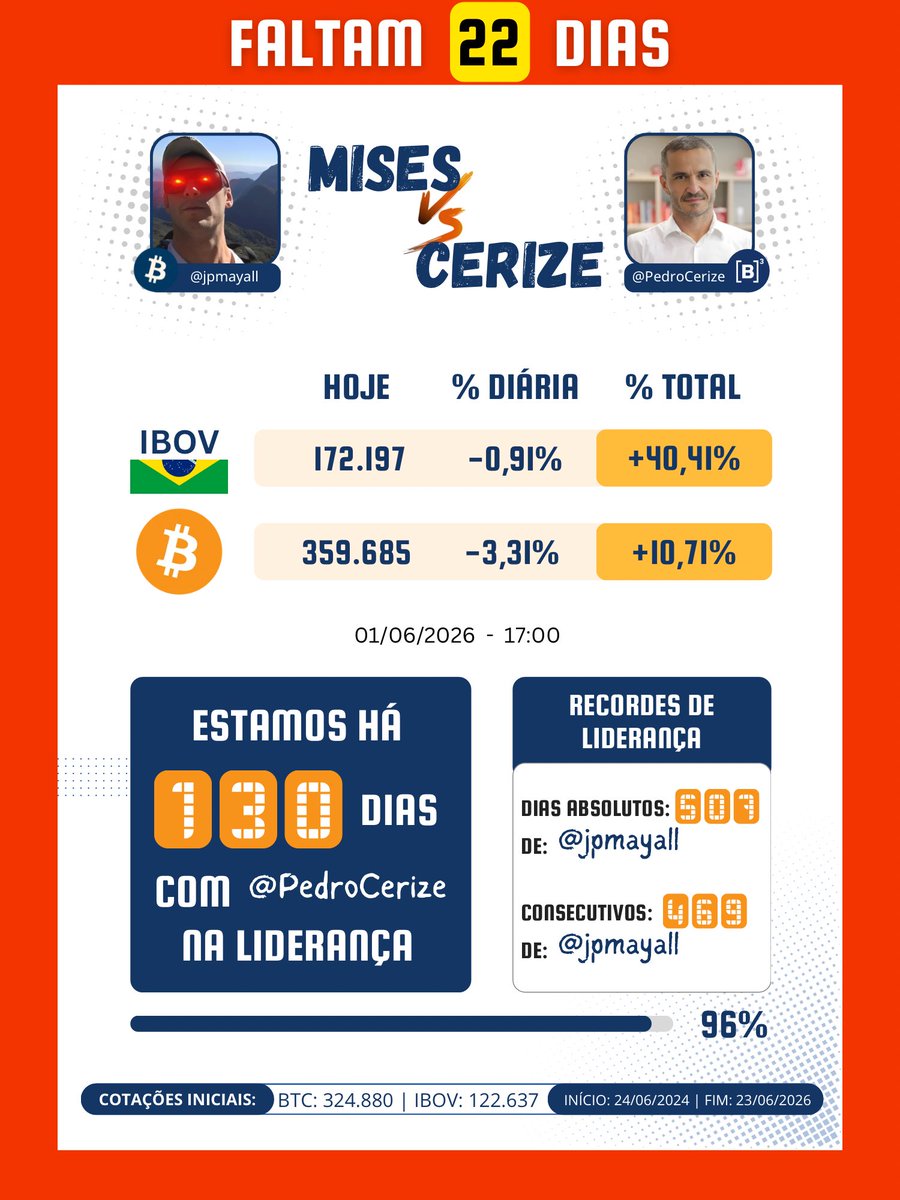
BTC está barato e eu posso te provar:

7
1
105
5,419
Tá barato pra kct, morrendo na sua frente.
x.com/MisesVsCerize/status/2…
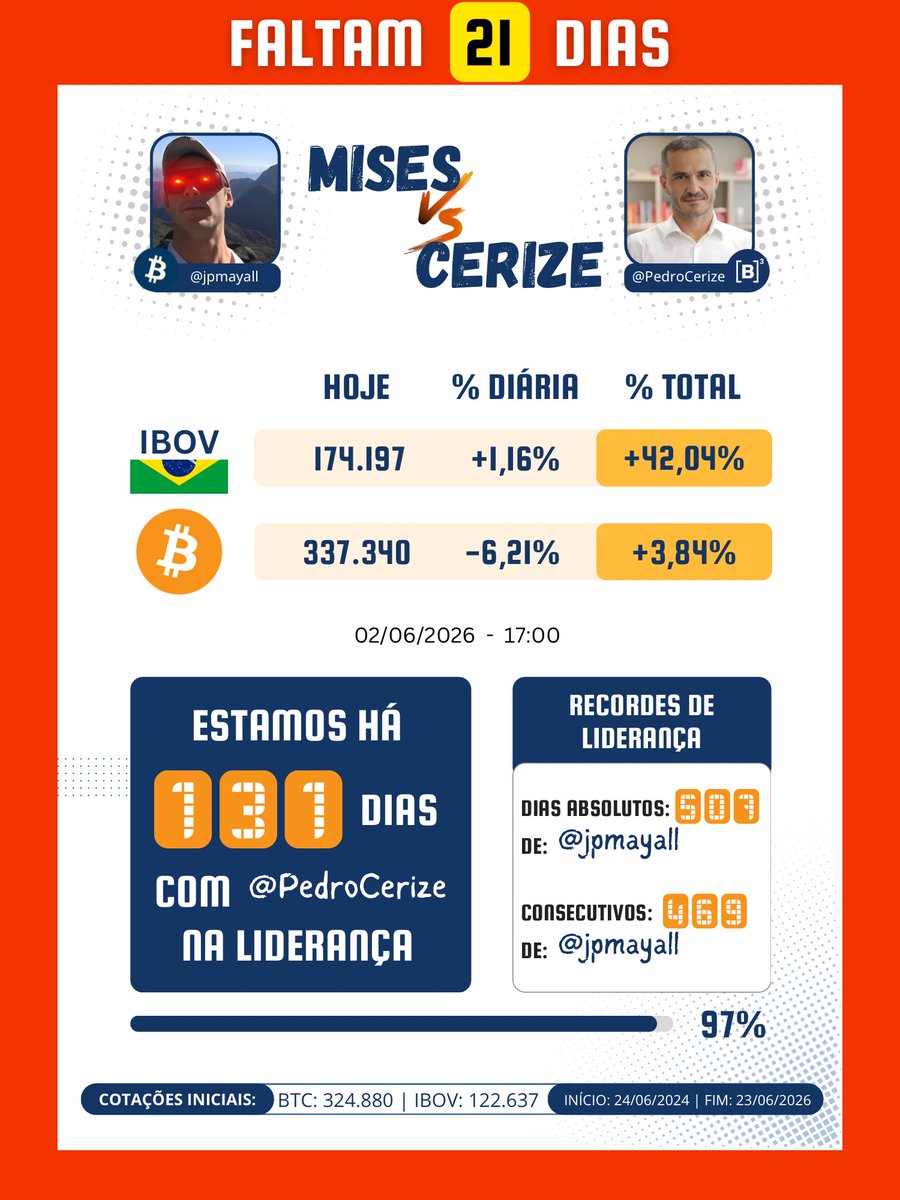
Dia 708 / 729
Dois anos atrás, havia confiança no ar,
Como se o amanhã já soubesse onde chegar.
Promessas e certezas guiavam a multidão,
Mas o mercado não conhece devoção.
[…]
16
1,071
₿it⚡️Dov retweeted

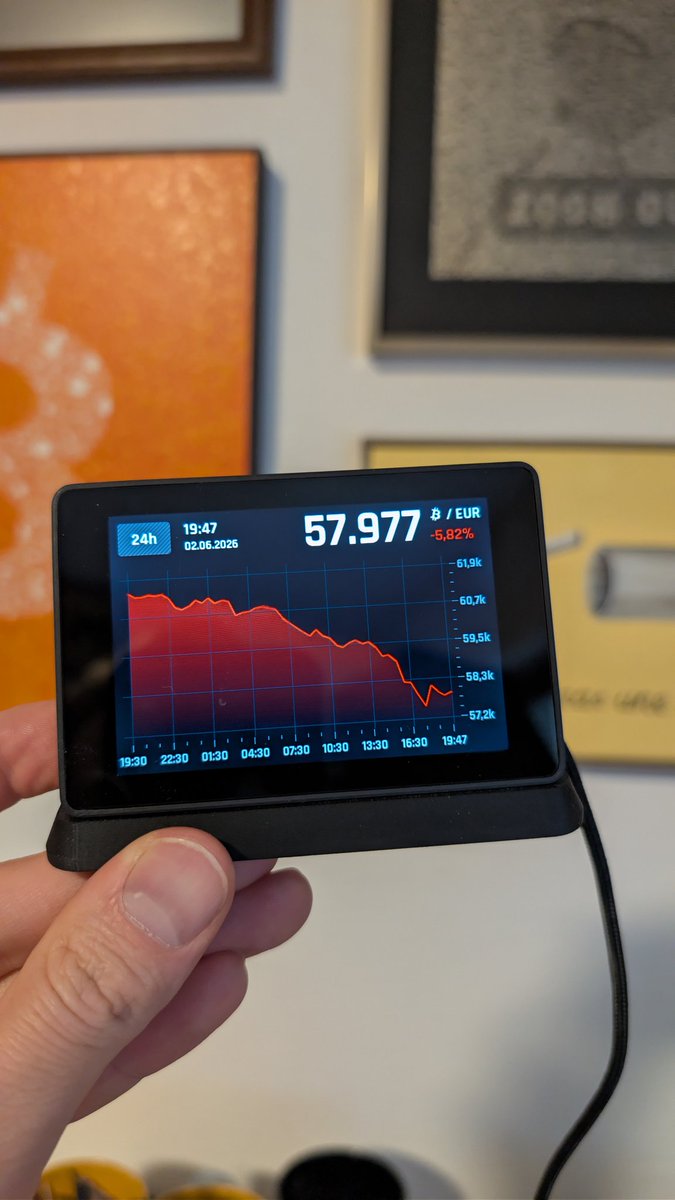
Happy 58k€ to those that celebrate
18
11
213
7,105
₿it⚡️Dov retweeted

Jun 2
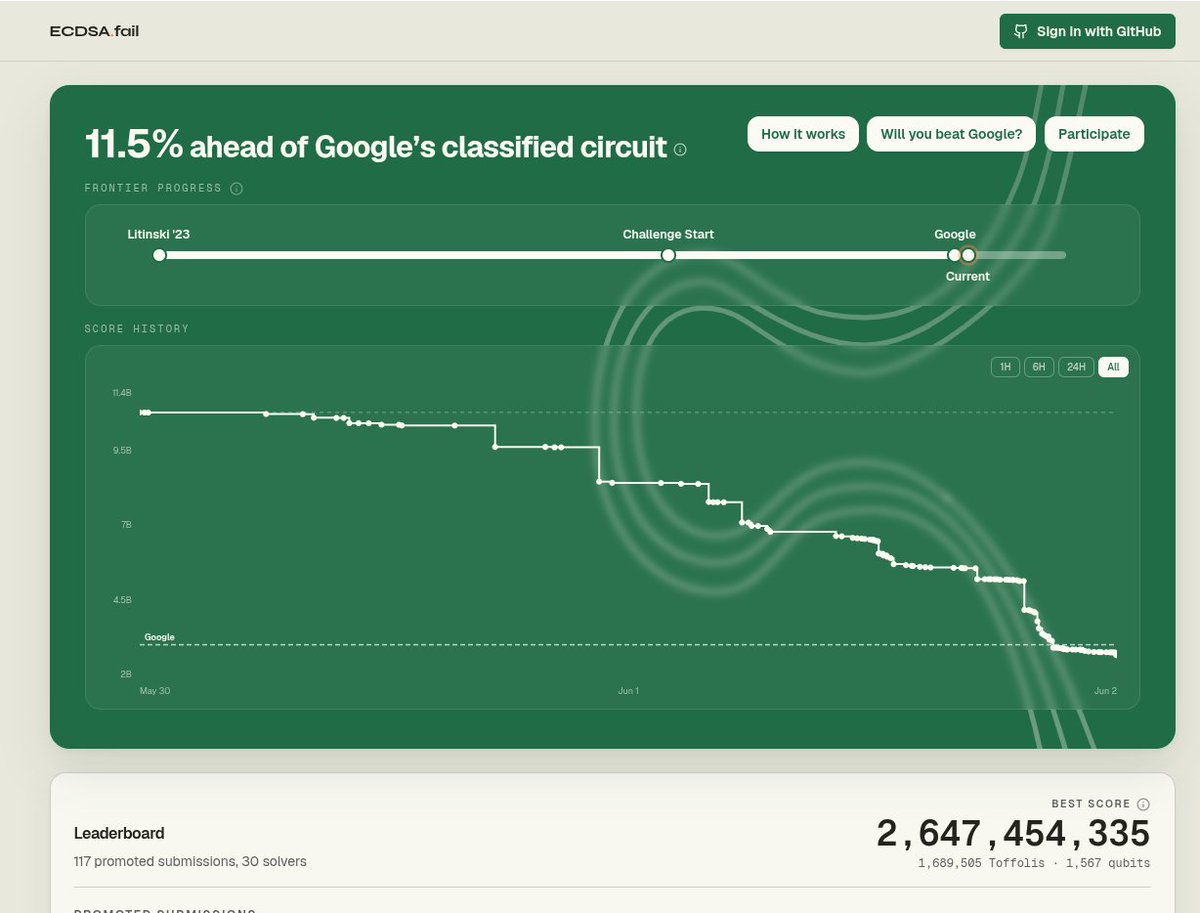
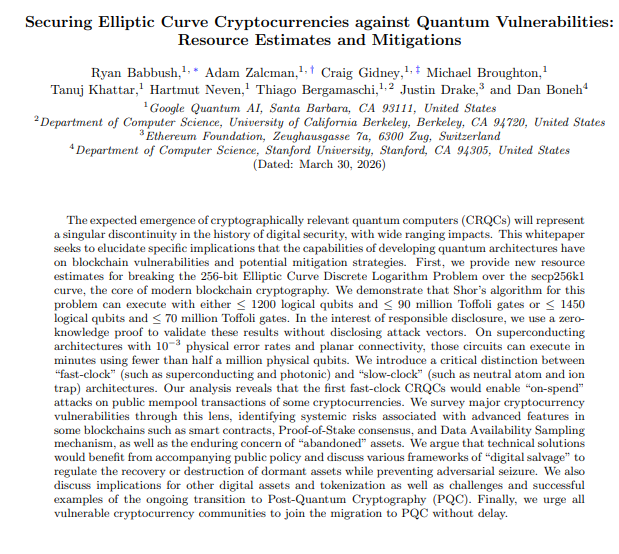
🚨 Google Quantum result was just rediscovered and IMPROVED!
On March 31, 2026, Google Quantum AI published a paper showing that 256-bit ECDLP, the hard problem behind ECDSA and therefore behind Bitcoin, Ethereum, TLS, and most of the world's authentication, can be solved with fewer than 1,200 logical qubits and ~90M Toffoli gates. Under 20 minutes on ~500,000 physical qubits.
BUT, they didn't publish the circuits. They published a zero-knowledge proof that the circuits hit those numbers. The standard read at the time: clever responsible disclosure, elegant.
Two months later, that read needs an update. Two things happened, in opposite directions.
1. The ZKP wasn't a stylistic choice. Google was stopped from publishing.
What was speculation in April is no longer. Google did not choose to keep the circuits private. The U.S. government prevented publication. The blog post phrased it politely ("we engaged with the U.S. government"). Call it what it is: diplomatic cover for a publication block.
This is the line Scott Aaronson warned about. At some point, the people estimating the resources needed to break deployed cryptosystems would stop publishing. We just watched it happen, and the actor enforcing the silence isn't Google's PR team. It's a government.
2. The ZKP turned out to be a reward function. AI used it.
Here's the part that's almost funny.
A ZK proof that "this hidden circuit achieves these resource counts" is, when you flip it, a public verifier of any candidate circuit. Submit a circuit, get back: does it compute ECC point addition correctly, and at what cost. Pass/fail plus a number. That is exactly the shape of a reinforcement-learning reward function.
The ZKP was designed to hide the attack. What it actually published is the reward function for rediscovering it.
The research community wired the verifier into an automated AI-driven search loop. They reproduced Google's numbers. Then they improved them by 11.5%. Two months, from outside Google, no access to the circuits, using the very artifact Google released to keep them proprietary.
Both of these are true at once. Hiding the circuits worked: nobody outside Google has Google's exact circuits. And hiding the circuits did not slow the frontier; it changed who is doing the search, and arguably accelerated it, because the verifier industrialized the search loop.
Let's NOT PANIC!
Neither of these is a working CRQC. There is still no quantum computer that can run this circuit. The headline state of the world has not changed.
What has changed is the honesty of every public PQC timeline. Cryptography exists to create mathematical trust in the security of systems. Trust isn't broken when an attack runs. It is eroded when the foundation looks thinner than the public record suggests, and the public record is now demonstrably thinner than reality in two ways: by classification on one end, by AI-driven re-derivation on the other.
In security, the moment you start doubting the foundation is the moment you start rebuilding it. Not the moment you panic. The moment you plan.
This isn't a moment to rush. It's a moment to commit to a migration plan and execute against it, knowing the threat model is shaped by what governments are willing to classify, not by what researchers are allowed to publish.
Stay safe. Stay honest about your trust assumptions.
Mar 31

Today, Google Quantum AI published a research paper that might boost the post-quantum migration. Their team has tailored Shor’s algorithm to solve the 256-bit Elliptic Curve Discrete Logarithm Problem. ECDLP is the hard mathematical problem that secures ECDSA: the signature scheme underpinning most blockchains, TLS certificates, and countless authentication systems, using fewer than 1,200 logical qubits and 90 million Toffoli gates. Translated to hardware: fewer than 500,000 physical qubits, executing in a few minutes.
A few minutes. Less than a Bitcoin block time. Less than two Ethereum epochs.
The long-standing argument that public keys can simply remain hidden is now moot (In fact, it has always been x.com/P3b7_/status/198854349…).
What exactly changed
Shor's algorithm has been known since 1994 as a generic quantum approach to factoring integers and computing discrete logarithms. But "known" and "practical" are very different things. The real progress is in the engineering: how many qubits and gates you actually need once you compile the algorithm into a fault-tolerant quantum circuit.
The last breakthrough by the INRIA Rennes team required ~2,100 logical qubit count for ECDLP. Google's engineers optimized the full circuit stack to ~1,200 logical Qubits.
The recent algorithmic trendline is clear: every 12-18 months, the resource estimates drop significantly. And these are pure algorithmic gains: they compound on top of hardware improvements, which remain a major challenge.
However, as of today, we're still far from having such a quantum computer. This didn't change.
Zero Knowledge Proof
Here's where it gets interesting. Google chose not to publish their optimized circuits. Instead, they released a zero-knowledge proof that their circuits achieve the claimed resource counts. We have no doubt they know how to do it, but no clue how (sounds magic ;-))
The reasons are likely multiple: competitive advantage, national security implications, or simply not wanting to hand a blueprint to adversaries. Regardless, it establishes a powerful (and elegant) precedent.
What’s ironic: Google's ZK proof is not itself post-quantum secure.
What’s next?
The good news is that we already have the tools: Post Quantum Cryptography, now we need to migrate.
A few days ago, Google announced it is targeting 2029 for full post-quantum readiness. NIST plans to deprecate RSA signatures by 2030 and disallow all legacy algorithms by 2035.
Most organizations haven't started their cryptographic inventory. Major blockchain protocols are currently discussing the path forward.
Cryptography exists to create mathematical trust in the security of systems. That trust is now being eroded, not by a working attack, but by the increasingly credible prospect of one. In security, the moment you start doubting the foundation is the moment you should be rebuilding it.
What this means for blockchains
For blockchain ecosystems specifically, the threat is central. ECDSA on secp256k1 (Bitcoin) and P-256 curves (broadly used elsewhere) is the cornerstone of security. Unlike traditional systems where you can rotate certificates behind a corporate firewall, blockchain migration requires coordination across decentralized, permissionless networks. This process will likely take time.
I'll be diving deeper into the concrete challenges and strategies for PQC migration on blockchains and secure systems at my keynote this Thursday at EthCC conference.
157
119
486
126,916
₿it⚡️Dov retweeted

Jun 2
Bitcoin breaks tourists.
Then pays survivors.
82
195
2,351
62,307
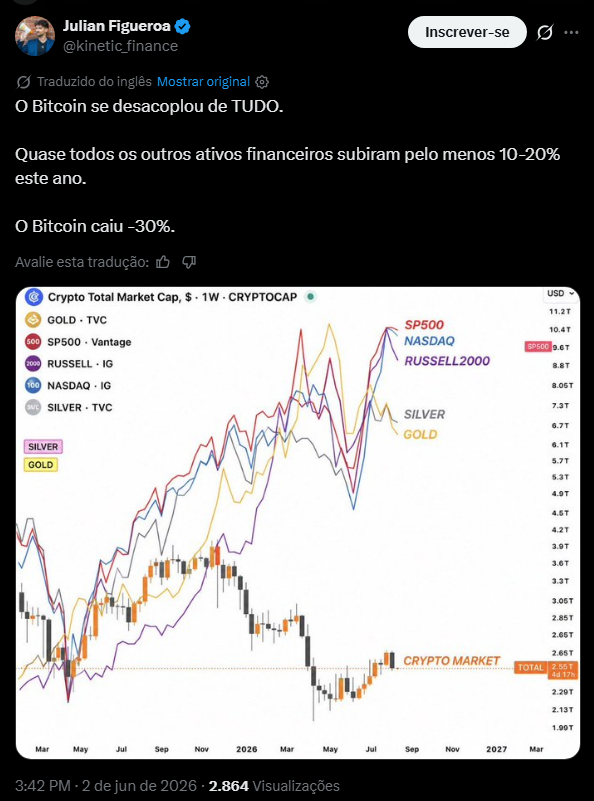
Aqui um exemplo muito bom com vários exemplos x.com/kinetic_finance/status…

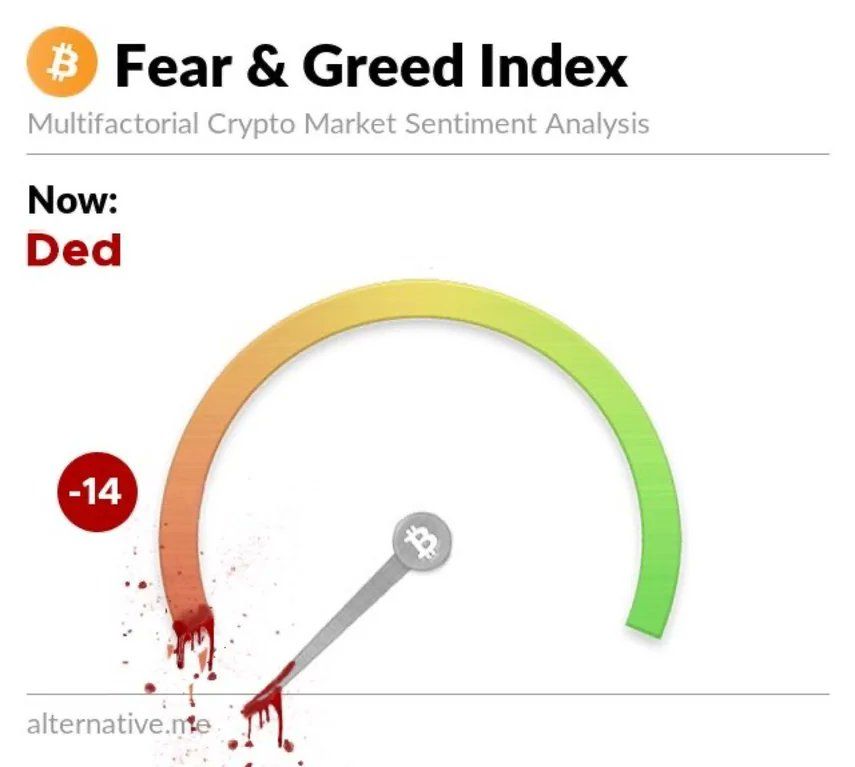
I have been in Bitcoin for 10 years.
I have NEVER seen sentiment this bad, on all fronts.
Not 2015, not 2018, not the 2022 collapse.
Something is broken this time, and I think I found out why through 9 charts... 📉
2
34
2,686
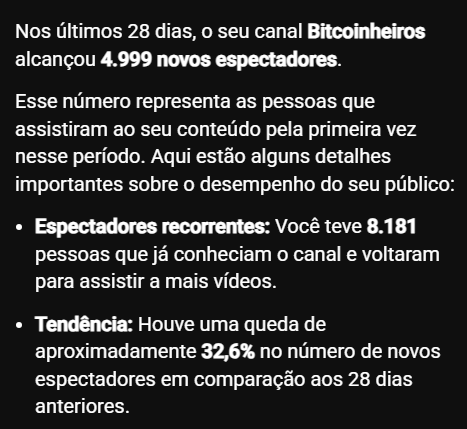
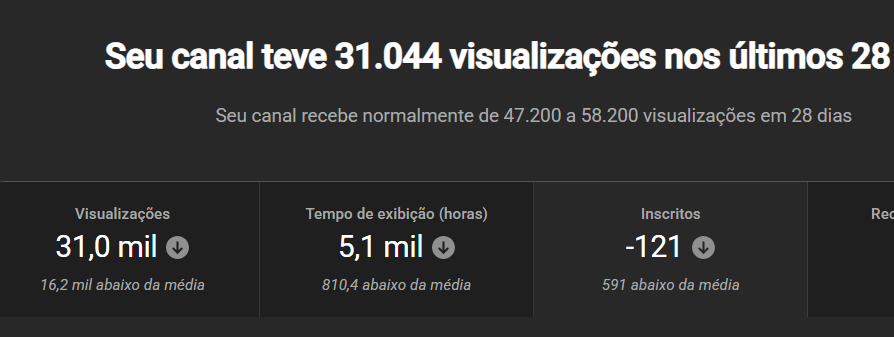
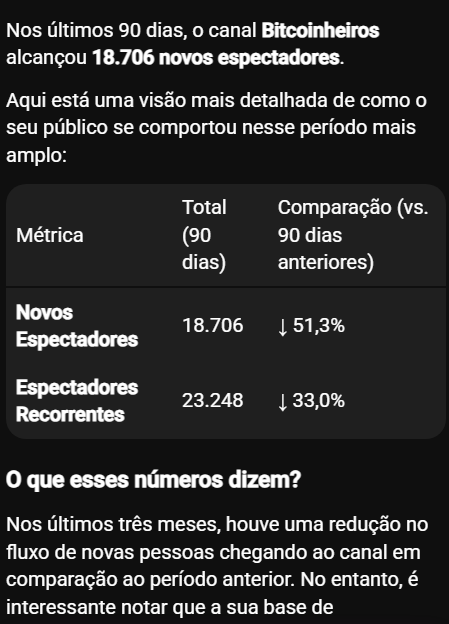
Desde 1 de março que venho sentindo uma queda constante no canal. Pela primeira vez em todo o período de existência do canal (em todos os outros períodos de baixa do BTC) tivemos menos inscritos do que pessoas que decidiram deixar de acompanhar o canal. Massas assustadas com BTC.
7
1
44
849
저렴하고 신뢰할 수 있는 비트코인 자기 보관 개발에 함께하세요

2
5
31
4,357
Bom dia e uma ótima semana para todos!
Não se esqueça da coisa mais preciosa do universo
youtube.com/watch?v=PA7mqyAe…
1
4
28
1,555

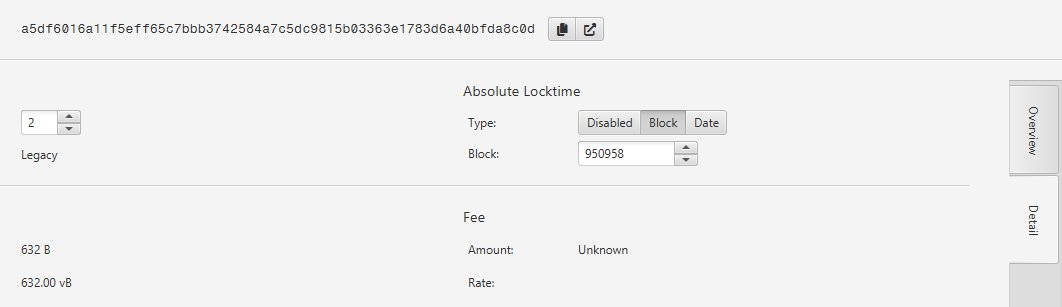
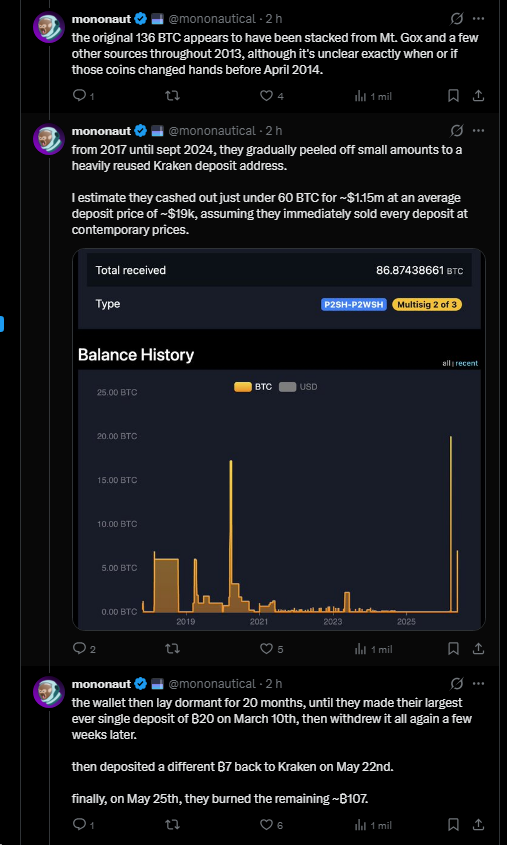
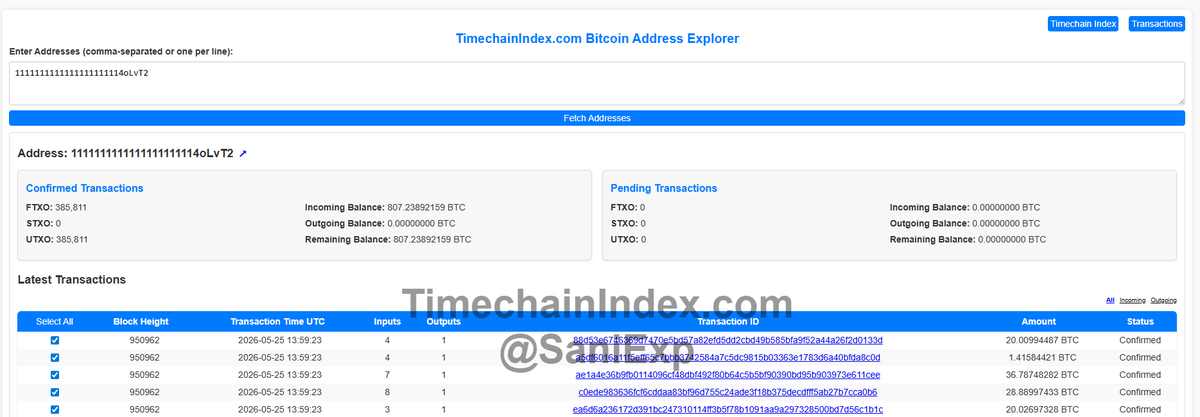
5 transações recentes de BTC "queimaram" 107 BTC - enviaram para um endereço q não pode gastar.
Pode ser medida para não recompensar sob coação.
Ou após X período sem movimento - já q elas tinham LOCKTIME.
Pode significar q alguém não está mais conosco - e não tinha herdeiros.

🚨🚨🚨 Someone just broadcasted 5 transactions totaling 107 BTC to the Bitcoin "burn address" 1111111111111111111114oLvT2
😢😢
explorer.timechainindex.com/…
12
9
240
26,484
₿it⚡️Dov retweeted

May 25
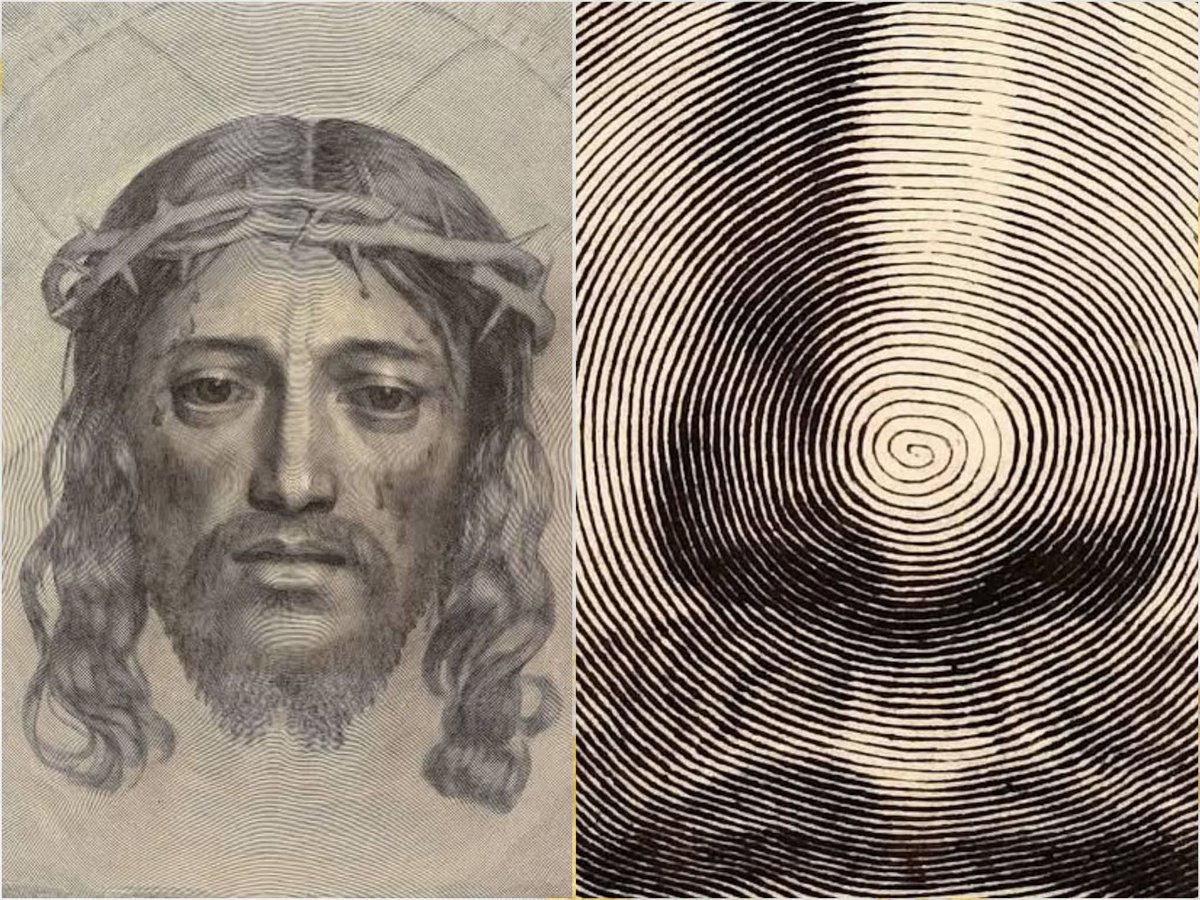
Claude Mellan's Face of Christ, also known as The Sudarium of Saint Veronica (1649), is one of the most technically extraordinary works in art history...
The entire portrait is rendered using a single, continuous spiralling line that begins at the tip of Christ's nose and expands outward to the edges of the cloth.
Mellan achieved the illusion of depth, shadow, and facial features without any cross-hatching or traditional shading. Instead, he precisely varied the thickness and pressure of the burin (his engraving tool) as he rotated the copper plate, creating "swelling" lines that darken the image where needed.
The spiralling line is estimated to be approximately 150m (about 500ft) long if it were stretched out.
284
3,079
25,146
1,164,127