
Not so active on X anymore. You may find me on BlueSky.
Joined January 2011
- Tweets 8,820
- Following 139
- Followers 5,988
- Likes 14,435
94 Photos and videos



Pinned Tweet

16 Oct 2025
Partiledare och politiker som vill ha ett offentligt samtal utan hat och hot borde kanske lämna X. NYT:s stjärnreporter Maggie Haberman: ”Sociala medier kan fortfarande vara en plats för nyheter men /…/ är mest giftiga. Plattformarna är konstruerade för att du ska bli arg."
1
543
Bitte Hammargren @bitteham.bsky.social retweeted

Apr 20
Magyar confirms that Netanyahu was lying when saying he was invited to Budapest. Today the incoming PM said per @business that Hungary under him will "have a legal obligation to enforce the ICC rulings and I'm sure [Netanyahu] knows this"
bloomberg.com/news/articles/…
193
5,737
20,993
594,431
Bitte Hammargren @bitteham.bsky.social retweeted

Apr 13
The victory of the opposition in Hungary yesterday, like the Polish election in 2023, is a victory for democracy, not just in Europe but around the world. Most of all, it’s a testament to the resilience and determination of the Hungarian people – and a reminder to all of us to keep striving for fairness, equality and the rule of law.
25,993
49,008
453,139
70,687,500
Bitte Hammargren @bitteham.bsky.social retweeted

Apr 8
Like all of our previous interventions in the Middle East, we are worse off after the war (not that this is over) than we were before.
Wars in the Middle East are a series of lose-lose scenarios for us, the sooner we learn that, the better off we’ll be.
Apr 8

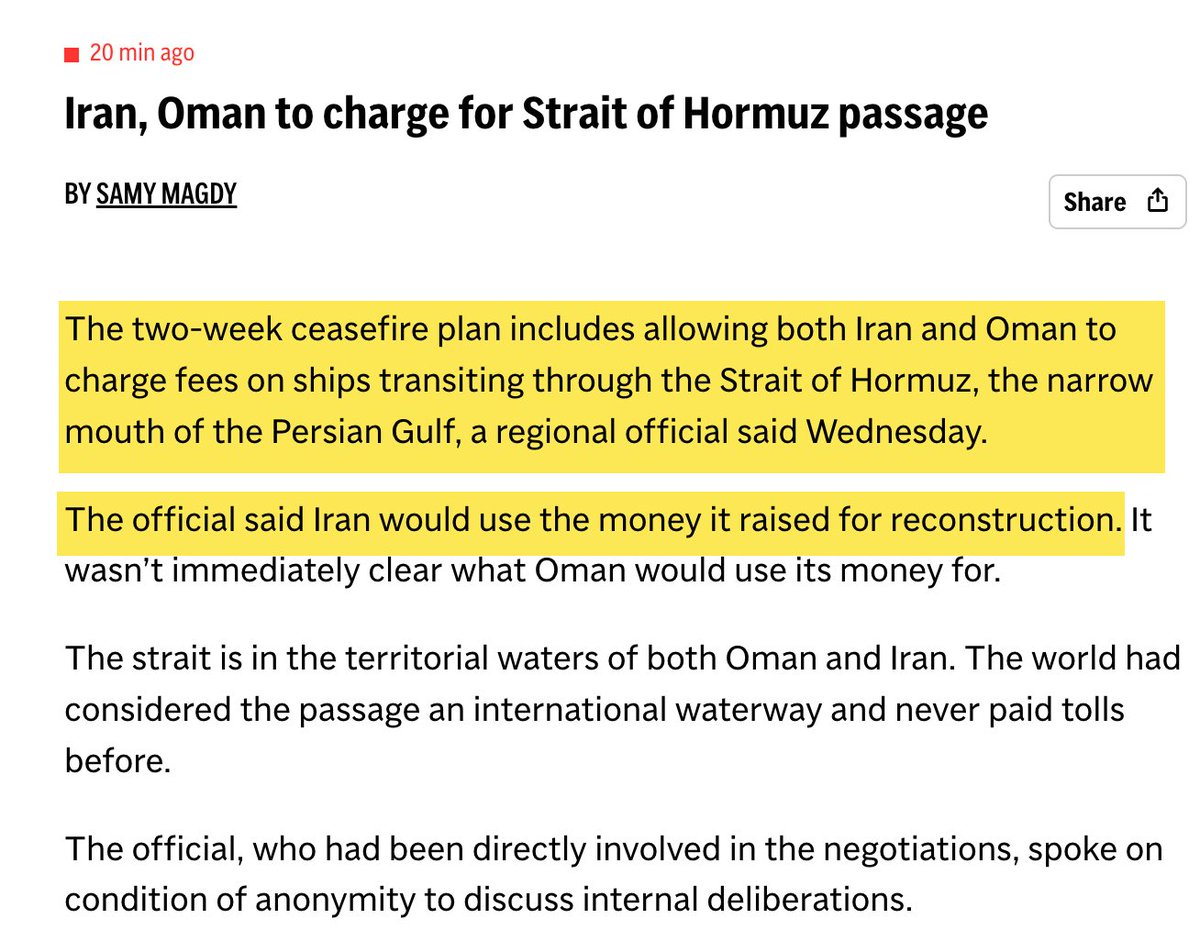
AP reports that the cease fire entitles Iran to charge for passage through the Strait of Hormuz, split with Oman, and to use that money for reconstruction. (Prior to the Israeli/US attack, passage through the Strait was free).
apnews.com/live/iran-war-isr…
639
2,292
11,260
326,122
Bitte Hammargren @bitteham.bsky.social retweeted
Apr 7
To ensure the ceasefire is successful we must first ensure that we restrain the Israelis.
6,442
26,162
123,647
4,507,804
Bitte Hammargren @bitteham.bsky.social retweeted

Mar 27
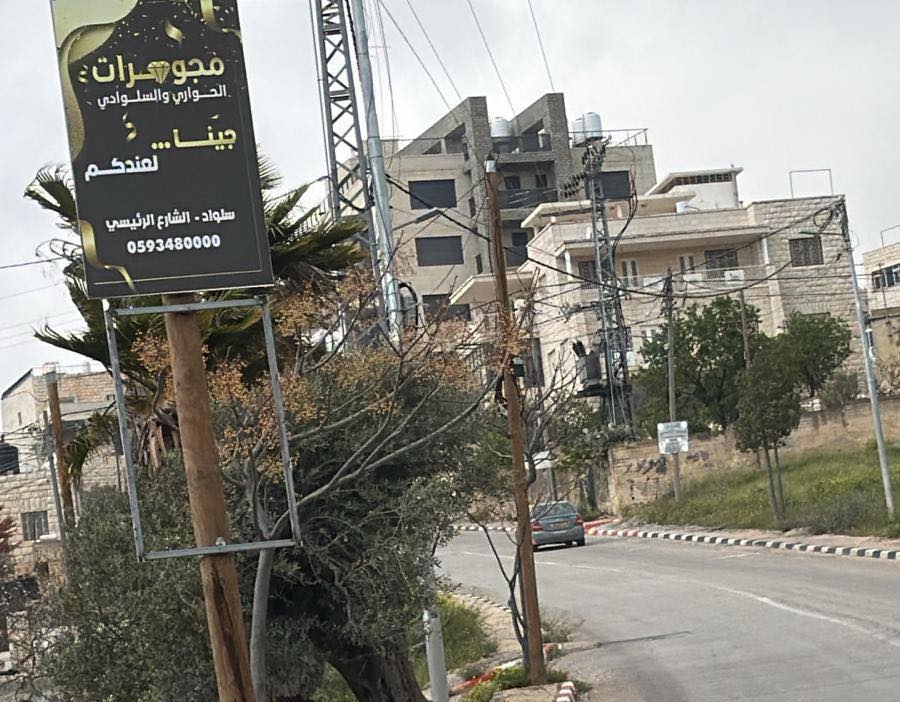
BREAKING: Israeli settlers have now stormed the Christian village of Taybeh after seizing the village quarry and announcing their takeover.
They are now carrying out daily incursions into the village to intimidate residents.
Received this image from residents of the car used to enter the village today. Two additional vehicles were also spotted at the village entrance, blocking it.
The Christian village of Taybeh has been under attack by Israeli settlers for over a year, with their assaults intensifying—now they have already seized a quarry in the village.
savewestbankchristians.com
21
383
671
29,229
Bitte Hammargren @bitteham.bsky.social retweeted

Mar 27
The blame game has started.
President Trump should get out of this Iran war asap.
Mar 27

🇺🇸🇮🇱🇮🇷VP Vance told Netanyahu in a "difficult" call on Monday that several of Netanyahu's predictions about the war had proved far too optimistic, like the prospects of a popular uprising to topple the regime. @MarcACaputo & I write for @axios axios.com/2026/03/27/vance-i…
1,082
1,134
8,644
1,551,066
Bitte Hammargren @bitteham.bsky.social retweeted

Mar 27
“If the regime survives, they will go after their most dangerous enemies: that’s the Iranian people,” says Hamidreza Mohammadi, brother of Nobel laureate @nargesfnd. “Because the attacks might stop, but the Iranian people [will] not stop… They don’t want this regime to remain.”
107
155
561
74,052
RT @AliVaez: Uber hawkish IRGC general Zolghadr has replaced relatively pragmatic Larijani, killed by Israel last week, as the new National…
113
Bitte Hammargren @bitteham.bsky.social retweeted

Mar 19
I don’t get it. If Hezbollah had flats in this block (unlikely in central Beirut but not impossible) why did the Israelis give everyone inside an hour to get out — including those they wanted to kill? And if there weren’t any Hezbollah people there, why destroy a building with dozens of civilians in it?
Mar 18

An Israeli airstrike struck an apartment building in central Beirut, on Wednesday. The Israeli army had warned residents to evacuate about an hour before completely flattening it as day broke.
1,709
4,659
16,336
1,505,423
Bitte Hammargren @bitteham.bsky.social retweeted

Mar 18
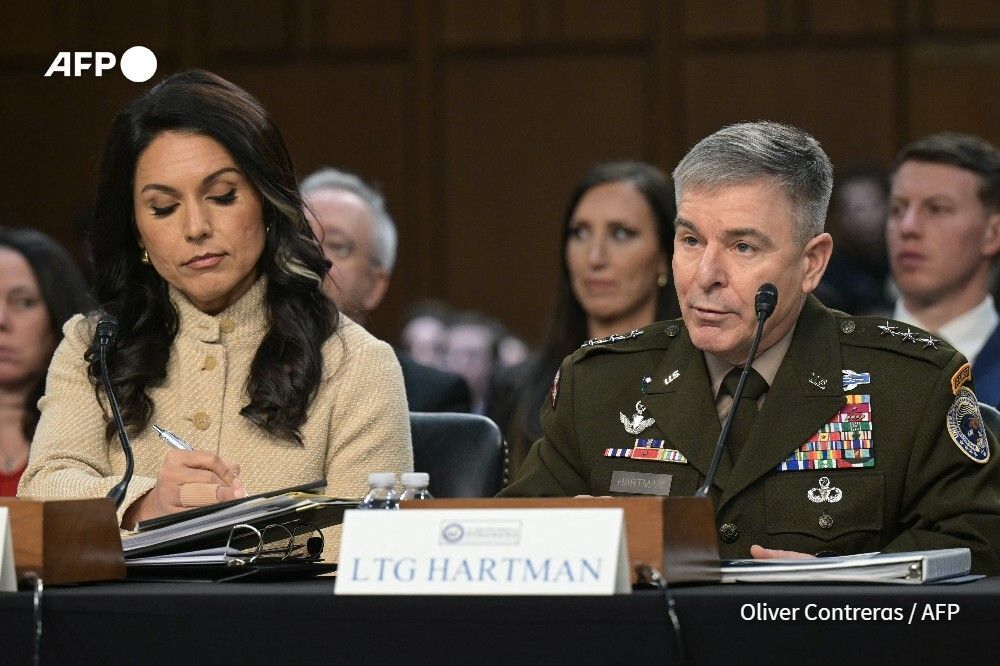
US intelligence concluded that Iran was not rebuilding nuclear enrichment capacities destroyed last year by the United States and Israel, contradicting a key justification by President Donald Trump for his ongoing war.
u.afp.com/SL8j
328
5,795
10,780
932,254
Bitte Hammargren @bitteham.bsky.social retweeted

Mar 18
Washington Post's @John_Hudson reports U.S. Embassy Jerusalem cable: in private, Israeli officials admit assumptions about Iranian regime resilience – what Israeli leaders reportedly told American counterparts to convince them to join war – were incorrect: washingtonpost.com/national-…
2
3
589
Bitte Hammargren @bitteham.bsky.social retweeted
Mar 17
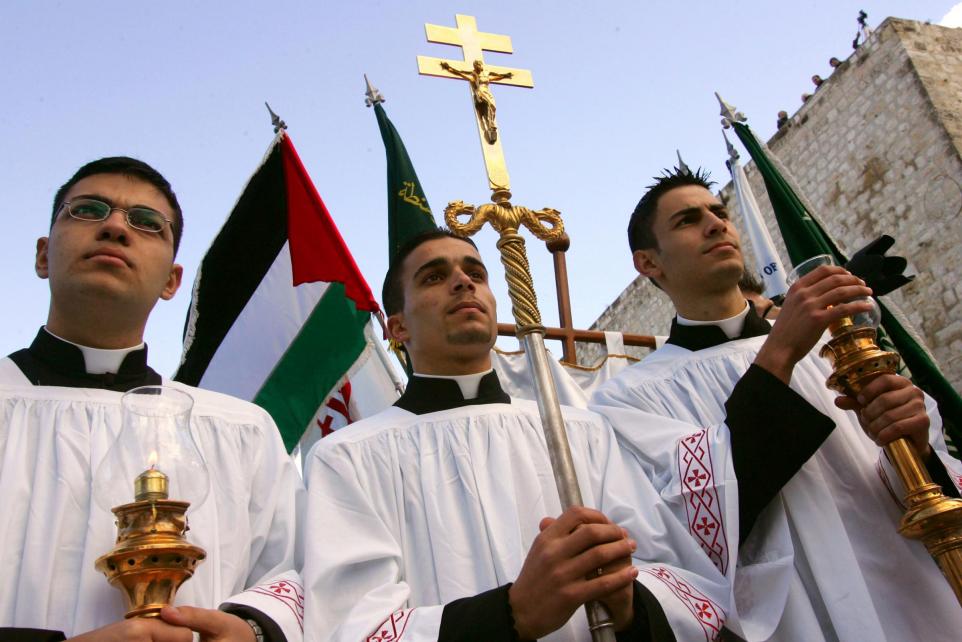
A heartfelt plea to churches and Christian leaders around the world from your fellow Palestinian Christians:
Palestinian Christians are facing an imminent threat of disappearing from the Holy Land, the birthplace of Christianity and home to the oldest Christian community on earth.
Amid relentless attacks by Israeli settlers, land theft, displacement, and the impact of Israeli occupation policies, hundreds of Palestinian Christian families are now considering leaving the Holy Land--pushing our communities toward disappearance.
You still have time to act. With hope and faith, we ask you to raise your voices, stand with us, and help ensure that the Palestinian Christian presence in the Holy Land does not fade away in silence.
savewestbankchristians.com
75
1,381
2,603
46,378
RT @BilalRKaafarani: I have been deliberately silent on social media for a while. I use all my social media platforms to promote education…
17,187
Bitte Hammargren @bitteham.bsky.social retweeted

Mar 17
Britain’s national security adviser argues that the final talks between the US and Iran should have prevented the rush to war because Iran agreed to permanently halt nuclear enrichment & dilute its already enriched uranium.
UK officials were impressed that Iran was prepared for the deal to be permanent and, unlike the 2015 nuclear agreement, would not have cut-off dates, or sunset clauses ending the restrictions on its programme.
Iran also agreed to down-blend the 400kg stockpile of highly enriched uranium under the supervision of the IAEA inside Iran. It agreed no stockpiles of highly enriched uranium would be built up in the future...
theguardian.com/world/2026/m…
9
26
55
8,479
Bitte Hammargren @bitteham.bsky.social retweeted
Mar 17
A source familiar with private plans & discussions tells me Ali Larijani was, for the US & Israel, the most favored transitional candidate as of Sept 2025, but became a target early Feb 2026.
The source said Larijani became a target when he:
-Pushed for crackdown on protesters;
-Took front seat in lashing out at US/Israel;
-Assumed key role in strategizing the IRGC kinetic actions, in particular against GCC states.
1,001
652
2,648
1,367,610
Bitte Hammargren @bitteham.bsky.social retweeted
Mar 17
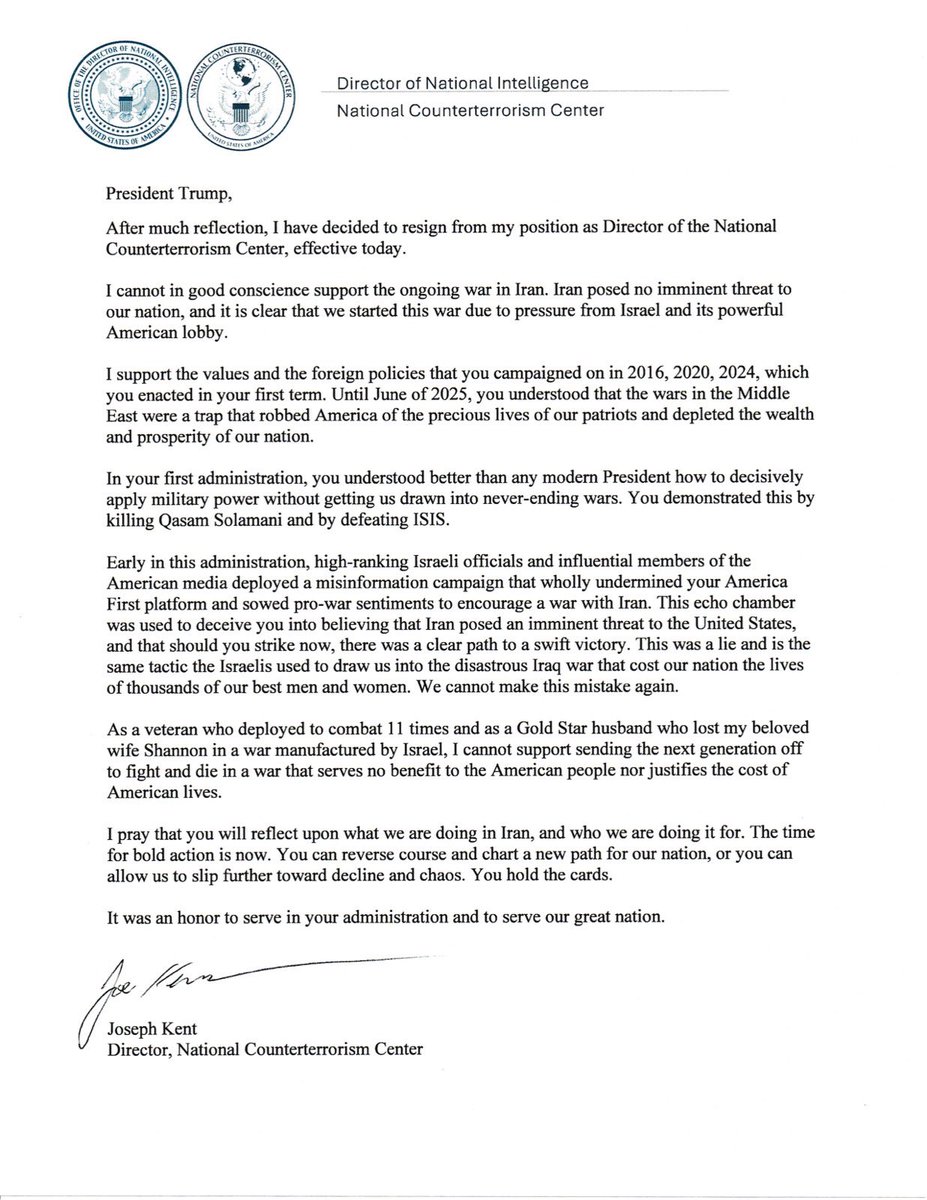
After much reflection, I have decided to resign from my position as Director of the National Counterterrorism Center, effective today.
I cannot in good conscience support the ongoing war in Iran. Iran posed no imminent threat to our nation, and it is clear that we started this war due to pressure from Israel and its powerful American lobby.
It has been an honor serving under @POTUS and @DNIGabbard and leading the professionals at NCTC.
May God bless America.
72,385
215,672
840,095
103,455,886
Bitte Hammargren @bitteham.bsky.social retweeted

Mar 15
Jens Stoltenberg is refreshingly clear on the fact that the 🇺🇸🇮🇱 war is against international law. And says that NATO should stay out of any involvement in it.
396
2,779
8,731
383,218
RT @mahamyahya: #Israel announces the official beginning of its ground invasion of #Lebanon - seeks now to depopulate the entire area south…
2,434
Bitte Hammargren @bitteham.bsky.social retweeted

Mar 16
The large scale Israeli invasion of Lebanon has begun. , This invasion is significantly larger in terms of manpower and organization than the 2006 Lebanon War. It is the largest since 1982. Here is what we know so far:
1) Divisions 162 and 98 are expected to join the fighting, on top of divisions 36, 91, and 146 already operating across the border. Five divisions means this is a serious war.
2) The IDF is expected to advance through three main corridors: the Western Sector (Ras al-Naqoura), the Middle Sector (Aita ech Chaab), and the Eastern Sector (Khiyam).
3) The army's stated objective is to prevent Hezbollah from being able to fire anti-tank missiles and rockets into Israeli territory. It appears more likely the goal is to permanently secure the area south of the Litani or even the Zahrani rivers.
4) The IDF has expanded evacuation orders to Lebanese residents south of the Zahrani River, roughly 40 km from the Israeli border. About 13% of Lebanon's territory is now under IDF evacuation orders.
5) There is an element of coercive diplomacy involved. Israeli officials have indicated that Israel and Lebanon may hold direct talks in the coming days. The Lebanese state has expressed a willingness to negotiate to end the war, even as Hezbollah continues its strikes.
6) Israel is applying the Daheyia Doctrine, which uses overwhelming, disproportionate force against civilian infrastructure in areas controlled by Hezbollah to deter future attacks. However, they plan to use this increasingly against Lebanese infrastructure to coerce Lebanon into a deal.
There is no clear exit strategy for this war. While in theory Israel is trying to coerce Lebanon into disarming Hezbollah, it is unlikely that can happen. Last time Israel sent this many troops in, they remained trapped there for 25 years.
52
489
1,114
82,512
Bitte Hammargren @bitteham.bsky.social retweeted
Mar 13
Diplomacy for ending the war has begun.
Mar 13

𝗔𝗠𝗘𝗥𝗜𝗖𝗔 𝗖𝗢𝗡𝗧𝗔𝗖𝗧𝗦 𝗜𝗥𝗔𝗡 𝗧𝗢 𝗘𝗡𝗗 𝗧𝗛𝗘 𝗪𝗔𝗥
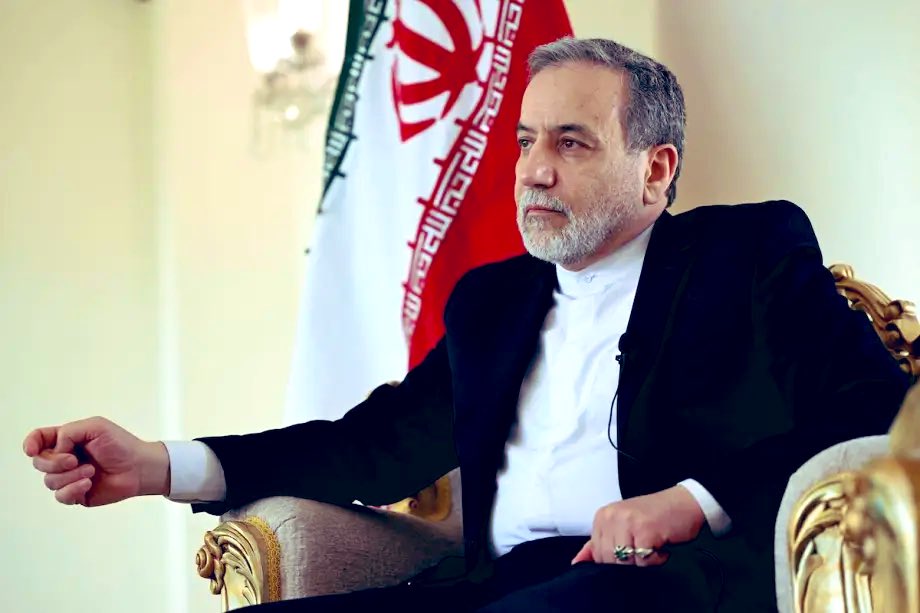
According to diplomatic sources, Marco Rubio reached out to Iran’s foreign minister Abbas Araghchi through Oman as part of an American effort to explore a path toward ending the war.
The message carried a single direct question: what does Iran want in order to stop the war?
Tehran initially gave no response.
Shortly afterward, France was tasked with delivering the same question in an attempt to reopen the diplomatic channel.
This time the reply from Tehran was explicit:
“We are not seeking to stop the war. There are objectives that must still be achieved.”
Despite the public rhetoric from Donald Trump and officials in Washington claiming battlefield success, the quiet diplomatic outreach suggests a far more cautious calculation behind the scenes.
The United States appears to believe that sustained military pressure will eventually force Iran to accept terms favorable to Washington for ending the conflict.
Tehran, however, is signaling the opposite.
Iranian officials indicate they are prepared for a prolonged confrontation and will not concede under pressure.
The war has therefore evolved into a strategic contest of endurance, a test of which side can sustain the greater cost, absorb the escalating pressure, and ultimately compel the other to recalibrate its position.
Behind the battlefield narratives and public declarations of victory, the real struggle is becoming clear: not who strikes harder, but who endures longer.

19
7
18
34,106