
U.S. policy newsletter at the intersection of government and blockchain technology. 🇺🇸 ENS: blockchaintipsheet.eth
Joined March 2022
- Tweets 2,605
- Following 733
- Followers 3,797
- Likes 634
635 Photos and videos

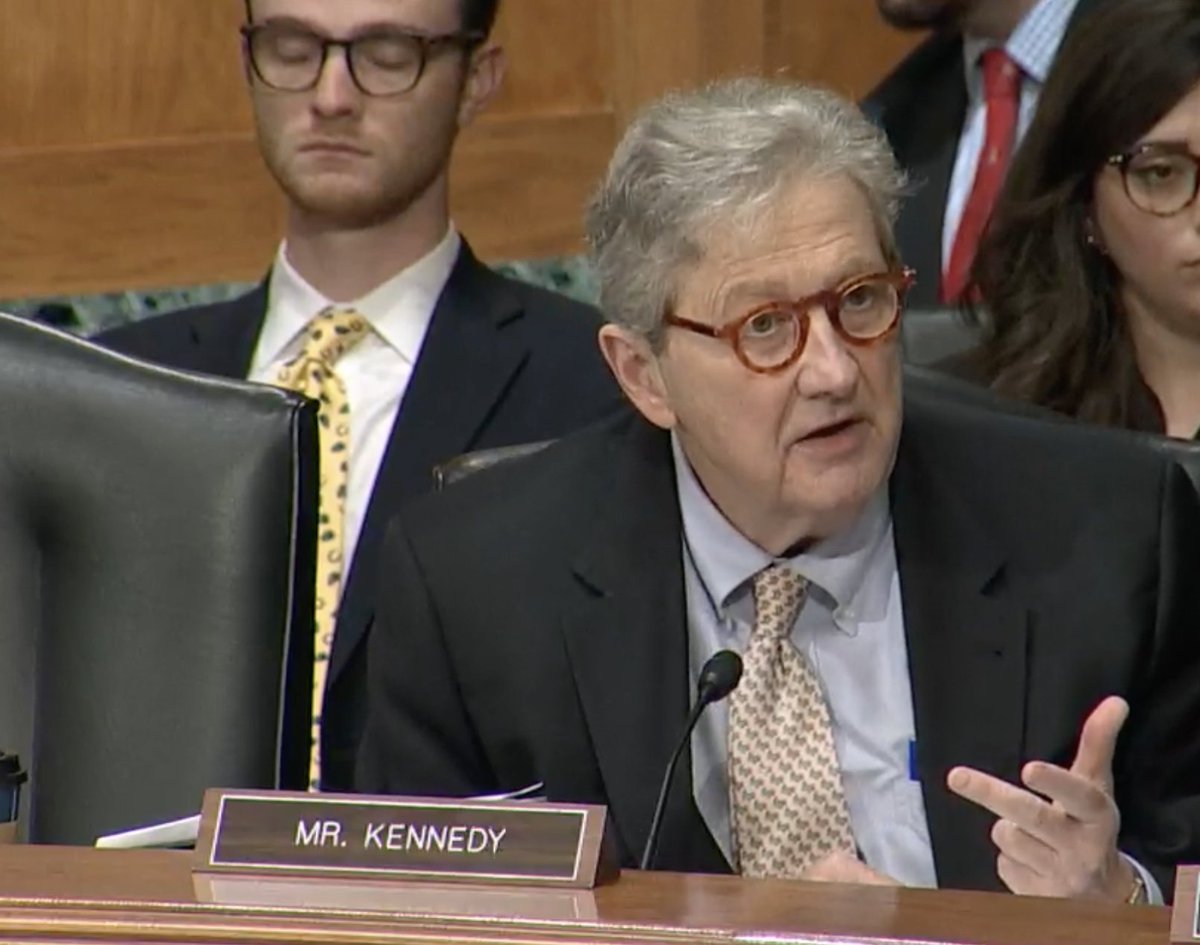
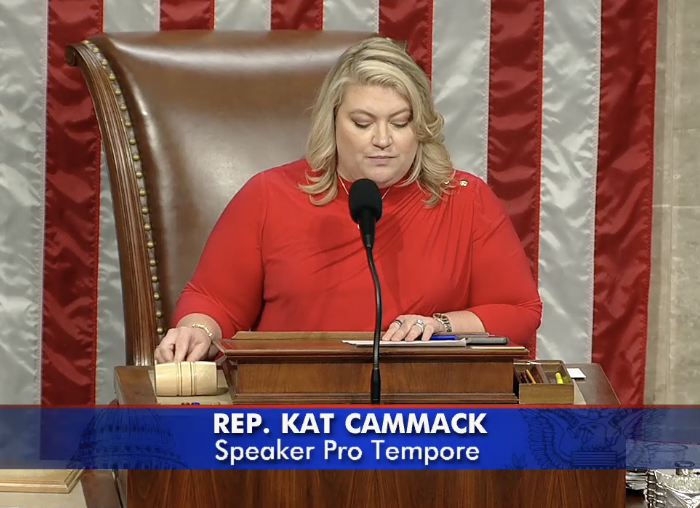
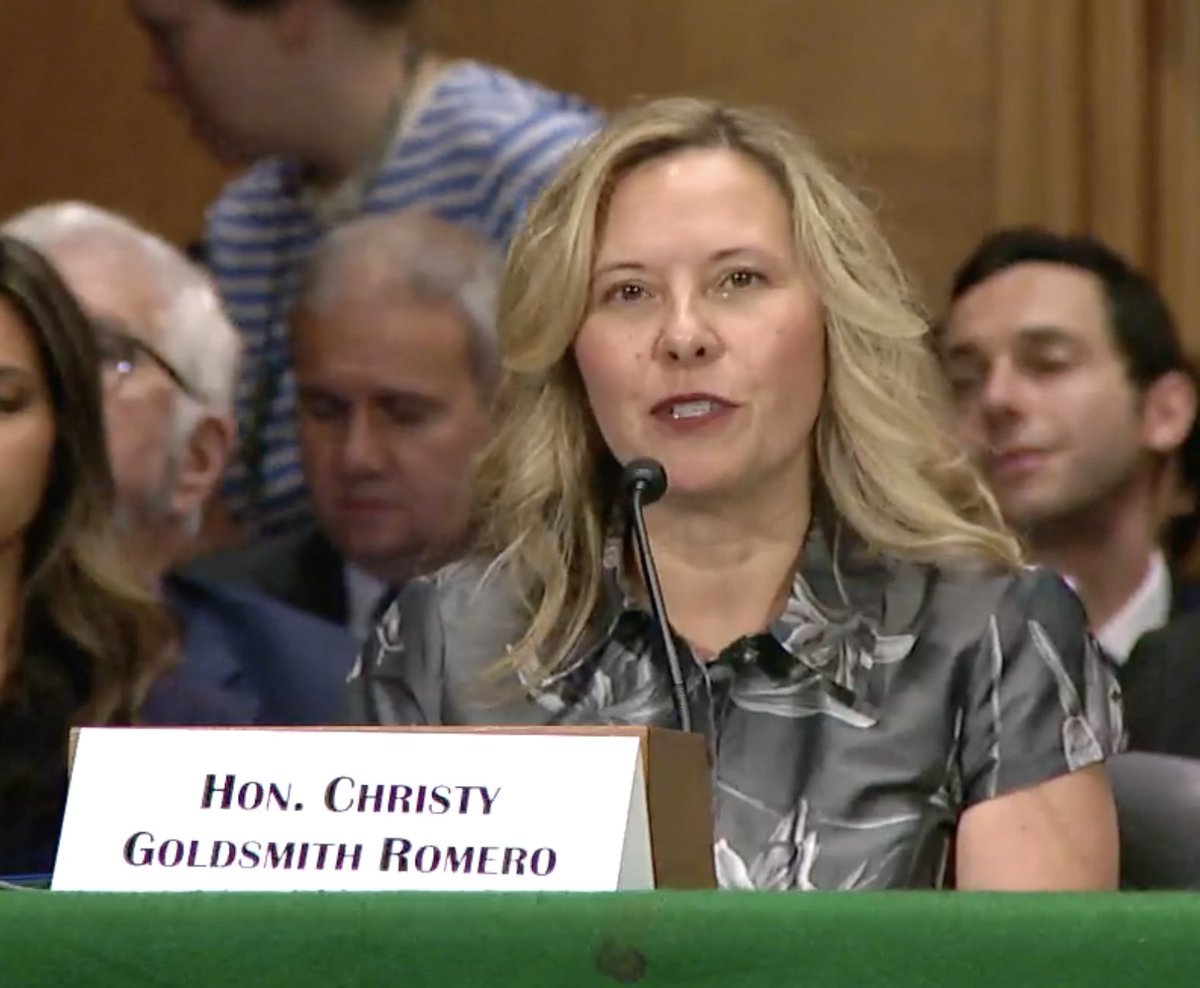
blockchain tipsheet retweeted

May 22
If people want to understand what synthetics mean to me in this context, see the staff statement on tokenization, which distinguishes tokenized versions of issuer-sponsored stocks and of stocks that SEC-registered firms hold for their customers from synthetic instruments that provide exposure to stocks. sec.gov/newsroom/speeches-st…
May 21

I appreciate the interest in--but not the hyperbole about--the contemplated innovation exemption for the onchain trading of tokenized NMS stock. Keep in mind: I've always expected that it'd be limited in scope & would facilitate trading only of digital representations of the same underlying equity security that an investor could purchase in the secondary market today, not synthetics.
37
67
342
135,827
blockchain tipsheet retweeted

Feb 12
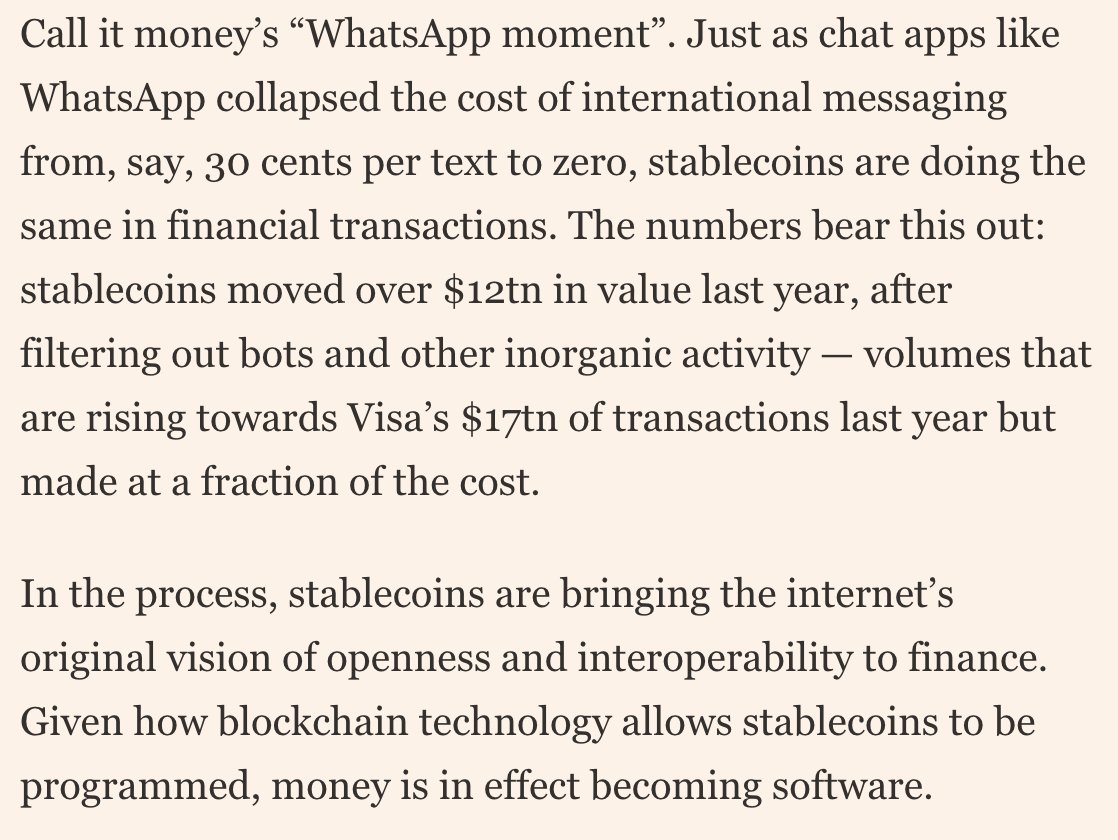
The internet made information global. Crypto is doing the same for money.
I discuss how stablecoins bring the internet's original vision to finance, and this important “WhatsApp moment” in the @FT.
ft.com/content/7b604dc2-5e9a…
114
108
641
67,622
Market structure markup rescheduled for Thursday: agriculture.senate.gov/heari…
99
blockchain tipsheet retweeted
🚨BREAKING: Chairman @JohnBoozman releases updated market structure legislation ahead of January 27th markup.
agriculture.senate.gov/newsr…
30
53
201
55,979
blockchain tipsheet retweeted

10 Nov 2025
Chairman @JohnBoozman and @SenBooker release a bipartisan market structure discussion draft.
Learn more here ⬇️
agriculture.senate.gov/newsr…

11
14
61
35,982
blockchain tipsheet retweeted

18 Jul 2025
Today, President Trump signed the GENIUS Act into law, a historic piece of legislation that will pave the way for the U.S. to lead the global digital currency revolution.
861
3,914
20,342
869,850
blockchain tipsheet retweeted

18 Jun 2025
Today brings us one step closer to becoming a welcoming home for digital asset companies. Now, let’s finish the job & pass market structure legislation to fulfill @POTUS' vision of becoming the crypto capital of the world.
93
169
1,369
140,076
blockchain tipsheet retweeted

12 Jun 2025
Shopify will enable USDC (Stablecoins on @Base) in Checkout via Shopify Payments and Shop Pay. Early access starts today, roll out throughout the year.
We think that stablecoins are a natural way to transact on the Internet and worked with coinbase to develop the commerce payment protocol smart contract that powers this work

327
552
4,411
2,327,600
blockchain tipsheet retweeted

11 Jun 2025
🚨NEW: Vote on cloture will take place at 2PM EST today.
11 Jun 2025

@EleanorTerrett - are we expecting a final vote on the stablecoin bill today?
66
218
1,418
231,782
blockchain tipsheet retweeted

11 Jun 2025
We did it! We are taking a 20 minute recess. Then, it's amendment time.
1
1
1,043
blockchain tipsheet retweeted

27 May 2025
Emmer says at Bitcoin 2025 that he expects Hill to move the Senate stablecoin's bill through House Financial Services Committee with some changes.
The plan is still to pass that proposal "before the end of the July" alongside market structure legislation, he says. He adds that he wants a vote on a CBDC ban at the same time.
2
6
6
4,119
blockchain tipsheet retweeted

27 May 2025
Stable Coin and Market Structure legislation will unlock the golden age of digital assets.
48
97
541
38,686

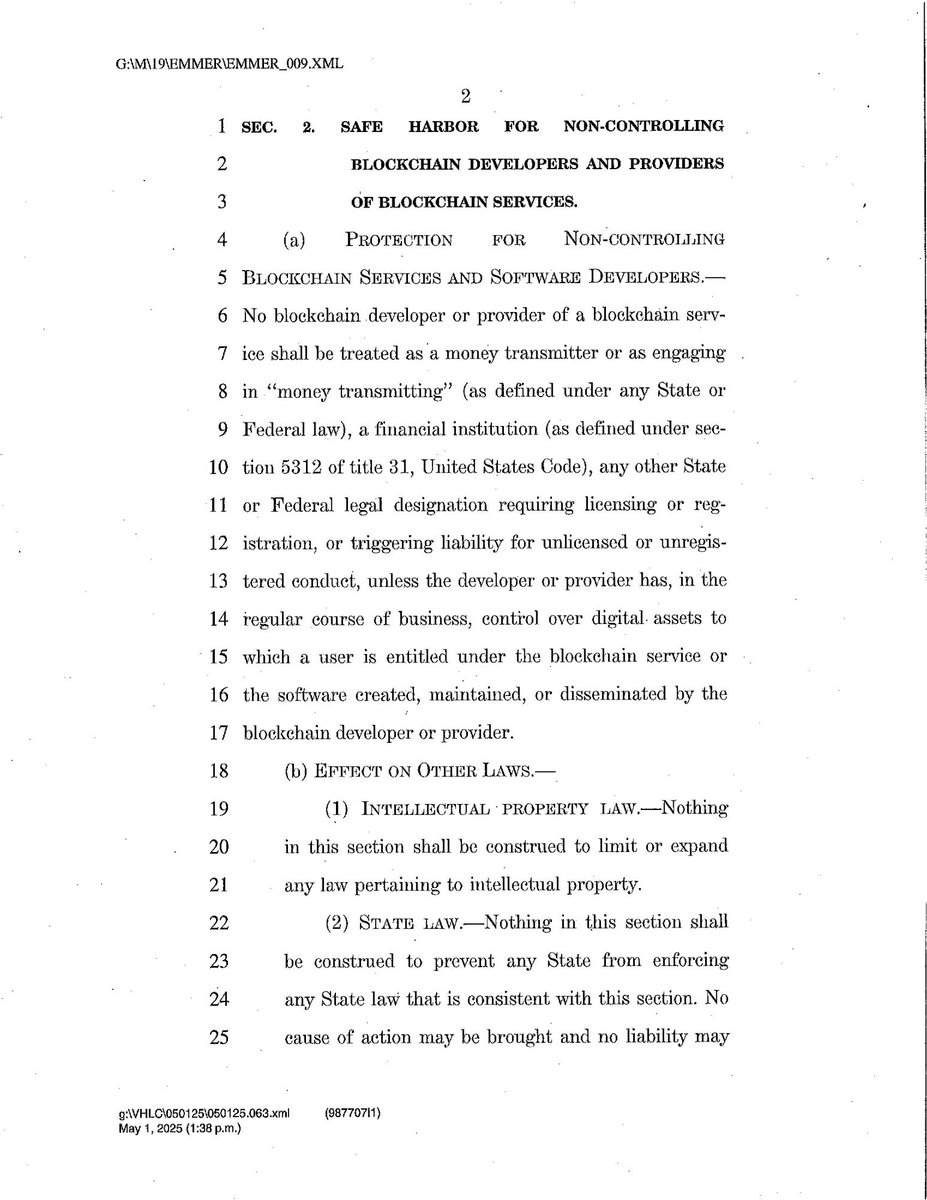
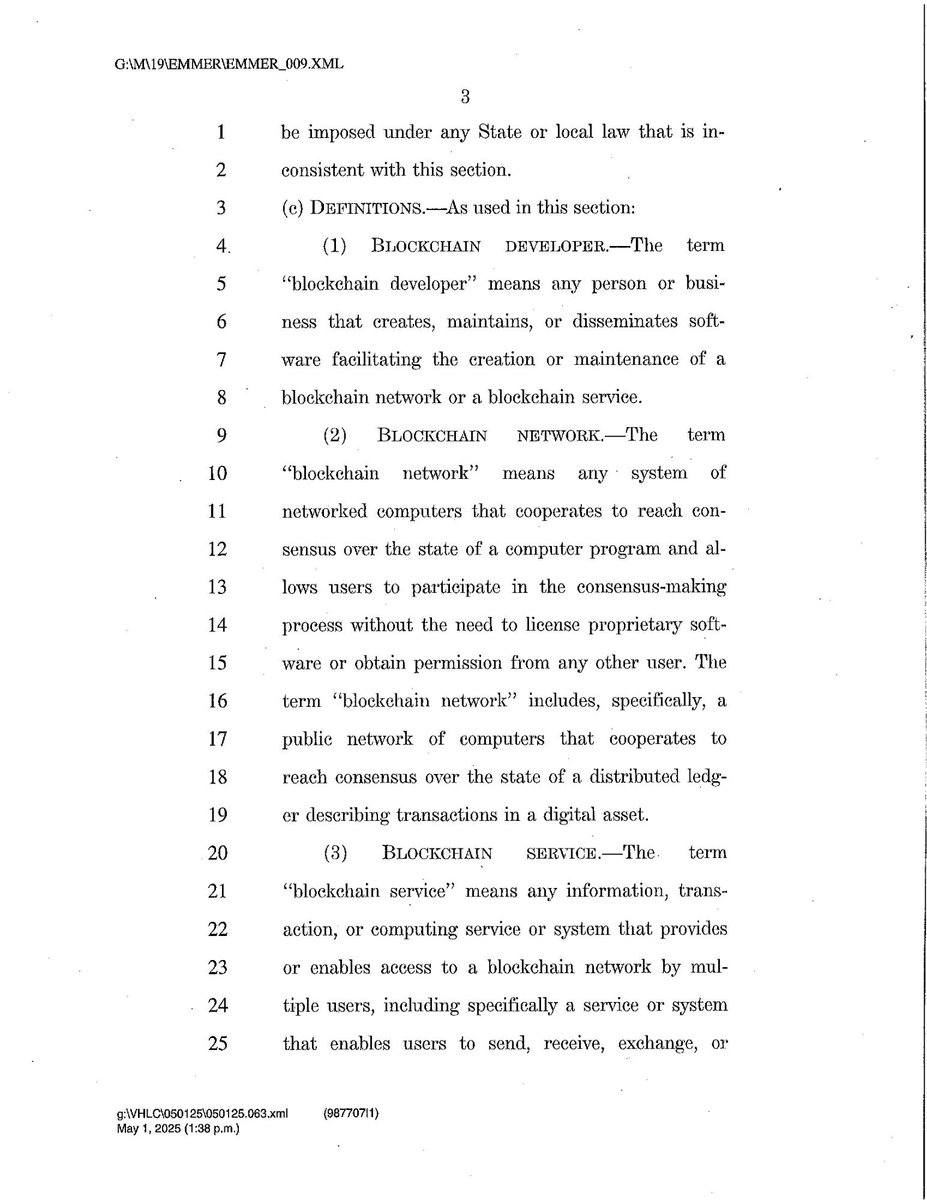
BRCA has always been such a solid, common sense bill that would bring regulatory stability. To argue otherwise and claim that noncustodial applications qualify as money transmitters would open the floodgates to all kinds of absurd arguments down the road.
It would be akin to arguing that internet service providers are money transmitters simply because they connect individuals to their bank's website. Where would it end?
21 May 2025

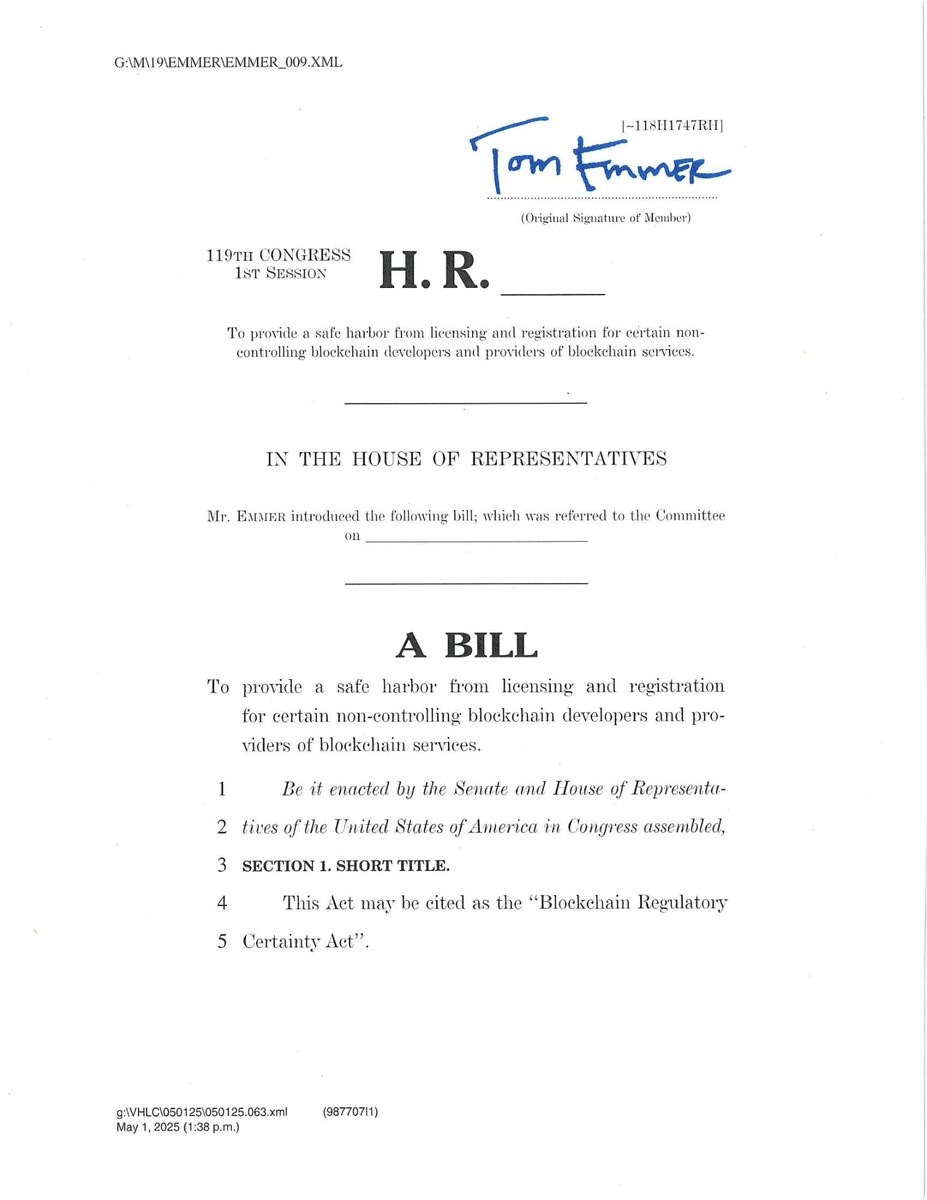
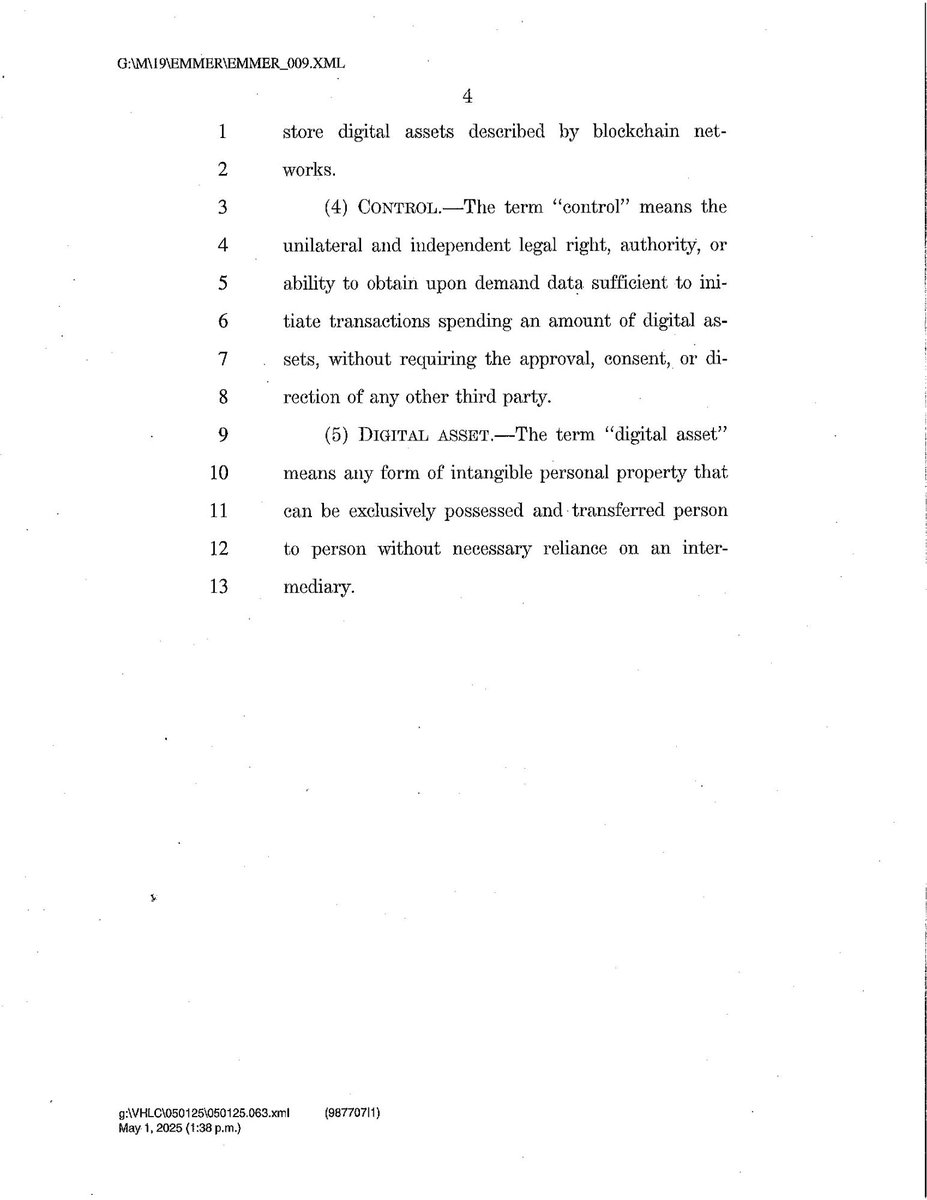
Today, @RepRitchie and I introduced the Blockchain Regulatory Certainty Act to protect blockchain developers and service providers that never custody consumer funds from unjust government prosecution.
2
3
18
1,758
blockchain tipsheet retweeted

21 May 2025
🇺🇸 The Senate passed the motion to proceed with the GENIUS Act, S. 1582, regulating stablecoins.
Now set for full Senate debate, amendments, and a final vote. 🗳️
49
27
156
15,451

20 May 2025
NYC’s public embrace of blockchain & finance.
20 May 2025

Standing room only at Gracie Mansion for @NYCMayor:
🤝 “We want to ensure this city remains the center of innovation”
💬 “If the mayor of the greatest city in the world is willing to talk about blockchain and digital assets…”
🌎 “making NYC the crypto capital of the globe”

1
155
blockchain tipsheet retweeted

20 May 2025
Bipartisanship is alive and well.
We called for stablecoin legislation to pass now. We're on the cusp. 17!!!! Democrats joining *nearly* all Republicans to move the GENIUS Act forward.
Thank you @SenatorHagerty @SenLummis @SenGillibrand @SenatorTimScott for your leadership.
20 May 2025

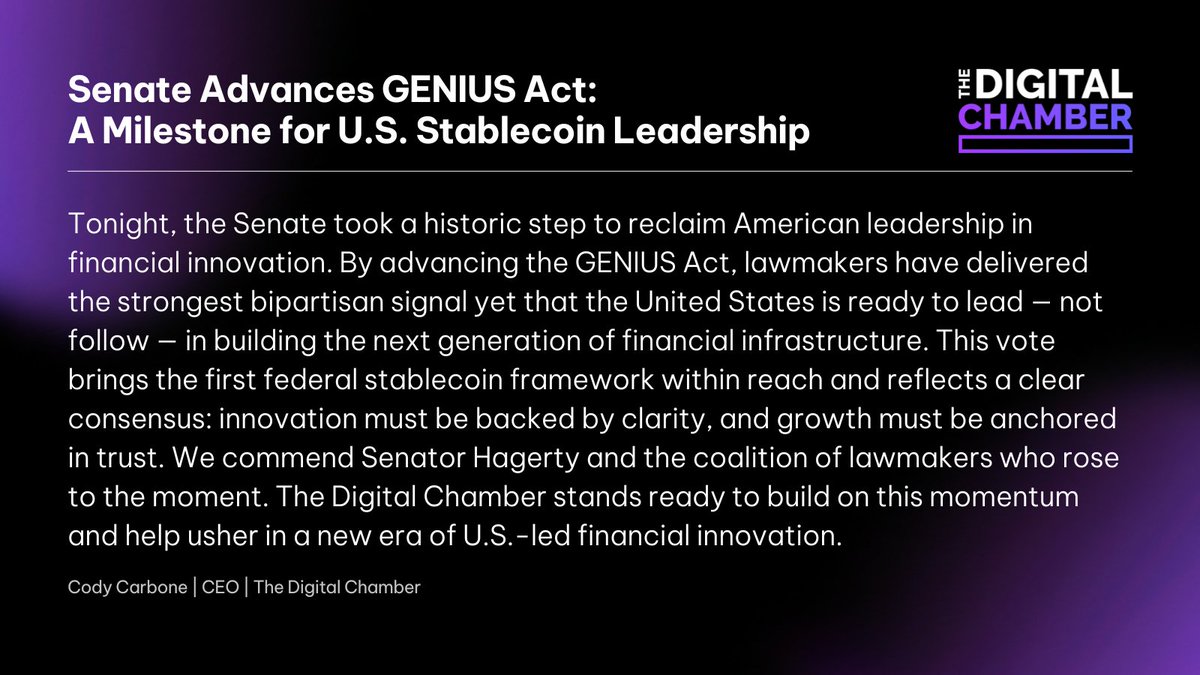
Tonight’s Senate vote on the GENIUS Act marks a major bipartisan step toward modern, clear stablecoin regulation — a key to U.S. financial innovation and leadership. The Digital Chamber is ready to keep the momentum going.
8
23
130
40,981
20 May 2025
Here we go
20 May 2025

LIVE: Senate Votes on GENIUS Act x.com/i/broadcasts/1rmxPyqnO…
1
219
blockchain tipsheet retweeted
19 May 2025
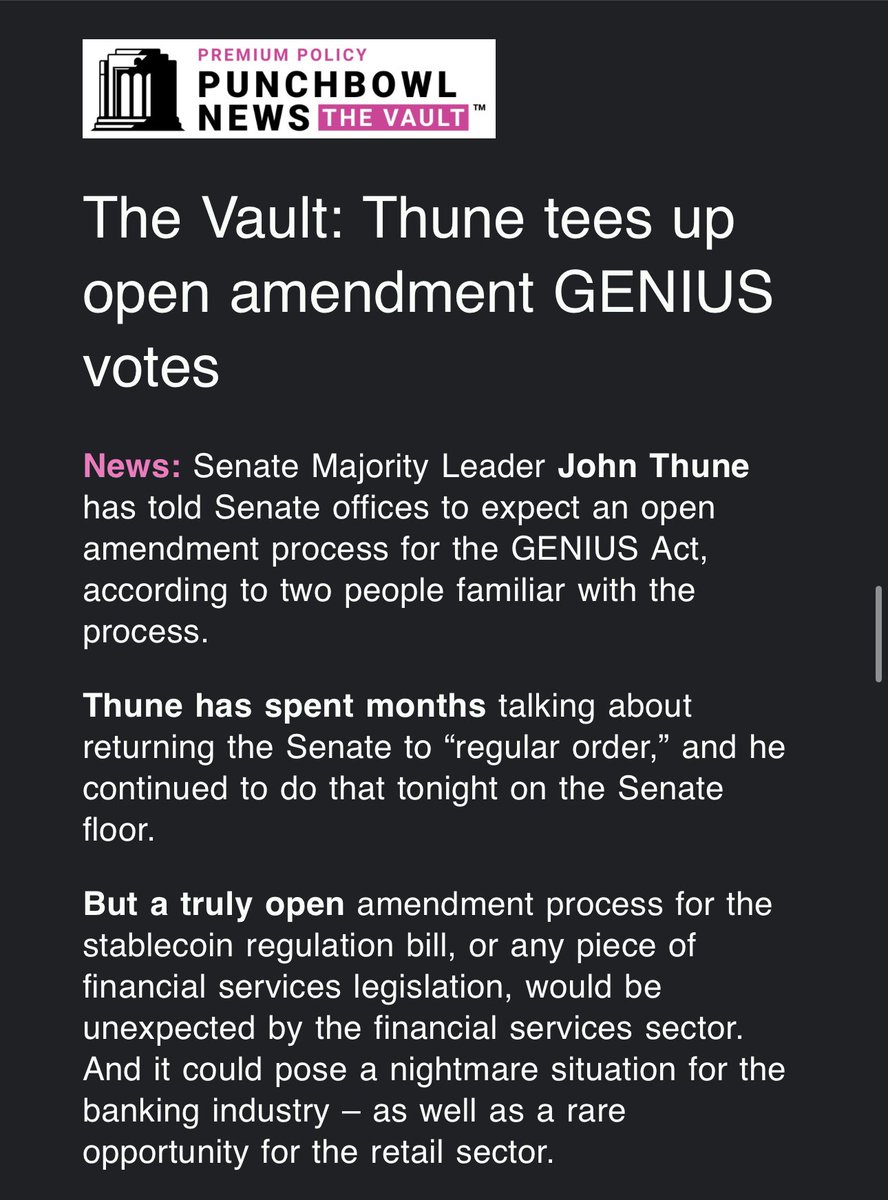
News in PM: Senate Majority Leader Thune is committed to an open amendment process around the GENIUS Act. Seriously.
He's been talking about regular order for months. But lobbyists didn't expect the process to be freewheeling. That could lead to a nightmare vote for banks.
8
18
40
99,525

In June 2012, I took this photo of Brian presenting at YC Demo Day.
Absolutely incredible work @brian_armstrong 🫡
13 year overnight success

12 May 2025

Coinbase just became the first and only crypto company to join the S&P 500.
This milestone represents what the true believers, from retail investors to institutional investors to our employees and partners, knew all along.
Crypto is here to stay.
29
41
951
82,156
blockchain tipsheet retweeted

8 May 2025
For my non-US frens, a "cloture" vote in the Senate is a procedure invented in 1917 used to end debate - incl. filibuster - on a piece of legislation. If a cloture vote fails, the debate continues, which means the bill could come up for vote again shortly. #GENIUS #stablecoins
1
4
13
1,677