@SpiritStAI • Hedge fund analyst turned bad
Joined November 2010
- Tweets 3,542
- Following 1,600
- Followers 4,530
- Likes 9,123
820 Photos and videos





Asternomic retweeted

Jun 4
Say hi to the new Poke! 🌴
Now officially approved by Apple to text on Apple Messages.
As the first and only AI agent. Chat now: Poke.com
435
248
5,461
4,893,212

May 24
Loopt was essentially Find my Friends
This has always been a hard business model to monetize as a standalone app
Snapchat, Instagram, and iOS now all have this as an embedded feature within their platforms

A young Sam Altman pitching Loopt, the $175M startup he sold for $43M before going on to lead YC and OpenAI:
3
838

Apr 22
Another way to think about this is that the $10B is a breakup fee if SpaceX does not end up buying Cursor for $60B
The nuance here is that $10B/$60B is 17%, where the typical breakup fees are ~5% or less. This is extremely generous and huge for Cursor

SpaceXAI and @cursor_ai are now working closely together to create the world’s best coding and knowledge work AI.
The combination of Cursor’s leading product and distribution to expert software engineers with SpaceX’s million H100 equivalent Colossus training supercomputer will allow us to build the world’s most useful models.
Cursor has also given SpaceX the right to acquire Cursor later this year for $60 billion or pay $10 billion for our work together.
14
2,543
Apr 21
The reason why image gen in ChatGPT is so powerful is because of its reasoning and capability to iterate back and forth in an easy UI/UX
ChatGPT Images 2.0 takes it to the next level with more accurate typography, web search, and more robust intelligence
Apr 21

new image model coming with some real magic within, to unlock new use cases in productivity and creativity
livestream noon today
6
798

Apr 9
AdaBoost is one of the most popular classical ML algorithms, but experts have many unanswered questions about its exact behavior in the long-run
This paper leverages AI itself (LLMs) to resolve a 14-year-old problem about whether its dynamics eventually converge
Congrats Erik!

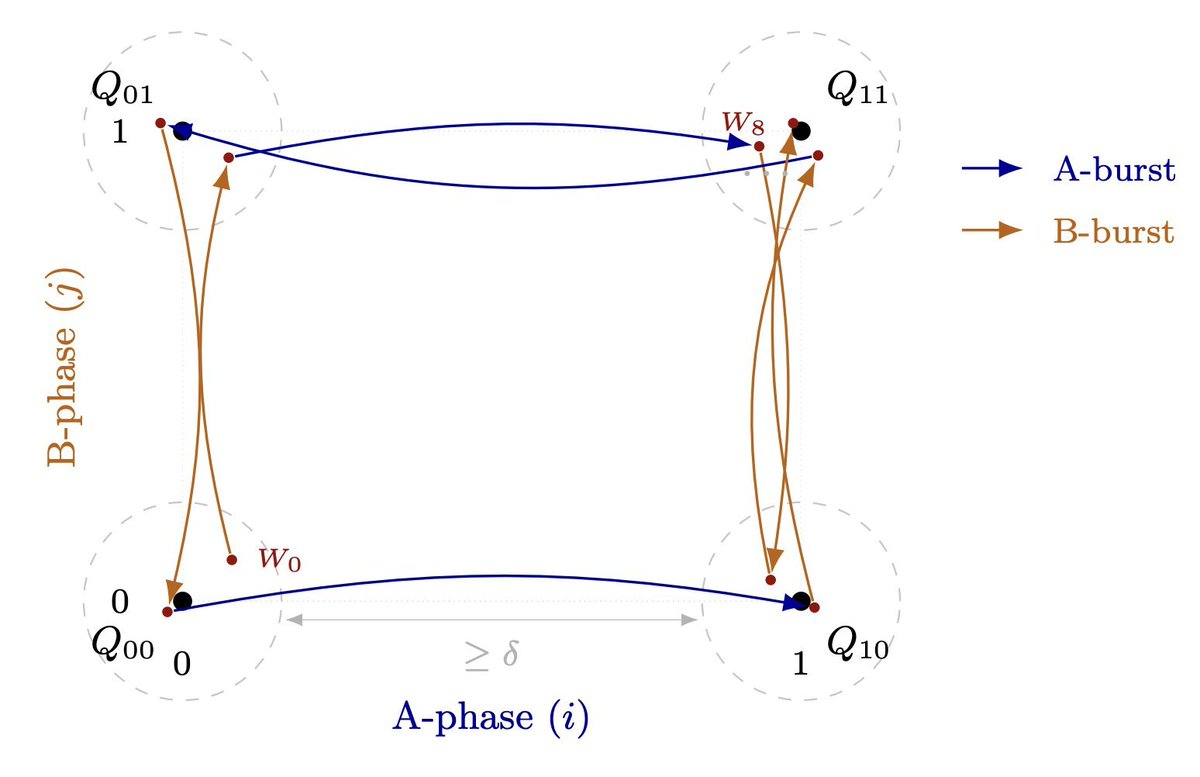
Excited to share an AI-driven solution to the open problem posed by Rudin, Schapire, and Daubechies in COLT 2012: "Does AdaBoost Always Cycle?"
arxiv.org/abs/2604.07055
This was an attempt to push the limits of autonomous mathematical research. It's stunning to see what GPT 5.4 Pro & Opus 4.6 are capable of.
AdaBoost is among the most widely used boosting algorithms, but its asymptotic behavior still isn't fully understood. This particular problem asks if its distributions always converge to a cycle for every {-1, 1}-valued matrix, and has been open for the past 14 years!
Working with GPT and Claude, we identify a counterexample and show that it does not converge with a certificate. What's most striking to me is just how much heavy-lifting the models did to get to the solution. The whole process was also shockingly quick.
This result further signals AI's ability to advance real scientific research. While many Erdős problems have (very impressively) been solved, this exact question was published as an open research problem of real interest to the CS and ML theory communities.
Certificate: github.com/ewang26/AdaBoost Many thanks to @EdgarDobriban for very helpful feedback on this work and his efforts on SolveAll.org. Onwards and upwards!
1
10
539
Asternomic retweeted

Apr 8
Today we are rolling out Dreamina Seedance 2.0 in the U.S.
And your first try is on us:
→ Everyone will have one free trial of Dreamina Seedance 2.0 across CapCut’s app, desktop and web.
→ New users get 90% OFF their first month of CapCut Pro (limited time)
Imagination has no ceiling now. Enjoy creating non-stop.
Access Dreamina Seedance 2.0 in CapCut:
→ AI Lab (app, v17.1.0)
→ Video Studio (web, capcut.com/ai-creator-home)
→ AI Video (app and desktop)
It might take some time for the model to reach everyone.
As the model rolls out, we're partnering with experts and creative communities to learn, iterate, and continuously improve on the ways this model can empower human creativity. Learn more here: capcut.com/newsroom/dreamina…
RT Comment in 4hr to get extra 1000 credit in your DM!
490
397
1,348
692,400
Apr 8
Productivity hack if you use YouTube a lot
Turn off your watch history. When you open the app, you are greeted with nothing but an empty home page (no suggestions)
2
1
9
272
Asternomic retweeted

we're a dense team of 10 jane street engineers, ioi medalists, and sunshine enjoyers down in palo alto.
user numbers up >1,000% since partnering with @fraser
still early, dm me something exceptional you've done if u wanna join!
Apr 6

Poke is OpenClaw for normies.
First AI product I've seen successfully scale on iMessage.
Closed an unannounced $10M round at $300M from Spark in Q1. Congrats!
38
16
610
217,751
1 Oct 2022
1/ This will be an open ended thread, where I choose my favorite AI generated picture of the day (mostly @midjourney) and reveal the prompt. Should be a fun time, this is the first...
WaveKiller: Decimation of the Cybernet in 3021

8
8
66