
C2C Journal aims to create debate and foster the promotion of democratic governance, individual freedoms, free markets, peace and security.
Joined April 2010
- Tweets 3,184
- Following 699
- Followers 2,662
- Likes 183
1,712 Photos and videos





Pinned Tweet

Jan 16
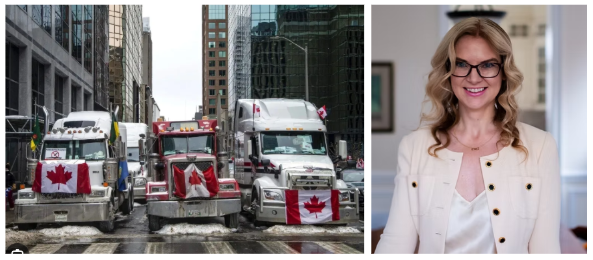
The Federal Court of Appeal has confirmed: the use of the Emergencies Act to crush the Freedom Convoy was unconstitutional. 🇨🇦
A massive congratulations to Christine Van Geyn and the Canadian Constitution Foundation (@CDNConstFound). You have rendered an immense service to the people of Canada by leading this legal fight! ⚖️
Our analysis of the original Federal Court ruling: c2cjournal.ca/2023/04/the-la…
9
30
63
1,691
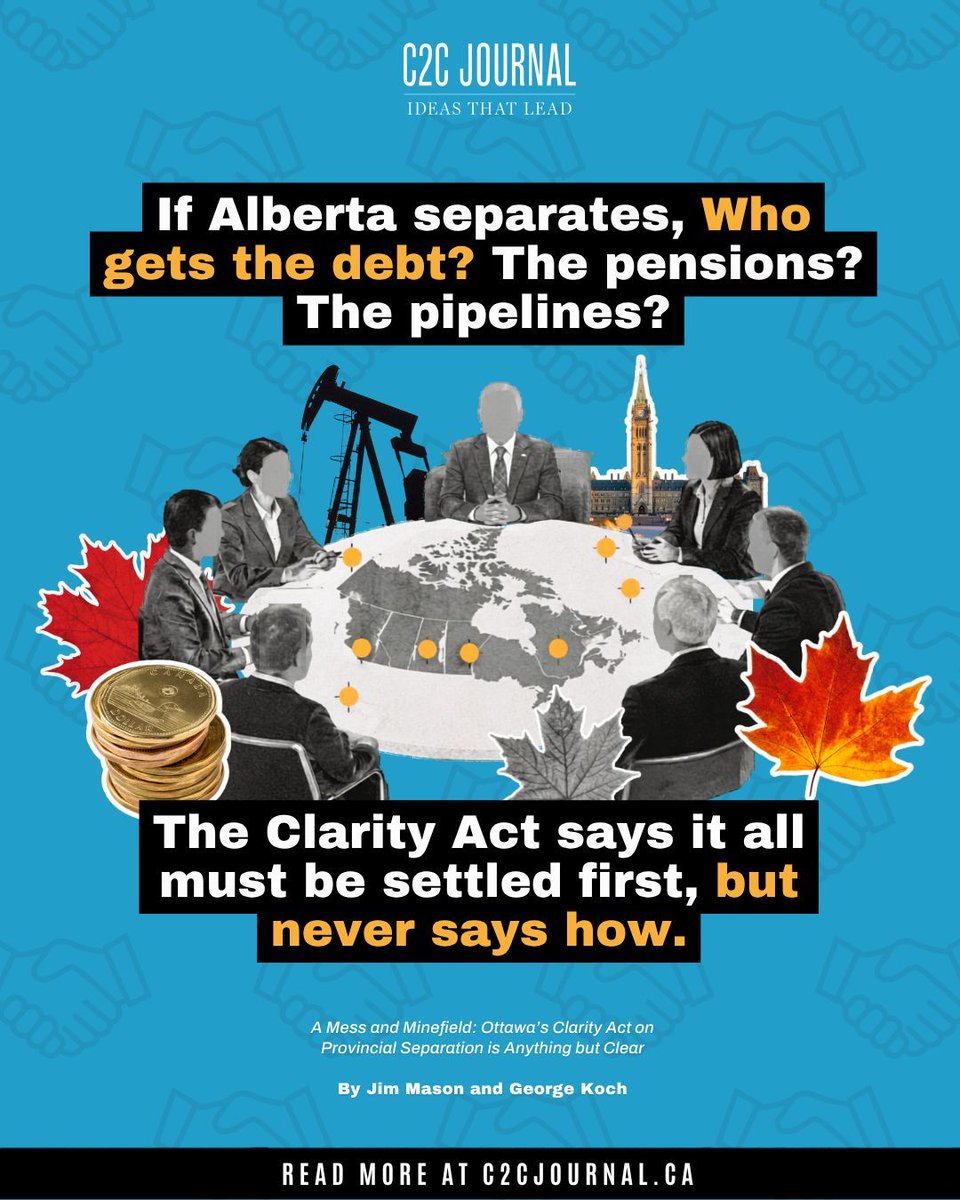
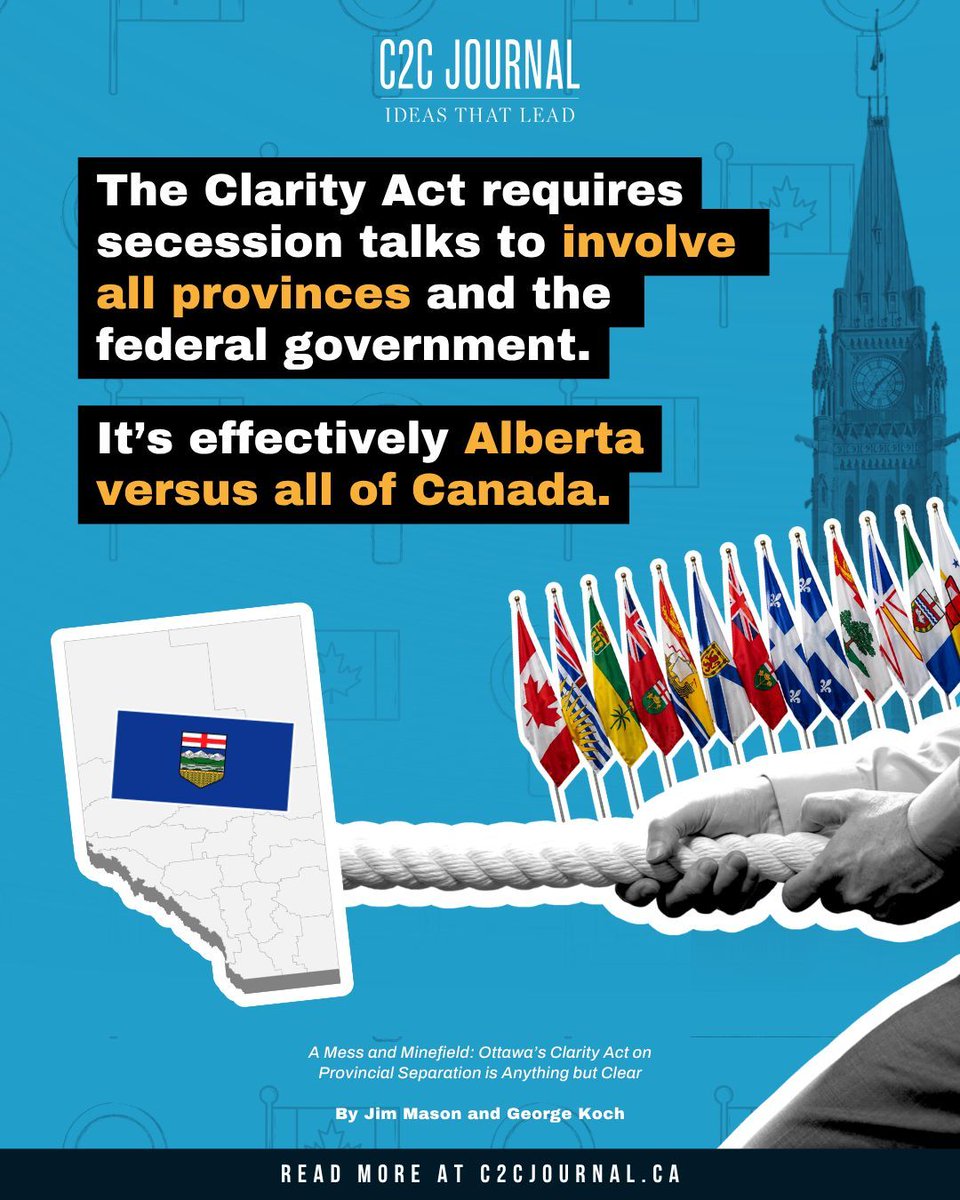
In any secession negotiations, the Clarity Act requires the involvement of all provincial governments and the Government of Canada, along with any other parties Ottawa would deem relevant.
Alberta won't be negotiating its exit with one partner. It will be facing every other province – and whoever else Ottawa chooses to invite.
81
Jun 15
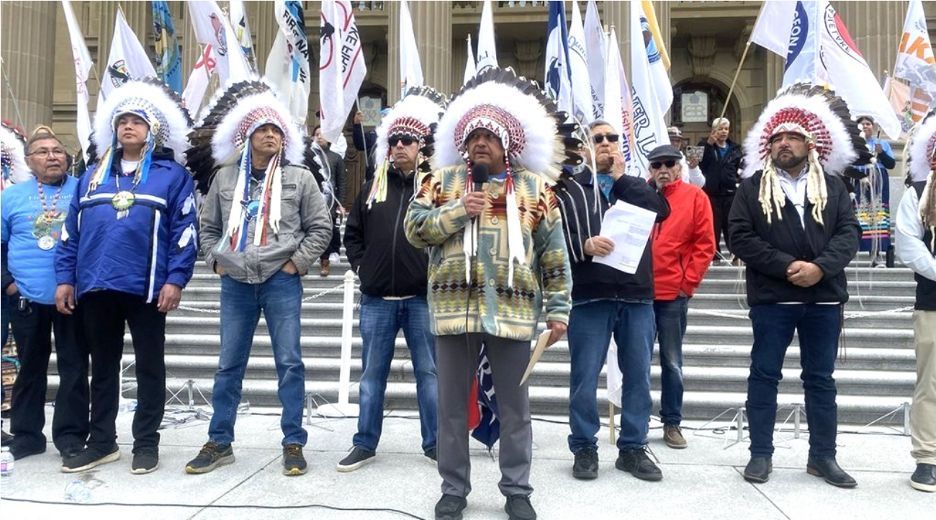
Due to the Clarity Act’s repeated references to safeguarding aboriginal interests, even an overwhelming vote for independence might fail to qualify as a “clear majority” in Ottawa’s judgment. Shown, Confederacy of Treaty 6 First Nations Chief Greg Desjarlais speaks at the First Nations anti-separation rally in Edmonton, May 2026.
48
Jun 14
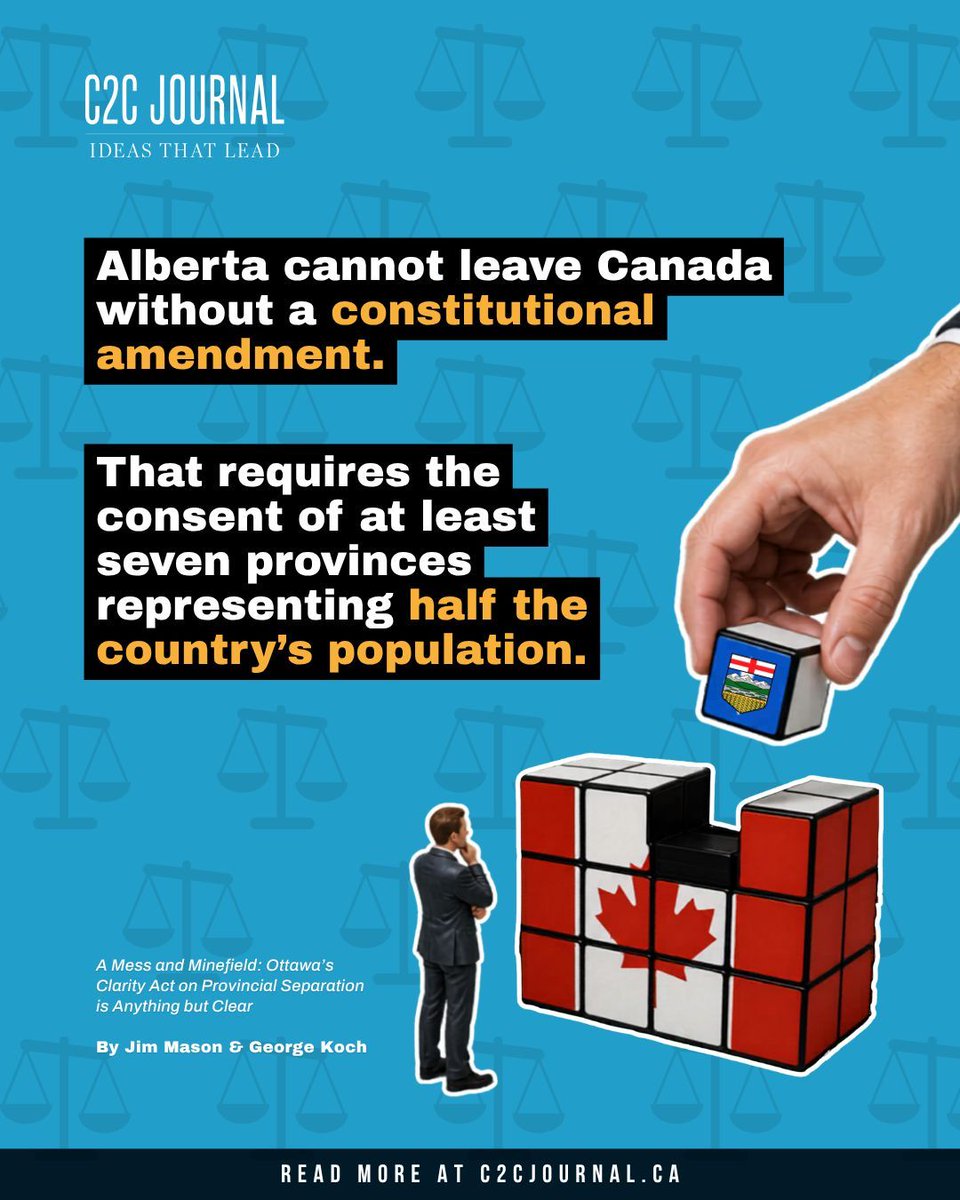
For a province to secede from Canada, an amendment to the Constitution of Canada would be required.
The Clarity Act is silent on the specific approval threshold, implying that Canada’s existing "7/50" amending formula would be followed, requiring agreement from the Government of Canada plus the legislatures of a minimum of seven provinces collectively representing at least 50 percent of Canada’s population.
Was this designed to be an impossible task?
Read more at c2cjournal.ca/2026/05/a-mess…
8
4
5
650
Jun 13
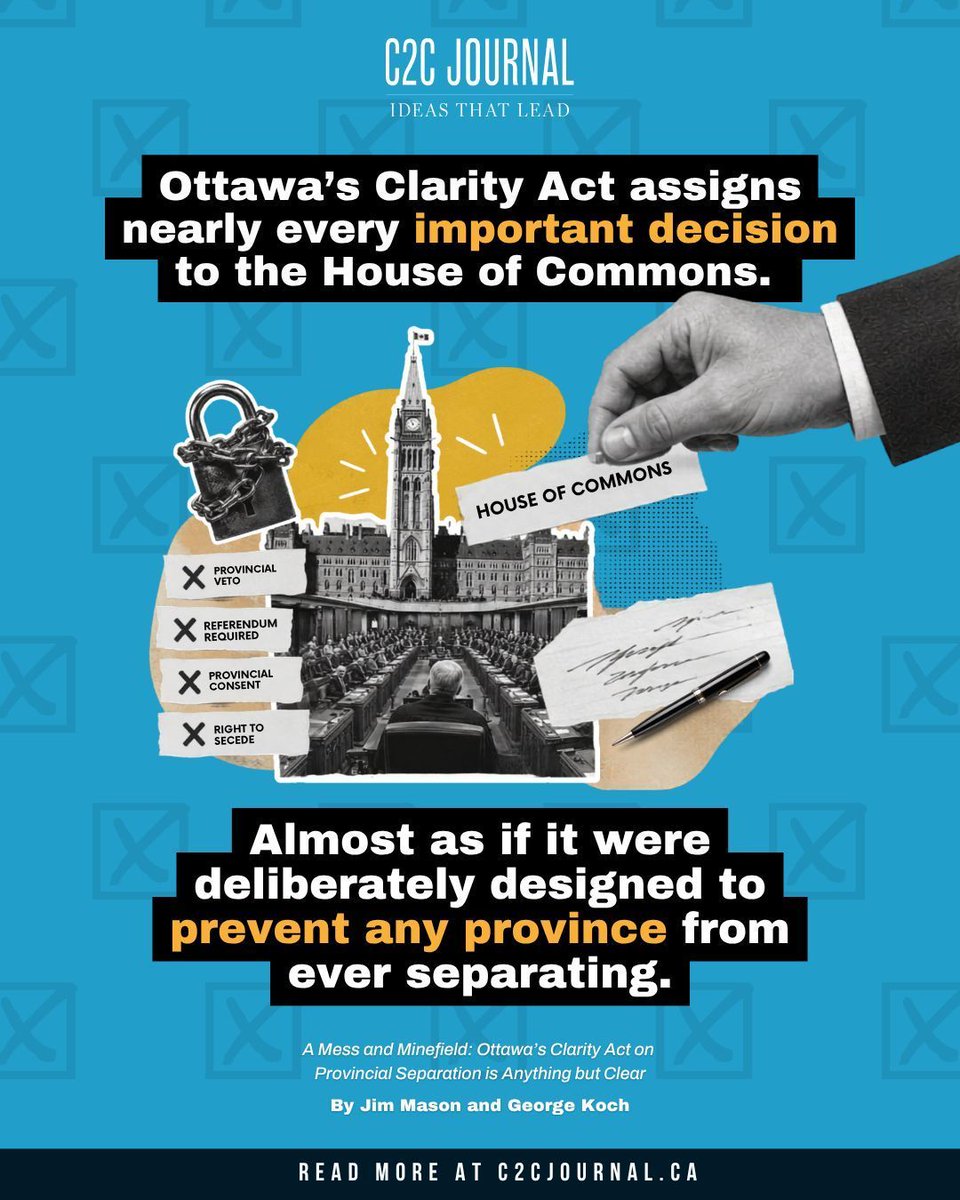
The Clarity Act empowers the House of Commons, with the Prime Minister's office largely in charge, to decide whether the secession referendum question is "clear", whether the result reflects a "clear majority", whether negotiations may begin, who gets to weigh in at each stage, and whether separation terms are resolved.
All while providing no path to provincial independence.
In short, even a decisive "Yes" vote may not be enough to leave. Ottawa calls the shots, while the province trying to separate gets no say.
49
Jun 13
The Clarity Act, passed in 2000 by the Liberal government of Jean Chrétien, is widely believed to provide a legal pathway for a province to leave Canada. But does it? As Jim Mason and George Koch explain, a clear-eyed reading reveals a law riddled with vague and ambiguous provisions that grant Ottawa near-unilateral control over any secession process. Rather than a roadmap to independence, the Act looks more like a constitutional minefield.
Read more at c2cjournal.ca/2026/05/a-mess…
138
Jun 12
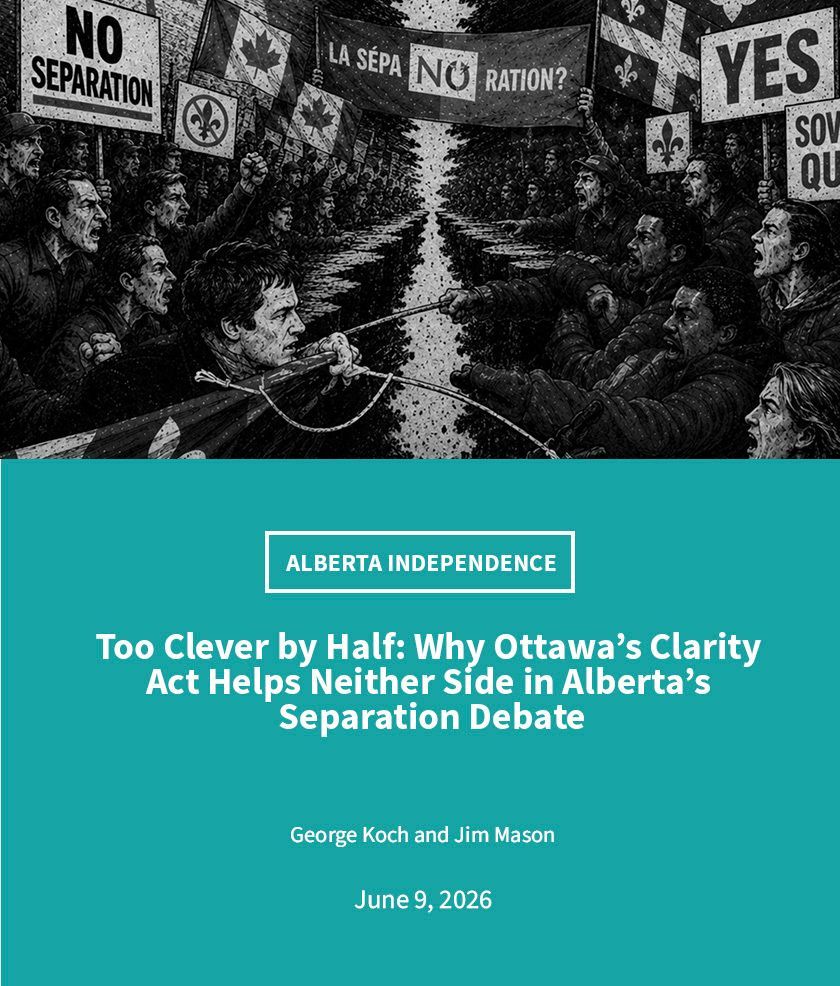
The federal Clarity Act is often see as a way to facilitate a province's orderly exit from Canada. But it is really a mess designed to prevent secession. Its extreme biases, once known, could well ignite rather than dampen separatist passions.
Canada’s Clarity Act arose from fears of Quebec unilaterally leaving Canada following its 1995 referendum. But it ignored the opposition Reform Party’s 1996 bill for clear, fair steps. In 2000 the Liberal government passed its own legislation, designed to crush secession movements.
The Supreme Court had affirmed in 1998 that though a UDI was unlawful, if a province’s population expressed a clear desire to secede, Ottawa would be obliged to negotiate in good faith. But it left defining what constitutes a “clear majority on a clear question” to elected politicians.
But then the Clarity Act also failed to define “clear question” and “clear majority” – unlike Reform’s bill which had provided a precise question and specified a simple majority. The Clarity Act instead assigns nearly all decision-making to the federal government – with no provincial appeal.
This means any province seeking independence will not control the process, as Ottawa vets questions and can seek further anti-independence allies. Ottawa would surely use such a process to avoid secession negotiations – and if needed, probably negotiate in bad faith.
“Failure” of the process, after all, represents victory for Ottawa – the status quo! The Clarity Act creates a system where failure at any step serves only one side. But couldn’t such extreme bias backfire by inflaming separatist passions and delivering not a united country but a UDI?
Read the full story:
c2cjournal.ca/2026/06/too-cl…
1
1
76
Jun 12
Is Alberta on the fast track to nationhood?
Alberta separatists lined up across the province to sign the petition, convinced a referendum win is the first step on an orderly “roadmap” to independence.
But the Clarity Act is less roadmap than minefield. It provides no definition – let alone an example – of what constitutes a “clear” question. Nor does it establish any threshold for a “clear majority” to capture a “clear expression of a will” of the province.
The views of every other province, Indigenous groups and even unspecified parties brought in by Ottawa must be “taken into account.”
Finally, the law provides no finish line on when and how negotiations will reach an end.
A pressing question, therefore, is what really happens the day after a “Yes” vote?
Read the full story:
c2cjournal.ca/2026/05/a-mess…
1
76
Jun 11
The 1,500-word Clarity Act – introduced by the Liberal government of Jean Chrétien five years after Quebec’s nearly-successful vote to separate in 1995 – consists mainly of vague, open-ended provisions granting Ottawa near-unilateral power over any provincial secession attempt. Shown, supporters gather boxes of signatures ahead of their submission to Elections Alberta, Edmonton, May 2026.
58
Jun 11
Premier Danielle Smith's recent announcement confirms that a public vote on Alberta's relationship with Canada is imminent. Her plan for an October plebiscite, asking Albertans whether to hold a future constitutional separation vote, sets the stage for a critical debate. This move ensures that the question of secession will remain at the forefront of Alberta’s political agenda.
Read more at c2cjournal.ca/2026/05/a-mess…
1
56
Jun 10
Canada’s secession rules – brought together in the Clarity Act – were shaped after Quebec’s near-vote to leave in 1995 and the Supreme Court’s later opinion that a unilateral declaration of independence would be unlawful.
That means a province cannot simply vote itself out of Canada.
Even after a successful referendum, independence would require a constitutional amendment and a complex process involving multiple and unspecified actors – all standing between the province and separation.
78
Jun 10
Richmond Shakespear, at the age of 29, bluffed a Khan into freeing 416 hostages.
Today, we need a warning label to operate a chainsaw. Progress.
Read our latest story here: c2cjournal.ca/2026/05/bubble…
29
Jun 9
Should negotiations for secession ever begin, the Clarity Act specifies they must involve “at least” the governments of all provinces and the Government of Canada. Such open-ended wording enables the federal government to add an unlimited number of other parties, creating a potential multilateral phalanx of opposition to the separating province. The Act also says nothing about how negotiations are to conclude. Words such as “agreement,” “settlement” or “deal” appear nowhere in the legislation, suggesting its framers may never have intended the process either to begin or to end.
Read more at c2cjournal.ca/2026/05/a-mess…
52
Jun 9
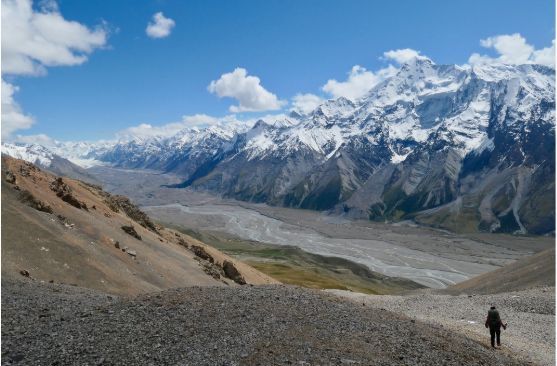
Adventure is a spirit, not a place. C2C Journal author Murray Lytle travelled to the Tien Shan Mountains of Kyrgyzstan at over 4,000 metres above sea level, waking gasping for air through the night. Embracing the unknown requires only curiosity and an openness to the world around us. Those things can still be found, if we choose to look.
Read his latest story on how safety culture has destroyed our sense of adventure: c2cjournal.ca/2026/05/bubble…
42
Jun 8
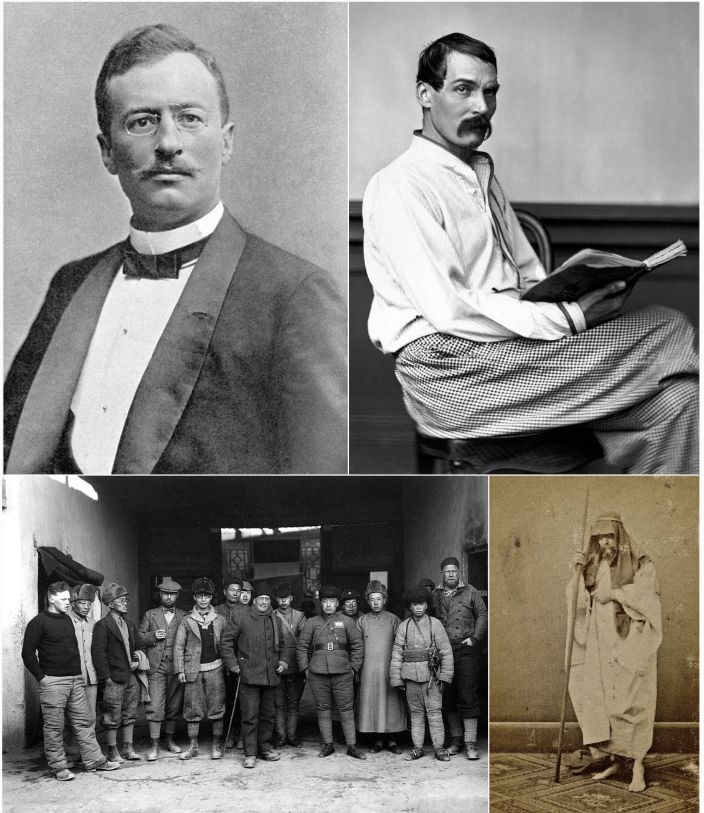
Sven Hedin (top left) mapped rivers and uncovered lost Silk Road cities across Central Asia.
Richard Francis Burton (top right) visited Mecca in disguise and searched for the source of the Nile.
Both were celebrated as public heroes, their adventures fuelling a vast public appetite for tales of exploration.
Read our latest story here: c2cjournal.ca/2026/05/bubble…
35
Jun 7
The Clarity Act sets terms and conditions for secession negotiations, including the division of assets and liabilities, border changes, and questions concerning Indigenous peoples and minorities. Yet the same Act grants Ottawa near-unchecked power by failing to define when those conditions have been satisfactorily addressed. This critical ambiguity serves as a powerful federal leverage point, enabling the indefinite obstruction of any provincial independence bid.
Read more at c2cjournal.ca/2026/05/a-mess…
69
Jun 7
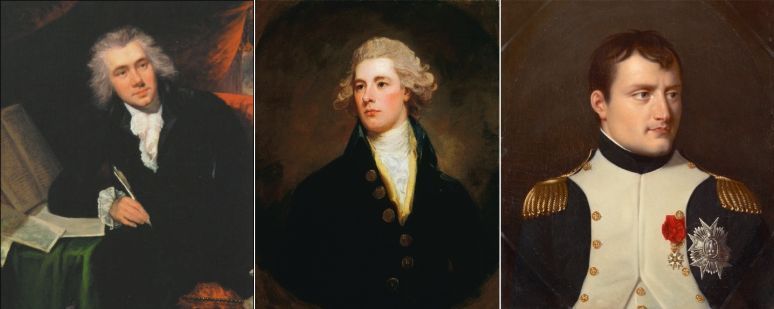
In 1780, British abolitionist William Wilberforce (left) was elected to parliament at just 21 years of age, while his friend William Pitt the Younger (middle) became Prime Minister at 24, the exact same age Napoleon Bonaparte (right) became a general.
These historic achievements stand as a rebuke to today’s over-weaning safety culture which prolongs dependence and fosters a state of perpetual childhood.
Read our latest story here: c2cjournal.ca/2026/05/bubble…
1
1
53
Jun 6
British author Peter Hopkirk profiles dozens of bold young men who traversed deserts, negotiated lofty mountain passes, and entered dangerous cities in disguise at great personal risk. These historical figures undertook extraordinary risks because they were motivated by an intoxicating combination of patriotism, duty and religion. This shared allegiance to a higher purpose stands as a direct challenge to contemporary Canada, where a creeping safety culture has successfully eroded the virtues that once inspired individuals to face the unknown.
Read our latest story here: c2cjournal.ca/2026/05/bubble…

46
Jun 5
Young adults once dreamed of hitchhiking across the continent or joining a travelling circus in search of new experiences.
Modern youth have replaced that urge with Instagrammable gap year vacations, luxury cruises and free spending on credit cards while receiving a simulacrum of adventure on a fixed schedule.
The shift from purposeful exploration to superficial thrill-seeking reflects a society that has traded genuine risk tolerance for a curated, risk-averse safety culture.
Read our latest story here: c2cjournal.ca/2026/05/bubble…

31