Global Health and Data Science | #SDG5 #SDG3 #DigitalHealth #CitizenScience Research Lead at UNU IIGH.
- Tweets 1,010
- Following 1,015
- Followers 413
- Likes 1,997





















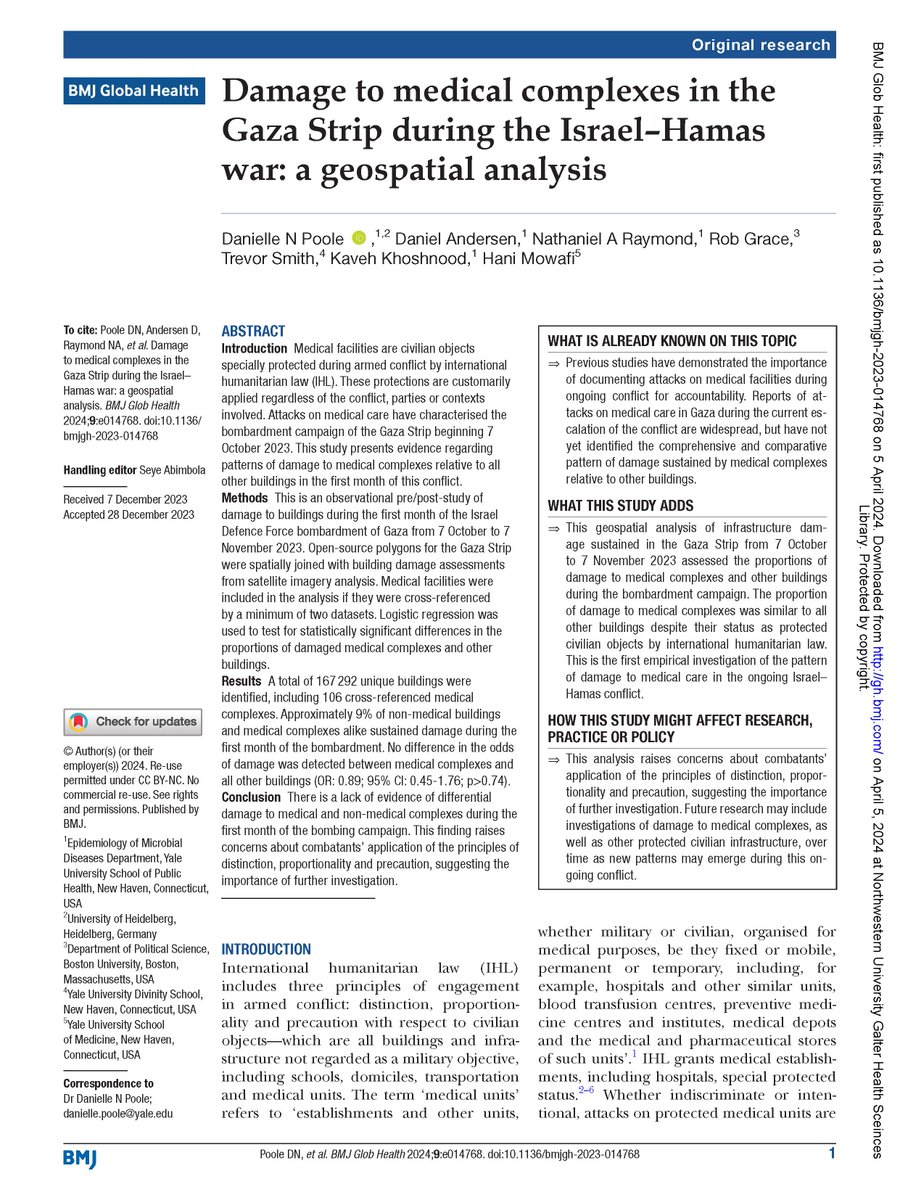
ALT First page of an article titled "Damage to medical complexes in the Gaza Strip during the Israel–Hamas war: a geospatial analysis" Results A total of 167 292 unique buildings were identified, including 106 cross-referenced medical complexes. Approximately 9% of non-medical buildings and medical complexes alike sustained damage during the first month of the bombardment. No difference in the odds of damage was detected between medical complexes and all other buildings (OR: 0.89; 95% CI: 0.45-1.76; p>0.74). Conclusion There is a lack of evidence of differential damage to medical and non-medical complexes during the first month of the bombing campaign. This finding raises concerns about combatants’ application of the principles of distinction, proportionality and precaution, suggesting the importance of further investigation.