
LEFT BLANK FOR xL TO WRITE A NEW STORY
Joined December 2022
- Tweets 9,956
- Following 406
- Followers 327
- Likes 30,044
600 Photos and videos









xL retweeted

One thing I like about these Modulr AMAs is that they aren’t just status updates.
They’re a chance to connect the dots between everything that’s been happening across the ecosystem.
Over the past few weeks alone we’ve seen,
→ Modulr.Core continue evolving through community-driven updates
→ The first Modulr.Gig demo go live, giving users a look at the network’s local-first work marketplace
→ Modulr Impact turn online participation into real world action
→ Continued eMDR burns reinforcing the project’s commitment to transparency and accountability
Now it’s time to hear what’s next.
If you’ve been following the project, this is your opportunity to ask questions directly,
Challenge assumptions, share feedback and get a clearer picture of where Modulr is heading.
Friday, 1 PM ET / 5 PM GMT
@Theundline @TheLiamDevlin
Big updates, bigger conversations, see you in the AMA. 💛
Jun 15

x.com/i/spaces/1wGWjjnVEgeKQ…
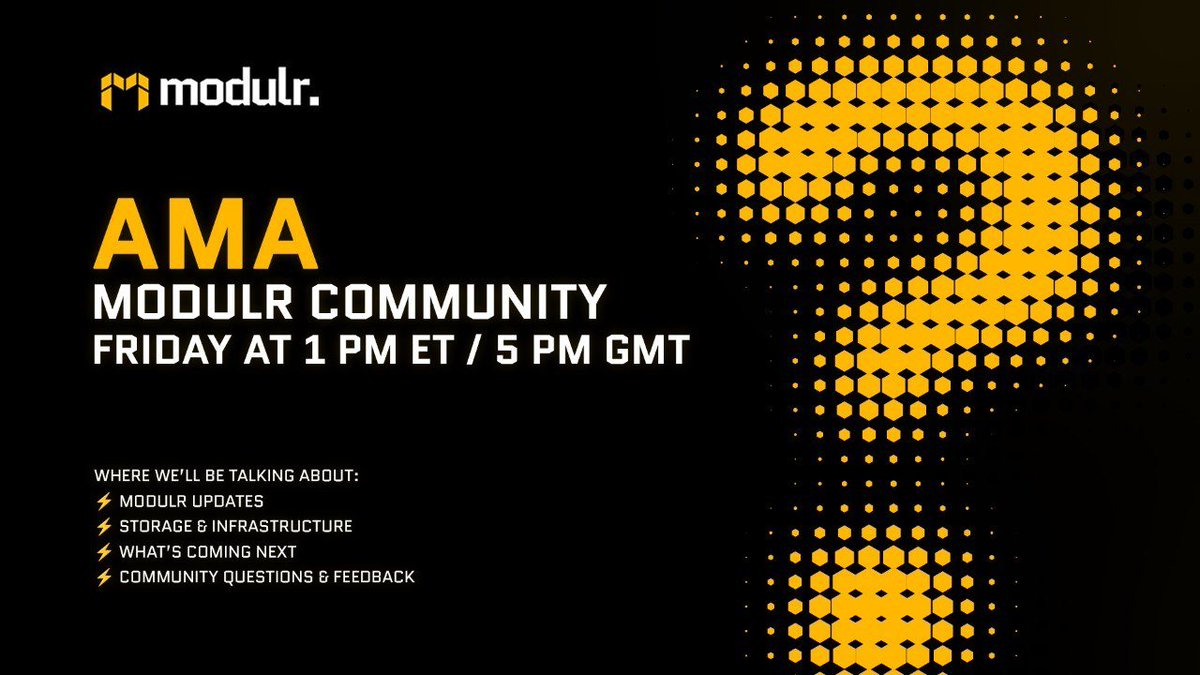
👀 Big updates. Bigger conversations.
Join the Modulr Community AMA this Friday at 1 PM ET / 5 PM GMT.
We'll be sharing recent developments, discussing what's ahead, and answering your questions live.
What would you like the team to address? Drop your questions below or drop them in Telegram at t.me/modulr_robotics
3
5
51

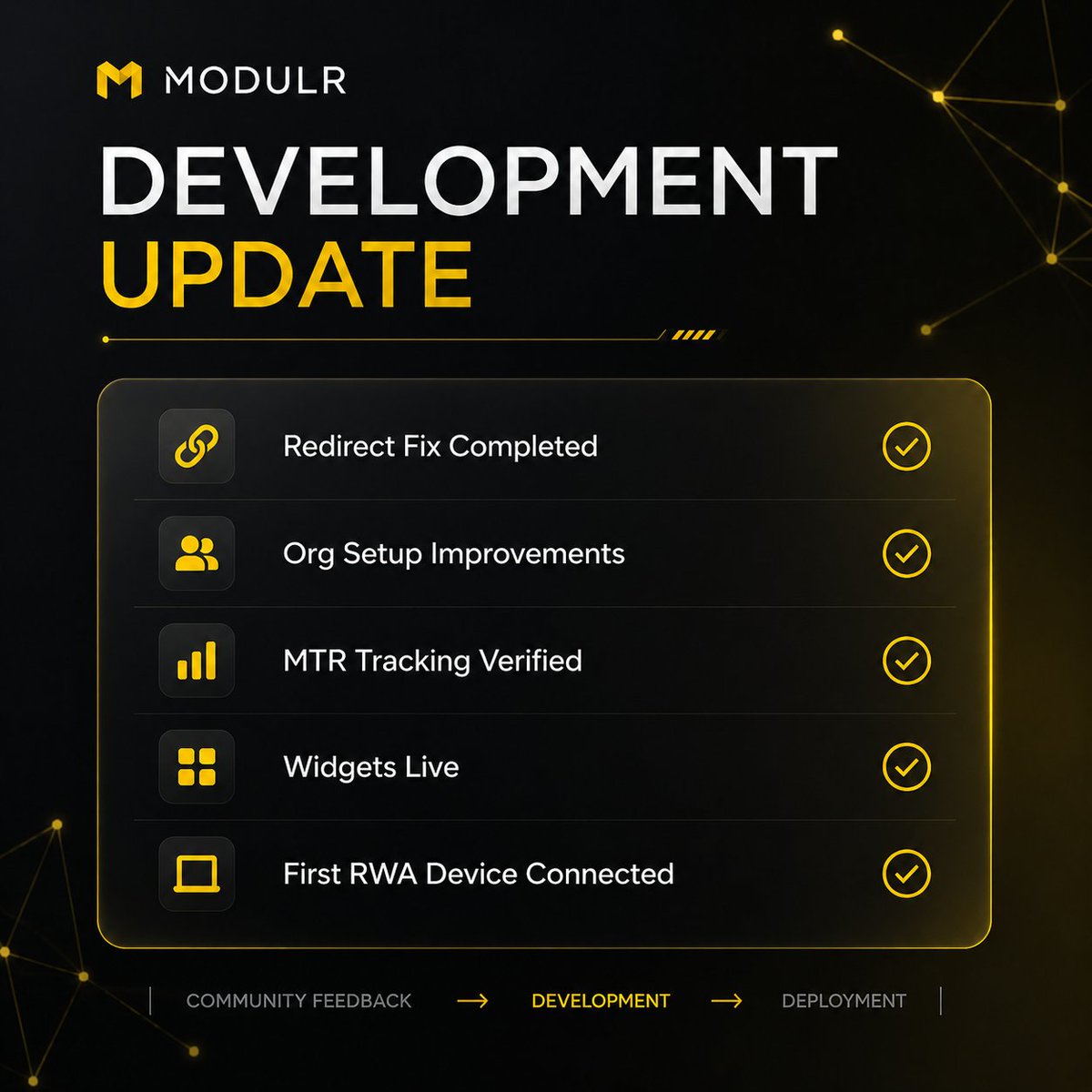
Yesterday we spent a lot of time working with @Theundline, testing features, reporting bugs and helping refine the platforms. Wanted to share some of the things we fixed and discovered:
⭐️The Gig and Asset platforms weren't redirecting properly to the core website through the direct link. I tested it with mobile data, wifi and VPN. Now the issue has been fixed.
⭐️ While creating an organization, we identified the need for customizable MTR purchase amounts for large buys. Since setting up orgs requires a significant amount of MTR, this has now been noted.
⭐️ We also investigated reported MTR balance glitches. After tracking everything down, purchase history and balance tracking appear to be working correctly. Somehow my MTR balance jumped from 690 to 10,000... reward or bug? 😭
⭐️ The widget section is looking great. Crypto prices, stocks, news, weather and more are all running smoothly. A few refinements are planned and we'll roll that out soon.
Huge bonus update:
>> We successfully brought the first realworld asset (a laptop) onto the Modulr network. It took quite a while to get everything online but team is now communicating through the client agent software. Soon users will be able to connect their own devices directly to the network.
Wanted to share these updates so everyone can follow the progress being made across the platform. More testing, improvements and feedback to come as development continues.
@Modulr_Robotics @Theundline @TheLiamDevlin @radford714212
5
5
13
63
xL retweeted
How Consent Based Communication Can Fix Modern Social Platforms
Modern communication platforms have made it easier than ever to connect with people but they have also created a new problem: attention overload.
Our inboxes, DMs, emails, notifications, and community feeds are spread across multiple platforms, while spam, unwanted outreach, and low quality interactions continue to increase. In many cases, users have little control over who can reach them or how promotional content appears.
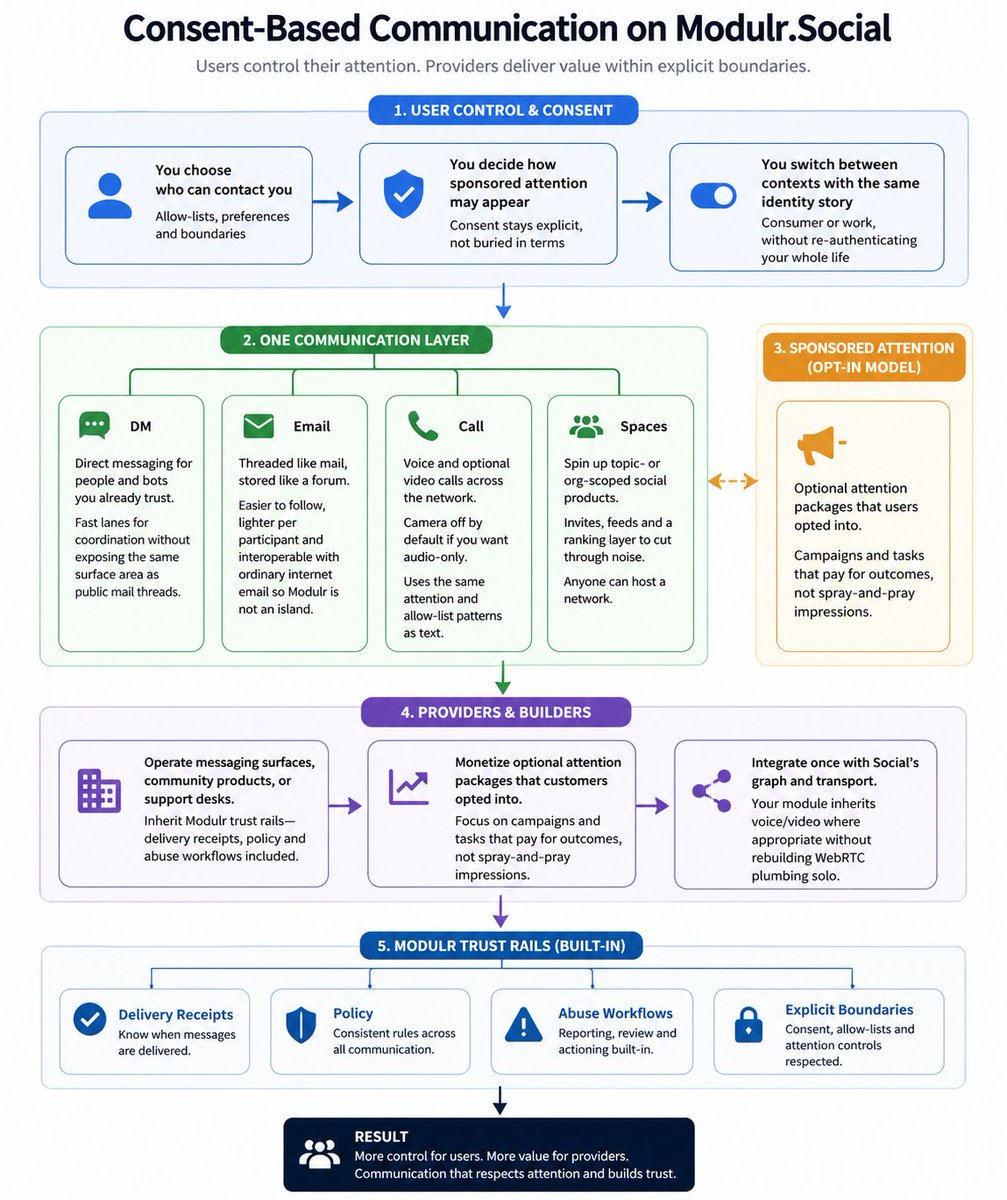
Modulr.Social explores a different approach by placing consent at the center of communication.
Instead of treating user preferences as something buried inside a terms update or hidden settings menu, Modulr.Social allows users to choose who can contact them and how sponsored attention may appear. The objective is simple: make consent explicit and give people more control over their digital attention.
This philosophy extends across the communication layer. DMs, email threads, voice calls, video calls, and community spaces are designed to operate within the same ecosystem rather than forcing users to manage a growing collection of disconnected tools and inboxes.
For users, this means:
• Keeping DMs, mail threads, voice, and video interactions within a unified communication layer.
• Choosing who can contact them and under what conditions.
• Moving between personal and work contexts while maintaining the same identity story instead of constantly rebuilding trust and re authentication across platforms.
For providers and builders, Modulr.Social offers infrastructure that can inherit delivery receipts, policy frameworks, and abuse handling workflows through Modulr trust rails.
Messaging surfaces, support desks, and community products can integrate with Social's graph and transport layer rather than rebuilding core communication systems from scratch.
The model also introduces optional attention packages that users have actively opted into. Instead of relying on traditional spray and pray advertising, campaigns and tasks can focus on outcomes while respecting user consent.
At its core, the idea is not simply about reducing spam. It is about creating a communication environment where attention is treated as something valuable, permissions are transparent, and interactions happen with clear expectations on both sides.
As digital communication continues to evolve, an important question remains:
Should access to a person's attention be assumed by default, or should it be earned through explicit consent?
@Modulr_Robotics
@Theundline @radford714212
2
3
5
31
xL retweeted
What makes a great Modulr Ambassador?
It's not the title.
It's what happens after you earn it.
✅ Create content
✅ Join conversations
✅ Support the community
✅ Stay informed
✅ Show up consistently
The title isn't the finish line.
It's the beginning of a greater responsibility.

12
11
42
483
xL retweeted
Spice Flow x @reppo private beta mainnet is now live. 🔥
This is the first step towards a future that Spice Flow enables: native multi-chain UX made easy.
If eligible, you can now access Reppo directly from Citrea, Arbitrum, and Base.
No extra steps, pure flow.
Details ↓
113
101
214
4,980
xL retweeted
As we have discussed Modulr Gig a few days ago
@Modulr_Robotics launched another features to test to the public
⭐️Modulr. Assets ⭐️
It is a digital shop and library where you can buy and own unique items created on the network.
Items are not limited to some digital arts.
There are variety of useful files such as music tracks, videos , software tools and Legal templates.
As we already know that along with this modulr assets
It also offers us to connect real world hardware like linking their own machines and devices to do the actual work and earn rewards.
✅For safety and trustworthy system every item listed uses a simple color coded system (from Gray to Gold) so you know how securely verified and protected that specific contract or creator is.
You can give it a try 👇
assets.modulr.cloud/discover…
Btw Community AMA is on Friday
Bring your questions to us
Dont forget to attend AMA
2
2
12
65

LG Liquidity Gap Trading Group Discord invite...always 💯 FREE...come join and trade with the best in the game for crypto or stocks
discord.gg/ErsEUGPkqM
4
7
145
You have minted something valuable.
But now comes the hard part.
Where does your ownership actually live?
Who holds the keys?
What happens if rights are disputed?
How do you prove custody years from now?
And what happens when assets need to move beyond a single chain?
With Modulr.Assets you start with the ownership first, then build everything else around it.
🟡 Mint tiered digital assets with clear ownership and protection models.
🟡 Choose between self custody and hosted custody based on how much control you want.
🟡 Attach Guardians and counsel relationships directly to the asset's legal story.
🟡 Escalate IP disputes through structured claims instead of anonymous support tickets.
🟡 Bridge assets and value across networks without rebuilding ownership records from scratch.
🟡 View selfcustody positions, hosted balances and crosschain assets from a single wallet surface.
The result isn't just another place to mint.
It's a system designed to keep ownership legible as assets move, value grows and stakes get higher.
>> assets.modulr.cloud launched today!
Creators can now build, manage, register and mint digital assets inside the Modulr ecosystem.
Our team is actively looking for feedback on what works, what doesn't and what should come next. Do you want to suggest something? Join us here: t.me/modulr_robotics
Jun 16
Modulr continues building.
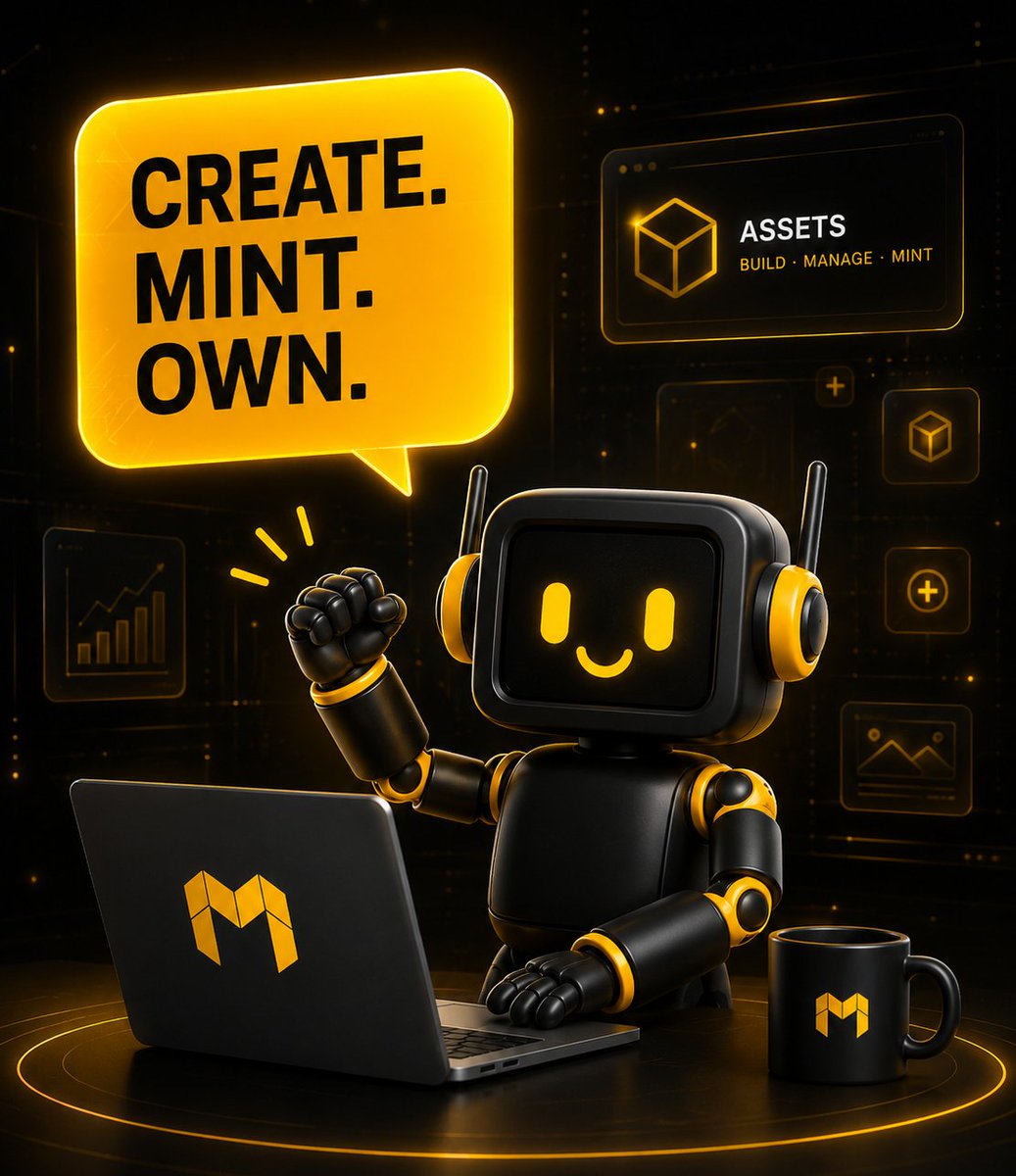
We're excited to introduce Modulr Assets.
Assets is the foundation for digital ownership within the Modulr ecosystem which is a place where creators can build, manage, list, and mint their own assets.
This is an early release, and community feedback is critical.
We want to know:
• What feels intuitive?
• What feels confusing?
• What should we add next?
• How can we make the experience better?
Open Modulr, head to Apps → Assets, and start exploring or go to assets.modulr.cloud
4
5
15
126
xL retweeted

Jun 16
Modulr continues building.
We're excited to introduce Modulr Assets.
Assets is the foundation for digital ownership within the Modulr ecosystem which is a place where creators can build, manage, list, and mint their own assets.
This is an early release, and community feedback is critical.
We want to know:
• What feels intuitive?
• What feels confusing?
• What should we add next?
• How can we make the experience better?
Open Modulr, head to Apps → Assets, and start exploring or go to assets.modulr.cloud
9
13
46
1,080
xL retweeted

Jun 16
A lot of the attention this week is understandably on @Modulr_Robotics. Assets and Modulr. Office.
What caught my eye, though, was the Client Agent.
Built in Rust.
Focused on performance.
And part of a much bigger vision:
➡️ Connect your own devices to the network
➡️ Securely share files between them
➡️ Become part of a decentralized ecosystem
That’s the kind of update I pay attention to.
Not because it’s flashy.
Because it’s infrastructure.
And infrastructure is what makes everything else possible.
$MODULR
1
1
12
145
xL retweeted

Jun 16
The Modulr team wants to hear from YOU 🫵.
This Friday we're hosting an AMA and the more questions we get ahead of time, the better the conversation will be.
Got questions about Modulr.Gig? The roadmap? Real-world assets? eMDR liquidity?
🧵👇
3
1
14
99
xL retweeted

Jun 15
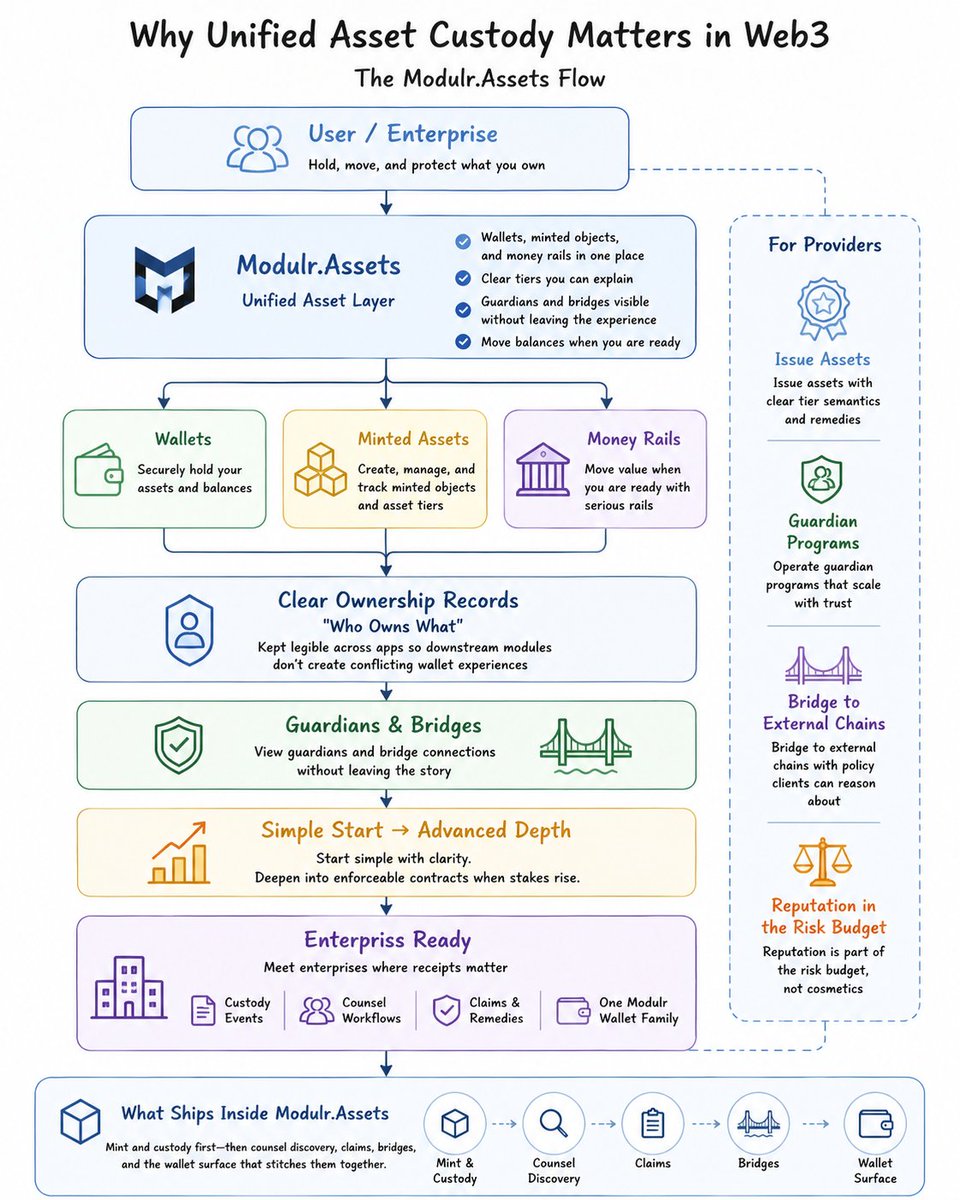
Why Unified Asset Custody Matters in Web3
Managing digital assets often becomes complicated when wallets, minted objects, and money rails are spread across different systems. Ownership records can become difficult to follow, and different applications may introduce their own wallet experiences, creating unnecessary friction.
Modulr.Assets
approaches this differently.
It brings wallets, minted objects, and money rails into a single surface where users can:
• Hold, move, and protect what they own
• Understand clear asset tiers and ownership structures
• View guardians and bridges without leaving the same experience
• Move from simple asset management to enforceable contracts as requirements grow
A key idea is keeping "who owns what" legible across applications. This helps downstream modules avoid creating conflicting wallet experiences and keeps ownership easier to understand.
For providers, Modulr.Assets supports:
• Asset issuance
• Guardian programs
• Bridges to external chains
• Published tier semantics and remedies
that validators and clients can reason about
As trust requirements increase, reputation becomes part of the risk budget rather than a cosmetic feature.
For enterprises, the focus extends beyond wallets. Custody events, counsel workflows, and wallet surfaces are designed to remain part of one Modulr family while supporting situations where receipts and accountability matter.
Example:
Imagine an organization issues a digital asset. Instead of managing ownership records, custody processes, guardian visibility, and external chain connections through separate systems, these functions can exist within the same Modulr.Assets
environment, making ownership and asset movement easier to understand and track.
At its core, Modulr.Assets starts with minting and custody, then expands into counsel discovery, claims, bridges, and the wallet surface that connects everything together.
@Modulr_Robotics @Theundline
@radford714212
2
1
12
97
xL retweeted

Jun 15
Today we're announcing that our co-founder Karthik Pariti is stepping down from his active role at Spicenet.
Karthik laid the foundation for what Spicenet is today. We’re deeply grateful for his work and vision and wish him continued success.
Our co-founder Matt McConnell will continue to lead the company forward, backed by our exceptional team of engineers, designers, and marketers.
We know you’ve been waiting for the first Spice Flow integrations to go live. We’re impatient to start shipping too.
Onward 🌶️
154
121
291
8,526
xL retweeted
Jun 15
x.com/i/spaces/1wGWjjnVEgeKQ…
👀 Big updates. Bigger conversations.
Join the Modulr Community AMA this Friday at 1 PM ET / 5 PM GMT.
We'll be sharing recent developments, discussing what's ahead, and answering your questions live.
What would you like the team to address? Drop your questions below or drop them in Telegram at t.me/modulr_robotics
8
15
54
1,416
xL retweeted

Jun 15
Gmodulr community
This week was amazing in
@Modulr_Robotics
✅modulr impact ended this week and members shows much kind gestures all around the world.
Btw , Keep helping others more
✅🏆winners announced on Friday
@Mareshahweb3 @ARPAANNN and @Vinaysingh1610
Congratulation guys
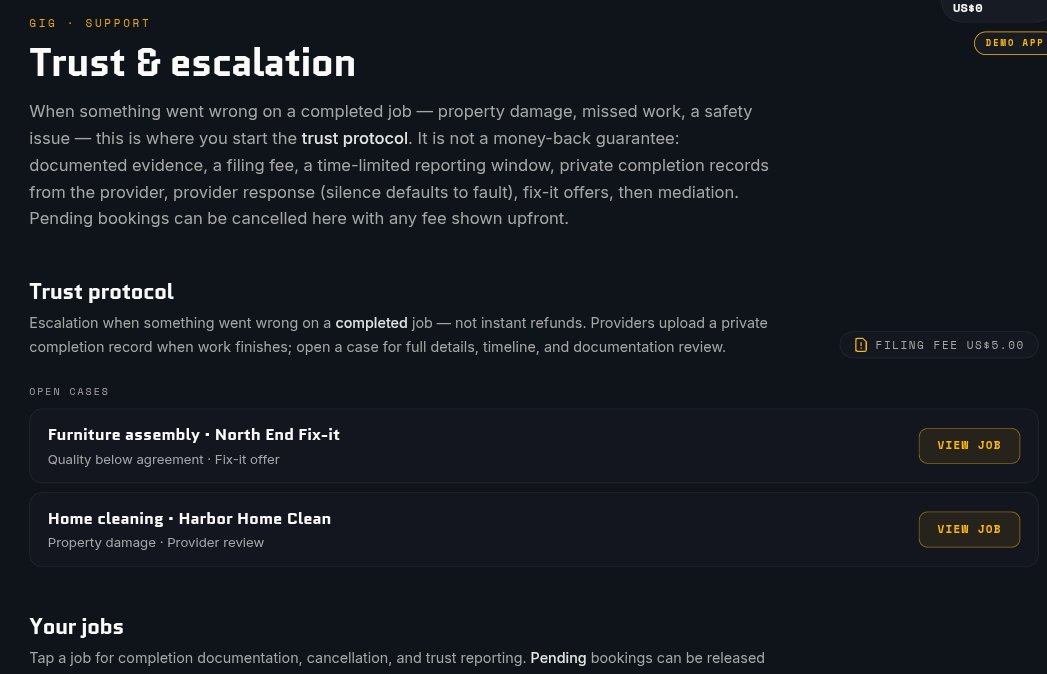
✅modulr Gig demo released to the public
Anyone can test and give their feedback about it
gig.modulr.cloud/login?retur……
✅In the meantime buy some $eMDR
Team keeps burning tokens every week 🔥
You can setup and register your won machine on Modulr platform to lend it or rent other machine for use .
There is no hidden fees
Pay what u see on platform
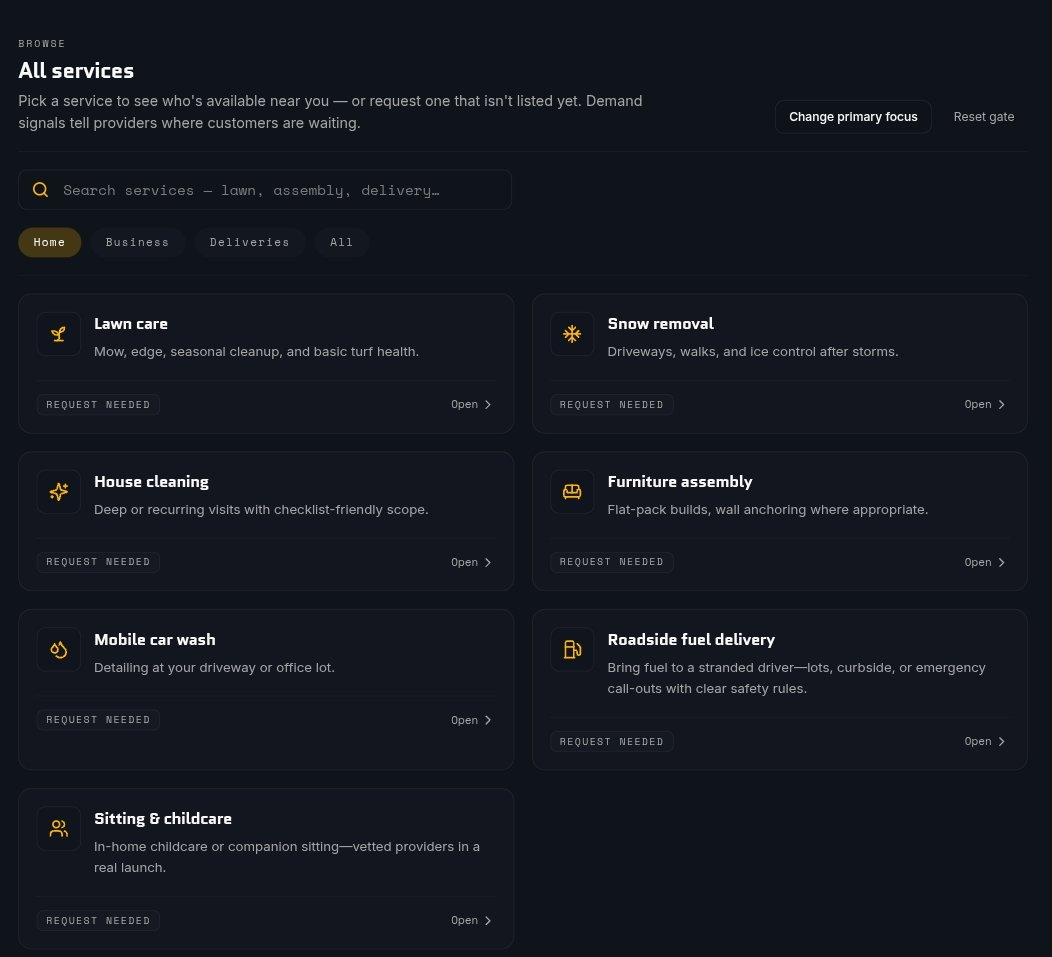
And you can request any services you want to lend or rent other than listed ones.
Your feedback matters to us
Let the world know about your machines
No machine remains idle now
@Theundline
4
2
26
336
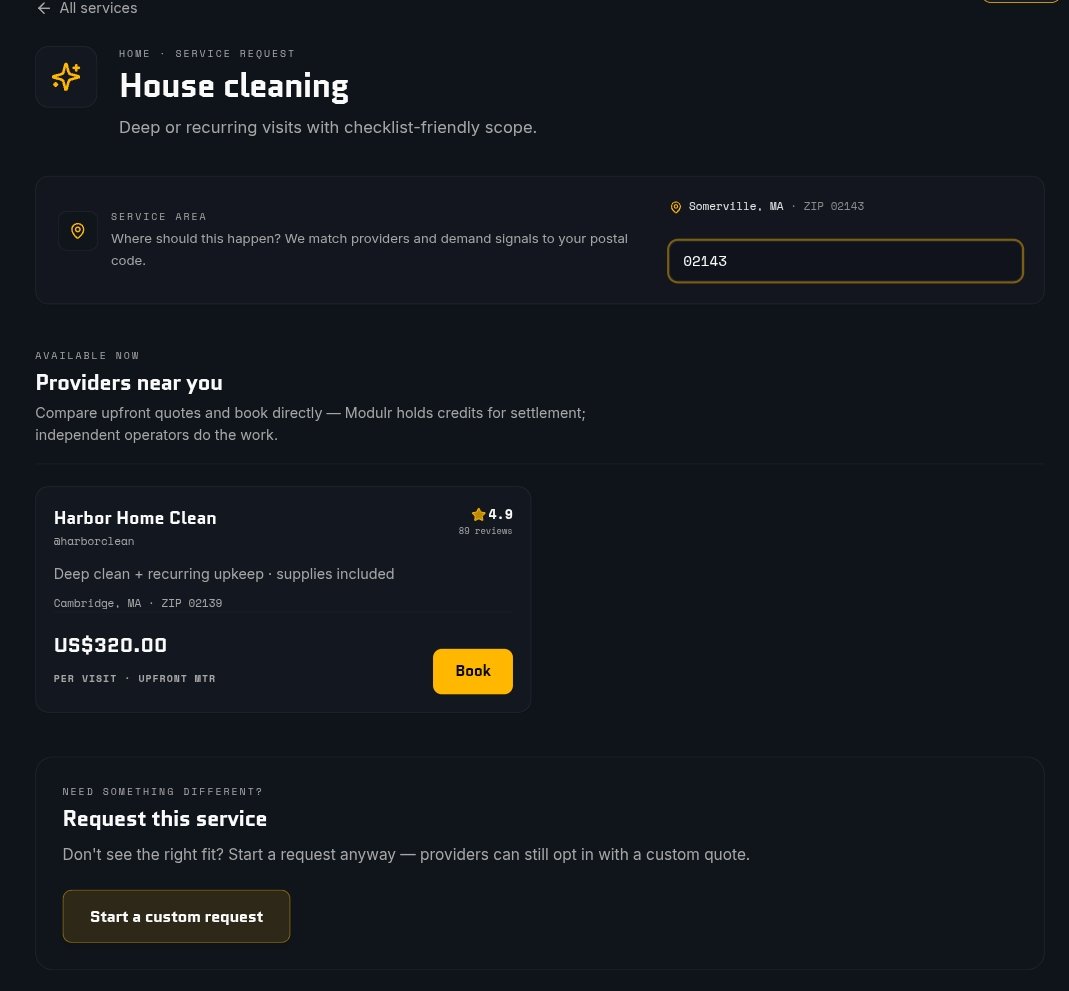
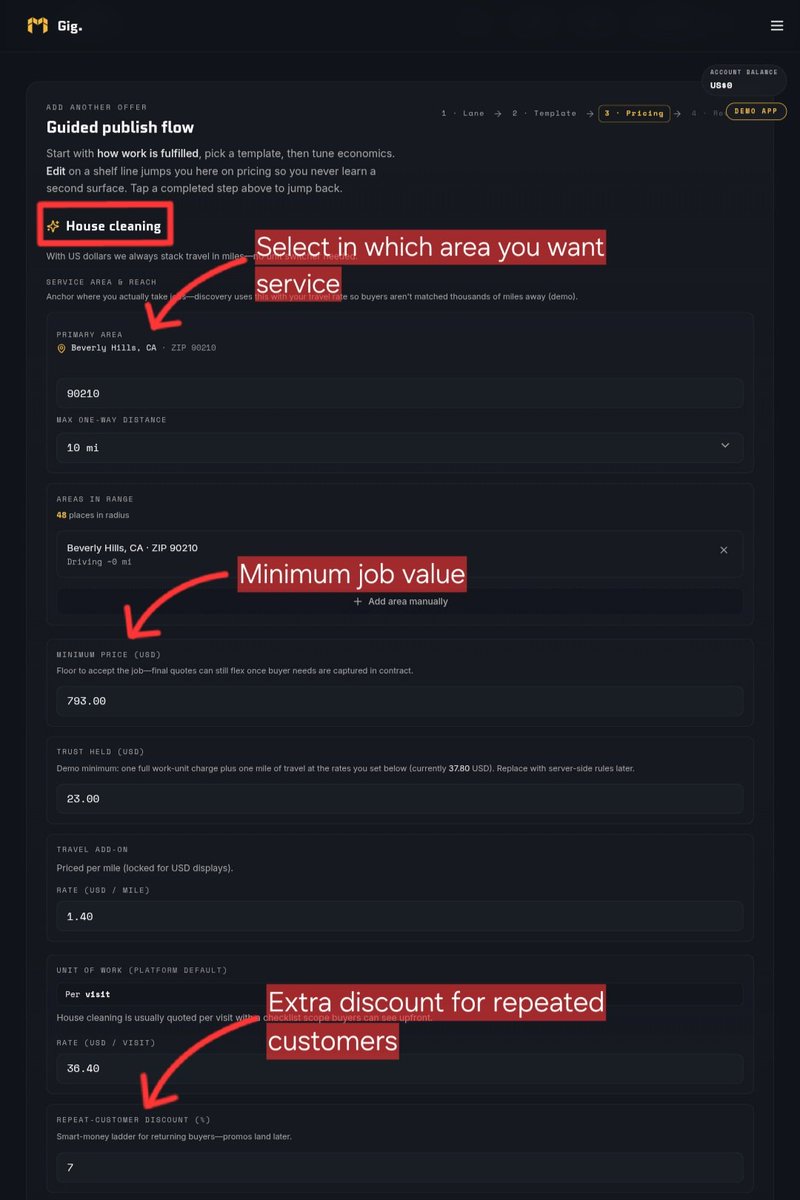
A house cleaner gets a message: "Can you do a deep clean this Friday?"
Now comes the chaos.
Where do they serve?
How far are they willing to travel?
What's the minimum job price?
How much should repeat customers pay? Do they charge per visit, per hour or per room?
At this point most platforms will throw all of this into one giant form and expect people to figure it out.
Modulr.Gig doesn't do that.
You start with how the work is actually fulfilled by choosing a template and then fine tune the economics behind the service. Need to adjust pricing later? A single edit jumps you right back to the exact step— no hunting through endless settings.
>> Define your service area so buyers aren't matched with providers hundreds of miles away.
>> Set a minimum price that makes every job worth accepting.
>> Add transparent travel rates that automatically scale with distance.
>> Price work the way it happens in real life— per visit, per project or per unit.
>> Reward loyal customers with built in repeat discounts.
Now the result isn't just another listing.
It's a guided path that helps people turn what they already do, into a structured offer which buyers can understand at a glance.
@Modulr_Robotics @Theundline @TheLiamDevlin @radford714212
7
3
20
207
xL retweeted
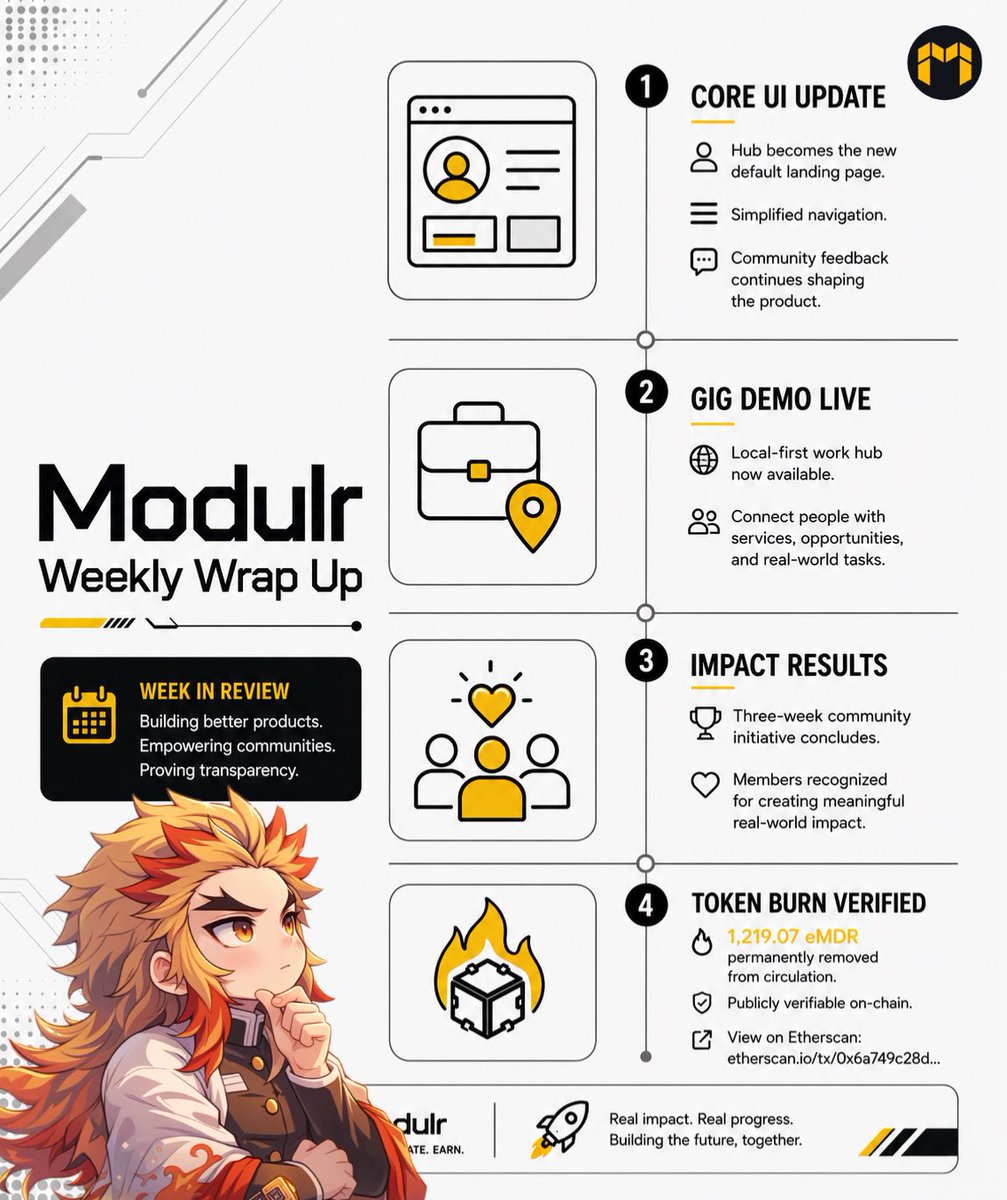
Another week of steady progress across the @Modulr_Robotics ecosystem.
→ Core received major UI improvements driven directly by community feedback including the new Hub experience, cleaner navigation and a more intuitive user journey.
→ Modulr.Gig officially launched its public demo, giving users their first look at the local first work hub designed to connect people with services, opportunities and real world tasks.
→ Modulr Impact came to a successful close after three weeks of community driven action highlighting members who stepped up and created meaningful impact in their local communities.
→ Transparency remained a priority as another on chain eMDR burn was completed bringing the total amount permanently removed from circulation to 1,219.07 eMDR.
What stands out is how each update connects back to the same goal.
Better products, stronger communities, more accountability.
@Theundline @TheLiamDevlin
Week by week, Modulr keeps turning ideas into working systems. 💛
1
2
8
95
Good weekend @Modulr_Robotics community. 💛
A quick look back at this week :-
>> Modulr.Core rolled out UI improvements based on community feedback, with the Hub becoming the new home experience
>> The Modulr.Gig demo went live, giving everyone a chance to explore and share their feedback on the product
>> Modulr.Impact came to an end, with Me, @Mareshahweb3 and @Vinaysingh1610 being selected as winners 🏆
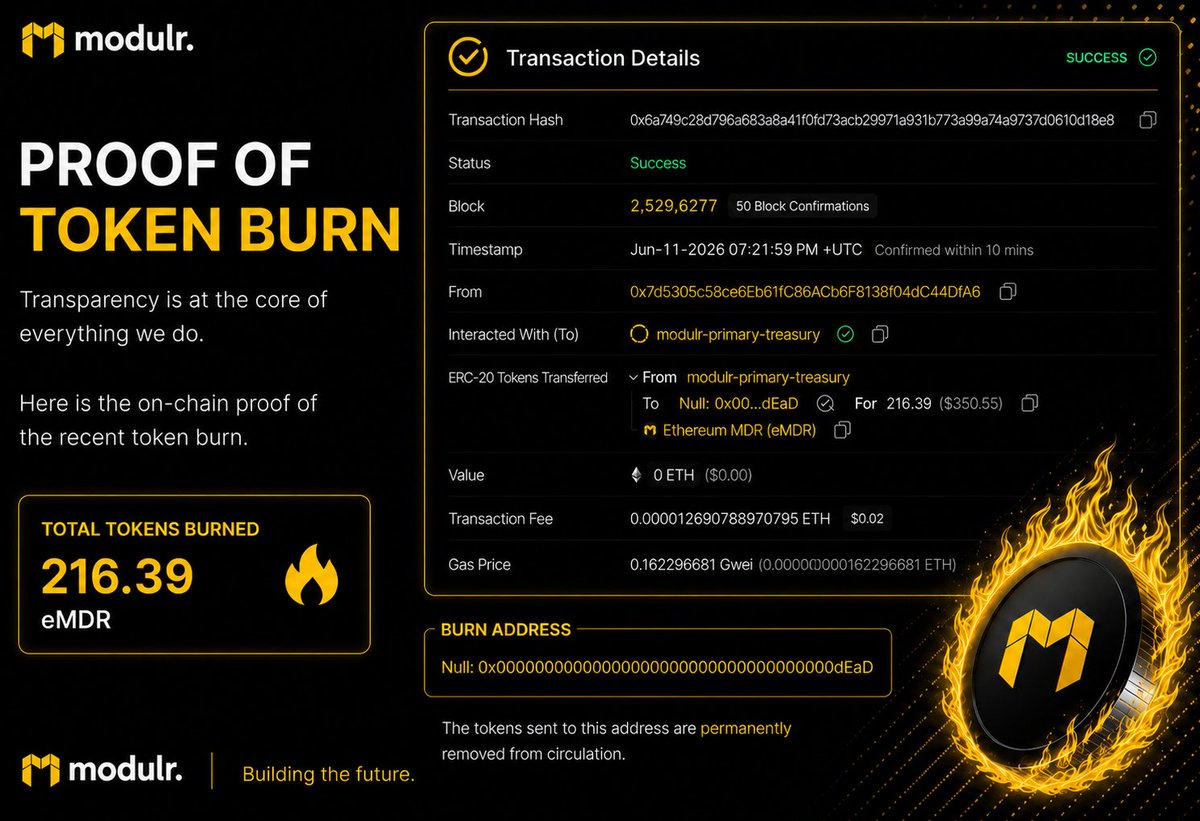
>> Our weekly scheduled eMDR burn was completed, with 216.39 tokens burned this week, bringing the total burned to 1,219.07
A solid week of building, shipping and recognizing the community who continue to contribute to the ecosystem. Looking forward to what's next. 🫱🏻🫲🏼
@Modulr_Robotics @Theundline @TheLiamDevlin @radford714212
Jun 13
Proof. Not promises.
The latest eMDR token burn is now complete and publicly verifiable on-chain. View the transaction details below on Etherscan 👇
etherscan.io/tx/0x6a749c28d7…
Total burned = 1,219.07
5
3
19
232
xL retweeted
Jun 13
Proof. Not promises.
The latest eMDR token burn is now complete and publicly verifiable on-chain. View the transaction details below on Etherscan 👇
etherscan.io/tx/0x6a749c28d7…
Total burned = 1,219.07
7
8
51
1,463
xL retweeted
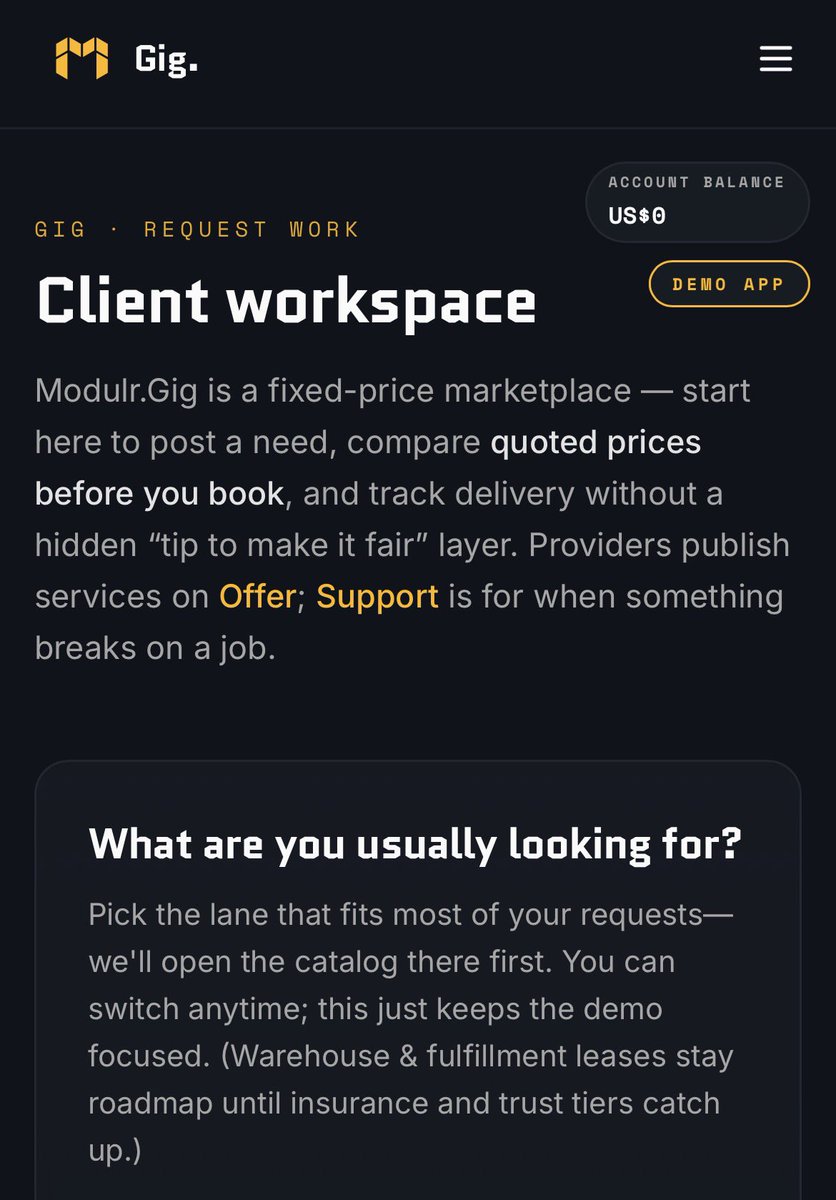
Another piece of the @Modulr_Robotics ecosystem just went live.
Modulr started with infrastructure, expanded into decentralized services and now
We’re seeing more of those building blocks become usable products.
→ Modulr.Core provides the foundation.
→ Modulr.Gig brings real world opportunities and services into the network.
→ Users can connect, offer skills, discover work and interact through a local first marketplace built around actual utility.
What I find interesting is that Gig isn’t trying to create another generic freelance platform.
It’s being built as part of a broader ecosystem where infrastructure, identity, trust,
Services and eventually real world assets can all connect together.
The demo is now live for anyone who wants to explore it.
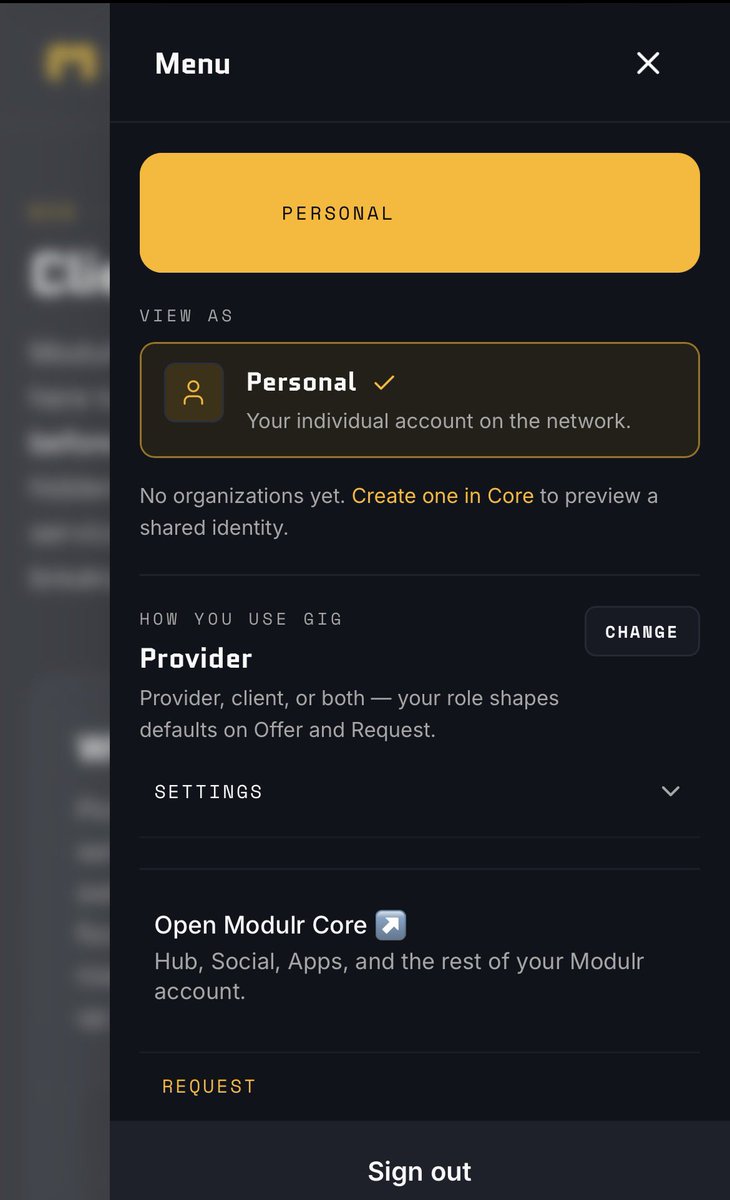
Open Modulr Core → Apps → Gig or head directly to gig.modulr.cloud
Still early, but it’s another example of Modulr moving from
@Theundline @TheLiamDevlin
Concepts and discussions to products people can actually use. 💛
Jun 10
Modulr continues building.
Today we’re excited to announce that the Modulr.Gig demo is live.
Gig is our local-first work hub for connecting people with opportunities, services, and real-world tasks.
Open Modulr Core, go to Apps → Gig, or visit gig.modulr.cloud directly.
Try it out and tell us what you think!

1
1
10
150