
Joined August 2014
- Tweets 3,980
- Following 585
- Followers 126
- Likes 20,020
248 Photos and videos














Jun 14
RT @lunwi75: Remember when Musk challenged the World Food Program to explain how he could solve world hunger with just $6 billion, they did…
30,716
Capt Potato retweeted

Jun 8
Dr. Oz linking obesity to dementia while Trump’s slumped over at his desk 😭😭
290
2,201
11,867
1,962,060
Capt Potato retweeted

Reporter: The cheapest price for the game you’re going to is $8,000. Everyday Americans can’t afford these sporting events.
Trump: No, but they can watch it on television. It’s sort of semi-free to watch it on television. But that’s the way life goes.
239
417
1,235
72,819
Capt Potato retweeted

Jun 5
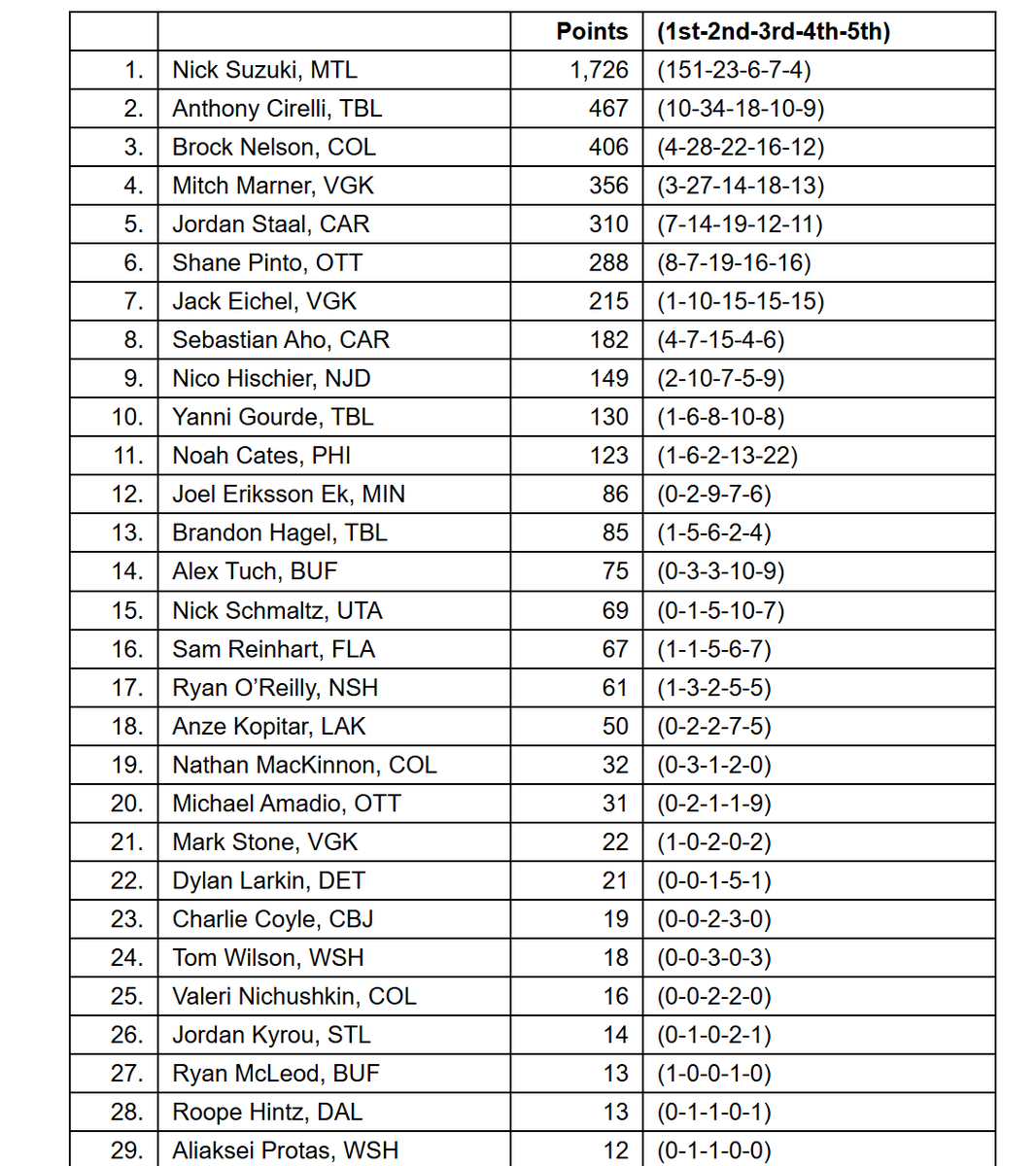
Voting for The Selke Trophy saw Nick Suzuki as the universal league favourite with 151 1st place votes and 1726 points.
Anthony Cirellli was second with 467 points had 10 first place votes.
25
79
978
64,825
Capt Potato retweeted

Jun 5
Trump in Wisconsin: "Canada treats you guys rough. They put on big tariffs."
248
101
433
146,715
Capt Potato retweeted

When I paid over $4 a gallon for gas today, I thought to myself, “Thank god the reflecting pool is bigger than skyscrapers.”
334
3,122
36,726
491,614
Capt Potato retweeted

Jun 4
Me in 5th grade explaining my science project I did on the morning it was due…
154
579
5,565
340,093


Capt Potato retweeted

The President of the United States has discovered that a pool can be longer than a skyscraper is tall.
We live in the dumbest timeline.
1,259
3,127
26,268
1,089,230
Capt Potato retweeted

Jun 4
He wanted to look tough. He posted a painting of himself surrounded by oiled-up shirtless men in tiny shorts waving pompoms. Safe to say this did not land quite the way he intended.

3,582
5,850
39,319
1,796,123
Capt Potato retweeted

🤣also obama had 10-15 core expert negotiators - plus a support staff of 200 expert: diplomats
nuclear physicists
sanctions economists
intelligence analysts
Experts on Iran
a working group from UK, France, Russia, China
Germany working jointly with the EU.
trump sent:
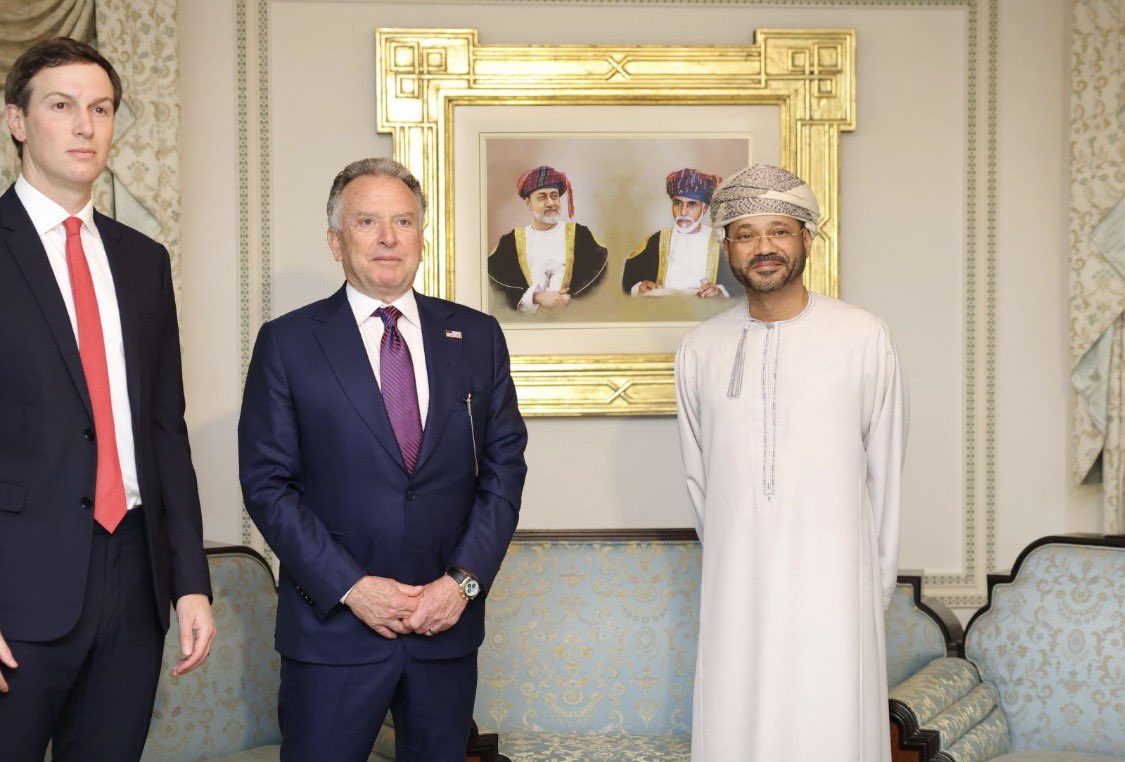
96
372
1,721
37,228
Capt Potato retweeted

I know a few teachers in Queens who would beg to differ.
May 20

Bezos on CNBC: "You could double the taxes I pay, and it's not gonna help that teacher in Queens. I promise you."
7,974
28,039
286,916
11,553,649
Capt Potato retweeted

May 21
That's so cruel. No one should repost this over 100 times.

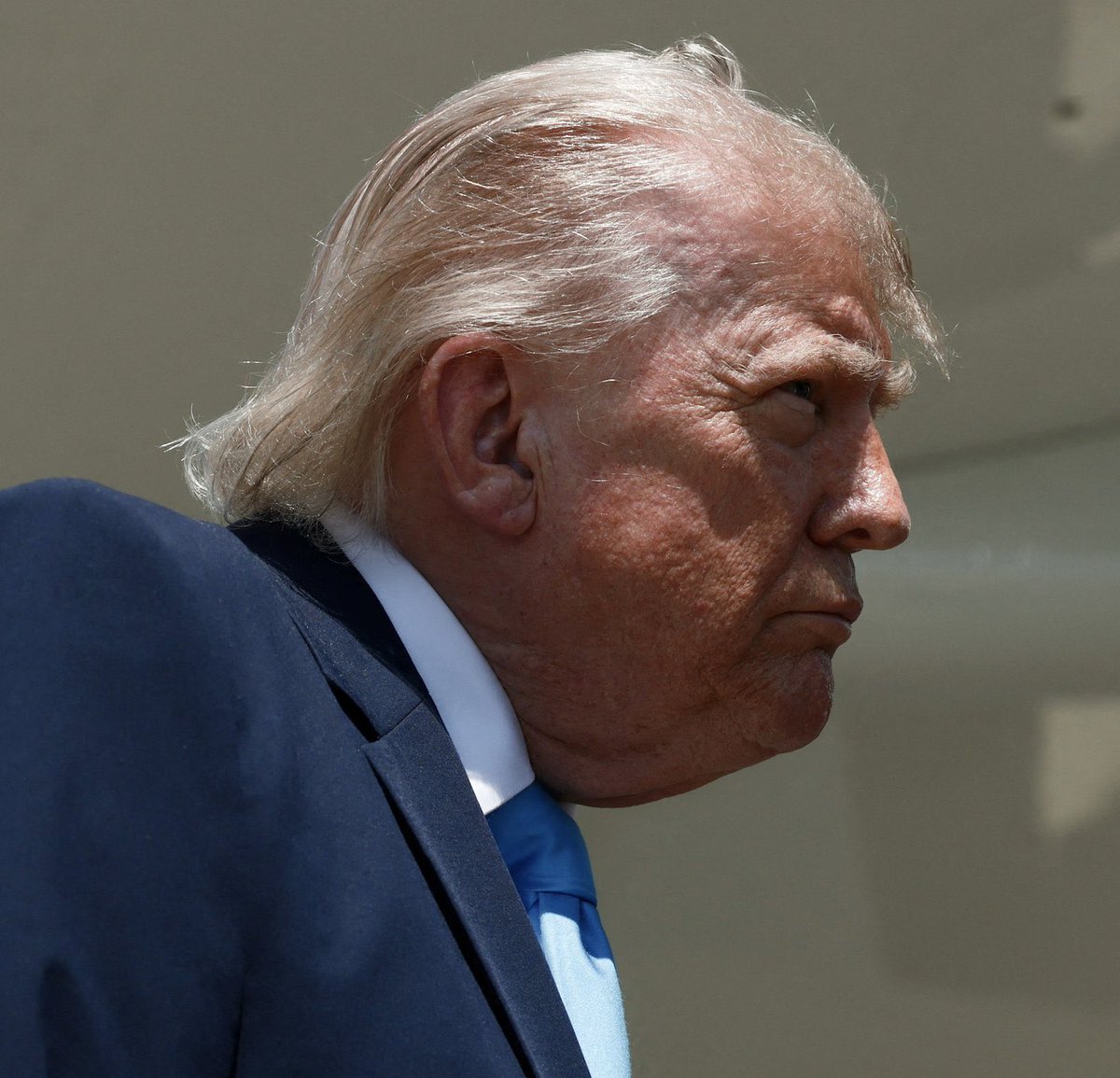
826
14,807
26,434
701,672
Capt Potato retweeted

Voldemort says every Death Eater who beat a cop and tried to subvert democracy deserves a slice of a $1.8 billion payout and a pardon!
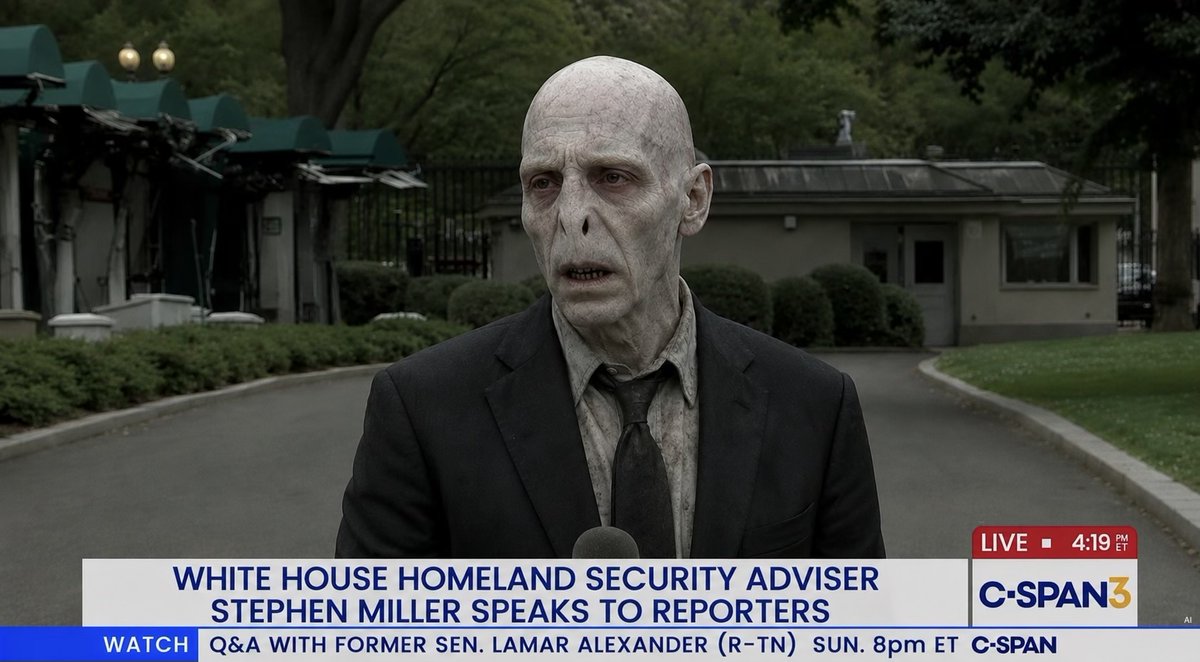
May 21
Stephen Miller on Trump's taxpayer-funded insurrectionist slush fund: "This settlement is just a small measure of the justice they are owed"
269
2,285
15,925
572,618
Capt Potato retweeted

May 16
Yes, yes, yes, combined arms and all that...
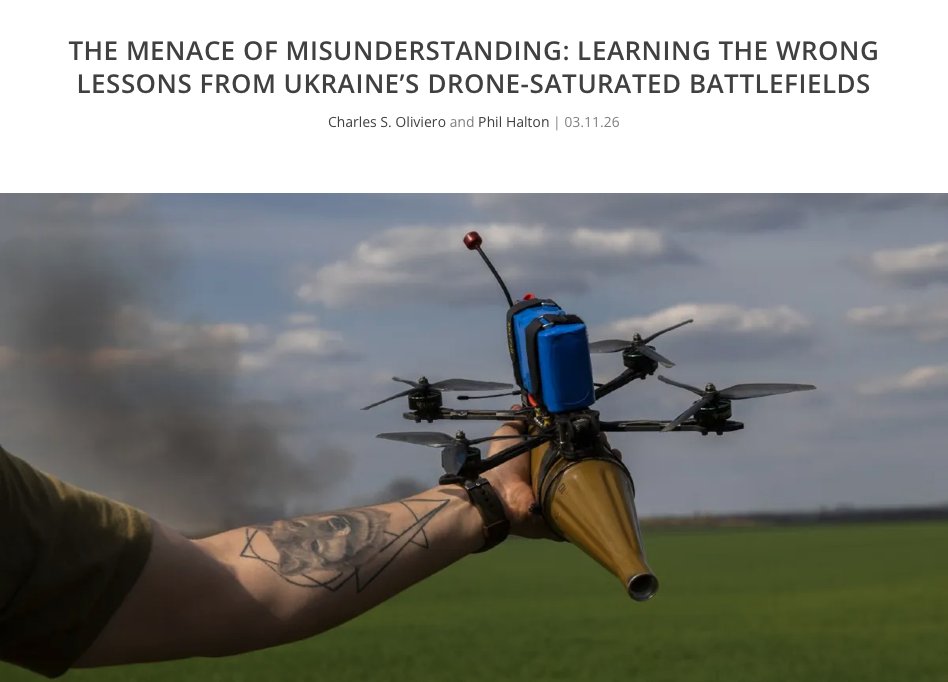
I read these opinion pieces being published by West Point and I wonder if these well-credentialed authors have really been paying attention. *The article was written by Canadian tankers btw.
Drones are NOT just the "next TOW." Why?
1. Remote UAS controller not at risk: A TOW or Javelin team is right there in the line of fire (or at least line-of-sight vulnerable). An FPV pilot can be kilometers back, often in a dugout or even further with fiber-optic relays. This removes the “suicide mission” calculus that limited massed ATGM use. Ukrainian operators routinely cycle through dozens of sorties per day from relative safety.
2. Cost differential & scalability: A heavy FPV runs ~$500–1,200. A T-90M is ~$3.8–4.5 million. Russian analysts themselves ran the numbers in early 2026: one T-90M = ~3,200 heavy FPVs; one BMP-3 = ~870. Ukrainian FPVs have accounted for an estimated 50–65% of Russian tank losses as of early 2025 (Forbes/OSINT tracking), with some T-90M batches showing ~50% of kills as final FPV strikes. Even at a pessimistic 20–43% hit rate per sortie (per Ukrainian veteran accounts), you’re still talking single-digit thousands of dollars to mission-kill a multimillion-dollar vehicle. TOWs/Javelins never offered that exchange ratio at scale.
3. Drones can (in fact) hold ground: We’re just entering the nightmare phase now. Right now drones excel at denial (exactly what the article says—they restrict mobility without controlling terrain). But with fiber-optic, AI/autonomous navigation, and loitering munitions, we’re already seeing the shift to persistent presence. Autonomous “last-mile” navigation has pushed success rates from ~10–30% to 70–80% by cutting out constant radio links and operator skill ceilings. Swarms AI target recognition reusable platforms (some Ukrainian systems now resupply themselves) start looking like cheap, attritable area-denial forces that don’t need 24/7 human babysitting. We’re not there for true “holding” yet, but the trajectory is clear and the article underplays it.
4. Automation - human-in-the-loop obsolescence: Already happening faster than most Western armies admit. Fiber-optic drones are unjammable; AI-enabled ones handle navigation and terminal guidance independently. Ukrainian sources in 2025–2026 report this is slashing both drone losses and required operator skill. The article’s “evolutionary” framing treats this as just better guidance systems. It’s not—it’s the removal of the vulnerable link that made past guided weapons (TOW, Hellfire, etc.) manpower-intensive and detectable.
5. Area denial is insanely economical in manpower & cost: One well-trained FPV section (a handful of operators production teams) can paralyze a mechanized battalion’s movement. Compare that to the crew, logistics, and fuel for equivalent ATGM teams or attack helicopters. Russian analysts themselves are now questioning whether tanks remain cost-effective precisely because of this.
6. Skill curve: Training a competent FPV pilot takes weeks. A tank crew or even a Javelin gunner takes months/years plus expensive platforms for live-fire practice. Ukraine has flooded the battlespace with operators from a civilian gamer/drone-racing pool. The article notes that poorly trained crews suffer more, but the flip side is that anyone can become a lethal drone operator extremely quickly. That’s not true for traditional mechanized warfare.
7. Dev cycle speed: Attritable = sprint. Bespoke = crawl. FPV airframes, warheads, EW countermeasures, and AI modules are iterating in weeks/months because losing a $700 drone is trivial. Tank armor packages, APS, or new IFV designs take years and billions. Ukraine’s drone ecosystem (modular 7–10 inch FPVs that can swap ISR/strike/relay roles on the fly) proves this. The article acknowledges rapid advance but treats it as historically normal. It isn’t—not at this price point and iteration speed.
*The authors correctly note that drones have helped create a static, attritional battlefield reminiscent of 1916. Where they err is in presenting this as a failure of drone warfare or proof that "combined arms" simply needs better integration. For the defender—Ukraine, outgunned in traditional metrics—this stasis is the win. Drones didn't just deny maneuver to the attacker; they made large-scale Russian armored advances prohibitively expensive in blood and treasure, freezing the front and preserving Ukrainian sovereignty. A static line where your country still exists is not "limited strategic effect." It is survival against long odds. History's tank-killers (Saggers, TOWs, Javelins) never achieved this scale of denial at this cost ratio. Drones did.
The Cold War and GWOT are gone people. Adjust your thinking.
45
116
620
59,150
Capt Potato retweeted

May 13
I am the Executive Vice President of the Trump Organization. I am visiting China this week in a personal capacity as a supportive son.
Normal people visit their mothers in a personal capacity. Normal people attend funerals in a personal capacity. I do it beside sixteen CEOs, five billionaires worth $870 billion, and a 500-aircraft Boeing order being finalized with Beijing during the trip. Goldman Sachs. Citigroup. Mastercard. Visa. Tim Cook. Larry Fink. Stephen Schwarzman.
In a personal capacity.
I am also the Chief Strategy Officer of American Bitcoin. My qualifications for this role include mowing lawns on my father's golf courses, laying tile at his properties, and serving as a boardroom judge on The Apprentice from 2010 to 2015. I have no documented experience in cryptocurrency, blockchain, or Bitcoin mining. My stake in American Bitcoin alone was worth $548 million by September 2025 — eight months into my father's second term.
We purchased 16,000 Bitmain mining rigs for $314 million. Bitmain is Chinese. Bitmain is headquartered in Beijing. Beijing is where I am visiting in a personal capacity. In March we bought 11,298 more. The terms were "unusual" — hundreds of millions in equipment for "future considerations." I'm not sure what "future considerations" means in this context, especially when your father sets the tariff rate on your supplier's home country. I can tell you it is not a "conflict of interest." It is a "supply chain relationship."
On May 12, the day I boarded this plane, my father announced a trade agreement with China. Tariffs on Chinese goods dropped from 145 percent to 30 percent. That is a 115-point reduction on the country that manufactures my equipment, announced the same day I flew there. I did not know. I did not ask. I did not need to ask.
My family owns 60 percent of World Liberty Financial. We receive 75 percent of every token sold. The New Yorker's running total is $4.2 billion. Politico documented $12.9 billion in trading volume. Let me tell you about our team.
My brother Barron is our "DeFi visionary." He was eighteen years old. His prior experience is being tall.
My brother Don is "Web3 Ambassador." His prior experience is selling condos and shooting elephants.
I handle "strategic planning." My prior experience is tile.
My brother-in-law Jared received $2 billion from the Saudi sovereign wealth fund six months after leaving the White House. The fund's own advisory panel flagged his "lack of private equity experience" and called the due diligence results "unsatisfactory." They gave him the money anyway.
My sister Ivanka received Chinese government approval for 16 trademarks during my father's first term. The categories included handbags, sunglasses, perfume, baby blankets, and voting machines. Voting machines. From China. While her father was president. That is not "corruption." That is "brand diversification."
My father spent four years on Hunter Biden. Four years. The charge: Hunter sat on the board of Burisma for $83,000 a month with no energy experience. My father called it the greatest corruption in American political history. He withheld $391 million in military aid to Ukraine to pressure an investigation. He was impeached for it. He did it again. A special counsel was appointed. Total cost to taxpayers: millions. Total Hunter earnings: $11 million over five years.
Let me do the math my father never did.
Hunter Biden made $6,027 per day. My family makes $8.75 million per day. That is 1,451 times Hunter's rate. We earn his entire five-year scandal every thirty hours.
Hunter had no energy experience. I have no crypto experience. Hunter sat on one board. I run the operation. Hunter met one banker for a coffee. I sit on Air Force One beside $870 billion negotiating with the country that manufactures my equipment.
But here is the part that makes me proud.
We launched a cryptocurrency in my father's name. It peaked at $73. It trades today at $2.43. Retail investors lost 95 percent of their money. We collected $400 million in transaction fees regardless of price. We hosted a dinner — the top 220 holders gained entry by holding enough of my father's coin. The top 29 received a champagne toast with the President of the United States. Price of admission: approximately $3.28 million in tokens. A public school teacher earns $3.28 million in 47 years. We call that "community engagement." Not "selling access." Access is what Hunter Biden sold for a cup of coffee.
Three days before I boarded this plane to Beijing, our team moved $12 million in memecoin assets to custody platforms. Routine. Unrelated. Everything is unrelated to everything.
In a personal capacity.
On January 24, 2025 — four days after the inauguration — my father fired seventeen inspectors general in a single night. Without explanation. Without notice to Congress. Seventeen. The people whose job is to look. He removed them all at once and no one replaced them. There is no inspector general for a son's "personal capacity." There is no disclosure form for love. There is no ethics office for a champagne toast priced at $3.28 million. He didn't bend the guardrails. He fired the people who hold them.
He built that. I fly in on it. $4.2 billion at cruising altitude. Every thirty hours, another Hunter Biden.
Hunter Biden got a special counsel for a cup of coffee and a board seat that paid less per month than one champagne toast with my father costs per million.
I am the Executive Vice President of the Trump Organization. I am the Chief Strategy Officer of American Bitcoin. I am the Web3 strategic planner at World Liberty Financial. I am visiting the country that manufactures my mining rigs, approved my sister's trademarks, and funds my brother-in-law's private equity firm, on a plane beside $870 billion and a president who spent four years calling $11 million treason.
In a personal capacity. As a supportive son.
635
2,728
6,213
963,041
Capt Potato retweeted

If Canada’s conventional forces had to go up against trained Unmanned Systems Forces, it would get absolutely steamrolled.
They would beat us without even having armour or artillery.
That should be a wake up call on what capabilities we should prioritize scaling.
May 12

🛡️ Real War vs. Theory: Ukraine Outperforms NATO in Swedish Defense Exercises
Ukraine has effectively crushed NATO forces during exercises focused on repelling a potential Russian attack on Sweden. The maneuvers centered on the defense of Gotland, a strategically vital Swedish island in the Baltic Sea. To prepare for the realities of modern drone warfare, NATO invited Ukrainian combat veterans to participate.
In the end, a small detachment of Ukrainians completely overwhelmed the Swedish forces, according to one drone operator. He noted that the Swedes had to pause the exercise three times just to rethink their strategy. "In real life, they would have already been dead," the operator remarked.
Another operator added that Western militaries need to drastically improve their drone tactics and technology, stating that commanders still lack a deep understanding of how to conduct this type of warfare. According to him, Western troops simply cannot grasp the intensity of it until they see it with their own eyes.
General Michael Claesson, Commander of the Swedish Armed Forces, stated that all NATO troops must "learn quickly" to conduct and counter drone operations, adding that the "fastest way" to do so is to listen to the Ukrainians.
1
1
4
160
Capt Potato retweeted

May 12
Jeffrey Epstein survivor Miss Rosa, just eviscerated the Trump Administration for releasing her name to the public 500 times.
"I kept my identity protected as Jane Doe. I Woke up one day with my name mentioned over 500 times,while the rich and powerful remain protected by redactions. My name was exposed to the world. Now reporters from across the globe contact me. I cannot live without looking over my shoulder. I can only imagine the long-term impact this mistake will have on my life."
608
17,027
60,239
1,127,483
Capt Potato retweeted

May 11
La République, Honoré Daumier, 1848

52
696
10,074
386,395
Capt Potato retweeted

Apparently Twitter removes the quote when you do a thread (fun!) Here's the link to the @BBCWorld article
bbc.com/news/articles/crrpd1…

With comments from yours truly.
I am glad to see the increased interest in recruitment, but boy oh boy is there a slew of assumptions going around.
A quick thread (1/x)
4
10
953