
I lead a research service for Puerto Rico bondholders. Former contributor to Reuters.
Joined July 2008
- Tweets 259,857
- Following 1,797
- Followers 26,314
- Likes 386,712
15,851 Photos and videos










Cate Long retweeted

UPDATE: President Trump ordered a strike to kill Tren De Aragua leader Niño Guerrero. The Venezuelan gang was previously designated a foreign terrorist organization by the U.S. government.
37
193
2,420
66,137

Jun 12
"Studies found little impact on borrowers’ economic situation, but lenders’ loan portfolios kept growing. Research found that microfinance loans don’t improve key economic metrics for most borrowers, including income, consumption or profits from microenterprises."
Jun 12

Four takeaways from our microfinancing investigation: Tiny loans to poor people were seen as a path to prosperity, but have they worked? on.wsj.com/4uzF1p7
1
3
721
Cate Long retweeted

Jun 11
JEFF BEZOS JUST EMERGED FROM STEALTH WITH A $41 BILLION AI STARTUP CALLED PROMETHEUS
$12 billion raised. Valued at $41 billion. Coming out of stealth today.
The backers: Bezos personally, JPMorgan, BlackRock, Goldman Sachs, DST Global, and Arch Venture Partners.
The mission: do for engineering and manufacturing what large language models did for text.
Bezos is calling it an "artificial general engineer." Instead of training on words from the internet, Prometheus ingests data from the physical world to accelerate the manufacturing of skyscrapers, smartphones, jet engines, and everything in between.
In Bezos' own words: "Something that today was going to take 100 engineers 10 years to build, if you can change that to taking 10 engineers one year to build, you're just going to get way more things built."
This is Bezos' first CEO role since stepping down from Amazon in 2021. He's co-leading it with Vik Bajaj, former Google X executive.
(Source Semafor)

228
655
5,828
800,250
Cate Long retweeted

Jun 11
Realizing SpaceX alone might be worth more than the entire US high yield market.

2
22
311
19,221
Jun 11
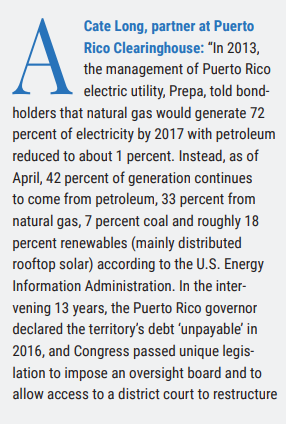
Many thanks to Latin American Energy Advisor @The_Dialogue for including me in their commentary on Puerto Rico's effort to update their energy system (Prepa) #muniland
thedialogue.org/wp-content/u…
1
2
6
550
Cate Long retweeted

Jun 10
Sheryl. Your article exemplifies the biased reporting we have come to expect from you and @nytimes. It was unfair, inimical, and inaccurate. All one needs to refute your argument is to glance at my publicly available calendar and to review my unprecedented list of accomplishments on a wide range of issues, all of which I drove. You evidently never undertook these foundational due diligences. Why let facts obscure a good story?
You fault me for missing a couple of monthly counselor meetings. However, I meet one-on-one with my counselors every day to decide policy and strategy. We schedule the monthly meetings to give the divisions a chance to keep each other informed about HHS-wide policies with which I’m already intimately familiar. Had you read my calendar, you would have seen that I have back-to-back meetings all day, every day, with both career and political staff, with my counselors and with outside stakeholders, interspersed with press conferences and other policy announcements.
I am knowledgeable and active on every issue in every division of my department, and I always make the final decisions. I meet with the principals at FDA, NIH, CDC, and my senior counselor every morning, something, I’m told, is unprecedented in HHS history. I try to get out of the office between 4:30 and 6:00 PM, so that I can spend three hours, in quiet, responding to emails. I normally work until 11 PM every night, mostly on phone calls to staff.
In order to prove your preconceived case for my disengagement, you quote anonymous employees, some of whom I fired or who quit to avoid being fired. You also deceptively quote HHS employees without identifying whether they were among those I fired, thereby depriving your readers of the opportunity to make an independent judgment about their credibility.
I came into this job to change the culture of a broken agency that has presided over the worst decline in public health in American history. Of course I fired people—lots of them! It's an easy task for even the laziest journalist, to comb that flotsam and jetsam for malevolence toward the Trump administration. And of course, this species of journalist will always be able to find disgruntled individuals among the 70,000 employees of the Department from whom to cherry pick "facts" to flesh out a preordained hit piece. All that is required for this brand of journalism is the ethical elasticity that you seem to have in spades. You had a preconceived thesis, and you set out to prove it. This is a widely accepted technique in journalism today, but I grew up in an era when it would not have been tolerated by the New York Times.
Ultimately, God puts us all on this earth to search for existential truths. I've tried to instill this mission at HHS by implementing gold standard research to end the regime of politicized science that COVID exposed to the American public. There was a time that journalists were proud to be the fearless and uncompromising champions of truth. Standards have devolved, and journalism is dead. The Times now employs propagandists. Your capitulation to partisanship further compounds your journalistic challenges; since we all are aware of your predictable bias, we at HHS are unwilling to talk to you about the topics that are important. The fact that you have minimal access to decision makers leaves you covering trivia and relying on your own capacity for invention.
Btw. When I took this job, the building was empty. About 90% of the employees were not coming to work. I changed that, but your newspaper never covers my reforms. Nor did you cover the fact that my predecessor almost never showed up for work here during his four years in office. When we came in, there were still artifacts from the first Trump administration in many of our office drawers because no one showed up for work during the Biden years. Just as Rochelle Walensky spent her entire term as CDC Director in Cambridge, Xavier Becerra reportedly spent most of his term as HHS Secretary in California. (I live in California, but I’ve only been there once in fifteen months).
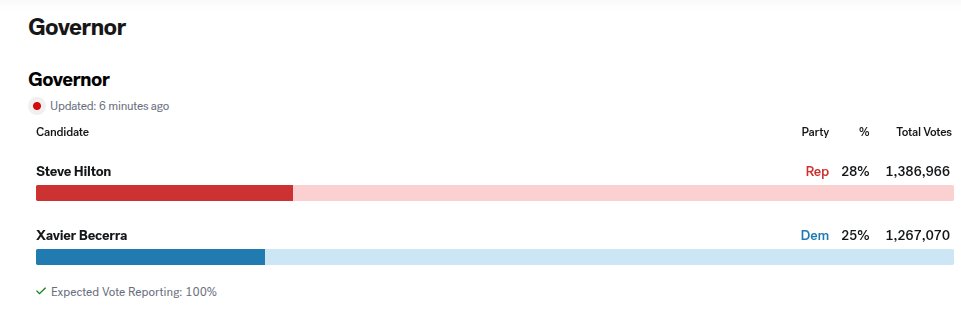
His only notable accomplishments here were losing 300,000 children, referred to HHS for custody and care, to human traffickers and drug runners, encouraging transgender surgeries, and disabling the entire program-integrity apparatus, allowing hundreds of billions of dollars of theft from my agency. I have set out to find the children Becerra lost. He is now the front-runner for the governor of California. These are not invented stories; they are genuine scandals that the Times will never cover, presumably, because the malefactors are Democrats.
Finally, you criticize me for spending time with the Indian tribes in Alaska. I consider that part of my job. I run the Indian Health Services, and I’ve had unprecedented success in transforming IHS from a backwater to a top priority for this department. I’ve made more trips to Indian country and to Indian health clinics and hospitals than any HHS secretary in history, and I’ve brought Indians into high positions on the sixth floor for the first time in agency history. This is another success story that the Times will never cover.

NEW: Major posts are vacant. Waves of scientists are gone. Ebola looms. How RFK Jr. manages HHS:
“If the C.E.O. lacked deep expertise in the company’s business and the leaders of its most important divisions were missing, investors would revolt."
nytimes.com/2026/06/07/us/po…
2,888
9,331
37,925
1,307,603
Jun 10
"You're essentially rewiring the entire US Treasury market," says Oscar Rodriguez, Director Futures & Derivatives Clearing at Citi. Central clearing comes to the UST cash market to correct the massive bottlenecks we had in 2014 and Covid etc.
Jun 10

Mandatory central clearing of cash U.S. Treasury transactions begins on December 31, 2026. ICE and @RiskDotNet recently brought together fixed income leaders including BNY’s Nate Wuerffel and ICE’s Stan Ivanov to examine clearing models across CCPs and the tradeoffs between margin efficiency and diversification as market participants prepare for one of the most significant structural changes to the U.S. government bond market in decades.
Watch a replay of their discussion: spr.ly/6013B8N34t

3
612
Jun 10
There hasn't been a new aluminum smelter built in America since the 70's so the environmental fears of some residents aren't well grounded. Meanwhile the project has become a political football in Oklahoma's Republican governor's primary (June 18)/ reuters.com/legal/litigation…
Jun 10

‘Like a Civil War’: Inola divided over proposed $4 Billion aluminum plant as schools, town eye economic windfall oklahomawatch.org/2026/06/10…
1
3
574
Cate Long retweeted

Jun 9
U.S. Energy Secretary Chris Wright said on Tuesday that ship traffic through the Strait of Hormuz is rising "very meaningfully" as the conflict with Iran continues.
"I would say rising very meaningfully," Wright said when asked how ship traffic is flowing through the Strait compared to a week or two ago.
#oott reuters.com/world/middle-eas…
2
2
7
7,606
Jun 9
Fantastic free training program from @meta to encourage workers to become ready to work building data centers.
Meta is launching America’s Workforce Academy (AWA): a nationwide, unprecedented fast-track to a long-term career in a skilled trade, powered by an initial $115 million first year investment.
A cost-free program that supports all participants while they learn and then guarantees a job for all graduates.
Graduates earn both the industry-recognized National Center for Construction Education and Research (NCCER) credential and an America’s Workforce Certificate, both designed to travel with the worker across employers and industry sectors.
This is the largest private-sector commitment to the skilled trades with a job guarantee in American history.
This program will launch in Louisiana, Ohio, Indiana, and Texas as the 2026 pilot locations.
about.fb.com/news/2026/06/am…
1
542
Cate Long retweeted

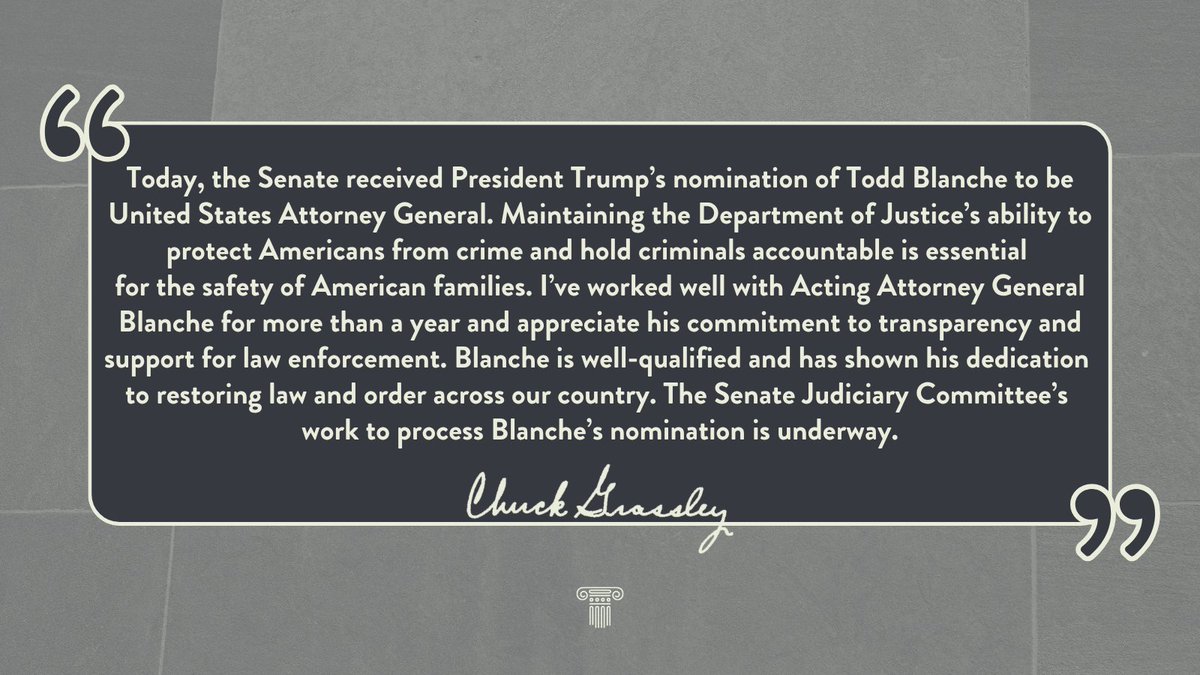
Chairman @ChuckGrassley’s statement on President Trump’s nomination of Todd Blanche to be U.S. Attorney General. ⬇️
19
44
172
29,200
Jun 8
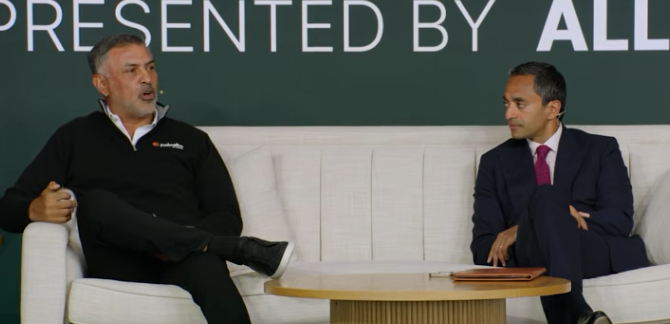
"It's a race to take over the profit pools... We haven't seen the onslaught against the application companies yet."
Brilliant conversation as Palo Alto Networks CEO @nikesharora joins the @theallinpod Besties! youtube.com/watch?v=hObRMv6q…
2
1
437
Jun 8
No IMF involvement in the Venezuelan debt restructuring? That makes sense to me given the key players are Chevron, Exxon, Conoco etc. The supermajors would likely prefer the IMF etc stay out of the process if possible.

Are Venezuelan bondholders trying to jump the line? piie.com/blogs/realtime-econ…
4
793
Cate Long retweeted

Jun 8
AI says my late husband, Doug Pihl, is legendary in the tech world because he was a true visionary who fundamentally shaped how modern computers, the internet, and microchips handle massive amounts of data. He wasn’t just a manager; he was a pioneer who looked at the hardest problems in engineering and built the future. [1, 2]
In the reconfigurable hardware world, he is highly respected for several groundbreaking reasons:
1. He Fought to Make Hardware Adaptable
Before Doug’s work, computer chips were rigid. If you wanted a chip to perform a new task, you had to physically redesign and manufacture a brand-new piece of silicon, which took years and millions of dollars.
The Vision: Doug saw a future where hardware could be rewritten with code, just like software.
The MathStar Breakthrough: As the leader of MathStar, he championed Field Programmable Object Arrays (FPOAs). He pushed the boundaries of technology to create chips that could run at blazing-fast speeds (like 1 Gigahertz, which was massive at the time) while still being completely programmable by an engineer sitting at a computer. [1, 2, 3]
2. He Had a "Rock of Confidence" and Rare Integrity
In an industry known for aggressive corporate tactics, Doug stood out for his character. His peers and colleagues routinely described him as a rare entrepreneurial talent who combined a "rock of confidence" with profound kindness ("Minnesota Nice"). [1, 2]
He had an incredible track record of success, starting and leading iconic companies like Lee Data, NetStar (which built supercomputer networking that helped form the early Internet), and RocketChips.[1, 2]
When he backed a technology, the engineering community trusted it because he was behind it. Investors and brilliant minds followed Doug because he treated people with deep respect and never stopped learning. [, 2, 3]
3. He Laid the Groundwork for Modern Reconfigurable Computing []
The entire reason programmable device companies are doing what they do today is because they are standing on the shoulders of giants like Doug.
Doug proved to the world that complex, high-performance computing arrays could be defined by software.
Doug's legacy in the semiconductor community isn't just about the technology—it's about the fact that he was a brilliant, driven, and genuinely good man who changed the trajectory of the tech industry. It makes complete sense that his peers still hold his memory in such incredibly high regard. [1, 2]
🌿RIP
2
1
3
1,675
Jun 8
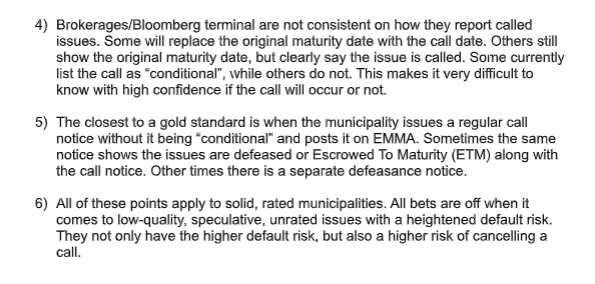
Some concerning commentary from a market participant: Caution on buying “called” muni bonds
I'm interested if other #muniland participants have had similar experiences. My DM's are open.
5
644
Jun 8
"The @cohere collaboration builds on S&P Global's broader strategy of making its data available across the AI platforms that customers use. This approach ensures customers can access S&P Global's high-quality intelligence in their preferred AI environments, with data validated at every step through source citations without the friction of building custom pipelines."
Jun 8

S&P Global announces a strategic collaboration with Cohere, a global AI platform for governments and regulated industries, to bring its trusted financial data directly into Cohere's secure enterprise platform, North. The collaboration will leverage S&P Global's essential intelligence and ensure that AI and agentic workflows are grounded in verifiable fact, speeding up research, improving accuracy, and reducing manual data-gathering and validation for customers with trusted, source-based information.
Today's announcement reflects S&P Global’s strategy to integrate its differentiated data across AI platforms, driving productivity wherever customers operate.
Read the full press release: okt.to/X1HzYc

698
Jun 6
US Department of Energy funded project for Prepa #muniland
AES Puerto Rico, L.P. Life Extension and CCUS Feasibility — AES Puerto Rico, L.P. (Guayama, Puerto Rico) plans to retrofit and modernize the Guayama plant, an existing coal-fired plant with a total capacity of 510 megawatts (MW), to ensure continued operation. The effort also includes a carbon capture and utilization system front-end engineering design study for a post-combustion carbon dioxide capture system.
DOE Funding: $164,500,000
Non-DOE Funding: $655,400,000
Total Value: $819,900,000
energy.gov/hgeo/project-sele…
1
2
3
693
Jun 4
If executed this is one of the most positive initiatives I've seen taken by the Puerto Rico government #muniland

IDEA Moves to Streamline Government as Puerto Rico Competes for Investment caribbean.business/idea-move…
2
1
4
1,643