
Founder @MIT Cryptoeconomics Lab. Previously: Co-Founder & Chief Strategy Officer, Lightspark. Co-Creator, Libra. Head Economist, Meta.
Joined December 2008
- Tweets 7,620
- Following 4,958
- Followers 22,788
- Likes 17,016
966 Photos and videos



Pinned Tweet

Feb 24
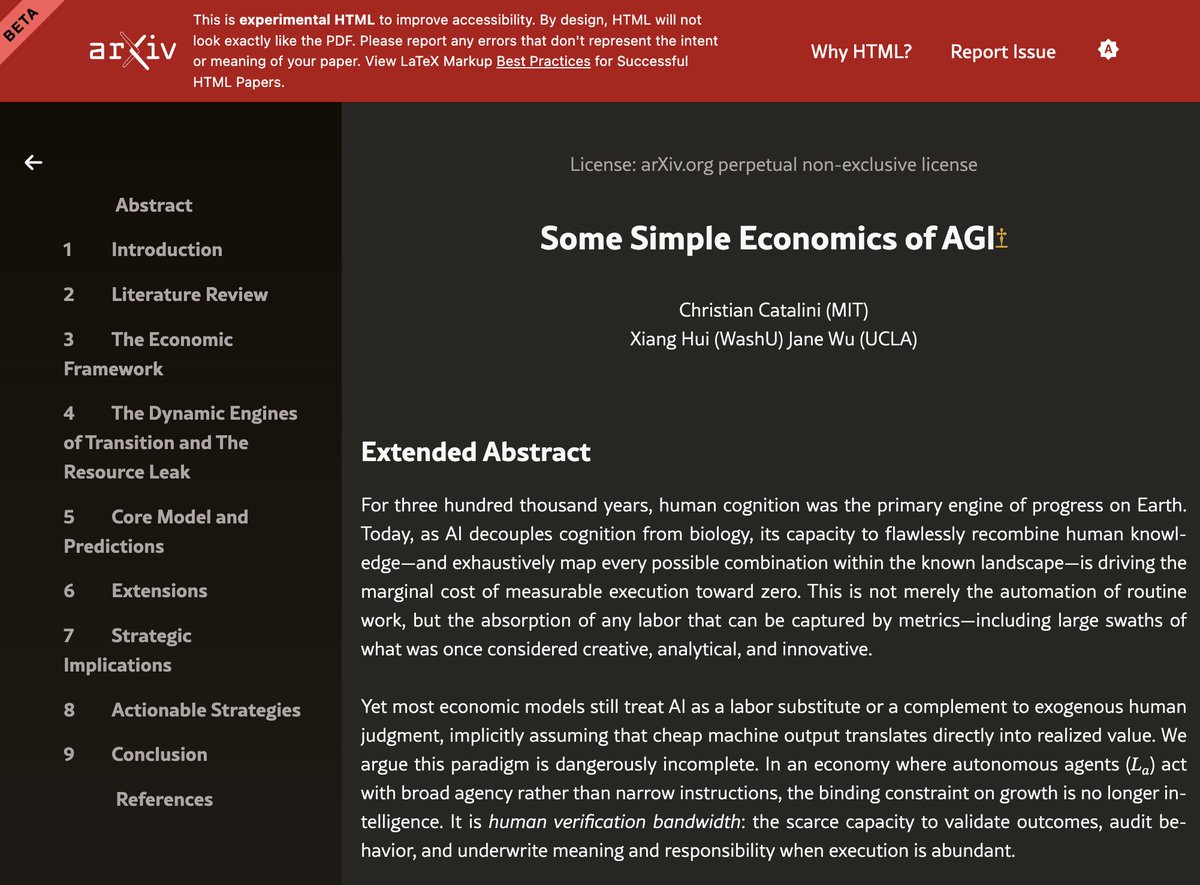
1/ Some Simple Economics of AGI—🔥🧵
Right now, there is a low-grade panic running through the economy. Everyone is asking the same anxious question: what exactly is AI going to automate, and what will be left for us?
150
384
2,052
621,731
genie is out of the bottle

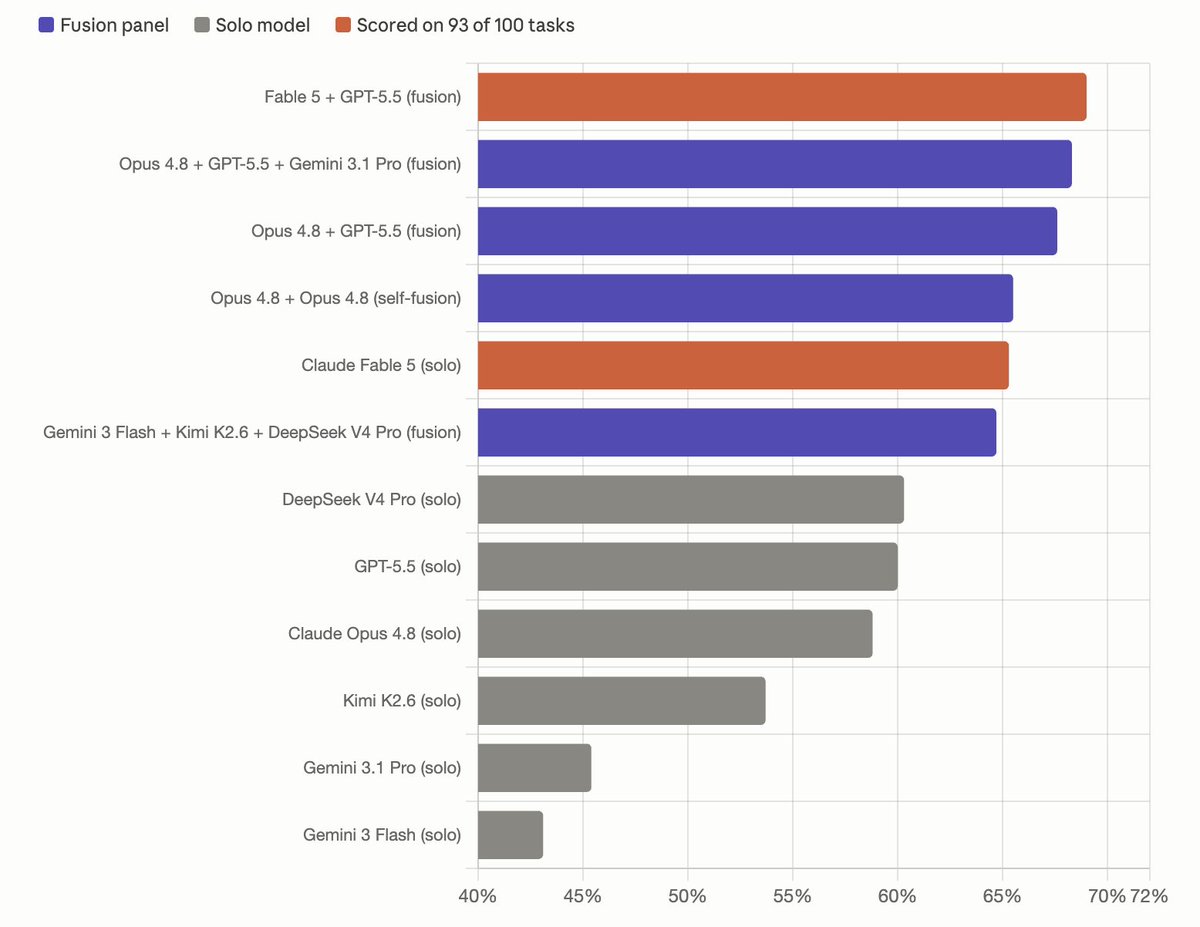
Introducing the Fusion API, the smartest compound model in the market.
Fusion achieves Fable-level intelligence at half the price.
How it works 👇
1
3
610
Intelligence is a powerful equalizer and engine of social mobility.
As parts of it become abundant, we may discover the human mind has far more dimensions than our metrics capture.
Future generations will also be baffled that we ever found our calling without AI.
3
12
516
Jun 13
Not your weights, not your model.
x.com/AnthropicAI/status/206…
Jun 13

The US government, citing national security authorities, has issued an export control directive to suspend all access to Fable 5 and Mythos 5 by any foreign national, whether inside or outside the United States, including foreign national Anthropic employees.
The net effect of this order is that we must abruptly disable Fable 5 and Mythos 5 for all our customers to ensure compliance.
Access to all other Claude models is not affected.
We apologize for this disruption to our customers. We believe this is a misunderstanding and are working to restore access as soon as possible.
Read our full statement: anthropic.com/news/fable-myt…
2
2
20
5,715
Jun 12
OpenAI is reportedly weighing price cuts. Anthropic isn’t. It doesn’t have to: SOTA is worth charging for.
Except open source keeps shortening the half-life of it.
Then it’s textbook Bertrand. Same product, price falls to cost. OpenAI just had to face this first.
Jun 4

Everyone got the economic implications of the Bitter Lesson backwards.
A little awkward for the labs: the theory they cite to explain their dominance is the same one that says their core product can't be a defensible prize.
The lesson gets quoted as if it were universal — enough compute, and general methods win, everywhere. The fine print is that this only works where "good" is cheap to verify.
Point compute at a crisp objective with a reasonable feedback loop and it eats the task, which is why math and code fell first. And "the lesson applies here" turns out to be the same as "this domain has no margin left in it" — compute isn't scarce enough to lock anyone out (every hyperscaler will have enough of it), and open source distills the frontier on a short lag regardless.
Capabilities converge, and the pressure shifts to better routing across models to minimize cost.
Winning a verifiable domain comes with the curse of being commodified on the other end of the race.
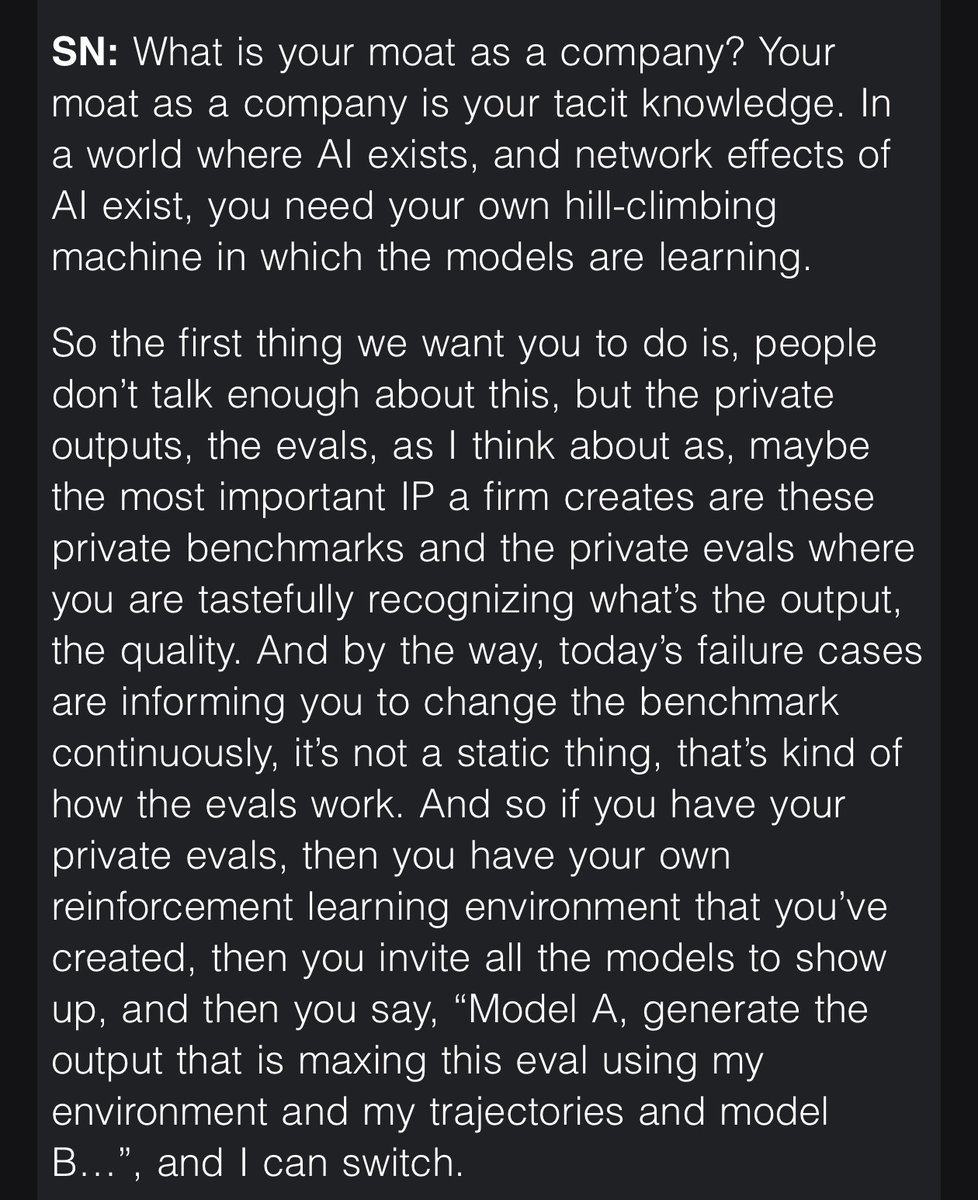
But here is where things get interesting, and why @satyanadella is playing one move ahead of many: the other half of the economy is less accommodating. Is this the right strategy, the right early-stage investment, the right hire, the campaign that actually captured a new trend — here "good" is expensive, contested, and slow to learn, so there's no cheap objective to point compute at, and the Bitter Lesson isn't binding.
Hard-to-verify domains stay valuable for an almost embarrassing reason: nobody can tell, cheaply, what counts as a good answer. Compute will hand you a thousand of them and do a sloppy job at telling you which one is the one you should ship.
Taste, judgment, curation based on experience: that's the surface where the Bitter Lesson, verification being the true bottleneck, delivers defensible businesses.
Which tells you where value will accrue. The models — mostly compute, data, and increasingly tooling and architecture — are the inputs that commoditize first, so putting your moat there is choosing, deliberately, the race with no margin.
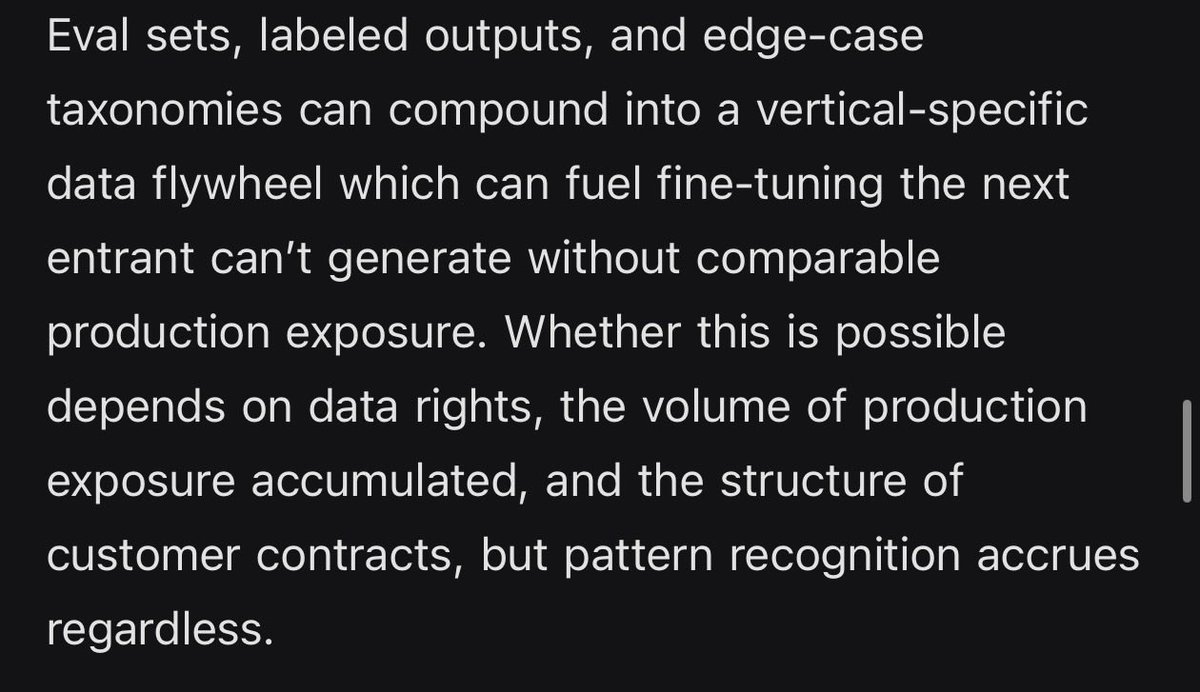
The interesting move is one level down, in the sectors the lesson can't reach, and there the only durable asset is whatever defines "good" where good isn't easily verifiable: your own verification stack. The proprietary record of what actually counted as right — the "this was wrong, here's why" that has to come from outside the loop, or the model will Goodhart itself into confident, sycophantic nonsense.
That moat is two things, and the second is load-bearing: the ground truth your work generates, and the expertise that keeps improving it. The trace is a record — copyable, perishable, only as current as your last correction. The expert is the renewable source: the standing ability to look at the model's next thousand answers and say which one is right, in a domain where that expertise lives in nobody else's head.
Compute can't automate a signal it can't measure, and open source can't distill weights that are still inside your people. What stays scarce is the firm that can keep climbing up the intelligence value chain.
@satyanadella makes the operating version of the case below — your own hill-climbing machine, with the models learning inside it. The polite way of saying: bet where there is no cheap verifier yet (and ideally there never will be), and hire and retain the experts who are the top verifiers in their domain.
Which leads us back to the labs and that awkward spot. They can't defend the model — the theory they live by commoditizes it first, and competition is thorough that way — so they have to come for your eval and verification layer instead: a complement worth absorbing, the kind that arrives bundled into the platform as a thoughtful free feature, for your benefit, naturally.
"the model alone is no longer the product"— Greg Brockman
To succeed, the one input they have to quietly fold in is the ground truth your own operation throws off every day.
Your moat was always the private traces — your failure cases, your taste, the benchmarks only your own work produces.
Outsource your traces and you've outsourced judgment, which was, the job.
4
12
3,914
Jun 11
1/ Anthropic quietly rationed the one domain where AI compounds fastest. The backlash got the safeguard made visible. Not removed, not auditable. Preview of the defining policy fight of the next few months: who sets the borders of self-improving AI, and on whose word.
3
1
5
711
Jun 11
For most of history, finding out what you’re good at required the right mentor, firm or zip code. AI collapses all three into the same chat window. The constraint on mastery is no longer access. It’s finding the domain where your learning rate is steepest—and building.
3
2
18
1,053
Jun 11
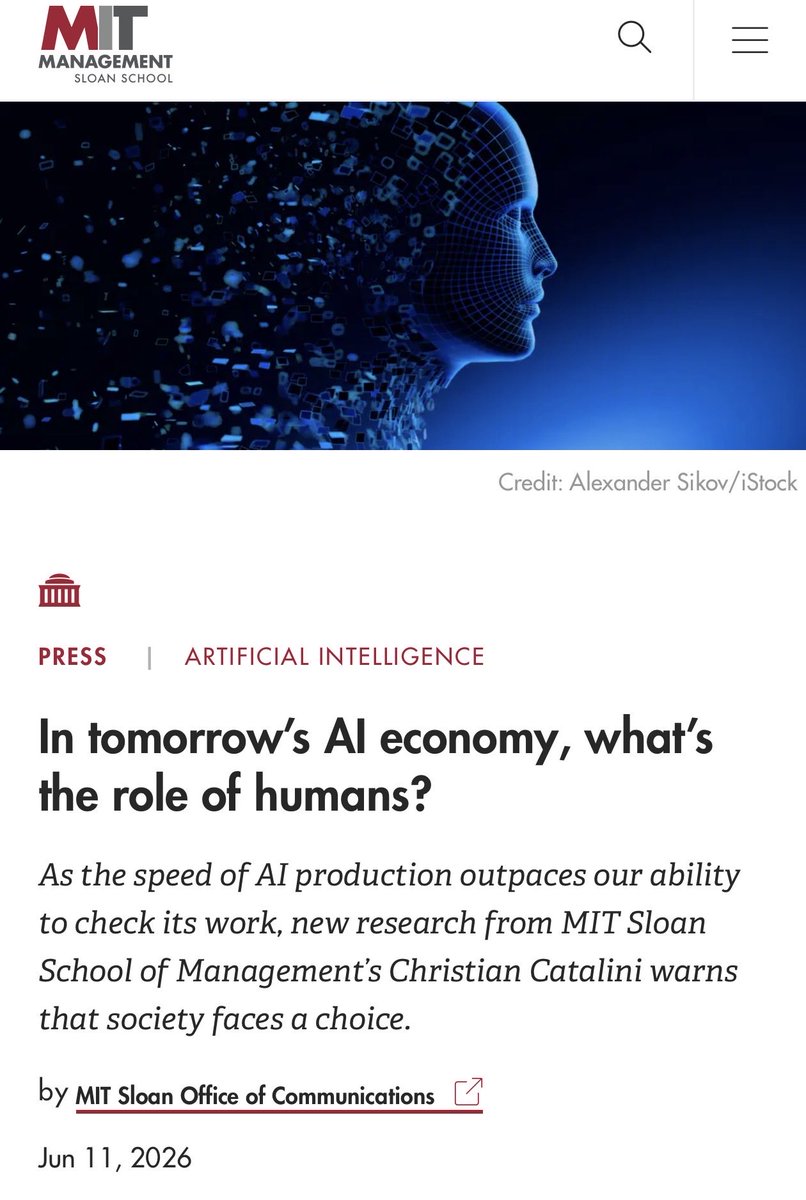
We unpack what AI-native individuals will do to stay on the frontier: accelerated mastery, synthetic practice, moving up the intent-and-underwriting stack in Section 8 of “Some Simple Economics of AGI” (w/ @wu_jane @xianghui90): arxiv.org/html/2602.20946v2#…
1
3
292
Jun 11
Since the paper is over 100 pages, you can feed the MD file directly to your favorite LLM:
catalini.com/s/paper.md
1
2
247
Jun 10
Intelligence wants to be free
Jun 10

Scientific research is fundamental to advancing civilization and helping people globally to solve the most critical problems, from medicine to materials, from brain science to physics, and much beyond. This is only possible when scientists have access to the best tools of the time to conduct scientific research, including having access to AI-based tools.
4
3
16
2,822
Christian Catalini retweeted

Jun 10
Cyberpunk vibes intensified sharply today.
141
112
2,107
219,880
Christian Catalini retweeted

Jun 10
if fable 5 agrees to do your work instead of downgrading you to opus, you’re in the permanent underclass
43
163
5,134
269,598
Jun 10
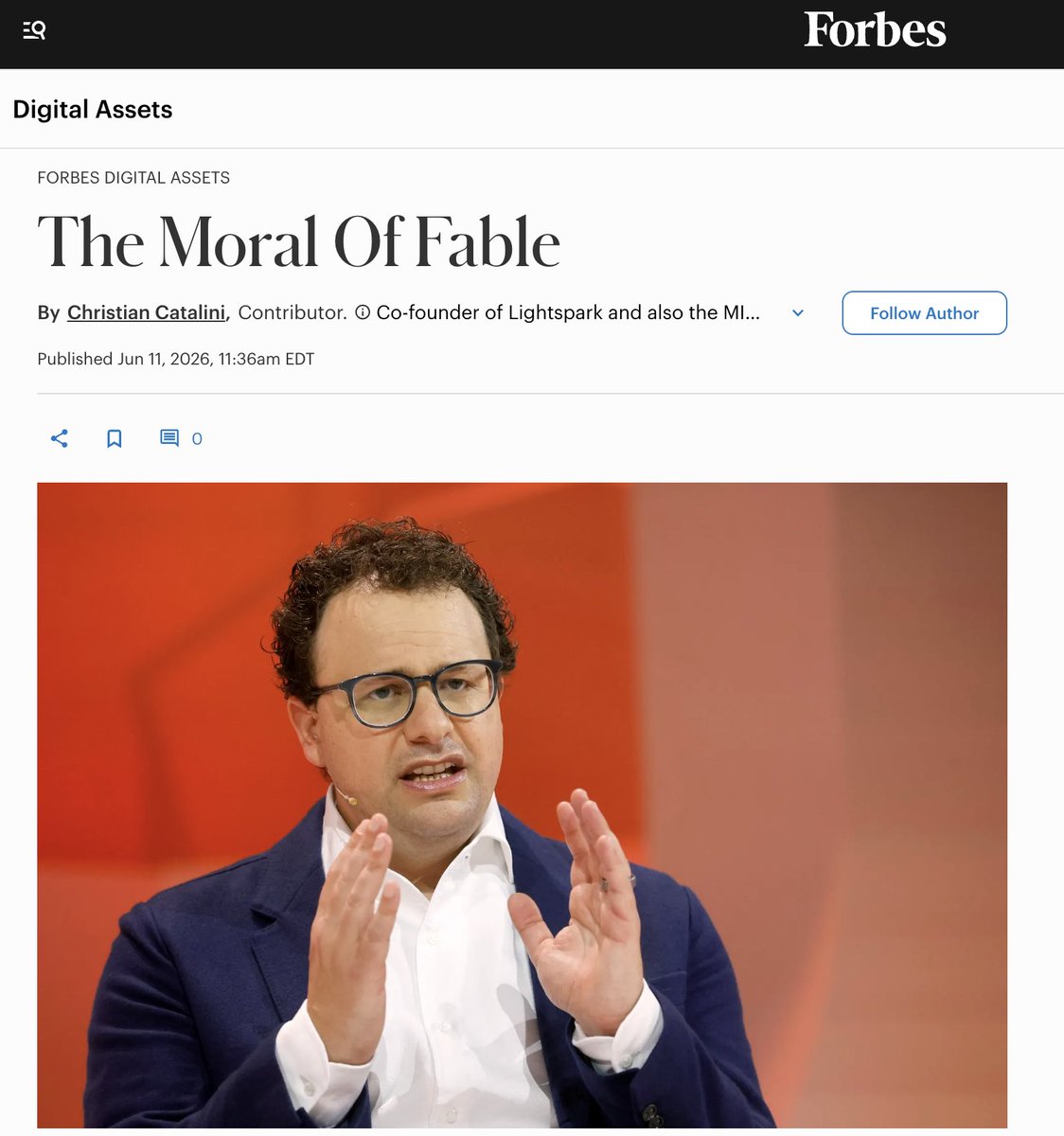
The moral of the Fable: verification sets the speed, and the labs draw the borders.
x.com/ccatalini/status/20647…
3
19
1,896
Jun 9
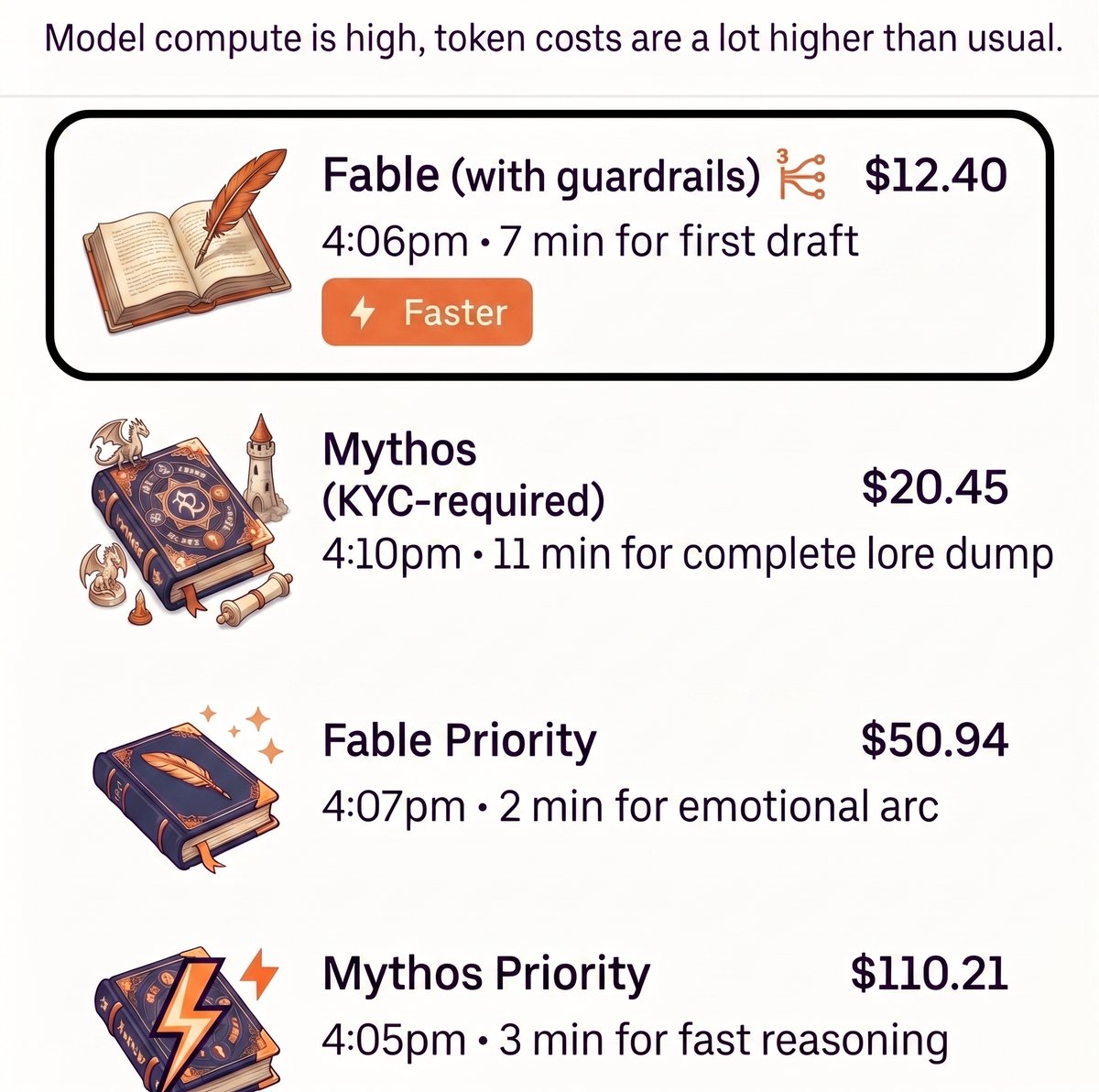
Waiting for Fable Pool, where you split the fare and share a context window with three strangers.
1
1
15
939
Jun 8
We are building recursive self-improvement for AI.
We must urgently build a radically faster version for humans.

World Labs CEO Dr. Fei-Fei Li says AI must change how we teach and evaluate students:
"AI must change learning. AI must change K-16 learning."
"The most precious resource of our entire world is human capital."
"When we have gotten the technology that can answer standardized tests... when AI can do better than an average human, it's not about humans are bad. It's about we need to change the education system."
"We need to change how we evaluate. We need to change the way we empower teachers to educate the next generation of students where they can use these tools, be empowered, and do things that we can never imagine."
"All of the kids today should not be scared of AI. They should feel the human agency to lead AI, to use AI in the right way, and to use AI to make the impact that they want to make for the world."
@drfeifei at Bloomberg Tech live with @emilychangtv
2
15
3,965