A collective set up by teachers to support physics teaching worldwide. Articles, chats & more for all involved in physics teaching. Come & #ChatPhysics with us!
It is getting close to 'Job Season' - that period where you are trying to find the right job in the right place at the right time
- whether it is Science or Physics we will try to promote jobs we see posted
ALT Youre At The Right Place At The Right Time Neil Degrasse Tyson GIF
“We just want to say how completely fired up we are for you.”
Artemis II crew members @Astro_Reid, @AstroVicGlover, and @Astro_Christina hand the Artemis baton to the newly-announced Artemis III crew.
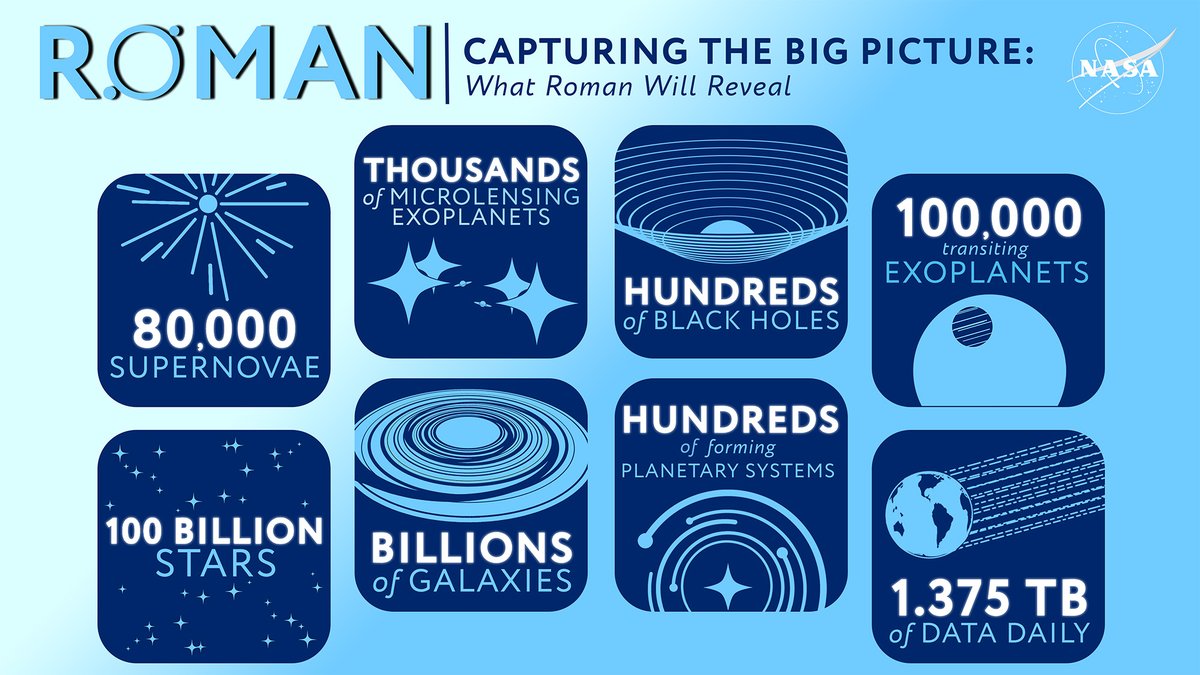
Our @NASARoman space telescope is officially slated to launch on Aug. 30!
Get the details and follow Roman's journey on our new Roman Space Telescope blog: go.nasa.gov/3RQxDIc
ALT An infographic about the Roman Space Telescope, titled "Capturing The Big Picture: What Roman Will Reveal." Various boxes beneath highlight that Roman will observe, for example, "80,000 supernovae" and "billions of galaxies". Credit: NASA's Goddard Space Flight Center
Is time travel possible. In this recent (13 min) interview with @BigThink I talk about the possibility of time travel into the future and the past according to our current understanding of physics and the problems it raises. youtu.be/q466zz0vMag?si=bglp… via @YouTube
I wonder how many schools are still lacking Physics teachers. While being told they must offer TripLe Science to anyone who wants to choose it, i doubt there is an excess (unless schools don't think the need a specialist?)
Discuss...
The DfE has sharply reduced its target for recruiting postgraduate teacher trainees next year, with music, physics and RE among the subjects seeing the largest drop in ITT ‘need’
tes.com/magazine/news/genera…
Five years ago today, NASA’s Ingenuity Mars Helicopter took its first flight on Mars!
After 72 flights, 11 miles flown, and a top altitude of 24 meters, Ingenuity ended its mission on January 25, 2024.
Congratulations to the Muon g-2 Collaboration @CERN@BrookhavenLab@Fermilab, winners of the 2026 Breakthrough Prize in Fundamental Physics, for multi-decade, groundbreaking contributions to the measurement of the muon’s anomalous magnetic moment, pushing the boundaries of experimental precision and igniting a new era in the quest for physics beyond the Standard Model.
breakthroughprize.org/News/9…
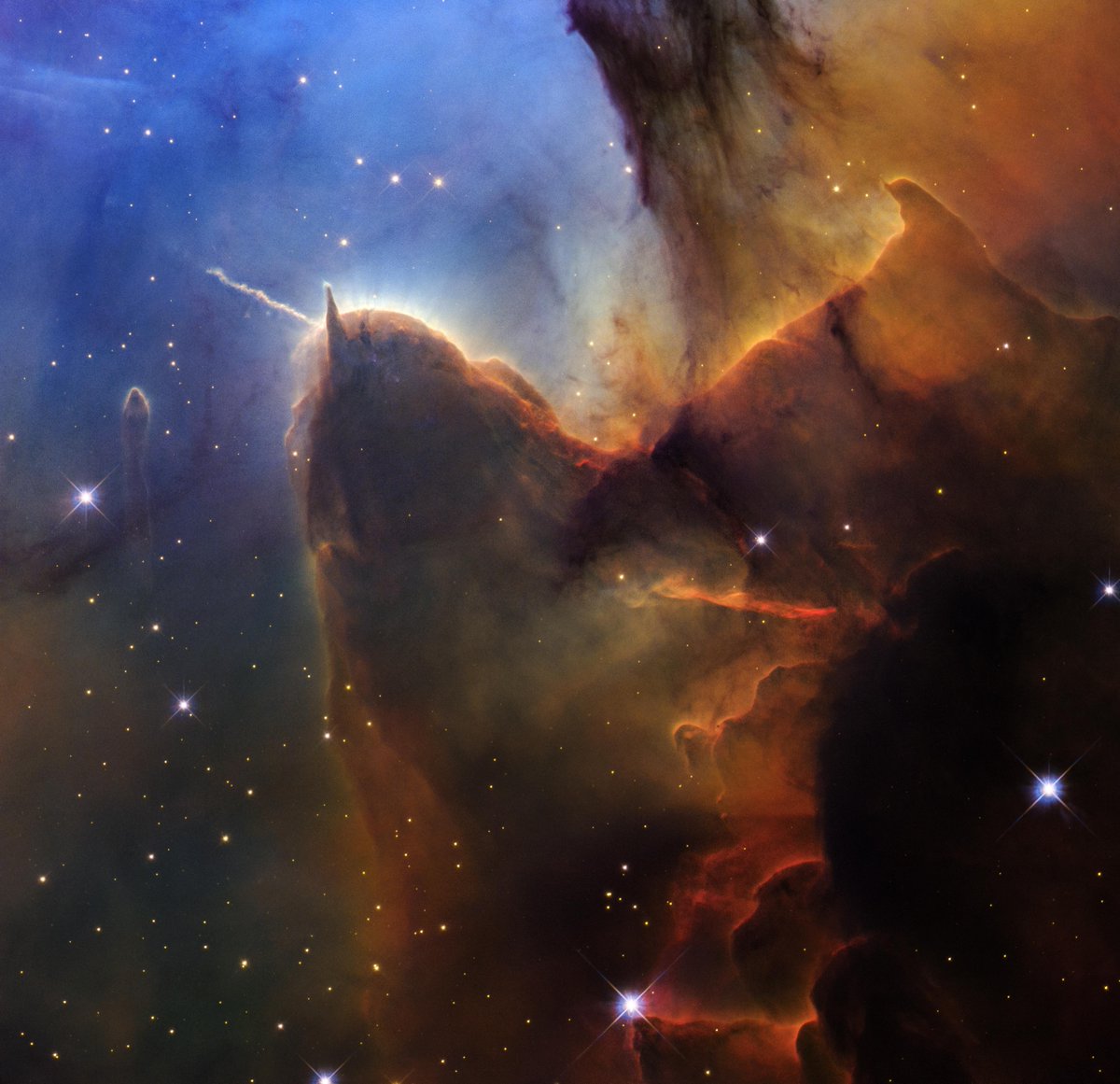
Welcome to Hubble's 36th birthday week! ✨🎂
We're kicking things off with a new view of the cosmos, courtesy of the telescope-of-honor. Hubble captured brilliant details of the Trifid Nebula, a star-forming region about 5,000 light-years from Earth: go.nasa.gov/4sJ7dEU
ALT A tightly cropped Hubble view of a vast star-forming region known as the Trifid Nebula. The top left is bright blue. Brown and amber colors run from top right through the center in irregular, overlapping lines to the bottom-center. At bottom right, the view is almost black. Tiny, amber-colored stars appear throughout the scene. Toward the left there is a prominent brown shape that looks like a head with two horns. The left horn points left and is wavy. The right horn is triangular and points up. The brown dust continues, flowing down, as if along a back, and up toward the top right. A prominent line, about the same length as the left horn, appears below the middle of the body, and changes from orange to red. A small, separate semi-transparent pillar is left of the head. A few slightly larger, blue foreground stars with four diffraction spikes appear throughout.
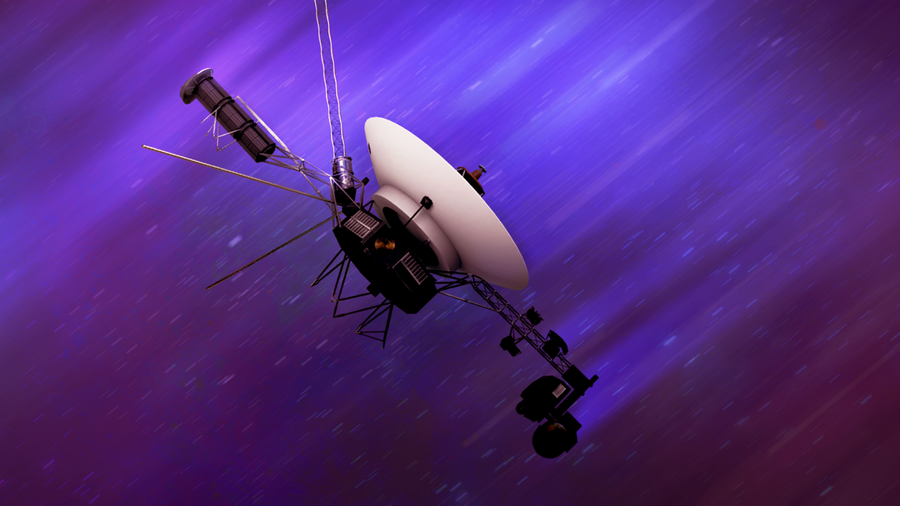
To conserve power, engineers at @NASAJPL have turned off an instrument on Voyager 1 – but the science continues!
Voyager 1 has two remaining science instruments – one that listens to plasma waves and one that measures magnetic fields. Learn more: science.nasa.gov/blogs/voyag…
ALT Illustration of a Voyager probe in deep space. The spacecraft features a large antenna dish and several other antennas and instrument platforms extending from its central body almost like the legs and antennas of an insect.
Action. Wonder. Adventure. Artemis II has got it all. Don't miss the moment. Our crewed Moon mission will launch as early as April 1.
Learn how to watch: nasa.gov/ways-to-watch/
Standing on the shoulders of giants.
As the Artemis II crew prepares for launch no earlier than April 1, they recently took a moment to pay homage to the Apollo 10 crew and the groundwork they laid for the Artemis II Moon mission.
ALT This GIF cycles between two different images: an image of the Apollo 10 astronauts posing in their white spacesuits in front of the Saturn V rocket and an image of the Artemis II astronauts posing in front of the Space Launch System rocket. Credit: NASA
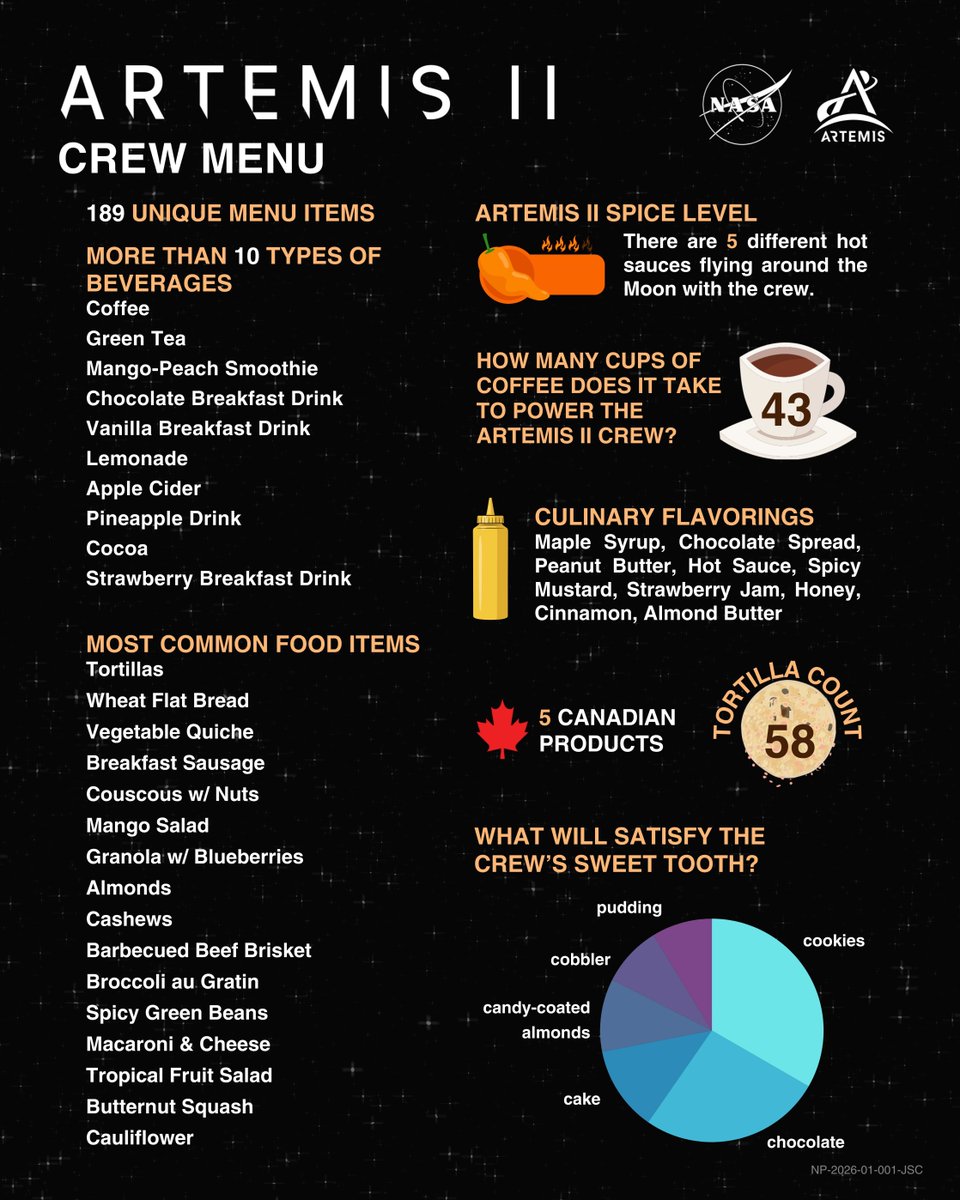
Brisket and cobbler and quiche, oh my!
Curious what astronauts eat on a 10-day trip around the Moon? Read about how we design and prepare meal plans for Artemis II: go.nasa.gov/4ceYlSu
ALT A graphic depicting the food being carried aboard the Artemis II mission, including 189 unique menu items, five different hot sauces, and a variety of flavorings. It is set against a dark, starry background. Credit: NASA
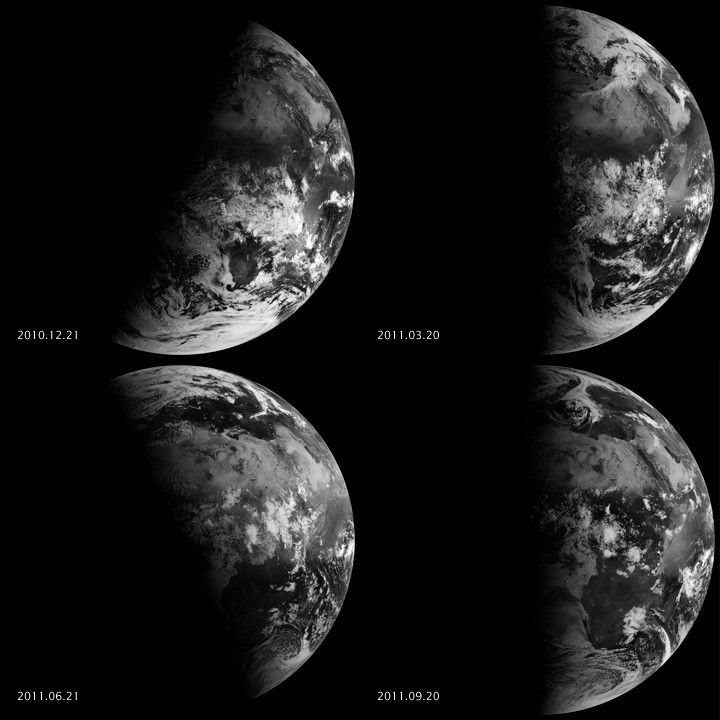
Happy vernal equinox! 🍀
Today marks the first day of spring in the Northern Hemisphere and the first day of autumn in the Southern Hemisphere.
After today, the Sun will shine more directly on the Northern Hemisphere than on the Southern Hemisphere until the autumnal equinox.
ALT An image containing four snapshots of Earth, each at a different equinox or solstice. Each Earth is perfectly divided in half by sunlight and shadow. The images of the equinoxes (dates listed as March 20, 2011 and Sept. 20, 2011) have sunlight centered along the equator, with Earth lit from 12 o'clock to 6 o'clock. The image of the summer solstice (June 21, 2011) shows Earth lit from about 11 o'clock to 5 o'clock. The image of the winter solstice (Dec. 21, 2010) shows Earth lit from about 1 o'clock to 7 o'clock. Credit: NASA
This was a very good question from Ryan - why does the Universe on the largest scales resemble the Universe on the smallest scales? The answer, for the case of the distribution of galaxies on the sky, is that the pattern we see has its origin in quantum mechanical fluctuations during inflation - before the hot big bang (at least according to inflationary cosmology, which is the most widely accepted model at present). Hail Mary is a very good film by the way :-)
Hi. Would really appreciate talking to anybody that teaches A level Physics Edexcel Pearson and has experience with the Core Practical visits. Please DM me if possible. @ChatPhysics