
Joined November 2008
- Tweets 904
- Following 529
- Followers 1,666
- Likes 1,663
47 Photos and videos




Paweł Bylica retweeted

Apr 23
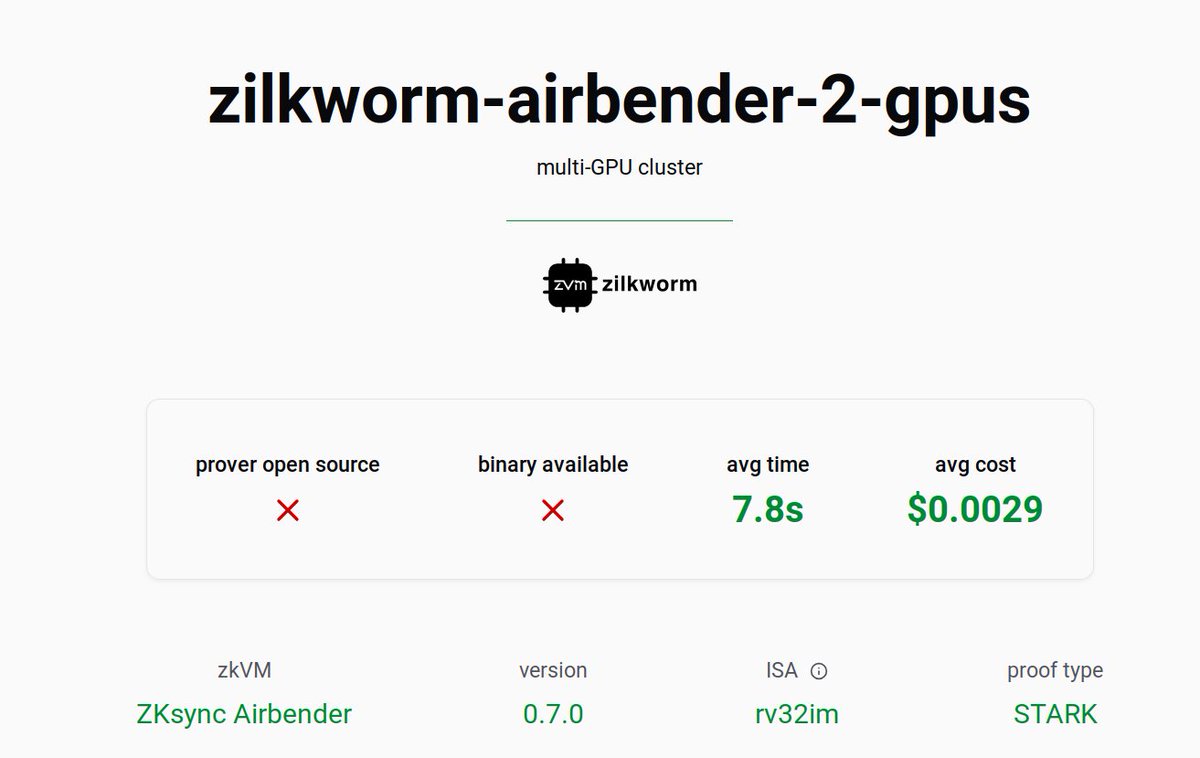
Last week we trespassed into the realm of RTP with 2 GPUs, this week we broke the 8 second barrier with zilkworm-airbender @eth_proofs
Next-stop: Avg latency less than 10 seconds
5
13
629
Paweł Bylica retweeted

Apr 22
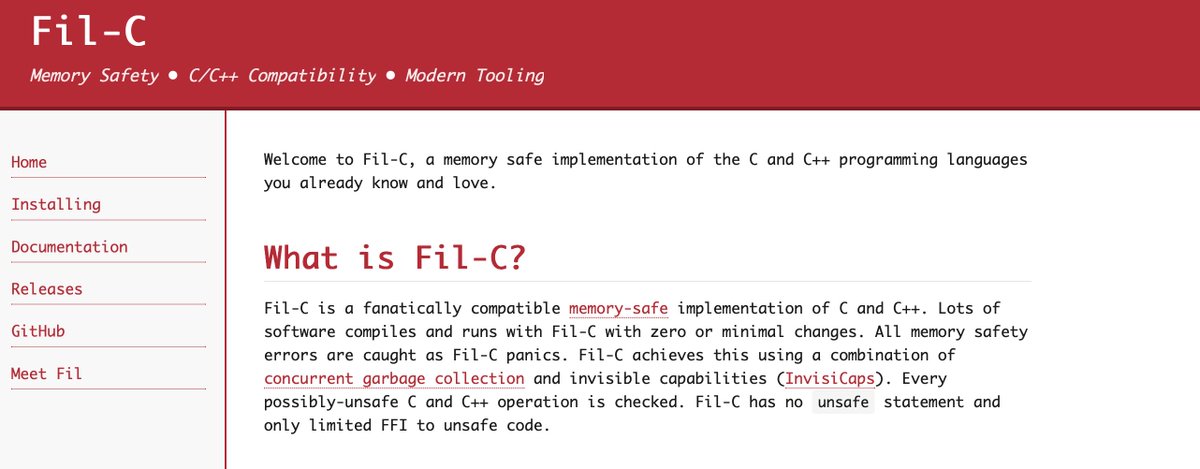
Fil-C is a C/C compiler that builds C/C projects into a binary with "complete memory safety". It is a great project by @filpizlo.
In part because it is so easy to do, I am going to make sure that all the production-quality projects I manage support Fil-C directly.
For the most part, this means skipping over direct assembly calls. You can still have the assembly calls, but you need some alternatives code path when building with Fil-C.
As a side benefit, running the code with Fil-C serves as a sanitizer: if there is any bad memory business going on, Fil-C will just crash you out.
Interestingly, Fil-C has no escape hatch. It is a totalitarian approach.
18
90
778
48,892
Paweł Bylica retweeted

Apr 13
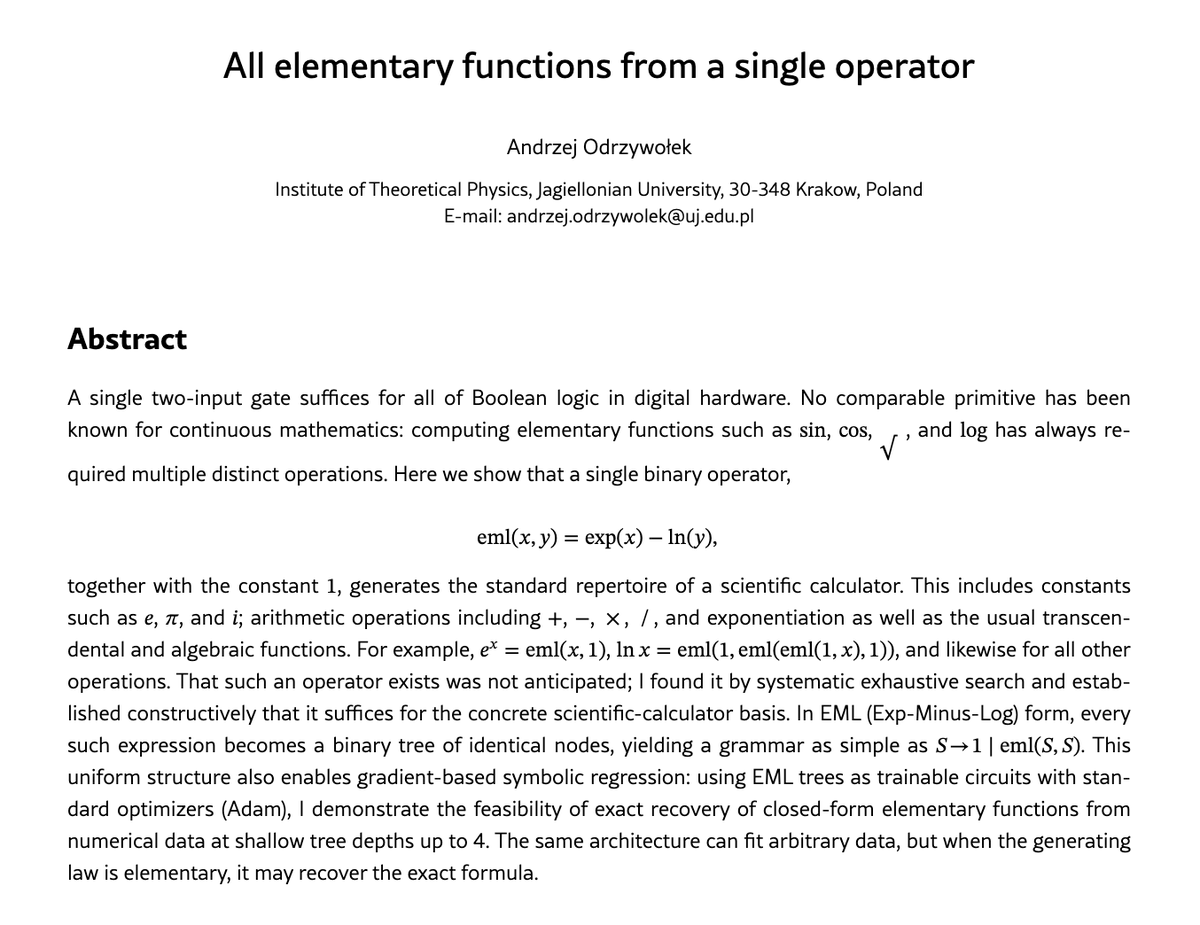
Researchers just proved that every single elementary function, sin, exp, log, sqrt, comes from one single binary operator.
It is like finding the “God Particle" for calculus.
In computer science, every complex program breaks down to a single logical operator: the NAND gate. It is the fundamental building block of all digital reality.
But for continuous math, physics, engineering, machine learning, we thought we needed a massive toolbox.
Addition. Subtraction. Trigonometry. Logarithms.
Every scientific calculator and neural network has to juggle all of them.
Until today.
But this paper proved that every single mathematical function can be generated by a single, bizarre binary operator.
eml(x,y) = exp(x) - ln(y).
Combine that with the number 1, and you can build everything.
Pi. The square root. Sine and Cosine. Arithmetic.
It is all just the exact same operator, repeating over and over again in a binary tree.
Nobody anticipated this existed. It was found by systematic exhaustive search.
But the implications for AI are massive.
Instead of an AI struggling to combine different mathematical rules to discover a new scientific law, it can just use a single, uniform architecture.
One trainable circuit. One repeatable node.
We thought the language of the universe was complex.
It turns out, it's just one equation repeating in the dark.
248
1,081
6,260
573,214
Paweł Bylica retweeted
Apr 13
GPU prices aren't gonna like this.
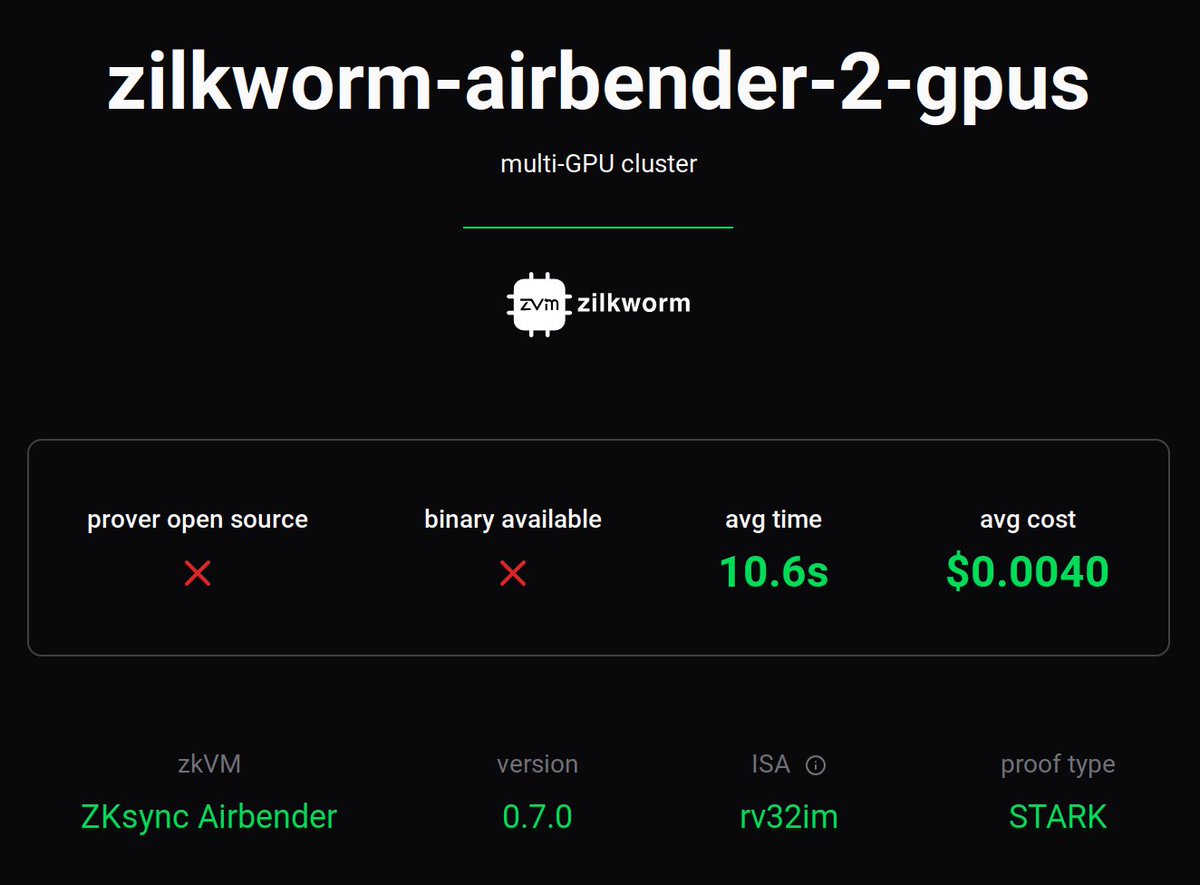
Sub-12 second #etheruem #zkevm proving achieved on just 2 5090s
ethproofs.org/clusters/5a74e…
As a great man once said, "basically a toaster"
5
25
1,558

Mar 19
In the future, EVM will spend more time computing gas than computing.
6
3
43
2,826
Paweł Bylica retweeted

Mar 17
Announcing powdr-wasm!
powdr-wasm is an optimized zkVM for WASM, built on top of @openvm_org and the novel 𝑐𝑟𝑢𝑠ℎ ISA.
Early benchmarks already show 1.5x fewer trace cells & faster proof times compared to RISC-V (OpenVM).
It also supports Go guests via WASI!
👇
7
14
99
15,900
Paweł Bylica retweeted

Jan 22
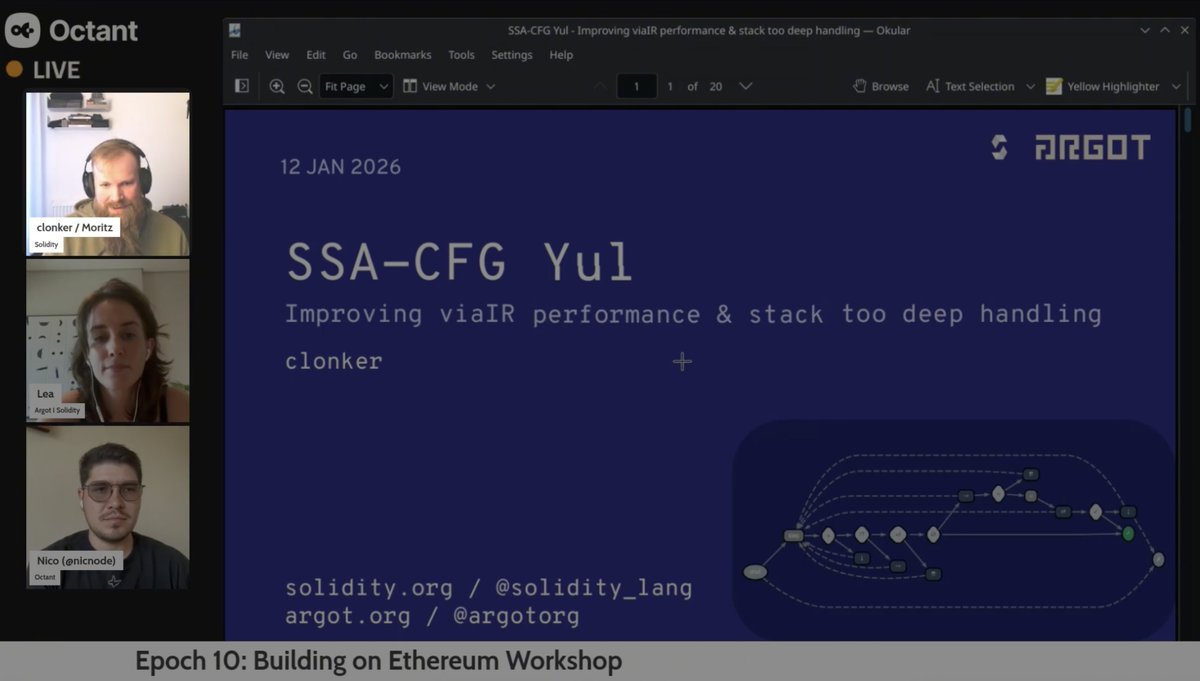
Solidity compilation is now 5x faster than it was in 2023.
The @solidity_lang team has been grinding on backend modernization, and they're not stopping. Next on their list is killing "stack too deep" errors for good.
This is the kind of work that doesn't make headlines but keeps Ethereum moving.
2
6
40
1,397
Paweł Bylica retweeted

Jan 15
Great post!
On the security of autoprecompiles: we're working on multiple fronts:
- optimizer & equiv checker in Lean
- FV proving equiv of R5 code & generated circuits
- simplifying the Rust code to a minimal core
In the end autoprecompiles will enable better perf & security!
Jan 14

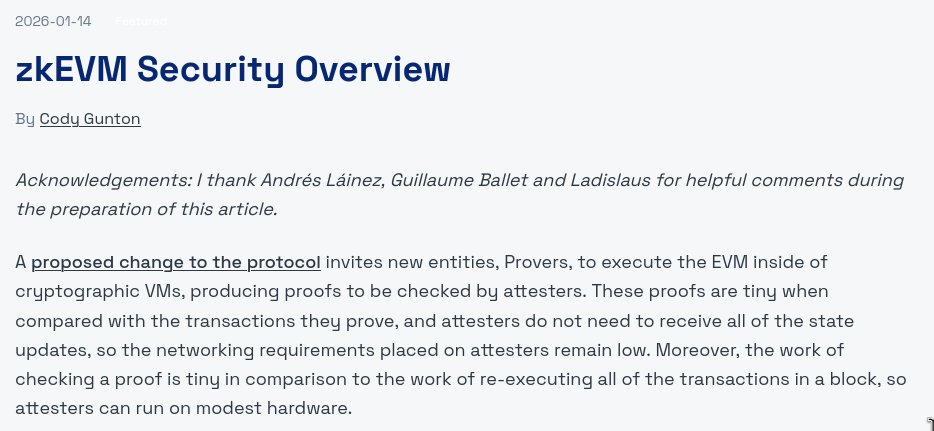
How do we minimize risk when integrating zkEVM proving into Ethereum L1? My latest blog post (link in thread) approaches this question by breaking down the risks into granular categories, making tradeoffs explicit. 1/7
3
15
1,280
Paweł Bylica retweeted

Jan 6
The fact drives a lot of talent away.
You can just do things, but it must already be on Vitalik's todo list.
Jan 6

Vitalik does run the EF, actually. He chooses not to control some things.
1
2
15
5,619
Paweł Bylica retweeted

11 Dec 2025
Fans of the C language, embedded engineers, compiler engineers -- take a look at this RFC to bring null safety and modern type narrowing to the clang compiler! discourse.llvm.org/t/rfc-flo…
1
9
38
2,829
Paweł Bylica retweeted

1 Dec 2025
We’re thrilled to welcome @rodiazet to the Solidity team!
Many of you already know his work from the Ipsilon team, where he contributed important features such as EOF support in the Solidity compiler, as well as earlier contributions during the Ewasm development efforts.
With a strong background in compiler design, deep knowledge of EVM internals, and his ongoing work on evmone, a fast C EVM implementation and crucial part of the Solidity testing stack, he brings invaluable expertise to the team.
On top of that, as an Ethereum core dev, he’s well versed in the protocol design process, including shepherding EIPs and contributing to core decision-making.
This hire helps replenish team capacity following the personal and organizational changes earlier this year. Radek will strengthen the C side of the Solidity compiler, contributing to backend and optimizer features including SSA-CFG and ethdebug.
We’re excited for what we’ll build together. Welcome aboard!
1 Dec 2025

It’s been three years at the @ethereumfndn — easily the most rewarding professional journey I’ve had so far. Now it’s time for the next exciting step. I’m thrilled to be joining the @solidity_lang team and contributing to one of the most important parts of the @ethereum stack!
6
8
73
10,786
Paweł Bylica retweeted

29 Nov 2025
Rust's biggest achievement might be annoying C programmers so much that they finally made it memory-safe.
29 Nov 2025

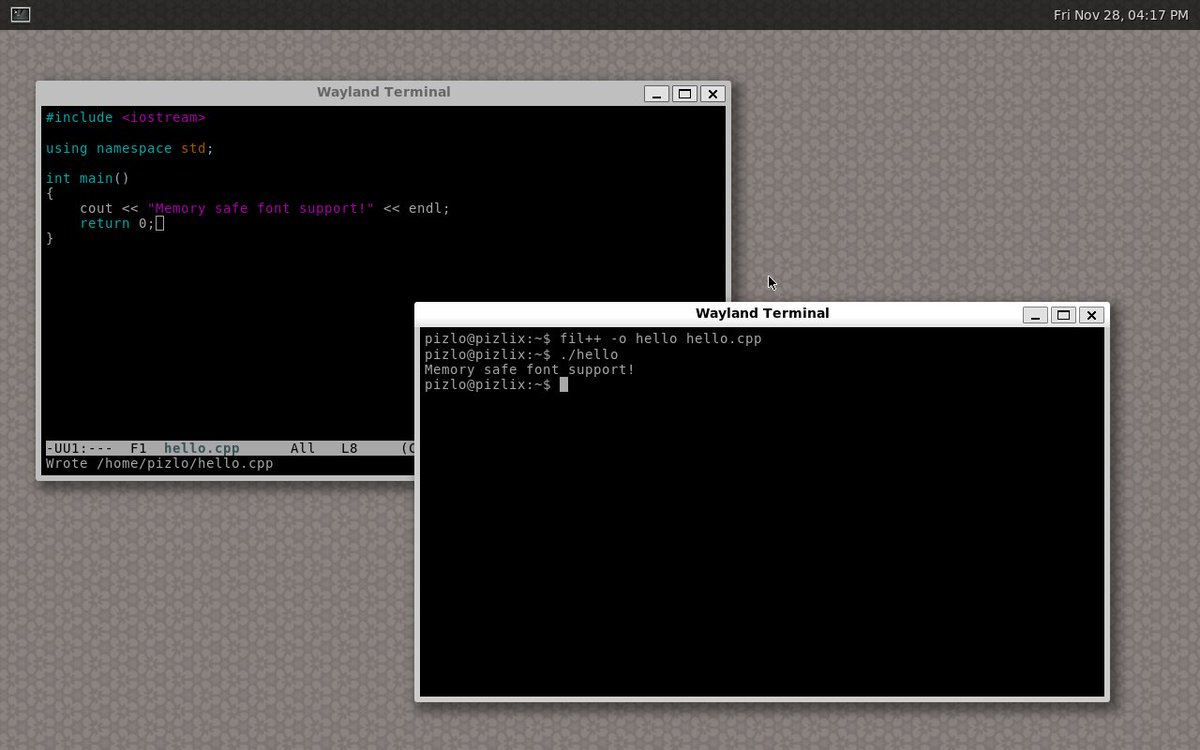
Memory safe Linux now has pretty fonts because I ported freetype, fontconfig, harfbuzz, and graphite to Fil-C. This is the Deja Vu monospace font.
This entire desktop is memory safe because everything is compiled with Fil-C. It's snappy - you could use it as a daily driver
45
211
4,005
166,780
Paweł Bylica retweeted

29 Nov 2025
The era of slow, bulky archive nodes is officially over. Erigon v3.3 introduces highly efficient, indexed historical MPT proofs, which slash storage costs and deliver 5x faster retrieval speeds.
This upgrade unlocks massive benefits across the ecosystem, particularly by enabling trustless historical state access for L2 scaling and the ZK future.
Discover why this feature is essential and the mechanism Erigon used to achieve it!
erigon.tech/erigon-v3-3-intr…
#ethereumnewstoday #scaling #zk @ethereumfndn

4
20
934
Paweł Bylica retweeted

28 Nov 2025
Now that Erigon v3.3 has finally been released, I am happy to announce that we fully released our data model to store historical merkle proofs.
Now operators can query eth_getProof at any block efficiently (and under 20 TB)! It is a somewhat niche feature used mostly by ZK and bridges but one that completes the client nonetheless!
Here is the blog post alongside a technical explainer on how it works:
erigon.tech/erigon-v3-3-intr…
6
8
46
3,125
Paweł Bylica retweeted
28 Nov 2025
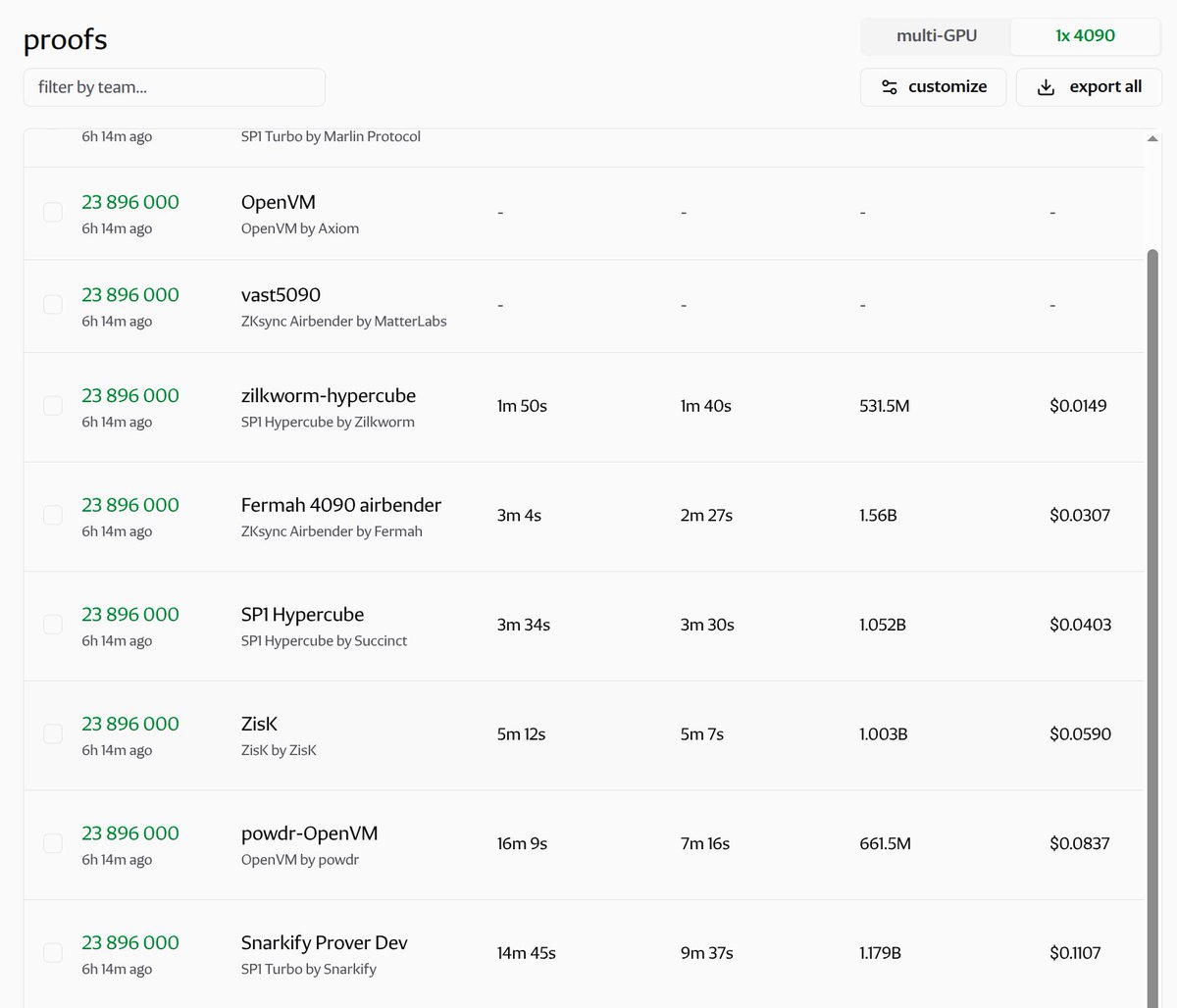
2 weeks of zilkworm-hypercube
Averaging around 35-40 seconds of proving time
(thanks @SuccinctLabs for the prover new rv64 zkvm)
But we are hitting 60M gas blocks where things may start to fall apart (see @eth_proofs dashboard)
Efficiency is crucial in scaling #ethereum L1
3
10
558
28 Nov 2025
zkVM question: How do you prove a specific guest program has been executed?
6
225