
Books: Strong Towns | Confessions of a Recovering Engineer | (Bestseller) Escaping the Housing Trap
Joined September 2008
- Tweets 13,149
- Following 605
- Followers 21,252
- Likes 23,606
657 Photos and videos







May 28
This writing by a high school kid is 🔥🔥🔥. Wow! Very impressive.
May 28

Attention hoops (and music and food) related writing outlets: Juan Miguel Adams is a high school student I've had the pleasure of "mentoring" these past few weeks but this cogent and against-the-grain Julius Randle piece up at Minnpost today is all him.
minnpost.com/sports/timberwo…
1
923
Charles Marohn retweeted

Apr 29
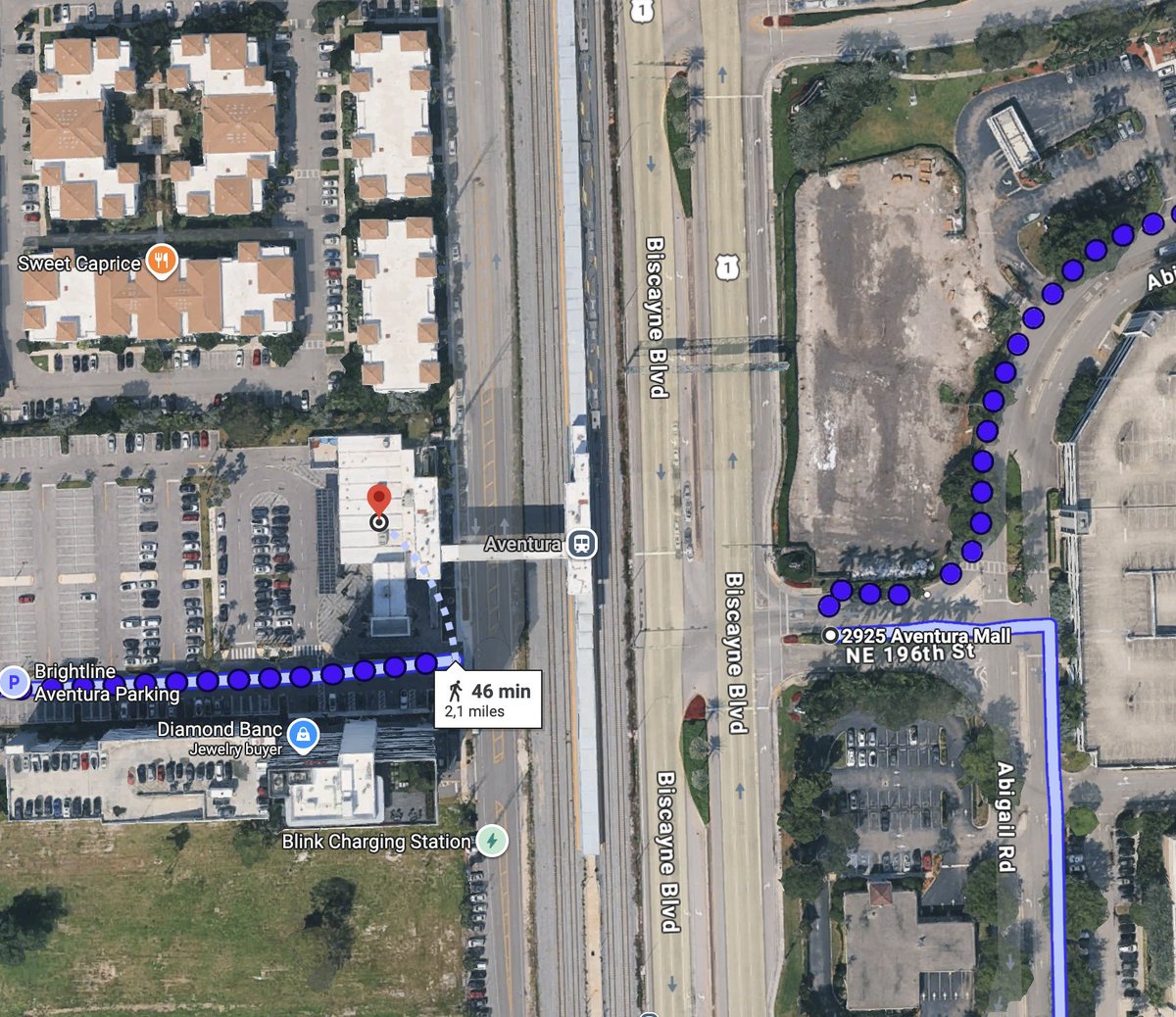
The worst kind of development is not low-density sprawl. It's high-density configured to be unwalkable and unservable by public transit. High-density = high traffic, and this guarantees all that traffic is in cars. Sadly the US exported this idea all over the world.
Apr 29

Florida is so walkable that it's a 46-minute walk to cross a single street to the train station in Aventura.
21
60
533
53,041
Charles Marohn retweeted

May 1
Finch went with all three of Gobert, Randle and Reid for 8 minutes in the 1st half -- and they won those minutes 22 to 11 ( 11).
Naz-at-the-3 is the plan without Edwards, DiVincenzo, Dosunmu and Anderson.
May 1

The Wolves had a net rating of 29.3 when all three of Gobert, Randle and Reid were on the floor together during the regular season -- though it was only for 123 possessions.
Looks like we might get a heavy dosage of that look tonight.
8
15
320
70,079
May 1
This is my favorite Wolves lineup that doesn't include Ant. Jaden at the 2 is epic.
May 1
This lineup is gigantic...
Gobert
Randle
Reid
McDaniels
Shannon
Finch hitting the athleticism button down guys
3
1,167
Charles Marohn retweeted

Apr 26
I've written for the last decade about the educational divide in the US, but culturally there is now a large divide between generations — specifically those over sixty versus basically everyone else.
The sixty-plus cohort (Boomers which I'm at the very tail end of) have a lot more certainty that they've discovered the Truth — or the high point, and often end point, of many things. From music (rock will always be here), to fashion (why would anyone wear anything but blue jeans), to politics (liberal democracy with emancipation from all forms of obligation as a human Telos).
Younger people are much more uncertain and relativistic. They don't accept the claim that it's been solved, and the Boomers' rigidity and religious-like certainty seems to them either laughably naive or arrogantly condescending.
The Boomers see everyone else as having fallen away from the path to historical perfection they paved, and are uniformly angry about that. What most of the Boomers miss is that the younger generation is living in the world they built — of hyper-individuality, of smashing of prior norms, and of moral relativism.
This post-truth, post-gatekeeping, hyper-partisan world is an endpoint of their worldview, and yet they are angry about it.
123
146
1,496
351,386
Charles Marohn retweeted

Apr 26
View from Glen Taylor’s seats:
24
45
1,147
233,825
Charles Marohn retweeted

Apr 26
Mike Conley on if he was trying to start trouble at the end of the game passing it up to Jaden McDaniels
“(Laughs) nah that was a slip up, that’s all on me I take the blame… as soon as I threw it I looked and I was like “ah it’s Jaden” I almost put my hands on my head and I was like “maybe he won’t” and then as soon as I saw him when the ball kind of bounced a couple times “it’s over man” you can even see me like lower my head”
127
958
19,309
1,883,725
Charles Marohn retweeted

LOOKA AT JADEN MCDANIELS HE'S LOVING THIS
HE'S AIN'T SCARED OF NIKOLA JOKIC LLLMMAAOO
177
1,984
21,249
1,034,041
Charles Marohn retweeted

WATCHING ON REPEAT TBH
15
368
3,259
73,511
Charles Marohn retweeted
Apr 23
Scott Foster is officiating Game 3 of Wolves-Nuggets tonight
17
10
255
25,500
Charles Marohn retweeted

Apr 21
Jaden McDaniels, deadpan delivery, on what worked for the Timberwolves offensively.
Jaden: Go at Jokic, Jamal, all the bad defenders. Tim Hardaway, Cam Johnson, Aaron Gordon, their whole team.”
Q: They’re all bad defenders?
Jaden: “Yeah, they’re all bad defenders.”
1,077
5,466
57,034
10,071,628
Charles Marohn retweeted

Mar 31
If I had the time to flesh this all out, I'd do a book on how American cities manage virtually everything at the wrong scale, and this accounts for about 80% of our routine issues. Policy wonks want to policy wonk everything; designers like me see everything as a design problem. But what I've become convinced of is we have a basic management problem.
I find this to be really difficult to communicate, so bear with me (which would be the point of writing something out, right?)
Smaller cities and towns have their limitations, but their local governments are intimately familiar with issues in town, know their constituents closely and are generally very accessible.
As cities grow larger, the population of districts also grows. Sometimes to very large numbers. My district in my city has over 80,000 people in it - represented essentially by 2 people. Bear in mind there are entire towns of half that size with a City Council of 5-12 people. So there's that aspect - the political side.
Then there's the day to day management side. As cities grow, they grow like corporations used to grow - vertically and siloed. It becomes harder and harder for lay people to know who to call, who does what, etc etc. I've seen a number of workarounds tried, with good managers and not so good ones. But fundamentally I see a systems problem - people just get farther and farther away from constituents and needs.
One result is many very localized issues just don't get dealt with well at all. Everyone in the process seems to default to solving problems at the scale of the whole city, when in fact most issues are hyper-local. That hyper-local scale gets problem-solvers in the form of BIDs, CIDs, Place-management organizations, like mine. And these groups often do a great job - because again they operate at a fine scale and are accessible.
But parts of the community without those groups, just generally don't get their issues solved.
This is but one part of a much longer thought train, but over and over again I've seen how we have countless issues because of lack of management at the right scale - a more localized one. And those issues then metastasize and become much bigger fights.
Much of this is rooted in the very 20th century idea that consolidation of governments and annexations would lead to management efficiencies. Because that was the mentality of much of society at the time. Might've sounded good in a textbook or a seminar, but it just hasn't worked.
My gut tells me so much of cities would work 1000% better if we had smaller-scale, localized governance and management. I feel like people instinctively know this or sense it, but we can't figure out how to communicate it well or solve for it.
13
8
72
8,910
Mar 21
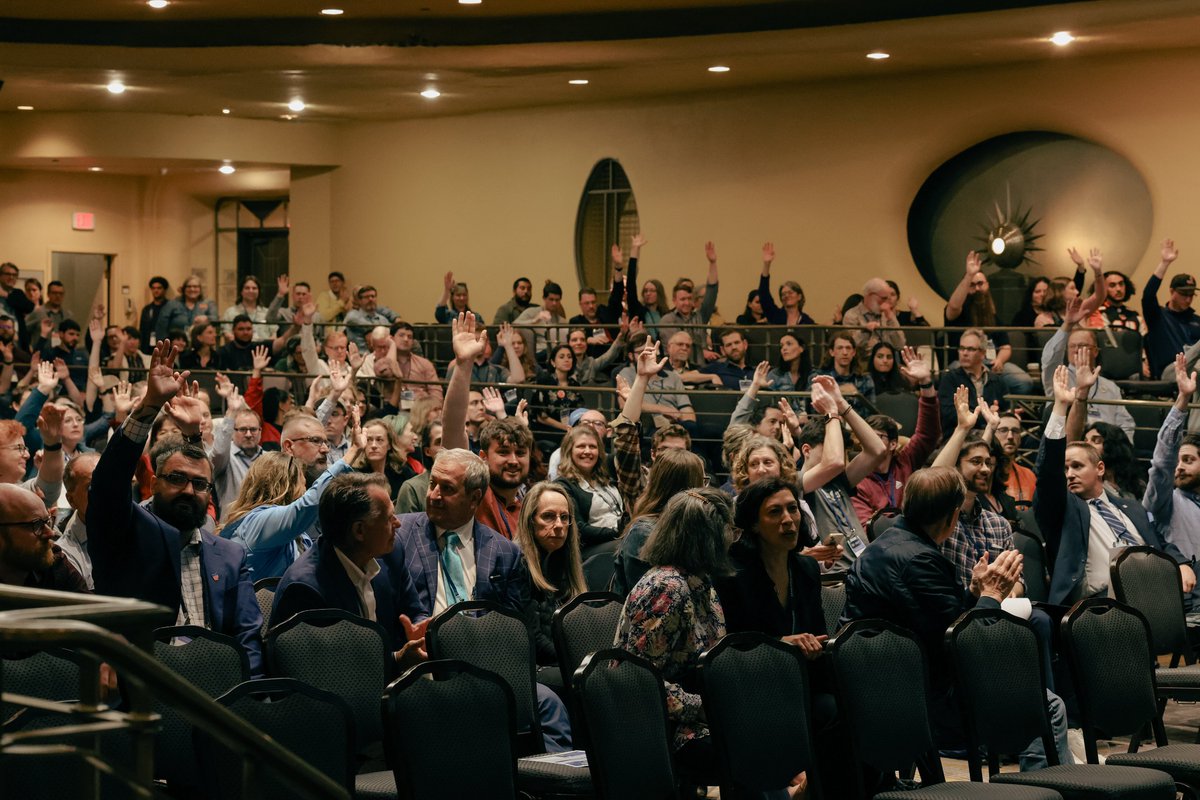
Count the number of voters in the top and bottom images.
Mar 21
A reminder that Mayor Anne Hidalgo will go down as one of the most consequential mayors of the modern time: a mayor who literally built 600 miles of bike lanes and made hundreds of streets car free in her 12 years as Paris mayor. Bravo.
1
2
161
16,129
Mar 17
In the 1960s, US highway engineers planned to used atomic explosions to flatten parts of the Rocky Mountains for highway construction.
Mar 15

Instead of fighting over a 21-mile-wide bottleneck forever, we cut a new channel through friendly territory. A dozen thermonuclear detonations and you’ve got a waterway wider than the Panama Canal, deeper than the Suez, and safe from Iranian attacks. chinatalk.media/p/its-time
Community note
The open letter ends with:
"The views expressed above do not necessarily represent those of anyone with brain cells"
chinatalk.media/p/its-time
1
1
12
1,857
Charles Marohn retweeted

Recommend this podcast. I've tuned into loads of Chuck Marohn podcasts over the years, so much was familiar — but the questions and conversation flow were really good. Worth a listen, especially if you have never heard @clmarohn speak before.
Feb 1

Chuck Marohn @clmarohn joined me on @yeomanpodcast to discuss the @StrongTowns movement, central planning, Jane Jacobs, public debt, GenZ, and bottom-up revolutions.
yeomanpodcast.com/2026/01/22…
2
4
1,069
Feb 16
We don’t have a transportation funding problem.
We have a venue problem.
It’s time to declare the Interstate construction era complete and redefine the federal role.
New white paper live discussion Thursday
strongtowns.org/event/virtua…
3
17
1,319
Charles Marohn retweeted
Feb 10
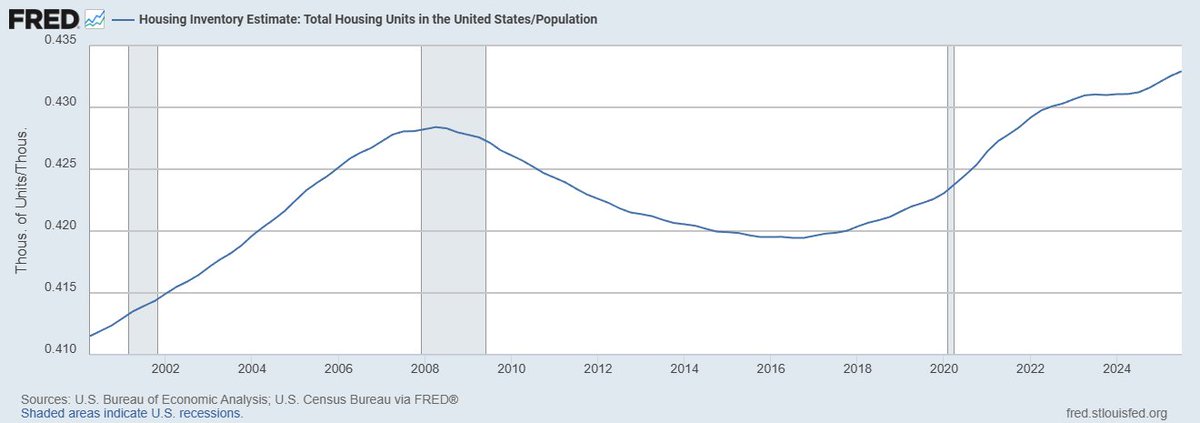
Ultimately, we will continue to be frustrated by outcomes if we define the housing market in only one dimension (supply), instead of defining it in at least two (supply finance).
1
2
5
1,070
Feb 9
For years, housing debates have leaned on a simple promise: build enough homes and prices will fall.
It’s an appealing idea.
Technical problem. Technical fix.
Anyone on this site has seen the rigid enforcement of a simplistic narrative on housing. Oh, the tweets I could dunk.
1
1
4
1,058
Feb 9
Taken together, it feels like the debate is shifting.
Not because the problem changed, but because housing was never as simple as many of us hoped it would be.
strongtowns.org/journal/2026…
1
1
3
491
Feb 9
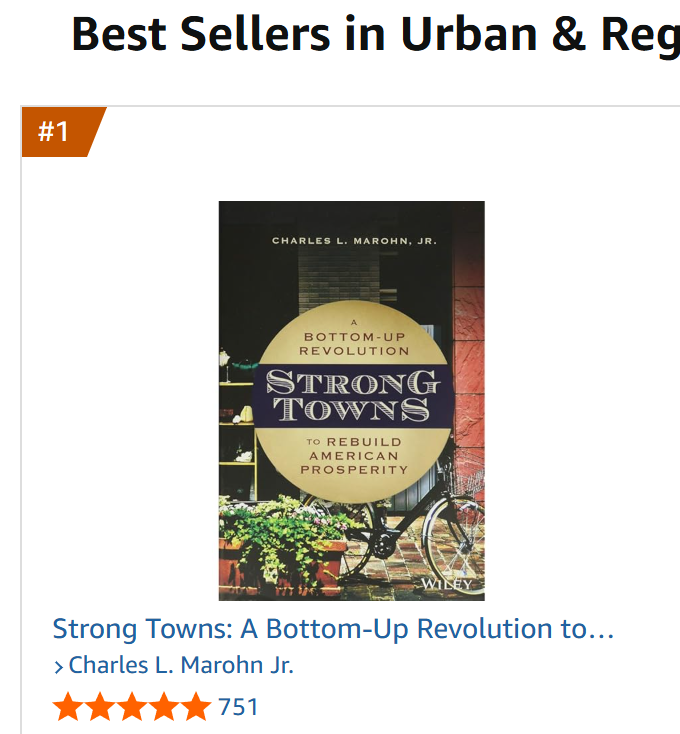
And anyone wanting to explore the real complexity of housing, and the Strong Towns response to the current crisis, there is a bestselling book for you: "Escaping the Housing Trap."
strongtowns.org/book
3
440