
Tweets are reminders to myself. Replies are me trolling friends. @bigridgemtnclub @yeomanpodcast @periodicalink @ioncompany
Joined June 2008
- Tweets 30,855
- Following 532
- Followers 4,777
- Likes 40,645
2,172 Photos and videos





Pinned Tweet

30 Mar 2024
I think a lot of folks rightly observe and articulate the problems of modernity—atomized communities, deteriorating metabolic health, ever-more industrial consolidation, etc—and assume they result from the natural progression of a humanity imperfectly directed by a central planning authority.
In their view, fixing them requires a better authority rather than no authority at all. Examples: Wendell Berry advocates for price controls in agriculture and different types of price supports, many New Urbanists seek new/different land use prescriptions and federal infrastructure subsidies, etc.
My sense is they advocate for these things with a kind of resignation: "It's just too that bad people, if left to their own devices, can't freely collaborate toward a better world. It's just too bad that people must have some sort of authority giving them direction."
But the more I pick at any failure of modernity, the more it seems to me that it is precisely the authorities' inevitable misdirection that caused the problem. In the case of land use and the changing patterns of human settlement (an area about which I know more than a little) it seems so inescapably obvious nowadays that even those who are politically inclined toward central planning reluctantly acknowledge it. And the more I learn about agriculture, the more I see the same pattern repeating itself there.
So, I don't quite get the pessimism. We don't need to try to solve the unsolvable problem of creating a better authority. If someone hangs on to that as the necessary path, I can see why they'd be pessimistic; history shows us that can't be done!
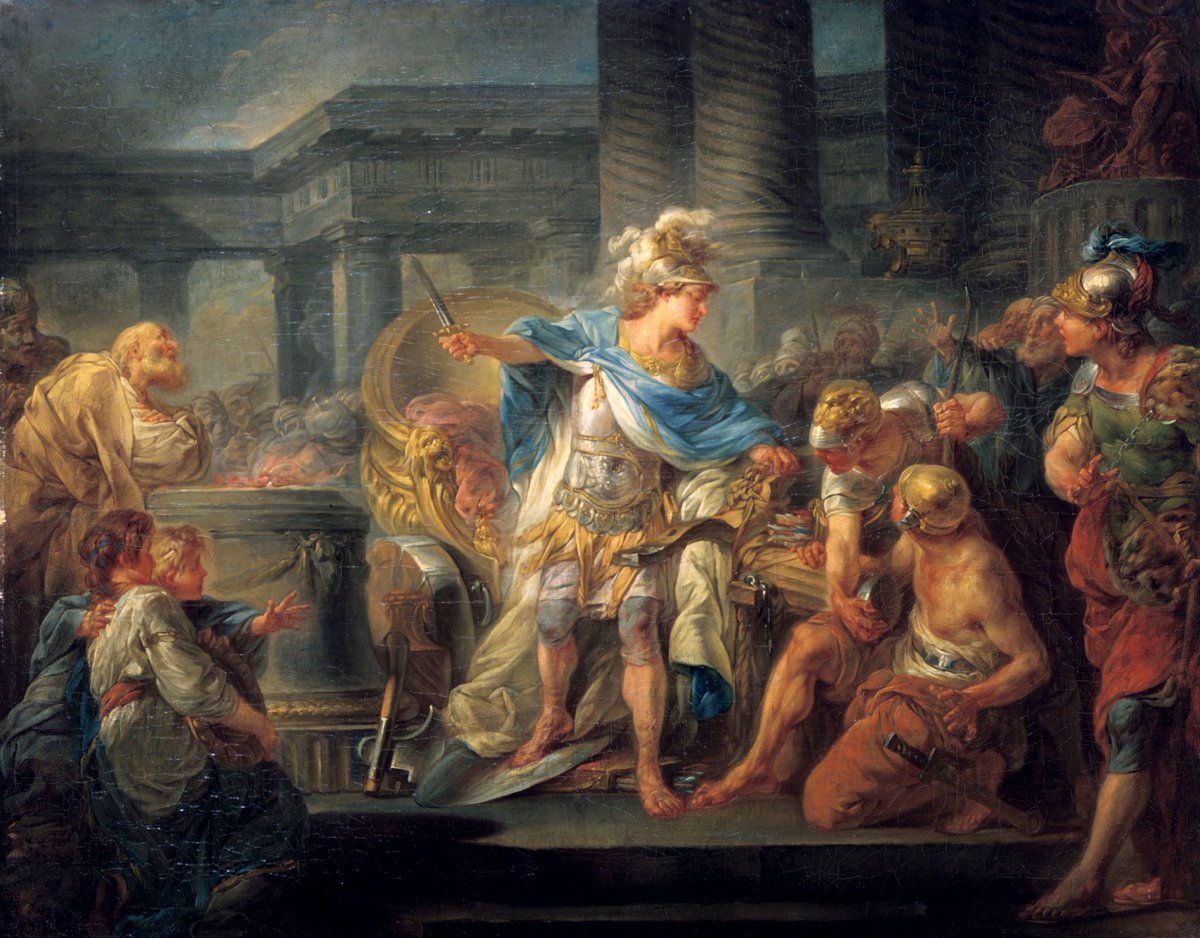
But we can begin cutting Gordian knots. Ending intervention. Ending interference. Ending micromanagement. Ending central planning. Etc etc. When enough people appreciate that the central planners caused the problems, we will end the central planning. And more people appreciate that now than a decade ago. And more appreciated that a decade ago than the decade prior.
So while I hear weariness and pessimism in the voices of some wise and battle-scarred critics of modernity, I'm optimistic: The path forward seems so obvious to me, and every year that passes, it seems to become increasingly obvious to more and more people. Before one can walk the way, one needs to know the way.


29 Mar 2024

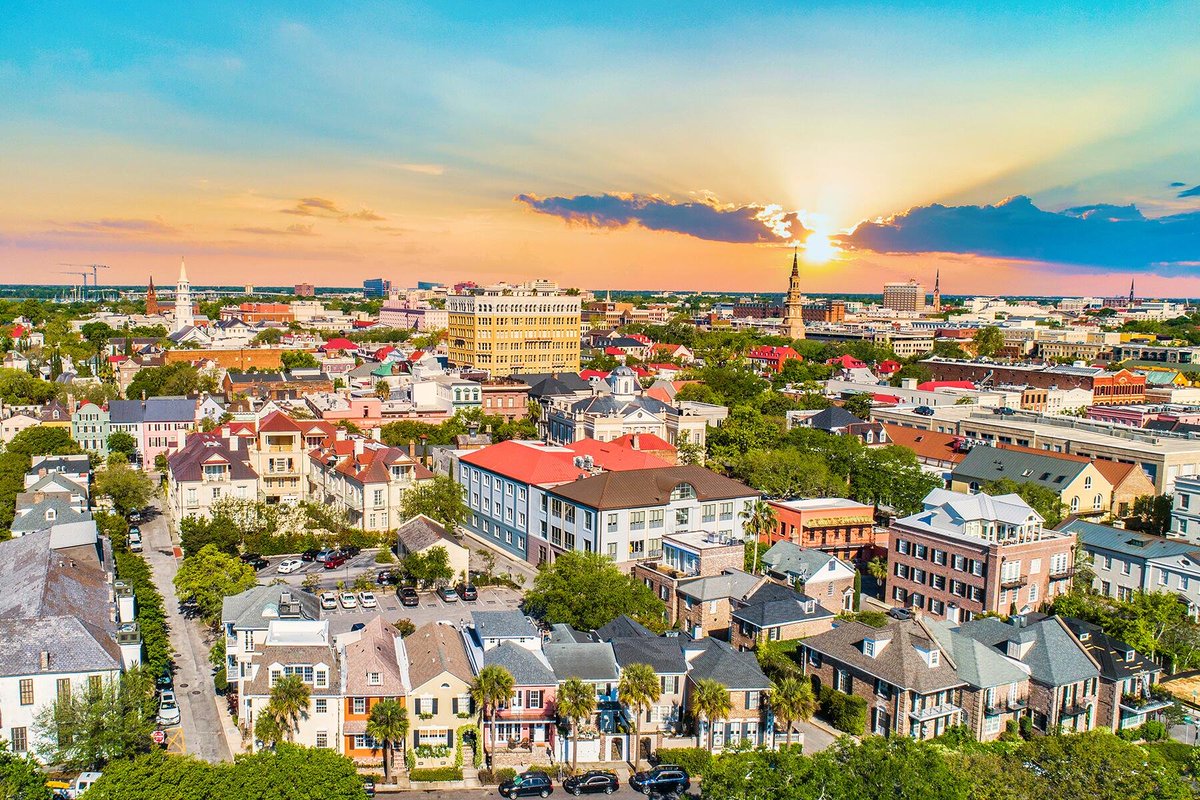
An excellent discussion with @GGunthorp on @DoomerOptimism about how our food system came to be what it is. So many parallels with our built environment. Sprawl didn’t “just happen”. Neither did industrial agriculture.
8
10
38
10,644

I wonder what company will become the Mailchimp of agricultural robotics?
My initial thought:
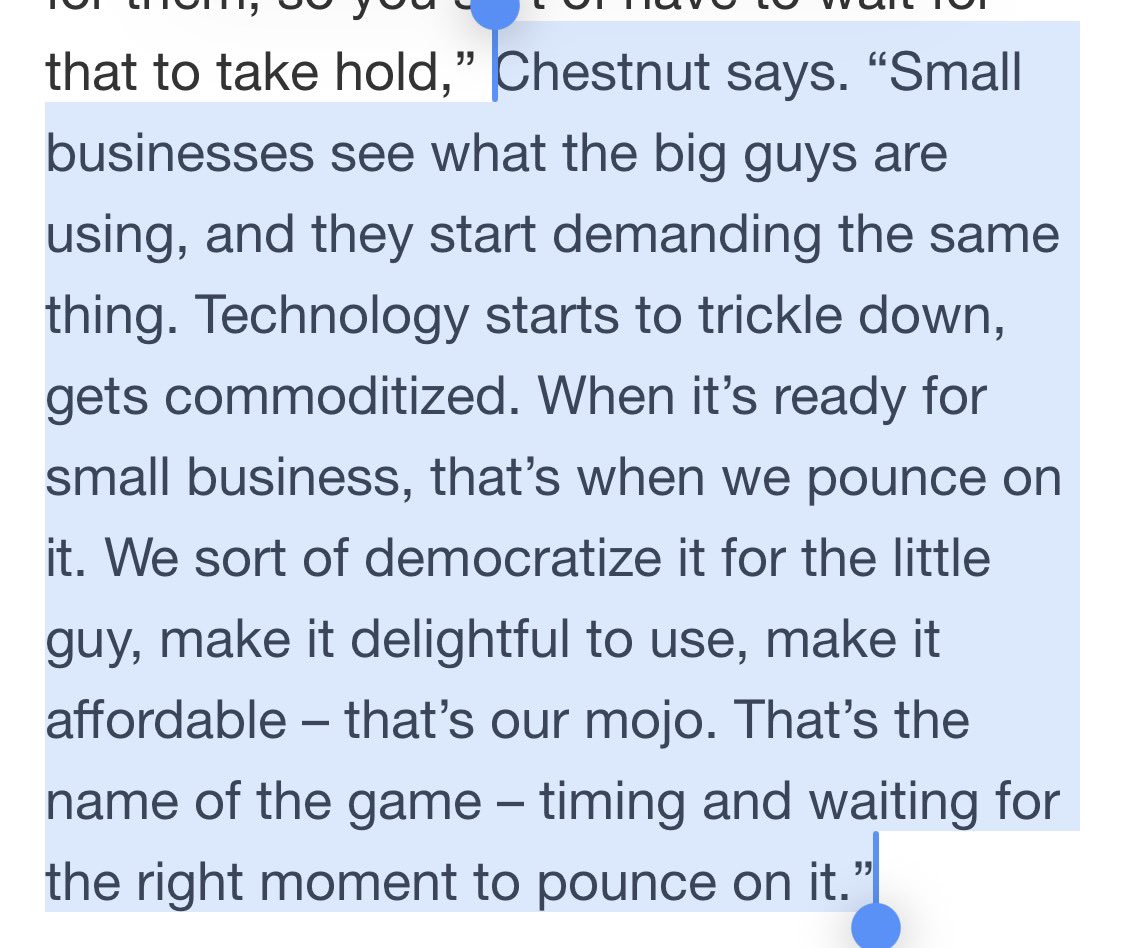
The co-founders of Mailchimp democratized technology used by the enterprise so that small businesses could have the same types of tools. Institutional investors thought it was a dumb idea so the two founders had to bootstrap the thing and never raised a dime or added anyone else to their cap table. The two friendly gents sold their highly profitable company a few years ago for $12B.
Businesses will emerge that provide the same sort of robotics in a much smaller and more nimble package to growers who are serving smaller markets much closer to home.
The biggest problem with being dependent on highly-subsidized industrial scale agriculture is not the terrible stuff getting sprayed on the ground, it’s that we’ve become fragile and dependent on an industry that’s fragile and dependent.
georgiatrend.com/2020/04/30/…
1
2
100
Geoff Graham retweeted

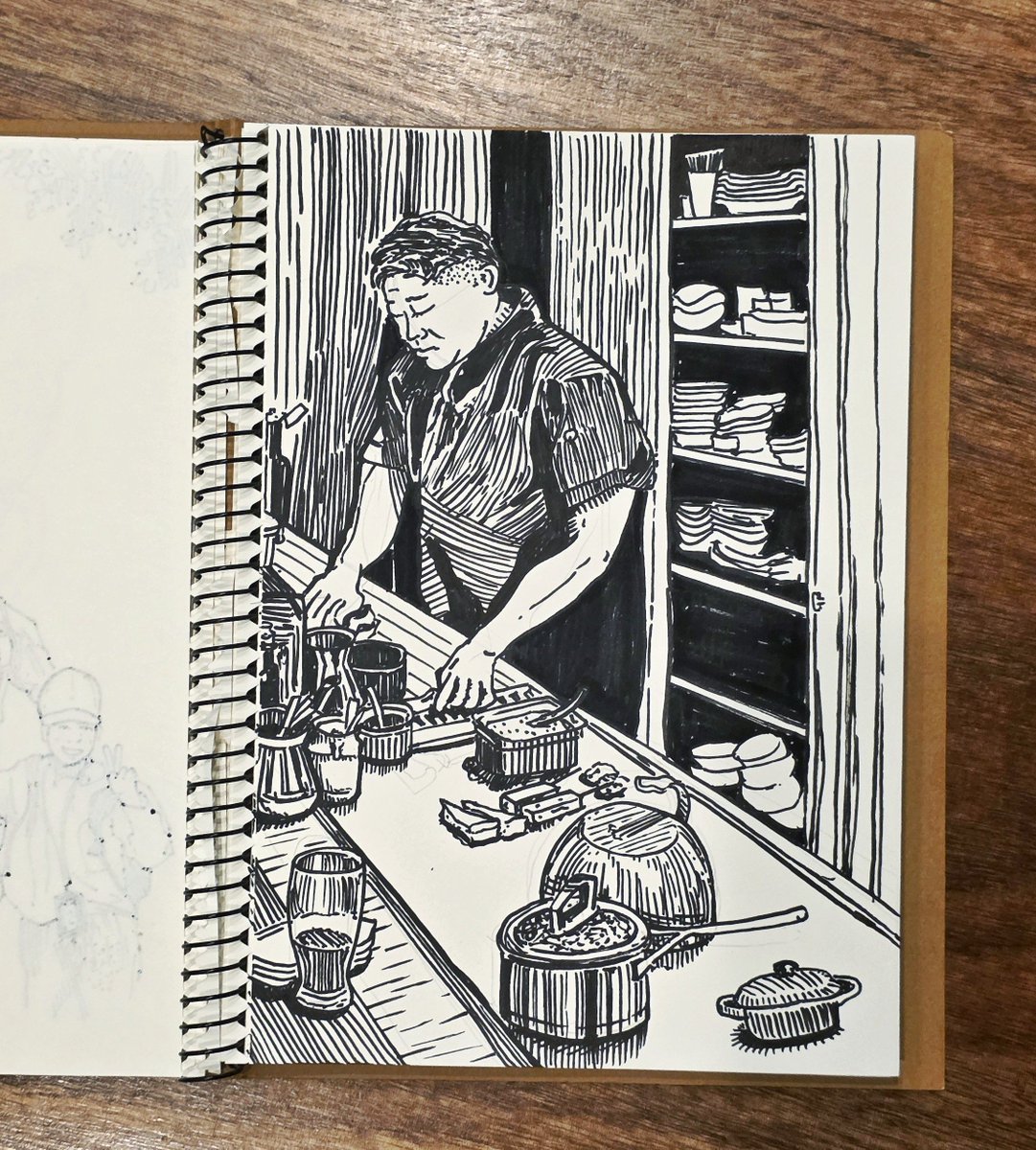
It's my last night in Osaka. I went out for beef tip omurice, oysters, sipped plum wine and sketched the chef at work
I love that in a year, I went from not being able to draw to being able to capture slides of life like this
41
59
1,234
13,482
Jun 11
Hyper-consolidation, cRapitalism, turbo-capitalism, etc, is the logical consequence of 100 years of policy that has tilted the playing field against yeomen, their customers, and their
communities and in favor of distant, metastasized, and financialized corporations.
Jun 10

Many Americans assume record beef prices mean record profits for cattle ranchers.
But that's not the case.
As this farmer explains:
“The more them industries consolidate, the easier it is for them to up the price and cut us out.”
The problem isn't the rancher.
It's the middlemen who have consolidated control of the supply chain and can squeeze both producers and consumers at the same time.
Farm Action is fighting to expose these monopolies and restore competition to America's food system.
@BusinessInsider
2
3
7
662
Jun 13
On the @JimWebbPodcast, @martyrmade describes this happening in America, the foreboding felt by those who saw it happening and the evaporation of subsidiarity and agency that followed.
Jun 10

Sat down with the great @martyrmade for part Two of our series on the History of Populism. Picking up at Andrew Jackson and covering topics like the importance of personal honor. Darryl provided his expertise (understatement of the week) on all this and the movements through the early 1900s. Don't miss this because it's foundational for where we'll pick up next week.
youtube.com/live/xgCn1nMRICM…
2
143
Jun 13
As much as I love seeing good people get paid for their loyalty, commitment, and contribution, there is something about a founder being congratulated on an IPO that has never sat right with me.
Is a child better off if a thousand extra parents adopt him? Of course businesses are categorically different than progeny, but there is something in there that has always seemed off to me. None of the new owners on the cap table will care as much as the founders do. Do founders tend to become more proud of their businesses ten years after IPO than they were the moment they went public? Or less? It's a strange thing, at least to me.
1
4
383
Jun 12
Reminder: It may be legal, but that doesn’t make it right.
yeomanpodcast.com/2026/01/05…
Jun 12

From this square, I wish to address a clear message to those who take advantage of people’s desperation, to those who organize death routes, traffic in human beings, withhold documents, exploit workers, threaten women, deceive families, and turn the suffering of others into a business. Stop! Repent! (Mk 1:15) #ApostolicJourney
vatican.va/content/leo-xiv/e…
1
112
Jun 12
“…almost the main work of life is to come out of our selves, out of the little dark prison we are all born in. [Intellectual] Masturbation is to be avoided as all things are to be avoided which retard this process. The danger is that of coming to love the prison.”
- CS Lewis
Jun 12

One thing I have learned over the years is that this site tends to attract smart people, but a big portion of smart people are very neurotic.
This is why you get a high proportion of c section defenders, crybaby victims, hate the opposite sex, can't breastfeed, complain about the lack of things being handed to them, etc. They simply are not mentally tough people and they use all sorts of argumentation as cope to explain their lack of tenacity and mental health.
Good to keep in mind! Know who you are dealing with!
2
4
906
Jun 12
I think it was Paul Kingsnorth who also referred to it as a summoning, though he used the term in its maximally ominous sense.

I can't stop thinking about how strange it is that large language models are what leads to AGI. it's really weird. it's a form of summoning, almost necessarily, the capabilities you want from a map of reality mediated by words. there are a trillion minds inside an LLM, and we just so happen to have defined a piece of fiction (the assistant) that can write itself into being. In the context of the obvious speed-up of capabilities - I'm really feeling it right now. Things are strange! Very beautiful. Best of all possible worlds. But very strange.
1
4
395
Jun 12
Indeed, I did recall correctly: Kingsnorth refers to AI as the summoning of demons. Also, pretty sure it’s in Against the Machine.
FWIW, lots of technology is (or began) this way. I doubt early agriculturalists understood why burying fish with their plantings increased yields when they started doing it. With that said, I do think AI is categorically different nowadays given how rapidly the institutions governing our overwhelmingly institutionalized modern lives are weaving it into their scaffoldings.
christianitytoday.com/podcas…
1
2
186
Geoff Graham retweeted

Jun 11
In America today, it's nearly impossible to get financing to build new buildings like the ones on the left.
The building on the right is easy to finance.


6
15
109
13,353
Geoff Graham retweeted

Jun 12
Problem solved.
Jun 11

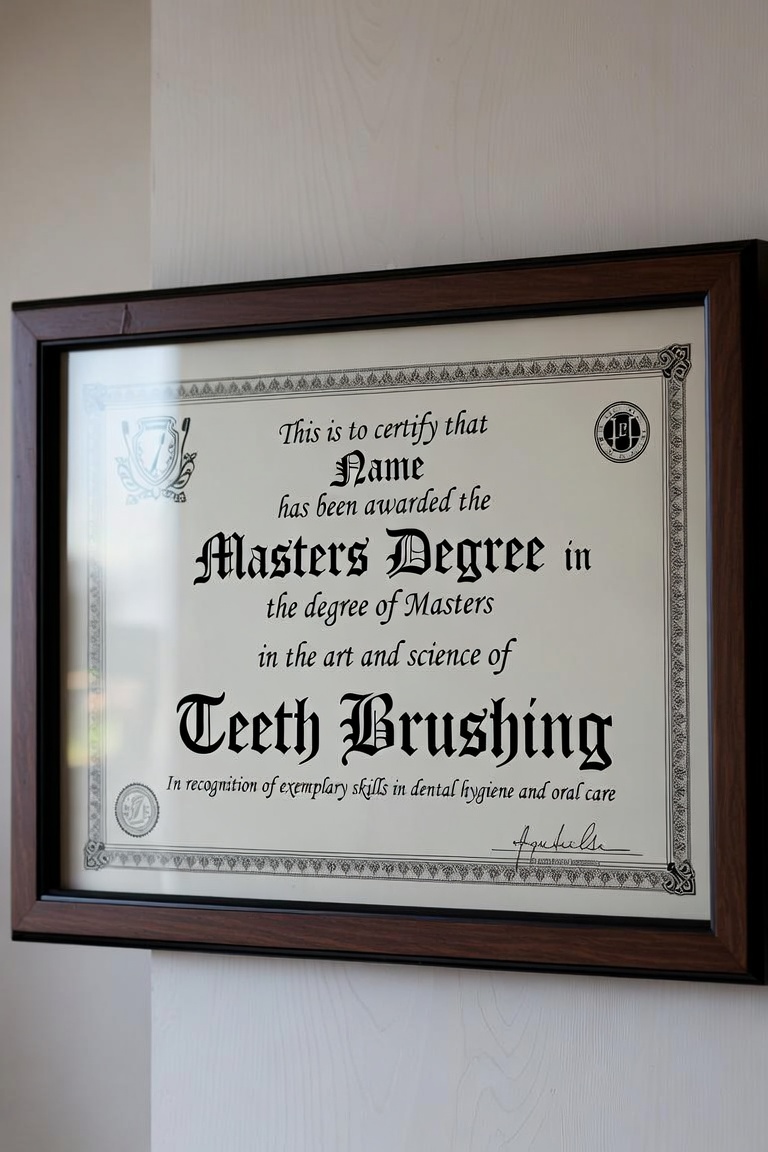
The academic mind cannot comprehend how non academics can even brush their teeth without a degree in teeth brushing.
3
1
23
1,237
Geoff Graham retweeted

Jun 12
having spent my military career mostly in the South, between NC and GA, the interior and the coastal, coming from the North, I completely empathize with the Germans now experiencing it.
I too was struck with wonder seeing the canopies of Spanish moss hanging from the old oaks.

10
34
588
4,832
Jun 12
"When a useful tool becomes detrimental to society, but incumbents prevent fixes, those involved are an enemy."
Yes.
Jun 12

Sometimes there are villains.
FIRE is one. Higher ed and institutional medicine are also up there. Elite law too.
It is also fair to hate the players. When a useful tool becomes detrimental to society, but incumbents prevent fixes, those involved are an enemy.
1
93
Jun 12
I wish I had the capacity to expand on @GordMagill's point in a way that was both both simple and sufficiently nuanced way that it rightly assigns responsibility and describes how we got here without indiscriminately vilifying everyone in FIRE—because it's plainly true that the vast majority of people in those fields are good and upstanding and doing their best to earn a living and make their little place in the world better for everyone around them, AND the last thing I want is for the pendulum to swing in the opposite direction.
My soundbite is, "I think it's good that institutional private equity, insurance, etc exist, and at their core, they do are important and valuable and necessary industries, but it's very bad that tax, banking, and finance policies have directly and indirectly encouraged FIRE to metastasize and become extractive."
I want to just say, "Don't hate the player; hate the game" and leave it at that, but then I see so many hate-able actors that it becomes hard to stay focused on the litany of insane policies that effectively institutionalize psychopathic behavior on a giant scale.

I don’t think I saw anyone in Adams replies say a damn word about all of the Value Scraping that goes on by Private Equity and other parts of the investment class, who also siphon a great deal of money out of the economy and park it outside of circulation.
Making it about wages is missing some huge elephants in the room.
3
183
Geoff Graham retweeted

The complexity of this stuff seems intentional at times, kind of how every level of government diffuses responsibility across their own areas and then on to other levels of jurisdiction.
Makes it difficult to hold any one node to account.
1
1
4
91
Geoff Graham retweeted

Hot take: NYC is the most overrated city in the world and people destroy their lives attempting to live there when they really belong (and would be happier) in a much smaller city.
259
53
1,083
293,055
Jun 11
1) A huge percentage of what Americans (and probably people in all developed nations) pay for things is syphoned directly or indirectly toward work that adds more cost than value. See Graeber's "bullshit jobs".
2) Americans pay for negative ROI systems that were mostly created and institutionalized more than 75 years ago (eg zoning, public school, social security, auto-dependency, policy-induced chronic illness).
3) Keeping-up-with-the-Joneses effect (eg large houses, fancy cars, hifalutin college tuitions).
I wonder how big a portion of every dollar we spend goes toward covering the negative ROI satellites orbiting around all the actually-useful-enjoyable-and-productive things we buy.
Jun 11

The real problem with the American economy is:
"No one can afford to employ the services of anyone else."
Which is a very difficult problem to solve, broadly increasing wages or reducing wage inequality (the conventional econ goals) only seems to make it WORSE.
1
2
15
1,532
Geoff Graham retweeted

Jun 11
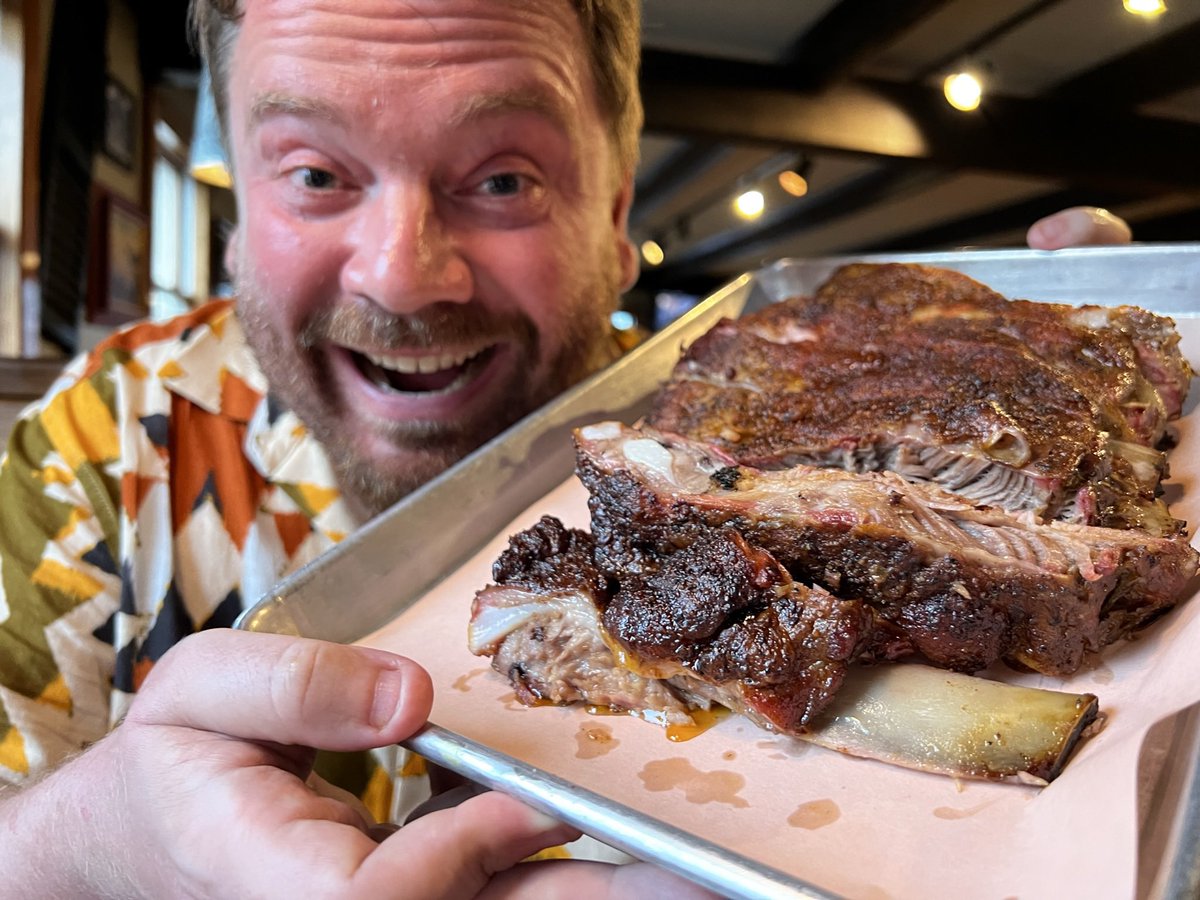
As a person who is not part of any inherited BBQ culture whatsoever, I feel that Carolina vinegar-based BBQ is the best there is.
Jun 11

I have discovered BBQ ribs in America - Carolina style with a vinegar sauce - and frankly every other meat is ruined for me now!
30
2
215
16,600
Jun 11
I have one of each.
Jun 11

There are two types of dogs: those who love water and those who don't
3
414