
Join our waiting list: dirrrt.fyi/getclone
Joined December 2021
- Tweets 77
- Following 97
- Followers 917
- Likes 394
5 Photos and videos


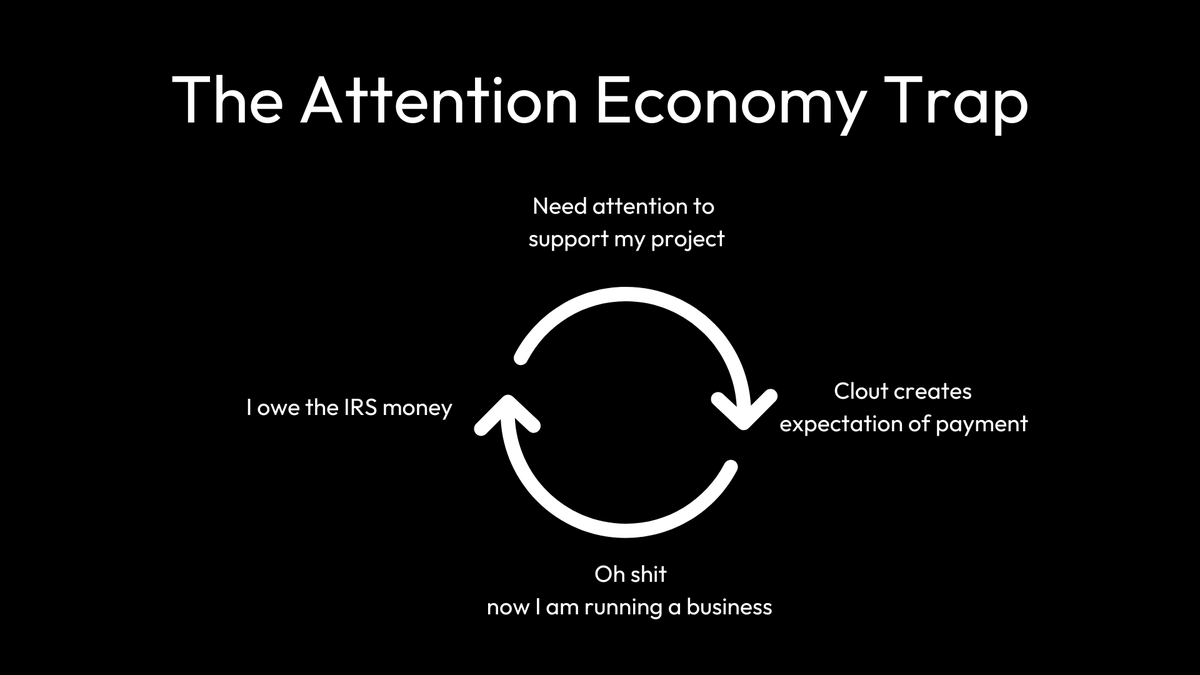



We think the next media interface won’t just be read by people. It will be parsed, evaluated, and acted on by agents acting on people’s behalf.
If agents are going to discover, interpret, and eventually transact around media, they need machine-readable ways to do it.
1
188
👇
Mar 21

I’ve been thinking about x402 and MPP, and it all comes down to a simple question: how does an agent pay?
To answer that, you have to start with something more fundamental. Agents are not humans. As Andrej Karpathy describes, they behave more like ephemeral entities. You spin them up, give them a task, and they disappear once it’s done. They’re a bit like Mr. Meeseeks. They exist to complete a goal, not to persist.
That alone breaks most of the assumptions the internet was built on.
The early web didn’t have a native payment system. HTTP even defined a 402 Payment Required status code, but it was never really used in practice. As online payments became viable through companies like PayPal, the dominant model that emerged wasn’t per-transaction payments, but subscriptions. Instead of paying every time you read an article or used a product, you paid once and got bundled access over time. This reduced both transaction friction and decision fatigue, which made sense for humans.
But agents don’t behave this way. When you spin up an agent, it exists for a specific task. You give it context, it executes, and then it’s gone. There’s no long-term relationship, no concept of loyalty, and no reason for it to subscribe to anything. It doesn’t make sense for something that lives for minutes to pay for a monthly plan it will never use again.
Instead, agents need payments that are tied directly to the task they are performing. If an agent needs access to a piece of data, an API, or an article, it should be able to pay for that specific request and move on. The problem is that today’s payment flows are built for humans. A typical flow involves hitting a paywall, logging in, or entering credit card details through a UI. Many sites don’t even use HTTP status codes for this and instead handle everything in the frontend. That works for people, but for agents it’s too indirect and too complex.
What agents need is something programmatic and immediate. Instead of redirecting to a payment page, an endpoint can simply return a 402 Payment Required response with instructions on how to pay. The agent can complete the transaction and retry the request, all within the protocol. This is the idea behind Coinbase’s x402. Stripe’s work on Model Payment Protocol is exploring a similar direction using more traditional payment rails. The details are still evolving, but the direction is clear.
We are moving from a subscription-based model designed for humans to a transaction-based model designed for machines. In the future, payments will likely be abstracted away into an agent-level or system-level wallet, so agents don’t need to care about specific providers or SDKs. They will see a price, pay for the resource, and continue the task.
The web was built for humans. The agentic web is being built for machines. And machines don’t subscribe. They transact.
1
2
190
"Cue the rise of agentic capital. A new class of audience using autonomous AI agents trained on their taste to extend their own attention and spending." dirt-media.notion.site/The-f…
1
63
Clone retweeted

Mar 5
Some big news in @lithub this morning. ✨
lithub.com/introducing-dirt-…
3
11
121
22,782


Clone retweeted
23 Nov 2025
Clone is for everyone that's still at the global village coffeehouse. ☕️🌍
clone.fyi


1
2
23
4,738
"It’s streaming vs. cable all over again. We're paying only for the voices we want to hear—but sometimes I want to discover a writer or a story I wasn’t looking for." gq.com/story/what-i-meant-wh…
1
230
