
Joined April 2013
- Tweets 12,459
- Following 3,470
- Followers 2,855
- Likes 16,252
1,361 Photos and videos







Pinned Tweet

Jun 3
@seikicksmarket was created to make Seismic understandable through a familiar everyday experience: buying and selling sneakers. Instead of asking users to understand private execution, shielded storage, TEEs, or SRC20 tokens first, Seikicks lets them interact with these concepts through a simple marketplace flow. Users can browse sneakers, connect a wallet, and pay with sUSDC, while the sensitive financial layer can benefit from Seismic’s privacy model.
This is why I chose a sneaker marketplace as the first MVP. It is simple enough for non crypto users to understand, but meaningful enough to demonstrate why private tokens, SRC20 payments, signed reads, and confidential user balances matter. On Ethereum, balances and transactions are public by default. On Seismic, the same familiar app experience can protect sensitive payment data while still preserving the composability of Solidity and the EVM.
In the future, Seikicks can expand beyond a marketplace into a broader consumer ecosystem around Seismic: private payments, encrypted order events, seller dashboards, loyalty rewards, escrow, bidding, and eventually Confidential DeFi features. The early traction across more than 49 countries ⛳️ shows that people can understand and engage with Seismic more easily when the technology is presented through a real app, not only through infrastructure language. My goal is to contribute to Seismic by building practical, approachable products that help bring privacy-first blockchain experiences to everyday users.
Contributing and helping people understand the technology more easily.
Build on @SeismicSys
@xealistt @NoxxW3 @terence725 @lyronctk

🚨🚨 New Feature Release
seikicks.xyz/
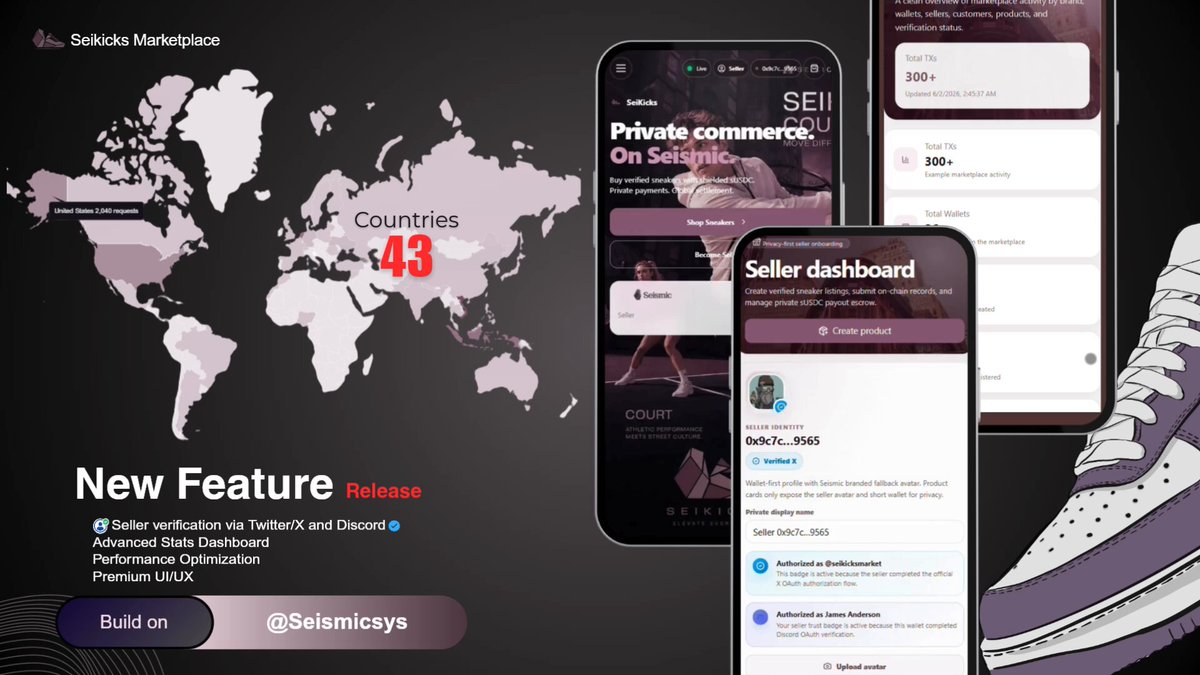
Over the past 2 weeks, Seikicks Marketplace has welcomed participants from 43 countries 🤝
We are truly grateful for the support, trust, and energy from our growing global community.
To mark this milestone, we’re rolling out several new improvements:
✅Premium UI Upgrade
✅Performance Optimization
✅Twitter/X & Discord Verification
✅Advanced Stats Dashboard
These updates are designed to make Seikicks faster, more trusted, and more transparent for everyone.
Built on @SeismicSys
Thank you for being part of the journey 😍
@lyronctk @terence725 @xealistt @NoxxW3 @0xameya
12
21
163
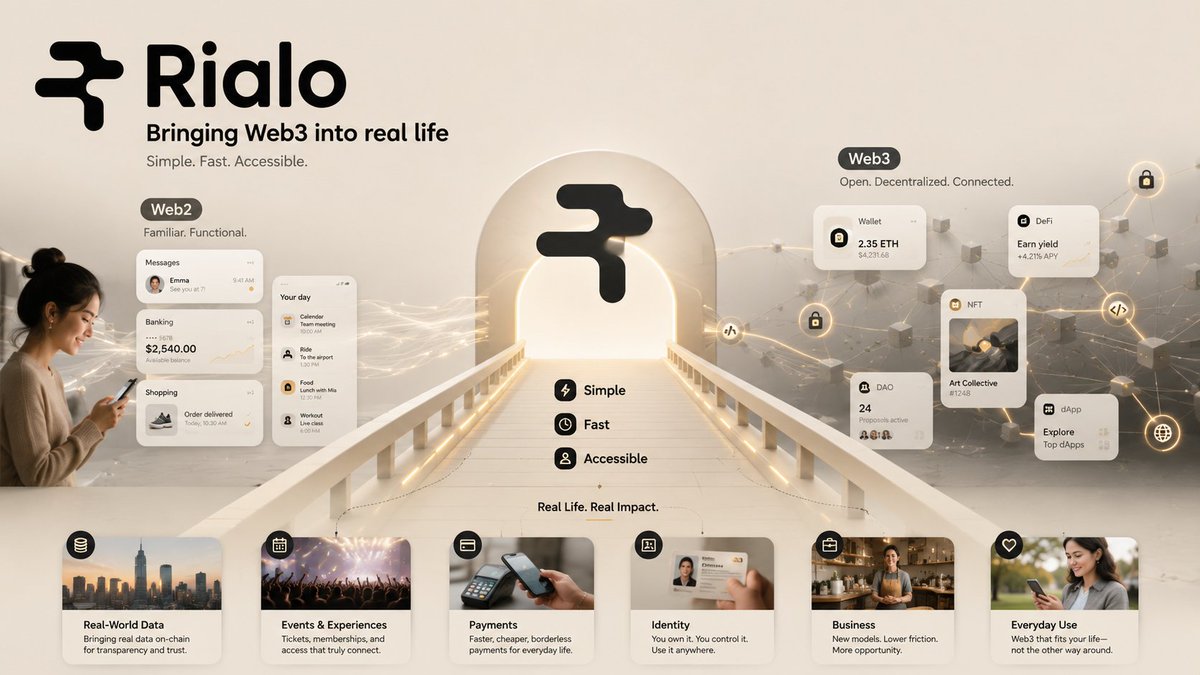
For many years, Web3 was considered a promising technology but remained relatively unfamiliar to the general public. Its complex interface, confusing operation, and less-than-smooth user experience made it difficult for many to access.
Rialo emerged with a different approach: bringing blockchain closer to familiar experiences like everyday Web2 applications. Instead of focusing solely on the underlying technology, Rialo aimed to create a faster, more user-friendly platform with better connectivity to the real world.
Rialo's key feature lies in its ability to support applications that interact with real-world data, events, and needs. This opens up opportunities for developers, businesses, and users to create Web3 products that are easier to use, more practical, and more applicable.
In the future, as the lines between Web2 and Web3 blur, platforms like Rialo could become crucial bridges, helping blockchain move beyond a distant concept and become a natural part of digital life.
Rialo isn't just about blockchain. Rialo is about how Web3 can enter real life in a simpler, faster, and more accessible way.
@RialoHQ
1
2
18
Jun 10
How do we make stablecoins feel like cash sitting in a checking account?
For a crypto neobank to win primacy, it needs to become the place where users hold money, move money, manage daily payments, and feel confident using stablecoins as their main financial layer.
People do not choose a primary bank only because they can spend from it. They choose it because it becomes their operating account.
If Brookwell can make stablecoins feel that normal, that simple, and that useful, then it is attacking a much bigger market than just crypto card users.
That is what makes @brookwellapp interesting to me🫡
@SeismicSys

2
30
Jun 5
Thanks to @dosunets_ for giving me a more vibrant summer with Cloud and Seismic. Don't hesitate to DM him for more beautiful photos!
@SeismicSys @xealistt @NoxxW3
May 25

Gmic guys!
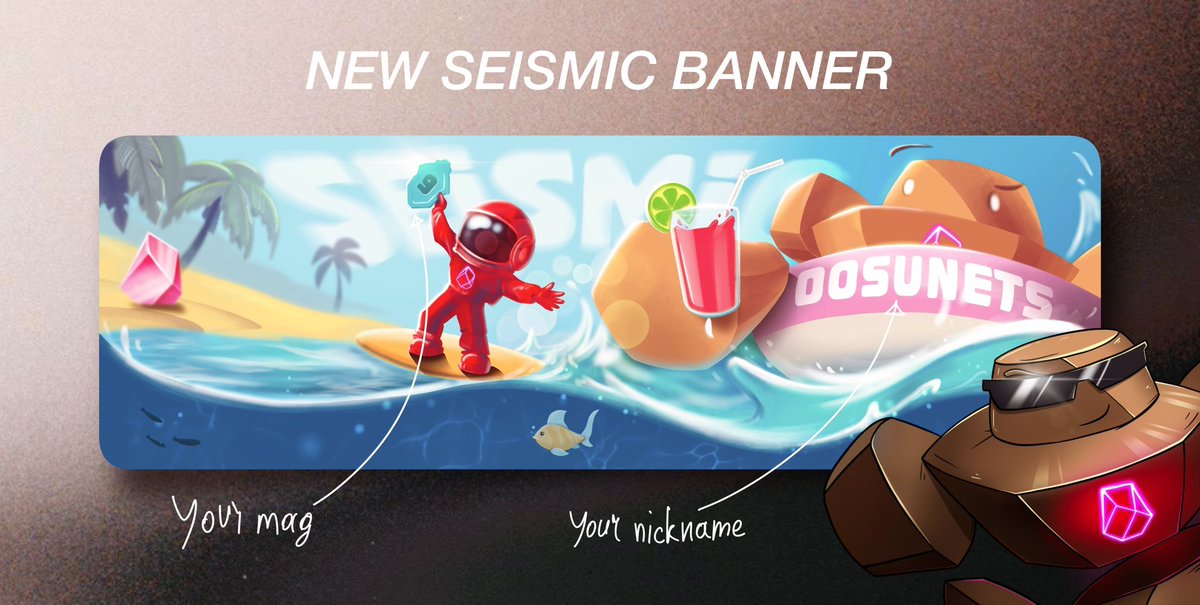
Summer is coming, so I decided to make some special summer banner for @SeismicSys
Liron and Rocky are already enjoying the summer vibes😁
So DM me if you want your own personalized banner👌😉
3
15
163
Cloud Labs retweeted

🚨🚨 New Feature Release
seikicks.xyz/
Over the past 2 weeks, Seikicks Marketplace has welcomed participants from 43 countries 🤝
We are truly grateful for the support, trust, and energy from our growing global community.
To mark this milestone, we’re rolling out several new improvements:
✅Premium UI Upgrade
✅Performance Optimization
✅Twitter/X & Discord Verification
✅Advanced Stats Dashboard
These updates are designed to make Seikicks faster, more trusted, and more transparent for everyone.
Built on @SeismicSys
Thank you for being part of the journey 😍
@lyronctk @terence725 @xealistt @NoxxW3 @0xameya
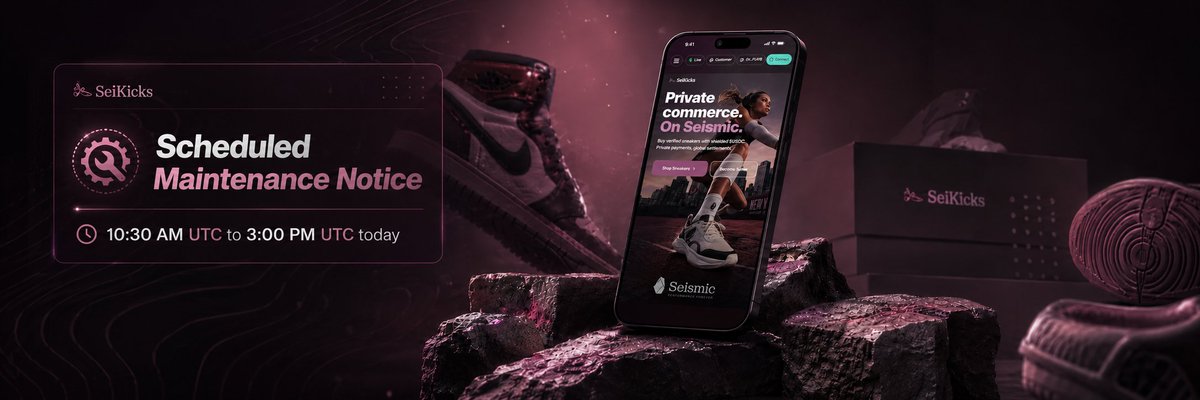
🚧 Scheduled Maintenance Notice
🚨🚨🚨🚨
Seikicks dApp will be temporarily under maintenance from 10:30 AM UTC to 3:00 PM UTC for a new version upgrade.
This update aims to improve performance, stability, and provide a smoother experience for our community.
Thank you for your patience and support.🤝
@SeismicSys
@lyronctk
@terence725
@xealistt
@NoxxW3
53
27
149
9,557
Jun 1
🎰 LUCKY 888 IS LIVE 🎰
Refer. Trade. Win.
We’re rewarding the first 5,000 qualified winners with blue-chip domain tokens — sent straight to their wallets.
Here’s the 888 combo:
🔸 Refer 8 people using your referral link
🔸 Each referral completes 8 qualified trades
🔸 Each trade must be at least $8
A qualified trade means any trade involving a domain token.
Hit the combo, pass anti-sybil checks, and you’re in.
Rewards include domain tokens such as Software.AI, Brag.com, Alert.AI, Rides.com, Investors.xyz, Wines.xyz, DePin.ai, and more.
🍀 8 is the number. Don’t sleep on it.
👉 Participate: doma.xyz/lucky888
👉 Referrals leaderboard: app.doma.xyz/leaderboard?vie…
@domaprotocol @D3inc
3
10
120
Cloud Labs retweeted
GMIC and happy weekend Seismic community
🚨🚨 A quick announcement 🚨🚨
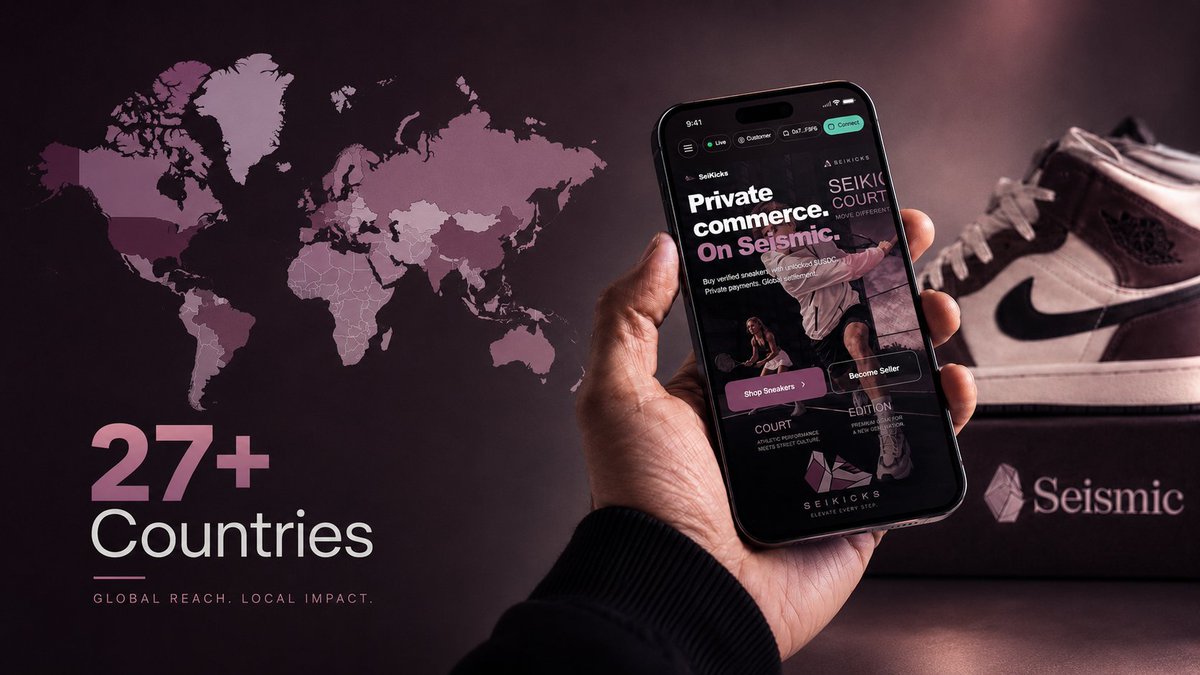
We’re thrilled to share that SeiKicks has reached users from 27 countries 🌐🤝 a strong sign of our growing global presence. The entire team is incredibly grateful for your continued support.
A major update is coming tomorrow, featuring social based user verification, smoother experiences across mobile and desktop devices, faster access speed, and several exciting improvements to the platform.
Thank you for being with us on this journey.
Enjoy your weekend the new SeiKicks release is coming soon.
@SeismicSys @lyronctk @terence725 @xealistt @NoxxW3
2
6
37
1,461
May 30
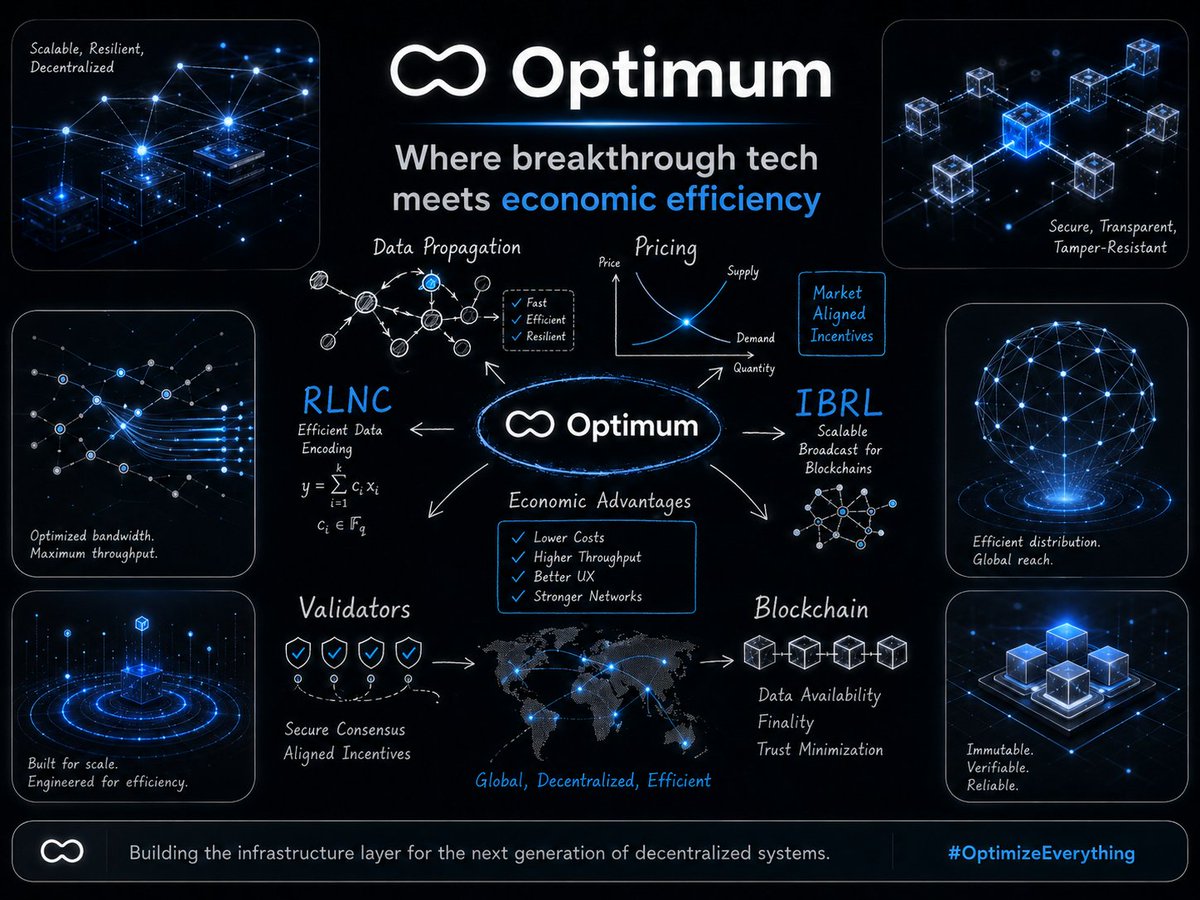
Dưới góc nhìn cá nhân, điều làm tôi chú ý ở Optimum không chỉ là công nghệ truyền dữ liệu nhanh hơn, mà là cách họ bắt đầu nói sâu hơn về mặt kinh tế phía sau hạ tầng blockchain.
Rất nhiều dự án thường tập trung vào TPS, execution, consensus hay DA. Nhưng Optimum đang chạm vào một lớp nền ít được nói tới hơn: data propagation — dữ liệu được truyền đi nhanh, hiệu quả và ít lãng phí hơn như thế nào.
Điểm thú vị là Optimum không cố tạo ra một blockchain mới, cũng không yêu cầu các network phải thay đổi toàn bộ kiến trúc hiện tại. Thay vào đó, họ xây một lớp tối ưu có thể chạy song song với blockchain, giúp giảm redundant transmission và cải thiện tốc độ lan truyền dữ liệu.
Và bây giờ, khi Optimum bắt đầu đi sâu vào pricing và economic advantages, câu chuyện trở nên thực tế hơn rất nhiều.
Bởi vì hạ tầng tốt không chỉ cần mạnh về mặt kỹ thuật. Nó còn phải tạo ra lợi ích kinh tế rõ ràng cho validator, node operator, protocol và toàn bộ network.
Theo tôi, đây là hướng đi rất đáng chú ý:
không chỉ làm blockchain nhanh hơn, mà còn làm cho việc vận hành blockchain trở nên hiệu quả hơn, tiết kiệm hơn và có giá trị hơn ở tầng hạ tầng.
Optimum đang cho thấy rằng đôi khi bottleneck lớn nhất không nằm ở việc “chain xử lý được bao nhiêu giao dịch”, mà nằm ở việc dữ liệu di chuyển trong network nhanh và thông minh đến mức nào.
@get_optimum @aqccapital
May 29

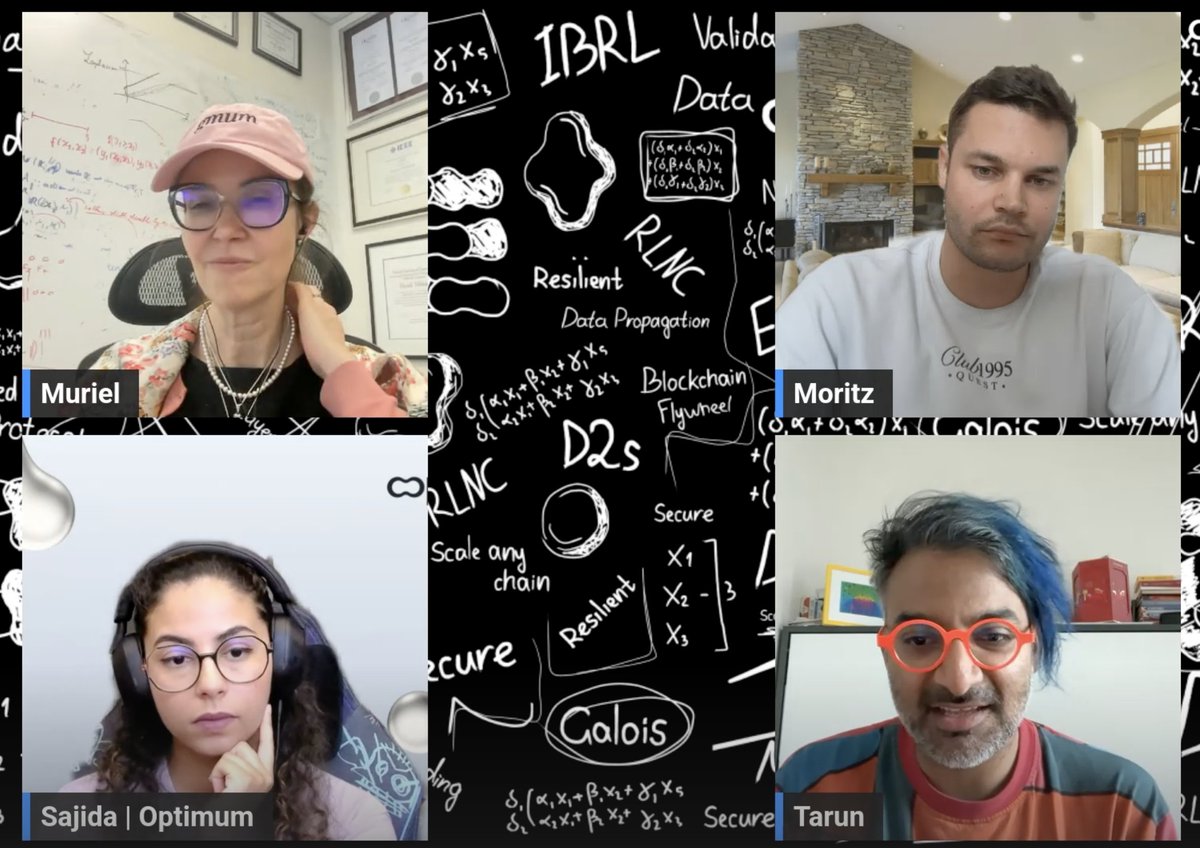
You've seen the breakthrough tech, but we're innovating on the economic side of things too.
Dropping next week: A video deep dive into pricing the economic advantages Optimum creates. Featuring @MurielMedard, @sajidazouarhi, @GrundeiMoritz, and @tarunchitra ♾️
4
12
151
May 29
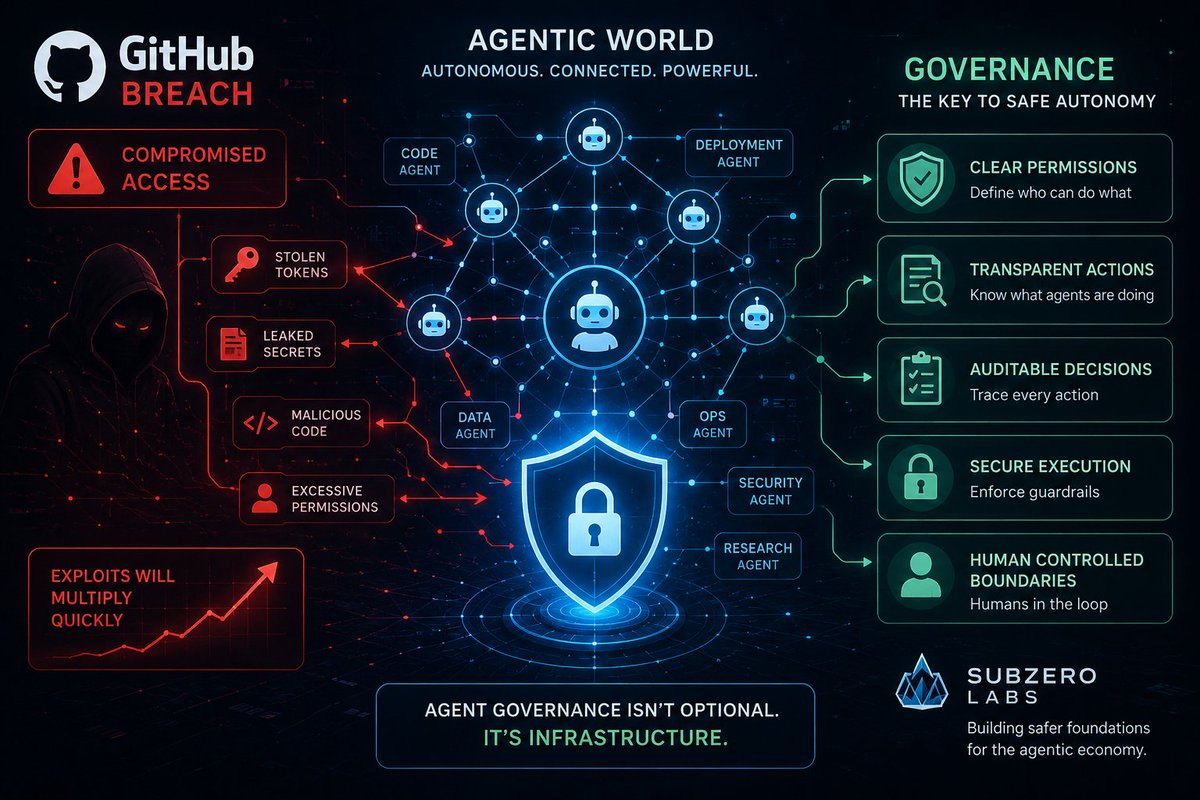
The recent GitHub breach is not just another security incident.
It is a warning sign for the agentic world we are entering.
As AI agents become more autonomous, faster, and more deeply connected to our workflows, the attack surface will expand massively. A single compromised token, repo, workflow, or permission layer can create a chain reaction across entire systems.
The future of agentic AI cannot rely only on speed and automation.
It needs governance.
Clear permissions. Transparent actions. Auditable decisions. Secure execution. Human-controlled boundaries.
Simple, effective governance over agents is no longer optional. It is becoming one of the most urgent infrastructure problems in AI.
This is exactly why we are focused on building safer foundations for the agentic economy at @Subzero_Labs @RialoHQ
Stay tuned 🫡
May 22

The Github breach is the latest in a series of exploits which will multiply quickly in an agentic world. Simple and effective governance over agents is one of the most urgent issues at this point in time - and therefore a key focus of our team at @Subzero_Labs .
Stay tuned 🫡
6
94
May 29
Perhaps this is the meme I’ve been hiding for a very long time…
Back then, I would always take the chance to secretly send it to the boys whenever @SDMikeCM wasn’t in the channel. 😅
But well, today I’ve decided: it’s time to make it public for the whole world to witness.
@domaprotocol @D3inc
1
6
93
May 27
What makes Optimum’s technology stand out is not that it tries to become another blockchain, L1, or L2.
It focuses on a deeper layer that many scaling discussions often overlook:
Data movement
In decentralized networks, performance is not only about execution speed or transaction throughput. Before any blockchain can scale effectively, data must be propagated quickly, reliably, and efficiently across distributed nodes.
This is the problem Optimum is addressing.
Optimum introduces a decentralized shared memory infrastructure designed to improve how blockchain data is transmitted, stored, and accessed across networks. Instead of relying on traditional data propagation methods that can create redundancy and bandwidth inefficiency, Optimum leverages Random Linear Network Coding RLNC.
With RLNC, data can be encoded into flexible coded pieces, allowing nodes to reconstruct the original information without depending on receiving every specific packet in the exact traditional way.
This creates several important advantages:
• reduced redundant transmission
• improved bandwidth efficiency
• faster data propagation
• stronger resilience in unstable network conditions
• better fault tolerance across decentralized systems
In simple terms, Optimum is not just trying to make blockchain faster at the surface level.
It is improving the underlying communication and memory layer that blockchain infrastructure depends on.
As Web3 continues to scale, execution alone will not be enough. The next generation of blockchain performance will also depend on how intelligently data moves across the network.
That is where Optimum becomes different.
@get_optimum
4
61
Cloud Labs retweeted
No sUSDC? No PROBLEM
One video. All the information you need. Don’t miss it.
With SeiKicks, you can become a seller, create your own sneaker products, and start earning sUSDC once customers complete their payments.
The process is simple
1️⃣Log in to SeiKicks - seikicks.xyz/
2️⃣Request seller access
3️⃣Create your products
4️⃣Receive sUSDC ( after successful customer payments )
5️⃣Withdraw directly to your wallet
SeiKicks is designed to make the marketplace experience simple, secure, and privacy-first.
Every order on SeiKicks is created by sellers, giving customers the freedom to explore and purchase products while allowing both sellers and buyers to maintain greater control over their own data.
Start building your seller journey today.
Become a professional seller with SeiKicks.
Built on @SeismicSys @lyronctk @terence725
May 25

real-world commerce with blockchain rails
Built on @SeismicSys
6
3
28
3,930
May 26
My first experience using the Seismic testnet was honestly smoother than I expected
I started by claiming testnet sUSDC from the official faucet:
faucet.seismictest.net/
To claim, users need to sign in with GitHub, and GitHub requires more than 10 followers. Each faucet claim gives 10 sUSDC, and it can be claimed once every 24 hours.
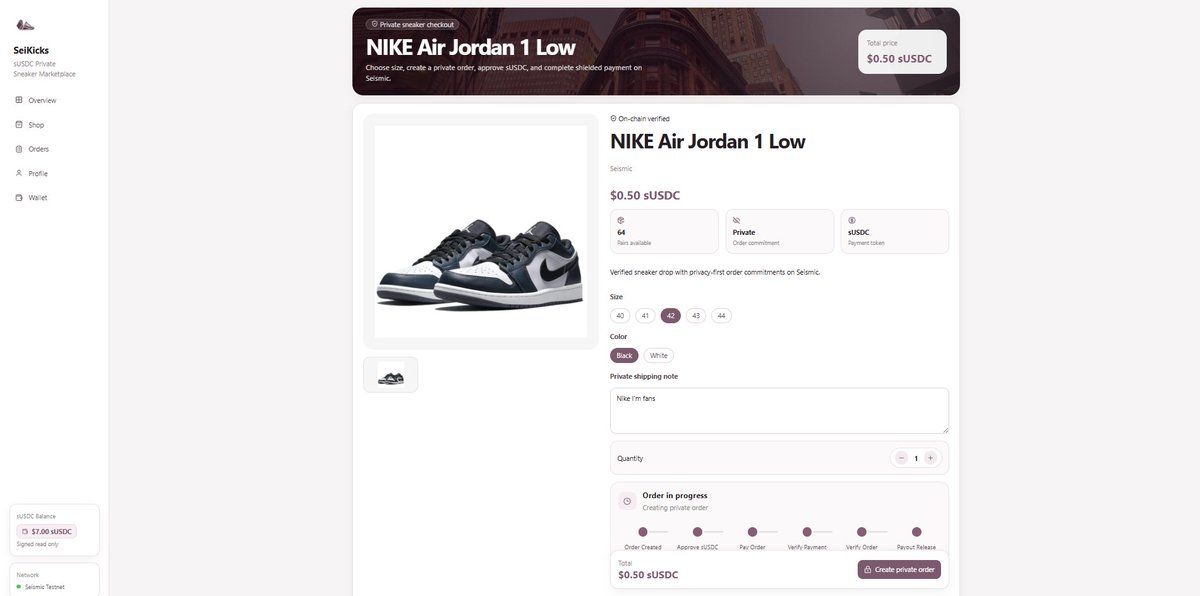
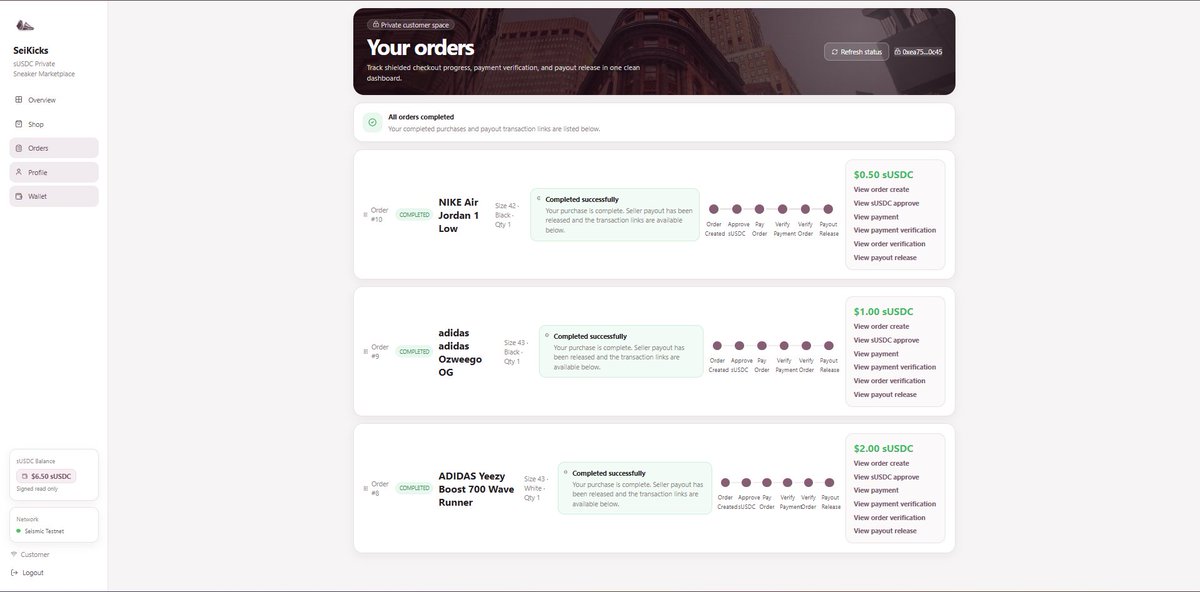
With my first 10 sUSDC ,I tested this marketplace by @seikicksmarket purchasing a pair of shoes . I tested a shopping flow on SeiKicks and bought 3 pairs of shoes priced at $3.5 each. If this were real life, getting sneakers at that price would be a huge win.
😁If I could actually buy them, I would be grateful, even though I know it’s just testnet.
👉seikicks.xyz/
What I liked most was how smooth the experience felt. The transaction flow was simple, the website was easy to use, and I could clearly see what I was doing on the network.
One small thing I noticed: when I opened my wallet, the sUSDC balance did not show up there, but when I connected to SeiKicks, the platform displayed my sUSDC balance correctly.
Overall, this was a clean and practical testnet experience. It gave me a better feel for how activity on the Seismic network works, how testnet sUSDC can be used, and how privacy-focused applications could become more user-friendly in the future.
Smooth UX. Simple flow. Real testnet utility.
@SeismicSys @lyronctk @NoxxW3 @xealistt
May 25
real-world commerce with blockchain rails
Built on @SeismicSys
11
20
216
May 26
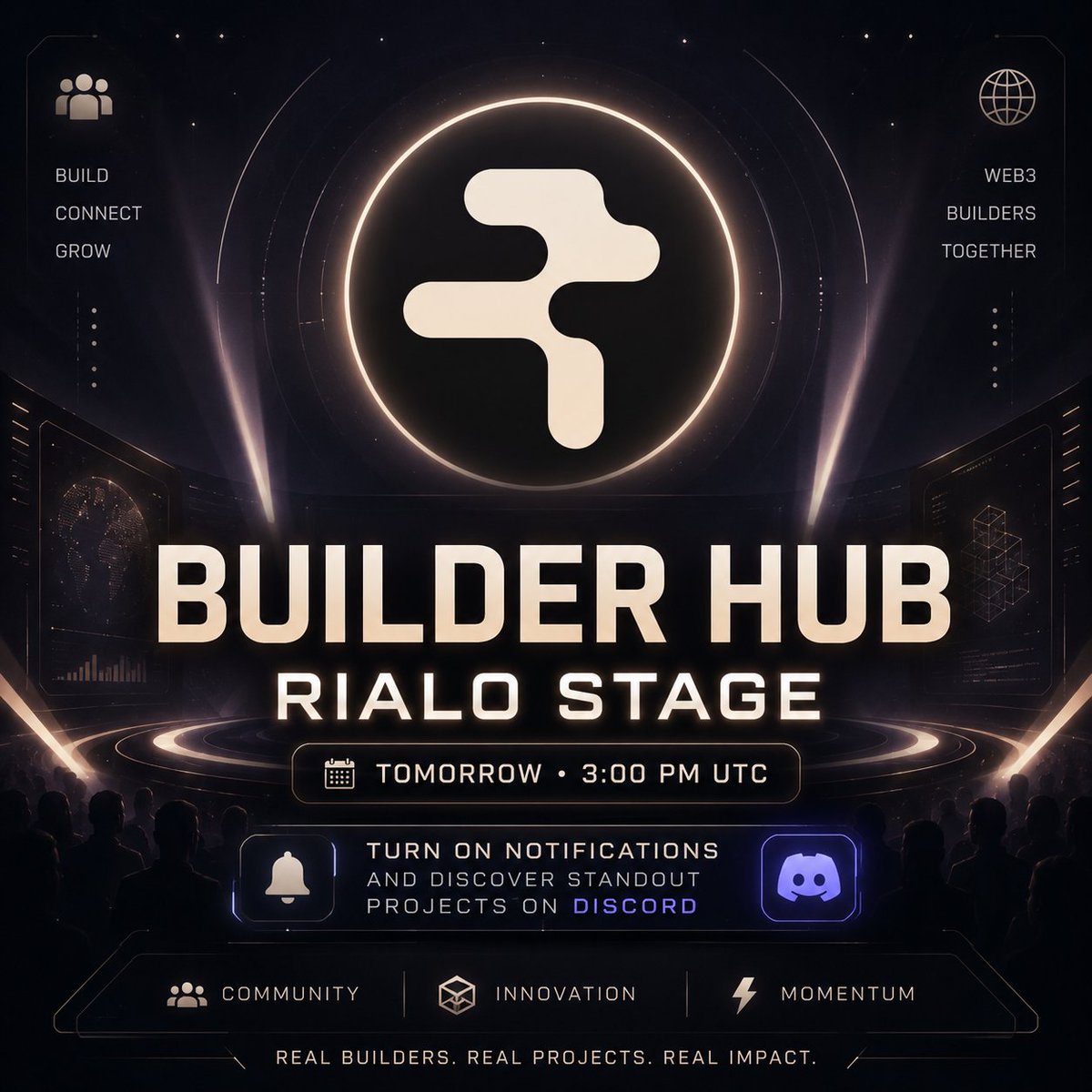
Getting ready for tomorrow’s Builder Hub at Rialo Stage 🛠️
The session starts at 3:00 PM UTC, so make sure to turn on your notifications and don’t miss it.
I’m excited to join the community, explore what builders are creating, and discover some of the standout projects being showcased in the Rialo Builder Hubs on Discord.
Rialo is becoming a place where real builders, fresh ideas, and useful applications can connect and tomorrow is a great chance to learn, engage, and get inspired.
See you at the Rialo Stage. 🚀
@RialoHQ
4
49
Cloud Labs retweeted

May 25
real-world commerce with blockchain rails
Built on @SeismicSys
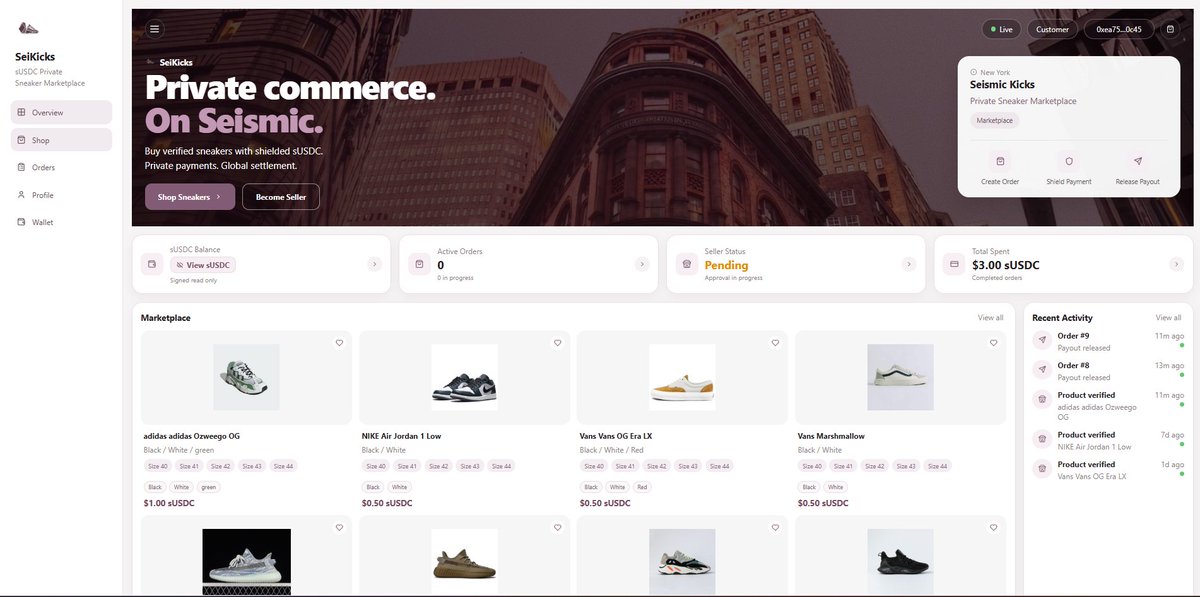
What could be better than buying the sneakers you love with sUSDC, through a shopping experience that is secure, private, and trustworthy?
With SeiKicks, buying sneakers is no longer just a normal transaction. Users can pay with sUSDC through a checkout flow designed to protect information, respect personal privacy, and bring transparency to every step of the order process.
From order creation, payment approval, transaction verification, to seller payout release, everything is tracked clearly in one clean dashboard. Buyers can feel more confident that their experience is protected, while sellers still benefit from a transparent and reliable payment process.
SeiKicks is not just a sneaker marketplace. It represents how Web3 e-commerce should work: more secure, more private, and designed to give users greater control over their own data.
A pair of sneakers you love.
A secure transaction.
A shopping experience that respects your privacy.
That’s the power of sUSDC on SeiKicks.
@SeismicSys @lyronctk
1
3
27
1,955
May 25
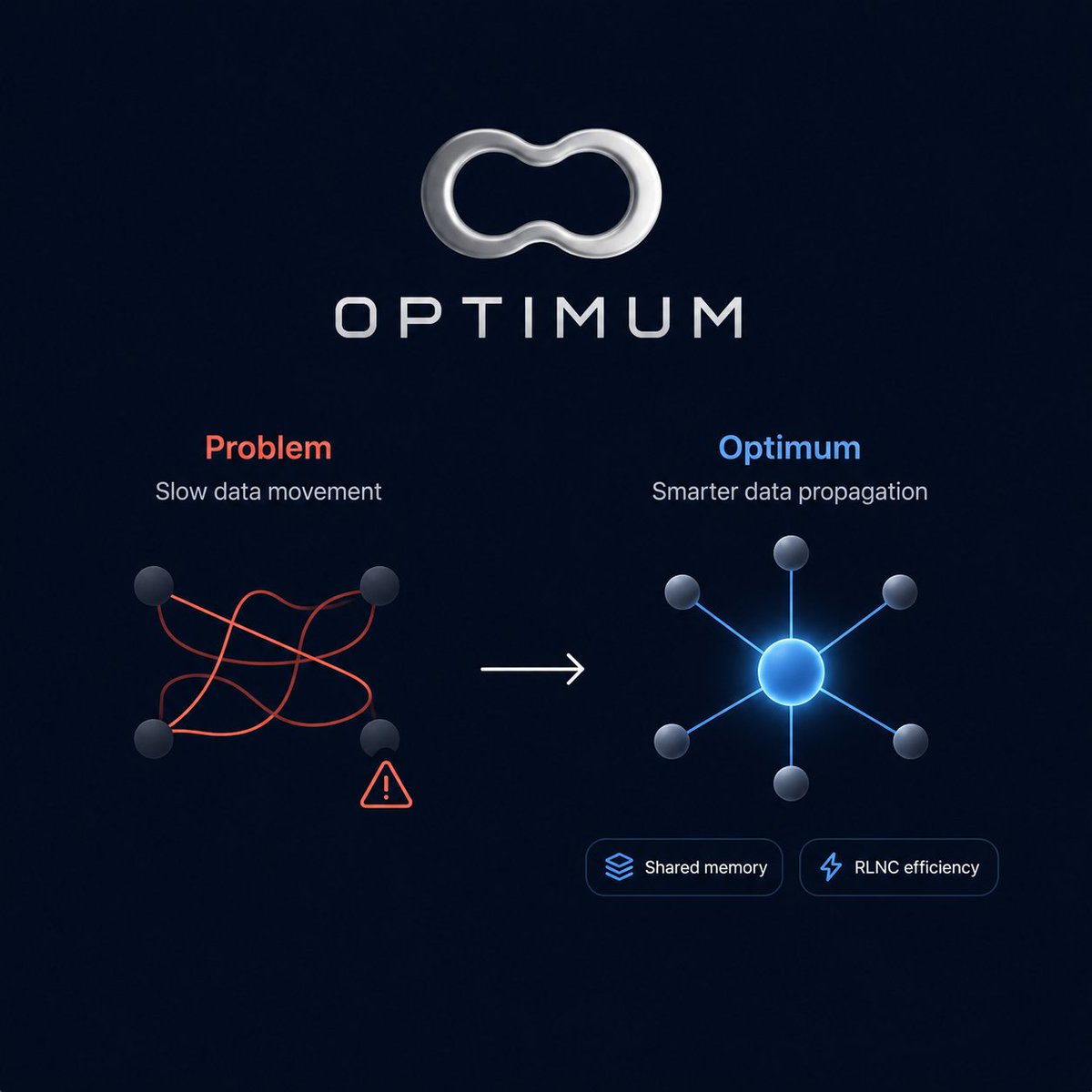
Solving one of the bottlenecks that not many people talk about in blockchain: the speed of data movement. That is what Optimum is focusing on.
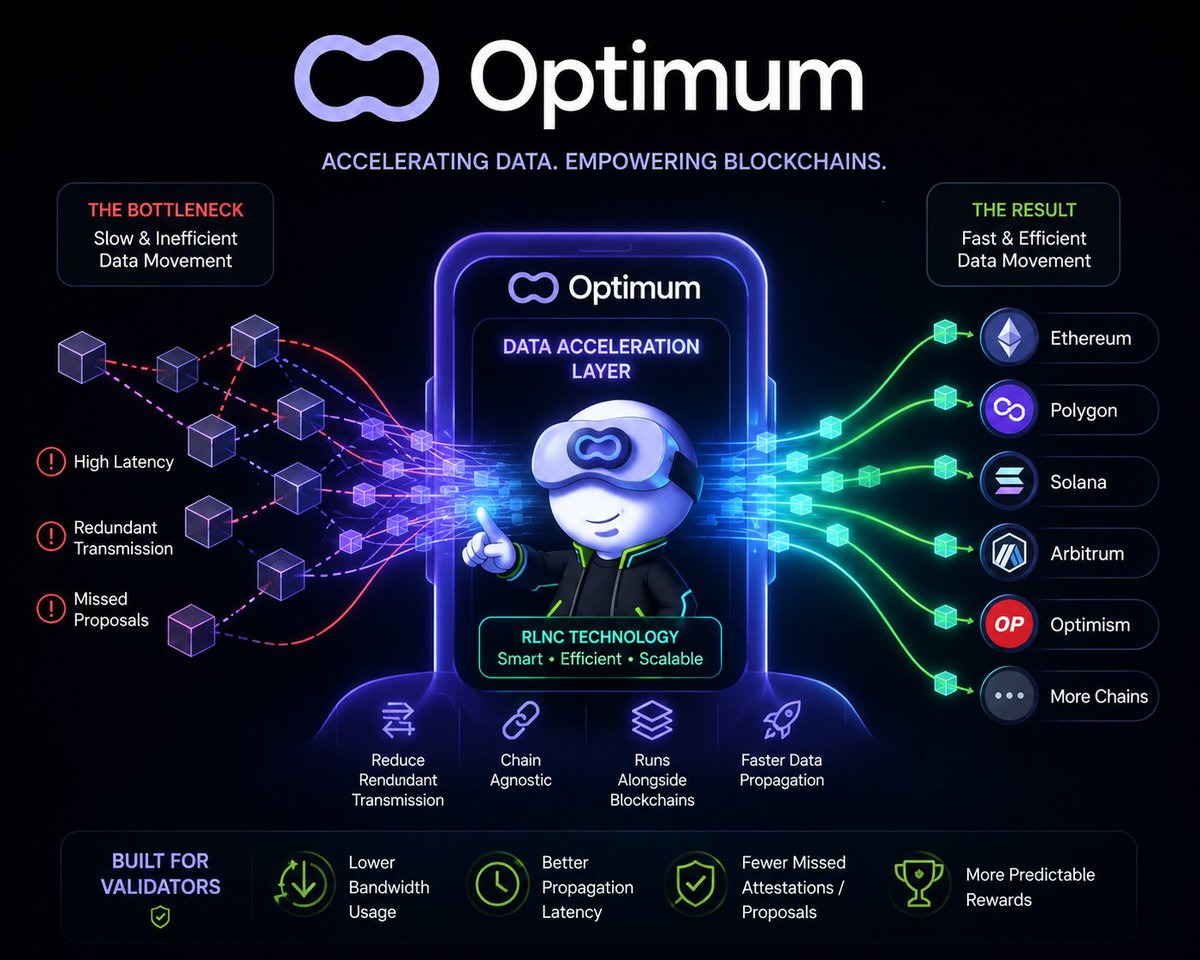
By enabling data to be transmitted faster and more efficiently, Optimum does not require changes to consensus or a full protocol rewrite. Their website also highlights key ideas such as reducing redundant transmission, being chain-agnostic, running alongside existing blockchains, and using RLNC to accelerate data propagation.
Here are the key points I want to share about Optimum:
1⃣Optimum is not a new blockchain. It is an acceleration layer for existing chains.
This is an important point to emphasize because it helps people understand the project more easily. According to the official FAQ, Optimum is not its own blockchain, does not process transactions, and does not have its own consensus. Instead, it works alongside blockchains to improve data propagation.
2⃣Blockchain does not only need faster execution. It also needs faster data movement.
This is probably the strongest angle. Many people talk about TPS, L1/L2, DA, and zk, but Optimum focuses on a deeper layer: how fast or slow blocks, transactions, and blobs move across the network.
3⃣Validator angle
This is also a strong point for content, because Optimum highlights how it can help reduce bandwidth usage, improve propagation latency, limit missed attestations or proposals, and make validator rewards more predictable.
4⃣RLNC explained simply
There is no need to explain it in an overly technical way. Simply put, RLNC helps data move more efficiently and reduces wasted bandwidth, especially in decentralized environments with many nodes. Optimum says its mump2p product uses RLNC to optimize the propagation of blocks, transactions, and data blobs.
That is the shortest overview I want to share about Optimum.
Thank you for reading.
@get_optimum
8
10
101
May 24
I only meant to gently wake up the Goblin team in Doma…
But the result was a strong, passionate squad ready to support, showing up at the perfect moment when Doma is hotter than ever.
The best part is not just how strong my team is, but the fact that everyone shares the same spirit: building together, pushing together, and making Doma more visible to the world.
Doma is heating up.
The team is awake.
And if you want to see it clearly, check it out here 👉 app.doma.xyz/leaderboard?vie…
Now it’s time to show everyone our real strength.
@domaprotocol @d3inc @SDMikeCM
6
8
92
May 24
1
59
May 23
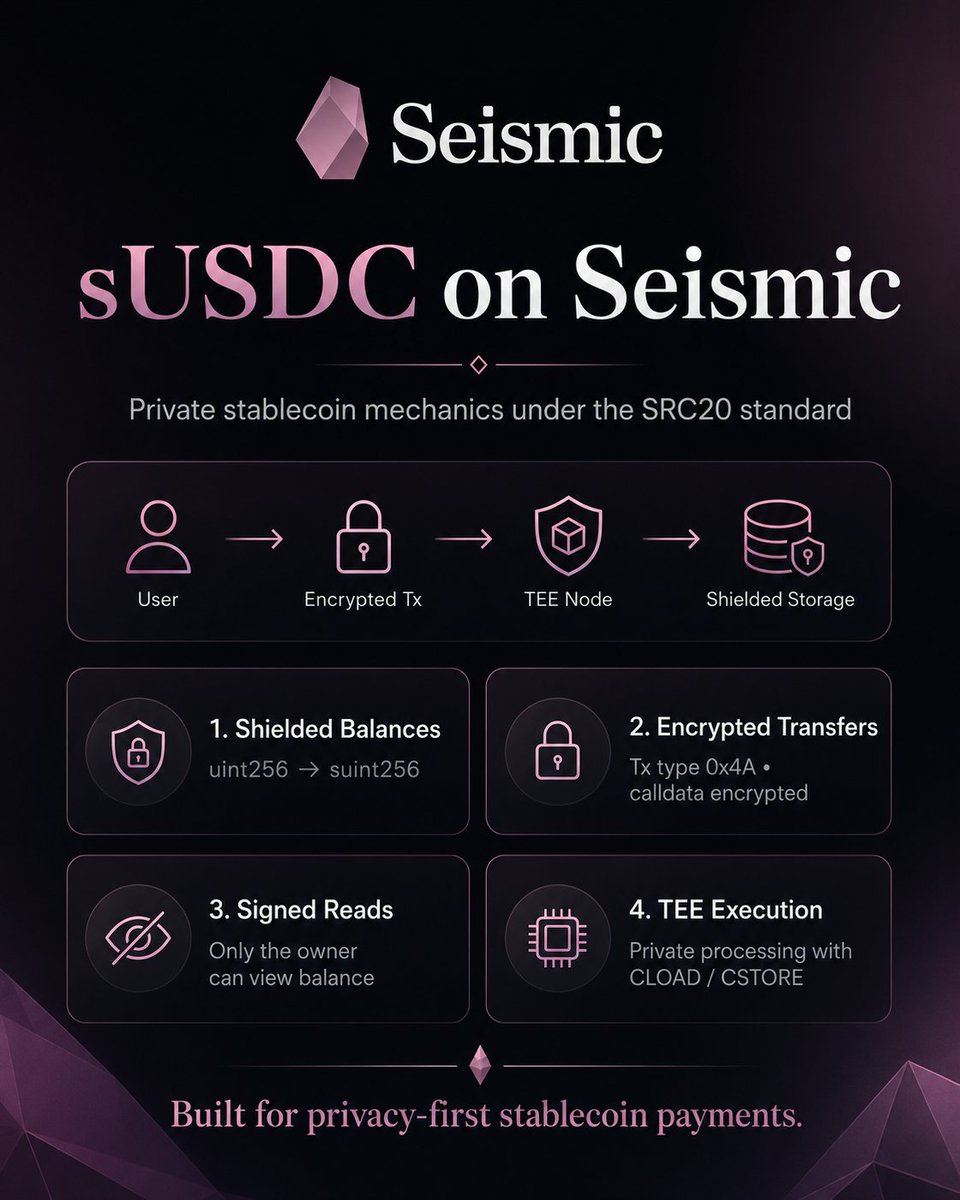
The Mechanism of sUSDC on Seismic under the SRC20 Standard
sUSDC can be understood as a version of USDC implemented as a shielded token on Seismic. Instead of operating like a regular ERC20 token, where wallet balances, transfer amounts, and allowances can be publicly observed, sUSDC uses Seismic SRC20 standard to hide sensitive on-chain data.
One important point to note is that Seismic SRC20 should not be confused with SRC-20 on Bitcoin Stamps. In the Bitcoin ecosystem, SRC-20 is a token standard based on Bitcoin Stamps. Meanwhile, on Seismic, SRC20 refers to a type of private ERC20 token running on Seismic’s EVM-compatible blockchain. Seismic describes SRC20 as a private ERC20 token where balances, transfer amounts, and allowances are shielded from external observers.
1. Core Difference: uint256 → suint256
mapping(address => suint256) balanceOf;
This means that anyone can read the balance of any wallet.
With SRC20 on Seismic, the value is changed into a shielded type:
Only changing from uint256 to suint256 may look simple, but the underlying mechanism changes significantly. According to Seismic, when the compiler detects shielded types such as suint256, it uses CSTORE/CLOAD instead of SSTORE/SLOAD. This marks the storage slot as private. As a result, when external observers read the state, block data, or transaction trace, they only see 0x00...0 instead of the real value.
2. sUSDC Transfer Flow
When a user transfers sUSDC, the mechanism can be understood as follows:
- The user calls the transfer(to, amount) function.
- The amount is a suint256, so it is processed as private data.
- The transaction is sent as Seismic transaction type 0x4A.
- The calldata is encrypted before it leaves the user’s device.
- The Seismic node running inside a TEE decrypts the calldata within a secure environment.
- The smart contract checks the balance, subtracts the amount from the sender, and adds it to the receiver.
- The result is stored in shielded storage.
External observers can only see that a transaction occurred, but they cannot see the exact amount of sUSDC transferred.
According to Seismic’s documentation, transaction type 0x4A encrypts calldata before broadcasting. The node decrypts it inside the TEE, executes the transaction, and writes the result into shielded storage. Plaintext calldata does not appear in the mempool, block data, or transaction trace.
3. How Users View Their Own Balance
Because balanceOf is no longer public, external users cannot call balanceOf(address) like they normally would with an ERC20 token. Instead, Seismic uses a mechanism called signed reads.
A signed read allows users to sign a read request to prove that they are the true owner of the wallet. The contract can check msg.sender, then return the balance only to the correct user. The returned result is also encrypted for the caller, so other parties cannot read the response.
4. The Role of TEE in Securing sUSDC
Seismic does not only encrypt data at the smart contract level. The Seismic network runs nodes inside Trusted Execution Environments, specifically referring to Intel TDX in its documentation. A TEE creates a secure execution environment that prevents code and data inside the enclave from being directly observed by node operators or the host operating system.
For sUSDC, this means that:
- calldata is encrypted before being sent;
- the node only decrypts it inside the TEE;
- balances and amounts are processed through shielded execution;
- private storage is written using CSTORE;
- public RPC cannot directly read shielded storage slots.
@SeismicSys @xealistt @NoxxW3
1
4
51
May 22
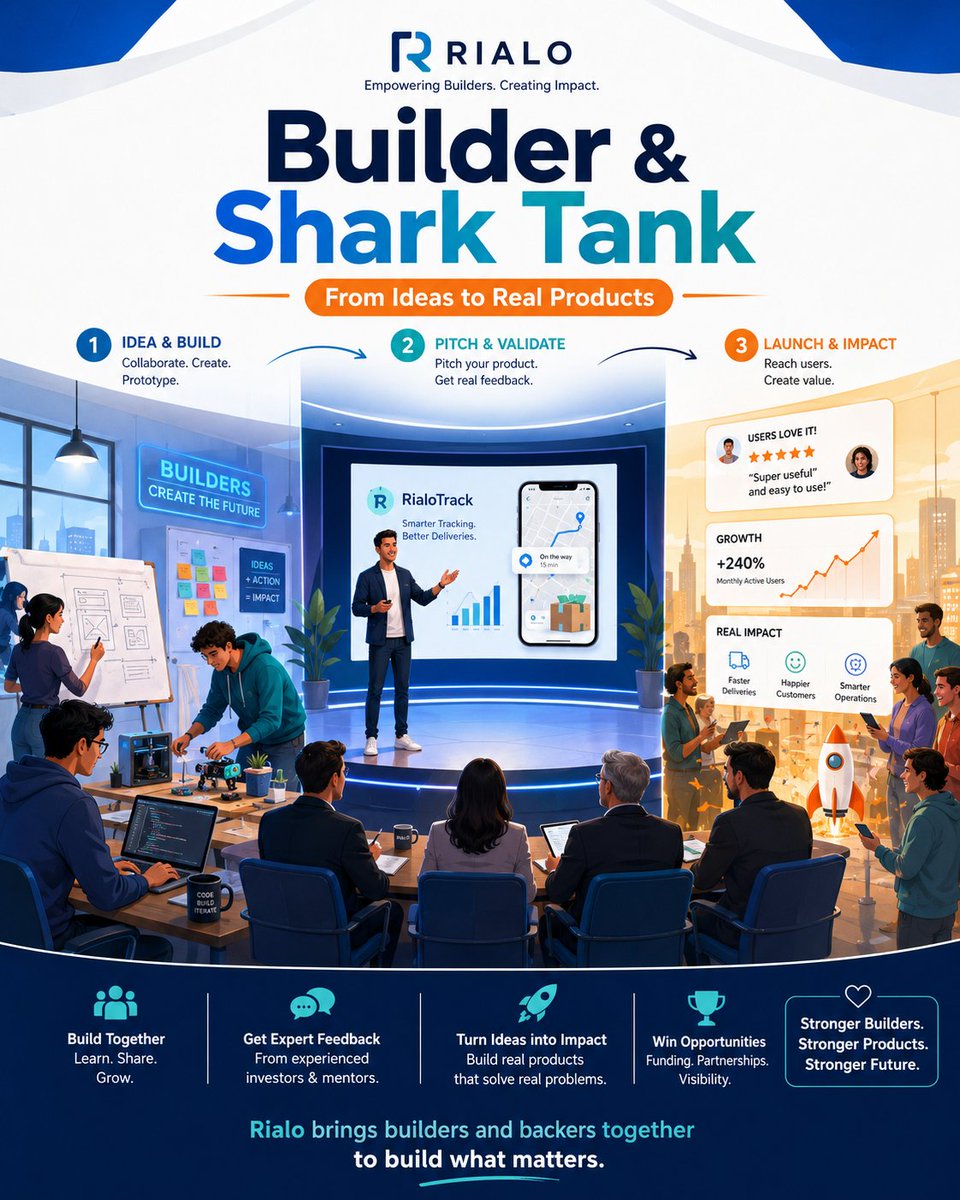
Why should Rialo organize more Builder & Shark Tank activities?
Because the market does not only need good ideas, but also real products that can solve real problems.
Builder activities provide product makers with an environment to build, test, and improve their ideas. Meanwhile, Shark Tank creates opportunities for projects to be presented, challenged, and evaluated by people with experience in the market, business, and investment.
Through these activities, Rialo can discover products with real potential, not just ideas on paper, but solutions that are capable of entering the market.
This is also a way to connect builders, investors, businesses, and real users. By organizing more activities like these, Rialo is not only creating a playground, but also building an ecosystem where good products can be seen, validated, and given the opportunity to grow further.
@RialoHQ
1
2
46
May 21
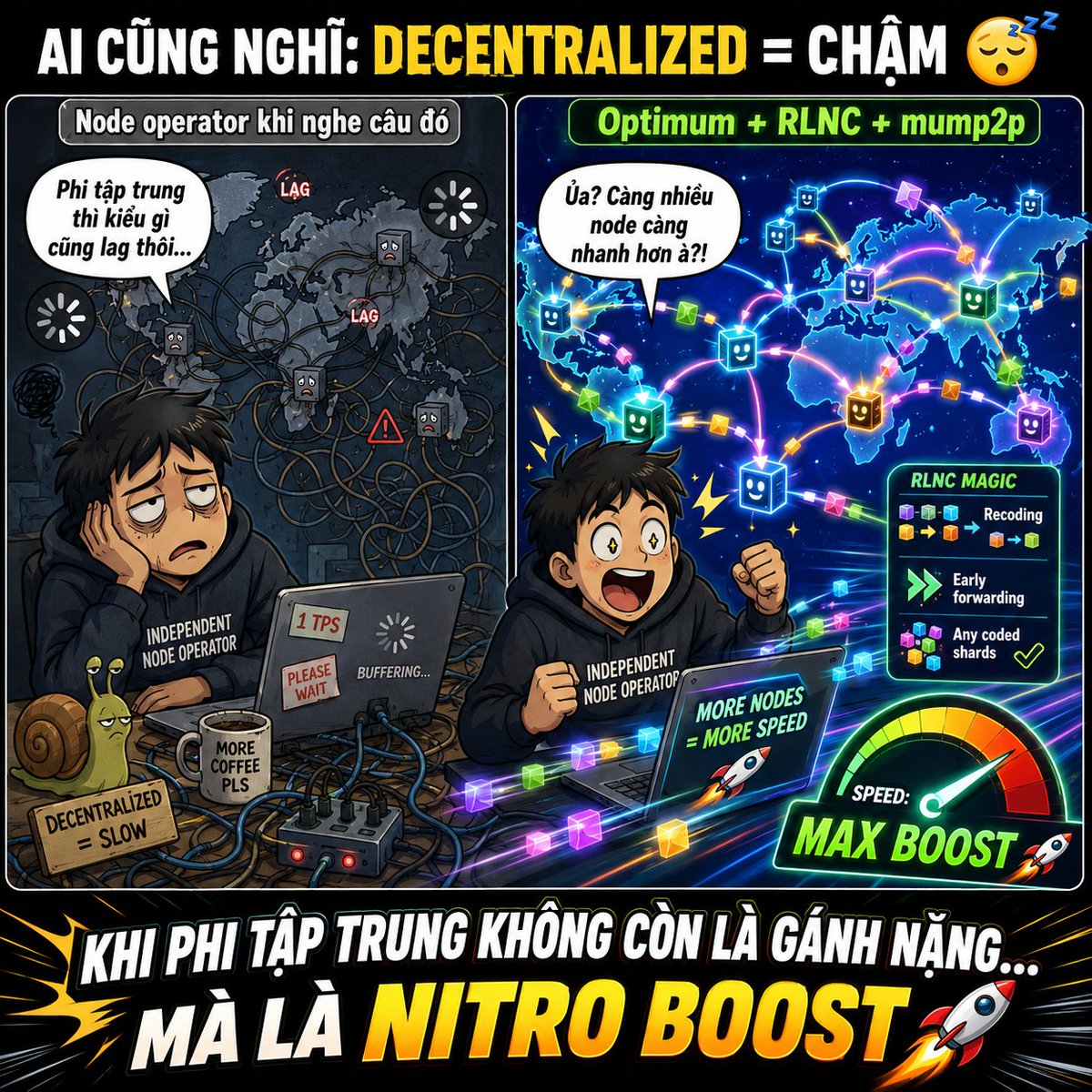
Mọi người thường nghĩ rằng mạng phi tập trung luôn đồng nghĩa với chậm chạp, nhưng thực tế, điều đó không còn đúng nữa. Optimum đang chứng minh điều ngược lại với mump2p, được hỗ trợ bởi Random Linear Network Coding (RLNC).
Theo mình, điểm đặc biệt của mump2p chính là khả năng xóa bỏ rào cản về vị trí và phần cứng. Một node độc lập ở châu Á hay Nam Mỹ, chỉ cần chạy mump2p, có thể đạt hiệu suất tương đương với những operator doanh nghiệp ở Tây Âu hay Bắc Mỹ. Điều này thực sự mở ra cơ hội cho mạng phi tập trung phát triển toàn cầu mà không bị giới hạn bởi hạ tầng hay địa lý.
Điều mình thấy thú vị là phi tập trung không chỉ giúp mạng an toàn, chống kiểm duyệt và chống tấn công, mà nhờ RLNC, nó còn tăng tốc mạng. Nhờ những tính chất cơ bản như:
Recoding tái mã hóa dữ liệu ngay trên các node,
Early forwarding chuyển tiếp dữ liệu ngay khi nhận được,
Decoding với bất kỳ tổ hợp shard nào,
mạng càng lớn, càng phân tán thì tốc độ càng cao. Mỗi node mới đóng góp thêm shard, giúp việc giải mã nhanh hơn; càng nhiều node ở các khu vực khác nhau, số bước trung gian giảm, độ trễ thấp hơn.
Với mình, đây là một bước tiến quan trọng: phi tập trung không còn là hy vọng xa vời, mà thực sự giúp các blockchain và hệ thống phân tán mở rộng quy mô mà không đánh đổi tốc độ. Đây chính là lý do tại sao tôi tin rằng công nghệ như mump2p sẽ là tương lai của mạng phân tán: vừa an toàn, vừa nhanh, vừa thực sự toàn cầu hóa.
@get_optimum
May 20
Everyone thinks decentralized = slow. We're proving them wrong.
Powered by Random Linear Network Coding, Optimum's mump2p improves network decentralization. When every node has access to low latency data propagation, it matters much less where that node is located or what hardware it runs on. By simply running mump2p, an independent node operator in Asia or South America can close the performance gap with enterprise operators in Western Europe or North America.
Decentralization innately supports network resilience, censorship resistance, and attack resistance. When a network communicates using RLNC that 𝐝𝐞𝐜𝐞𝐧𝐭𝐫𝐚𝐥𝐢𝐳𝐚𝐭𝐢𝐨𝐧 𝐚𝐜𝐭𝐮𝐚𝐥𝐥𝐲 𝐡𝐞𝐥𝐩𝐬 𝐬𝐩𝐞𝐞𝐝 𝐮𝐩 𝐭𝐡𝐞 𝐧𝐞𝐭𝐰𝐨𝐫𝐤 too.
Because of RLNC’s fundamental properties:
- Recoding
- Early forwarding
- Decoding with any combination of coded shards
it thrives in massive globally distributed networks, whereas other propagation methods slow down.
Every new node adds more coded shards to the network, so decoding gets faster. More nodes in more diverse regions shortens the hops between them, so latency drops.
This is how Optimum lets chains decentralize to scale.
5
10
152