
Director, Software Architecture at @CustomInk. AWS Certified Solutions Architect - Professional (SAP-C02). Current interest: Pandas and Machine Learning
Joined May 2007
- Tweets 9,694
- Following 977
- Followers 1,062
- Likes 2,673
1,275 Photos and videos
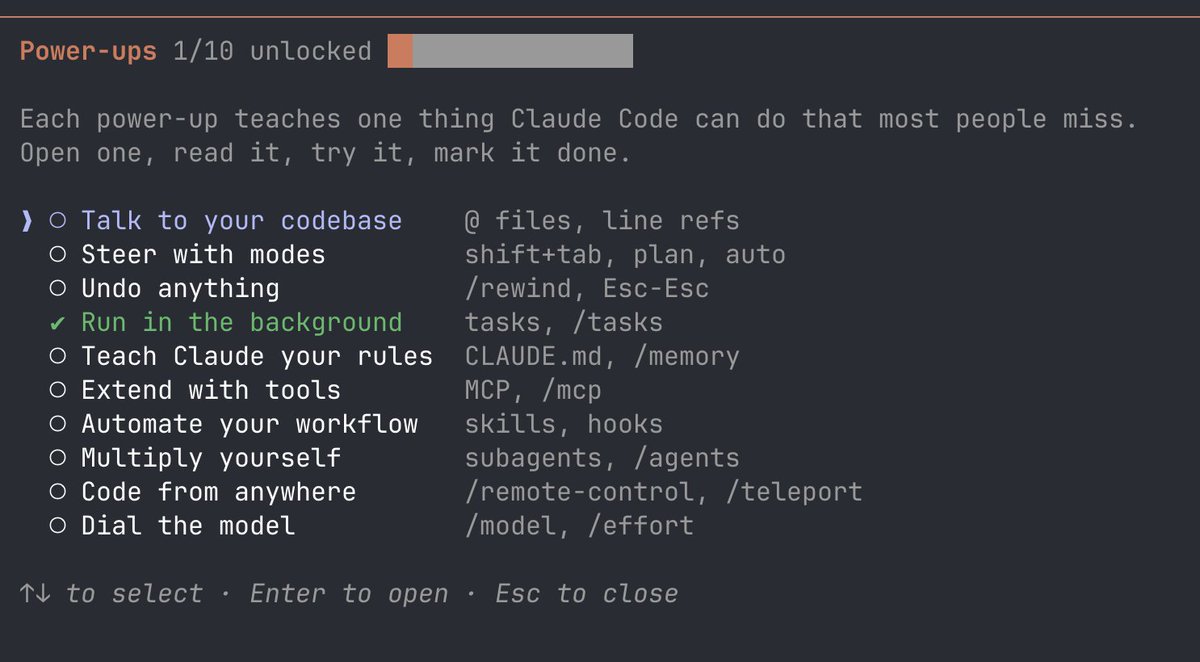





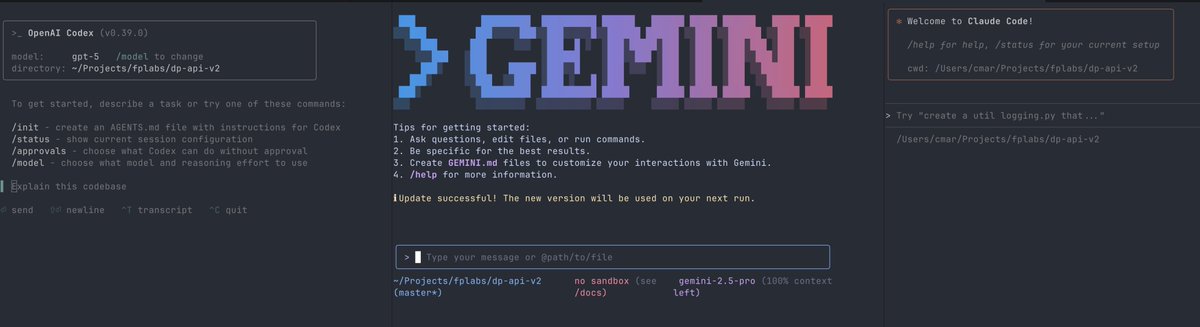

Even though I spend my days coding with AI Agents, I still constantly write thoughts in my notebook, I couldn't explain why handwriting works better for me, but this study explains it clearly
May 18

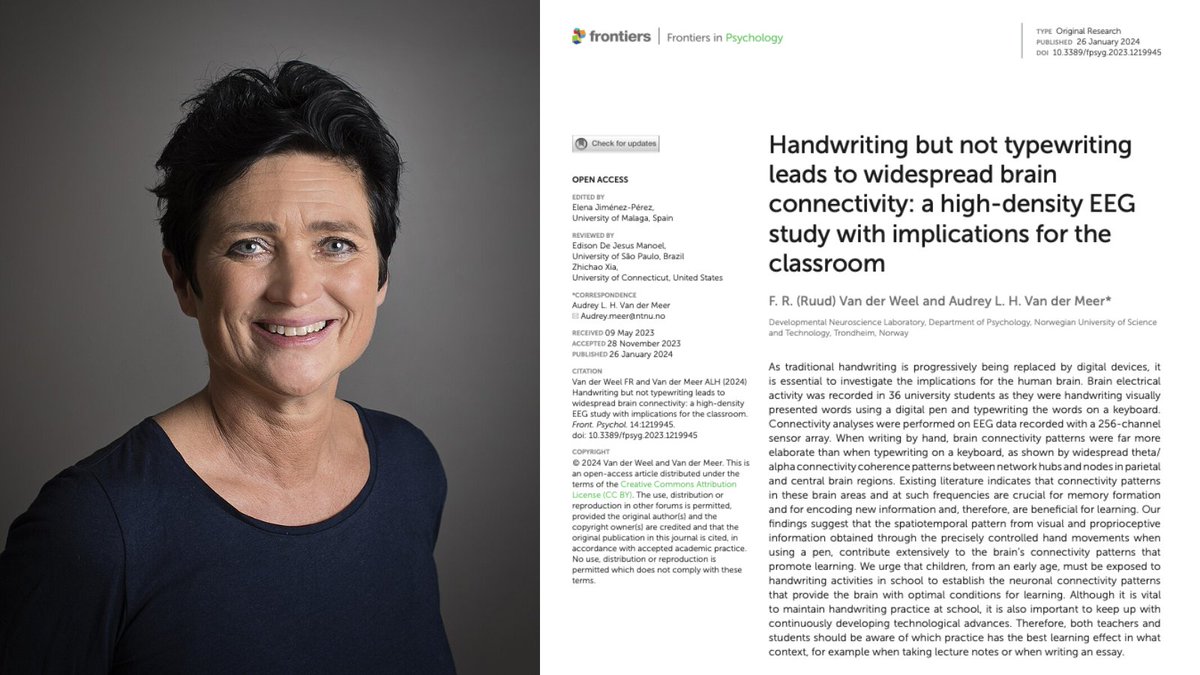
A Norwegian neuroscientist spent 20 years proving that the act of writing by hand changes the human brain in ways typing physically cannot, and almost nobody outside her field has read the paper.
Her name is Audrey van der Meer.
She runs a brain research lab in Trondheim, and the paper that closed the argument was published in 2024 in a journal called Frontiers in Psychology. The finding is brutal enough that it should have changed every classroom on Earth.
The experiment was simple. She recruited 36 university students and put each one in a cap with 256 sensors pressed against their scalp to record brain activity. Words flashed on a screen one at a time.
Sometimes the students wrote the word by hand on a touchscreen using a digital pen, and sometimes they typed the same word on a keyboard. Every neural response was recorded for the full five seconds the word stayed on screen.
Then her team looked at the part of the data most researchers had ignored for years, which is how different parts of the brain were communicating with each other during the task.
When the students wrote by hand, the brain lit up everywhere at once.
The regions responsible for memory, sensory integration, and the encoding of new information were all firing together in a coordinated pattern that spread across the entire cortex. The whole network was awake and connected.
When the same students typed the same word, that pattern collapsed almost completely.
Most of the brain went quiet, and the connections between regions that had been alive seconds earlier were nowhere to be found on the EEG.
Same word, same brain, same person, and two completely different neurological events.
The reason turned out to be something nobody had really paid attention to before her work. Writing by hand is not one motion but a sequence of thousands of tiny micro-movements coordinated with your eyes in real time, where each letter is a different shape that requires the brain to solve a slightly different spatial problem.
Your fingers, wrist, vision, and the parts of your brain that track position in space are all working together to produce one letter, then the next, then the next.
Typing throws all of that away. Every key on a keyboard requires the exact same finger motion regardless of which letter you are pressing, which means the brain has almost nothing to integrate and almost no problem to solve.
Van der Meer said it plainly in her interviews.
Pressing the same key with the same finger over and over does not stimulate the brain in any meaningful way, and she pointed out something that should scare every parent who handed their kid an iPad.
Children who learn to read and write on tablets often cannot tell letters like b and d apart, because they have never physically felt with their bodies what it takes to actually produce those letters on a page.
A decade before her, two researchers at Princeton ran the same fight using a completely different method and ended up at the same answer. Pam Mueller and Daniel Oppenheimer tested 327 students across three experiments, where half took notes on laptops with the internet disabled and half took notes by hand, before testing everyone on what they actually understood from the lectures they had watched.
The handwriting group won by a wide margin on every question that required real understanding rather than surface recall.
The reason was hiding in the transcripts of what the two groups had actually written down.
The laptop students typed almost word for word, capturing more total content but processing almost none of it as they went, while the handwriting students physically could not write fast enough to transcribe a lecture in real time, which forced them to listen carefully, decide what actually mattered, and put it in their own words on the page.
That single act of choosing what to keep was the learning itself, and the keyboard had quietly skipped the choosing and skipped the learning along with it.
Two studies. Two countries. Same answer.
Handwriting makes the brain work. Typing lets it coast.
Every note you have ever typed instead of written went into your brain through a thinner pipe. Every meeting, every book highlight, every idea you captured on your phone instead of on paper was processed at half depth.
You did not forget those things because your memory is bad. You forgot them because typing never woke the part of the brain that would have made them stick.
The fix is the thing your grandmother already knew.
Pick up a pen. Write the thing down. The slower road is the faster one.
71
Cyberpunk PS5 Pro Update Trailer youtu.be/4sXRNUYsdbA?si=xKJa…
1
114

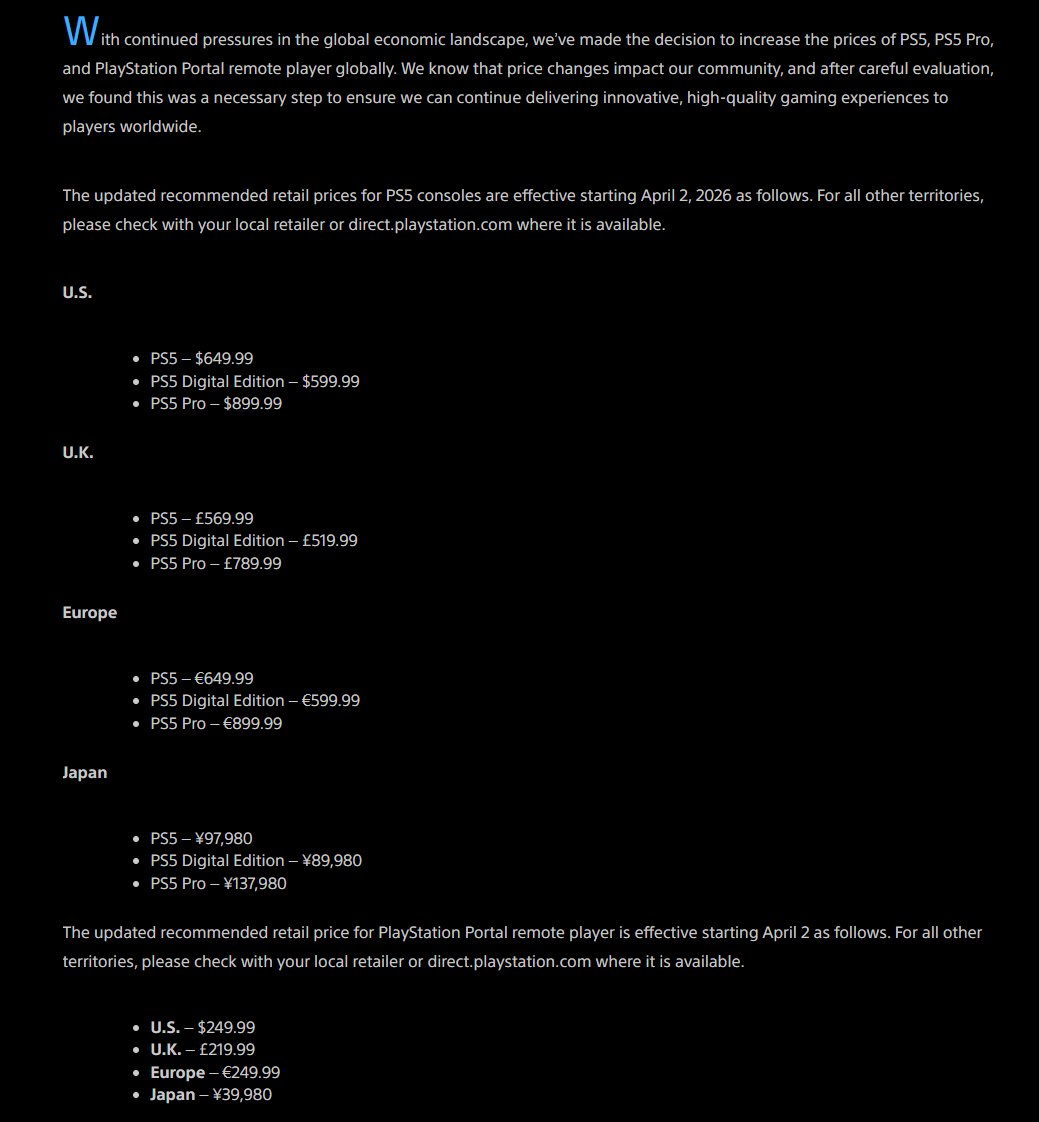
PS5/PS5 Pro/PS Portal will receive price increases on April 2nd.
For USA:
-PS5 $549 -> $649
-PS5 Digital $499 -> $599
-PS5 Pro $749 -> $899
-PS Portal $199 -> $249
blog.playstation.com/2026/03…

1,509
1,340
10,722
8,729,581
Your assistant can use Chrome DevTools MCP now

how to set up live Chrome sessions:
1️⃣ open chrome://inspect/#remote-debugging
2️⃣ toggle it on
3️⃣ that's it. your agent can now see your tabs, cookies, logins — everything
uses Chrome DevTools MCP under the hood, no extensions needed
📖 developer.chrome.com/blog/ch…
📖 docs.openclaw.ai/tools/brows…
74
Daylight Savings is even hard on Agents. I had to remind Claude Code it was DST
> No. The schedule is cron(0 14 ? * MON-FRI *) in UTC — that's 9:00 AM ET, which already passed at 7:37 AM when we first invoked the Lambda manually.
...
> You're right. DST started Sunday March 8
57
I had noticed Claude was a bit off today. Just switched my effort back to high
Mar 6

👋 we recently changed the default effort to medium to better balance intelligence with speed, based on median usage we were seeing in the wild.
You can change it anytime in the /model selector if you prefer low effort (faster) or high effort (more intelligence). The setting is sticky and will persist for your next session.
If you’ve changed effort to high already, can you double check you’re on the latest version, and that your CLAUDE.md’s (in /memory) don’t have confusing/conflicting instructions? That’s the most common cause.
[deleted a previous post where I accidentally said default is high, it’s early and I haven’t had coffee..]
1
55
Did you see CloudFlare forked NextJS onto Vite for $1,100 in tokens? blog.cloudflare.com/vinext
79
Claude Code now remembers your preferences, conventions, and workflow across sessions — getting better the more you work together

We've rolled out a new auto-memory feature.
Claude now remembers what it learns across sessions — your project context, debugging patterns, preferred approaches — and recalls it later without you having to write anything down.
74
Talking to Claude Code with the @superwhisper is a noticeable improvement in the way I communicate with the agent.
1
27
This video Inspired to try talking to the agent youtube.com/watch?v=q_QhY9Cd…
24