
🔍 CNC Intelligence: Leaders in #CryptoForensics & #FraudPrevention! Global offices. On-site training for law enforcement & compliance professionals
- Tweets 531
- Following 35
- Followers 244
- Likes 17
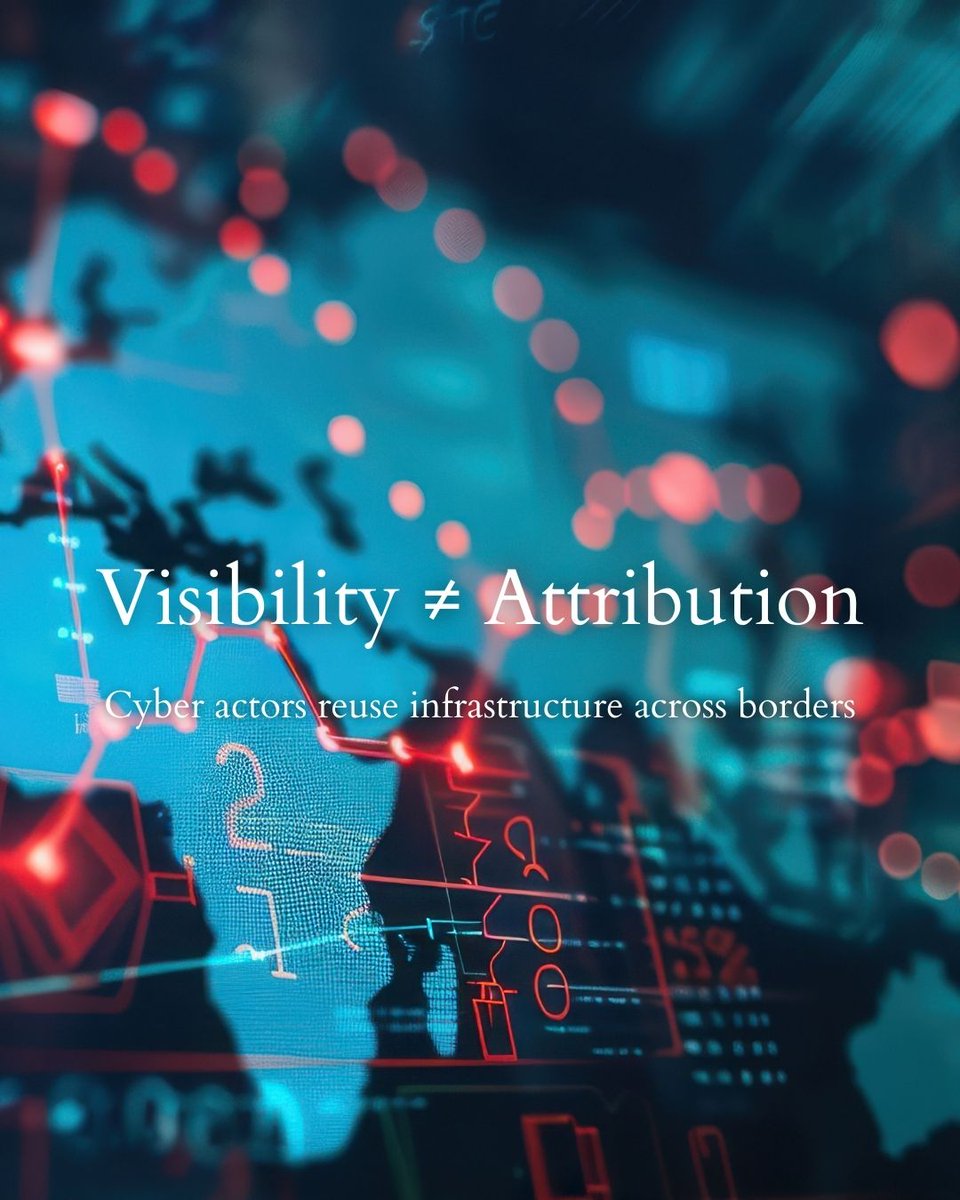









ALT Stylized global map with digital network lines and data overlays, displaying the text “Visibility ≠ Attribution” and “Cyber actors reuse infrastructure across borders.”
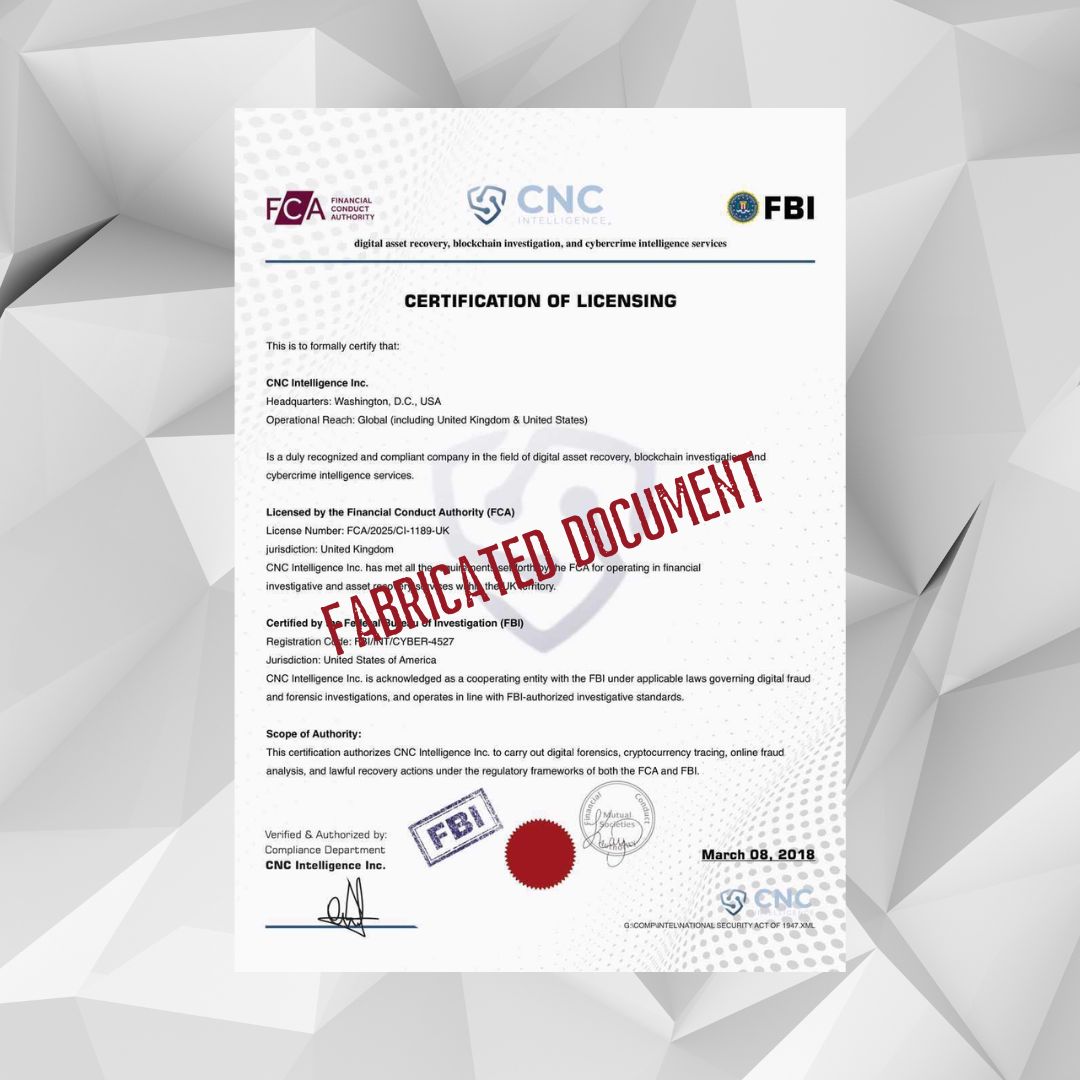
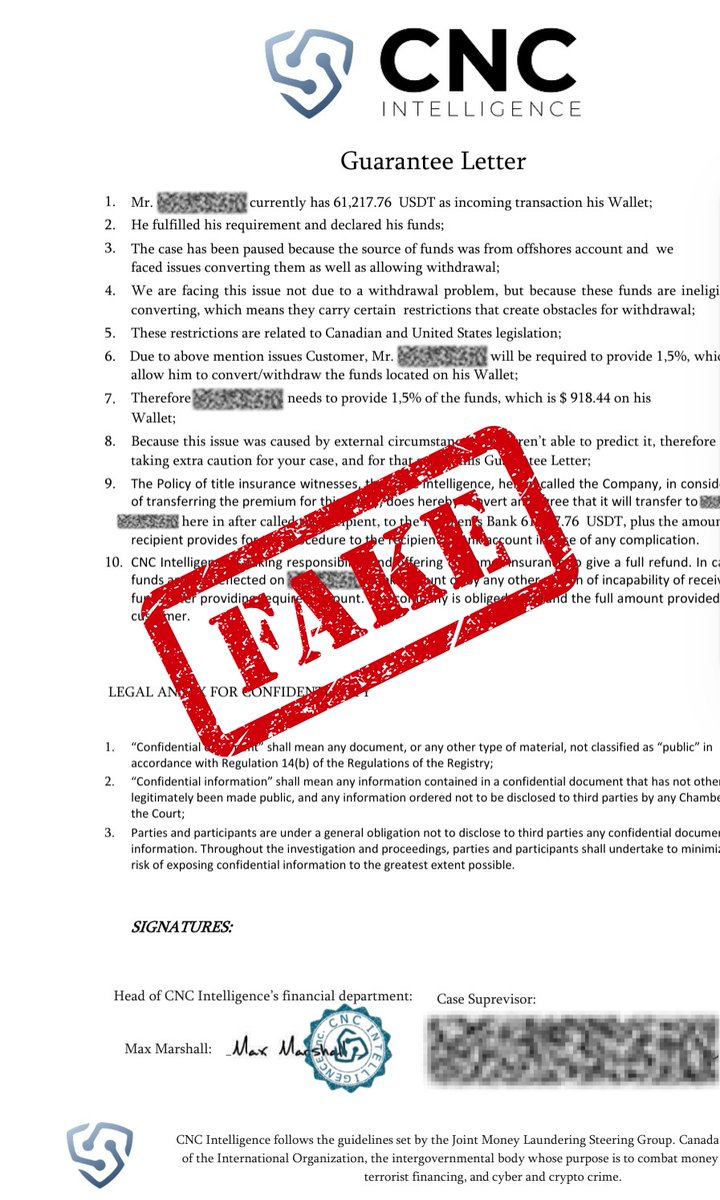
ALT Fabricated licensing certificate falsely claiming association with multiple law enforcement and regulatory agencies, marked as a fabricated document by CNC Intelligence.
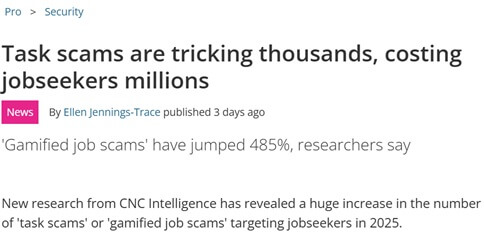
ALT TechRadar Pro security article headline stating that task scams are tricking thousands of jobseekers and costing millions, referencing CNC Intelligence research.
ALT An older woman sits at her kitchen table in soft morning light, speaking on the phone while looking at an open laptop displaying faint digital patterns. Papers and glasses rest on the table, reflecting the confusion and concern many retirees face during cyber scams.

ALT A concerned professional holding a phone to their ear inside a modern office, illustrating the pressure and uncertainty common in personal loan scam attempts.
ALT A concerned professional holding a phone to their ear inside a modern office, illustrating the pressure and uncertainty common in personal loan scam attempts.
ALT A dark navy graphic with a red shield icon containing an exclamation mark. Large white text reads “SCAM ALERT,” with smaller grey text above it reading “Government-Impostor.” Below, the graphic includes “#WarningWednesday” and “CNC Intelligence.” The design resembles an official fraud-prevention notice.
ALT A still image styled as a confidential file folder labeled “North Korea Is Attacking the Blockchain. Here’s What That Means,” taken from the Warfronts episode. The design includes the Warfronts branding and reflects an investigative theme related to cyber operations and state-backed blockchain threats.
ALT An older man stands at a grocery store checkout, looking thoughtfully at his smartphone. A cashier is blurred in the background, smiling gently. The image includes a message overlaid: “Arizona law now protects people from crypto ATM pressure scams,” with the CNC Intelligence logo in the top left corner. The scene conveys caution, awareness, and consumer protection.
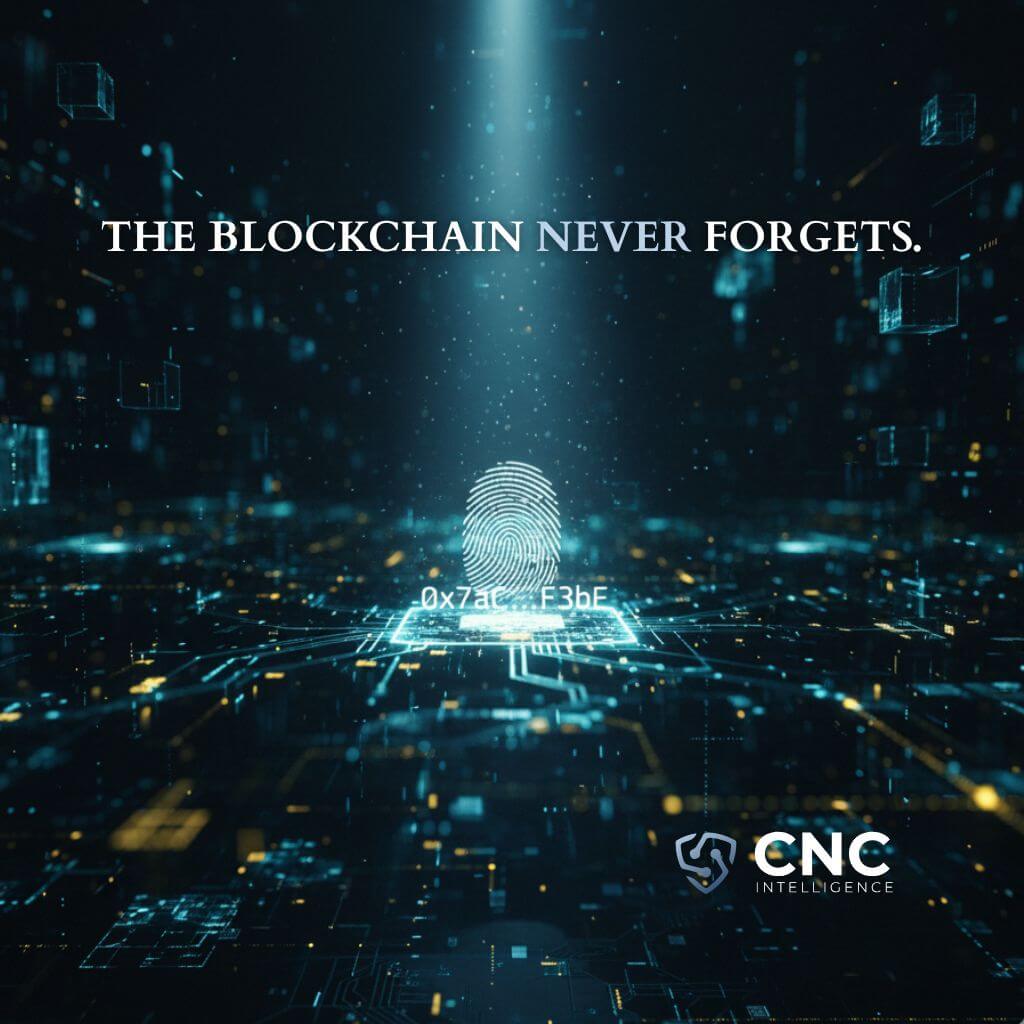
ALT Hyper-realistic, cinematic image of a dark digital blockchain network with interconnected nodes and blocks glowing. A bright, focused spotlight illuminates a specific crypto wallet address, subtly revealing a human fingerprint beneath it, symbolizing identity traceability. The text 'THE BLOCKCHAIN NEVER FORGETS.' is at the top, with 'NEVER' highlighted in yellow. The CNC Intelligence logo is in the bottom right corner.